


A well-organized fridge and freezer can transform your kitchen, making meal prep faster, reducing food waste, and maximizing your food storage space. But organizing these appliances requires more than just throwing items into containers. It takes a thoughtful approach to ensure everything stays fresh and accessible. In this article, we’ll cover 10 smart tips that will help you organize your fridge and freezer, giving you more room and improving your kitchen’s overall functionality.
1. Start with a Clean Slate: Clean Your Fridge and Freezer Thoroughly
Before organizing, it’s essential to start with a clean fridge and freezer. Cleaning your appliances helps eliminate odors, remove food particles, and give you a clear view of what you have left to store.
Start by emptying out all food items. Check expiration dates and dispose of expired or unwanted food. Then, wipe down the surfaces using a vinegar-water solution or warm, soapy water to clean shelves, trays, and compartments. If there’s any build-up of ice in the freezer, defrost it to maximize storage space.
This thorough cleaning step will help you make the most of the space and give you a fresh starting point for organization.
2. Organize by Zones: Group Similar Items Together
One of the easiest and most effective ways to organize your fridge and freezer is by dividing them into zones based on the types of food you store. This method makes it easier to find what you need and ensures that each food item is stored under the right conditions.
For example:
- Top shelf: Ideal for ready-to-eat items like leftovers, snacks, and drinks.
- Middle shelf: Best for dairy products like milk, cheese, and yogurt, which require a steady, moderate temperature.
- Bottom shelf: The coldest part of the fridge, perfect for raw meats and poultry. Store them in leak-proof containers to avoid contamination.
- Crisper drawers: Use these for fruits and vegetables. Separate them to prevent spoilage from the release of ethylene gas from some fruits.
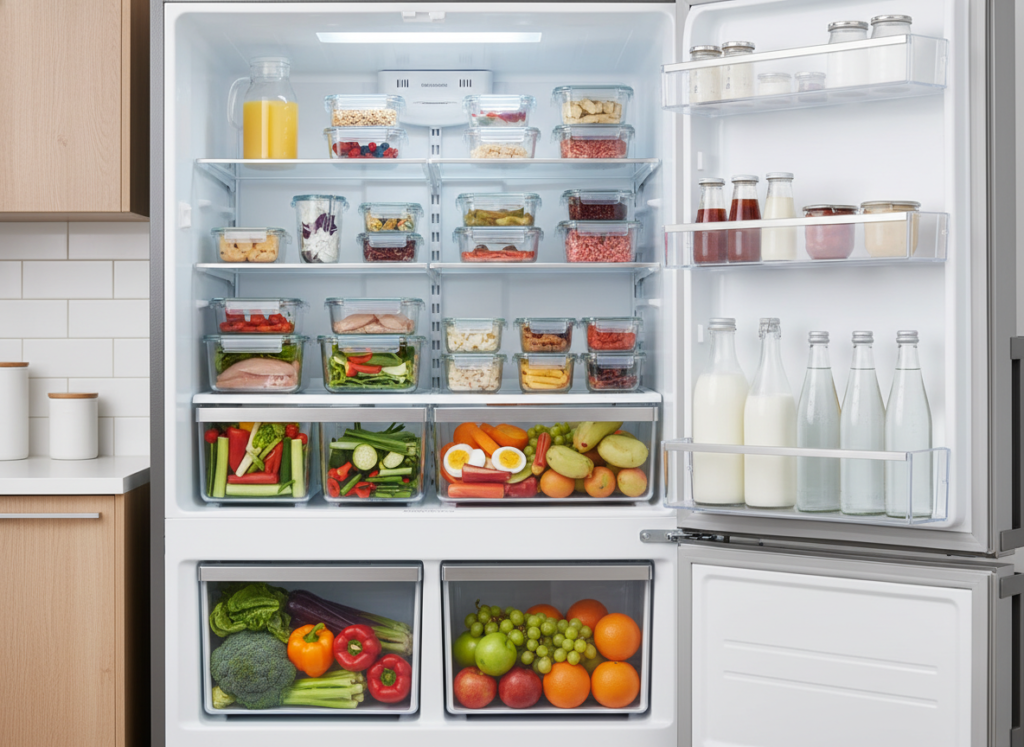
3. Use Clear Containers for Better Visibility
One of the most common reasons fridges get disorganized is that food gets buried behind larger items. To avoid this, use clear containers for smaller items so that everything is visible and easily accessible.
Clear containers help you see what’s inside without digging through everything. They’re especially useful for leftovers, chopped vegetables, or meal-prep ingredients. Additionally, label each container with its contents and the date it was stored. This will help ensure that nothing gets forgotten or wasted.
4. Maximize Door Storage
The fridge door is often the most underutilized space, but it can be a valuable storage area for condiments, sauces, and smaller items like eggs or butter.
Use small bins or baskets in the fridge door to keep things like ketchup, mustard, or salad dressings organized. This will help prevent them from falling out when you open the door and create a more organized and accessible storage space. Store heavier items on the bottom shelves to avoid putting too much strain on the door hinges.
5. Label Everything
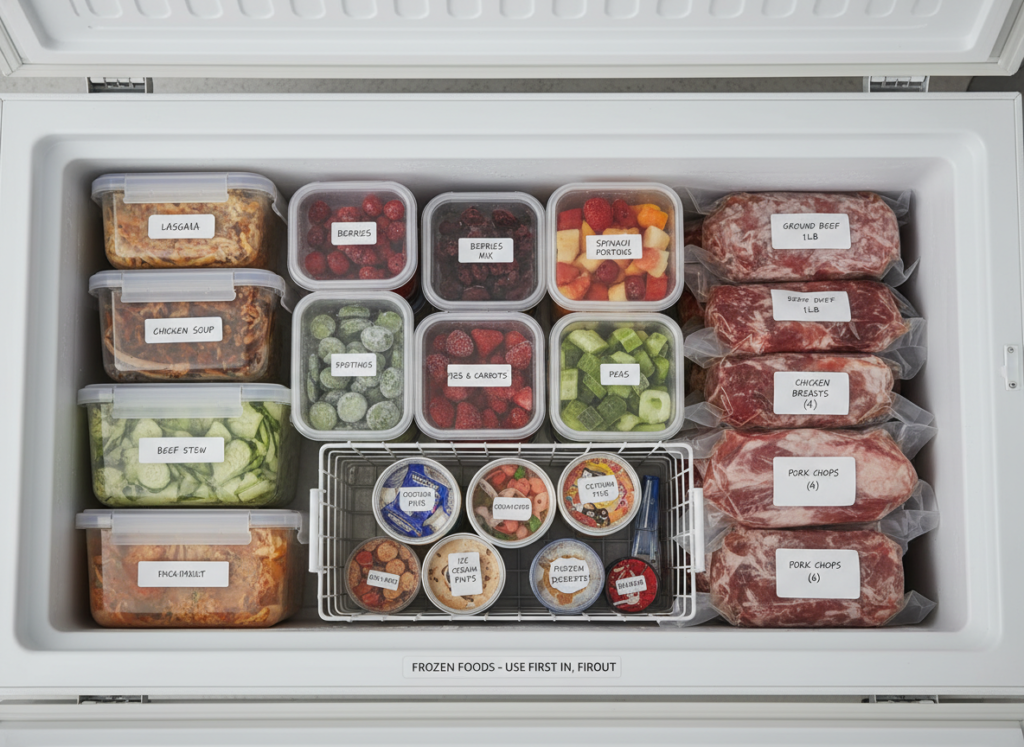
Labeling your food containers and storage bins is a simple but effective way to maintain organization. Labels help you keep track of what’s inside each container and ensure that older items are used first.
Use a labeling system that works for you, whether it’s color-coded labels for different food types (e.g., red for meats, green for veggies) or simple date labels to indicate when the food was stored. Labeling will also help you avoid confusion and reduce the chances of food being forgotten or wasted.
6. Store Freezer Items Upright
Maximize the space in your freezer by storing items upright. When frozen food is stacked or jumbled, it’s easy to forget what you have, leading to wasted food.
Use stackable bins to keep frozen vegetables, meats, and prepared meals organized. If you have smaller bags or packs, use file organizers to keep them upright and easy to access. This vertical storage method helps you make better use of space while keeping everything visible.
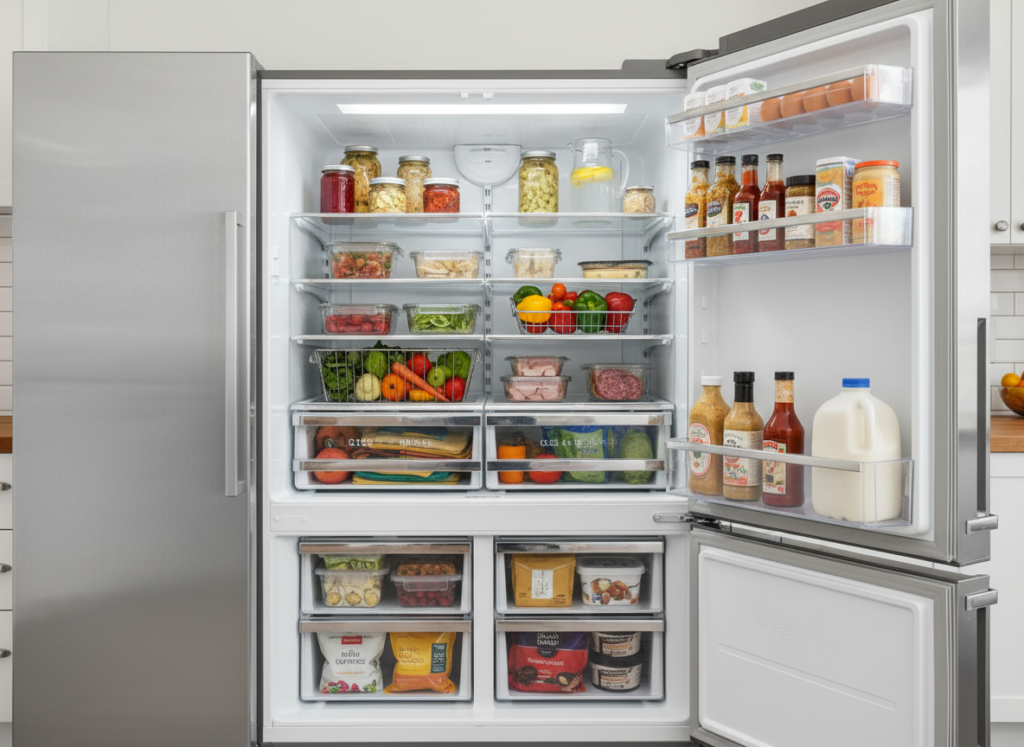
7. Keep a Running Inventory of Your Fridge
One of the best ways to stay organized is by keeping a running inventory of what’s in your fridge and freezer. This helps prevent overbuying, reduces food waste, and keeps your fridge more organized.
Keep a note on your phone or a piece of paper on your fridge where you track food items. Update it whenever you add new items or use something up. This will ensure that you are aware of what you have and make grocery shopping more efficient.
8. Use Turntables for Easy Access
Turntables (also known as lazy Susans) are a great solution for organizing small items like condiments, jars, and spices. They allow you to reach items in the back without having to move everything around.
Place turntables in your fridge door or on the shelves to organize bottles and jars. This makes it easy to access condiments, salad dressings, or jars of pickles without disturbing everything else.
9. Regularly Rotate Your Food
Rotating food items is crucial for maintaining an organized fridge. By using the first in, first out (FIFO) method, you ensure that older items get used first, preventing them from spoiling or going to waste.
Every time you add new groceries, place older items at the front so you can use them first. Take a moment each week to check expiration dates and discard any expired items.
10. Invest in Drawer Dividers for Produce
Produce can often get messy in your fridge, especially when fruits and vegetables are thrown together in one drawer. To keep things organized, invest in drawer dividers that separate different types of produce.
Use these dividers to keep fruits and vegetables organized by type. For example, separate apples from leafy greens or carrots from potatoes. By doing this, you’ll extend the life of your produce and prevent early spoilage caused by ethylene gas emitted by certain fruits.
Maintenance Tips: Keep Your Fridge Organized Long-Term

To ensure your fridge and freezer stay organized over time, it’s essential to adopt habits that prevent clutter from creeping back in. Here are some tips for maintaining long-term order:
- Weekly checks: Set aside time every week to clean out expired food and reorganize shelves. This will keep your fridge from becoming overcrowded and ensure you’re using items before they spoil.
- Make it a habit: Every time you bring new groceries home, take a moment to quickly rearrange your fridge and freezer. This ensures that the older items are in the front and will be used first.
- Create a routine: Incorporate fridge cleaning and organizing into your regular chores to avoid feeling overwhelmed. Aim to do a more thorough cleaning every month.
With these small, consistent habits, you’ll maintain an organized fridge and freezer with minimal effort.
Eco-Friendly Solutions: Store Your Food Sustainably
As sustainability becomes more important, consider incorporating eco-friendly practices into your fridge and freezer organization.
- Use reusable containers: Switch to glass or BPA-free plastic containers for storing leftovers, fruits, and vegetables. These are more sustainable than single-use plastic bags and containers.
- Opt for eco-friendly wraps: Consider using beeswax wraps or silicone food covers instead of plastic wrap to store food items.
- Vacuum sealing with eco-conscious bags: If you’re vacuum sealing, opt for biodegradable or reusable vacuum sealing bags to reduce plastic waste.
By adopting these eco-friendly solutions, you can organize your fridge while also reducing your environmental footprint.
Conclusion: A More Efficient, Clutter-Free Fridge and Freezer
Organizing your fridge and freezer is not only about aesthetics but also about making your kitchen more efficient, reducing food waste, and saving time during meal prep.
By following these 10 smart tips, you’ll maximize space, improve food preservation, and enjoy a more organized kitchen. Whether you’re a busy professional, a couple, or a family, these tips can help you keep your fridge and freezer in top shape, making your life easier and less stressful.
Remember, an organized fridge is more than just a tidy space; it’s a key to creating a functional, stress-free kitchen. Start small, implement these tips, and enjoy a more organized, efficient, and clutter-free kitchen for years to come.
Related Articles
- 15 Smart Kitchen Organization Tips to Declutter, Maximize Space, and Create a More Functional, Easy-to-Use Kitchen
- How to Remove Odors From Fridge: 7 Instant Hacks for Stubborn Smells (2026)
- DIY Fridge Deodorizer: 7 Baking Soda Hacks (2026)