


If you’d asked me a year ago whether I was “good” at decluttering, I would’ve said I hated clutter. I loved the idea of a calm, organized home. But when it came time to actually let things go, I stalled. I overthought. I convinced myself I might need that thing someday.
That’s exactly why the 90/90 decluttering rule caught my attention. It promised clarity and boundaries, which meant fewer emotional debates with myself. And honestly? It delivered just not in the rigid, all-or-nothing way most articles make it sound.
This is my real, lived-in take on the 90/90 rule: what worked, what didn’t, and how I adapted it so it actually transformed my home instead of becoming another abandoned organizing experiment.
What Is the 90/90 Decluttering Rule (Really)?
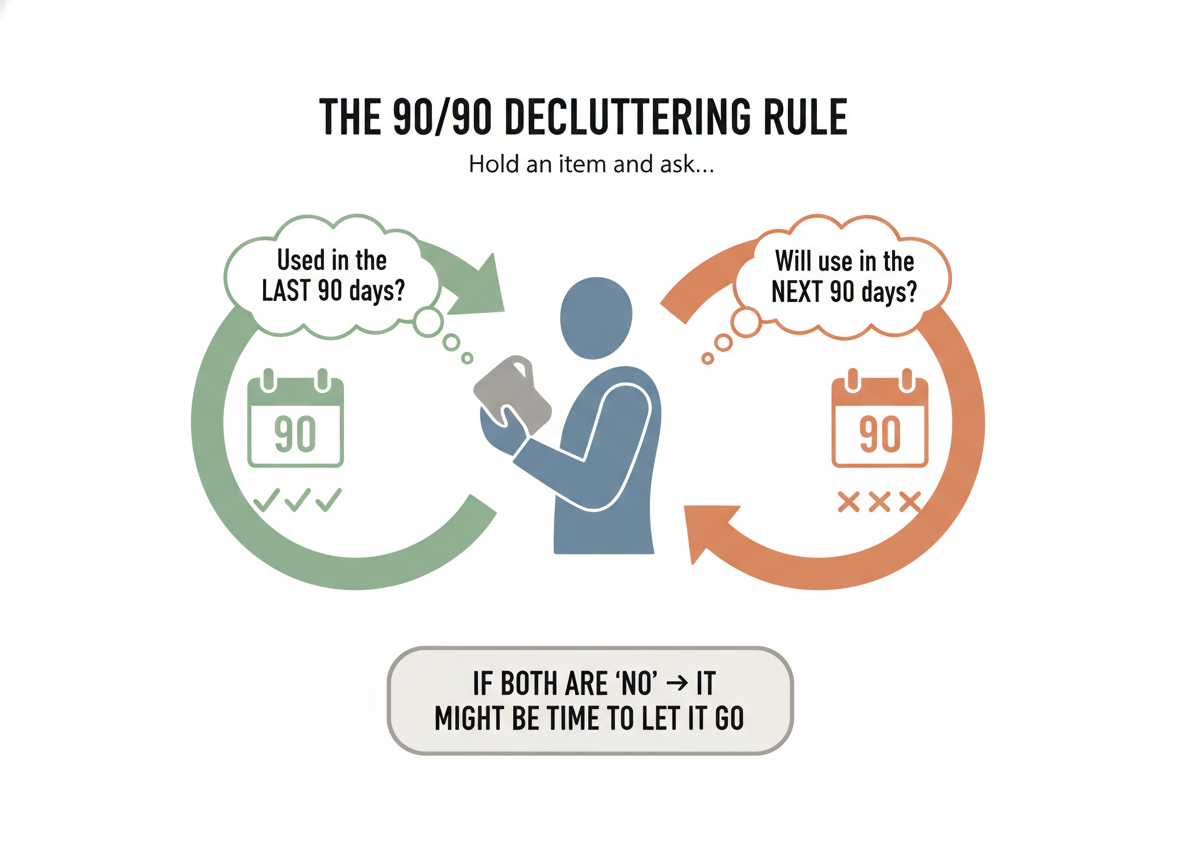
The 90/90 rule, popularized by Joshua Fields Millburn and Ryan Nicodemus (aka The Minimalists), is refreshingly simple:
You pick up an item and ask:
- Have I used this in the last 90 days?
- Will I use it in the next 90 days?
If the answer to both questions is no, the item doesn’t earn its place in your home. And at first glance, it sounds almost too blunt, especially if you live in the real world with kids, busy schedules, seasonal needs, or a home that actually gets used.
Why This Rule Hit Different for Me
I’ve tried a lot of decluttering methods such as timed sprints, “Take Away 10” challenges, and five-minute resets. To be honest, they just helped temporarily. Clutter always crept back in because I never changed how I made decisions. I just moved faster. The 90/90 rule forced me to confront something uncomfortable: I was keeping things based on imagined versions of my life instead of my actual one. That realization alone changed everything.
Where the 90/90 Rule Worked Shockingly Well
Closets and Clothes
Clothing is where the 90/90 rule shines. When I stopped asking “Do I like this?” and started asking “Did I actually wear this?” the answers became brutally clear.
Pieces I swore were “wardrobe staples”? I never touched them.
Sale items I felt proud of buying cheaply? I may wear them once.
The rule didn’t just declutter my closet, it changed how I shop. Now I pause before buying and think, “Will this realistically make it into my next 90 days?” That alone has kept new clutter from entering my home.
Junk Drawers, Nightstands, and “Drop Zones”
The drawer where random cords go to die. The nightstand is stuffed with manuals, hair ties, and receipts. These spaces thrive on decision fatigue, which is exactly what the 90/90 rule cuts through.
When I applied it to just one drawer at a time, something clicked:
- If I hadn’t reached for it in three months
- And couldn’t imagine reaching for it soon
Here’s the thing: it didn’t belong there or anywhere.
Where the 90/90 Rule Fell Apart
The Kitchen Is Its Own Beast
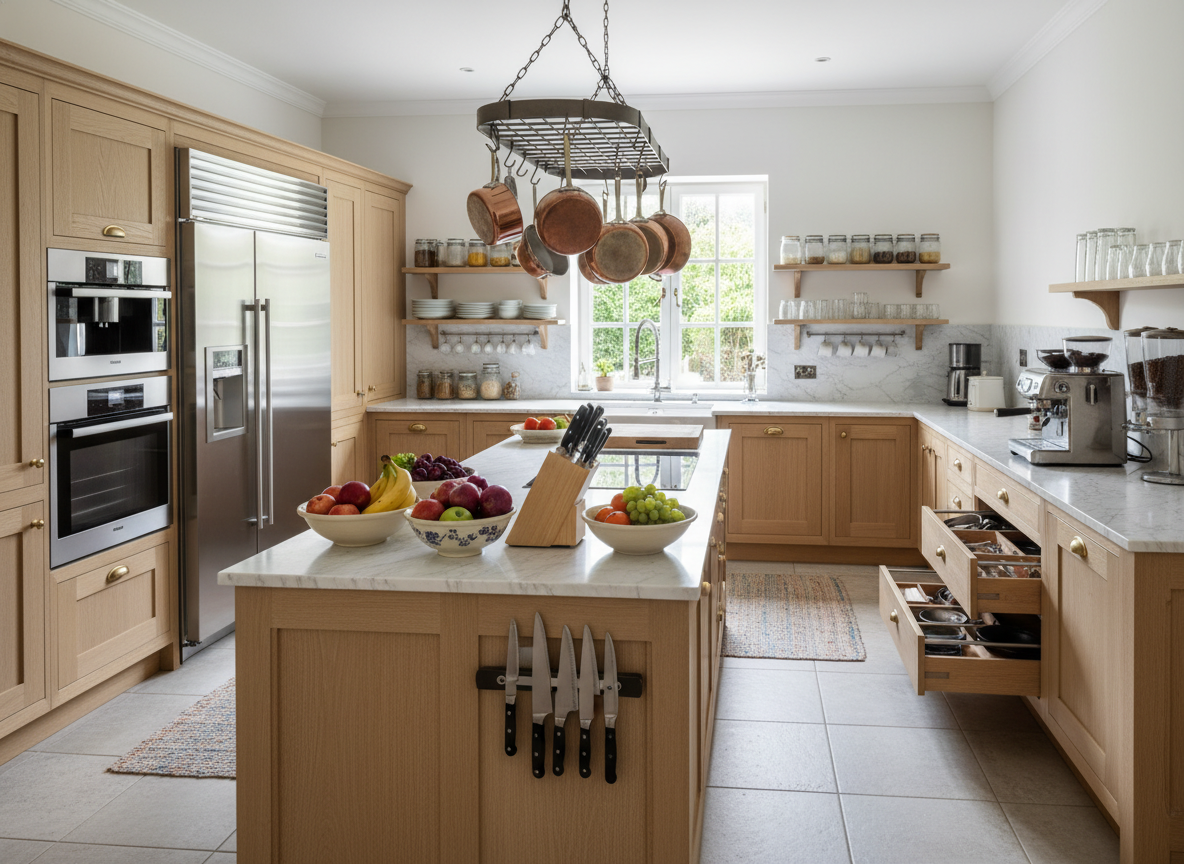
Here’s where most articles oversimplify things. Kitchens are functional, seasonal, and emotional all at once.
- I don’t use my holiday baking tools for 9 months of the year.
- My stand mixer doesn’t get weekly action but when I need it, I really need it.
- Pantry items rotate based on seasons, routines, and family life.
By strict 90/90 logic, I’d get rid of things I genuinely rely on. That’s when I realized something important: My kitchen didn’t need decluttering as much as it needed reorganizing. So I adjusted the rule instead of forcing it.
How I Adapted the 90/90 Rule So It Actually Works
I Used the Rule as a Filter, Not a Verdict
For high-use, high-function spaces (like kitchens or shared family areas), I stopped asking “Should this go?” and started asking:
- Is this in the right place?
- Do I have duplicates doing the same job?
- Is this easy to reach when I actually need it?
The 90/90 rule helped me identify friction, even when it didn’t eliminate items.
I Paired It With Other Decluttering Methods
Instead of forcing one rule everywhere, I matched the method to the space:
- 90/90 rule → clothes, drawers, overflow closets
- Take Away 10 → kitchens, storage bins, kids’ areas
- Timed resets → maintenance, not major purges
Decluttering stopped feeling like failure when I let go of the idea that one rule had to fix everything.
The Mental Shift That Made the Biggest Difference
The real transformation wasn’t physical at all. It came from realizing that keeping something “just in case” always has a cost, even if it isn’t obvious at first. Every item I own quietly competes for space, attention, and mental energy, whether I notice it or not. Once I started letting go, I saw that fewer things didn’t make my life feel emptier, yet they made everyday routines easier. The 90/90 rule gave me permission to trust my actual habits instead of acting out of guilt or imagined future scenarios.

Who the 90/90 Rule Is Best For (And Who Should Be Careful)
This rule is great if you:
- Feel stuck and overwhelmed by clutter
- Overthink decisions and need boundaries
- Want a fast, no-nonsense way to start
- Are decluttering clothes, drawers, or storage areas
Use it gently if you:
- Have seasonal tools or hobby equipment
- Share spaces with family members
- Are organizing high-function rooms like kitchens
- Tend to take rules too literally
Remember, you should apply it flexibly. Flexibility isn’t cheating, it’s how real homes work.
My Final Verdict on the 90/90 Decluttering Rule
The 90/90 rule didn’t suddenly make me a minimalist, but it made a meaningful difference in how I manage my space. It simplified decision-making, cleared mental clutter, changed how intentionally I bring new items into my home, and helped me stop repeatedly organizing the same unnecessary mess.
When used thoughtfully, it’s one of the most practical and realistic decluttering methods available. You don’t have to declutter everything at once, you just need to start seeing what you own more clearly and make intentional choices from there.