

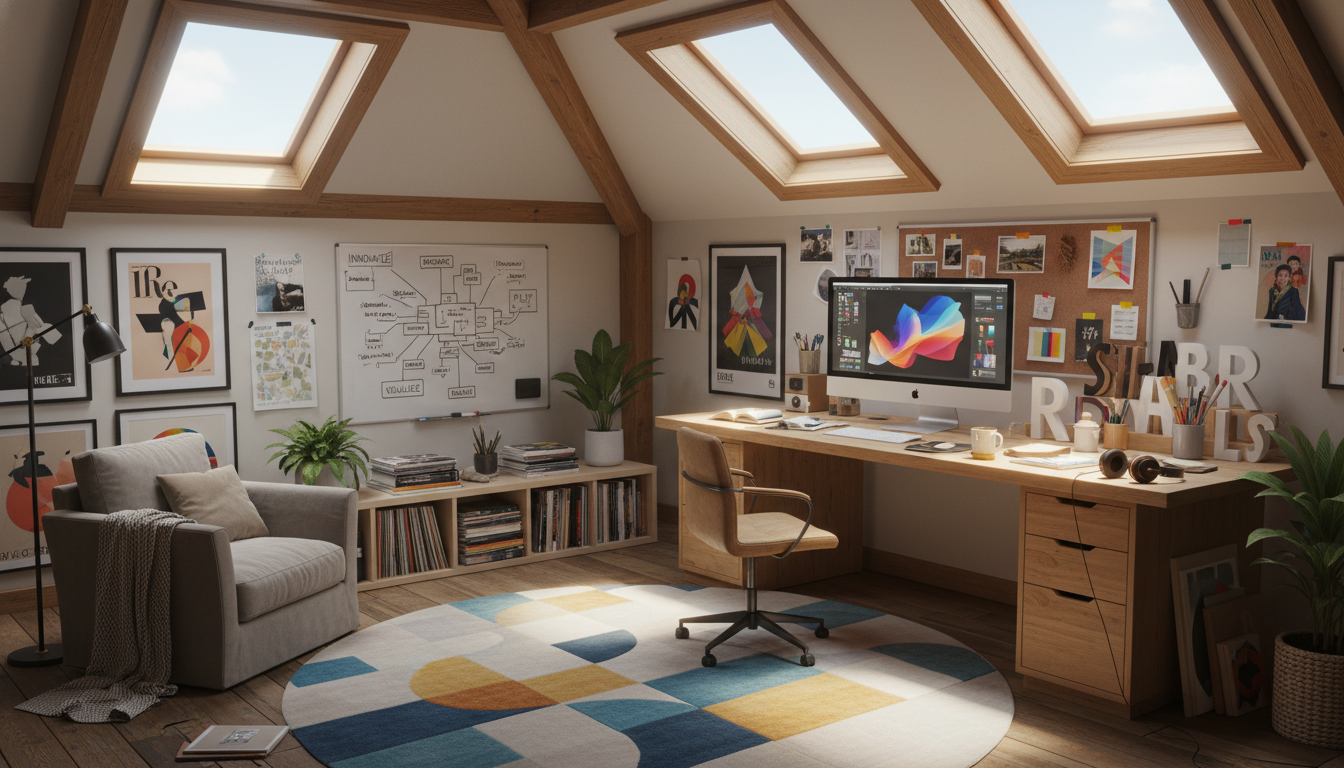
When people think about clutter, they imagine stuffed drawers, disorganized counters, or “that one room” nobody dares to step into. And sure, having too much clutter can sap your energy, make it harder to focus, and even add to your stress. But here’s what often gets missed: a little clutter might encourage creativity, help solve problems, and keep your mind flexible.
This means your house doesn’t have to resemble a sleek minimalist catalog to boost your mental health. The things lying around, like books, loose papers, half-finished projects, or items full of memories; they don’t distract you. They can inspire you.
This guide helps you understand that not all clutter is bad, how to tell the difference between useful clutter and harmful clutter, and ways to set up your space to improve creativity and clear thinking.
How Clutter Impacts Your Brain More Than You Think
Studies show clutter has an effect on your brain’s ability to process information, control emotions, and stay focused. When there’s too much visual mess, it increases mental strain, making it tougher to focus or finish tasks.
However, research also suggests that a bit of disorder around you can spark creativity and free up your mind. It can help you think outside the box and come up with new ideas instead of sticking to regular habits. The goal isn’t to have a house that’s perfectly neat or chaotic. It’s figuring out the balance that works best for how your brain operates.
The Creative Side: How “Productive Clutter” Boosts Your Thinking

A lot of people in the U.S. who are creative minds, business owners, remote employees, students, or overwhelmed parents feel pressure when their home isn’t spotless. But in reality, a little bit of clutter can benefit you:
1. Creativity and new ideas
A messy environment encourages “divergent thinking.” This kind of thinking helps spot connections and come up with fresh ideas. That’s why famous inventors and artists often had messy workspaces.
2. Flexible thinking
Messiness can push your brain to think in different ways instead of sticking to the same old patterns. A bit of chaos can help trigger creative ways to solve problems.
3. Feeling comfortable & connected
Studies find that a home full of things that matter to you can offer comfort and a sense of stability. It can feel safe and calming when you’re stressed. Items that reflect who you are, what you’ve achieved or people you care about can lift your mood and build inner strength.
When mess works:
- Your desk holds papers from tasks you’re doing.
- Your shelves show off things that inspire or bring back memories.
- Your workspace feels personal and inviting, not overwhelming.
When Mess Turns Stressful: Unpacking the Psychology Behind It
Clutter isn’t all the same. Some stuff can make you feel alive, while other stuff wears you down.
Too much clutter can lead to:
- Higher levels of cortisol, the stress hormone
- Trouble focusing and staying attentive
- Getting less done overall
- Overthinking, feeling exhausted, and getting anxious
- Problems with sleep, relationships, and self-esteem
What counts most isn’t how neat your space looks. It’s about how being in it makes you feel.
Figure Out Your “Clutter Personality” to Boost Your Mental Wellness
Knowing why clutter builds up in your space can help you set up an environment that improves your life instead of making it harder.
| Clutter personality | Description | Strength | Challenge |
|---|---|---|---|
| 1. The Sentimentalist | You hold onto stuff because it reminds you of special moments. | Strong emotional ties, creative mind | Struggling to let go, feeling guilty |
| 2. The Perfectionist | You crave an organized home, but the need to do it freezes you. | Attention to detail high expectations | Feeling overwhelmed leads to avoidance |
| 3. The Procrastinator | You plan to tidy up but feel like the job is too much to handle. | Flexible nature | Trouble making decisions, piling clutter |
| 4. The Overwhelmed | You feel stuck because you can’t figure out where to begin. | Seeing the bigger picture | Shutting down |
Using “Good Clutter” While Tackling the Stressful Stuff
STEP 1: Set Up Zones (Creative, Practical, Relaxing)
Each area in your space has its own purpose, so the kind of mess you allow should match its use.
Creative Areas (Desk, Workshop, Craft Space)
These spaces can tolerate a little mess as long as it supports creativity and keeps ideas flowing. Items like journals or notebooks, supplies for current projects, and objects that inspire you don’t need to be perfectly put away. In creative areas, a bit of “organized mess” can actually be helpful and productive.
Functional Spaces (Kitchen, Bathroom Entryway)
Clutter can interfere with how smoothly this space functions, so it’s important to clear out what no longer serves a purpose. Get rid of expired or spoiled items, unnecessary duplicates, and things you’re keeping “just in case” but don’t actually use. Removing these distractions helps the space stay efficient, organized, and easier to maintain.
Relaxation Spaces (Bedroom, Living Room)
Keep these areas peaceful and free from too much stuff. This will help you avoid things like poor sleep or feeling drained.
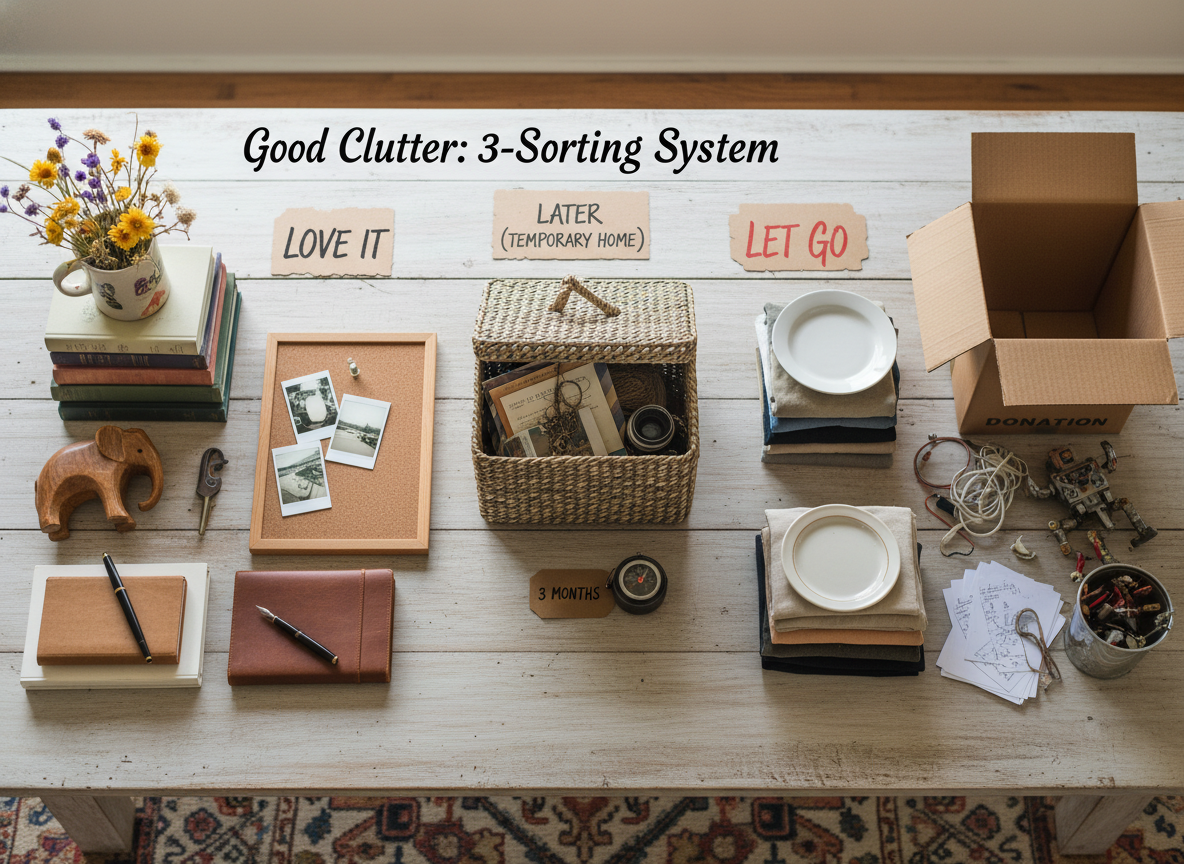
STEP 2: Try the 3-Part Sorting System
Skip the usual “Keep / Toss / Donate” method. Go with this approach that’s easier on your mental health:
- Items That Energize You → Hold Onto
- Items That Just Exist → Organize
- Let Go of Draining Items → Feel Relief
STEP 3: Avoid Feeling Drained By Using Simple, Repeatable Rules
Try these strategies that are easy on your mind:
- The 10-Minute Declutter: Set a timer to focus on one small space and clear it.
- One-In, One-Out Rule: It keeps things balanced without much effort.
- The Deal-With-It-Now Rule: Whenever you can, handle the item rather than leaving it for later.
- Clear Digital Clutter: Clean up your files, remove apps you never use, and stop unnecessary email subscriptions.
STEP 4: Take Care of Your Mental Health During Decluttering
Clearing out your space can bring up strong emotions, including guilt, sadness, nostalgia, or even grief. To stay calm and grounded, acknowledge these feelings instead of pushing them away, take breaks when needed to avoid overwhelm, and remind yourself with affirmations like, “I’m making room for who I am now.” If decluttering feels closely tied to past trauma or mental health challenges, seeking support from a trusted friend or a therapist can be a helpful and compassionate step.
Decluttering isn’t about discipline or perfection, it’s about being kind to yourself. This process helps you identify what truly brings joy or fuels creativity, while gently letting go of items that drain your energy or no longer support the life you’re living today.
How Managing Clutter Helps Your Mental Health
When you find that balance between inspiring clutter and purposeful organization, it can benefit:
- Reduced stress: An organized space calms your nervous system.
- Increased focus: Your mind works better when you have fewer distractions.
- Enhanced sleep: A clean bedroom helps your brain relax at night.
- More creativity: A little bit of thoughtful clutter sparks new ideas.
- Improved confidence: Creating a space that reflects you can feel uplifting.
Simple Tips: Decide What Stays or Goes
| Keep it if it | Let it go if it |
|---|---|
| Sparks your creativity | Brings guilt, stress, or shame |
| Helps you think or stay focused | Hasn’t been used in over a year |
| Reflects who you are today | Ties you to an old version of yourself |
| Provides comfort or inspires you | Makes it harder to move, rest, or access things |
Smart Ideas for Small U.S. Homes & Apartments
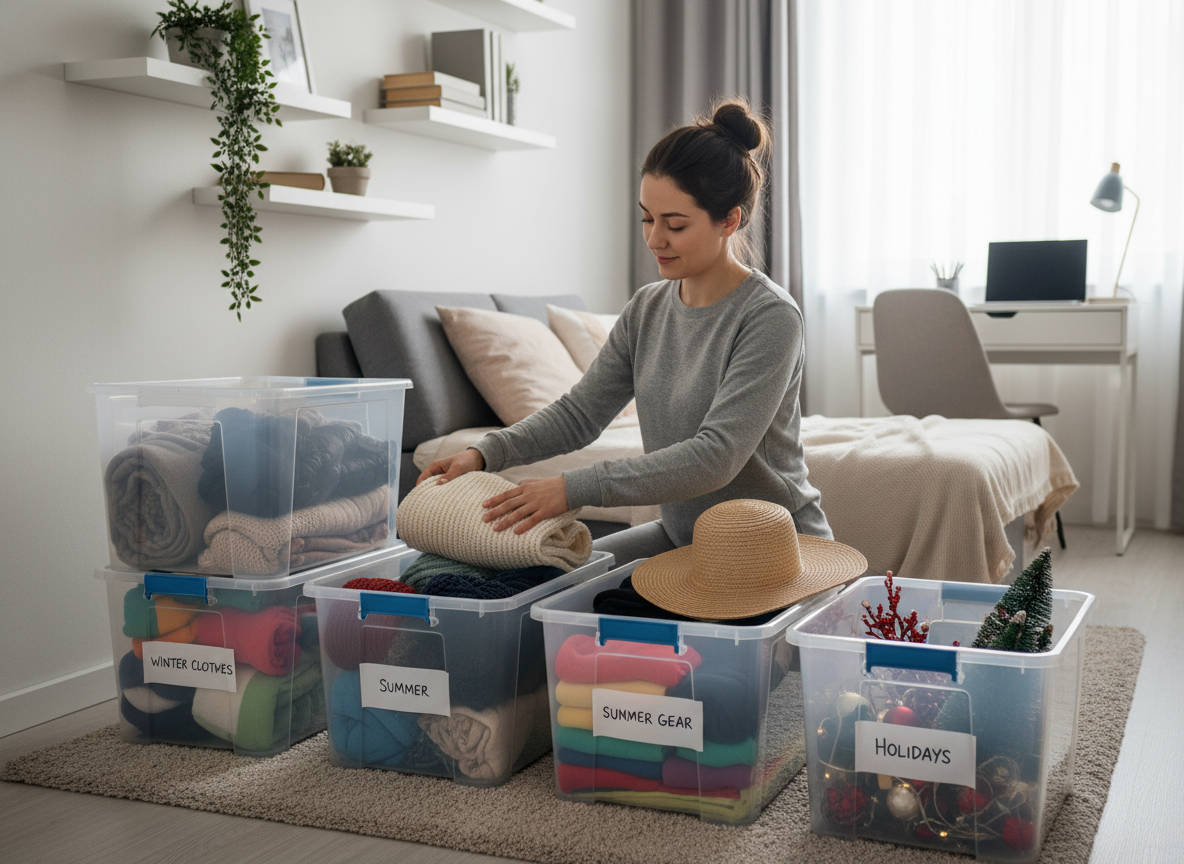
These ideas are great for renters, families starting out, or city life:
- Use wall shelves and over-the-door racks to save space
- Get rolling carts that can move around for more storage options
- Pick furniture that doubles as storage spots
- Keep seasonal stuff in sealable bins to stay organized
- Set up spots by the door for keys, phones, or chargers
Final Thoughts: Clutter Doesn’t Have to Be the Problem
Clutter turns into an issue when it takes over your mind, feelings, or space. The right balance of meaningful and inspiring clutter can: inspire new ideas, help you think, add energy to your space, and reflect your past.
The aim isn’t to be flawless. It’s about being purposeful, shaping a home that nurtures your mind, daily life, and imagination. Does a bit of clutter let your thoughts explore, create, or invent something fresh? Maybe it isn’t clutter after all.