


If your home feels busy even when it’s technically “clean,” you aren’t alone. Many of us crave calm, organized spaces, but real life such as work, family, hobbies, deliveries, laundry has other plans. That’s exactly why minimalist home design has become less about stark, empty rooms and more about living better with fewer distractions.
Minimalism today isn’t cold or extreme. It’s practical and flexible. Most importantly, it works in real homes like apartments, rentals, family houses, and everything in between. Here are 15 simple, realistic minimalist home design ideas that help create clean, modern spaces without sacrificing comfort, warmth, or personality.
What Modern Minimalist Home Design Really Means
Before jumping into ideas, let’s reset expectations. Minimalist home design isn’t about owning nothing. It’s about owning what supports your life and letting go of what doesn’t. The focus is on clarity, function, and visual breathing room. A well-designed minimalist home:
- Feels calm instead of chaotic
- Uses space intentionally
- Reduces visual and mental clutter
- Makes everyday routines easier
1. Start by Clearing Surfaces, Not Rooms
If you don’t know where to begin, start here. Clearing countertops, tables, and nightstands instantly changes how a room feels, even before anything gets donated. Flat surfaces collect clutter because they’re convenient. Plus, removing excess items creates immediate visual relief and sets the tone for the rest of your home.
2. Choose Fewer, Better Furniture Pieces
Minimalist spaces feel open because they aren’t crowded with furniture. Instead of filling every corner, focus on essential pieces that earn their place, a comfortable sofa, a dining table that fits your household, or storage that works hard behind the scenes. If a piece exists only because “that’s how rooms are supposed to look,” it’s worth reconsidering.
3. Let One Anchor Piece Lead Each Room
Every room benefits from a clear focal point. Once that anchor is in place, everything else should support it, not compete with it. In minimalist design, that might be a sofa in the living room, a bed with a simple headboard, or a dining table with clean lines.
4. Stick to a Calm, Cohesive Color Palette

You don’t have to live in an all-white box to embrace minimalism. Try something else such as soft neutrals, warm earth tones, muted greens, and gentle grays. Remember the key is consistency. When colors flow naturally from room to room, your home feels calmer, even if you own the same amount of stuff.
5. Use Texture to Avoid a “Bare” Look
One of the biggest fears people have about minimalist homes is that they’ll feel sterile or cold. That’s where texture makes all the difference. For example, linen curtains soften the light, woven rugs ground the space, wood accents add warmth, and soft throws or pillows bring in comfort without clutter. These subtle layers keep a minimalist home feeling inviting and lived-in.
6. Hide Storage Wherever You Can
Modern minimalist homes rely heavily on hidden storage because this allows you to live fully without seeing everything all the time. You should look for furniture that pulls double duty, such as beds with drawers, ottomans with storage, and closed cabinets instead of open shelves.
7. Keep Wall Decor Intentional (and Limited)

Instead of gallery walls packed with frames, you can choose one large piece of art, a pair of matching prints, or a simple wall-mounted shelf with just a few objects. Minimalist walls don’t have to be blank, but they should be thoughtful. Less art often makes a stronger statement.
8. Embrace Natural Light Whenever Possible
Natural light is one of the most underrated minimalist tools. Due to heavy curtains, crowded window sills, and bulky furniture near windows, your home turns dark and spaces feel smaller. Keeping windows clear and using light-filtering treatments instantly makes rooms feel more open and modern.
9. Simplify Open Floor Plans with Visual Zones
Open layouts can feel overwhelming without structure. Minimalist design uses subtle cues like rugs, lighting, or furniture placement to define spaces without walls. This keeps the layout functional while preserving openness.
10. Choose Decor with Meaning, Not Filler
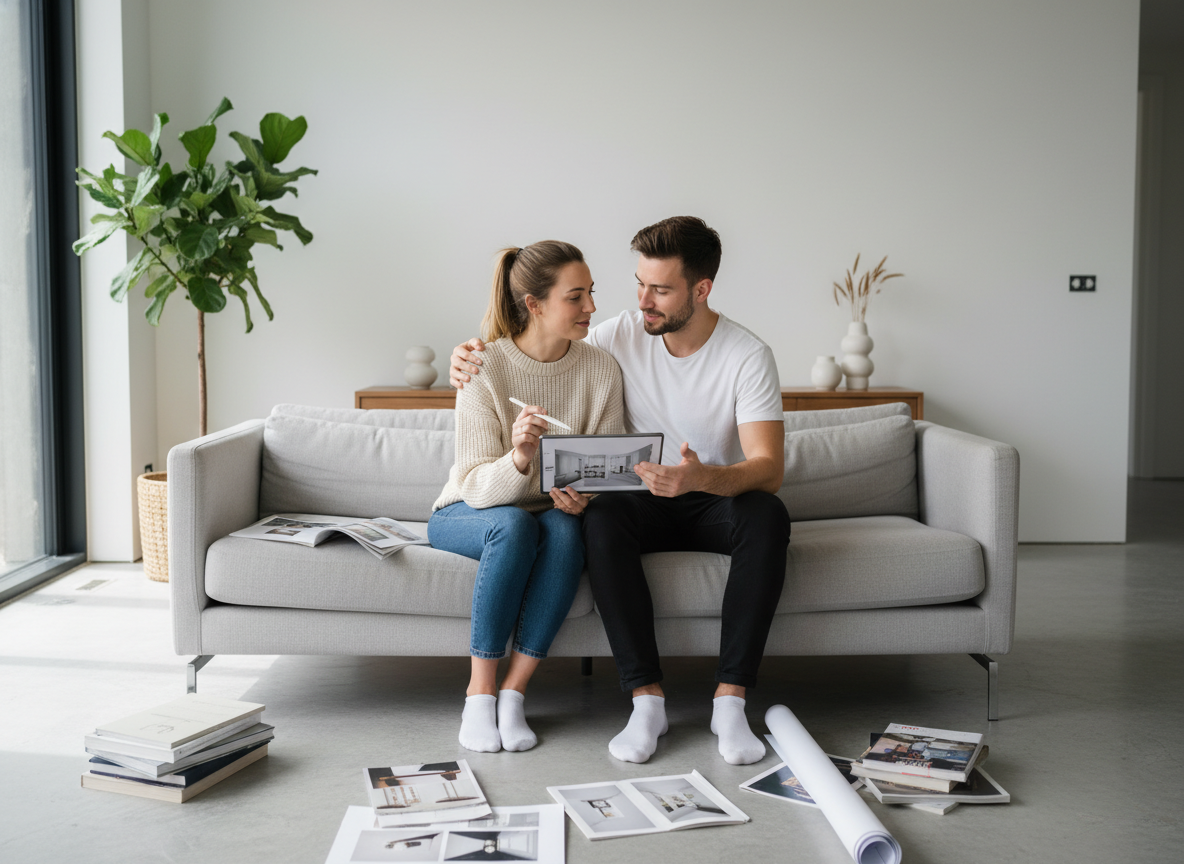
If something is purely there to “fill space,” it’s probably unnecessary. Instead, choose items that have meaning, function, or emotional value. A single object with a story often feels richer than five generic ones. Here’s the thing: minimalism doesn’t mean zero decor, it means no filler decor.
11. Reduce Visual Noise in the Kitchen
Although kitchens collect clutter fast, you don’t have to hide every appliance. Instead, you can prioritize clear countertops, simple backsplashes, neutral cabinetry, or thoughtful storage.
12. Bring Nature Inside (But Don’t Overdo It)
Plants are a minimalist favorite for a reason: a few well-placed plants add life, color, and softness without clutter. Stick to simple planters and repeat the same type of plant if possible to keep the look cohesive and calm.
13. Favor Clean Lines Over Decorative Shapes
Minimalist design thrives on simplicity. That means furniture and decor with clean lines, smooth edges, and uncomplicated shapes reflect light better and feel less visually busy. Overly ornate or complex pieces tend to disrupt the flow of a minimalist space.
14. Create “Empty Space” on Purpose

Honestly, empty space isn’t wasted space, it’s what makes minimalist homes feel breathable. Leaving a corner empty, a shelf partially open, or a wall undecorated are the useful methods to give the eye a place to rest. That pause is what makes the entire room feel more intentional.
15. Design for Maintenance, Not Perfection
The most successful minimalist homes are easy to maintain, which means they should support your routines, not create stress. That said, if a design choice makes daily life harder, it won’t last. You should choose systems, storage, and layouts that work with how you actually live.
Why Minimalist Home Design Works for Real Life
Minimalist homes aren’t about deprivation. They’re about clarity. When your environment is calmer:
- Cleaning is faster
- Decision fatigue drops
- Stress feels lighter
- Your home works for you
And that’s the real goal.
What to Consider Before Choosing a Minimalist Home Design Style
Minimalist design looks beautiful in photos, but before you commit to it in your own home, it’s worth slowing down and thinking through how it’ll actually support your daily life. Minimalism works best when it’s intentional, not when it’s forced.
First, consider how you truly live, not how you wish you lived. If your home is busy, shared with kids, pets, or multiple adults, minimalism should focus on smart systems and flexibility rather than perfection. A minimalist home isn’t one where nothing is out, it’s one where everything has a reason for being there.
Next, think about your tolerance for visual simplicity. Some people find calm in very sparse spaces, while others need warmth, texture, or a few personal items to feel comfortable. Minimalism isn’t one-size-fits-all. You can still embrace a minimalist style while keeping meaningful décor, artwork, or collections in a more curated way.
Storage is another major consideration. Minimalist homes rely heavily on hidden, functional storage, so ask yourself whether your home can support that. If storage is limited, minimalist design may require creative solutions like multifunctional furniture, built-ins, or intentional editing of belongings over time.
It’s also important to think about maintenance, not just aesthetics. Minimalist spaces tend to show clutter quickly, which means habits matter more than rules. If wiping down surfaces daily feels stressful, aim for “soft minimalism,” clean lines with forgiving textures and practical layouts.
Finally, remember that minimalism is a long-term mindset, not a one-time redesign. Your needs will change. Your home should be able to evolve with you. The most successful minimalist homes are the ones that leave room for life to happen without letting clutter take over.
Choosing minimalist home design isn’t about restriction. It’s about creating a space that feels lighter, calmer, and easier to live in every single day.
Final Thoughts
Minimalist home design is an ongoing process of editing, adjusting, and choosing intentionally. You don’t need to do everything at once. You can start small, clear one surface, or even simplify one room. These little changes add up faster than you think.
Related Articles
- Minimalism vs. Maximalism: How to Choose the Best Interior Design Style for Your Home
- 15 Scandinavian-Inspired Home Design Ideas to Create a Warm, Minimalist, and Functional Nordic-Style Living Space
- 15 Japandi Organization Ideas to Create Calm, Functional, and Beautifully Minimalist Living Spaces