

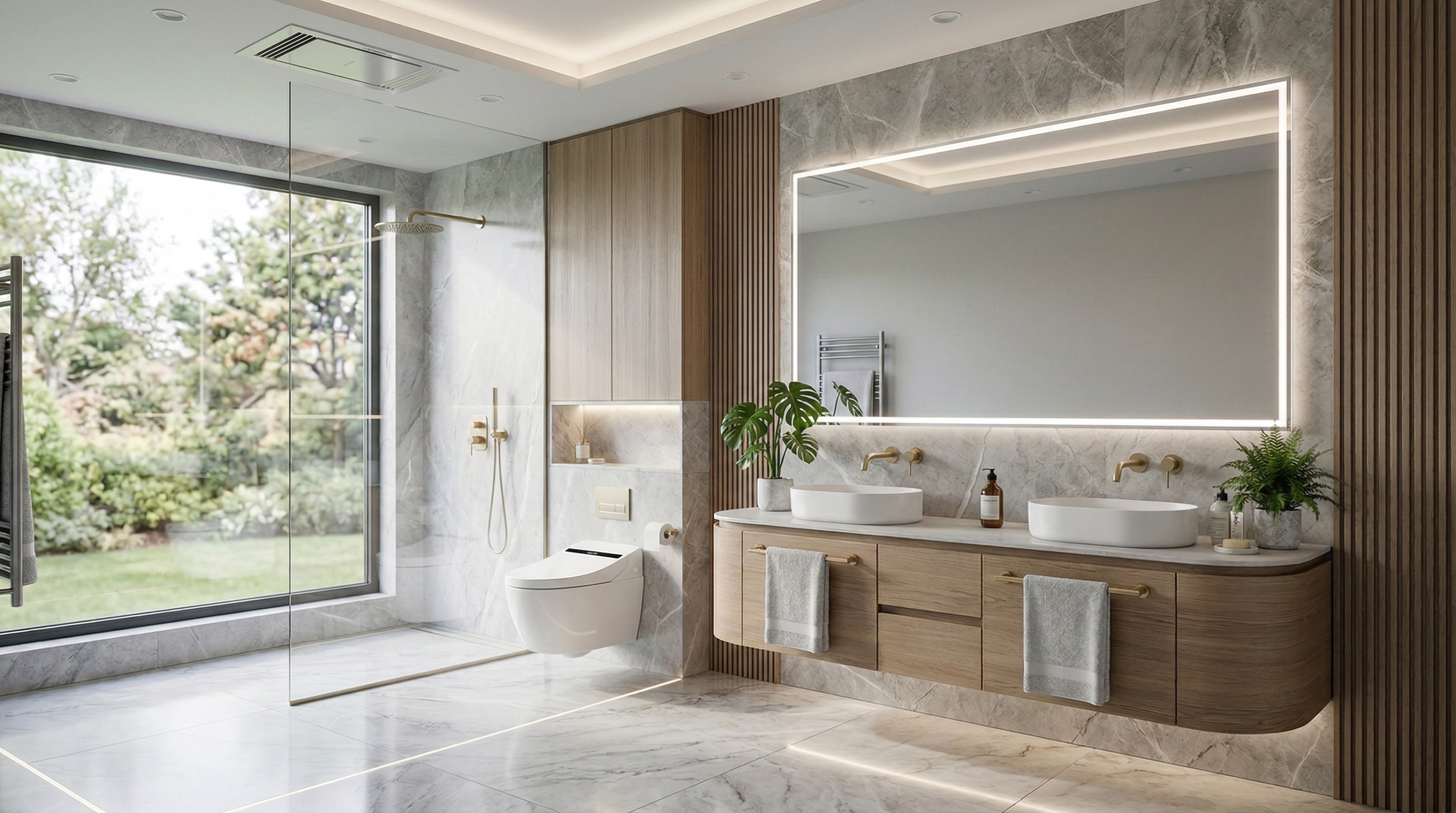
A well-designed bathroom can make daily routines feel smoother, faster, and far less stressful. Even a small bathroom can work beautifully when the layout is efficient, storage is thoughtful, and every feature earns its place. Whether you’re updating a primary bath, guest bath, or compact apartment bathroom, smart design choices can help you save space, improve storage, and create a room that feels cleaner, calmer, and easier to use.
1. Start With a Layout That Supports Daily Movement
Before thinking about finishes or décor, focus on how the bathroom functions. A smart bathroom layout should make it easy to move between the sink, toilet, shower, and storage without awkward squeezing or blocked access. In many homes, the biggest frustration isn’t the size of the room itself. It’s a layout that wastes space or creates clutter around the busiest zones.
Look closely at what happens during a normal morning or evening routine. If drawers can’t open fully, the vanity is too bulky, or the door swings into useful floor space, the room will always feel tighter than it should. In a small bathroom, even a few inches matter. Replacing a deep vanity with a shallower one, choosing a sliding or pocket door where possible, or switching to a more compact toilet can improve movement immediately.
A bathroom feels more spacious when the layout is simple and predictable. Clear sightlines, easy access to storage, and enough elbow room at the vanity all make the room more comfortable to use every day.
2. Choose a Vanity That Balances Storage and Scale
The vanity is often the hardest-working piece in the room, so it needs to do more than look nice. A smart vanity should fit the size of the bathroom while offering enough storage for daily essentials. In smaller bathrooms, oversized vanities are a common mistake because they dominate the room and leave too little open floor area.
Wall-mounted vanities are a strong option if you want the room to feel lighter and more open. Because they reveal more floor beneath them, they create a sense of visual space while still providing useful storage. For bathrooms that need maximum function, a compact vanity with deep drawers often works better than one with a cabinet and shelf. Drawers make it easier to reach items at the back without digging through clutter.
When choosing a vanity, consider what you actually store there. Hair tools, backup toiletries, cleaning products, and daily grooming items all take different types of space. The better the storage matches your habits, the easier the bathroom will be to maintain.
3. Use Vertical Storage to Free Up Limited Floor Space
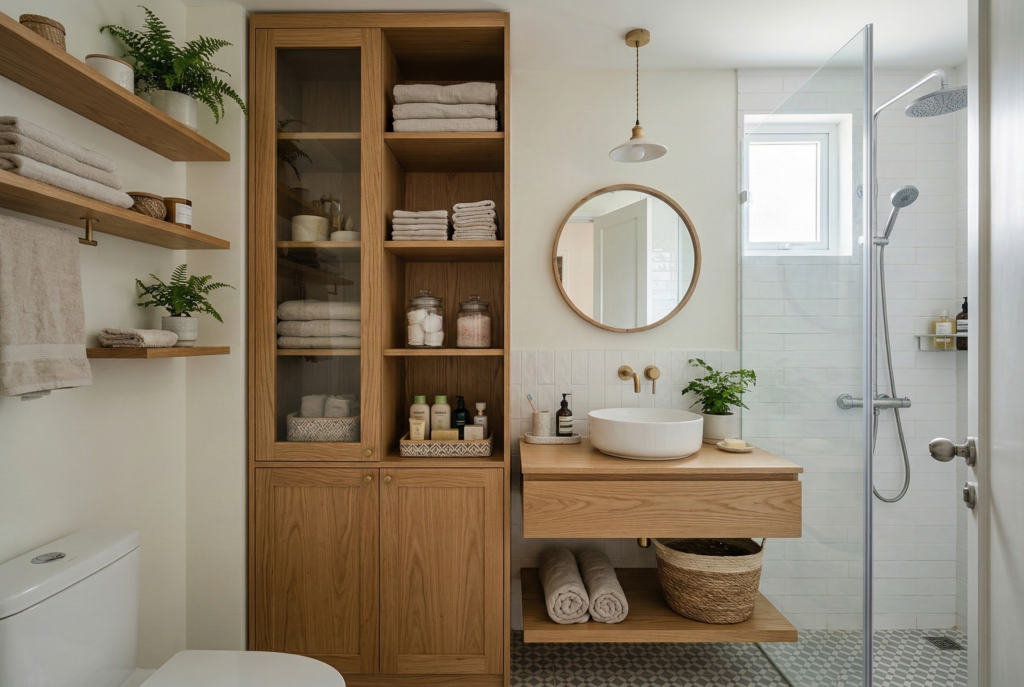
When square footage is tight, vertical storage can completely change how a bathroom functions. Walls often hold far more potential than people realize, especially in bathrooms that don’t have linen closets or extra cabinet space.
Open shelving above the toilet, a recessed medicine cabinet, or a tall narrow storage unit can add valuable storage without crowding the room. The key is to keep it controlled. Bathrooms feel calmer when vertical storage is useful but not overloaded. Use shelves for neatly folded towels, containers, or a few attractive everyday items, rather than turning them into catchalls.
Hooks are another simple but effective solution. A row of hooks behind the door or beside the shower can hold towels, robes, or baskets without taking up much room. In family bathrooms, assigning hooks or bins to different people can reduce the pileup that happens when everyone shares the same small space.
4. Add Smart Drawer and Cabinet Organization
Effective storage focuses on usability, helping everyday items stay organized and easy to reach. A bathroom can technically have enough storage and still feel messy if the inside of the vanity is chaotic. Smart organization helps you fit more into the same footprint while keeping daily items accessible.
Drawer dividers are especially helpful for cosmetics, toothbrushes, grooming tools, and first aid items. Under-sink organizers can make awkward cabinet interiors more functional, especially around plumbing. Clear bins, stackable trays, and labeled containers can help separate categories so backup products don’t mix with daily-use essentials.
Try to store items based on frequency of use. Everyday products should be the easiest to reach. Extra stock, travel items, and infrequently used products can go higher up or farther back. This sounds simple, but it has a real effect on how the bathroom feels during rushed mornings.
5. Make the Most of Shower and Tub Storage
The shower is one of the easiest places for clutter to build up. Bottles collect along edges, razors end up balanced wherever they fit, and the whole space starts to feel crowded even when the room itself is clean. Better shower storage makes the bathroom feel more organized right away.
Built-in niches are one of the best long-term solutions because they hold products without taking up extra room. If a renovation isn’t in the plan, a well-chosen corner shelf, shower caddy, or tension pole organizer can still improve function. The goal is to keep products contained rather than lined up on every ledge.
It also helps to reduce what stays in the shower. Many households store far more products there than they actually use daily. Keeping only the essentials inside the shower can make the space feel more open and easier to clean.
6. Use Mirrors and Lighting to Expand the Room Visually
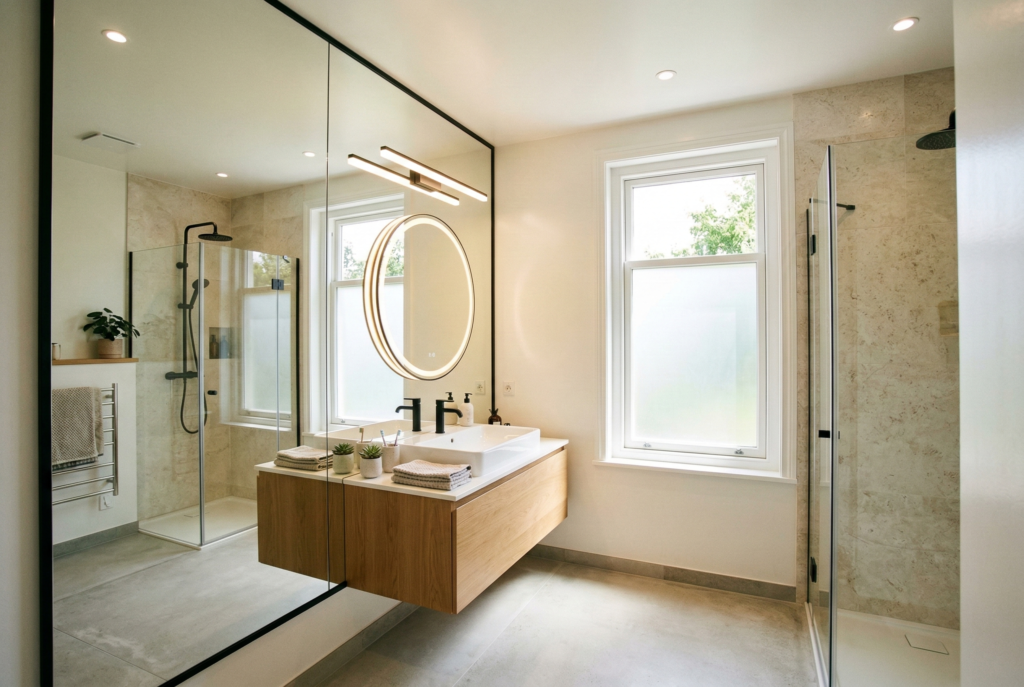
A smart bathroom design doesn’t only rely on storage. It also uses visual strategies to make the room feel more spacious. Mirrors and lighting are especially important because they influence how large, bright, and comfortable the bathroom feels.
A larger mirror can make a small bathroom seem wider by reflecting more light and more of the room itself. In many cases, a broad vanity mirror creates a cleaner and more expansive look than a small decorative mirror that leaves too much blank wall around it. Medicine cabinets with mirrored fronts can add even more function without sacrificing style.
Lighting should be layered when possible. Overhead lighting is useful, but vanity lighting helps with grooming tasks and creates a more balanced look. Bathrooms often feel smaller when they’re dim or poorly lit, so choosing better lighting can improve both function and atmosphere. Warm but clear lighting usually works best for keeping the space inviting while still practical.
7. Select Finishes That Help the Bathroom Feel Bigger
Material and color choices can influence how spacious a bathroom looks. Light, cohesive finishes tend to make a room feel more open because they reflect light and reduce visual interruptions. Bathrooms can include color, as long as the palette stays controlled enough to keep the space feeling calm and organized.
Large-format tile can make a bathroom feel less busy because there are fewer grout lines breaking up the surfaces. Glass shower doors often create a more open look than shower curtains or frosted enclosures because they allow the eye to travel further across the room. Floating vanities, open-leg stools, and slim-profile fixtures also help lighten the visual weight of the space.
If you want to add contrast, do it selectively. A darker vanity, matte black hardware, or patterned floor tile can give the room personality without making it feel crowded, especially when the rest of the palette stays balanced.
8. Include Hidden Storage Wherever It Makes Sense
Bathrooms function better when everyday clutter stays mostly out of sight. Hidden storage is especially valuable in smaller homes because visible items can quickly make the room feel messy. Recessed medicine cabinets, mirrored cabinets, and built-in niches are all good examples of storage that works hard without visually crowding the room.
A vanity with internal drawers, pull-out trays, or integrated outlets can make daily routines easier while keeping countertops clearer. Even small additions like a cabinet above the toilet or a shallow recessed shelf near the vanity can improve storage without taking away usable floor area.
The most successful hidden storage solutions are the ones that feel natural to use. If a cabinet is too awkward to reach or a storage bench doesn’t fit the room, it won’t solve the problem long term.
9. Keep Countertops as Clear as Possible
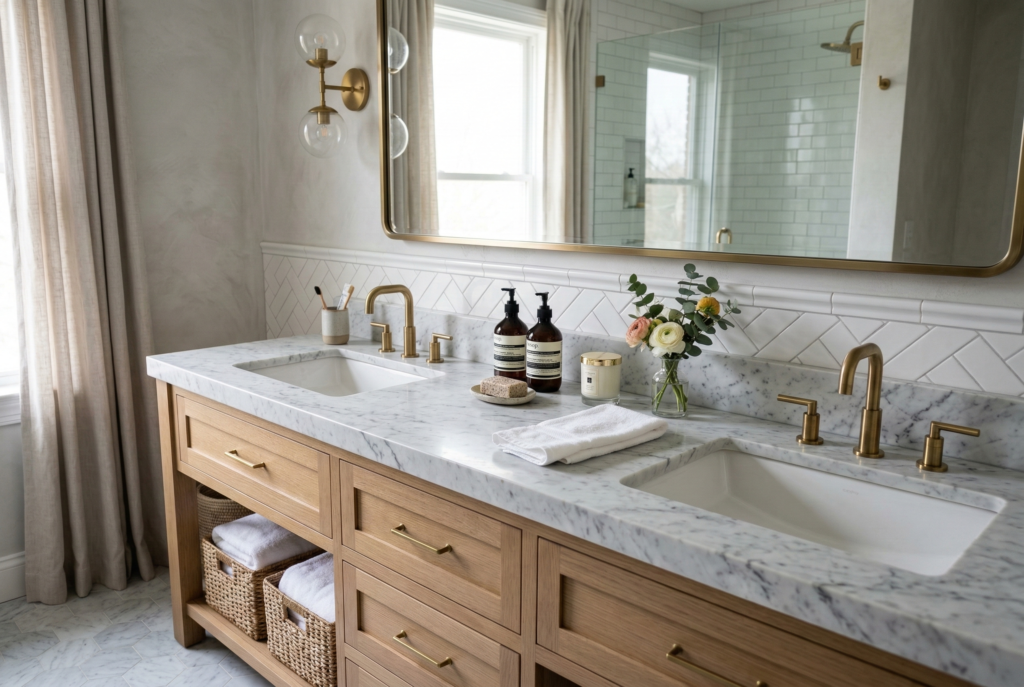
Clear counters make a bathroom look bigger and feel easier to clean. In most bathrooms, the counter becomes the first place where clutter shows up, from skincare and hair products to hand soap, jewelry, and toothbrushes. The solution usually isn’t a bigger counter. It’s better containment.
A tray can help group daily items neatly so they don’t spread across the surface. Wall-mounted toothbrush holders, soap dispensers, and magnetic organizers inside cabinet doors can also reduce visual mess. Try to keep only the items you use every day on display and store the rest nearby. This one shift can dramatically change how polished the room feels. Even a simple bathroom looks more intentional when the vanity surface isn’t overloaded.
10. Choose Multiuse Features That Add Function Without Bulk
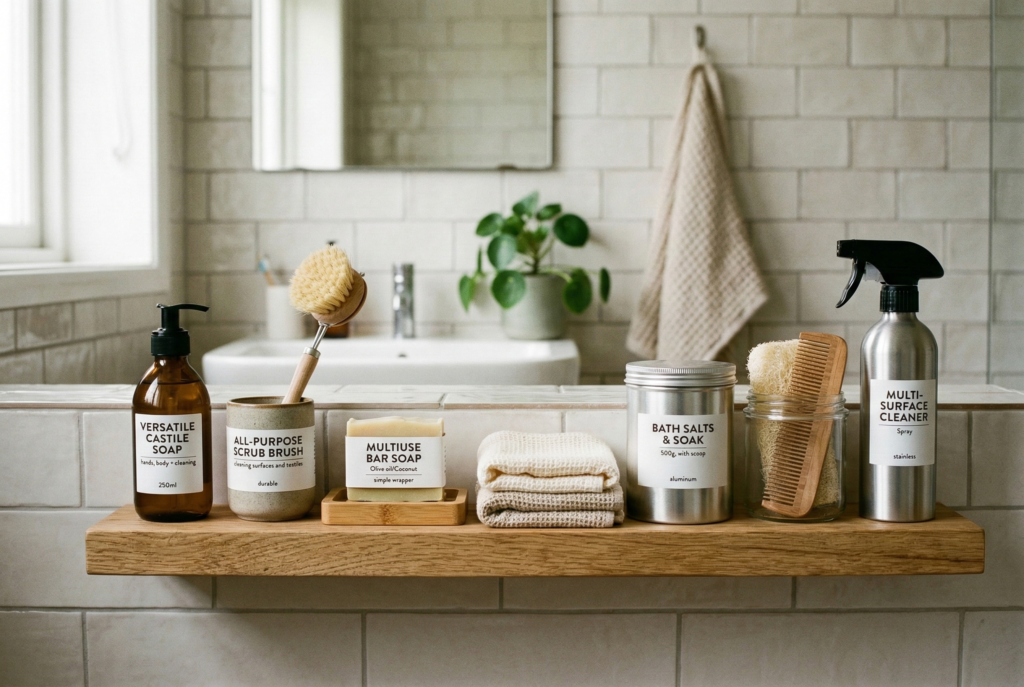
In a small bathroom, every feature should work as hard as possible. That’s where multiuse design becomes especially helpful. A mirrored medicine cabinet provides both reflection and storage. A vanity stool can hold extra towels. A shelf above the toilet can store essentials while also displaying a few decorative pieces that soften the room.
A bathroom works best when every feature has a clear purpose and earns the space it takes up, rather than filling the room with clever gadgets. The best multiuse pieces are simple, durable, and easy to maintain. In practical terms, that often leads to a bathroom that feels calmer and more efficient.
11. Build Storage Around the People Who Actually Use the Room
One of the smartest design choices is tailoring storage to real habits. A guest bath doesn’t need the same setup as a family bathroom, and a primary bath shared by two adults will have different needs than a child’s bathroom. When storage reflects who uses the room and how, it becomes much easier to keep the space organized.
Think about what needs to be within reach, what should stay hidden, and what tends to pile up. Towels, backup toilet paper, hair tools, skincare products, medications, and cleaning supplies all need homes, but they don’t all need prime placement. Designing around real routines is what turns a good-looking bathroom into one that truly functions well.
Conclusion
Smart bathroom design can make even a compact room feel more spacious, organized, and easier to use. By improving the layout, choosing a properly scaled vanity, adding vertical and hidden storage, and keeping surfaces clear, you can save space without sacrificing comfort or style. Better lighting, thoughtful finishes, and storage that matches daily routines all contribute to a bathroom that works harder and feels calmer. When each detail is chosen with function in mind, the room becomes simpler to maintain and far more pleasant to use every day.
Related Articles
- 10 Small Living Room Layout Ideas to Maximize Space and Enhance Your Home’s Functionality
- Smart Bedroom Design Ideas to Create a Stylish, Organized, and Relaxing Space at Home