

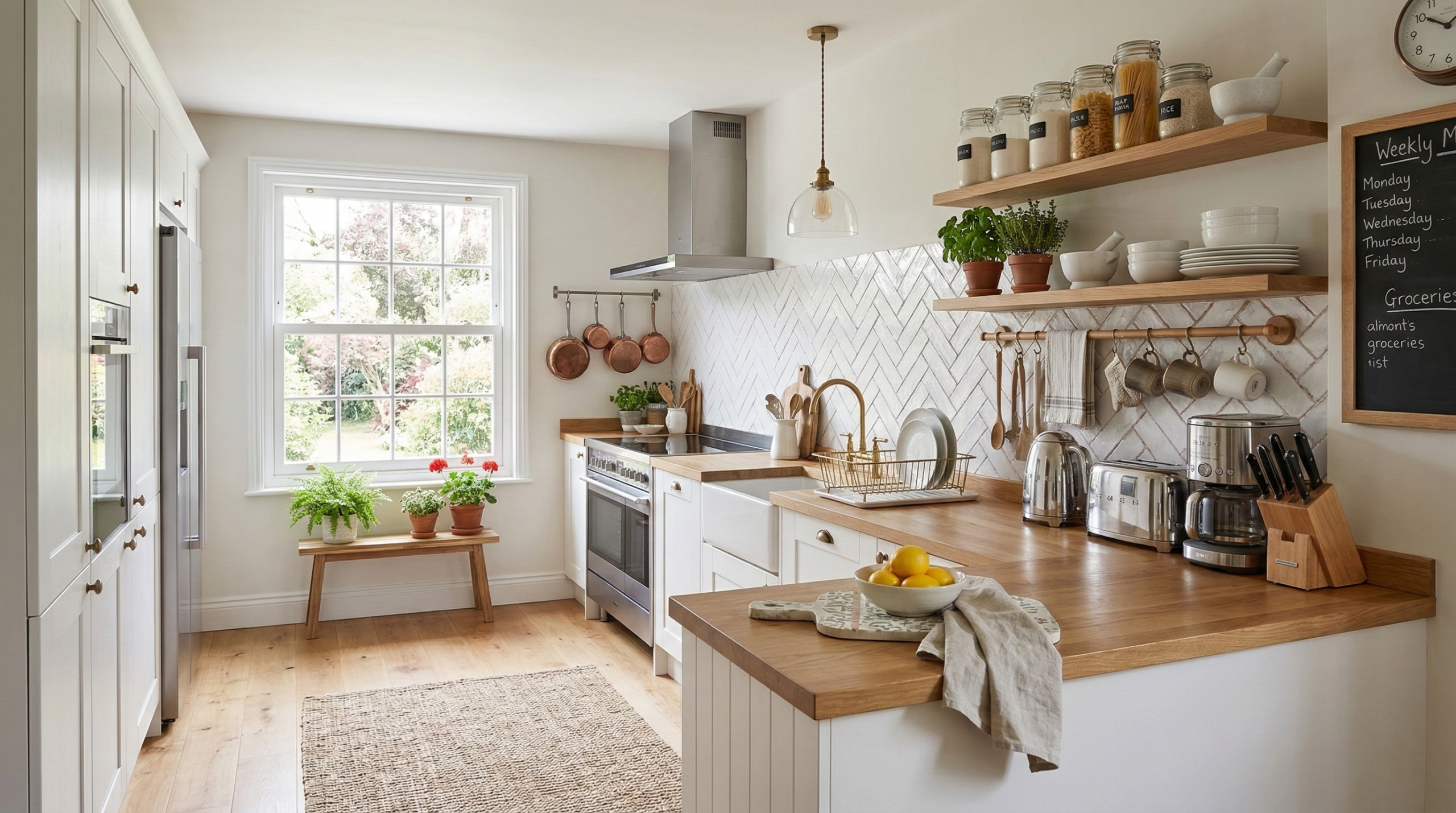
A kitchen doesn’t need a huge footprint to work well. In many homes, the most comfortable kitchens are the ones that simply function better. You walk in, everything is where you expect it to be, and cooking dinner doesn’t feel like a puzzle you have to solve every evening.
For busy households, renters in compact apartments, or families living in older homes with smaller kitchens, the goal isn’t chasing a picture-perfect renovation. It’s creating a space that supports everyday life. A thoughtful layout, smarter storage, and a few intentional design choices can completely change how a kitchen feels and functions.
Why Smart Kitchen Design Matters for Small Kitchens and Busy Households
Many people assume a better kitchen starts with more space such as more cabinets, a larger island, a wider floor plan… But square footage alone rarely fixes the real problems.
What usually matters more is how the space works. A kitchen becomes easier to live with when common tasks feel natural. You can prepare food without clearing half the counter first. Two people can move through the room without bumping into each other. The dishes, spices, and tools you use most are right where you expect them.
In other words, a functional kitchen supports the rhythm of daily life. It removes small frustrations that quietly add up over time. Once those friction points disappear, the whole room starts to feel calmer and more efficient.
How to Choose the Best Kitchen Layout to Maximize Space and Improve Daily Workflow
Before choosing cabinet colors, new lighting, or decorative details, it helps to look closely at the kitchen layout. Layout affects everything else. A beautiful design won’t solve much if the room still feels awkward to use.
A good starting point is noticing how people actually move through the kitchen. Maybe the dishwasher blocks the main walkway when it’s open. Maybe groceries always land on the only clear counter space. These small patterns reveal where the design isn’t supporting everyday routines.
Dividing the kitchen into simple zones often helps. One area naturally becomes the prep zone, another handles cooking, and another focuses on cleaning. When storage and tools are placed near the tasks they support, the room becomes more intuitive.
Different layouts can work well depending on the home. Galley kitchens, for example, can feel extremely efficient when both sides are organized thoughtfully. L-shaped kitchens create natural movement paths and often leave space for a small table or extra storage piece. One-wall kitchens work well in apartments and open-plan homes, especially when vertical storage is used effectively. The key is working with the space you already have instead of forcing it to behave like a much larger kitchen.
Use Vertical Space to Expand Kitchen Storage
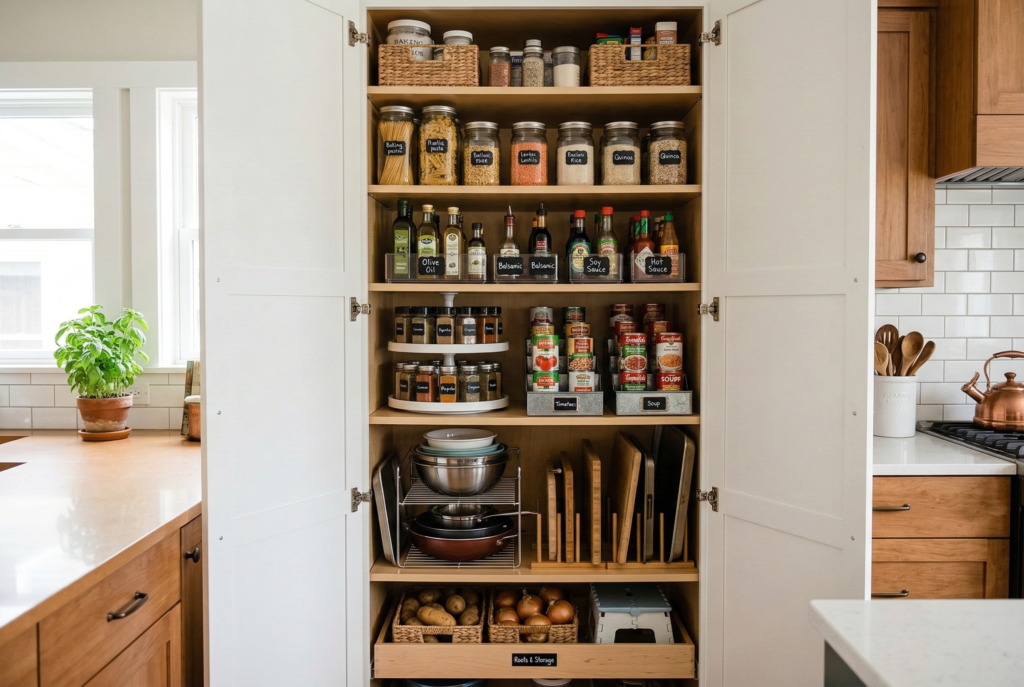
One of the most overlooked areas in small kitchens is vertical space. Many kitchens leave several inches or even feet of unused room above cabinets or along open walls. In a compact kitchen, these areas can become surprisingly valuable for storage and organization.
Extending cabinetry closer to the ceiling creates additional storage for items that aren’t used every day. It also helps the room look more finished and intentional. Even when full renovations aren’t possible, adding shelves, wall rails, or mounted organizers can create extra storage without taking up precious floor space.
Walls can quietly handle a surprising number of kitchen items. Cooking tools, cutting boards, mugs, and small shelves for spices can all move upward rather than crowding drawers and cabinets.
Another small but effective improvement involves the inside of cabinet doors. Slim racks or organizers can hold wraps, cleaning supplies, measuring spoons, or spice packets. These hidden storage spots make cabinets work harder without making the room feel cluttered.
Organize Kitchen Storage Around Real Daily Routines
A lot of kitchens struggle not because they lack storage, but because storage isn’t arranged around daily habits. Plates end up far from the dishwasher. Spices hide on the opposite side of the room from the stove. Lunch containers are tucked somewhere difficult to reach.
Reorganizing the kitchen around everyday tasks can make a huge difference. Dishes stored near the dishwasher make unloading faster. Cooking oils and spices placed close to the stove simplify meal preparation. Mixing bowls and knives kept near prep space eliminate constant back-and-forth movement.
When storage matches the way people actually cook and clean, the kitchen feels easier to use without requiring more cabinets. Drawers deserve special attention as well. Deep drawers often become cluttered catch-all spaces where tools disappear under layers of other items. Simple dividers or inserts allow everything to stay visible and easy to grab.
Pull-out storage can also transform lower cabinets. Sliding shelves or pantry drawers make it easier to reach items that usually get lost in the back of dark cabinets. This small upgrade is especially helpful for busy families and anyone tired of crouching down to search for one specific pan.
Keep Kitchen Countertops Clear to Make the Space Feel Larger
Counter space plays an important role in how large or small a kitchen feels. When surfaces are crowded with appliances, decorative objects, and random daily items, the room quickly starts to feel smaller.
One simple approach is protecting a clear prep zone. This becomes the dedicated area for chopping, mixing, and preparing meals. Keeping at least one section of the countertop open creates breathing room and makes cooking more comfortable.
That doesn’t mean counters should look empty or sterile. A few practical items can stay out without overwhelming the space. A coffee maker, utensil holder, or fruit bowl can add warmth and personality while still keeping the room functional.
When deciding what belongs on the counter, it helps to think about frequency of use. If an appliance or object isn’t used regularly, storing it elsewhere usually makes the kitchen easier to work in.
Choose Kitchen Colors and Finishes That Make the Space Feel Larger and Brighter
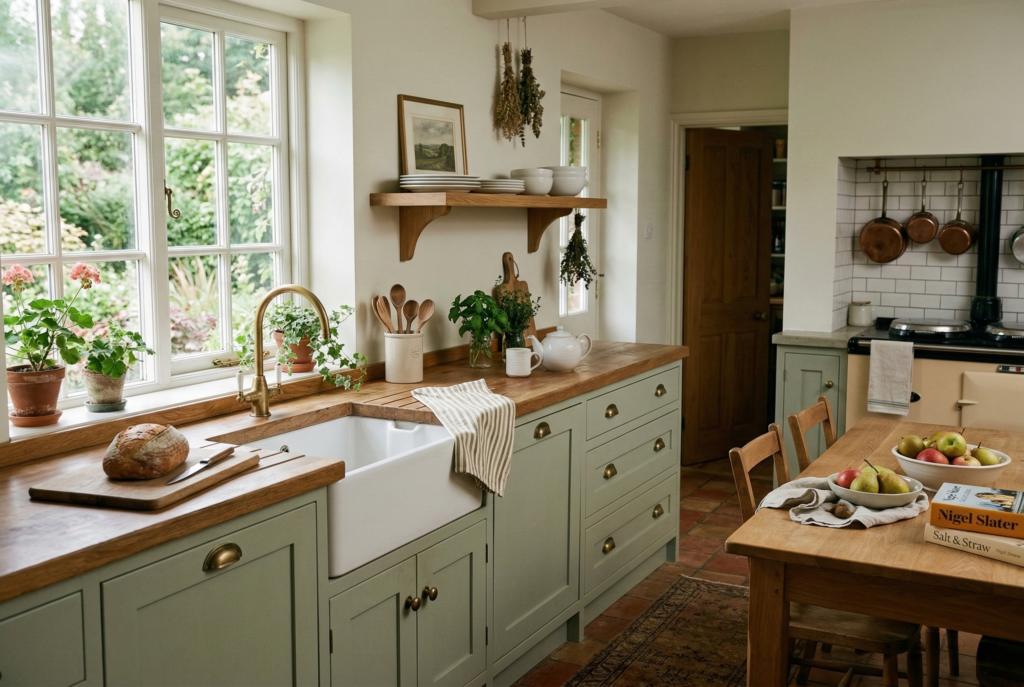
Color choices can dramatically change the mood and visual size of a kitchen. Many people still assume that small kitchens must be white to feel open. While light colors can help, modern kitchens often use a mix of warmth, contrast, and subtle personality.
Warm neutrals have become increasingly popular in recent years. Shades like soft white, mushroom, oat, and warm greige create brightness without feeling stark or cold. These tones also pair well with natural wood, stone surfaces, and simple hardware.
Green continues to be a favorite kitchen color because it feels calm and timeless. Muted sage, olive, or eucalyptus tones connect well with natural materials and add depth without overpowering the space.
Darker colors can also work surprisingly well in compact kitchens. Deep navy, charcoal, or plum cabinetry can create a cozy, sophisticated atmosphere when balanced with good lighting and lighter accents.
For homeowners who enjoy color but prefer flexibility, accents can provide personality without overwhelming the room. Bar stools, tile backsplashes, runners, or painted lower cabinets allow color to appear in smaller doses.
Add Flexible Furniture that Improves Functionality
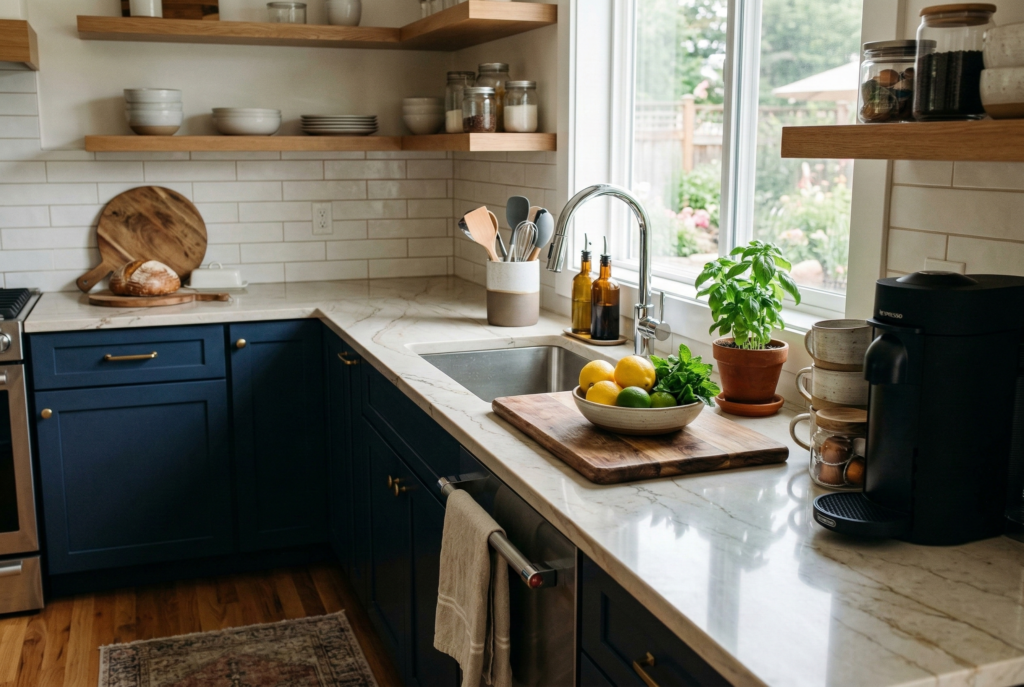
Not every kitchen improvement requires built-in cabinetry. Sometimes a movable piece of furniture can solve a storage or workspace problem more easily. A slim rolling cart, for example, can act as extra pantry storage, a coffee station, or a prep surface. Because it moves easily, it can adapt to changing needs throughout the day.
Small islands or work tables can also help if space allows. Even a compact butcher block cart can provide additional workspace and hidden storage underneath. In kitchens with dining areas, storage benches or banquettes can hold table linens, small appliances, or rarely used cookware. Furniture that performs multiple roles often makes the biggest difference in everyday kitchen organization.
Kitchen Lighting Ideas That Make Small Kitchens Feel Brighter
Lighting affects how a kitchen looks and how comfortable it feels to use. A poorly lit kitchen often feels smaller, no matter how well it’s designed.
Relying on a single overhead fixture rarely provides enough illumination for cooking and prep work. Layered lighting works better. Ambient lighting brightens the entire room, while task lighting focuses on work areas like countertops and the sink.
Under-cabinet lighting is especially effective in compact kitchens. It brightens work surfaces and adds warmth during evening hours, helping the kitchen feel more inviting.
Natural light matters just as much. Windows should remain as open and unobstructed as possible. When the sink sits beneath a window, keeping that area visually light can help the entire room feel brighter and more spacious.
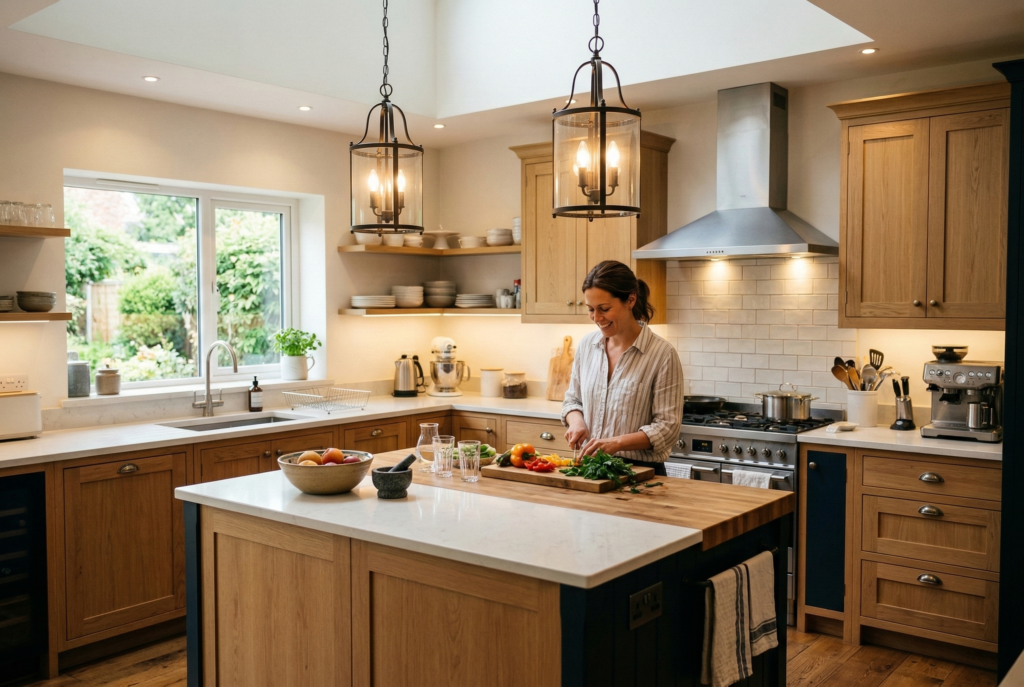
Design the Kitchen Around Real Daily Life
One of the most common kitchen design mistakes happens when people design for an ideal lifestyle instead of their actual routines. The imagined version might involve perfectly organized pantry jars and spotless countertops at all times.
Real life usually looks different. Groceries arrive in a hurry. Lunch gets packed during busy mornings. Kids grab snacks between activities. Dishes pile up after long days.
A kitchen becomes more functional when the design reflects these real patterns. A small tray for keys near the counter, a snack drawer within reach for children, or a dedicated coffee station can simplify everyday habits. Instead of striving for perfection, a smart kitchen design focuses on making daily tasks smoother.
Final Thoughts
Smart kitchen design ideas don’t require massive renovations or expensive upgrades. Often the biggest improvements come from small adjustments that help the space function better.
A thoughtful layout, smarter storage, and clearer surfaces can transform how a kitchen feels day after day. Vertical storage, flexible furniture, and balanced lighting add even more support. When a kitchen works with your routines instead of against them, the room starts to feel calmer and easier to live in. And for most households, that matters far more than having the largest kitchen on the block.
Related Articles
- Smart Bedroom Design Ideas to Create a Stylish, Organized, and Relaxing Space at Home
- 10 Small Living Room Layout Ideas to Maximize Space and Enhance Your Home’s Functionality
- 11 Smart Bathroom Design Ideas to Save Space Improve Storage
- How to Choose the Right Interior Design Style: Practical Tips to Transform Your Space