


A cluttered home often starts long before drawers overflow or countertops disappear. It usually begins with small, frequent purchases that seem harmless at the moment but slowly create more to store, sort, clean, and manage. Learning how to stop overbuying can make home organization much easier because it reduces the flow of new clutter before it enters the house. With a few practical habits and more awareness around shopping triggers, you can create a home that feels calmer, more functional, and easier to keep in order.
Understand Why Overbuying Creates So Much Household Clutter
Most clutter isn’t caused by a lack of storage alone. It’s often the result of too many items entering the home without a clear purpose, place, or long-term value. Duplicate kitchen tools, extra beauty products, clearance décor, impulse storage bins, and “just in case” purchases can all build up faster than people expect.
Overbuying creates more than a visual mess. It also adds mental load. The more you own, the more you have to organize, clean, maintain, and remember. Closets feel cramped, cabinets become less practical, and surfaces begin to fill up with everyday items. Even tidying takes longer because there’s simply more to move around.
Once you understand that clutter is often a purchasing problem as much as a storage problem, the solution becomes clearer. Better organization helps, but changing buying habits has a much bigger effect over time.
Notice the Most Common Reasons You Buy Too Much
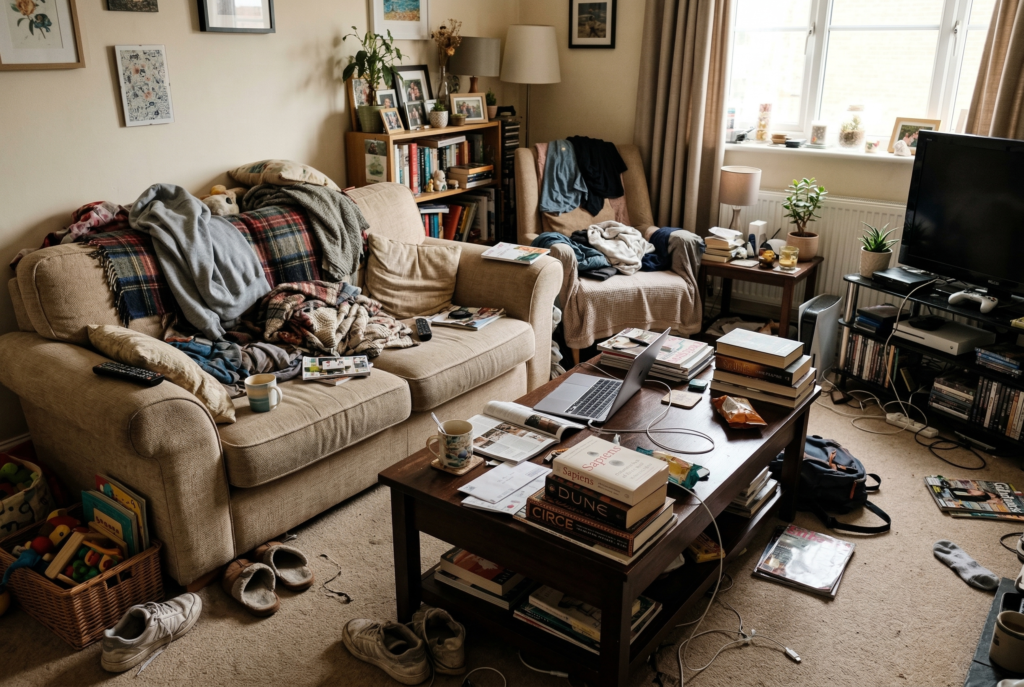
A lot of unnecessary shopping has very little to do with actual need. People often overbuy because they’re stressed, bored, influenced by marketing, or trying to solve a problem quickly. Sometimes shopping feels productive, especially when life feels chaotic. Buying organizers, home décor, or “helpful” items can create the illusion of progress, even when the real issue is too much stuff already in the house.
For some households, overbuying also comes from fear. Running out of essentials, missing a sale, or regretting not buying something can lead to stockpiling or impulse purchases. In other cases, shopping becomes entertainment, especially online where buying is fast and frictionless.
When you identify your own pattern, it becomes easier to interrupt it. You may realize you tend to shop late at night, after a stressful workday, or whenever you start comparing your home to polished images online. Awareness alone can reduce a lot of automatic spending.
Define What Counts as “Enough” in Each Category
One of the most useful ways to reduce clutter at home is to decide what a reasonable amount looks like before more items come in. Without limits, categories tend to expand endlessly. Mugs multiply, candles pile up, linens overflow, and backup toiletries take over cabinets.
Think room by room and category by category. How many sheet sets do you actually need for each bed? How many water bottles fit your routine? How many decorative throw pillows make sense for your living room before they become one more thing to move every day?
This kind of limit-setting makes decision-making easier because you’re no longer shopping in a vacuum. You already know when a category is full. That boundary helps you resist “good deals” that don’t actually improve your home.
Shop With a Specific Plan Instead of Browsing Aimlessly

Unplanned shopping is one of the fastest paths to overbuying. When you browse without a clear purpose, you’re much more likely to buy things because they’re on sale, attractive, or temporarily exciting rather than genuinely useful.
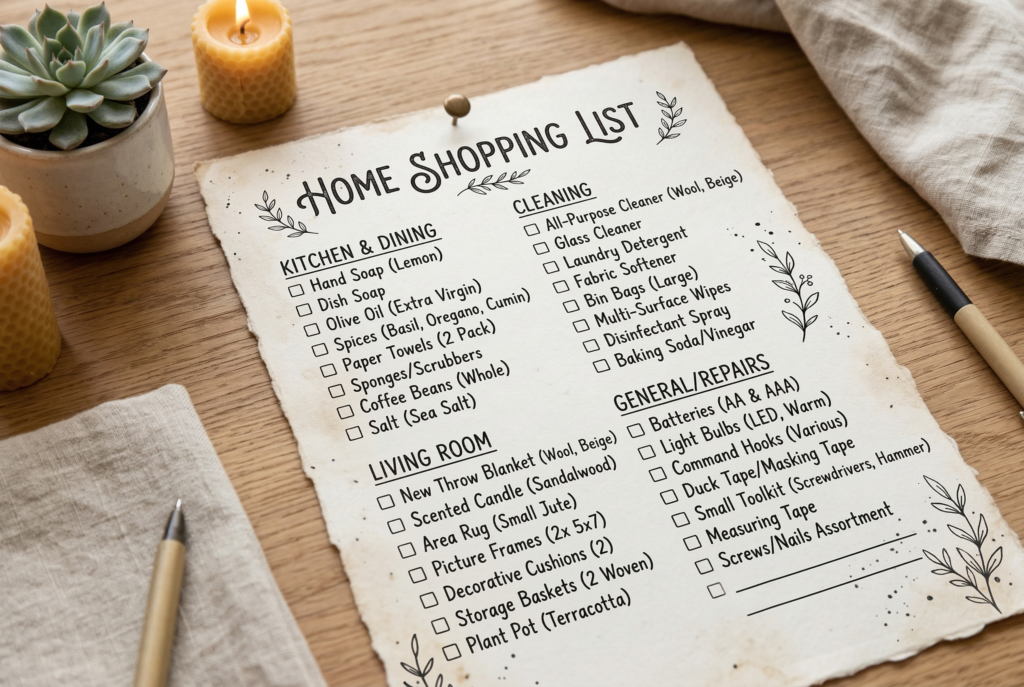
A more effective approach is to shop from a written list tied to specific needs in your home. If you need new bath towels, define the size, color, quantity, and budget before you start looking. If you need storage for a certain closet, measure the space first and decide exactly what the organizer needs to hold.
This reduces emotional purchasing and makes it easier to recognize when something doesn’t fit your actual goal. It also helps prevent the common problem of buying a “solution” before fully understanding the problem.
Slow Down Every Purchase With a Waiting Rule
A waiting rule is one of the simplest ways to stop impulse buying. Instead of purchasing nonessential items immediately, give yourself a mandatory pause. That might be 24 hours for smaller purchases and several days for more expensive ones.
This delay creates enough space to ask better questions. Do you still want the item once the initial excitement wears off? Do you already own something similar? Do you know exactly where it will go? Will it make daily life easier, or will it just add more to manage? Many items lose their appeal when you wait. That doesn’t mean you can’t buy anything enjoyable. It just means the purchase has time to prove itself before it enters your home.
Stop Buying Organizers Before You Declutter
A very common mistake in home organization is buying containers, bins, baskets, and drawer inserts before reducing the amount of stuff. This often creates a second wave of clutter, because now the home contains both the excess items and the products meant to hold them.
The more effective order is simple. First, remove what you no longer use or need. Then evaluate what remains. Only after that should you decide whether you actually need organizing products.
In many cases, decluttering creates enough space that extra organizers aren’t necessary at all. When storage products are needed, they work much better because they’re being chosen to fit the remaining items, not to force clutter into prettier packaging.
Use a One In, One Out Rule for High Clutter Categories
Some categories tend to grow quickly in almost every home. Clothing, shoes, toys, mugs, decorative accessories, beauty products, and pantry items are common examples. A one in, one out rule can help control volume without requiring constant large-scale decluttering sessions.
When a new item comes in, one similar item leaves. If you buy a new sweater, donate or sell one you no longer wear. If a new coffee mug comes home, an old one goes. This rule keeps categories from expanding quietly over time and encourages more thoughtful shopping decisions. It also changes the emotional equation of buying. You’re no longer only thinking about the new item. You’re also considering whether it’s worth making room for.
Make Inventory Visible So You Don’t Buy Duplicates
A lot of overbuying happens because people don’t know what they already have. This is especially common in pantries, bathrooms, cleaning supply closets, craft areas, and children’s storage zones. When inventory is hidden or scattered, duplicates feel justified because the home gives the impression of shortage.
Clear, visible organization makes a difference. Group like items together. Store backups in one place instead of across multiple cabinets. Use bins or simple labels for categories that tend to spread. Keep pantry staples in view so you don’t buy more pasta, snacks, or canned goods just because you forgot what was there. Visibility reduces unnecessary spending and makes the home easier to maintain because you’re working with what you already own.
Be Honest About Fantasy Purchases

Many cluttered homes contain items bought for an imagined version of life rather than real life. These are the purchases tied to fantasy routines, fantasy hobbies, or fantasy identities. Exercise equipment for workouts that never became a habit, elaborate kitchen gadgets for meals you don’t actually cook, craft supplies for projects you never start, or entertaining pieces for hosting you rarely do all fall into this category.
These purchases are understandable because they’re often tied to hopeful intentions. But they can create guilt and clutter at the same time. A more grounded question is whether the purchase supports your current lifestyle, not your idealized one. Buying for the life you have now usually leads to better decisions and a home that functions more smoothly.
Reduce Shopping Triggers in Your Daily Routine
If you want to stop overbuying, it helps to make impulsive shopping less convenient. Marketing is designed to create urgency and desire, so reducing exposure can make a real difference.
Unsubscribe from promotional emails that tempt you with constant discounts. Remove saved payment information from shopping sites so checkout takes more effort. Avoid recreational browsing on apps when you’re bored or stressed. Be careful with influencers or home accounts that make constant consumption look normal or necessary.
These changes may seem small, but they create friction in exactly the places where automatic buying often happens. The less often you’re pushed toward spending, the easier it becomes to buy only what truly fits your home and budget.
Set Home Organization Goals That Focus on Maintenance
Many people focus on getting organized once, but long-term results come from creating a home that’s easy to maintain. That’s much harder when too many items keep entering the space. Reducing overbuying supports maintenance because there’s less to sort, less to store, and less to clean around.
A more useful goal than “have a perfect home” is something like this: keep counters mostly clear, make closets easy to use, and avoid overflow in key storage areas. Those goals are realistic and measurable. They also connect directly to buying behavior. When new items are chosen carefully, organization stops feeling like a constant reset and starts feeling much more stable.

Practice a Reset Before Bringing Anything New Home
Before you buy something new for your home, pause and do a quick reset of that category. If you’re thinking about buying kitchen accessories, open the kitchen drawers first. If you want more candles, check the cabinet where candles already live. If you’re considering more storage baskets, review the closet where unused organizers are stacked.
This small habit reconnects the purchase to the physical reality of your home. It reminds you what you already own and whether the category is functioning well. Often, just seeing the current volume is enough to stop the purchase. This method works especially well for home décor and household goods, where clutter tends to build through small, appealing additions rather than one obvious problem.
Let Better Habits Replace the Reward of Shopping

For many people, shopping fills an emotional role. It can offer novelty, control, distraction, or a quick mood boost. If you remove it without replacing it, the habit often comes back. That’s why it helps to build alternative routines that still give you a sense of progress or pleasure.
You might refresh a room by rearranging furniture instead of buying new décor. You might declutter one drawer when you feel the urge to browse online. You might keep a running wishlist and enjoy curating it without purchasing immediately. Some people benefit from shifting their “treat” money toward experiences, meals out, books, or a savings goal rather than more stuff for the house. The goal is to keep the enjoyment while breaking the habit of turning to buying as the automatic response to every feeling or design impulse.
Conclusion
Stopping overbuying is one of the most effective ways to reduce clutter and keep your home more organized over time. When you understand your shopping triggers, set clear limits, slow down purchases, and organize what you already own more visibly, it becomes much easier to maintain a calmer and more functional space. A well-organized home doesn’t depend on endless storage products or constant decluttering sessions. It depends on being more intentional about what enters the house in the first place. With practical habits and a more grounded approach to shopping, you can create a home that feels lighter, easier to manage, and far less overwhelmed by unnecessary stuff.