

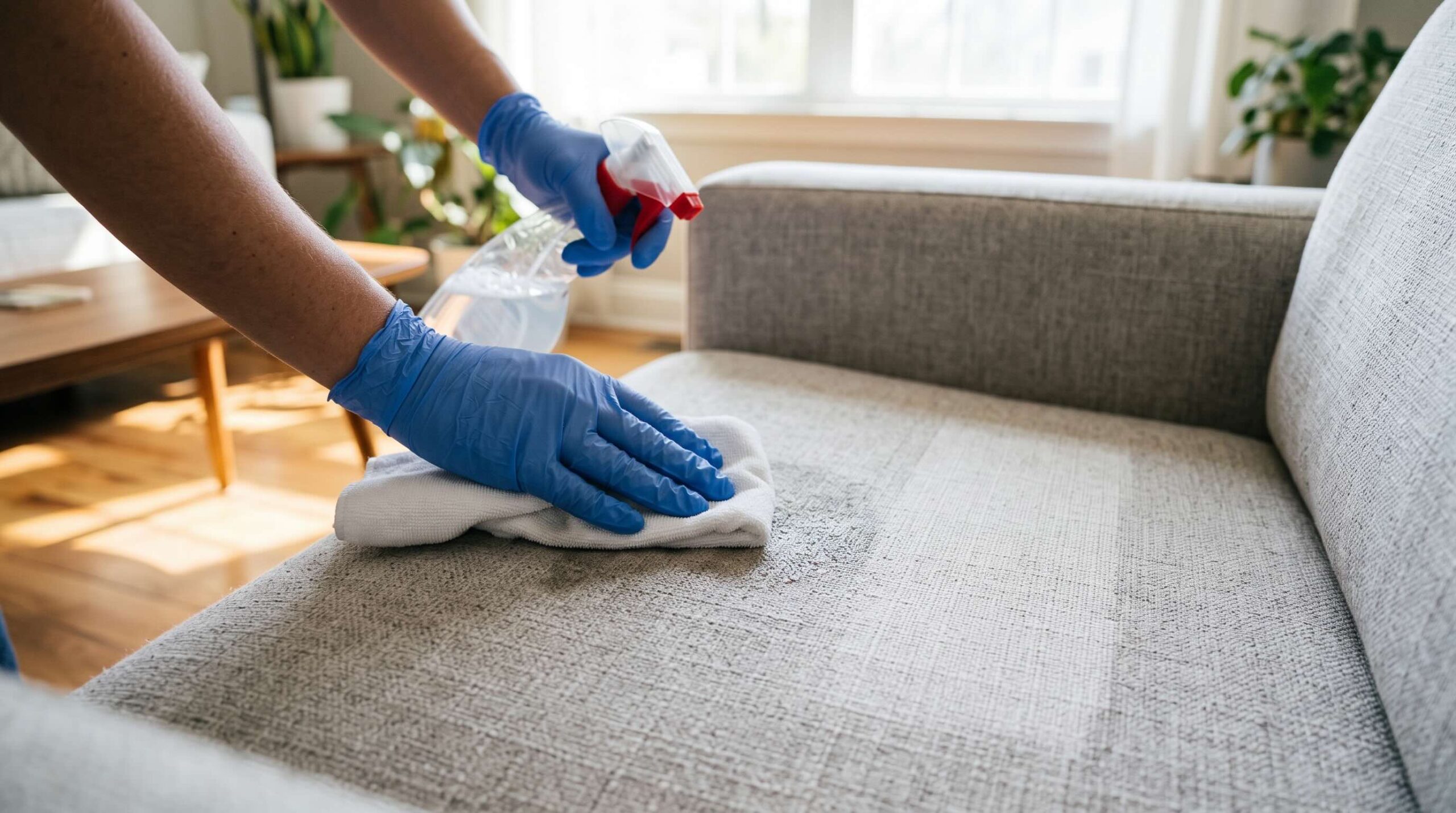
Upholstered furniture adds comfort, softness, and warmth to a home, but it also collects dust, body oils, pet hair, odors, and everyday spills more easily than many people realize. Gradually, even a beautiful sofa or accent chair can start to look dull or feel less fresh if it isn’t cleaned properly. The good news is that regular care and the right stain-removal approach can help upholstered furniture stay cleaner, last longer, and continue looking good in everyday life.
Start With the Fabric Care Tag Before You Clean Anything
Before using any cleaner, check the furniture’s care tag. This small label gives important guidance about how the fabric should be cleaned and can help you avoid damage. Many upholstered pieces use common cleaning codes that indicate whether water-based or solvent-based products are safer.
A water-safe fabric may tolerate mild soap and water, while other materials require solvent-based cleaners or professional treatment. Some pieces can handle only very limited moisture. If the tag is missing, it’s smarter to test any method on a hidden area first rather than assume the fabric will react well. This first step matters because the wrong product can leave water rings, discoloration, shrinkage, or texture changes that are much harder to fix than the original stain.
Remove Dust and Debris Before Treating Spots
A lot of people focus on visible stains first, but dry debris should be removed before any wet cleaning begins. Crumbs, dust, lint, and pet hair can turn into muddy residue if they’re rubbed into damp fabric. That makes the furniture harder to clean and can spread dirt further across the surface.
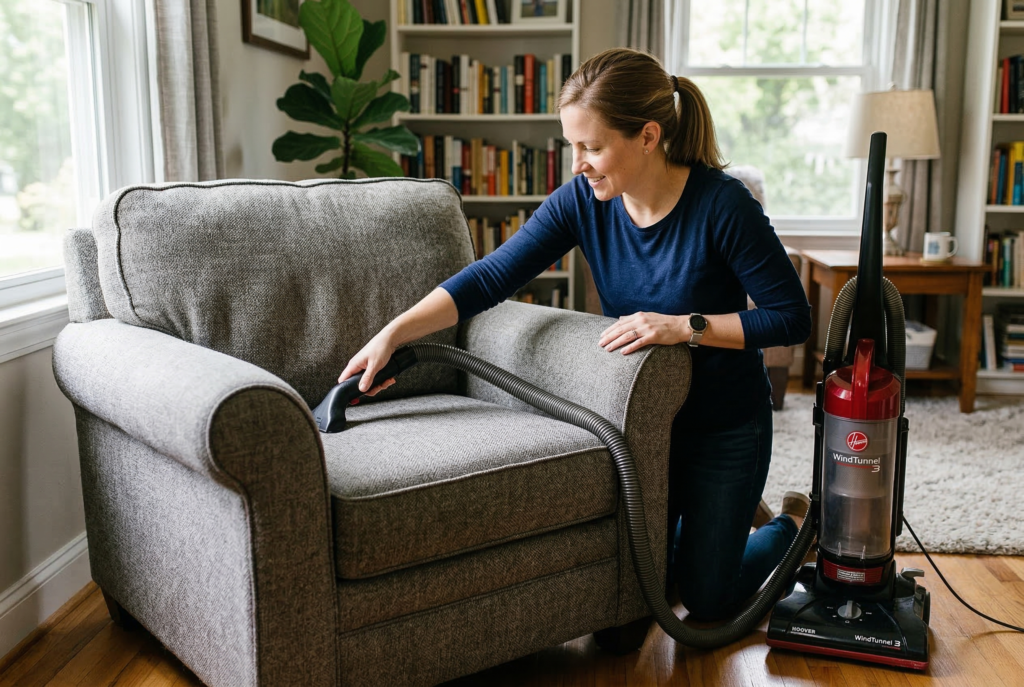
Use a vacuum with an upholstery attachment to clean the seat cushions, arms, back, sides, and crevices. If cushions are removable, vacuum both sides and the platform underneath them. Pay extra attention to seams, corners, and the area along the base where dust and hair tend to collect. A soft brush attachment can also help lift surface dust without being too rough on the fabric. Once the loose debris is gone, you’ll have a much clearer view of what actually needs stain treatment or deeper cleaning.
Treat Stains Quickly for Better Results
Fresh spills are almost always easier to remove than older set-in stains. The longer a stain sits, the more likely it is to bond with the fibers and become difficult to lift fully. That’s why speed matters, especially with coffee, wine, juice, greasy food, and pet accidents.
Blot the spill gently with a clean, dry cloth or paper towel. Don’t rub it. Rubbing usually pushes the liquid deeper into the upholstery and spreads the stain outward. Keep blotting until you’ve absorbed as much as possible. Once the excess moisture is removed, use the cleaning method that matches the fabric type. Working gently and patiently usually gets better results than applying too much product all at once.
Use Mild Cleaning Solutions for General Spot Cleaning
For many water-safe upholstery fabrics, a mild solution of warm water and a small amount of gentle dish soap can help with light spot cleaning. Dampen a clean white cloth with the solution rather than soaking the furniture directly. Then blot the stained area carefully, working from the outside inward so the stain doesn’t spread.
After that, use another cloth lightly dampened with plain water to remove soap residue. Then blot the area dry with a clean towel. The goal is to clean the fabric without oversaturating it. Too much moisture can create watermarks, encourage mildew, or leave the cushion interior damp for too long. White clothes are useful because they won’t transfer dye to the upholstery. They also make it easier to see whether the stain is lifting as you work.
Handle Grease and Oil Stains Differently
Grease stains need a different approach because water alone usually won’t break them down well. Food oils, lotion, makeup, and body oils can leave dark marks that seem to linger even after basic cleaning.
If the stain is fresh, blot first to remove any excess. Then a small amount of baking soda or cornstarch can sometimes help absorb oil when sprinkled lightly over the spot and left in place for a short time before vacuuming. After that, you can treat the area according to the fabric’s care instructions.
For more stubborn oil-based stains, a fabric-safe upholstery cleaner may work better than homemade solutions. As always, testing in an inconspicuous area first is important. Oil stains often improve gradually rather than disappearing immediately, so gentle repeated treatment is usually safer than aggressive scrubbing.
Be Careful With Deep Cleaning the Entire Piece
A full upholstery refresh can make furniture feel noticeably cleaner, especially if it has absorbed odors or looks generally dingy. Still, deep cleaning should be done carefully. Too much water or product can create more problems than it solves.
For water-safe fabrics, lightly cleaning larger sections with a damp cloth and mild cleaner may help even out the look of the fabric. Some upholstery-safe machines can also be useful, but only when the fabric and cushion construction can tolerate that level of moisture. If the piece is vintage, delicate, or made from a fabric that reacts unpredictably, professional cleaning may be the smarter choice. When cleaning a larger area, try to treat the full section rather than only one small patch. Spot-cleaning one area intensely can sometimes leave a visible ring or clean spot that stands out against the rest of the fabric.
Dry Upholstery Thoroughly to Prevent Odors and Mildew
Drying is just as important as cleaning. Upholstered furniture that stays damp too long can develop a musty smell, and trapped moisture inside cushions can lead to mildew. After any wet cleaning, blot the area thoroughly with dry towels and allow strong airflow around the furniture.
Open windows if weather allows, turn on fans, and avoid sitting on the furniture until it’s fully dry. If the cushions are removable, standing them upright can help speed drying. In humid climates or darker rooms, drying may take longer than expected, so patience matters. A sofa may look dry on the surface while still holding moisture deeper inside. Giving it enough time to dry completely helps protect both the fabric and the cushion fill.

Remove Odors Without Overloading the Fabric
Upholstered furniture can hold odors from pets, cooking, smoke, and everyday use. Even when there aren’t visible stains, the piece may not smell as fresh as it should. Regular vacuuming helps, but sometimes extra odor control is needed.
A light sprinkle of baking soda across dry upholstery can help absorb odors when left briefly and then vacuumed thoroughly. This can be especially helpful for sofas and chairs that feel stale but don’t need a full wet cleaning. Just make sure the powder is fully removed afterward so it doesn’t settle into seams or create dust.
If odors keep returning quickly, it may be a sign that the source is deeper than the surface. Pet accidents, moisture inside cushions, or long-term smoke exposure may require more thorough treatment or professional help.
Protect High-Use Areas From Future Wear
The best way to keep upholstered furniture looking better longer is to reduce buildup before it becomes a bigger problem. Armrests, headrests, favorite cushion spots, and corners where pets sleep often show wear first because they collect oils, dirt, and pressure more consistently.
Regular vacuuming helps, but rotating cushions also matters. If the seat cushions are reversible, flipping and rotating them can distribute wear more evenly. Washable throws can help protect favorite sitting areas without making the room feel overly formal. In family homes, performance fabric furniture or removable, washable covers can also make maintenance much easier. Small habits like these often do more for the long-term look of upholstery than occasional intensive cleaning sessions.
Know When a Stain Needs Professional Help
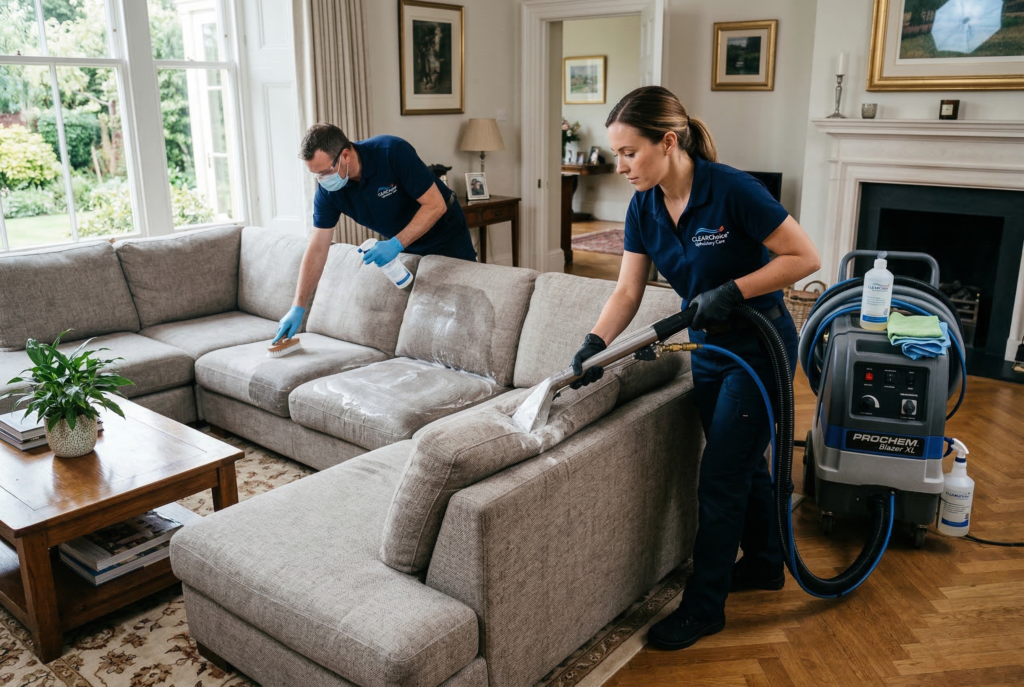
Some stains are better left to professionals, especially if the fabric is delicate, the stain is old, or previous cleaning attempts have already made the area worse. Ink, dye transfer, large pet stains, and unknown discoloration can be difficult to treat safely at home.
Professional upholstery cleaners also make sense for large sectionals, antique furniture, or valuable upholstered pieces where mistakes would be costly. A professional service may be the better route if the furniture has an overall gray cast, strong odor, or widespread staining that home spot cleaning can’t handle evenly. Home care works well for routine maintenance and many small stains, but knowing when to stop can prevent unnecessary damage.
Build a Simple Upholstery Cleaning Routine
Furniture stays fresher when care happens regularly instead of only after a visible mess appears. A realistic upholstery routine doesn’t need to be complicated. Vacuuming every week or two, addressing spills quickly, and doing a broader refresh every so often can make a major difference.
For many homes, a simple routine works well:
- Vacuum upholstered furniture regularly
- Blot spills immediately
- Rotate cushions when possible
- Treat small stains before they set
- Freshen fabric periodically if odors build up
This kind of steady maintenance keeps dirt from becoming deeply embedded and helps furniture hold its color and texture better over time.
Keep Cleaning Products Gentle and Targeted
It’s easy to assume stronger cleaners will work better, but upholstery often responds best to gentler products used carefully. Harsh cleaners can strip color, stiffen fibers, or leave behind residue that attracts more dirt later. A softer approach usually protects the fabric better and still gets good results.
When you do use a commercial upholstery cleaner, follow the label carefully and use only the amount needed. Adding more products doesn’t usually increase cleaning effectiveness. Instead, it often leaves more residue behind. When furniture feels sticky or stiff after cleaning, it’s usually a sign that it needs better rinsing or that less product should be used next time.

Conclusion
Cleaning upholstered furniture properly helps your home feel fresher, more comfortable, and easier to maintain over time. By checking the care tag first, vacuuming regularly, treating spills quickly, and using the right stain-removal method for the fabric, you can keep sofas and chairs looking better without causing damage. Gentle care, thorough drying, and consistent upkeep go a long way toward extending the life of upholstered pieces. When you clean with patience and pay attention to what the fabric needs, your furniture can stay inviting and attractive for years to come.