

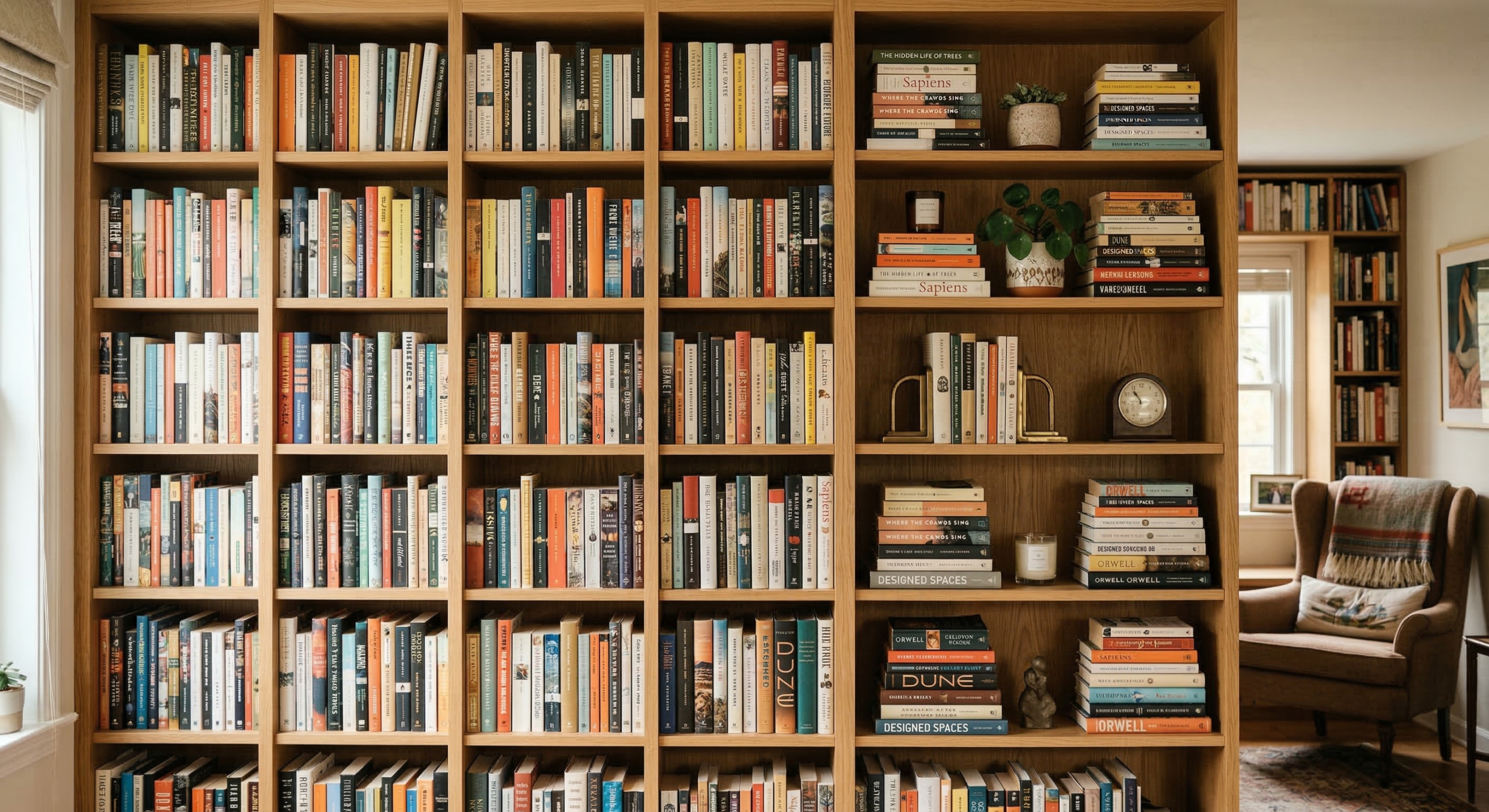
Shelves can do much more than hold extra stuff. When they’re organized with intention, they help a home feel calmer, more functional, and more visually balanced. Whether you’re working with open shelves in the kitchen, built-ins in the living room, or simple wall shelving in a small apartment, the way you arrange those surfaces has a big impact on both storage and style. A few smart shelf organization ideas can help you use vertical space better, reduce clutter, and create rooms that feel easier to maintain every day.
Why Shelf Organization Matters in Everyday Home Design
Shelves are often treated as passive storage. People place items there wherever they fit, then wonder why the room starts to feel crowded or messy. The real problem often comes from the absence of a clear system rather than the shelf itself. When shelves become a catchall for books, decor, papers, baskets, and random household items, they stop supporting the room and start adding visual noise.
Good shelf organization helps solve that problem. It gives frequently used items a clear home, makes better use of vertical storage, and creates more breathing room in the rest of the space. This matters in many homes across the United States, especially where square footage is limited, storage is tight, or open shelving is part of the design. Organized shelves can make a small space work harder while still looking polished and welcoming.
1. Group Items by Function Before You Style Anything
The smartest shelf organization starts before you move a single object around. First, decide what the shelf actually needs to hold. Is it for everyday kitchen supplies, office essentials, books, bathroom backups, or decorative displays? Once you know the shelf’s job, group similar items together before placing them back.
This step helps prevent the common mistake of mixing unrelated things in the same zone. When practical items, decorative pieces, paperwork, and miscellaneous clutter all compete for attention, shelves quickly start to feel disorganized.
Grouping by function makes shelves easier to use and easier to maintain because every category has a logical place. It also gives you a clearer sense of how much storage you truly need. Sometimes shelves feel overcrowded simply because too many categories are being forced into one area.
2. Use Baskets and Bins to Hide Small Visual Clutter
Open shelving looks best when there’s some level of containment. Small loose items such as chargers, cords, office supplies, kids’ toys, toiletries, pantry packets, or random accessories can make even a nice shelf look chaotic. Baskets and bins help solve that by giving smaller items structure.
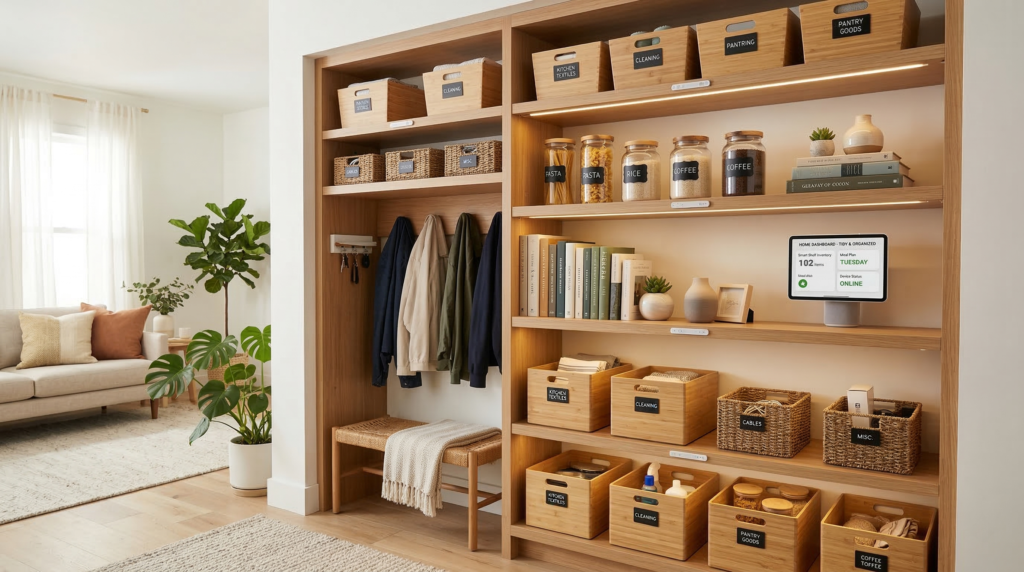
Choose containers that fit the size and style of your shelf. Woven baskets add warmth in living rooms and bedrooms. Clear bins work well in pantries and bathrooms where visibility matters. Fabric bins can soften office shelves or family spaces.
The goal is to reduce visual scatter without making the shelf feel heavy or overfilled. This also makes daily cleanup faster. Instead of dealing with ten separate items, you’re putting one container back in place.
3. Leave Some Empty Space on Purpose
One of the most effective shelf styling ideas is also one of the simplest: don’t fill every inch. Empty space helps shelves look cleaner, lighter, and more intentional. Without it, even well-organized shelves can feel crowded.
This matters especially on open shelves in living rooms, kitchens, and home offices, where visual clutter has a stronger effect on the whole room. Giving items a little breathing room makes each object easier to see and easier to access.
It also allows decorative elements to stand out instead of getting lost in overcrowding. In practical terms, leaving space also gives you room for life to happen. A shelf that’s packed to capacity from the start won’t adapt well when you need to add a cookbook, a framed photo, or a new storage basket later.
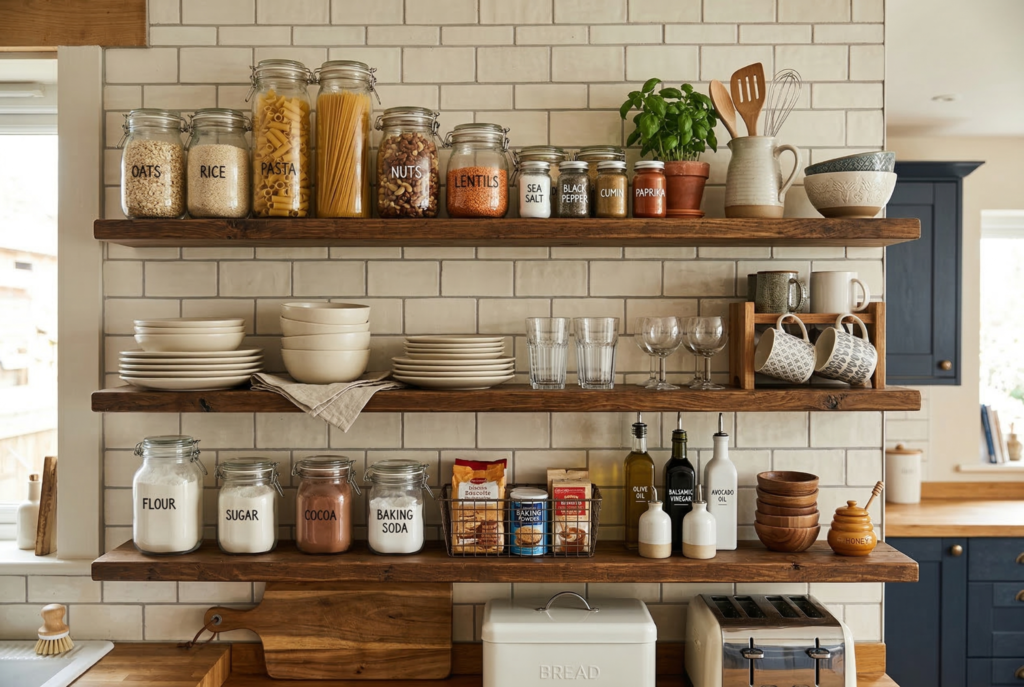
4. Place Everyday Items at Eye Level and Easy Reach
A well-organized shelf should support the way you actually use the room. That means the most frequently used items belong where they’re easiest to reach. Eye-level and waist-level shelves are prime real estate, so use them for things you grab often.
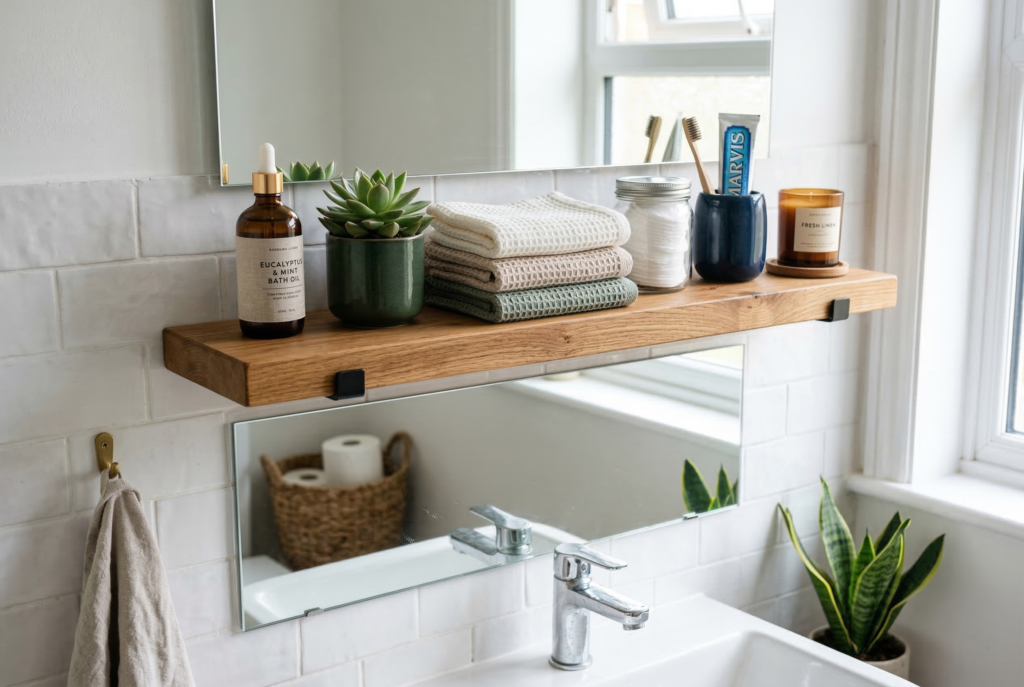
In the kitchen, that might mean everyday dishes, mugs, or pantry staples. In a bathroom, it could be towels or daily skincare. In a home office, it may be supplies, files, or notebooks. Higher shelves and lower shelves can hold less-used items, backups, or seasonal pieces. This kind of placement makes a space feel more intuitive. It reduces frustration, speeds up routines, and keeps shelves from becoming decorative in a way that doesn’t actually serve your daily life.
5. Mix Vertical and Horizontal Arrangements
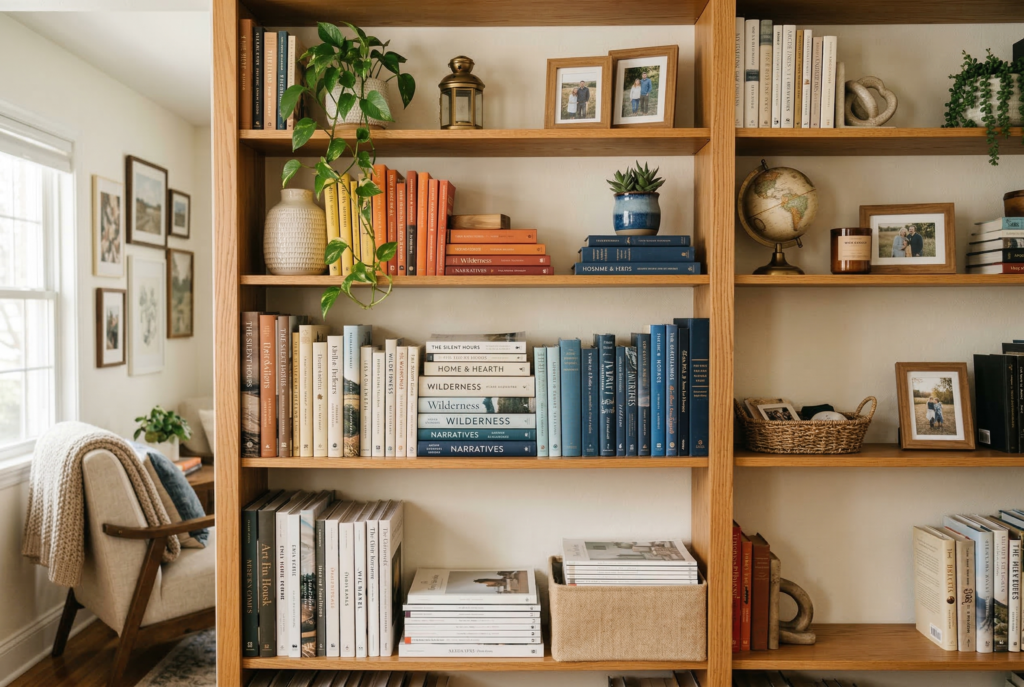
Shelf organization looks better and works better when everything isn’t lined up the exact same way. Books, trays, containers, and decor can all benefit from a mix of vertical and horizontal placement. This adds visual rhythm and helps break up the monotony of rows. For example, books can stand vertically on one side of a shelf and be stacked horizontally on the other. A small tray on top of a horizontal book stack can hold candles, coasters, or decorative objects.
In kitchens, cutting boards or platters can stand upright while bowls or jars sit beside them. This variation keeps the shelf from looking flat or overly rigid. The same principle works in storage-heavy spaces too. A shelf can still feel practical while having a little visual balance. Function and style don’t have to compete.
6. Create Shelf Zones Instead of Letting Items Drift
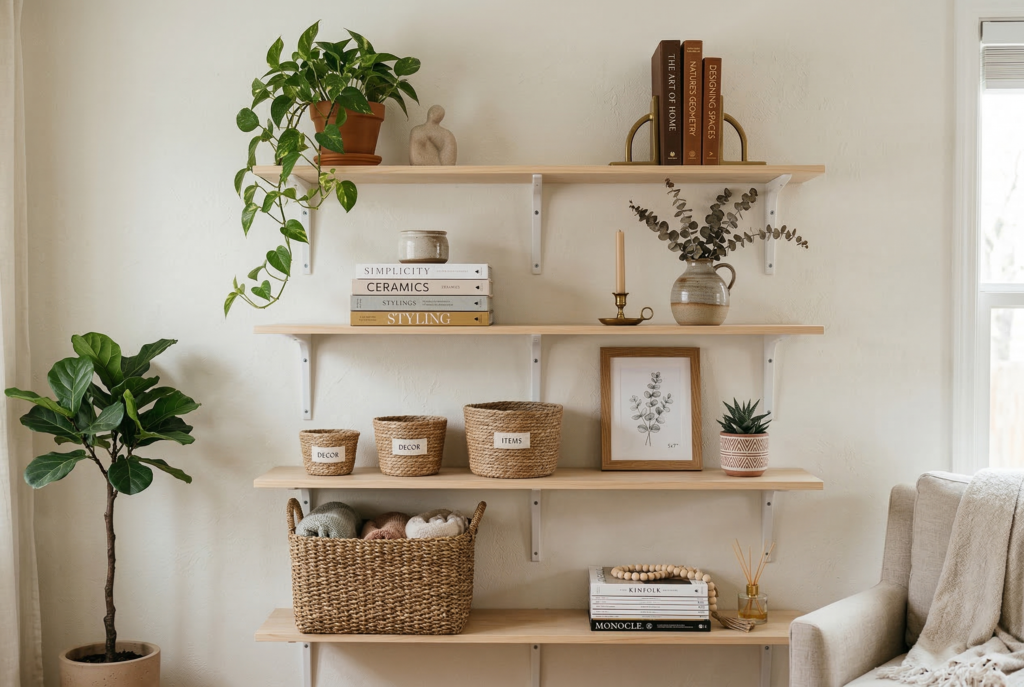
One reason shelves become messy over time is that items slowly drift out of place. A book gets set next to the basket of chargers. Extra candles land in the office area. Mail ends up on a display shelf. Without clear zones, shelves gradually lose their structure.
Creating zones helps stop that pattern. Assign one part of the shelf to a specific category and keep that boundary consistent. For instance, one section may hold books, another may hold decorative objects, and another may contain hidden storage bins. In a pantry, one shelf might be for breakfast foods while another is for snacks or baking supplies. This system makes shelves easier for everyone in the household to use. It also makes tidying faster because you can quickly tell what belongs where and what has wandered.
7. Use Shelf Height Wisely to Avoid Wasted Space
A lot of shelf storage gets wasted because the spacing between shelves doesn’t match the items being stored. Tall gaps with short objects leave unused vertical room, while cramped shelves make access awkward. If your shelving is adjustable, changing the shelf height can immediately improve how much fits and how usable the space feels.
Try to match the space to the category. Shorter shelves work well for folded clothes, pantry cans, or paperback books. Taller spaces are better for vases, serving pieces, storage bins, or larger decor. Even a few inches of adjustment can make a shelf feel more efficient. If the shelf isn’t adjustable, shelf risers and stackable organizers can help create more usable layers within the existing space. This is especially helpful in kitchen cabinets, linen closets, and bathroom storage.
8. Balance Decorative Items With Practical Storage
In many homes, shelves need to do double duty. They need to store real things while still looking clean and attractive. The best way to achieve that is by balancing decorative elements with functional ones rather than leaning too far in either direction.
A shelf filled only with decor can look styled but may not solve any storage problems. A shelf packed only with practical items may work functionally but feel heavy or cluttered. A better approach is to combine both. Pair books with a small plant, baskets with a framed photo, or functional kitchen jars with a few attractive serving pieces. This balance makes shelves feel integrated into the room instead of purely utilitarian. It also helps the home feel warmer and more lived in without tipping into visual mess.
9. Edit Shelves Regularly So They Don’t Become Clutter Zones
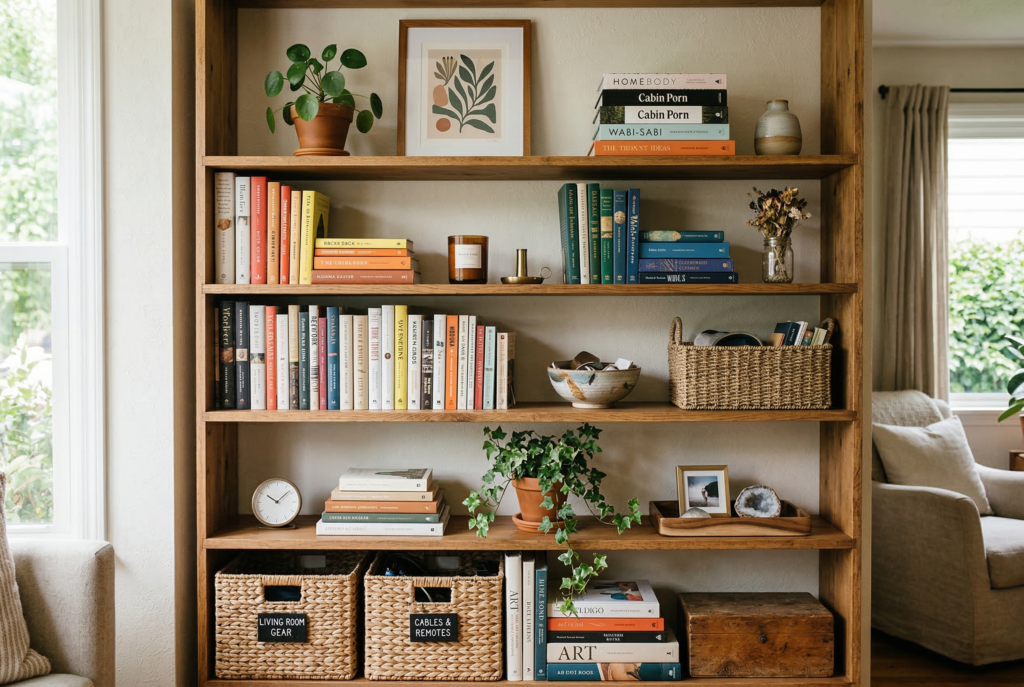
Even the best shelf system won’t stay organized forever without occasional editing. Items get added over time, habits shift, and shelves that once felt neat start to collect extras. A quick reset every few weeks can prevent that buildup from turning into full-blown clutter.
This doesn’t need to be a major project. Straighten stacks, return misplaced items, remove anything you no longer use, and check whether your containers still make sense for what’s being stored. In seasonal spaces like entryways, kids’ rooms, or living room shelves, regular editing helps the area keep up with changing routines.
This habit also helps you notice when a shelf is being asked to do too much. If it constantly overflows, the answer may be reducing what lives there rather than squeezing in more organizers.
Common Shelf Organization Mistakes to Avoid
A few common habits can make shelf storage harder than it needs to be. One is trying to store too many unrelated things in the same area. Another is buying bins or baskets before understanding what actually needs to be stored. That often leads to containers that look nice but don’t fit the space or support real routines.
Another mistake is focusing only on appearance while ignoring access. A beautifully styled shelf won’t work well if everyday items are hard to reach or awkward to put back. On the other hand, shelves that are purely functional without any visual restraint can make a room feel busier than necessary. The strongest shelf organization ideas solve both problems at once. They make storage more useful while improving the way the room looks and feels.
Conclusion
Smart shelf organization can completely change how a home functions. When shelves are arranged with clear categories, practical zones, and a little breathing room, they stop feeling like clutter magnets and start becoming useful, attractive parts of the room. Whether you’re organizing books, baskets, pantry supplies, decor, or daily essentials, thoughtful shelf systems help maximize storage space without sacrificing style.
A clean, stylish home doesn’t come from filling every surface. It comes from using space with more intention. When your shelves support your routine, reflect your style, and stay easy to maintain, the whole room feels more organized and far less stressful to live in.