

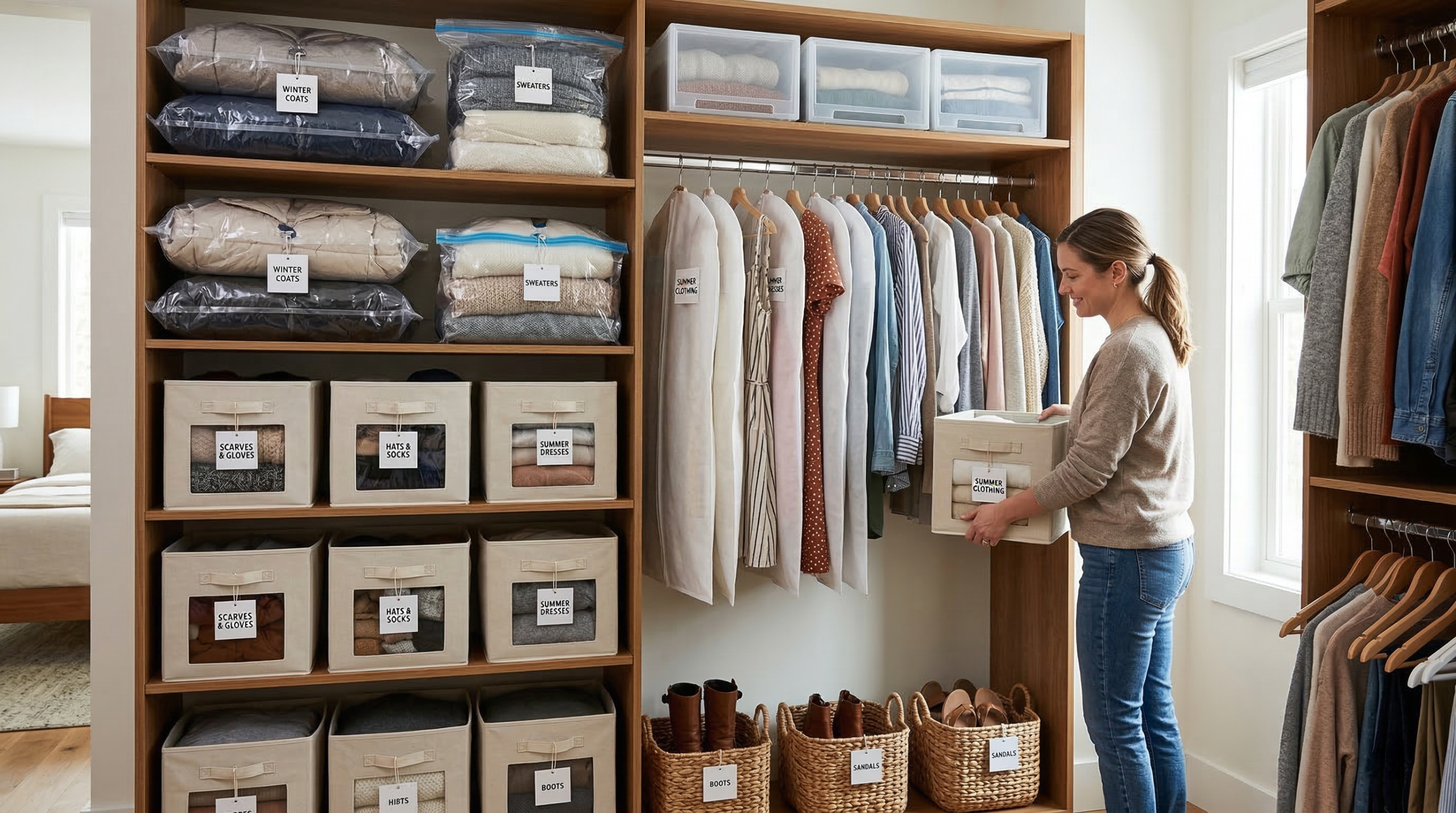
Seasonal clothing has a way of taking over valuable closet space when it isn’t managed well. Heavy coats stay packed beside summer dresses, boots compete with sandals, and shelves fill up with items you won’t wear for months. A better storage plan can make daily routines easier while also helping your clothes last longer. When you rotate what you wear, store off-season pieces properly, and use space more intentionally, your closet becomes easier to maintain and far less stressful to use.
1. Start With a Full Seasonal Closet Edit
Before storing anything, take time to sort through your clothing honestly. Seasonal clothing storage works best when you aren’t packing away items you no longer wear, items that don’t fit, or pieces that are too damaged to keep. There’s no benefit in protecting clutter for another year.
Go through coats, sweaters, swimsuits, shorts, boots, scarves, and other weather-specific items. Set aside anything that should be donated, repaired, or discarded. If you didn’t wear something at all during its season, ask yourself whether it still fits your lifestyle, comfort, and needs.
This first step matters because it reduces the amount you need to store and keeps valuable space available for clothes you’ll actually use again. It also makes the seasonal swap feel more purposeful instead of becoming another task built around excess.
2. Wash Everything Before It Goes Into Storage
One of the most important clothing storage tips is also one of the most overlooked. Clothes should always be clean before they’re packed away for the season. Even if something looks fine, small traces of deodorant, body oil, perfume, lotion, or food residue can settle into fabric over time and lead to discoloration, odors, or pest problems.
Wash, dry clean, or spot-clean each item based on the care label before storing it. This applies to sweaters, coats, jeans, swimsuits, scarves, and even items you only wore once or twice. Don’t forget accessories like winter hats or gloves if they’re going into a closed bin for several months. Clean clothing stores better, smells fresher when it comes back out, and usually requires less work when the next season arrives. That simple habit can help preserve both the look and longevity of your wardrobe.
3. Use Breathable Storage for Delicate or Natural Fabrics

Not every fabric should be packed into airtight plastic containers. While sealed bins can work well in some situations, natural fibers like wool, cotton, linen, and silk often do better in breathable storage that allows some air circulation.
Garment bags made from fabric, cotton storage bins, and breathable canvas containers are good options for more delicate pieces. These can help protect clothing from dust while reducing the risk of trapped moisture. Structured coats, blazers, and special occasion items often benefit from this type of storage more than being folded tightly into a crowded bin.
This is especially useful in homes where closets may get warm or where climate changes throughout the year. Using suitable storage materials can help maintain the quality of your clothes, while also keeping everything neatly organized.
4. Fold Bulky Items Instead of Hanging Them Long Term
Many people assume hanging everything is the best way to keep clothes neat, but that isn’t always true for seasonal storage. Heavy sweaters, knitwear, sweatshirts, and some soft winter layers can stretch out of shape when they stay on hangers for months.
These items are usually better folded and stored flat in bins, drawers, or shelf organizers. If possible, group similar items together so they’re easier to find later. Sweaters in one section, sweatpants in another, winter pajamas in another. Keeping categories separate makes the next seasonal transition much easier.
This approach also frees up hanging space in your closet for garments that should remain on hangers, such as coats, dresses, button-down shirts, or tailored pieces. A more balanced mix of folded and hung storage usually creates a closet that functions better overall.

5. Take Advantage of Under-Bed Storage
Under-bed storage can be one of the easiest ways to free up closet space without adding bulky furniture to your room. It works especially well for off-season clothing because those items don’t need to be accessed every day.
Flat storage bins, zippered fabric containers, or low-profile boxes can hold folded seasonal clothing like swimsuits, shorts, sweaters, or cold-weather accessories. If you use this space, choose containers that slide easily and label them clearly so you aren’t opening multiple bins to find one category of clothes.
This option is especially helpful in apartments, smaller homes, and shared bedrooms where closet space is limited. Instead of crowding your main closet with everything year-round, you can shift less-needed items out of the way while still keeping them accessible.
6. Store Shoes and Accessories as Part of the Seasonal Rotation
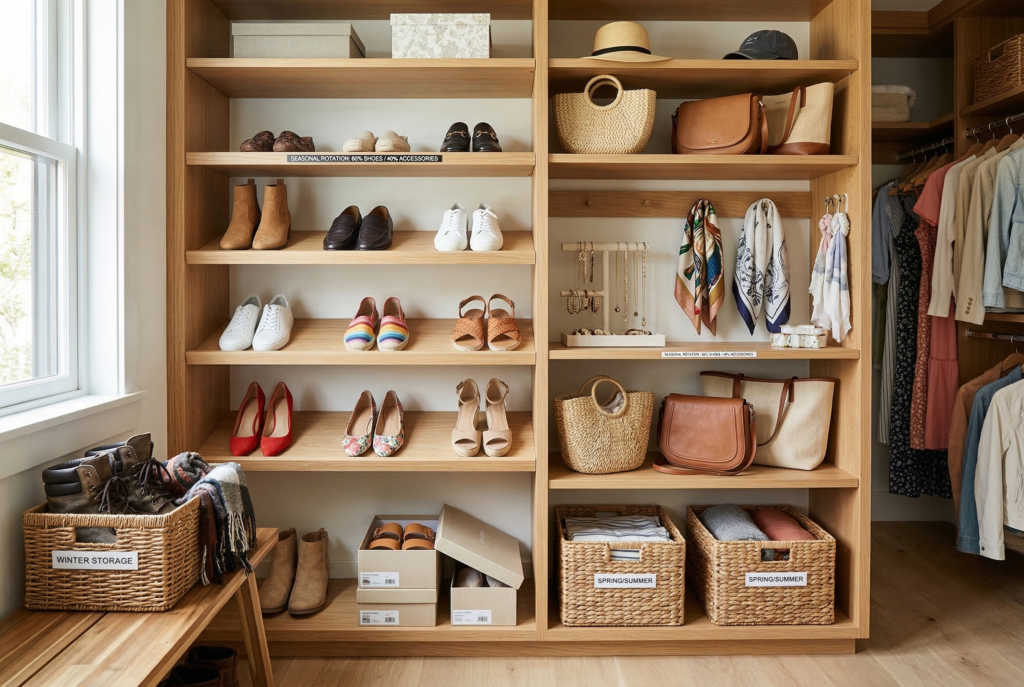
Seasonal wardrobe storage shouldn’t stop at clothing. Shoes and accessories take up a surprising amount of room, and they can create clutter quickly when they’re left mixed together all year.
Store off-season boots, sandals, scarves, gloves, sun hats, and other accessories in clearly labeled bins or on designated shelves. Clean them first, especially shoes, since dirt and moisture can cause damage over time. Stuff boots with boot shapers, rolled towels, or acid-free paper if needed to help them keep their form while stored.
When accessories are grouped by season, it becomes much easier to find what you need and avoid overloading your everyday closet. It also helps you see what you already own before buying duplicates the next year.
7. Label Everything So Seasonal Swaps Stay Simple
A storage system only saves time if you can actually find what you need. Labels may seem like a small detail, but they make a big difference in seasonal clothing organization. Without them, bins often become mystery containers that you dig through again and again.
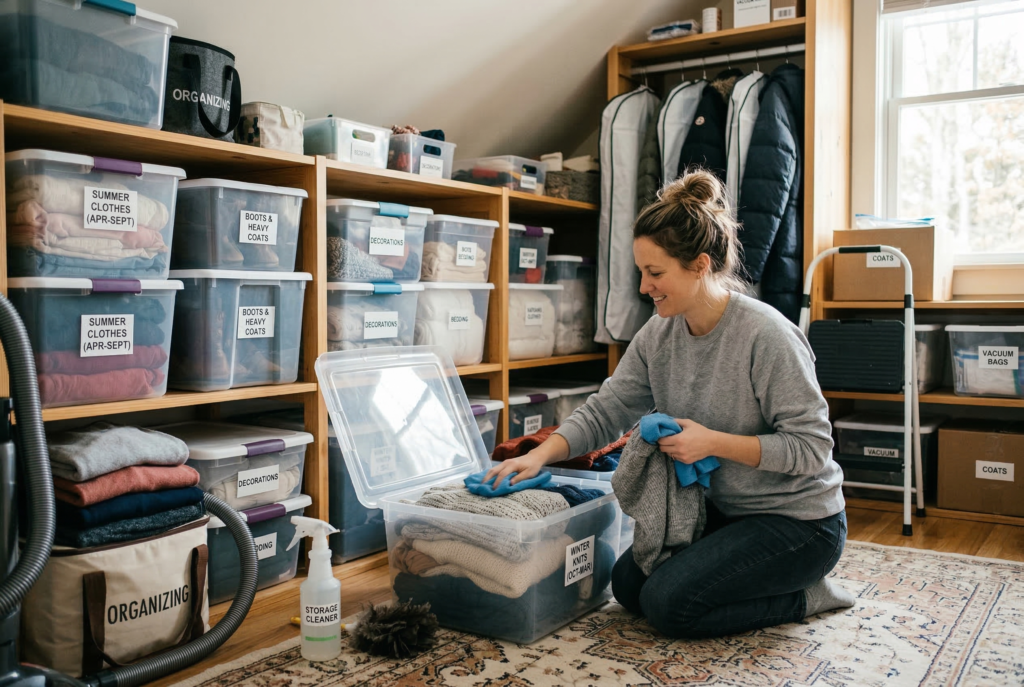
Use simple labels such as “Winter Sweaters,” “Summer Clothes,” “Cold Weather Accessories,” or “Spring Jackets.” You don’t need an elaborate system. Handwritten labels, adhesive tags, or clip-on labels can all work well as long as they’re readable. This is especially useful for families, shared closets, or storage areas like attics, basements, and hall closets. Clear labeling helps everyone know where things belong and makes the seasonal switch faster when the weather changes.
8. Use Vertical Closet Space More Intentionally

If your closet feels full year-round, the problem may not be the amount of clothing alone. It may also be how the space is being used. Many closets have underused vertical space that can be turned into practical seasonal storage.
Upper shelves can hold labeled bins for off-season items. Hanging shelf organizers can store folded knits or accessories. Slim secondary rods may create room for shorter seasonal pieces. Even the floor of the closet can be made more functional with stackable containers if they’re kept neat and limited to categories you truly need.
Using vertical space well helps keep current-season clothing within easy reach while moving less-needed items higher up or farther back. That creates more breathing room in the main part of the closet and makes it easier to keep things tidy over time.
9. Set a Seasonal Clothing Reset on Your Calendar
One reason closets become overcrowded is that seasonal storage gets postponed. People often wait until the weather shifts dramatically, and by then both warm-weather and cold-weather clothing are packed into the same space. Scheduling a simple reset at the start of each season can prevent that buildup.
Plan a clothing swap around early spring and early fall, with smaller adjustments as needed depending on where you live. In many parts of the U.S., temperatures can shift unpredictably, so you may still want a few transition pieces available. Even so, most of your wardrobe can still be rotated based on likely use.
A seasonal reset doesn’t have to take all day. Once your storage system is in place, the process becomes much easier. You review what you wore, clean what’s being packed away, bring the next season forward, and make quick edits where needed. That rhythm keeps clutter down and makes closet organization far more manageable.
Conclusion
Seasonal clothing storage can do much more than free up a little closet space. It can help protect your wardrobe, simplify your mornings, and make your home feel more organized throughout the year. When clothes are cleaned, sorted, stored properly, and rotated with intention, you spend less time digging through crowded shelves and more time using what actually fits the season.
The best seasonal clothing storage ideas are usually the easiest to maintain. Edit what you own, choose storage methods that protect fabrics, label everything clearly, and use overlooked spaces like under-bed storage or upper closet shelves. With a practical routine and a few smart adjustments, your closet can stay functional, organized, and much easier to use in every season.
Related Articles
- 10 Smart Ways to Prepare Your Home for Seasonal Changes and Stay Organized Year-Round
- How Seasonal Changes Influence Your Lifestyle: Simple Tips to Align Your Home and Habits