


Cleaning isn’t always framed as self-care, but in everyday life, it often works that way. A simple reset of your space can create a sense of relief that goes far beyond appearances. When the kitchen feels manageable again, the bathroom counter is clear, or the bedroom looks calmer at the end of a long day, the effect is often emotional as much as practical. Cleaning won’t solve every source of stress, but it can help create a home that feels lighter, steadier, and more supportive when life feels full.
Why Cleaning Can Feel Grounding in Daily Life
Home has a powerful effect on how people feel. When a space is cluttered, noisy, or visibly unfinished, that pressure tends to stay in the background all day. It shows up in small ways, like feeling more irritable, more distracted, or more drained than expected. A reset doesn’t have to be dramatic to help. Even a short cleaning session can make the environment feel more settled, which often helps the mind feel a little more settled too.
For many households in the United States, home is where work, rest, family life, errands, and recovery all overlap. That means the condition of the space matters. A cleaner room can support clearer thinking, smoother routines, and a stronger sense of control, especially during busy or emotionally heavy seasons.
Cleaning Can Create a Sense of Immediate Progress
One reason cleaning can feel so powerful is that the results are often visible right away. In a world where many responsibilities are ongoing and many stressors don’t have a quick solution, cleaning offers a task with a beginning, middle, and end. You wipe the counter, fold the blanket, clear the sink, and the room instantly feels different.
That kind of visible progress matters. It reminds people that small actions can still improve the day. Even when larger problems remain unresolved, resetting one corner of the home can create momentum and emotional relief. It can help shift the feeling of being stuck into the feeling of having done something supportive and useful.

A Cleaner Space Can Reduce Background Stress
Not all stress is loud or obvious. Sometimes it comes from a constant stream of visual reminders that things feel unfinished. Laundry on the chair, dishes in the sink, papers on the counter, and clutter gathering in every room can quietly add pressure without demanding direct attention. Over time, that low-level stress can become exhausting.
Cleaning helps reduce some of that background noise. When surfaces are cleared and rooms are reset, the home often feels less mentally crowded. That doesn’t mean everything has to be spotless. It means the environment stops asking for attention from so many directions at once. That alone can make it easier to breathe, focus, and feel more present in the space.
Cleaning Can Help You Reconnect With Your Space
When life gets busy, people often stop engaging with their home in a thoughtful way. Rooms become places to pass through, drop things, and catch up later. Cleaning can change that by helping you notice the space again. You start to see what’s working, what feels off, and what needs a little care.
That reconnection matters because a home tends to feel better when it feels noticed. Straightening a room, wiping down surfaces, opening the blinds, or changing the sheets can shift the mood of the space in a very direct way. It reminds you that your home isn’t just a container for tasks. It’s the environment where daily life happens, and it affects you more than you may realize.
Small Cleaning Rituals Can Support Emotional Reset
Cleaning as self-care doesn’t have to mean deep cleaning the entire 10 Daily Cleaning Habits That Keep Your Home Tidy, Organized, and Easy to Maintainhouse. In many cases, it works better as a small ritual that helps mark a transition. Wiping down the kitchen after dinner can help close out the day. Making the bed in the morning can signal a fresh start. Resetting the living room in the evening can make the home feel calmer before bed.
These rituals can become emotionally supportive because they create rhythm. They offer a way to move from one part of the day to another with more intention. That kind of structure can feel especially helpful during stressful periods, when routines are what help keep life feeling manageable.

The Physical Motion of Cleaning Can Be Calming
Cleaning is also physical, and that can be part of why it feels grounding. Folding laundry, sweeping the floor, wiping down surfaces, or organizing a shelf all involve movement and touch. That physical engagement can help bring attention back to the present moment, especially when the mind feels overloaded. For some people, cleaning provides a break from screens, overthinking, or emotional spiraling. It offers a task that is simple, practical, and fully in front of you. The hands know what to do, and the body has a purpose. That can be soothing in a way that feels quiet but meaningful.
Cleaning Helps Restore a Sense of Control
Life can feel overwhelming when too many things seem uncertain, unfinished, or out of your hands. Cleaning offers one area where action usually leads to a clear result. You may not be able to fix everything, but you can clear the table, sort the laundry, or reset the bathroom. That sense of agency matters.
Self-care is often misunderstood as something passive or indulgent, but it can also look like creating order where you can. Cleaning helps restore a sense of control in a practical way. It reminds you that your environment can respond to your effort, and that can be a surprisingly stabilizing feeling when other parts of life feel unpredictable.
A Reset Home Can Support Better Rest

One of the most overlooked benefits of cleaning is how much it can improve the feeling of rest at home. A cluttered or chaotic room often makes it harder to fully relax, even if you’ve gotten used to it. The eye keeps noticing unfinished tasks. The room feels active instead of restorative.
A quick reset can make a big difference here. Fresh sheets, a clear nightstand, an emptied sink, or a tidy living room can all help signal that it’s time to slow down. When the home feels calmer, rest often comes more easily. That’s one reason cleaning can be such an effective form of self-care. It helps prepare the environment to support recovery, not just function.
Cleaning Can Be a Way of Caring for Your Future Self
There’s also something quietly kind about cleaning for tomorrow. Loading the dishwasher, laying out fresh towels, clearing the entryway, or putting things back where they belong creates a better experience for your future self. It reduces tomorrow’s friction before it arrives.
This matters because self-care is often about reducing unnecessary stress, not only chasing comfort in the moment. A small effort now can make the next morning feel less rushed or the next evening feel less heavy. That kind of care is practical, realistic, and deeply useful in daily life.
It Doesn’t Have to Be Perfect to Help
One reason people resist cleaning is that they imagine it has to be all or nothing. If they can’t do a full deep clean, they feel like there’s no point in starting. But cleaning as self-care works best when it’s gentler than that. A full-house overhaul isn’t required for a space to feel better. Five minutes can help. One room can help. One cleared surface can help. The aim is to bring a bit more ease to your space and a sense of calm to yourself. Even a small shift like this can make a meaningful difference.
How to Use Cleaning as a Realistic Form of Self-Care
The most sustainable way to approach this is to think in terms of support, not pressure. Ask what would help the space feel better right now. Maybe it’s making the bed. Maybe it’s clearing the kitchen counter. Maybe it’s opening the curtains, wiping the bathroom mirror, or putting laundry into the hamper.
It also helps to avoid turning cleaning into punishment. It isn’t something you do because you’ve failed to keep up. It’s something you do because you deserve to feel more comfortable in your space. That mindset changes the whole experience. Cleaning becomes less about guilt and more about care.
Simple Cleaning Tasks That Often Have the Biggest Emotional Payoff
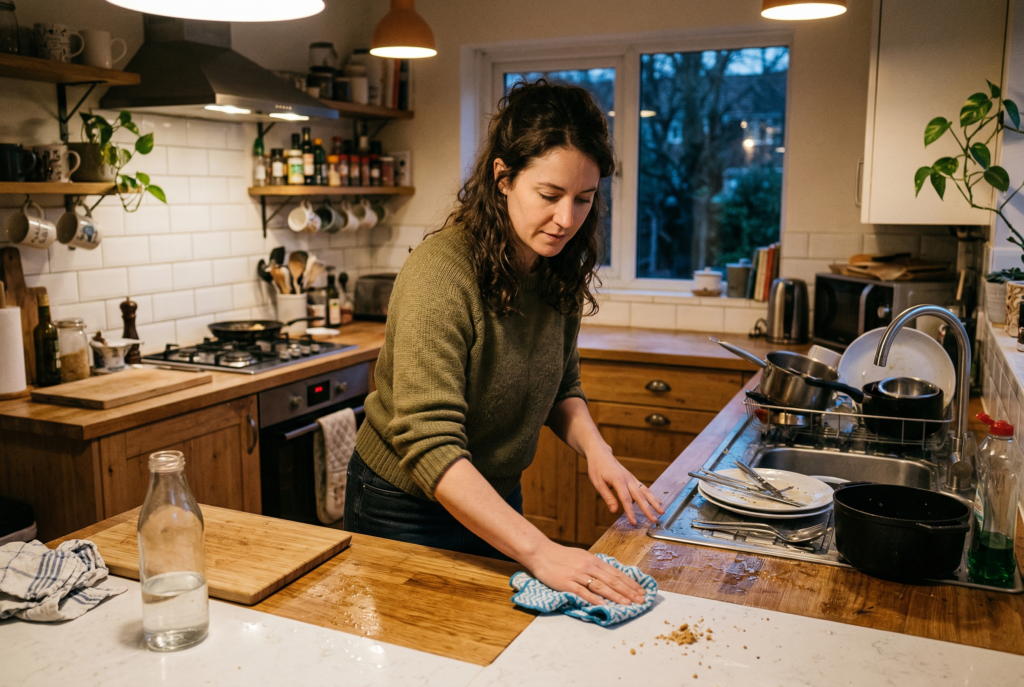
Some tasks tend to create more relief than others. The kitchen sink is one of them, because dishes can make the whole home feel backed up. The bed is another, because a made bed changes the look of the entire bedroom quickly. Bathroom counters, living room surfaces, and entryways also tend to have a strong emotional payoff because they’re seen and used so often.
Focusing on these high-impact areas can help cleaning feel more rewarding. When the most visible or most frequently used parts of the home improve, the space often feels better faster. That’s useful when energy is limited and you need the biggest shift from the smallest effort.
Why Cleaning as Self-Care Works Best When It’s Consistent

The strongest benefits usually come from consistency, not intensity. A few small resets done regularly often support well-being more effectively than rare all-day cleaning sessions that leave you exhausted. That’s because consistent care keeps the home from becoming too overwhelming in the first place.
It focuses on recognizing the simple habits that help most and coming back to them whenever possible, rather than trying to follow a perfect schedule. A short evening reset, a five-minute morning tidy, or a weekly kitchen refresh can all create a more supportive environment over time. Those habits add up.
Conclusion
Cleaning as self-care is a simple but meaningful way to reset your space, clear your mind, and feel more in control. It works because the condition of your home affects the way daily life feels, and small acts of care inside that space can create real emotional relief. Whether it’s clearing a surface, resetting a room, or doing a few tasks that support tomorrow, cleaning can be a practical form of support when life feels heavy or scattered.
It only needs to bring a bit more calm, a bit more clarity, and less friction into the space you live in every day to make a difference. When cleaning is approached as care instead of pressure, it becomes one of the most useful ways to support both your home and yourself.
Related Articles
- Minimalist Cleaning Routine: A Practical Way to Save Time and Energy Every Day
- 10 Speed Cleaning Techniques: Quick, Time-Saving Tips for Fast, Efficient Home Cleaning on Busy Days
- 10 Daily Cleaning Habits That Keep Your Home Tidy, Organized, and Easy to Maintain