

Throw pillows are often the finishing touch that makes a house feel like a home, yet they are also notorious for trapping dust mites, pet dander, and various allergens. Learning how to wash throw pillows is not just about keeping your living room looking sharp, it is also a vital step in maintaining a healthy environment for your family.
If you have been wondering how to wash pillows without ruining those expensive decorative covers, you are in the right place. This guide covers everything from checking labels to the secret tricks professionals use to keep inserts fluffy and fresh
The Golden Rules: 7 Do’s and Don’ts for Pillow Care
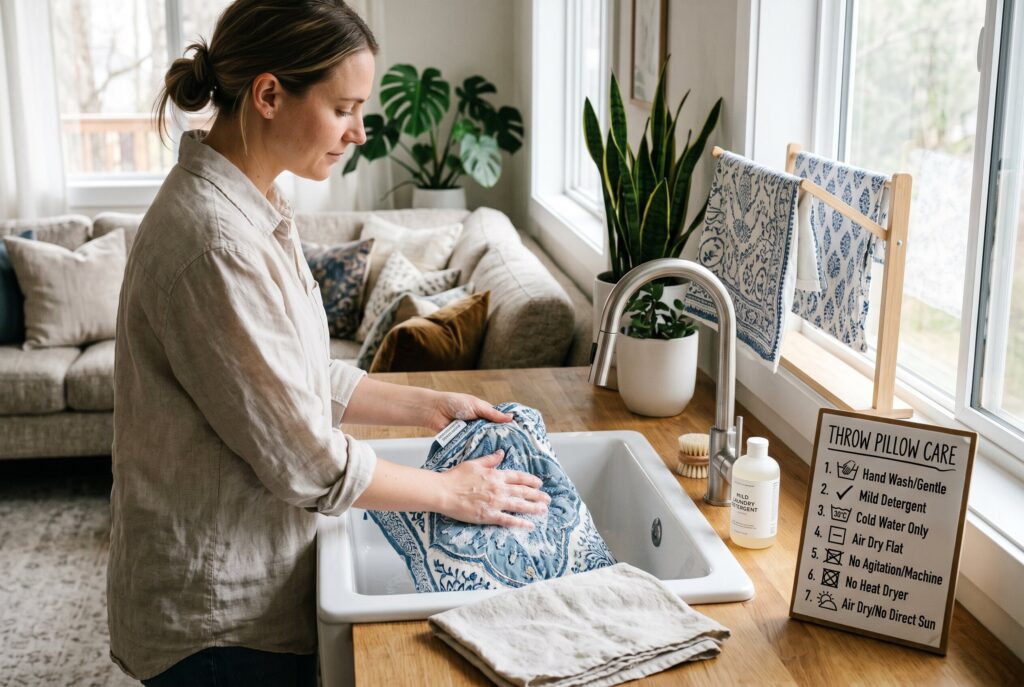
Adhering to specific guidelines ensures that how to clean pillows and can wash pillows remains a safe task for household maintenance.
DO: Decipher the Care Label First
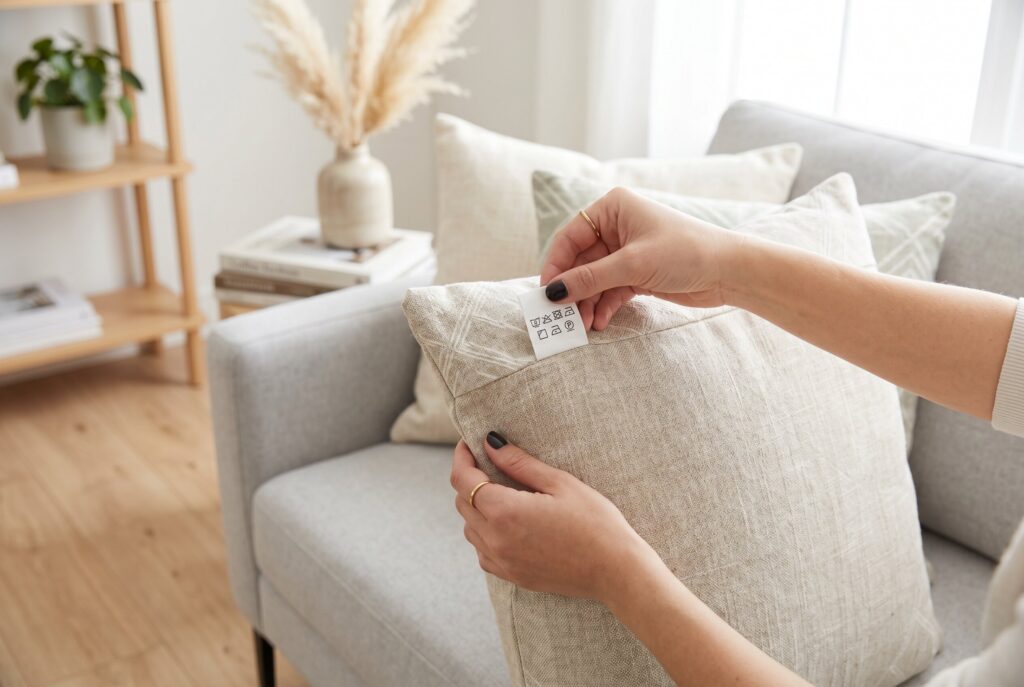
The very first thing you should do is find the care tag, which is usually tucked inside the zipper or along a side seam. These labels use international symbols to tell you exactly what the fabric can handle, such as whether it is machine-safe or requires professional dry cleaning. Skipping this step is the most common way people accidentally shrink their favorite covers.
DO: Perform a 30-Second Colorfastness Test

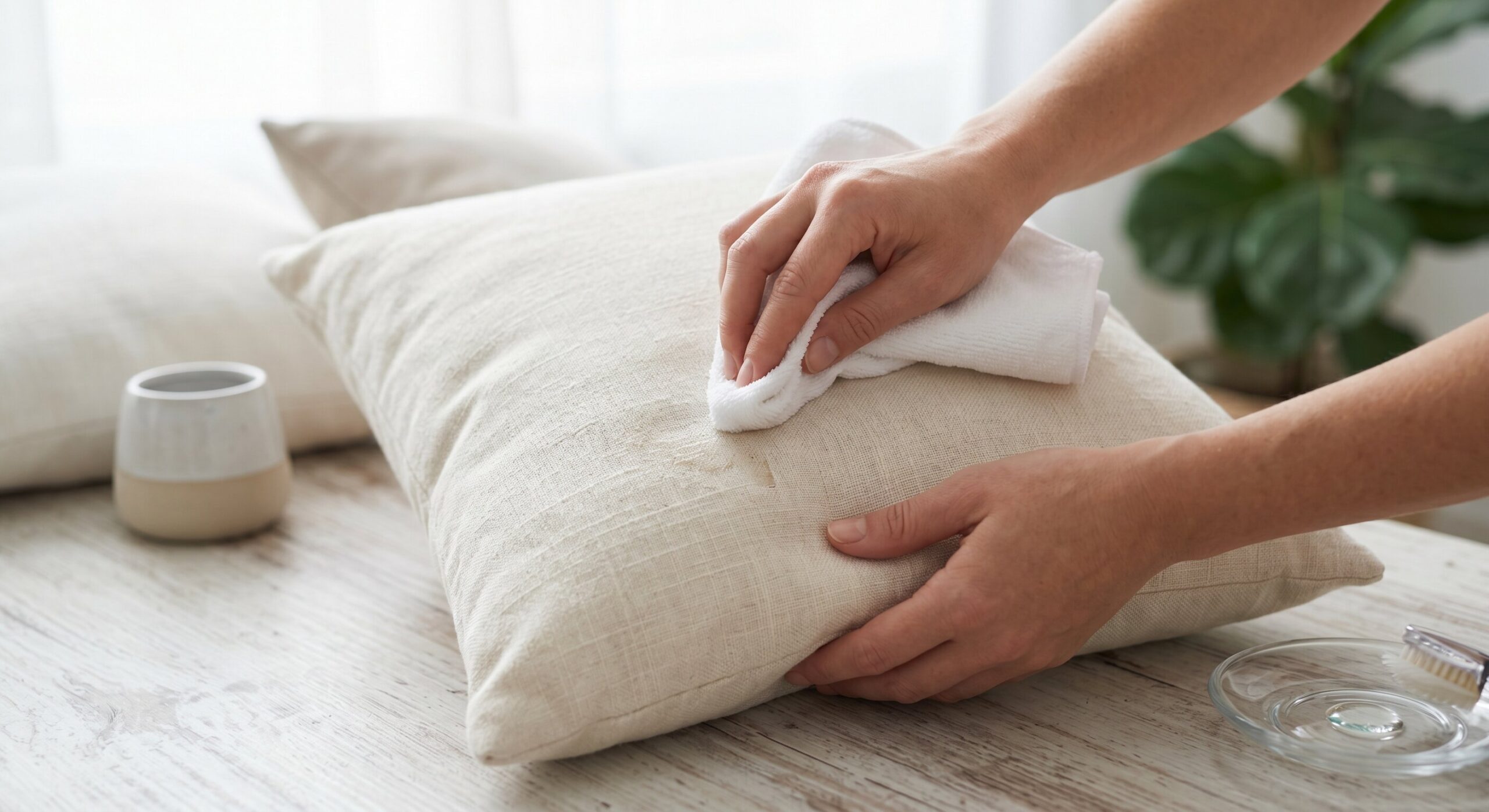
If you have high-end or brightly colored covers, it is a good idea to test if the dye will run. You can do this by taking a clean white cloth, dampening it, and pressing it against a hidden spot on the pillow for about thirty seconds. This simple test is a mandatory safety measure whenever you are researching “How to Wash Throw Pillows” to avoid permanent color bleeding.
DO: Use a Gentle Cycle and Mild Detergent
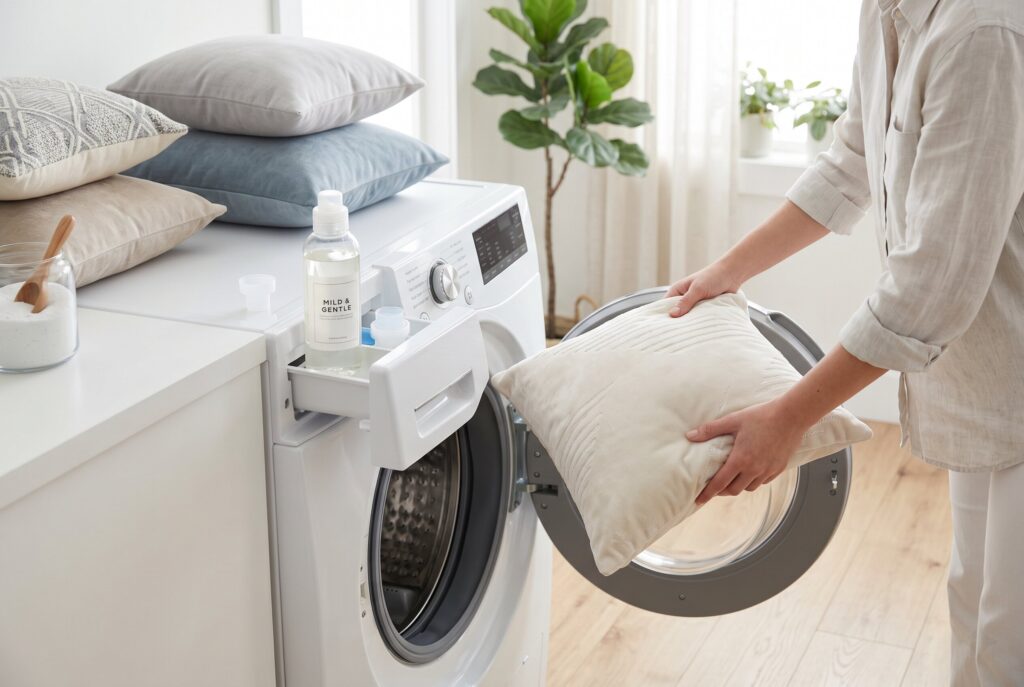
If your pillows are machine-safe, always opt for a gentle or delicate cycle with cold water. Using a mild, neutral detergent helps protect the integrity of fibers like silk, velvet, or linen. When you are learning how to wash pillows in washing machine units, a front-loading machine is generally safer because it lacks a center agitator that can snag delicate seams.
DO: Balance the Load with Towels
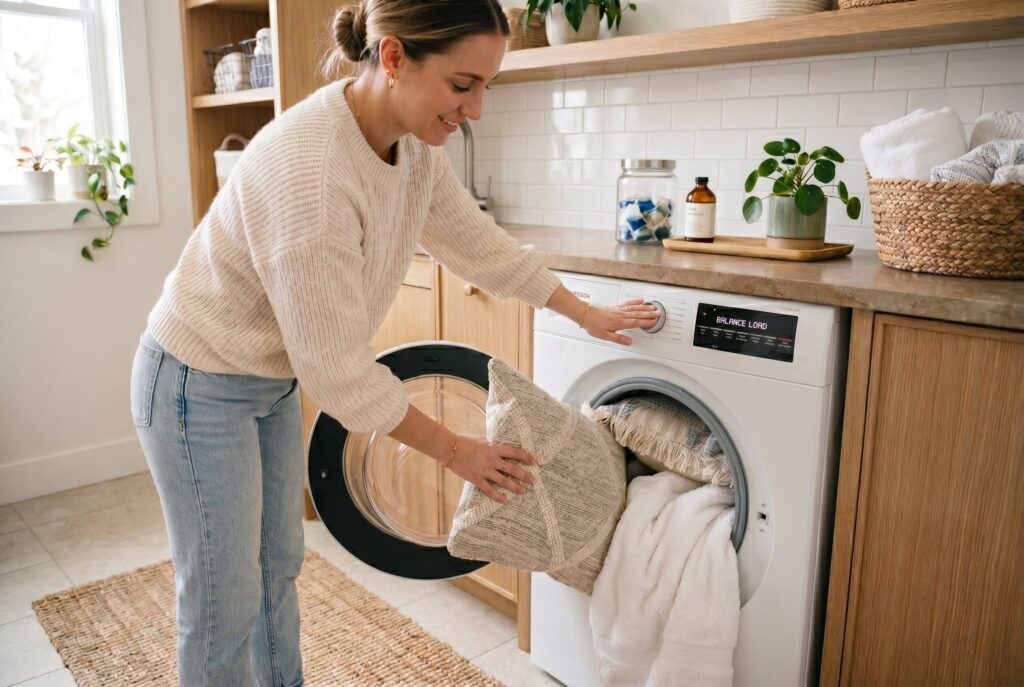
If you have ever heard your washer thumping loudly, it might be because you only threw in one or two light items. To keep the drum steady, you should add a few clean towels to the load. This is a simple trick that ensures the machine stays balanced while you are washing pillows in washing machine settings. When people ask can you put pillows in the washer, the answer is usually yes, provided you keep the load even.
DON’T: Machine Wash Memory Foam Inserts
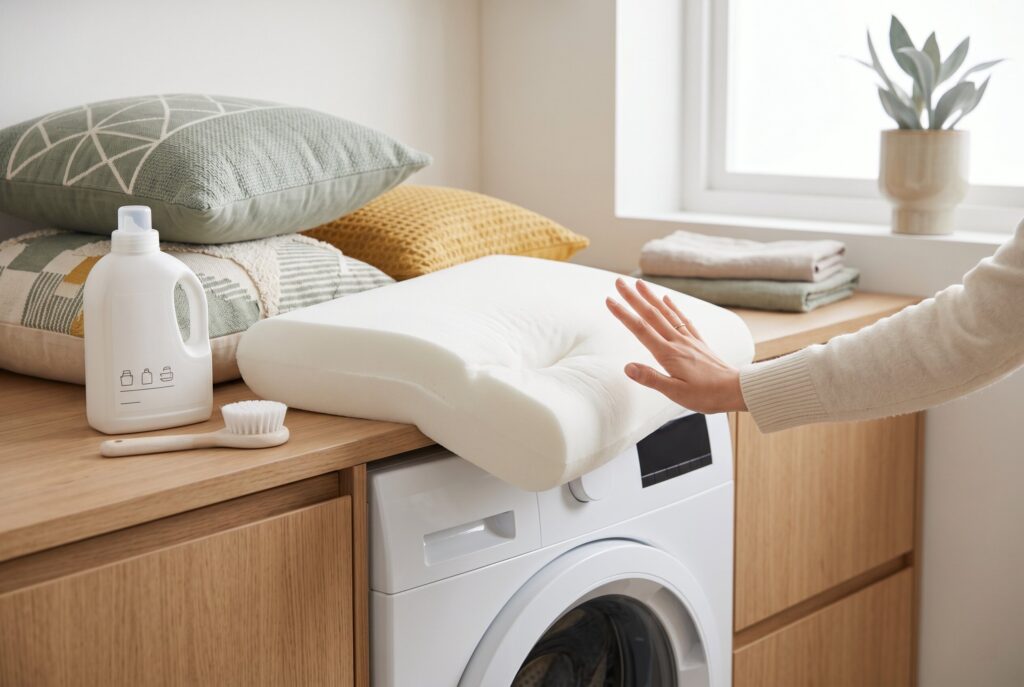
One of the most important things to remember is that memory foam and washing machines do not mix. The mechanical action of the washer can easily shred the foam structure, leaving you with a lumpy mess. If you are looking into can you wash memory foam pillows, keep in mind that these should only be vacuumed or spot cleaned by hand.
DON’T: Over-Saturate Non-Washable Fabrics

For fabrics that cannot be submerged, such as certain structured velvets or leather, less is more. Using too much water can lead to mold growth or cause the pillow to lose its original form. Instead, use a lightly dampened sponge to dab away surface dirt without soaking the material through.
DON’T: Skip the Tennis Ball Drying Trick
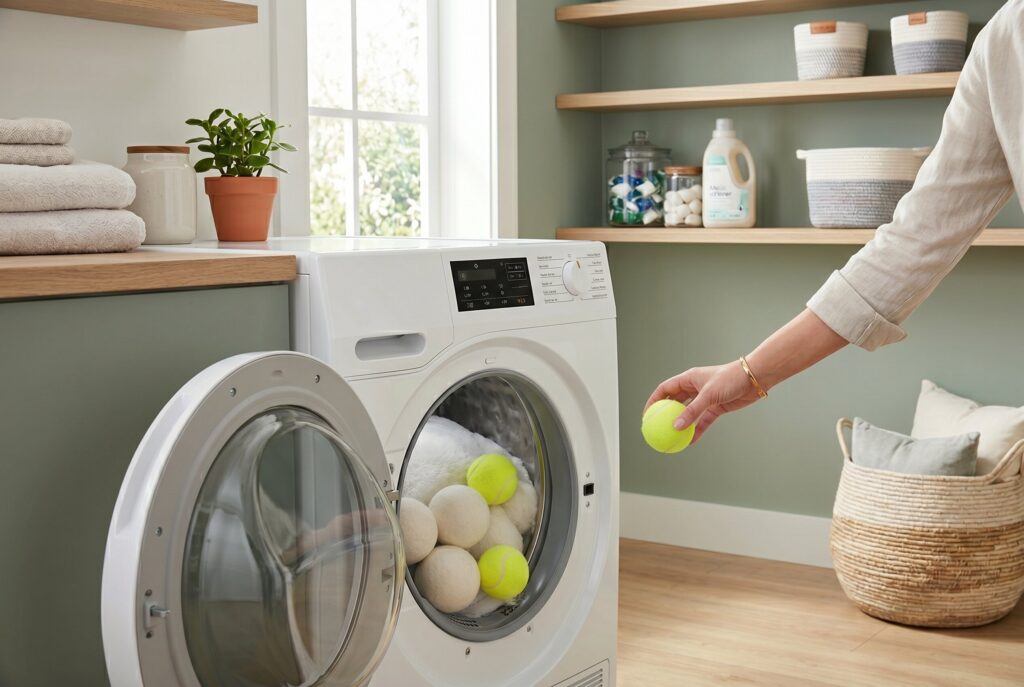
If you want to know how to clean pillows while keeping them fluffy, the drying stage is where the magic happens. Adding a few clean tennis balls or wool dryer balls to the dryer prevents the filling from clumping together. This is a favorite “CleanTok” trend because it effectively restores the loft of the pillow as it tumbles. Most people find that whether or not can you wash pillows successfully depends almost entirely on how well you fluff them afterward.
Material Breakdown: Material-Specific Cleaning Instructions
Different interior materials require tailored approaches to maintain longevity.

When considering how to wash down pillows, specialized protocols for feathers are required to avoid the development of mold. These inserts often require extended drying times on low heat to ensure the core is completely moisture free. For can wash memory foam pillows, the answer is generally negative regarding machine use: spot cleaning remains the industry standard. Most common polyester and synthetic fiberfillings allow for standard machine washing using cold water to prevent matting.
Troubleshooting: Removing Odors and Tough Stains
Baking soda serves as an effective natural deodorizer for surface smells, while OxiClean or vinegar spray addresses more stubborn stains. This process assists with washing pillows and how to wash a pillow effectively without a full immersion wash.
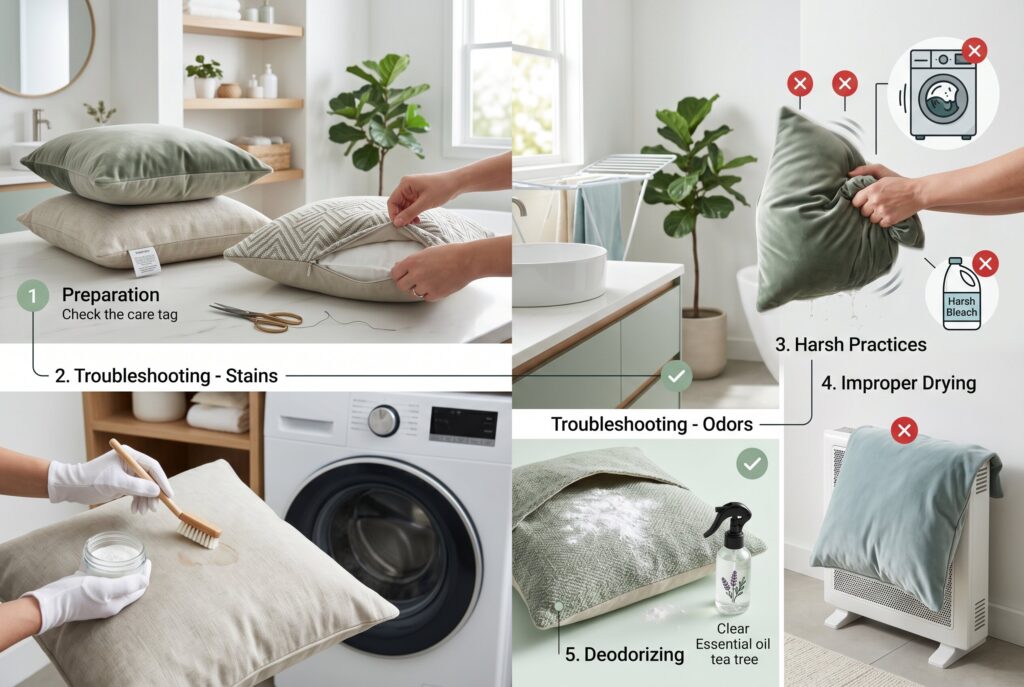
Modern trends such as CleanTok often promote laundry stripping: however, caution is advised as harsh chemicals may damage organic dyes or handmade seams.
Maintenance: When to Refresh vs. When to Replace
Keeping your home healthy involves more than just a one-time clean. It is generally recommended that you wash your decorative covers once a month and give the actual inserts a deep clean every two months.
Consistent upkeep is much easier when you have mastered the steps of how to wash throw pillows properly. If you fold your pillow in half and it stays that way instead of springing back, it is probably time to buy a new one. Knowing when to let go of an old pillow is just as important as knowing how to clean a savable one.
Conclusion

In the end, taking the time to wash throw pillows properly ensures that a home remains a healthy and beautiful sanctuary. Using the right methods, like the tennis ball trick or the colorfastness test, protects the investment made in high-quality decor. When a homeowner understands the nuances of material care, the process of maintaining a fresh living space becomes a simple and rewarding part of home organization.
Related Articles
How to Wash Pillows: 7 Steps to Keep Them Fluffy & Damage-Free (2026)