
Ceiling fans do more than move air around your home. They also collect a surprising amount of dust, pet hair, and grime gradually. When those blades get dirty, every spin can send particles back into the room and onto your furniture, bedding, and floors. The good news is that cleaning ceiling fans doesn’t have to turn into a dusty mess. With the right methods, you can clean them quickly, protect indoor air quality, and keep your home feeling fresher with far less effort.
Why Regular Ceiling Fan Cleaning Matters
Ceiling fans often get overlooked during routine house cleaning, especially when they’re installed in high ceilings, bedrooms, or guest rooms that aren’t cleaned as often. But once dust builds up on the blades, it doesn’t stay there forever. Each time the fan turns on, that buildup can scatter fine particles into the air and across nearby surfaces.
For households in the United States, where forced air systems, seasonal pollen, pet dander, and indoor dust are common concerns, keeping ceiling fans clean can make a noticeable difference. Clean fan blades help reduce recirculated dust, support better air flow, and make rooms look more polished overall. It also helps your fan run more efficiently because heavy buildup can affect balance over time.
1. Use a Pillowcase to Trap Dust on the Blades
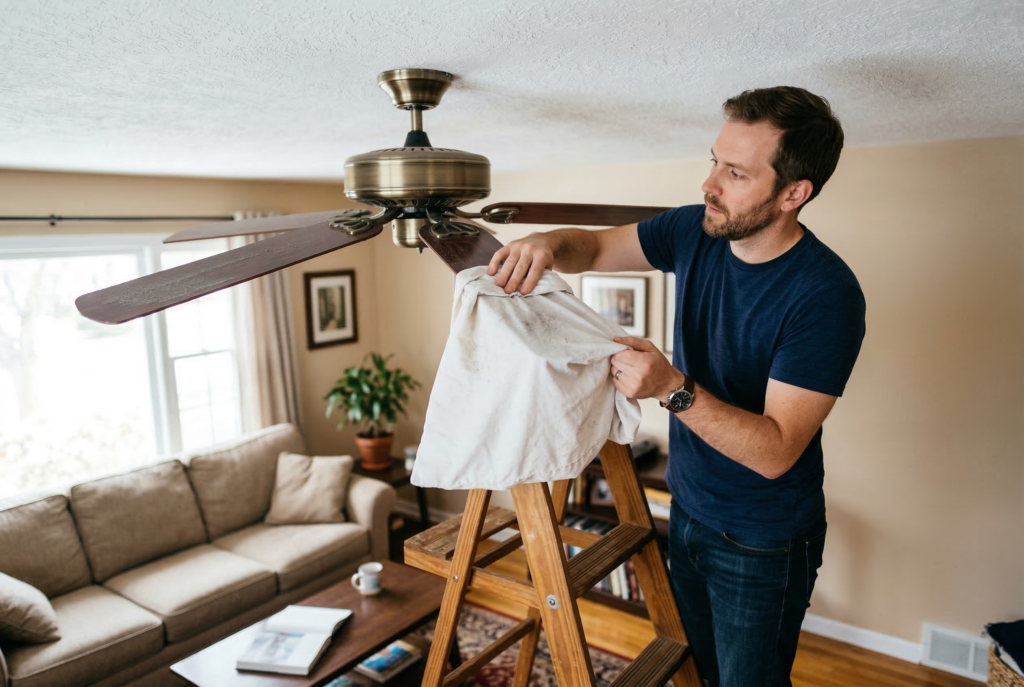
One of the easiest and least messy ways to clean ceiling fans is with an old pillowcase. This method works especially well for standard fans in bedrooms, living rooms, and dining areas.
Slide the pillowcase carefully over one blade at a time. Press lightly on the top and bottom of the blade, then pull the pillowcase back toward you. The dust stays inside the fabric instead of falling onto the floor, bed, or furniture below. Once you finish, take the pillowcase outside, shake it out into the trash, or wash it right away. This is a smart option for anyone who wants a simple tool-free approach. It’s also helpful if you’re cleaning fans above carpet, where fallen dust can be harder to pick up.
2. Clean Ceiling Fans Before Dusting the Rest of the Room
Timing matters when you want to keep your home dust-free. Always clean ceiling fans first before you dust shelves, wipe furniture, or vacuum floors. Even with careful methods, a little loose debris may still fall. Starting at the top of the room makes the rest of your cleaning more effective.
This top-to-bottom approach is especially useful in busy homes where dust builds up quickly from pets, kids, open windows, or HVAC use. Once the fan is done, you can move on to light fixtures, furniture, baseboards, and floors without having to redo surfaces later. Professional cleaners often follow this method because it saves time and keeps dirt from spreading back onto already-clean areas.
3. Use a Microfiber Duster for Weekly Maintenance
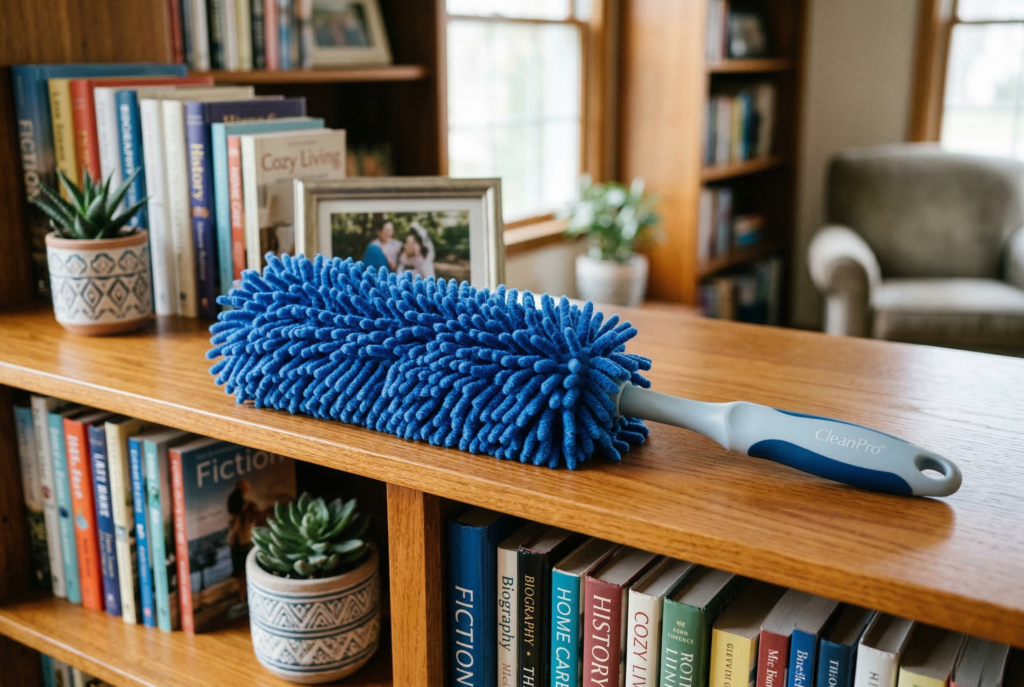
If you want to avoid heavy dust buildup altogether, a microfiber duster is one of the best tools to keep on hand. It’s ideal for quick touch-ups between deeper cleanings.
Microfiber grabs and holds dust better than many traditional feather dusters, which can end up pushing particles around instead of removing them. Choose an extendable duster if your fan is mounted high or above staircases. Gently wipe both sides of each blade, the motor housing, and the pull chain if your fan has one. A quick weekly pass can prevent layers of dust from forming. That means you won’t have to deal with thick clumps later, and your regular cleaning sessions will be much easier.
4. Wipe Sticky or Greasy Buildup With a Damp Cloth
Some ceiling fans collect more than dry dust. In kitchens, open-concept homes, or rooms near cooking areas, fan blades can develop a sticky film from grease and airborne residue. When that happens, dry dusting alone won’t fully clean the surface.
Use a soft microfiber cloth dampened with warm water and a small amount of mild dish soap. Wipe each blade carefully, then go back over it with a clean damp cloth to remove any residue. Finish by drying the blade with a soft towel so moisture doesn’t sit on the finish. Don’t spray cleaner directly onto the fan. It can drip into the motor housing or light fixture and create problems over time. Applying cleaner to the cloth first gives you better control and keeps the process safer.
5. Protect the Floor and Furniture Before You Start
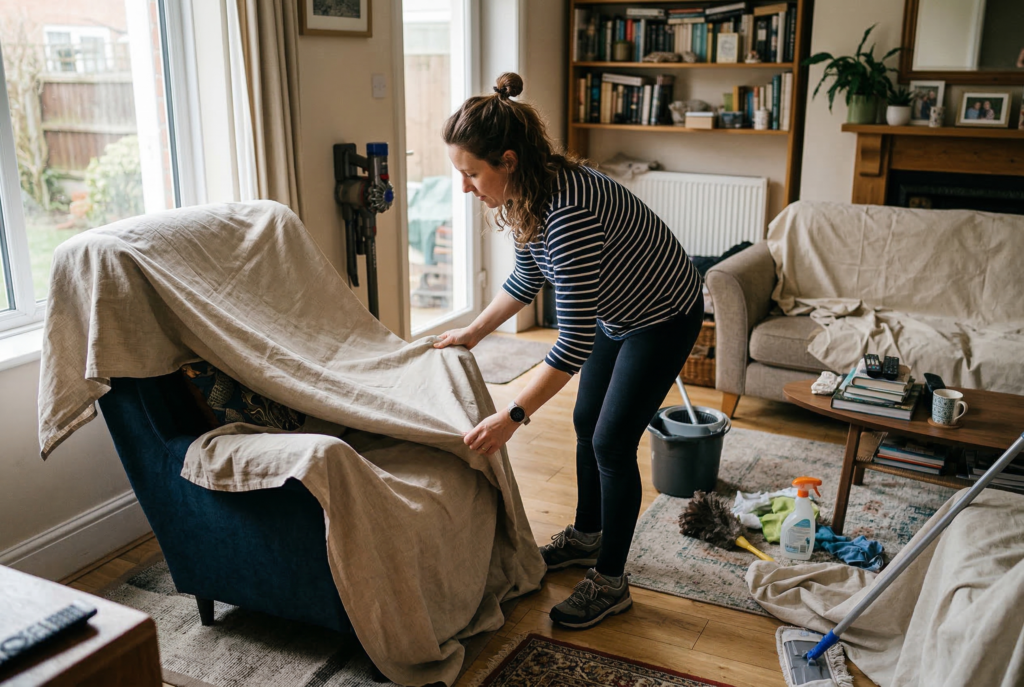
Even the cleanest method works better with a little preparation. Before cleaning your ceiling fan, move lightweight furniture if needed and place a washable drop cloth, old sheet, or towel underneath the fan. This simple step makes cleanup easier, especially if the blades haven’t been cleaned in a while.
In bedrooms, cover the bed first. In living rooms, protect upholstered furniture and coffee tables. In dining spaces, clear the table surface so dust doesn’t settle on placemats, dishes, or decor. This step matters most during seasonal deep cleaning, after renovation work, or during allergy season when extra dust tends to gather indoors. A few seconds of prep can save much more time afterward.
6. Don’t Forget the Light Fixtures and Motor Housing
When people clean ceiling fans, they often focus only on the blades. But dust also gathers on the base, motor housing, light kit, and glass covers. Ignoring those areas can leave the fan looking dull and can still allow dust to circulate when the fan runs.
Turn the fan off completely before cleaning. If your fan has light bulbs or glass shades, make sure they’ve cooled down first. Wipe the motor housing with a dry or slightly damp microfiber cloth. If there are removable glass covers, take them down carefully and wash them in warm soapy water. Dry them fully before reinstalling. This fuller cleaning approach helps the entire fixture look brighter and more cared for. It’s especially worthwhile in entryways, primary bedrooms, and family rooms where ceiling fans are highly visible.
7. Create a Cleaning Schedule That Matches Your Home

The best way to keep ceiling fans clean without the mess is to clean them often enough that dust never gets out of control. How often that should happen depends on your household.
Homes with pets, smokers, open windows, nearby construction, or high pollen levels usually need more frequent attention. In many homes, a light dusting every one to two weeks and a deeper wipe-down once a month works well. Fans in guest rooms or less-used spaces may not need as much upkeep, but they still shouldn’t be ignored for long stretches.
A realistic cleaning schedule is better than an overly ambitious one you won’t stick to. Tying ceiling fan cleaning to a routine, such as changing air filters, washing bedding, or doing monthly deep cleaning, makes it easier to remember.
Best Tools to Clean Ceiling Fans With Less Effort
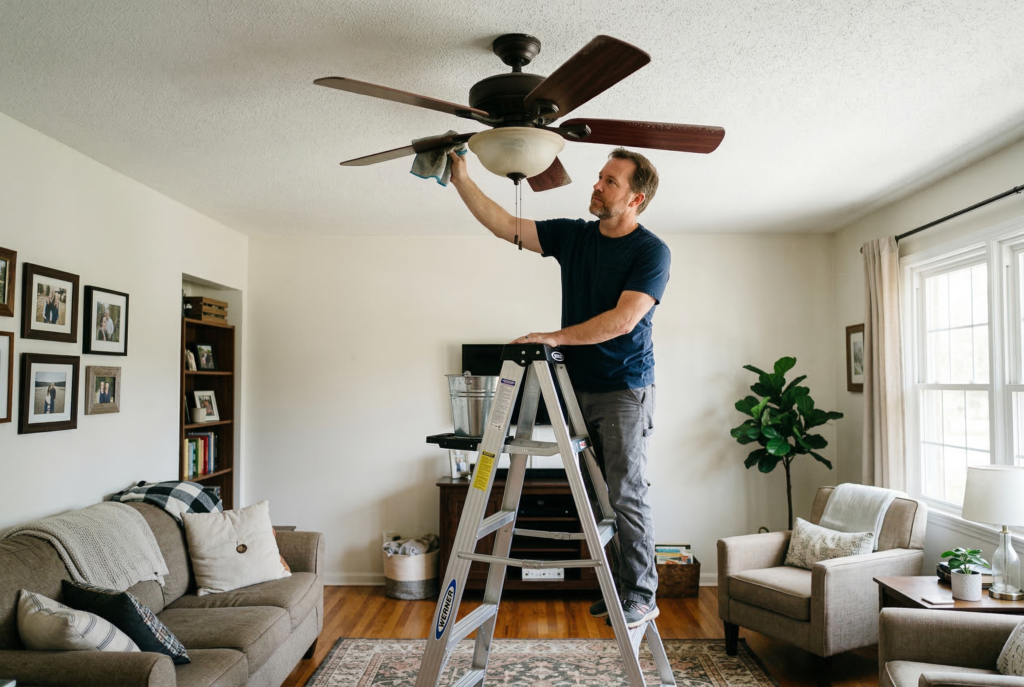
You don’t need a long list of specialty products to clean ceiling fans well. A few reliable basics will do the job:
Microfiber cloths are excellent for both dry dusting and damp cleaning. A pillowcase works well for trapping loose debris on fan blades while you wipe them down. For fans installed on high or vaulted ceilings, an extendable microfiber duster makes the job much easier. In rooms with standard-height ceilings, using a sturdy step stool with secure footing can help you clean safely.
If there is sticky buildup on the blades, a simple mixture of mild dish soap and warm water is usually enough to remove it effectively. Try to avoid harsh sprays, abrasive scrubbers, or overly wet cloths. These can damage finishes, leave streaks, or create unnecessary mess.
Common Ceiling Fan Cleaning Mistakes to Avoid
A few cleaning habits can make the job harder than it needs to be. One of the biggest mistakes is dusting too aggressively, which sends debris flying across the room. Another is cleaning the fan after you’ve already vacuumed and wiped everything else down.
Using too much liquid is another common issue, especially on wood-finish blades or fans with integrated lighting. And of course, cleaning a fan while it’s still running or without stable footing is never worth the risk. A careful, controlled approach works best. Slow down, use the right tools, and clean each section with intention rather than rushing through it.
Conclusion
Keeping ceiling fans clean doesn’t have to create a layer of dust across your entire room. With simple methods like using a pillowcase, microfiber tools, and a damp cloth for stubborn buildup, you can remove dust effectively while keeping the mess under control. Regular cleaning also helps support better air quality, reduces dust on furniture, and keeps your home feeling fresher day to day.
If you want a cleaner home without adding complicated chores to your routine, ceiling fan maintenance is one of the smartest places to start. A few minutes every couple of weeks can make a real difference, and once you build the habit, it becomes one of the easiest ways to keep your home dust-free.