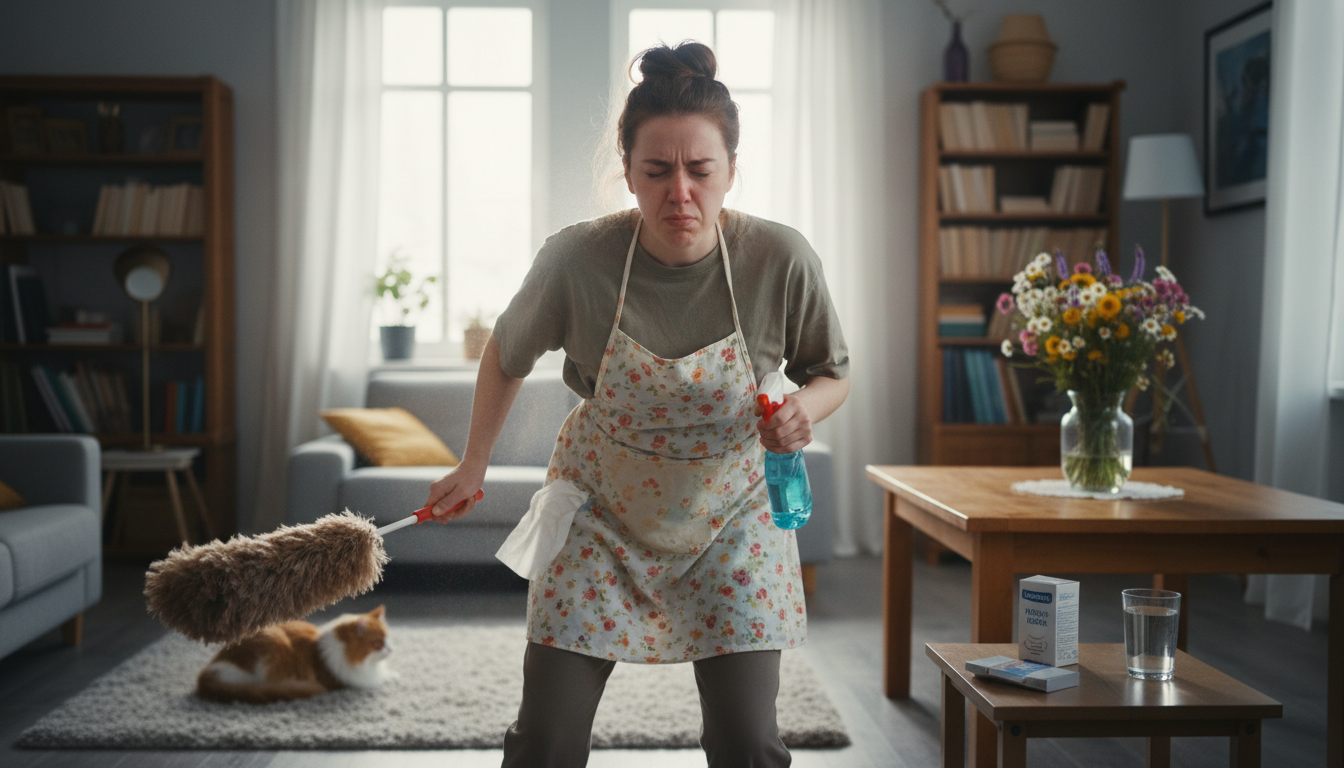
If you’re an allergy sufferer and feel betrayed when you vacuum, wipe everything down, and still wake up congested, it’s because of your cleaning habits. Some common ones actually kick allergens into the air, making dust, pollen, pet dander, and mold feel even worse.
This guide is built to address these real-world issues. You’ll get specific cleaning tips for allergy sufferers, plus a room-by-room plan that reduces dust and helps improve air quality at home without turning your schedule upside down.
Quick health note (important): If you have asthma and there’s significant mold, the CDC advises people with asthma or chronic lung disease shouldn’t stay in a moldy home or be there while it’s being cleaned.
The Goal: Capture Allergens, Don’t Scatter Them
Most “cleaning for allergies” comes down to one core rule: clean in a way that traps particles instead of launching them into the air. In practice, that means choosing damp microfiber cloths over dry dusters, using HEPA-filter vacuums and air cleaners instead of basic filters, favoring closed storage over open piles where dust can settle, and keeping humidity under control since mold and dust mites thrive in damp conditions.
Allergy-Safe Cleaning Toolkit (What Experts Actually Recommend)
The Non-Negotiables
- Microfiber cloths (multiple): Use slightly damp. They trap dust instead of redistributing it.
- HEPA vacuum (sealed if possible): Allergen control organizations note HEPA vacuums can help reduce allergen exposure, especially when paired with other controls.
- Disposable gloves and a mask: Especially for dusty tasks, changing filters, or cleaning moldy areas.
- A small hygrometer (humidity meter): Cheap, and it stops you from guessing.
Helpful Upgrades
- HEPA air purifier for the bedroom or main living area (think of it as “air support,” not a substitute for cleaning). CDC notes HEPA is the high bar; other units should be clearly labeled as non-HEPA.
- Allergen-proof mattress/pillow encasements: Allergists emphasize the bedroom because of time spent there.
The “Don’t Make It Worse” Rules (Allergy Cleaning Protocol)
Rule 1: Keep Humidity in The Allergy-Safe Zone
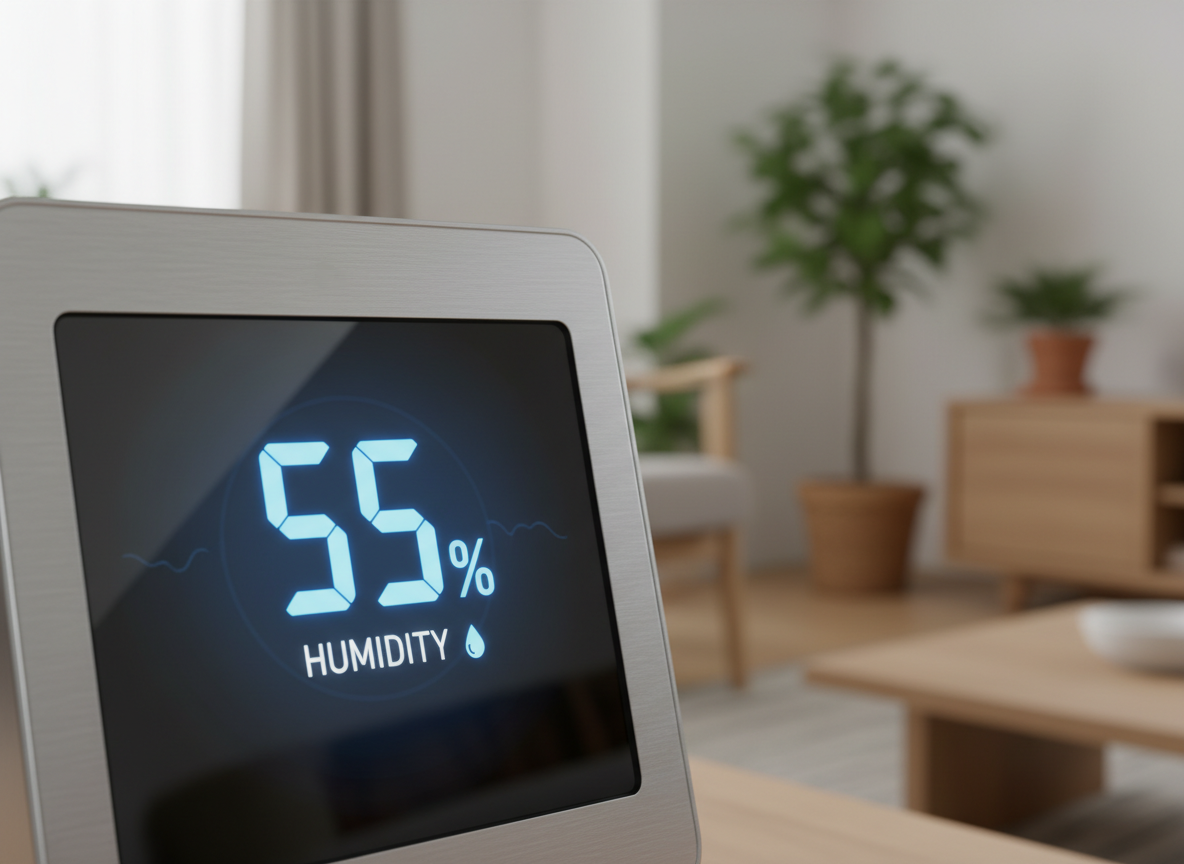
The U.S. Environmental Protection Agency (EPA) recommends keeping indoor humidity between 30% and 50% to help control mold growth and reduce other indoor pollutants. When humidity rises above 50–60%, the risk of mold and dust mites increases quickly, while air that’s too dry can irritate nasal passages, skin, and airways, especially for people with allergies or asthma.
Rule 2: Wash Bedding the “Allergist Way”
Allergists (AAAAI) recommend washing bedding weekly in hot water (130°F) and drying on hot to help control dust mites. This is one of the highest-impact steps in the whole guide.
Rule 3: Vacuum Like You Mean It (Slowly)
A vacuum only helps if it actually traps particles instead of redistributing them. Research published in the Journal of Allergy and Clinical Immunology shows that poor filtration can increase allergen exposure during vacuuming, which is why proper filtration matters so much for allergy sufferers. Using the right technique is just as important: move slowly with overlapping passes (similar to mowing a lawn), vacuum edges and corners first where dust tends to collect, and clean upholstery and rugs weekly if you’re experiencing symptoms.
Rule 4: Be Cautious With Bleach (And Never Mix Chemicals)
EPA notes you generally can’t “sterilize” mold away; moisture control is the real fix. If you use disinfectants/biocides, ventilate well, and never mix bleach with ammonia due to toxic fumes. If bleach triggers your breathing, choose alternatives (more on that in the Bathroom section).
Your Simple Schedule
| Daily (5–10 minutes) |
|
|---|---|
| Weekly (30–60 minutes total, split if needed) |
|
| Monthly (30 minutes) |
|
| Seasonal (1–2 hours, once a quarter) |
|
Room-by-Room Cleaning Plan
Entryway
The goal here is to stop outdoor allergens before they spread through your home. Placing a washable mat just inside the door and shaking or washing it weekly helps catch pollen and dust right away. Adding a small shoe tray keeps contaminants from traveling farther indoors, while storing hats, scarves, and dog leashes in a closed bin prevents allergens from settling onto nearby surfaces.
Living Room
The goal in the living room is to control major dust reservoirs like rugs, couches, and curtains before allergens spread through the rest of the home. On a weekly basis, vacuum rugs and high-traffic floor paths then move on to upholstered furniture. Finish by damp-dusting surfaces such as the TV stand, shelves, and window sills to capture lingering particles.
Once a month, wash throw blankets and pillow covers, which quietly hold onto allergens over time. If you have pets, vacuum their favorite lounging spots twice a week for better symptom control. For renters who can’t remove carpet, a HEPA vacuum keeps clutter off the floor and also ensures you can vacuum thoroughly and effectively.
Bedroom
Allergists stress the importance of reducing dust mite exposure in the bedroom because this is where you spend the most uninterrupted time each day. According to the American Academy of Allergy, Asthma & Immunology (AAAAI), washing sheets and pillowcases weekly in hot water (130°F) is one of the most effective ways to control dust mites. It’s also important to vacuum around the perimeter of the bed, where dust tends to accumulate unnoticed.
On a monthly basis, wash your comforter or duvet cover and vacuum the mattress surface using an attachment before remaking the bed. For longer-term relief, allergists recommend using allergen-proof encasements for mattresses and pillows, which block mites from settling in.
Kitchen
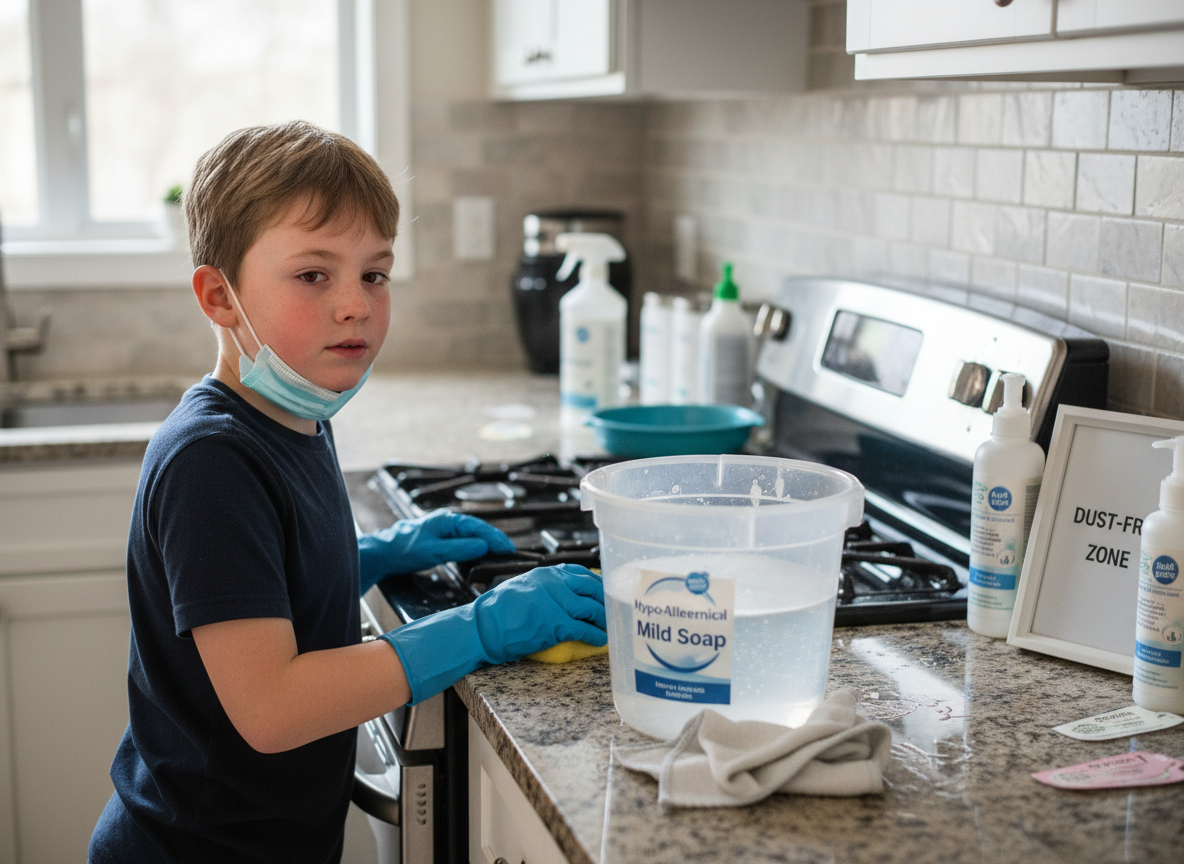
Goal: Reduce moisture, remove food sources, and limit irritants.
Daily
- Run exhaust fan while cooking (and 10–15 minutes after)
- Wipe counters/stove backsplash with mild soap and water
- Empty trash if food scraps build up fast
Weekly
- Mop hard floors (don’t “dry sweep”)
- Wipe cabinet fronts and handles (touch points collect grime)
- Check under sink for leaks (moisture drives mold)
Seasonal
- Clean stove hood filter (grease holds particles)
- Deep clean fridge shelves and drawers
Bathroom
The goal in the bathroom is simple but critical: keep moisture low so mold never gets the chance to take hold. After each shower, you should run the exhaust fan or leave the door open, and take 60 seconds to squeegee or towel-dry the shower walls and door seams. That small habit dramatically reduces lingering moisture, which is the main driver of mold growth.
On a weekly basis, clean tub and shower corners along with grout lines. Wash bathmats regularly, since they trap water and mold spores more easily than most people realize. If you notice visible mold, always address the moisture source first by improving ventilation, fixing leaks, or lowering indoor humidity. When using bleach or disinfectants, make sure the space is well ventilated and never mix cleaning chemicals, as advised by the U.S. Environmental Protection Agency.
Laundry Area
The goal in the laundry area is to stop damp fabrics and lint from feeding allergens. On a weekly basis, clean the lint trap with every load and check that the dryer is venting moisture outdoors properly. Each month, wipe down the washer door gasket and get into the habit of leaving the washer door slightly open after use so moisture can fully evaporate.
Basement or Garage
The goal in a basement or garage is to control dampness and limit dust reservoirs before they turn into larger problems. On a monthly basis, run a dehumidifier if humidity rises above 50 percent. Vacuum and dust shelving regularly, and use closed storage bins to reduce the amount of dust that can settle on stored items.
If you discover mold, treat it as a moisture problem first by identifying and fixing the source of dampness. Follow CDC safety guidance during cleanup, as people with asthma or other respiratory conditions are considered higher risk and should avoid being present while mold is being removed.
Product Choices That Won’t Trigger Symptoms

A lot of “clean” smells are just fragrances that can irritate sensitive lungs. For allergy-friendly cleaning, you should look for fragrance-free or dye-free products, low-VOC cleaners, and simple formulas.
For most homes, simple and safer basics are more than enough to keep allergens under control. Mild dish soap mixed with warm water works well for daily cleaning without irritating sensitive airways, while a baking soda paste can tackle grime and buildup gently. Vinegar is effective for hard-water deposits, though it’s best avoided if strong smells trigger your symptoms.
Small Daily Habits That Add Up to Fewer Symptoms
Try incorporating these habits:
- Leave shoes at the door to reduce tracked-in pollen
- Use washable entry rugs and clean them regularly
- Wear a mask when cleaning dusty areas
- Store clutter in closed bins instead of open shelves
When You’re Too Busy (or Too Sensitive) to Do It All
If your symptoms flare up while you’re cleaning, that doesn’t mean you’re doing something wrong, it’s useful feedback. Take it as a cue to reduce exposure rather than push through discomfort. You can do that by:
- Asking someone else to handle vacuuming, especially carpets and upholstery
- Vacuuming at times when you’re able to leave the room afterward and let the air settle
- Using a HEPA air cleaner in the bedroom for added support, as studies published in Wiley Online Library have shown meaningful reductions in indoor airborne particles in certain settings
Final Thoughts: Clean Enough to Breathe, Not Clean Enough to Impress
A truly allergy-friendly home is predictable. You keep humidity in check, wash bedding weekly, vacuum with proper filtration, and damp-dust so you aren’t stirring up yesterday’s dust into today’s air.
Related Articles
- Non-Toxic Cleaning Methods: Simple Ways to Create a Safer Home
- Top 10 Best Natural Cleaning Products for a Safe, Eco-Friendly Home
- Healthy Home Cleaning Practices for Better Physical and Mental Well Being
- 10 Essential HVAC Maintenance Tips to Improve Indoor Air Quality, Reduce Allergens, and Keep Your Home Healthy
- Top 10 Best Robot Vacuums: Pros, Cons, and How to Choose the Right One
- 12 Eco-Friendly Laundry Tips to Save Energy, Reduce Chemicals, and Create a More Sustainable Cleaning Routine