If you’ve ever stepped outside, looked at your lawn, and thought, “I have no idea what I’m doing,” you’re dealing with the same thing many homeowners face. Lawn care has a reputation for being complicated, time-consuming, and a little intimidating, especially if this is your first yard, or your schedule is already packed.
Honestly, growing a healthy lawn doesn’t require perfection, expensive equipment, or constant attention. It just requires you to understand a few fundamentals, make smarter choices upfront, and let your grass do most of the work. This guide breaks lawn care basics down into realistic, beginner-friendly steps for you to turn this chore into something manageable and even enjoyable.
Start With the Right Mindset (This Matters More Than You Think)
Before we get into mowing heights or watering schedules, let’s clear something up: a “good” lawn isn’t the same as a “perfect” lawn. A beginner-friendly, low-maintenance yard looks mostly green and healthy, recovers quickly after stress, doesn’t demand constant fixing, and fits your time, climate, and lifestyle. Once you let go of the idea that your lawn needs to look like a golf course, everything gets easier and cheaper.
Understand What You’re Working With
Know Your Grass Type (Cool-Season vs. Warm-Season)
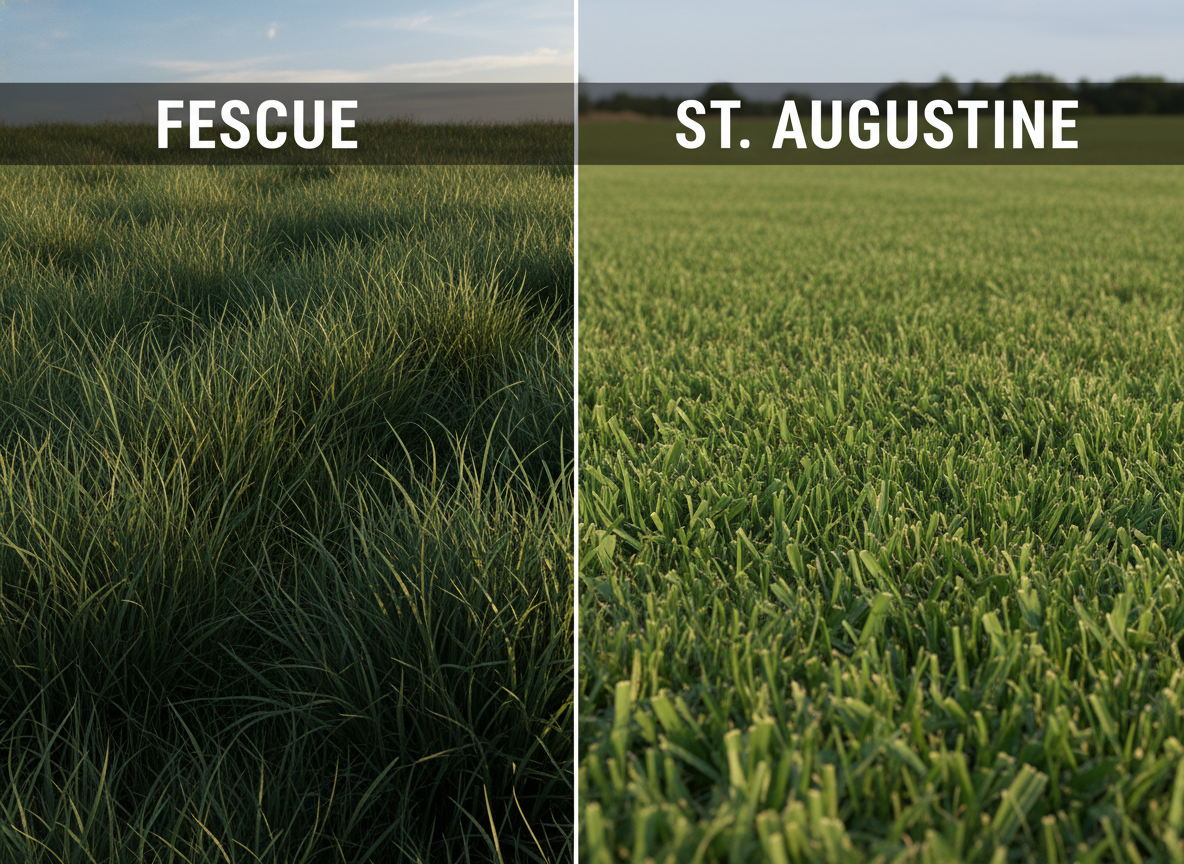
Grass isn’t one-size-fits-all, and a lot of frustration comes from treating the wrong grass the wrong way.
- Cool-season grasses (like fescue, bluegrass, ryegrass) thrive in northern and transitional areas. They grow most in spring and fall.
- Warm-season grasses (like Bermuda, Zoysia, St. Augustine) love heat and grow aggressively in summer.
This matters because everything from how often you water to how high you mow, when you fertilize, and whether overseeding makes sense depends on your grass type. If you aren’t sure what kind of grass you have, a local extension office or a simple online photo guide can usually point you in the right direction.
Pay Attention to Sun, Shade, and Traffic
Take a slow walk around your yard and ask yourself:
- Where does grass struggle?
- Where does water sit?
- Where do people (or pets) walk the most?
You don’t need to fix everything right away. Just noticing patterns helps you make better decisions later.
Lawn Mowing Basics That Actually Make a Difference
Mow Higher Than You Think
One of the most common beginner mistakes is mowing the lawn too short. Taller grass shades the soil, helps retain moisture longer, naturally suppresses weeds, and encourages deeper root growth. As a general guideline, cool-season grasses do best when kept around 3–4 inches tall, while warm-season grasses typically thrive at about 1.5–3 inches, depending on the specific variety.
Follow the One-Third Rule
Never cut more than one-third of the grass height at once. If grass gets tall, raise your mower and bring it down gradually over a few cuts.
Sharp Blades Matter
Keeping mower blades sharp is more important than most people realize. Dull blades rip the grass rather than slicing it cleanly, which leads to frayed, brown tips and puts unnecessary stress on the lawn. Sharpening your blades once or twice per season can noticeably improve both the look and health of your grass.
Water Smarter, Not More Often
Deep and Infrequent Wins
Most established lawns stay healthiest with about 1 to 1.5 inches of water per week, including rainfall. Rather than watering a little every day, it’s better to water deeply and less often. This approach encourages roots to grow deeper into the soil instead of spreading shallowly, making your lawn more resilient to heat and drought.
Morning Is Best
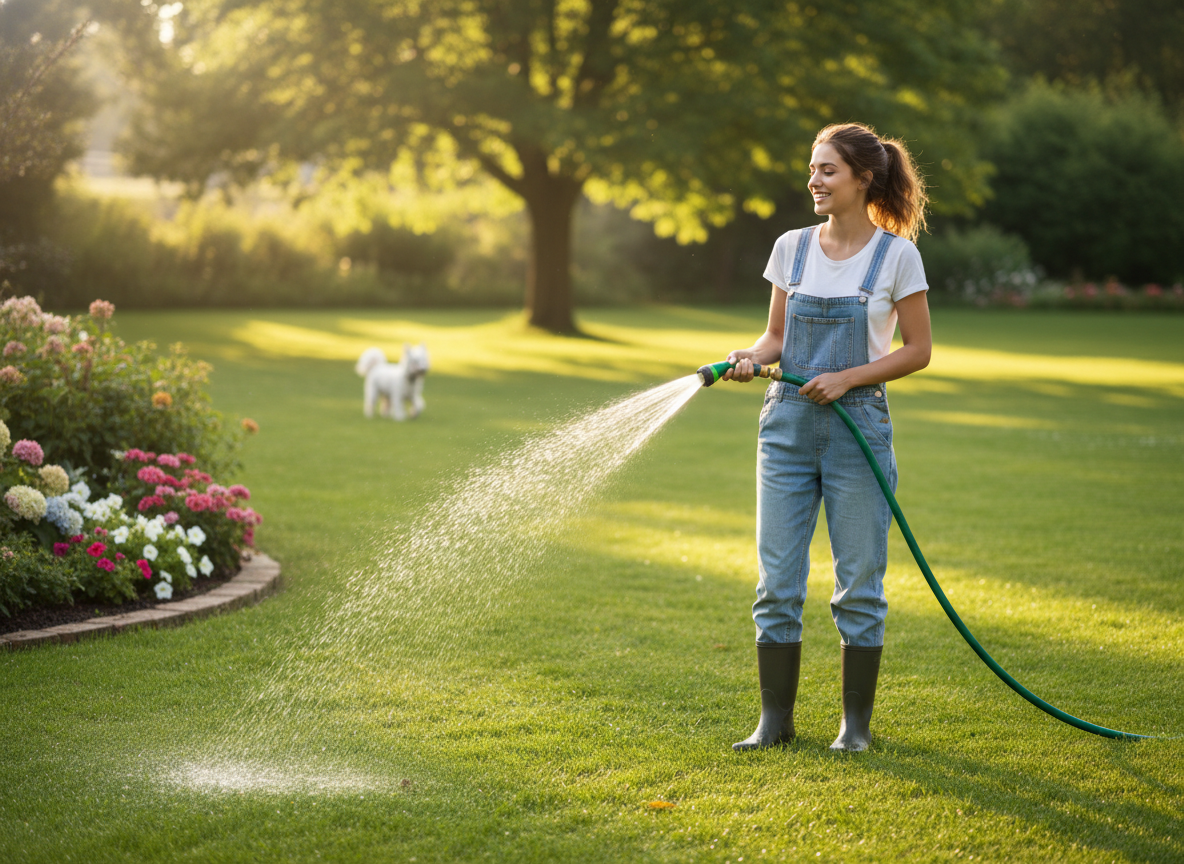
You should water in the morning because it reduces evaporation and lowers disease risk. Instead, evening watering may seem convenient, but wet grass overnight invites problems.
Let the Lawn Tell You What It Needs
Your lawn will usually tell you when it needs water if you know what to look for. When grass starts to take on a slightly blue-gray tint, footprints remain visible after you walk across it, or the blades begin to fold inward, it’s a sign the lawn is thirsty. You don’t need a strict schedule.
Fertilizing Without Overdoing It
Less Is Usually More
Many beginners see fertilizer as a quick solution, but using too much can actually damage your lawn. A simple approach works best: feed your grass once or twice a year, choose fertilizers with slow-release nitrogen, and avoid fertilizing during periods of extreme heat. If you want more precise guidance, you can consider a soil test.
Timing Matters More Than Brand
When it comes to fertilizing, when you feed your lawn matters far more than which brand you buy. Grass responds best when nutrients are applied during its natural growth periods, not when shelves are fully stocked with seasonal promotions.
- Cool-season lawns: Focus most fertilizing in the fall, when grass is actively building roots and storing energy. A lighter feeding in spring can help, but fall does the heavy lifting.
- Warm-season lawns: Fertilize from late spring through summer, once the lawn has fully greened up and is growing vigorously. Feeding too early can stress the grass instead of helping it.
By aligning fertilization with your lawn’s growth cycle, nutrients actually get used instead of wasted. That simple timing shift often delivers better results than upgrading to a more expensive product.
Weed Control That Doesn’t Take Over Your Life
Healthy Grass Is Your Best Defense
A thick, healthy lawn is one of the most effective weed control tools you have. When grass is well-mowed, properly watered, and growing densely, it naturally crowds out weeds by limiting their access to sunlight, space, and nutrients. In many cases, weeds are a signal that something else is off, like thin grass, compacted soil, or inconsistent care. Fix the underlying issue, and the weed problem often improves on its own.
Spot Treat, Don’t Blanket
Instead of spraying the entire lawn, focus toward targeted solutions. Pull small weeds by hand, spot treat stubborn patches, and avoid applying treatments during extreme heat or drought. This approach saves your time, reduces costs, minimizes stress, and is generally easier on the environment than blanket applications.
Aeration and Overseeding: When (and When Not) to Worry
Aeration Helps, But It’s Not Always Urgent
Aeration relieves compacted soil and improves water and nutrient flow. It’s most helpful if:
- Soil is heavily compacted
- Water runs off instead of soaking in
- Grass struggles despite good care
Many lawns only need aeration every few years.
Overseed Strategically
Overseeding can help thicken your lawn and naturally reduce weeds, but it only works well when the timing is right. Seeding at the wrong time often leads to wasted effort and poor results.
- Cool-season lawns: Early fall is ideal because soil is still warm, weeds are slowing down, and cooler air helps new grass establish strong roots.
- Warm-season lawns: Late spring to early summer works best, once temperatures are consistently warm and the grass is actively growing.
Seasonal Lawn Care Basics (At a Glance)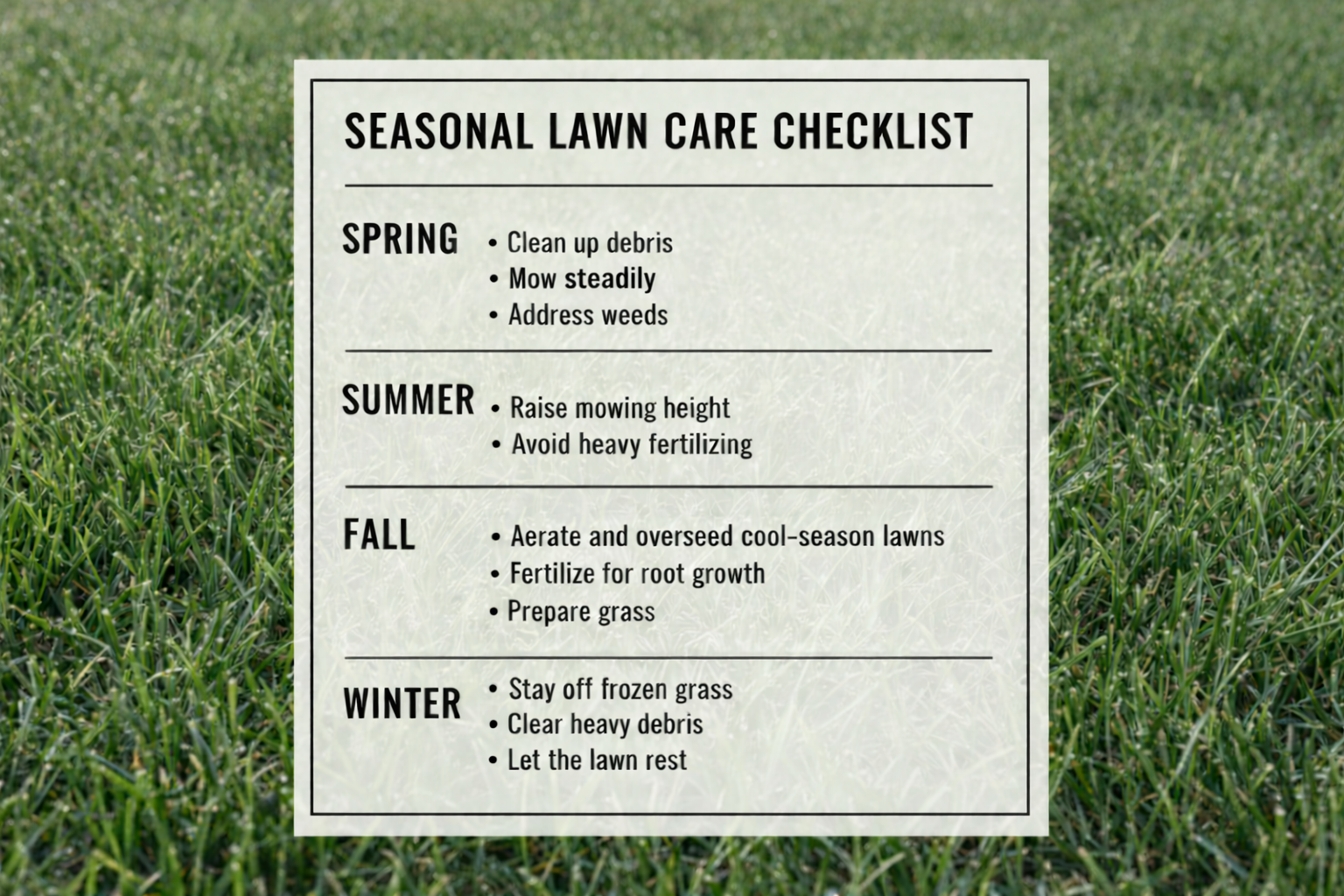
Spring
In spring, focus on setting your lawn up for the growing season. Start by cleaning up debris left behind from winter, then ease back into mowing as grass begins to grow. Plus, address weeds early, before they have a chance to establish and spread, to reduce problems later in the season.
Summer
During summer, adjust your routine to help your lawn handle heat and stress. Raise the mowing height to protect grass from sun exposure, focus on deep, infrequent watering to encourage strong roots, and avoid heavy fertilizing during periods of high heat, which can damage or burn the lawn.
Fall
Fall is time to shift your focus on strengthening the lawn for the colder months ahead. This is also the ideal time to aerate and overseed cool-season lawns, fertilize to promote strong root growth, and help grass recover from summer stress.
Winter
During winter, the best thing you can do for your lawn is largely to leave it alone. Stay off frozen grass to prevent damage, clear away heavy debris like fallen branches or thick leaf piles, and allow the lawn to rest until growth resumes in spring.
Build a Low-Maintenance Lawn Routine
Here’s the thing: you don’t need a perfect lawn care schedule. What you need is consistency. A realistic approach means mowing when the grass actually needs it instead of following a strict calendar, watering when the lawn shows signs of thirst, fertilizing sparingly, and addressing small issues before they turn into bigger problems. Five minutes of regular attention will always beat one exhausting, all-day overhaul once a year.
When to DIY and When to Get Help
Many lawn care tasks are very manageable for beginners, especially when you have a bit of time and the right tools. Mowing, making basic watering adjustments, handling light weed control, and taking care of seasonal cleanup are all things most homeowners can comfortably do themselves with good results.
Other tasks, however, may be worth outsourcing depending on your schedule, equipment, and comfort level. Severe weed infestations, ongoing lawn diseases, large-scale aeration, and major soil corrections often require professional-grade tools and expertise. There’s no prize for doing everything yourself; choosing what fits your life is what keeps lawn care sustainable and stress-free.
Final Thoughts: A Healthier Lawn Without the Burnout
Lawn care doesn’t have to be complicated to be effective. Once you understand the basics, such as how grass grows, when it needs help, and when to leave it alone, you can build a yard that looks good without demanding constant attention. Remember: A greener, healthier, low-maintenance yard isn’t about doing more. It’s about doing the right things, at the right time, for your space.