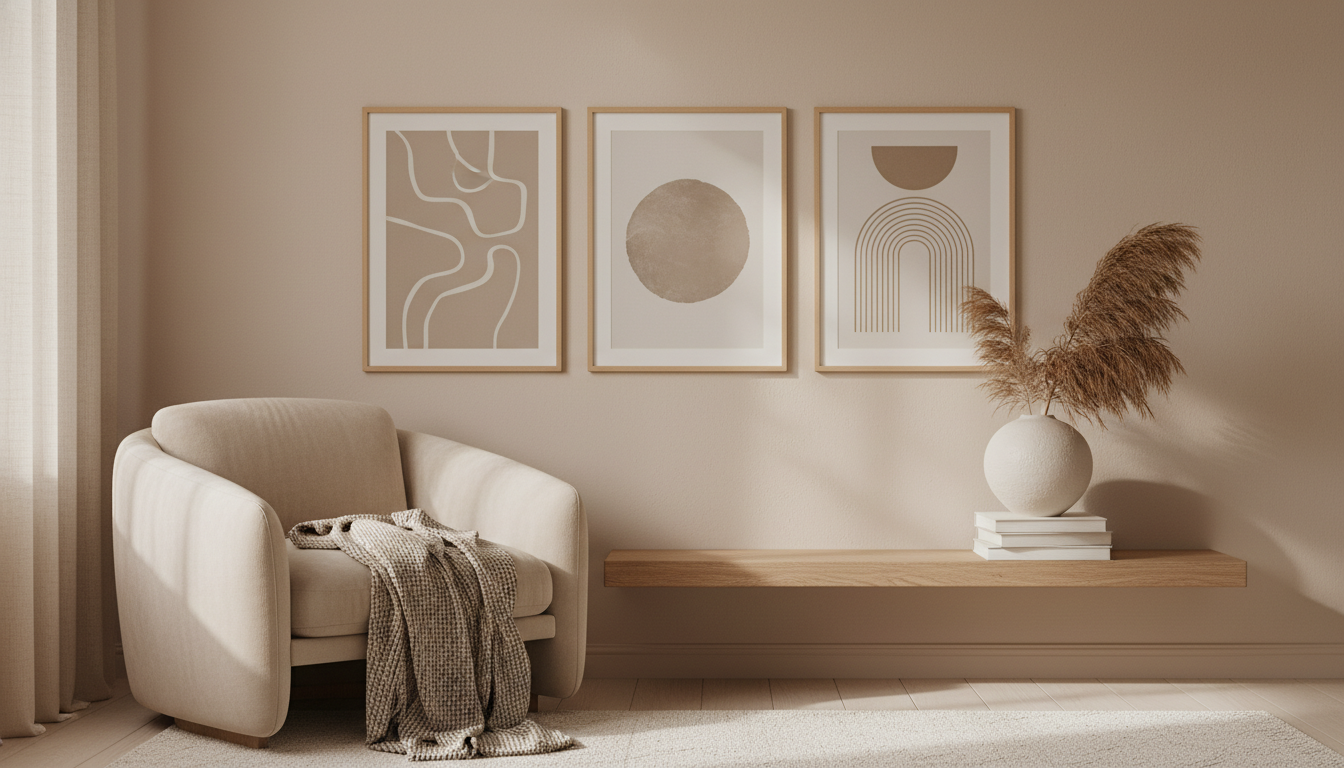
At some point, most homes reach the same place. The big pieces are done. The sofa works, the rug fits, the lighting finally feels livable. But the walls? They still feel like an afterthought.
Minimalist wall décor isn’t about stripping a room down or living with blank, echoing walls. It’s about choosing fewer elements so the space feels clear, comfortable, and easy to live in. When it’s done well, minimalist décor adds personality without adding stress.
This guide focuses on realistic, everyday solutions for renters and homeowners alike. The kind of wall ideas that hold up in busy households, small apartments, and lived-in family spaces, without constant tweaking or maintenance.
Why Minimalist Wall Décor Works
Minimalist design works because it simplifies daily life. When there’s less visual clutter, rooms feel easier to maintain, easier to focus in, and far more relaxing, especially on busy days. The challenge is finding the balance. Too little on the walls can feel stark or unfinished, while too much quickly becomes distracting. The ideas that follow are designed to sit right in the middle, which brings character and warmth without tipping into excess.
1. Anchor the Room With One Oversized Statement Piece
If you do only one thing, do this. A single large piece of wall art instantly grounds a room and eliminates the urge to “fill the gaps.” It works beautifully above sofas, beds, and console tables.
What works best:
- Abstract art with a limited color palette
- Black-and-white photography
- Textural pieces like canvas, plaster, or carved wood
Here’s a quick sizing rule: Aim for art that spans about two-thirds the width of the furniture below it. Anything smaller tends to look accidental rather than intentional.
2. Build a Minimalist Gallery Wall With Rules
Gallery walls don’t need to feel busy to make an impact. In minimalist spaces, restraint is what gives them clarity. Using identical frames or sticking to one consistent material keeps the look cohesive, while limiting your palette to two or three colors prevents visual overload. Planning the layout on the floor or with paper templates before hanging helps everything feel intentional. A structured grid creates a modern, calming effect, while a thoughtfully balanced asymmetrical layout adds softness without losing its curated feel.
3. Let Negative Space Do Some of the Work
This is something many décor guides overlook: leaving space on your walls is a design choice, not a missed opportunity. Open wall areas create visual balance and allow the pieces you do display to stand out more clearly. Not every wall needs decoration, and no wall needs to be fully filled. If an item doesn’t actively add to the room, it’s better left out.
4. Use Mirrors to Multiply Light
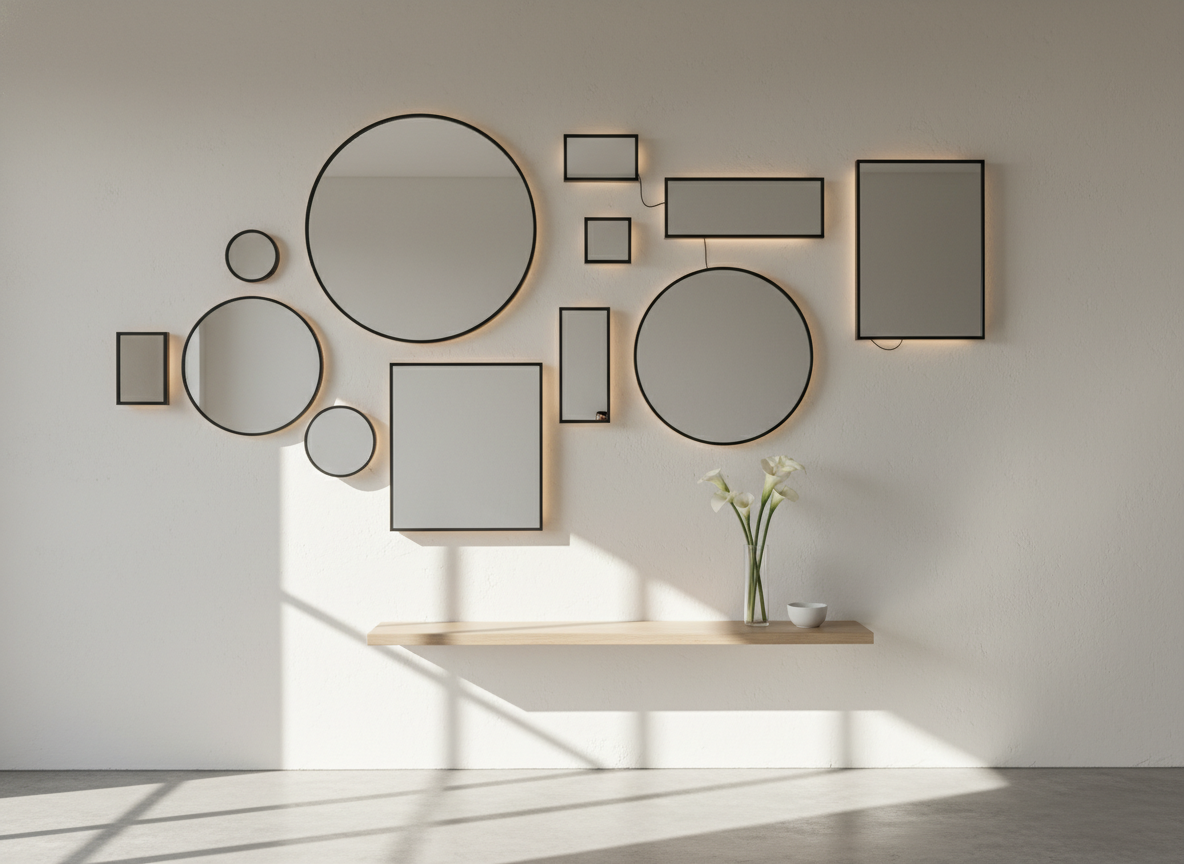
A mirror is one of the simplest ways to elevate minimalist wall décor, particularly in rooms that feel small or lack natural light. When placed thoughtfully, it reflects brightness and adds depth without introducing visual clutter. Hanging a mirror opposite a window helps spread daylight throughout the space, while positioning one above a console table or entry bench creates a clean, welcoming focal point. Mirrors also work well on narrow walls that otherwise feel forgotten. Keep the design understated with a simple frame or no frame at all, allowing the reflection itself to do the work.
5. Style Floating Shelves Like Displays, Not Storage
Floating shelves work best in minimalist spaces when they’re styled with the same intention as a small gallery, not used as extra storage. A balanced arrangement usually includes one living or sculptural element, a short stack of thoughtfully chosen books, and a single ceramic or natural accent to anchor the look. Spacing matters just as much as the objects themselves, so leave room between items and resist the urge to fill every inch. If the shelf feels a little bare at first, give it a few days. Minimalist spaces often improve with patience, while overstyling happens quickly.
6. Add Warmth With Texture Instead of More Objects
When a minimalist room relies too heavily on smooth surfaces and neutral tones, it can start to feel a bit lifeless. Texture brings warmth and dimension without adding visual noise. To introduce depth to your home, you can add some woven wall hangings, linen or wool fabric art, subtle wood slats, or raw canvas and plaster-style pieces.
7. Turn Functional Items Into Wall Art
This is where minimalist décor truly comes into its own. Rather than treating decoration and function as separate goals, the most effective spaces rely on pieces that serve both purposes at once. A pared-back wall clock without numbers, sculptural wall sconces, or a simple peg rail styled sparingly can all act as design elements while doing real work in the room. When everyday function is elevated to something visually appealing, the need for extra décor fades, and clutter tends to disappear on its own.
8. Use Wall Lighting to Create Atmosphere
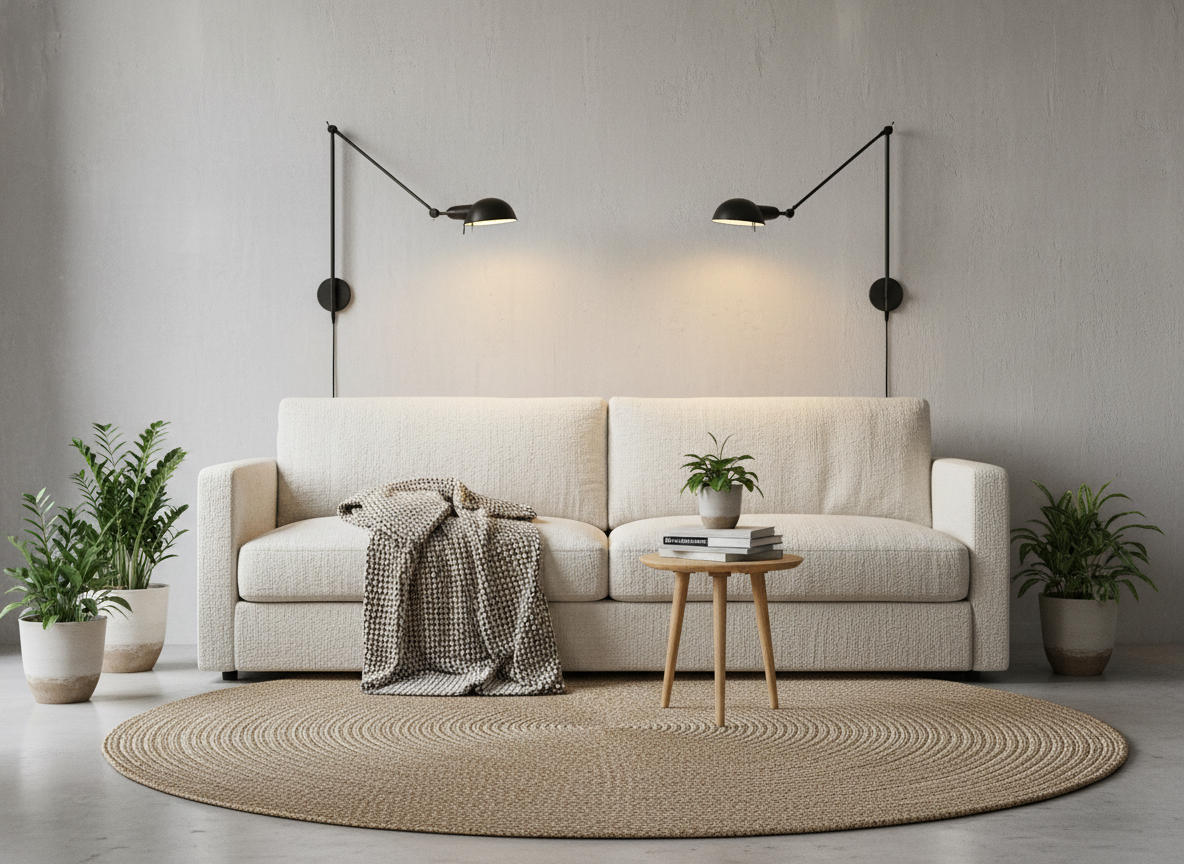
Wall lighting introduces depth, creating layers that make a space feel more intentional and inviting. Then, you can consider some minimalist-friendly choices like simple globe sconces, slim swing-arm reading lights, or integrated LED wall bars. When the light is soft and indirect, the entire room feels calmer, warmer, and noticeably more complete.
9. Keep Color Calm, Then Add One Intentional Accent
Minimalist wall décor works best when color is used with intention. A calm base of warm whites, soft greiges, muted beiges, or pale grays keeps the space feeling cohesive and easy on the eyes. From there, a single accent color introduced through artwork, ceramics, or textiles adds just enough contrast to keep things interesting. When one color is repeated thoughtfully, the room feels purposeful and well designed; when too many colors compete for attention, even a minimalist space can start to feel cluttered.
10. Go Vertical in Small Spaces
When space is tight, looking up instead of out can make a big difference. Vertical wall elements help maximize what you have without crowding the room. Tall, narrow artwork, thoughtfully stacked shelves with plenty of breathing room, and slim mirrors placed vertically all pull the eye upward. This simple shift creates the illusion of height, making smaller rooms feel more open and spacious without adding visual or physical bulk.
11. Embrace Sculptural Wall Pieces
Flat walls don’t have to remain two-dimensional. Sculptural wall décor adds visual interest through form and texture rather than bold color, making it a natural fit for minimalist spaces. You can add some elements like metal line sculptures, ceramic wall discs, or carved wood panels to introduce depth. Keeping each wall to a single sculptural grouping helps the display feel deliberate and refined, rather than busy or overdone.
12. Try Acoustic Panels That Look Like Art
Open, modern homes often amplify sound, especially in layouts with hard surfaces and fewer walls. Acoustic wall panels address that issue without drawing attention to themselves. Many current designs feature neutral fabrics and clean geometric forms that blend seamlessly into minimalist interiors while quietly improving sound quality. It’s an often-overlooked upgrade that can make a noticeable difference in busy households and home offices alike.
13. Create DIY Art That Looks Expensive (But Isn’t)
Minimalist design doesn’t have to come with a high price tag. One of the most impactful and affordable DIY options is creating your own large-scale textured art. By applying joint compound or plaster to a canvas and shaping it with a putty knife, you can build soft, organic texture. Adding a touch of neutral paint while the surface is still wet creates subtle variation and depth. Once fully dry, the finished piece has a refined, gallery-quality look, at a fraction of the cost of purchased artwork.
14. Bring in Nature Without Going Full “Plant Wall”
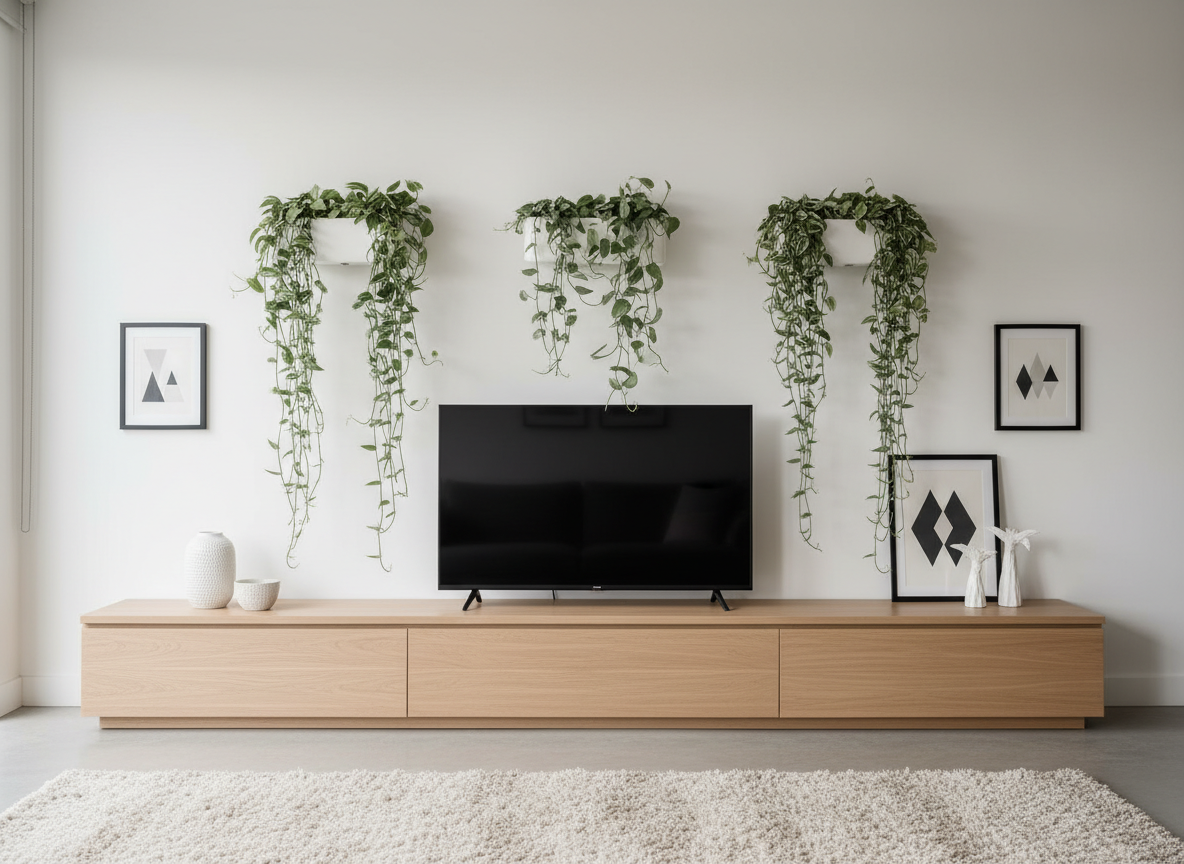
Biophilic design pairs naturally with minimalism when it’s applied with restraint. Simple, wall-friendly touches like pressed leaves framed between glass, wall-mounted planters with trailing greenery, or a single sculptural branch displayed horizontally bring in an organic element. These subtle references to nature soften clean lines and neutral palettes, adding warmth and life while preserving a calm, uncluttered look.
15. Stop Decorating When the Room Feels Finished
It may seem simple, but it’s often the most challenging part of decorating. Minimalist wall décor isn’t about occupying every open area. Instead, it’s about recognizing when a space already feels balanced and finished. If the room feels calm, functional, and comfortable, there’s no need to add more. Stepping back and resisting the impulse to keep adjusting is what gives minimalist spaces their ease and lasting appeal.
Mistakes to Avoid When Creating Minimalist Wall Décor (And How to Fix Them)
Minimalist wall décor looks effortless when it’s done right, but small missteps can quickly make a space feel awkward, unfinished, or unintentionally cluttered. These are the most common mistakes people make, plus exactly how to course-correct them.
Hanging Art Too High
This happens constantly, especially in living rooms. Art that’s hung too high breaks the visual connection between the wall and the furniture below it, making the room feel disjointed.
How to fix it:
- The center of your artwork should sit around 57–60 inches from the floor, roughly eye level.
- If hanging art above a sofa or console, leave 6–8 inches of space between the furniture and the bottom of the frame.
- When in doubt, go slightly lower rather than higher, minimalism favors more grounded compositions.
Choosing Art That’s Too Small for the Wall
Undersized art is one of the fastest ways to make minimalist décor feel accidental instead of intentional. Tiny pieces floating on large walls often read as temporary or unfinished.
How to fix it:
- For art above furniture, aim for two-thirds to three-quarters the width of what’s below it.
- On large, empty walls, choose oversized art, diptychs, or triptychs rather than trying to “fill in” with multiple small pieces.
- If a piece feels too small, it usually is.
Overstyling Shelves Until They Become Clutter
Floating shelves should feel intentional and edited, not packed to the edges. When every bit of space is filled, the clean, minimalist look quickly fades. Styling them like a small gallery rather than a storage solution makes all the difference: fewer pieces, carefully chosen, with room to breathe between them. As a general guide, keeping each shelf to just a handful of items helps maintain balance, but visible negative space is just as important as what’s displayed.
Mixing Too Many Styles at Once
Minimalist décor pairs well with a range of styles, such as Scandinavian, Japandi, or Boho, but problems arise when too many influences compete at once. The key is to anchor the space with one clear style direction and let any secondary influences stay subtle. Consistency in materials goes a long way here; combinations like wood, ceramic, and linen tend to feel cohesive and calm. If a room feels slightly off despite a neutral color palette, the issue is often mismatched finishes or materials rather than the colors themselves.
Trying to Decorate Every Wall
Minimalism doesn’t rely on treating every wall the same. When all surfaces are decorated evenly, rooms tend to feel crowded rather than calm. A more balanced approach is to identify one focal wall and let it carry the visual weight, while keeping secondary walls simple or only lightly styled.
Choose-Your-Path: Minimalist Wall Décor That Fits Your Life
If You’re a Renter (Damage-Free, Flexible, Stress-Free)
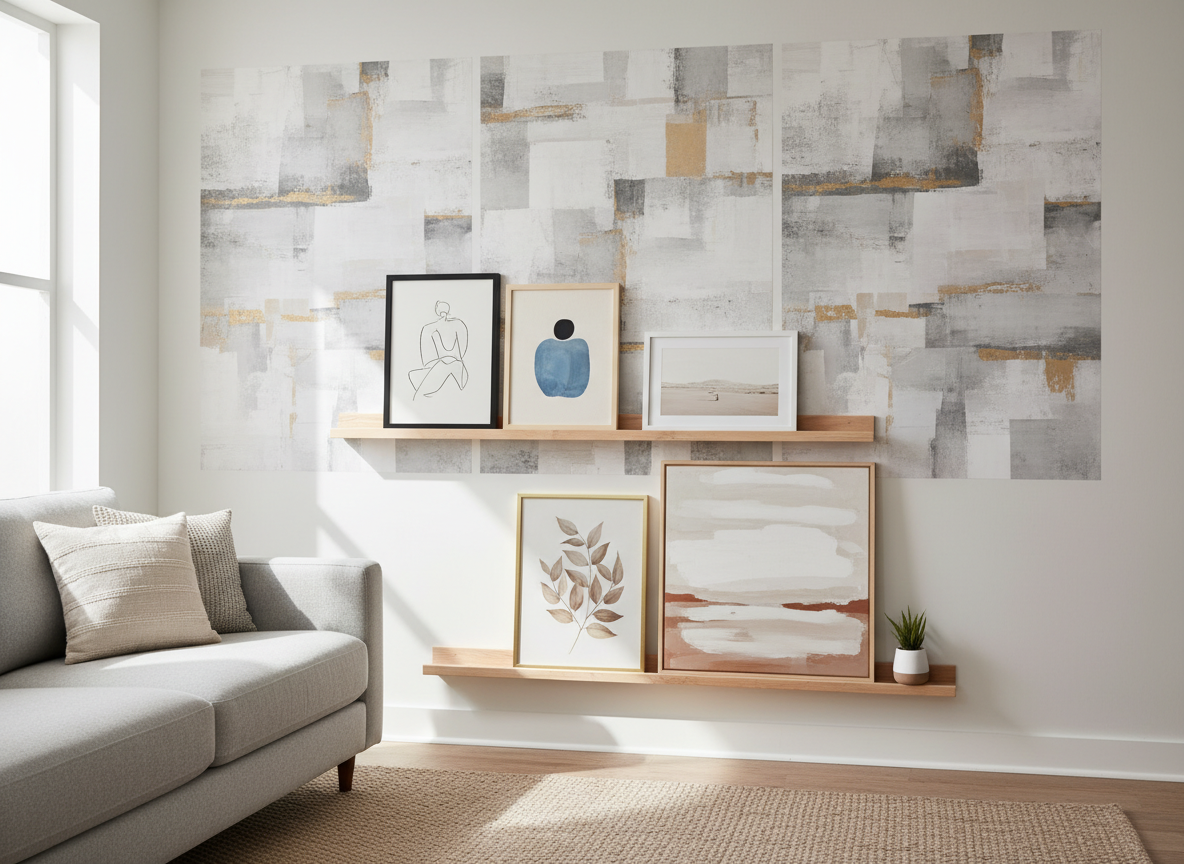
Renters need wall décor that’s low-commitment and easy to reverse.
Best strategies:
- Lightweight framed art with Command hooks (check weight limits carefully)
- Peel-and-stick wallpaper or fabric panels for accent walls
- Leaning art on picture ledges instead of hanging
- Plug-in wall sconces instead of hardwired lighting
Avoid:
- Heavy mirrors without anchors
- Permanent paneling or molding
- Over-customizing walls you can’t keep
If You Have a Small Living Room or Apartment
In compact spaces, wall décor should help the room feel open and breathable, not visually crowded. A single oversized statement piece often works better than several small ones, while vertical artwork or tall mirrors naturally draw the eye upward and create the illusion of height. Floating shelves can still work in small rooms, but only when used sparingly and styled with a light touch. Sticking to a neutral color palette with subtle texture keeps the space feeling calm and cohesive rather than busy.
What tends to work against small rooms are tightly packed gallery walls, dark or heavy frames that visually weigh the walls down, and too many competing focal points. When done thoughtfully, minimalist wall décor becomes one of the simplest and most effective ways to make a small space feel larger, lighter, and more comfortable to live in.
If You Have a Large, Empty Wall That Feels Intimidating
Large walls respond best to decisive choices rather than cautious ones. Oversized artwork or multi-panel pieces like diptychs and triptychs give the space a clear focal point, while picture-frame molding painted the same color as the wall adds depth without visual noise. Sculptural wall lighting and acoustic panels arranged in clean geometric patterns also introduce dimension without cluttering the surface. These approaches allow the wall to feel intentional and grounded instead of empty or awkward.
If You Have Kids, Pets, or a Busy Household
Minimalist décor doesn’t have to be delicate to be effective. In fact, it often makes busy households easier to manage by reducing visual clutter and simplifying daily routines. Choosing durable frames and washable materials helps décor stand up to real life, while wall-mounted storage that doubles as design keeps surfaces clear. Fewer pieces placed higher on the wall, along with functional elements like clocks, sconces, or peg rails, create a space that looks intentional without demanding constant attention.
If You’re Decorating on a Tight Budget
Best strategies:
- Large DIY textural art instead of multiple small prints
- Framing fabric, wallpaper samples, or digital prints
- Thrifted frames painted in one consistent finish
- Fewer pieces, better placement
Avoid:
- Buying sets just to “fill space”
- Cheap décor in high quantities
- Trend-driven pieces you’ll replace quickly
A Final Thought on Minimalist Walls
Minimalist wall décor means: every piece should earn its place, either by adding beauty, function, or calm. When you choose carefully and leave room to breathe, your walls stop being background noise and start supporting how you live every day. If you’ve ever walked into a room and felt an immediate sense of ease, chances are the walls weren’t trying too hard.
Related Articles
- Minimalism vs. Maximalism: How to Choose the Best Interior Design Style for Your Home
- 15 Simple Minimalist Home Design Ideas to Create Clean, Organized, and Modern Living Spaces with Less Clutter
- Natural Materials in Interior Design for a More Sustainable and Healthy Home
- Color Psychology in Interior Design and How It Affects Mood