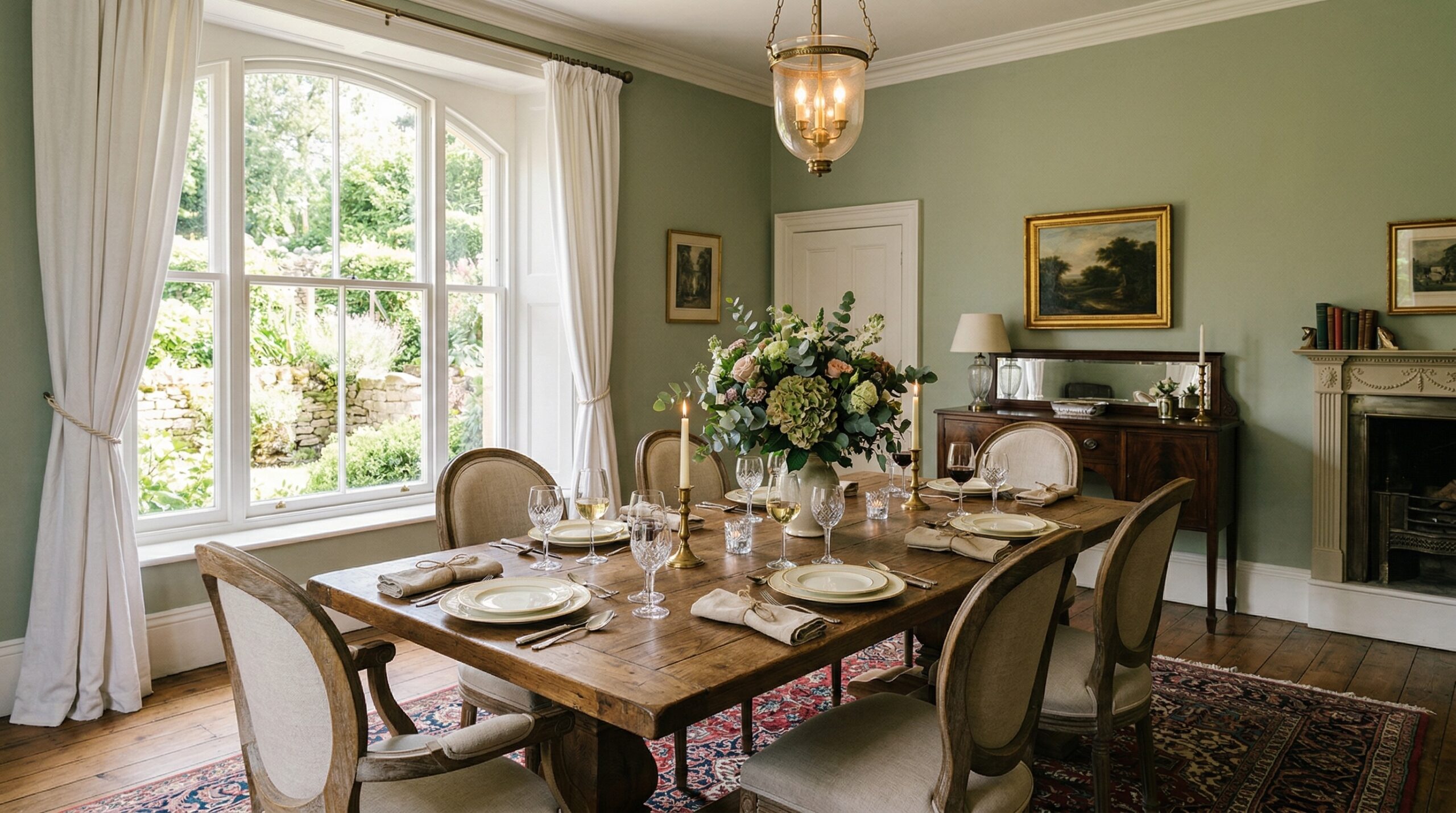
A dining room should support more than special occasions. In many homes, it’s where quick breakfasts happen before work, weeknight dinners come together after a long day, and holiday meals turn into extended conversations that last well beyond dessert.
The best dining room ideas make the space feel welcoming, functional, and easy to use on an ordinary Tuesday as much as during a full house on the weekend. With the right choices, a dining area can feel more comfortable for daily life while still being ready for guests when the moment calls for it.
Choose a Dining Table Shape That Fits the Way Your Room Actually Functions
One of the most important dining room decisions is the table itself. Size matters, but shape often matters just as much. A rectangular table works well in longer rooms and usually offers the most seating flexibility for families or frequent hosts. A round table can make smaller dining spaces feel easier to move through and often creates a more relaxed, conversational setup.
The smartest choice depends on how people use the room every day. In a compact breakfast area or apartment dining nook, a round pedestal table may improve flow and reduce visual heaviness. In a larger dedicated dining room, a rectangular table can anchor the space more effectively and handle bigger gatherings with less effort.
It also helps to think beyond maximum seating capacity. A table that technically fits eight but leaves little room to pull out chairs won’t feel comfortable in practice. A better layout usually leaves enough clearance for everyday movement so the room feels easy to live with, not just good on paper.
Prioritize Comfortable Dining Chairs That Support Longer Meals
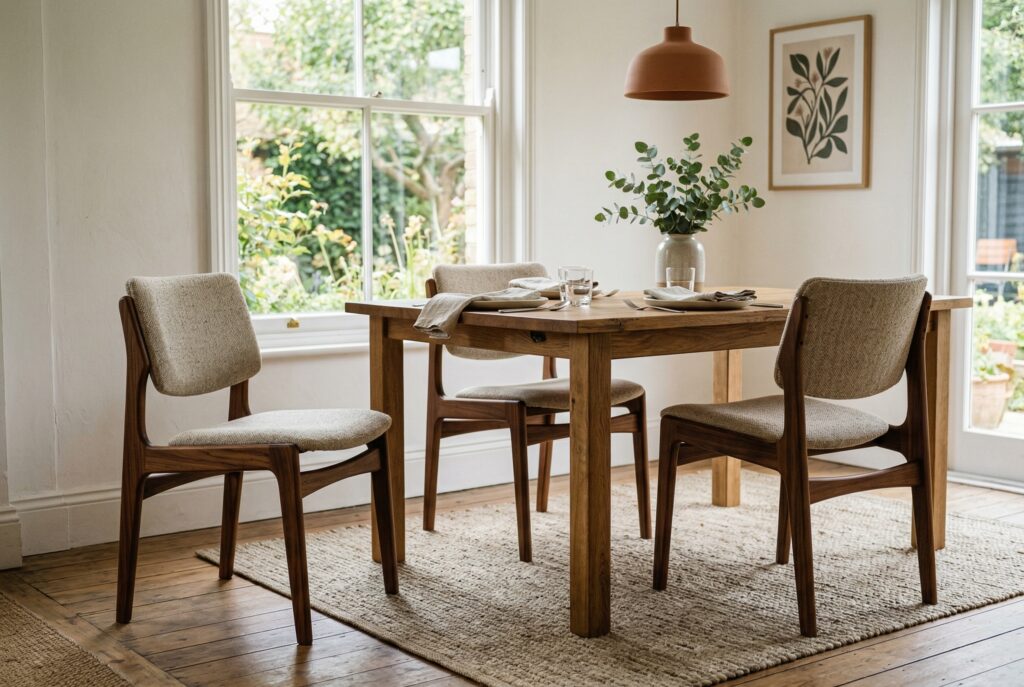
Dining chairs influence the feel of the room more than many people expect. When chairs are uncomfortable, even a beautiful dining room won’t function well for everyday meals or extended gatherings. Supportive seating encourages people to stay longer, relax more, and enjoy the room more fully.
Upholstered chairs can add softness and warmth, especially in homes where the dining room needs to feel inviting rather than formal. Wooden chairs can work beautifully too, particularly when they have a supportive shape and a seat that doesn’t feel too rigid. In many households, a mix of comfort and easy maintenance is the most practical balance.
This is especially relevant for families, people who work from home and sometimes use the dining table as overflow workspace, or hosts who want guests to linger comfortably. Chairs should look good, but they should also perform well over time. Easy-clean fabrics, durable finishes, and well-proportioned frames help support both style and function.
Use Lighting That Makes Meals Feel Warmer and More Relaxed
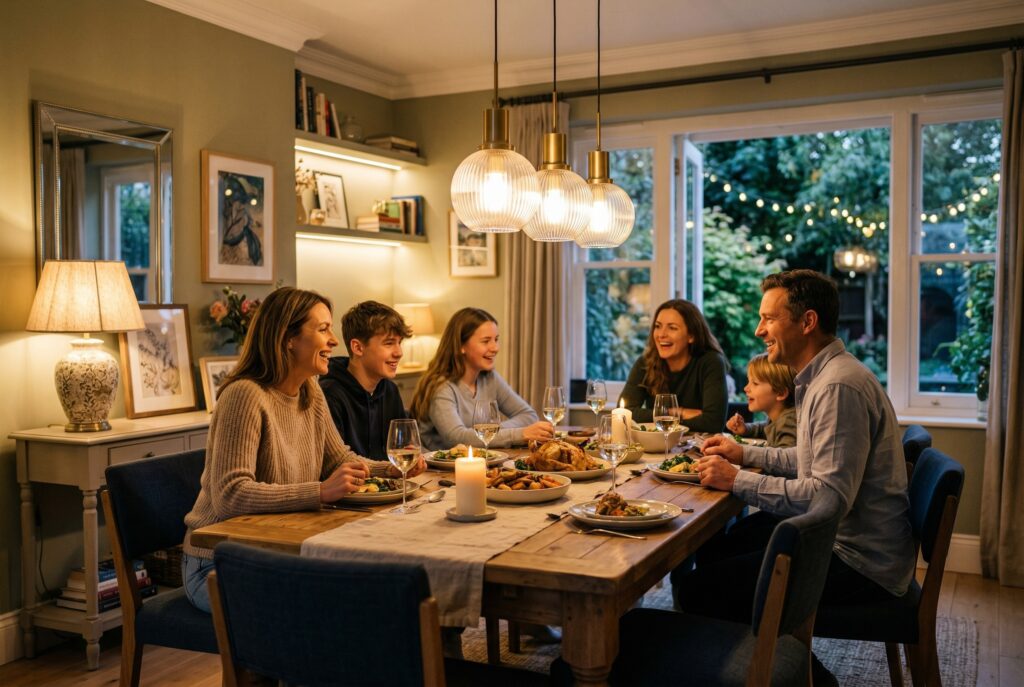
Lighting can completely change the experience of a dining room. Harsh overhead light tends to make the space feel less inviting, while well-placed warm lighting creates a more comfortable and flattering atmosphere. A pendant or chandelier above the table helps define the dining zone and gives the room a sense of intention.
Scale matters here. A fixture that’s too small can feel disconnected, while one that’s properly sized helps the room feel balanced. Dimmable lighting is especially useful because it allows the space to adapt. Brighter light may work better for homework, casual lunches, or table projects, while softer light makes dinner and hosting feel more relaxed.
In open-concept homes, good dining room lighting also helps separate the eating area from the kitchen or living room without using walls or bulky dividers. It’s one of the most effective ways to make the room feel complete and comfortable at the same time.
Add a Bench for Flexible Seating and a More Relaxed Layout
A dining bench is one of the most practical ideas for households that want flexibility without overcrowding the room. Benches can make it easier to fit more people at the table when needed, and they often help a dining area feel more casual and approachable.
This works especially well in family homes, smaller dining areas, and breakfast spaces where efficiency matters. A bench can tuck neatly under the table when not in use, which helps preserve floor space. It can also create a softer visual rhythm when paired with individual chairs on the opposite side.
To make this idea work well, keep comfort in mind. A bench with a slightly contoured seat or a cushion can make everyday use more appealing. The goal is to add flexibility without making the room feel temporary. When chosen carefully, a bench can make the space more useful while still feeling polished.
Include Storage That Keeps Dining Essentials Easy to Reach
A dining room becomes much easier to use when the items needed most often are close at hand. Storage furniture such as a sideboard, buffet, or cabinet can quietly improve how the room functions by keeping serveware, placemats, candles, extra dishes, and hosting pieces organized and accessible.
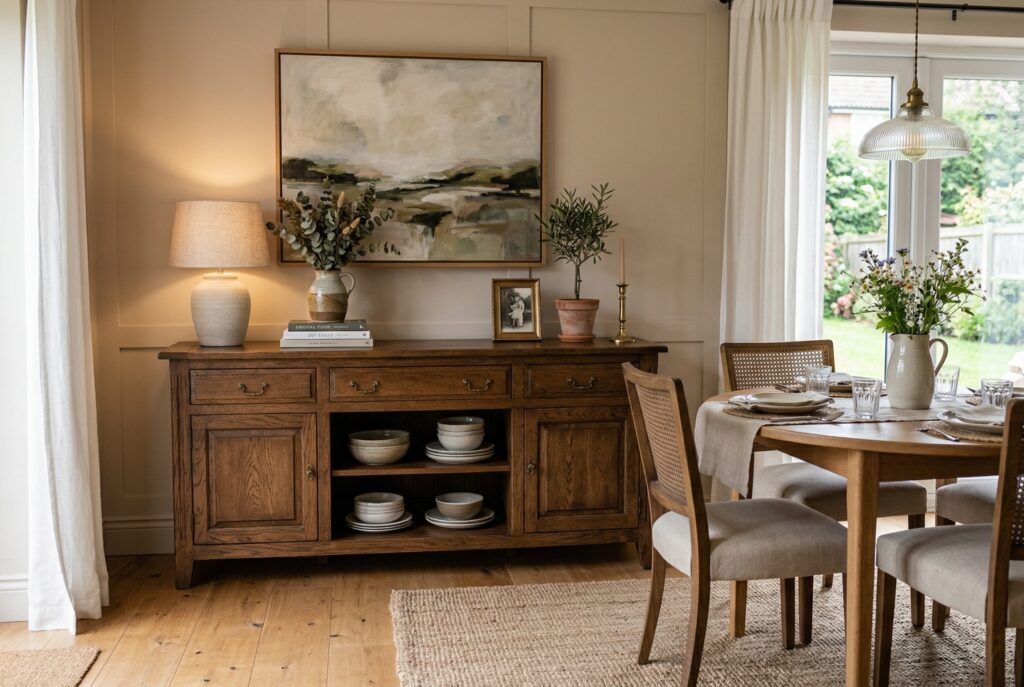
This kind of storage is helpful in both large and small homes. In a dedicated dining room, it supports entertaining and keeps the space more efficient. In a smaller dining area, it reduces the need to pull items from multiple rooms every time guests come over. Even a compact cabinet can make a meaningful difference.
Storage also supports visual calm. When serving pieces, paper goods, and miscellaneous items have a clear place, the dining room feels more composed. That matters in everyday life, especially in homes where the dining area is visible from nearby rooms and needs to stay visually manageable with minimal effort.
Soften the Space with Textiles That Add Warmth and Depth
Dining rooms can easily feel hard if they’re filled mostly with wood, glass, metal, and painted surfaces. Textiles help balance that. A rug under the table, fabric window treatments, upholstered chair seats, or even a soft table runner can make the room feel warmer and more comfortable.
A dining room rug can be especially useful when chosen carefully. It helps define the space, reduces echo, and adds texture that makes the room feel more inviting. For everyday practicality, a low-pile or easy-care rug often works best, especially in homes with kids or frequent meals around the table.
Window treatments also change the atmosphere. They soften natural light and make the room feel less exposed. These elements may seem secondary, but they often shape how the room feels just as much as the furniture does. In many homes, comfort comes from this kind of layering rather than from large decorative gestures.
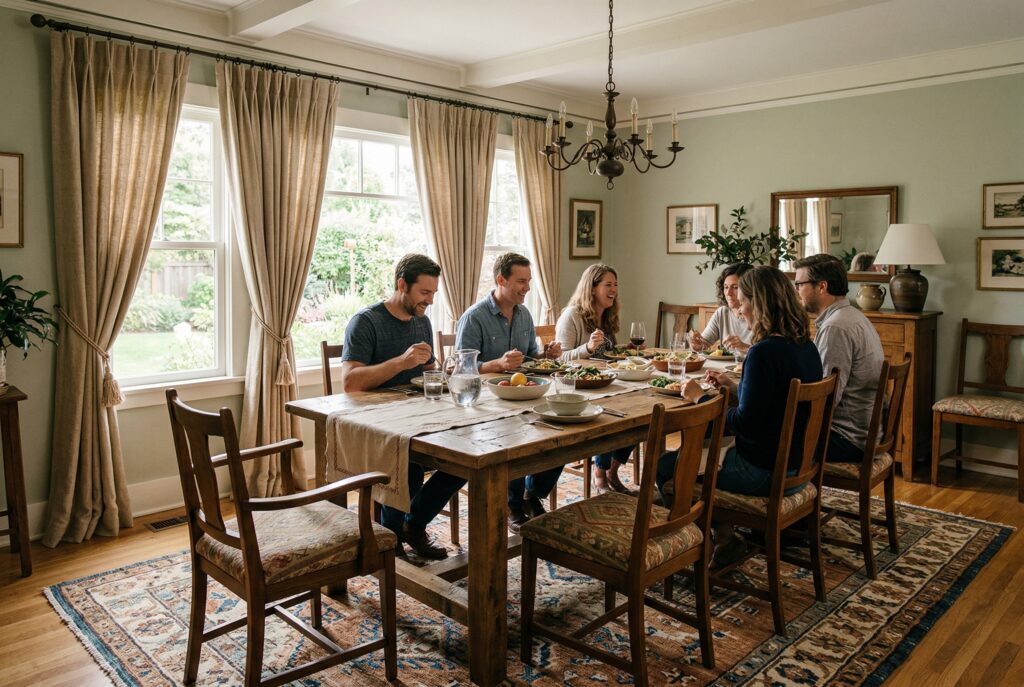
Create a Centerpiece Area That Looks Good Without Feeling Fussy
A dining table feels more complete when it has some kind of visual center, but that doesn’t mean it needs an elaborate centerpiece all the time. A simple arrangement can make the room look thoughtfully styled while still being easy to clear for everyday meals.
A bowl, a low vase, a small tray, or a few candles can all work well. The best centerpieces don’t block conversation or become annoying to move every time someone sets the table. They add presence without getting in the way. This is especially useful for people who want their dining room to feel finished without requiring constant maintenance. A practical centerpiece strategy makes the room feel intentionally designed while keeping the table ready for actual use. That balance matters more than decorative complexity.
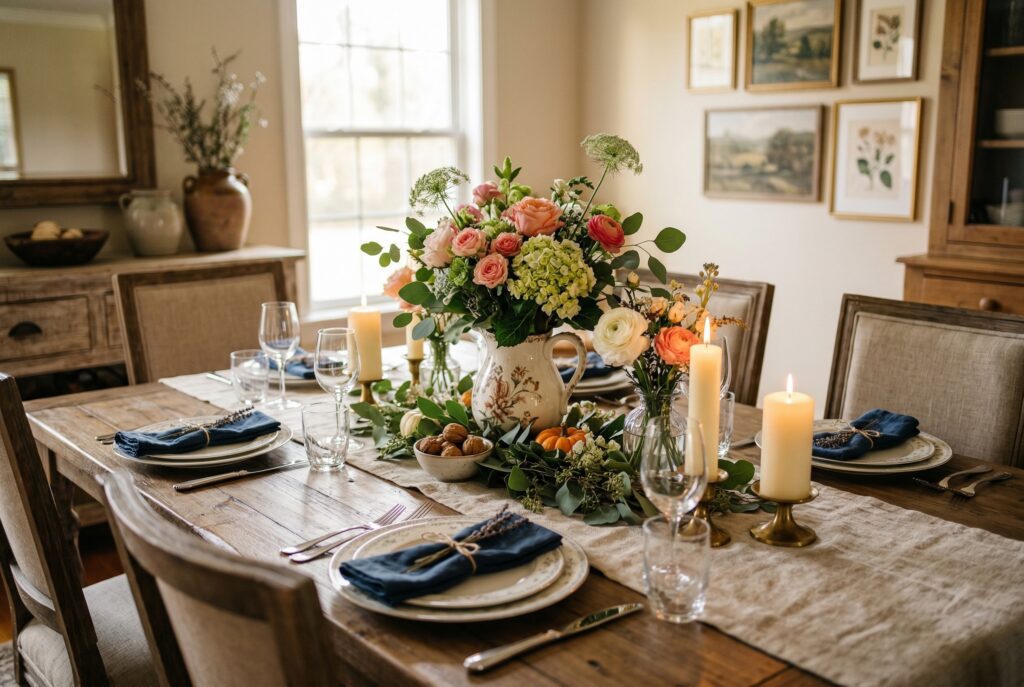
Make the Dining Room Work for Everyday Life, Not Just Occasions
Some of the best dining room ideas come from designing for daily habits first. If the room only feels usable during holidays or dinner parties, it’s missing a lot of its potential. A well-designed dining area should feel natural for takeout nights, family meals, coffee breaks, homework sessions, and spontaneous conversations.
That may mean choosing wipeable finishes, leaving enough room around chairs for frequent movement, or selecting furniture that can handle more than one purpose. In many U.S. households, the dining room isn’t a formal space that stays untouched all week. It’s part of the real rhythm of the home.
When the room supports daily life well, hosting also becomes easier. Spaces that already function smoothly tend to adapt better when more people gather. The best entertaining rooms usually aren’t the most formal. They’re the ones that already feel comfortable, flexible, and ready to be used.
Conclusion
The most effective dining room ideas make the space easier to use, more comfortable to spend time in, and better suited to both daily meals and shared occasions. When the table fits the room well, the chairs support real comfort, the lighting feels warm, and the storage reduces friction, the entire experience of using the room improves.
A dining room doesn’t need to feel formal to feel thoughtful. In many homes, the best version of this space is one that handles everyday life gracefully while still being ready for guests, celebrations, and longer conversations around the table. When comfort, function, and atmosphere work together, the room becomes more than a place to eat. It becomes a space people genuinely want to gather in.
Related Articles
- Smart Kitchen Design Ideas to Maximize Space, Improve Storage, and Create a More Functional Kitchen
- Smart Bedroom Design Ideas to Create a Stylish, Organized, and Relaxing Space at Home
- 10 Small Living Room Layout Ideas to Maximize Space and Enhance Your Home’s Functionality
- 11 Smart Bathroom Design Ideas to Save Space Improve Storage
- 10 Space-Saving Furniture Ideas That Make Small Homes More Flexible, Functional, and Comfortable for Everyday Living