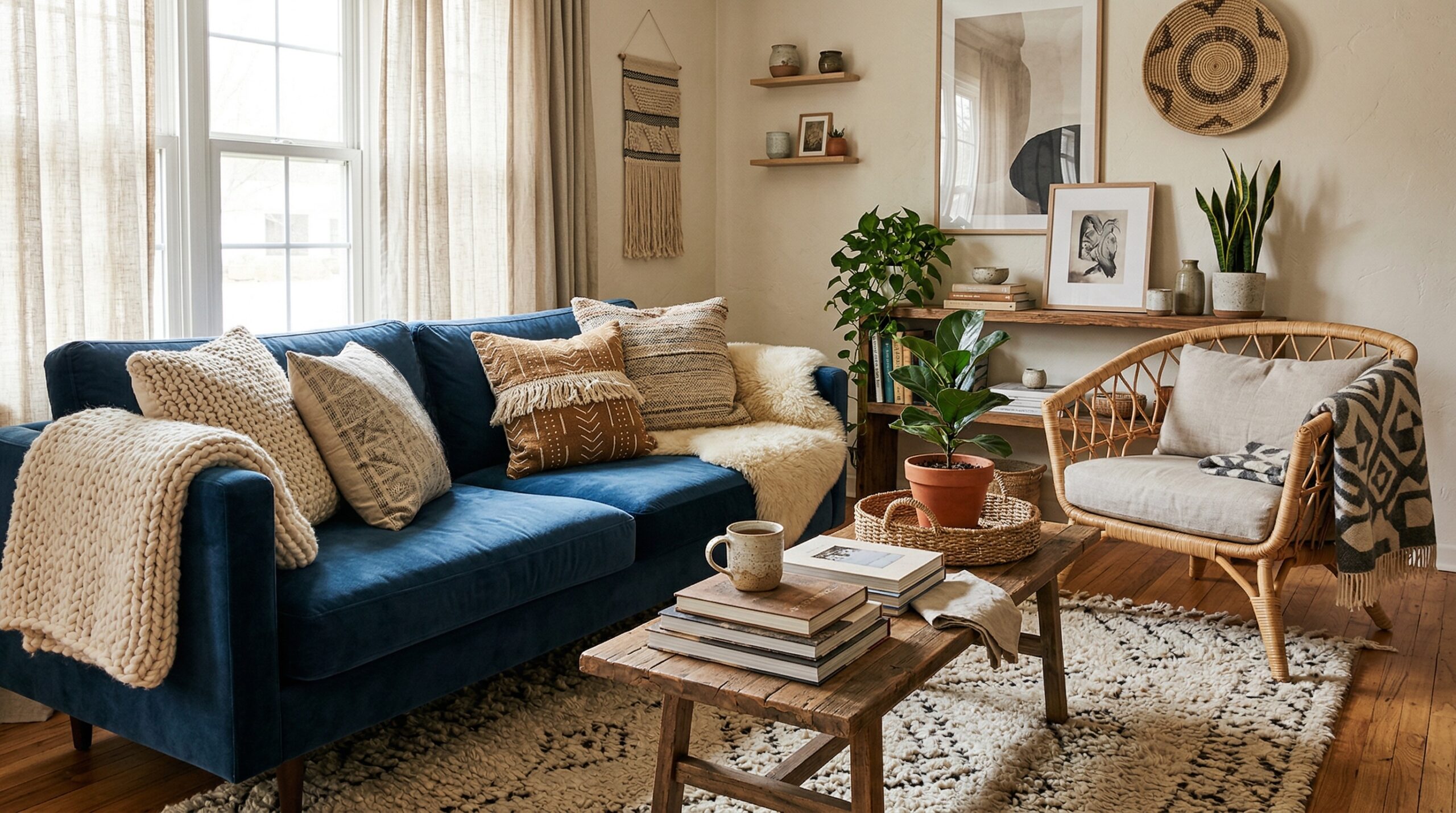
A living space can have the right furniture, a practical layout, and a cohesive color palette and still feel a little flat. In many homes, the missing element is texture. Texture layering helps a room feel warmer, more inviting, and more complete without requiring a full redesign. When different materials and surfaces work together thoughtfully, the room gains depth, softness, and a more natural sense of comfort. These texture layering ideas can help create a living space that feels stylish, relaxed, and easier to enjoy every day.
1. Start with a Grounding Rug That Adds Softness and Visual Weight
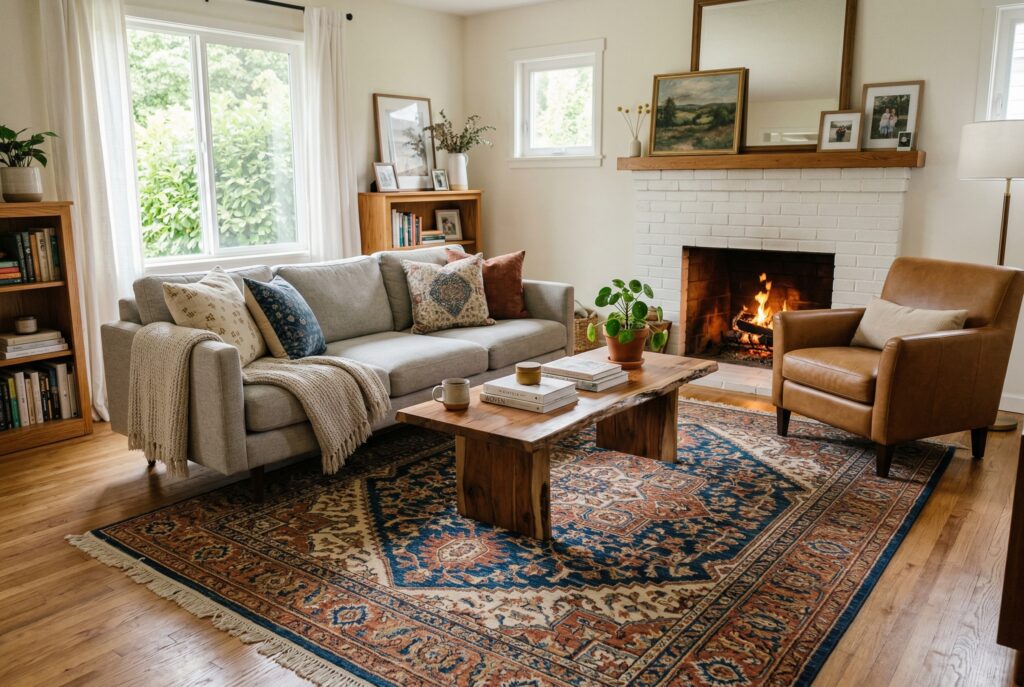
One of the most effective ways to build texture in a living room is to begin from the floor up. A well-chosen rug adds physical softness underfoot, but it also gives the room visual structure. In many living spaces, especially those with hardwood, laminate, or tile floors, a rug helps prevent the room from feeling too hard or echo-prone.
For a warmer and more layered result, choose a rug with visible texture rather than a completely flat finish. Wool blends, low-pile patterned rugs, handwoven styles, and subtle ribbed textures can all make a room feel more grounded. Even a neutral rug can add dimension when the weave has enough character.
This matters in everyday homes where the living room needs to feel comfortable for lounging, entertaining, and daily routines. A textured rug softens the space immediately and gives the rest of the room something to build on.
2. Mix Upholstery Fabrics to Make Seating Feel More Lived-In
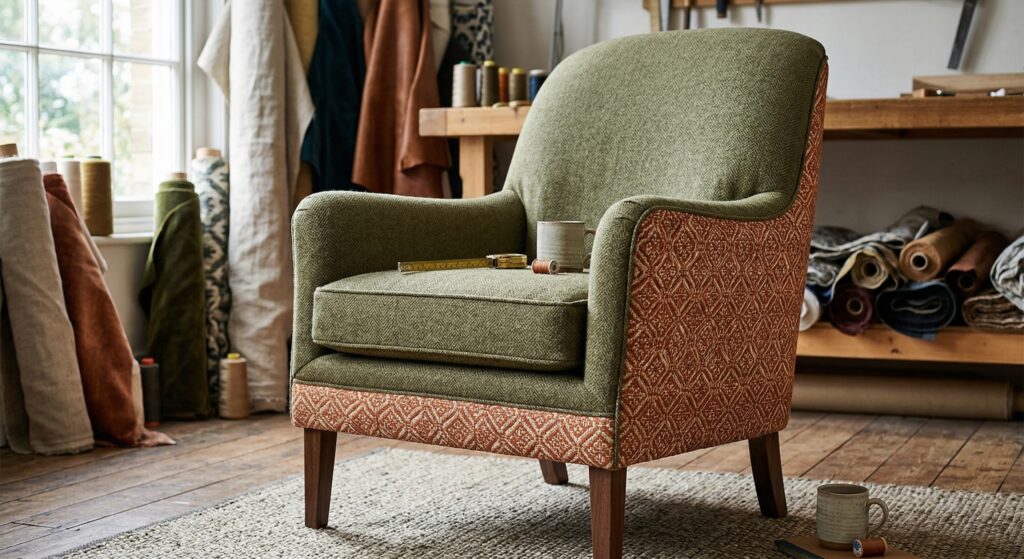
When every upholstered piece in a room feels too similar, the overall look can become predictable. One of the best texture layering ideas is to vary the fabrics across seating and accents. That doesn’t mean everything should contrast sharply. It means the materials should create enough variation to make the room feel richer and more natural.
A sofa in a woven fabric, for example, can pair beautifully with a leather chair, a velvet accent pillow, or an ottoman in a soft nubby textile. These differences help the room feel more considered without making it look busy. They also reflect how real homes evolve over time rather than appearing overly matched.
In living spaces used heavily by families, couples, or busy professionals, this approach can be especially useful. It allows the room to feel comfortable and personal while still looking polished. Performance fabrics can still work here too. Durability and texture don’t have to compete with each other.
3. Layer Throw Pillows in Different Materials, Not Just Different Colors
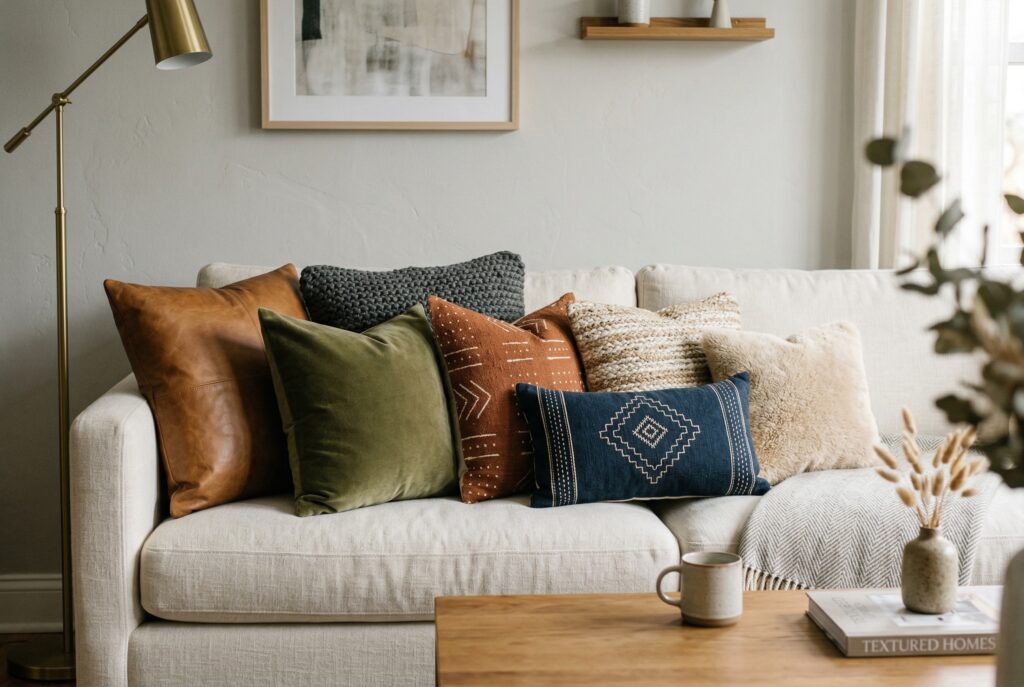
Throw pillows are often the first thing people think of when they want to add texture, but the real impact comes from material contrast, not simply adding more pillows. A set of pillows in the same fabric but different colors won’t create the same depth as a thoughtful mix of linen, boucle, velvet, cotton slub, or chunky woven covers.
The goal is to vary the surfaces enough that each layer adds something distinct. A smooth pillow next to a nubby one, or a soft brushed fabric paired with a heavier woven cover, can make a sofa feel far more inviting. This is especially helpful in neutral spaces where the palette stays restrained but the room still needs warmth.
It’s also smart to vary shape and scale. A larger square pillow, a smaller lumbar pillow, and one with subtle texture can make the arrangement feel less formulaic. In many U.S. homes, where the living room is used for both daily life and casual hosting, this kind of softness makes the room feel more welcoming without much effort.
4. Use Window Treatments to Soften Light and Add Fullness
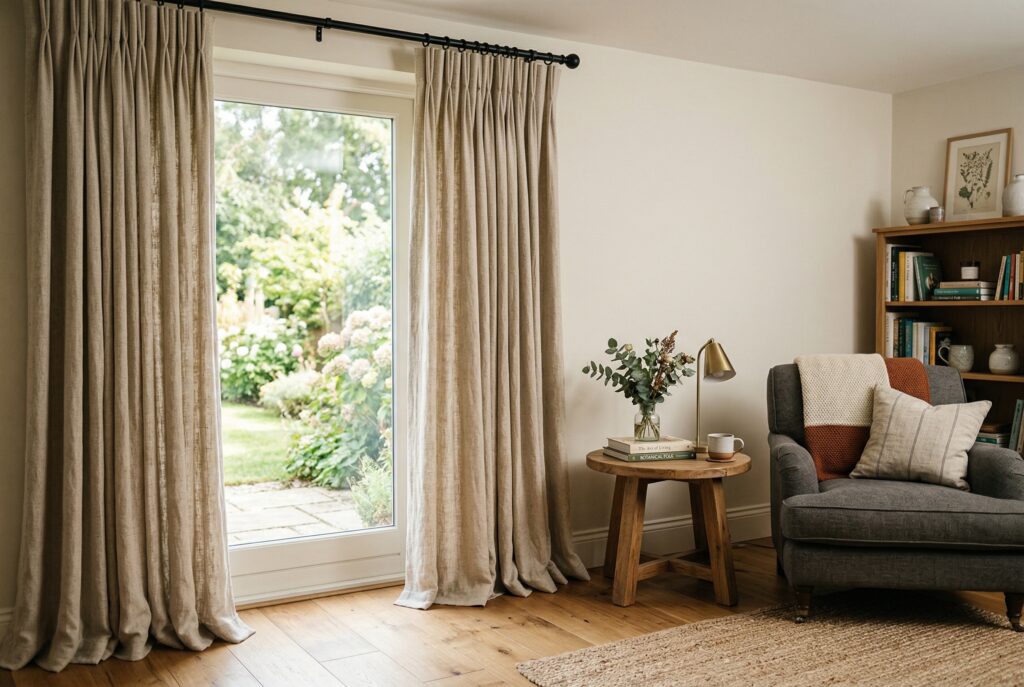
Window treatments do more than control privacy and sunlight. They also contribute a major layer of texture, especially in rooms that otherwise rely on hard surfaces like glass, wood, metal, and painted walls. Fabric panels bring softness to the perimeter of the room and can make the space feel more finished.
Linen-look curtains, cotton blends, woven shades, or layered drapery can all add depth. Even when the color is neutral, the material itself changes how the room feels. A soft, lightly textured curtain can make daylight feel gentler and the whole room seem calmer. This idea works especially well in living rooms with large windows or open layouts that can feel visually exposed. Texture at the windows helps balance the room. It can also make the ceiling feel taller when curtains are hung properly. Beyond function, fabric around the windows adds an element of comfort that many living rooms quietly need.
5. Bring in Natural Materials for Organic Contrast
Rooms often feel more comfortable when not every surface looks manufactured or uniform. Natural materials help break that pattern. Wood, rattan, jute, stone, leather, clay, and woven fibers all add texture in ways that feel timeless and easy to live with.
A living room might include a wood coffee table with visible grain, a woven basket near the sofa, a ceramic lamp with a matte finish, or a side table with a slightly imperfect stone surface. These details may seem small, but together they make the room feel layered and grounded.
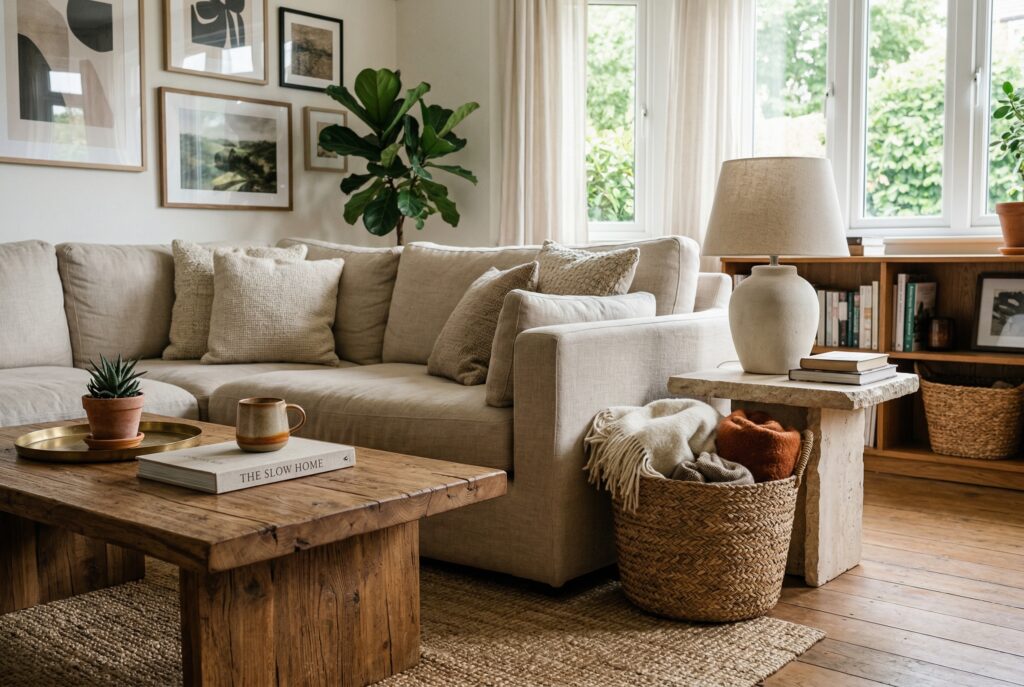
Natural textures also help balance smoother elements like painted walls, metal frames, or modern upholstery. That balance is useful in newer homes and apartments where finishes can sometimes feel sleek but a little impersonal. By adding materials with variation and tactility, the room becomes warmer and more relaxed.
6. Add Soft Layers with Throws That Feel Functional and Intentional
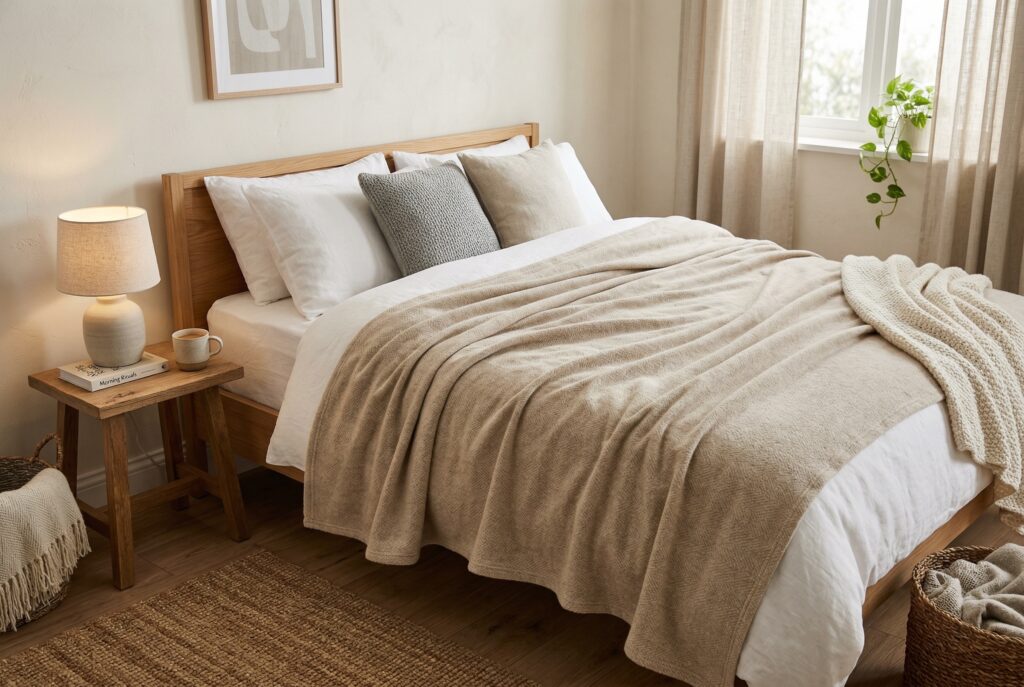
Throws are one of the easiest ways to add warmth and comfort to a living space, but they work best when they feel like part of the room rather than an afterthought. A casually folded knit throw, a brushed cotton blanket, or a soft textured cover draped over the arm of a sofa can make the space look more inviting right away.
Texture is what gives a throw its visual value. Chunky knits, subtle fringe, quilted stitching, fleece-lined finishes, and softly woven cotton all create different effects. The best choice depends on the room and the season, but in general, a throw should contribute both comfort and visual softness.
This works especially well in households where the living room serves as a true everyday retreat. A throw makes the room more usable for reading, napping, or winding down at night. It also helps a space feel lived in, which often matters more than making it look overly perfect.
7. Combine Smooth and Rough Finishes for Better Depth
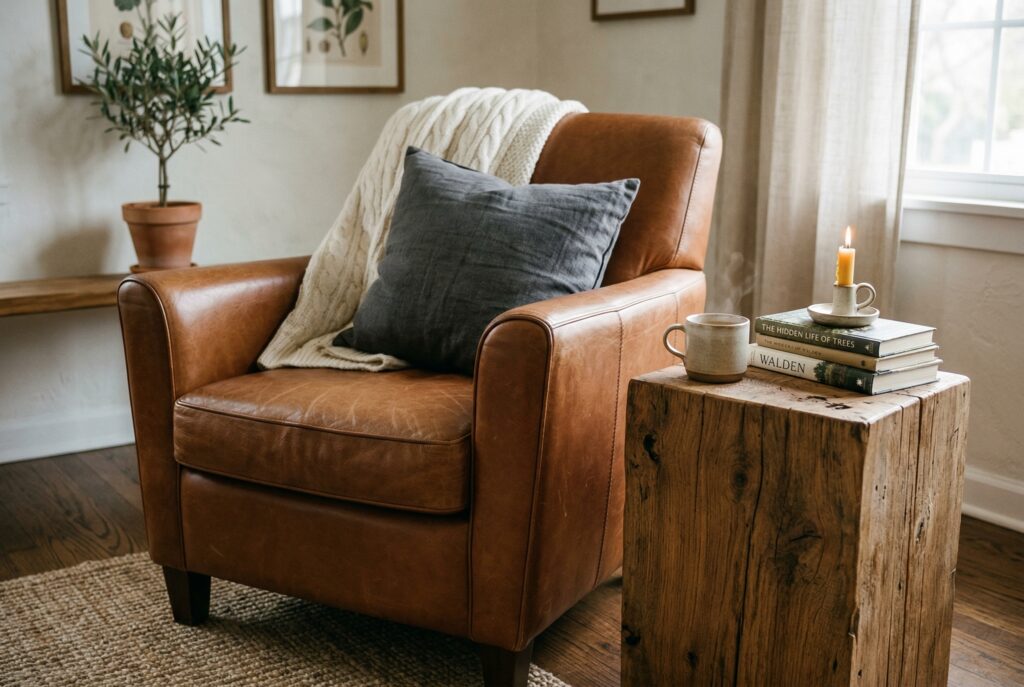
One of the most overlooked texture layering ideas is contrast between smooth and rough surfaces. A room feels more dynamic when not every finish behaves the same way. If everything is polished, sleek, or flat, the space can feel cold. If everything is heavily textured, it can feel visually heavy. A better result usually comes from balance.
For example, a smooth leather chair can sit beautifully next to a rougher wood side table. A clean-lined sofa can feel more inviting beside a chunky knit throw or a woven rug. A glossy ceramic vase can stand out more when placed on a matte console table. These relationships create depth without requiring bold color or excessive décor.
This approach helps living rooms feel styled in a quieter, more sophisticated way. It also makes the room easier to update over time. Rather than relying on trend-driven accessories, you’re creating interest through the relationship between materials, which tends to age more gracefully.
Conclusion
Texture layering can change how a living space feels without requiring major renovation or a complete furniture replacement. When rugs, upholstery, window treatments, natural materials, soft throws, and contrasting finishes work together, the room gains warmth, dimension, and a more comfortable atmosphere. These details help a living room feel less flat and more supportive of real daily life.
The most inviting spaces usually aren’t built from one dramatic feature. They come together through layers that feel thoughtful, practical, and easy to live with. When texture is used well, a room feels softer, more complete, and more personal. That’s often what turns a visually nice space into one that truly feels like home.