Mornings have a way of revealing every weak spot in our homes and routines: the missing shoe, the empty coffee mug cabinet, or the calendar reminder you forgot to check. And somehow, all of it shows up at once, right when you’re trying to get out the door.
When mornings feel rushed or chaotic, it’s rarely because you lack motivation. More often, it’s the buildup of friction: too many decisions to make, too much visual clutter, and too few systems working behind the scenes.
Here’s the good news: you can avoid a picture-perfect routine or a 5 a.m. wake-up call with a few smart organization choices that remove stress before it starts. These 10 busy morning routine organization tips are designed for all your workdays, school days, work-from-home days, and the mornings that don’t go as planned.
Why Morning Organization Matters More Than Willpower
A calm, smooth morning has very little to do with discipline or willpower. It’s really about setting up your space to work for you, especially on the days when you’re tired, distracted, or running on autopilot. Thoughtful organization cuts down on decision fatigue, keeps everyday essentials where you can see and reach them, and helps you build momentum before the day gets loud and demanding. When you can do this, you’re free to focus on getting through the morning instead of managing it.
1. Do a “Morning Reset” the Night Before
Your morning actually begins the night before, whether you’re intentional about it or not. Taking just five to ten minutes in the evening to reset your space can make the next day feel noticeably calmer. Things like laying out clothes, packing backbags, and setting keys and wallets in one consistent spot all help remove the small obstacles that tend to slow you down in the morning. The goal is simply to make tomorrow easier before you even go to bed.
2. Create One Drop Zone for Morning Essentials
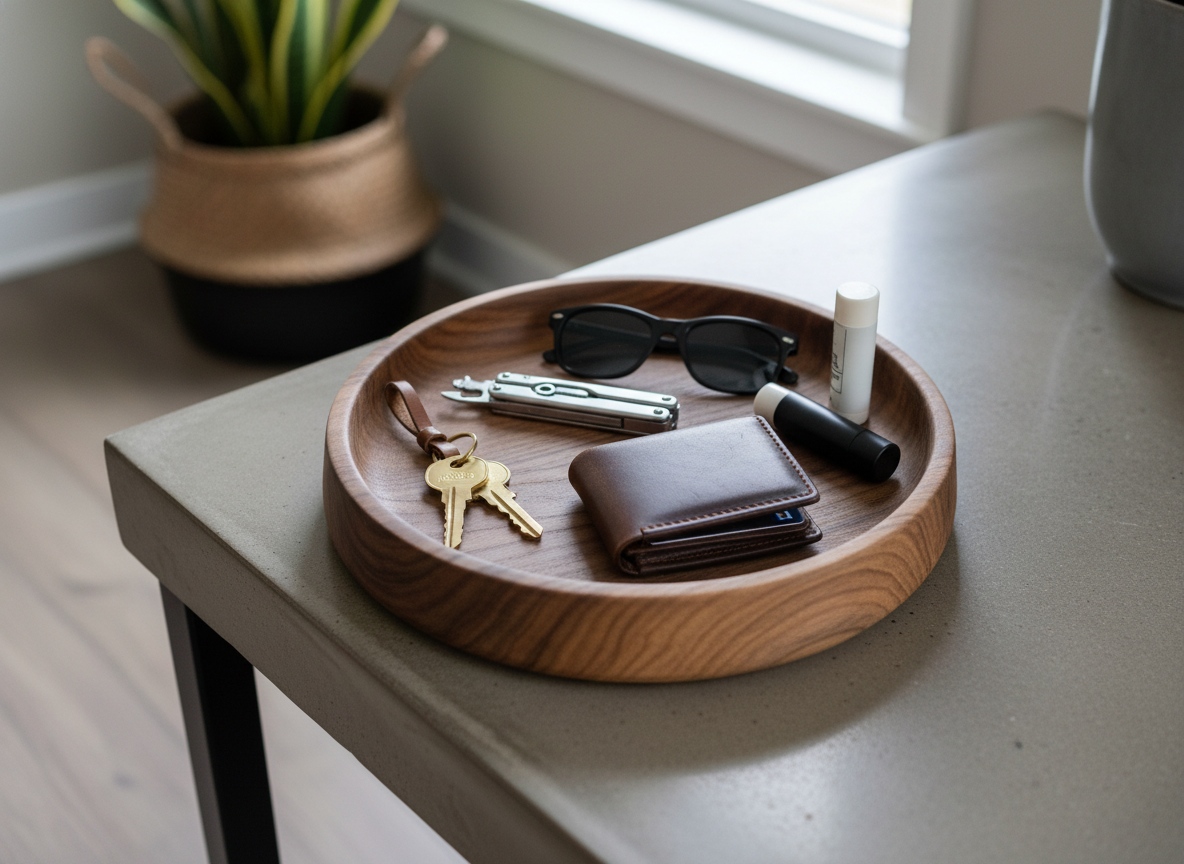
If you’re always hunting for keys, sunglasses, or a work badge, the reason is the lack of one dependable place where those items live. A well-designed morning drop zone gives everything a home and removes the daily scavenger hunt. The most effective setups are simple and easy to maintain:
- A tray or bowl for keys, wallets, and small grab-and-go items
- Hooks or pegs for bags, jackets, or lanyards you use every day
- A shelf or basket for items like lunch bags, planners, or mail that needs attention
Plus, you can place your drop zone along a path you already use, such as near the front door, garage entry, or hallway, so using it becomes automatic.
3. Keep Morning Items Visible
A common mistake is hiding the very items you rely on every morning and then wondering why your routine feels scattered. In reality, visibility is a feature, not a flaw. Keeping daily essentials like your coffee maker, favorite mug, vitamins, or simple breakfast basics out in the open makes routines easier to follow and harder to forget. If you use something every single day, placing it on a functional counter where it’s visible and easy to reach.
4. Simplify Decisions With “Default” Choices
Mornings tend to fall apart when every small step requires a decision. One of the easiest ways to reduce friction is to set a few simple defaults. Having a small rotation of work outfits, sticking to the same weekday breakfast, or relying on one go-to hairstyle or grooming routine removes unnecessary choices when your energy is lowest. Defaults save your mental energy for later in the day when it matters more.
5. Organize Bathrooms for Speed, Not Aesthetics
A beautiful bathroom doesn’t mean much if your morning routine still feels scattered. What matters more is a organized bathroom, which means how easily you can move from one step to the next. Instead of organizing by product type or brand, group items by the order you actually use them. Keeping daily skincare in one container, hair tools and products in another, and makeup you truly use in a single drawer or bin creates a smoother flow and cuts down on unnecessary stops. The fewer times you have to search or switch locations, the calmer your mornings will feel, with less visual clutter when you’re barely awake.
6. Let Light Do the Waking Up for You

Natural light is one of the easiest ways to help your body wake up and lift your mood without extra effort or willpower required. Letting light in early signals to your brain that it’s time to start the day, which can make mornings feel less sluggish and more manageable. A few simple habits can make a noticeable difference:
- Open blinds or curtains as soon as you’re up to let daylight flood the room
- Keep windows unobstructed so light isn’t blocked by furniture or heavy decor
- Use warm, layered lighting in darker areas to create a softer, more inviting glow
7. Empty the Dishwasher in the Morning (or at Night)
An empty dishwasher is one of those small wins that quietly makes mornings easier. When dishes have a place to go, clutter doesn’t build up and a minor task doesn’t turn into an early source of frustration. The key is consistency: either unload the dishwasher every night before bed or make it the first thing you do in the morning. Whichever you choose, you’re setting up your kitchen to work with you for the rest of the day instead of against you.
8. Use a Short “Reset Timer” Instead of Cleaning
You don’t need to clean your entire house in the morning, but a quick reset can go a long way. Setting a five-minute timer to put away visible clutter, wipe down one surface, and reset the space you’ll return to later helps keep mess from piling up. This small habit prevents chaos from compounding throughout the day and makes evenings feel noticeably lighter when you walk back into a space that’s already under control.
9. Keep a Simple Morning Checklist (Mental or Physical)
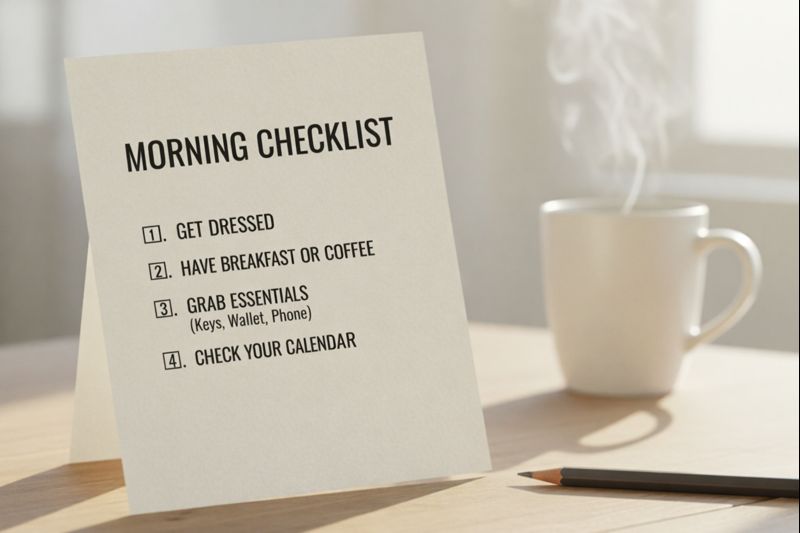
Checklists are one of the simplest ways to reduce mental load, especially on busy mornings when your brain is still warming up. A basic morning checklist might include:
- Get dressed
- Have breakfast or coffee
- Grab essentials like keys, wallet, or work bag
- Check your calendar for any schedule changes
When routines are written down, or at least clearly defined, they’re much easier to follow on autopilot. Instead of mentally juggling what comes next, you can simply move from one step to the next with less effort and less stress.
10. Design for the “Off” Morning, Not the Perfect One
One of the most overlooked organization strategies is planning for the mornings that don’t go smoothly. Instead of designing a routine that only works on perfect days, take a moment to think through a few common curveballs:
- What if you oversleep?
- What if the kids move at half speed?
- What if you suddenly need to work from home?
From there, create a lighter backup routine that covers only the essentials.
The Real Goal: Fewer Decisions, Not More Discipline
The important point of organizing your morning routine is removing the unnecessary tasks. When your home is set up to support your habits, mornings feel quieter, clearer, and more forgiving.