
Some nights, falling asleep feels effortless. Other nights, you’re lying there replaying the day, scrolling “just one more minute,” or mentally negotiating with yourself about tomorrow. If that sounds familiar, you’re just missing a routine that works for real life.
A nighttime routine isn’t about perfection, aesthetics, or copying someone else’s checklist. It’s about creating a few reliable signals that tell your brain, “The day is done. You’re safe to slow down now.” When those signals are simple and flexible, they stick even on busy, messy days.
This guide walks you through how to build a nighttime routine that actually lasts, using small habits that support better sleep, calmer evenings, and less mental clutter.
What a Nighttime Routine Really Is (and What It Isn’t)
A nighttime routine is a transition. It’s the bridge between “doing” and “resting,” designed to help your nervous system downshift gradually instead of slamming on the brakes at bedtime.
What it is: a predictable rhythm that makes evenings feel contained and calm.
What it isn’t: a rigid schedule, a long self-care checklist, or something that collapses the moment life gets inconvenient.
Think of your routine as a container that holds your evening together, not a set of rules you can break.
Why Nighttime Routines Help You Sleep Better
Sleep doesn’t start when your head hits the pillow. It starts earlier, when your body and brain begin letting go of stimulation, decisions, and unfinished loops from the day. When evenings follow a familiar rhythm, your circadian clock gets clearer signals. Your brain spends less energy deciding what to do next. Over time, falling asleep feels less like effort and more like a natural next step. That’s why consistency matters more than complexity.
Start with a Wind-Down Window, Not a Perfect Bedtime

One of the most common reasons routines fail is aiming for a strict bedtime. Real life rarely cooperates. Flexibility makes consistency possible. Instead of picking an exact time, choose a wind-down window. For example, you might aim to sleep sometime between 10:30 and 11:30 p.m., and begin winding down about an hour beforehand. This approach gives your brain rhythm without punishing you for late meetings, family responsibilities, or the occasional night that runs long.
Build Your Routine Around Simple Signals
The most effective nighttime routines include three types of cues. You don’t need all of them every night, just one or two is enough.
1. A Signal for Your Body
Your nighttime routine acts as a signal to your body that it’s safe to slow down and prepare for rest. Simple, calming actions, such as taking a warm shower or washing your face, doing light stretching or gentle movement, changing into sleepwear earlier than usual, or enjoying a warm, non-caffeinated drink, help cue your nervous system to relax and ease the transition into sleep.
2. A Signal for Your Brain
Here are some helpful options:
- A 3–5 minute brain dump (write what’s on your mind)
- Listing 1–3 things you’ll handle tomorrow
- Reading a few pages of something light
- Slow breathing (inhale 4, exhale 6)
This tells your mind it can stop problem-solving. This step is especially powerful if you struggle with racing thoughts at night.
3. A Signal for Your Environment
Your environment also plays an important role in signaling that it’s time to wind down. Small adjustments like dimming overhead lights or switching to softer lamps, setting your phone to Do Not Disturb, and charging devices away from the bed. Plus, do a quick two-minute tidy around your sleep space, especially keeping your nightstand clutter-free, helps reduce visual distractions.
Keep the Routine Short Enough for Bad Days

If your nighttime routine only works on calm, ideal evenings, it won’t last. A realistic routine takes five to fifteen minutes. It also has a minimum version for nights when you’re drained. On good days, you might add reading or stretching. On rough days, brushing your teeth, writing one sentence, and taking a few slow breaths still counts. Consistency comes from doing something, not everything.
Anchor the Routine to What You Already Do
Habits stick better when they’re anchored to existing ones. This is called habit stacking, and it removes the need for willpower.
Instead of “I’ll start my routine at 10 PM.” You can try:
- “After I finish the dishes, I start winding down.”
- “Once the kids are in bed, I do my 10-minute routine.”
- “Right after brushing my teeth, I do my brain dump.”
Set Gentle Boundaries Around Screens and Stimulation
You don’t have to ban screens entirely, but boundaries matter. Even reducing scrolling by fifteen or twenty minutes can make a noticeable difference. Stressful emails, news, or endless comparison keep your brain alert. Swapping that last scroll for music, a podcast, or a familiar book gives your nervous system a chance to settle.
Prepare for Tomorrow Without Re-Activating Your Brain
A few minutes of preparation can dramatically reduce nighttime anxiety. It can be laying out clothes, packing a bag, or even writing down tomorrow’s top priority. Just keep it brief, and do it before you’re fully in sleep mode so your mind has time to power down afterward.
Plan for Messy Nights in Advance
There will be evenings when routines feel impossible. That doesn’t mean you’ve failed. Messy nights are part of real life. What matters is having a tiny fallback, something so small you’ll still do it when everything else falls apart. Even a two-minute routine teaches your brain that evenings still have an ending.
How to Know If Your Routine Is Working

Don’t obsess over trackers or exact sleep times. Instead, you should notice:
- Are you falling asleep faster?
- Are nights feeling calmer?
- Do mornings feel slightly less rough?
If yes, keep going. If not, adjust one thing at a time. Remember, this is an experiment, not a test you pass or fail.
Nighttime Routines for Families and Couples (Without Adding Stress)
When you live with other people, your nighttime routine can’t exist in a vacuum. The key is coordination.
For Couples
The nighttime routines don’t have to match exactly. What helps most is agreeing on a shared wind-down signal, like dimming lights at the same time or putting phones away together. It also helps to talk about expectations. If one person wants quiet reading time and the other likes background TV, deciding in advance avoids nightly tension.
For Families
Simplicity matters even more. Kids thrive on predictability, and adults benefit from it too. A family-wide cue, lowering lights, turning off loud activities, or starting bedtime preparation at the same general time will create a household rhythm. Plus, parents should also protect one small post-bedtime ritual for themselves, even five minutes can help your nervous system reset.
A Simple Nighttime Routine Checklist
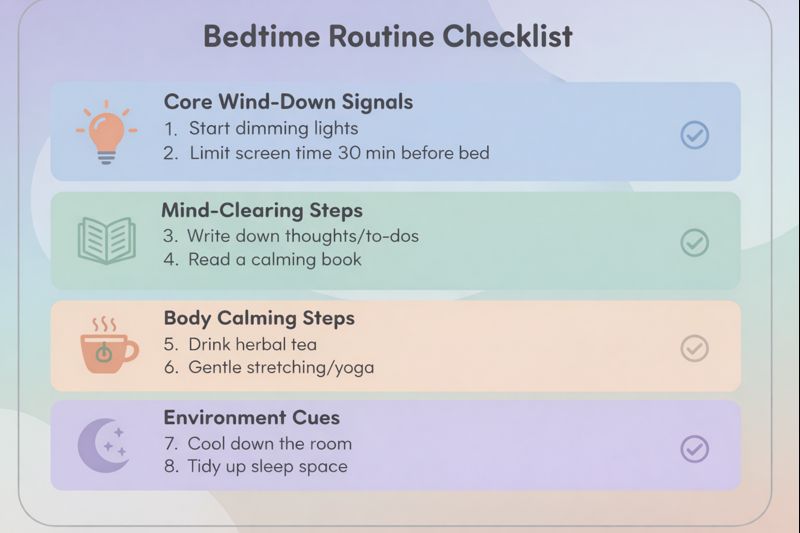
This checklist isn’t meant to be followed perfectly every night. Think of it as a menu you can pull from, depending on your energy, schedule, and mood. On good nights, you might do most of it. On hard nights, just one or two items is enough.
Core wind-down signals (the essentials):
- Dim the lights or switch to lamps
- Put your phone on Do Not Disturb or charge it away from the bed
- Brush teeth and wash your face before you’re fully exhausted
Mind-clearing steps (pick one):
- Quick brain dump: what’s still on your mind
- Write down 1–3 things you’ll handle tomorrow
- Read a few pages of something light
- Slow breathing for a minute or two
Body-calming steps (pick one):
- Warm shower or bath
- Gentle stretching or mobility
- Skincare or another small, repetitive self-care habit
Environment cues:
- Lower the volume in your space
- Clear the area around your bed (even a 2-minute reset helps)
- Set out what you need for the morning if that reduces stress
Minimum version (for messy nights):
- Brush teeth
- Phone away
- A few slow breaths in bed
Final Thoughts: Calm Comes from Consistency, Not Perfection
The nighttime routine works because it fits your actual life, survives imperfect days, and reduces friction instead of adding rules. Your evenings don’t need more discipline. They need structure that feels kind and when that happens, better sleep usually follows.