There’s a moment most of us know too well. You walk into the kitchen, see yesterday’s mail spread across the counter, a bag on the chair that never quite gets put away, and a drawer that won’t close anymore. You tell yourself, I’ll deal with it later.
Later turns into days. Days turn into clutter. And suddenly, organizing your home feels heavier than it should. If this sounds familiar, it’s telling that you’re stuck in a very human cycle of procrastination. However, that cycle can be interrupted with practical, realistic habits that fit real life.
This guide breaks down why home organization procrastination happens and shows you how to build decluttering habits that actually stick, whether you live in a small apartment, a busy family home, or somewhere in between.
Why Home Organization Is So Easy to Put Off
Procrastination around decluttering rarely comes from a lack of caring. Most people want a calmer, more organized home. The issue is what’s standing between intention and action.
Overwhelm Disguised as “I’ll Do It Later”
When a space feels too big to tackle, such as a packed closet, an overflowing garage, or a junk drawer that’s multiplied, your brain immediately goes into avoidance mode. The simple reason is because you can’t see a clear starting point.
Decision Fatigue Sneaks In Fast
Decluttering requires decisions, whether to keep or toss, donate or store, now or later. When you’re already making dozens of decisions at work or at home, your brain quietly rebels. Avoidance feels easier than choosing.
Emotional Weight Adds Friction

Sentimental items, “maybe someday” purchases, or guilt over money spent all add emotional drag. Even touching these items can feel exhausting, so you walk past them instead. That fatigue means memories, expectations, and regret all demand mental energy at once, which makes avoidance feel easier than deciding. That’s why it helps to skip these items at first, build momentum elsewhere, and come back when your decision-making feels lighter and more confident.
Lack of Systems Makes Progress Feel Temporary
If you’ve decluttered before only to watch the mess come back, your brain learns a discouraging lesson: Why bother? Without simple systems to maintain order, motivation fades quickly.
The Real Cost of Procrastinating Decluttering
Putting things off doesn’t just affect your home, it affects how you feel in it. Clutter has a quiet way of seeping into daily life and weighing on you in ways that aren’t always obvious at first.
Clutter quietly:
- Increases daily stress and mental noise, even when you aren’t actively thinking about it
- Makes simple cleaning tasks take longer than they should
- Creates friction during already busy mornings and tired evenings
- Adds a constant background feeling of “I should be doing something”
- Reduces your ability to relax because your space never fully feels “done”
- Triggers decision fatigue every time you look around and see unfinished tasks
- Makes starting feel harder the longer it’s avoided
The longer clutter lingers, the more intimidating it becomes, which is exactly why breaking the cycle early, with small and manageable actions, makes such a meaningful difference.
A Simple, Repeatable Decluttering Framework That Works
Instead of bouncing between random tips, the most effective approach combines clarity, small actions, and consistency. Here’s a framework designed for real households.
Step 1: Shrink the Task Until It Feels Almost Too Easy
Big goals tend to stall progress, while small actions create momentum. Telling yourself to “declutter the bedroom” can feel so overwhelming that it stops you before you start. A smaller, more realistic goal, like clearing the nightstand, putting away five items, or sorting a single drawer, gives your brain a clear, manageable entry point. And if even that feels heavy, shrink it again. Real progress often begins much smaller than we expect.
Step 2: Use Time Limits to Reduce Pressure
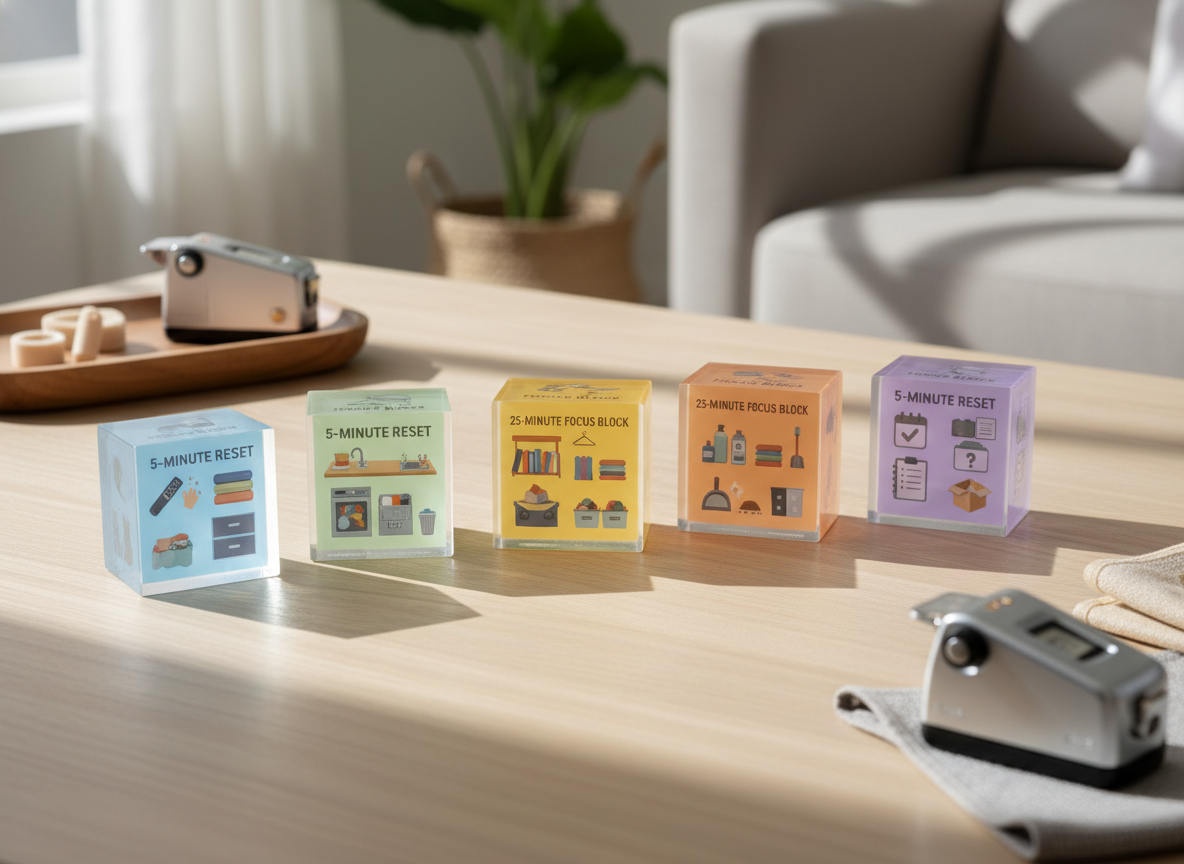
Two options that work especially well:
- 5-minute reset: Do whatever you can for five minutes, then stop without guilt. Even a small reset can noticeably improve how a space feels.
- 25-minute focus block: Set a timer, work with intention, then take a real break. Knowing a break is coming makes it easier to stay engaged.
Timers reduce the fear of getting “stuck” cleaning all day, which is a surprisingly common reason people procrastinate in the first place. When time has boundaries, starting feels far less risky.
Step 3: Follow the “Like With Like” Rule
Before buying bins or rearranging furniture, start by grouping similar items together. Put all mail in one spot, keep charging cords in a single container, and gather pantry snacks into one clear zone. You don’t need a perfect system or matching organizers for this to work. Simply seeing what you have, and where it belongs, reduces clutter blindness, prevents overbuying, and makes daily upkeep much easier.
How to Decide What to Declutter First (Without Overthinking It)
Start Where Emotions Are Lowest
Early wins matter because they build confidence and momentum. Begin with areas that carry little sentimental weight, such as junk drawers, bathroom cabinets, fridge shelves, or entryway clutter. These spaces usually involve quick, low-emotion decisions, which makes it easier to take action.
Use the One-Question Filter
When stuck, ask yourself:
“Would I notice if this was gone?”
If the answer is no, it’s usually safe to let it go.
Save Sentimental Items for Later
There’s nothing wrong with postponing emotionally loaded items. Build decision confidence first by practicing on easier areas. Decluttering is a skill, and like any skill, it becomes easier and less draining the more you use it.
Building Decluttering Habits That Last Beyond One Weekend
Attach Decluttering to What You Already Do
Instead of creating a brand-new routine from scratch, layer decluttering onto habits you already have. Clear the counter while your coffee brews, sort the mail before you sit down, or reset one surface before bed. These small, built-in actions are easier to maintain long term, and consistency will always matter more than short bursts of intense effort.
Try the “One Item a Day” Approach
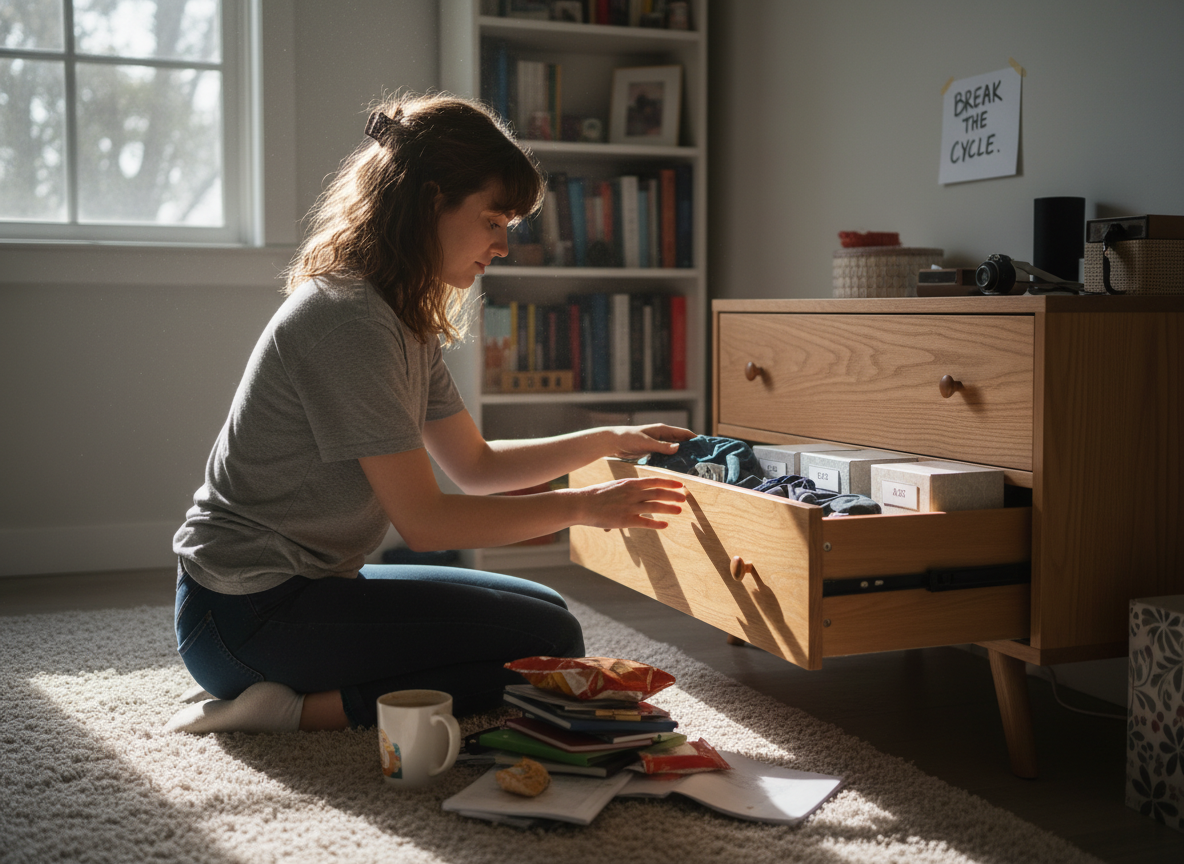
On busy days, doing just one small thing is enough. Donating a single shirt, tidying one drawer, or tossing one bag still counts as progress. Those tiny actions add up faster than you expect, and more importantly, they keep the habit alive even when life feels crowded and time is limited.
Make Maintenance Easier Than Mess
If returning items to their place takes too much effort, clutter will creep back. Look for friction:
- Are storage spots too far away?
- Are containers overfilled?
- Do items lack a clear home?
Simplifying storage often prevents future procrastination.
What to Do When Motivation Is Completely Gone
Use Body Doubling
Working alongside someone can make a surprising difference when motivation is low. This might be another person in your home, a friend on a call, or even a quiet “clean with me” video playing in the background. You aren’t cleaning together or coordinating tasks, instead you’re simply working alongside someone else, which adds gentle accountability and makes starting feel less isolating.
Change the Environment, Not Your Willpower
Instead of trying to force motivation, adjust your surroundings. Stand up instead of staying seated, put on shoes, or move clutter into the room where it belongs. These small physical shifts send a signal to your brain that it’s time to act, often jump-starting momentum without relying on discipline alone.
Practice Self-Compassion (It’s Not Optional)
Negative self-talk quietly fuels avoidance. When you tell yourself, “I should’ve done this already,” the task feels heavier. Replacing that thought with, “I’m doing what I can today,” creates space to move forward. A kinder inner voice lowers resistance now and makes it much easier to start again tomorrow.
A Simple Weekly Reset for Busy Homes
If you want structure without overwhelm, try this once a week:
- Pick one room
- Set a 15–25 minute timer
- Toss trash first
- Put misplaced items back where they belong
- Stop when the timer ends
Breaking the Cycle Starts Smaller Than You Think
Procrastination thrives on vague plans and oversized expectations, while real progress happens when tasks feel clear, doable, and forgiving. You don’t need a perfect system, a free weekend, or brand-new containers to move forward. What you need are smaller steps, clear starting points, and habits that fit your real life. Start with one drawer, one surface, or even one minute if that’s all you have. That’s how clutter loses its grip quietly, consistently, and for good.
Related Articles
- How to Create a Daily Decluttering Routine for a Simpler, Clutter-Free Home
- Top 7 Spaces to Prioritize for Decluttering: Simple Tips to Maximize Home Efficiency and Reduce Clutter
- How to Keep Clutter Away Long-Term: Simple Tips for a Tidy, Stress-Free Home
- 12 Habit Tracking Strategies for a Cleaner Home to Build Consistent Routines and Reduce Daily Clutter
- 12 Common Decluttering Mistakes to Avoid: Expert Tips to Keep Your Home Cleaner, More Organized, and Clutter-Free
- The Psychology of Clutter: Why We Hold On and How Letting Go Creates a Calmer, More Organized Home