
Buying a house is a big step in life, but taking care of it takes work all year. Fortunately, keeping up with home maintenance doesn’t have to be stressful. By following a basic seasonal home care checklist, you can take care of your space, steer clear of expensive fixes, use energy, and be ready for unexpected weather conditions.
Treat this as your helpful resource to see what your house needs during each season and how sticking to regular upkeep can save cash, stop problems before they happen, and keep your home safe, cozy, and looking great through every season.
Spring Home Care To-Do List

Spring means fresh beginnings, and your house could use one as well. After freezing months filled with cold, wind, and wet weather, spring makes a great time to check for any harm and get your house ready for the warmer days ahead.
1. Clear Out Gutters and Downspouts
Winter debris can easily build up in your gutters, leading to blockages that cause water to overflow and potentially damage your roof, siding, or foundation. To prevent these issues, clear out accumulated leaves, twigs, dirt, and any other debris as soon as the weather allows. After cleaning, flush the gutters and downspouts with water to ensure everything drains smoothly.
2. Check Your Roof
Inspect your roof for any shingles that are cracked, curled, loose, or completely missing. Harsh winter conditions can cause subtle damage that isn’t always obvious at first, but if left unaddressed, these small issues can quickly worsen and lead to leaks or major problems once spring rains arrive.
3. Maintain Your HVAC System
Prepare your air conditioner ahead of the warm season by scheduling a routine maintenance check, replacing the air filter, and inspecting the outdoor condenser coils for dirt or debris. Taking care of these tasks early helps prevent unexpected breakdowns and ensures your system runs efficiently before the intense summer heat arrives.
4. Spruce Up Outside Spaces
Give your home’s exterior a fresh start by using a power washer to clean siding and windows, removing dirt and grime that built up over winter. Take time to thoroughly wash patios and decks to restore their appearance and prevent slippery surfaces. While you’re outside, inspect fences and gates for signs of winter damage, such as loose boards, cracks, or rust, so small repairs can be handled before they become bigger problems.
5. Clean Up the Yard
6. Test Outdoor Faucets and Sprinklers
It’s necessary for you to turn on outdoor faucets and sprinkler systems and watch closely for leaks, weak water flow, or visible cracks. Freezing winter temperatures can cause hidden damage, so checking now helps you catch and repair any issues before beginning to use them frequently.
Your Home’s Summer Maintenance Tips
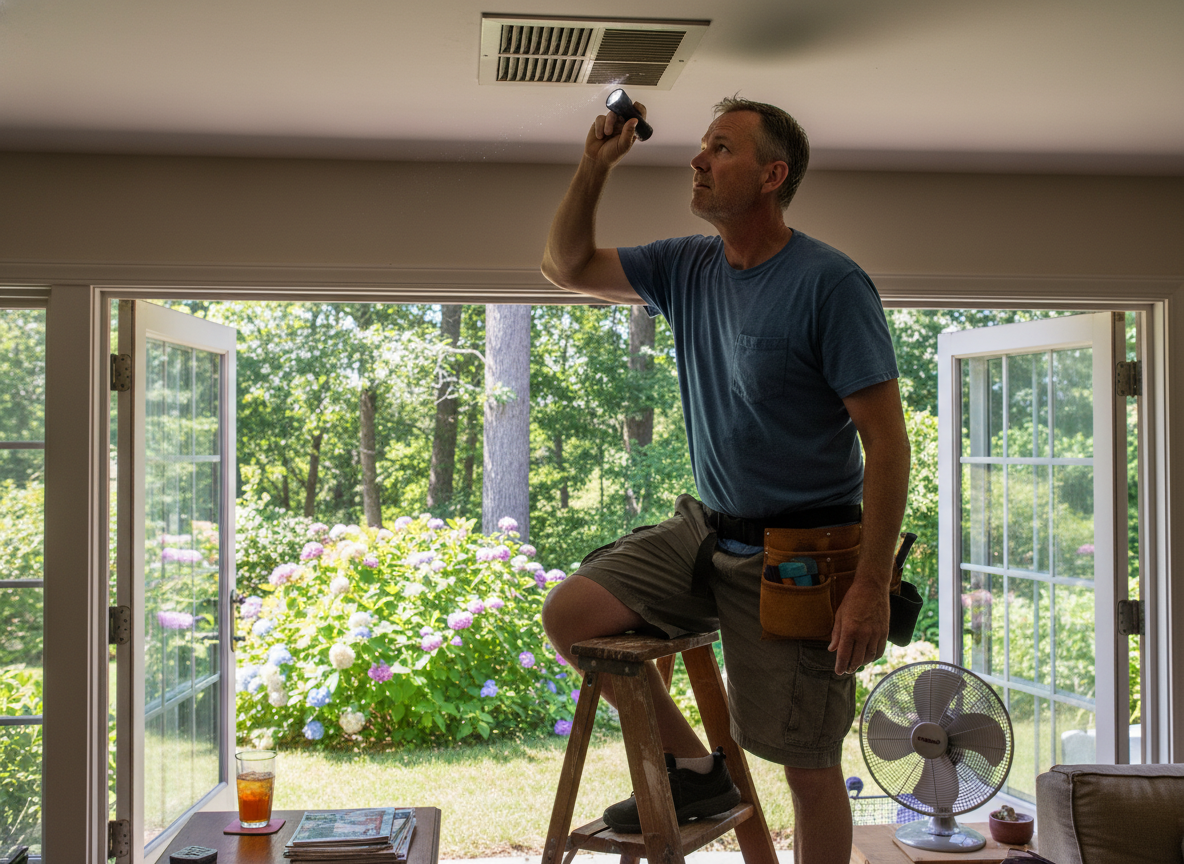
Summer is an ideal time to tackle outdoor repairs and improvements, as warm temperatures and long, dry days make it easier to take on larger projects and complete them efficiently.
1. Take Care of Your Lawn and Garden
Keep your yard healthy and vibrant by watering plants regularly, especially during hot or dry periods. Remove weeds often so they don’t compete with your plants for nutrients, and mow the lawn consistently to maintain a clean, green, and well-kept appearance throughout the season.
2. Fix and Clean Windows and Doors
While the weather is favorable, take the opportunity to inspect your home, then replace damaged screens and repair siding so your home stays energy-efficient and well protected.
3. Inspect Patios, Decks, and Fences
First, you should thoroughly clean outdoor surfaces such as decks, patios, and walkways to remove dirt, mildew, and buildup. After washing, apply a protective sealant to help strengthen these surfaces and improve their resistance to weather, moisture, and long-term wear, extending their lifespan and keeping them looking their best.
4. Examine Vents and Exhausts
Dryer vents, along with bathroom and kitchen exhaust vents, can accumulate lint, dust, and debris over time. Cleaning them regularly reduces fire hazards, improves airflow, and helps your home run more efficiently, which can also lower energy costs.
5. Check and Fix Siding
You should find cracks, warping or signs of rotting, and then fixing these minor problems right away stops moisture or structural damage from growing worse.
6. Keep Pests Away
Summer often leads to an increase in pests like ants, wasps, mice, and termites. To prevent infestations, seal cracks and other potential entry points around your home, and consider contacting a pest inspector if you notice signs of activity or want added protection.
Get Your Fall Home Ready

1. Tune Up Your Heater
Replace old filters, schedule a furnace inspection, and test your thermostats to make sure everything is functioning properly. Taking care of these tasks ahead of time helps ensure your heating system is ready, so winter doesn’t arrive before your home is prepared.
2. Check and Clean Chimneys
If you plan to use your fireplace, have the chimney inspected in advance. This helps reduce fire risks, ensures proper ventilation, and keeps your home safe throughout the colder months.
3. Stop Air Leaks
You need to seal any gaps or cracks around doors and windows using caulk or weatherstripping to keep cold air out. This simple upgrade improves insulation and can lower your heating costs by as much as 30%.
4. Get Gutters Ready for Winter
Clearing leaves and debris from your gutters during the colder months helps prevent ice dams from forming and reduces the risk of roof leaks and water damage.
5. Winterize Outdoor Plumbing
Drain and store garden hoses, shut off outdoor water supplies, and insulate hose bibs to protect exposed pipes from freezing and bursting during cold temperatures. Taking these precautions helps prevent costly plumbing damage, reduces the risk of leaks, and ensures your outdoor water systems are ready to use again when warmer weather returns.
6. Look at Insulation
Proper attic insulation helps keep warm air from escaping through the roof, making your home more energy-efficient during cold weather. By maintaining consistent indoor temperatures, it also reduces the risk of ice buildup and ice dams on your roof, which can lead to leaks and costly damage over time. Fall is all about getting prepared. Before winter’s cold and storms hit, start getting your home in shape.
Winter Home Maintenance To-Do List
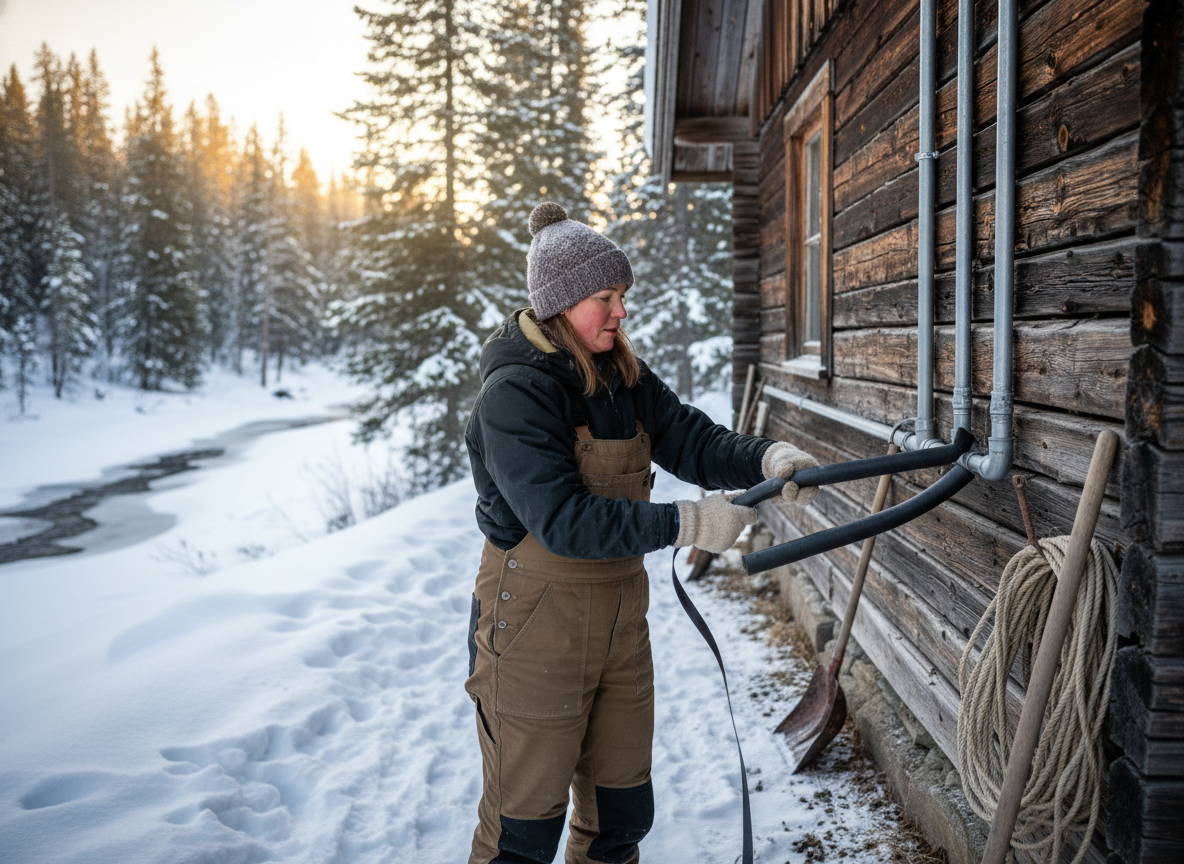
Winter means staying warm, keeping out the cold, and avoiding damage from bad weather.
1. Stop Pipes From Freezing
Protect your plumbing during cold weather by insulating exposed pipes, maintaining a steady indoor temperature throughout your home, and allowing faucets to drip slightly when temperatures drop. These simple steps help keep water flowing, reduce pressure inside the pipes, and lower the risk of freezing and burst pipes.
2. Check Roof, Gutters, and Downspouts
Heavy snow and ice buildup can put extra stress on your roof. When it’s safe to do so, remove ice dams and icicles, or consider hiring a professional to handle the job and prevent potential damage.
3. Freshen Indoor Air
Keep your home’s air quality and ventilation system in good shape by wiping down bathroom exhaust fans, clearing dust and debris from vents, and replacing air filters regularly. These simple maintenance steps improve airflow, help systems run more efficiently, and support a cleaner, healthier indoor environment.
4. Look Out for Drafts
If you’re feeling cold air leaking in your house, you should seal up gaps around doors and windows; this will save you money on your energy bill honestly.
5. Gather Winter Supplies
6. Check Your Basement and Foundation
To prevent moisture, you should watch for water leaks during mid-winter warm periods, because it can show up without warning.
Home Maintenance Every Month and Few Times a Year: Prevent Costly Repairs
Each month:
- Test your smoke alarms
- Check the pressure on your boiler or HVAC
- Check for leaks beneath sinks
- Scrub spots where mold tends to grow
- Look over plumbing and drains
- Refill your stash of cleaning supplies
Every few months:
- Remove sediment from the water heater
- Check if Ground Fault Circuit Interrupter (GFCI) outlets still work
- Give vents a thorough cleaning
- Look at fire extinguishers to ensure they are ready to use
- Clean showerheads and faucet aerators
These monthly tasks are easier to manage when you follow a simple home cleaning routine that breaks responsibilities into daily, weekly, and monthly steps.
Why Keeping Up With Seasonal Maintenance Is Important
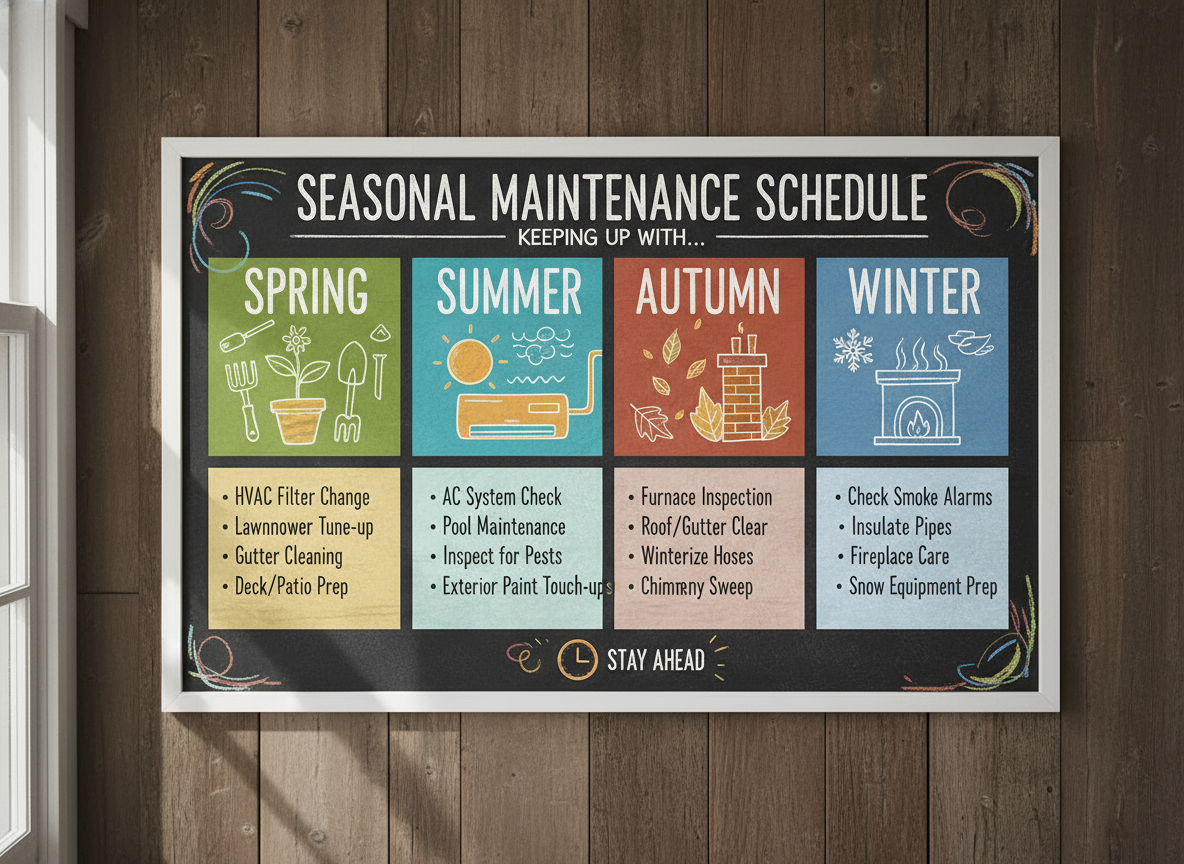
Sticking to a regular home care schedule helps:
- Prevent expensive repairs. Even a little leak or broken roof shingle can turn into major damage costing thousands.
- Maintain your home’s worth. Homes that are well-kept score brownie points with potential buyers and even insurance firms.
- Save on energy costs. Good sealing, insulation, and keeping the HVAC system in shape can slash energy bills.
- Make your home systems last longer. Take care of your roof, HVAC, plumbing, and appliances to keep them working longer.
What You Can Fix Yourself And When to Hire an Expert
Some home maintenance tasks are well suited for DIY, such as cleaning gutters or replacing air filters. However, more complex or risky jobs, such as electrical repairs, gas appliance installation, major roof work, chimney repairs, or serious plumbing issues, are best left to trained professionals. When in doubt, prioritizing safety is always wiser than trying to save a little money and risking costly or dangerous mistakes.
Closing Thought: A Home That Supports You
Keeping up with home maintenance during different seasons is simpler than it seems. Following a clear plan and staying consistent can help you take care of your home, prevent headaches and make it a safer and cozier place to live in any season. You can print this guide, set up calendar alerts and handle the tasks season by season. This will benefit both your home and your bank account.