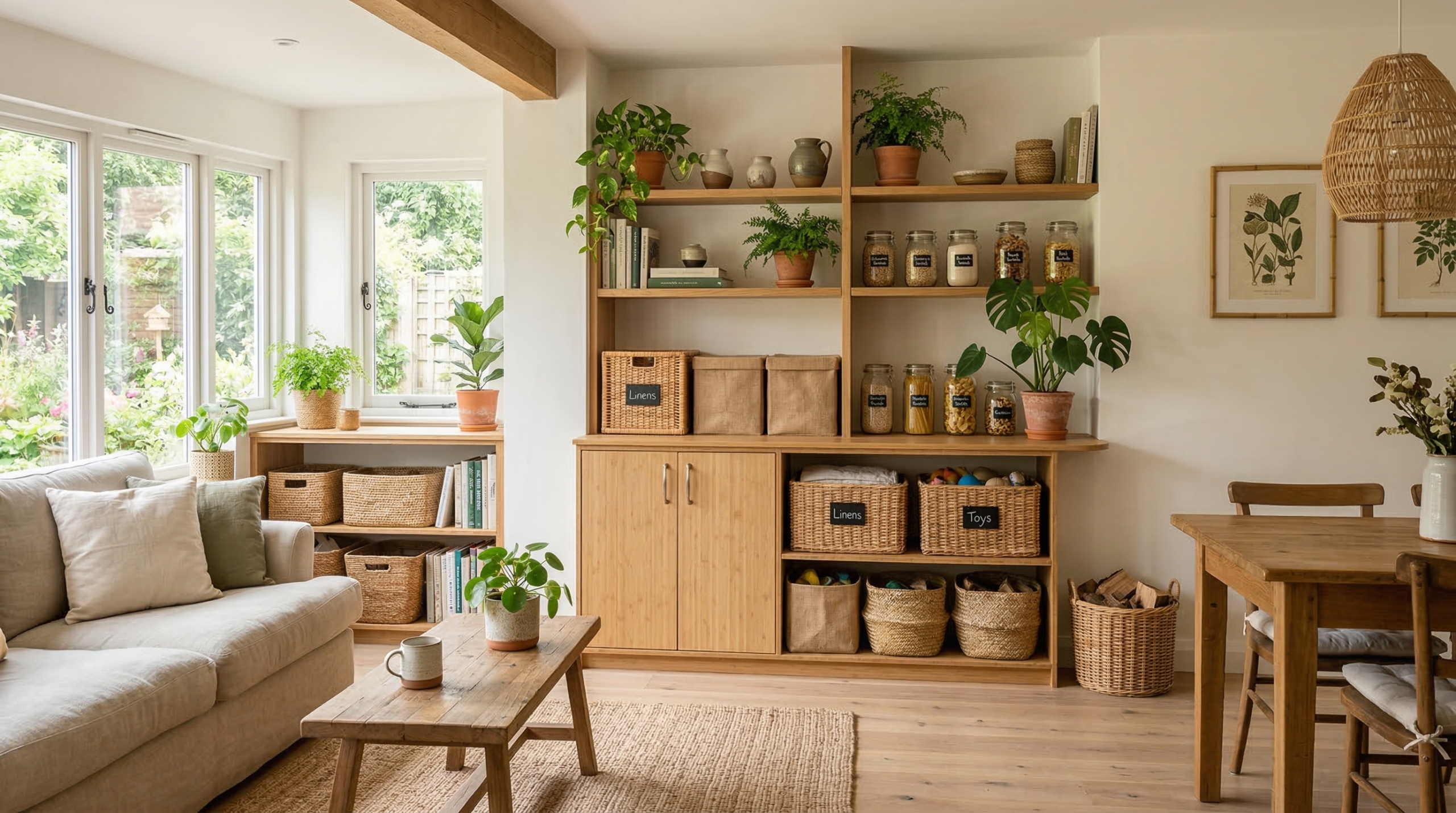
Creating a more organized home doesn’t have to mean buying a pile of plastic bins or filling every closet with trendy storage products. In many cases, the smartest storage choices are the ones that reduce waste, last for years, and work naturally with the way your home already functions. Eco-friendly storage solutions can help you cut clutter, use space more thoughtfully, and build a home that feels cleaner, calmer, and more intentional. When chosen well, they also add warmth, texture, and style instead of making rooms feel overly utilitarian.
Why Eco-Friendly Storage Solutions Make Sense for Modern Homes
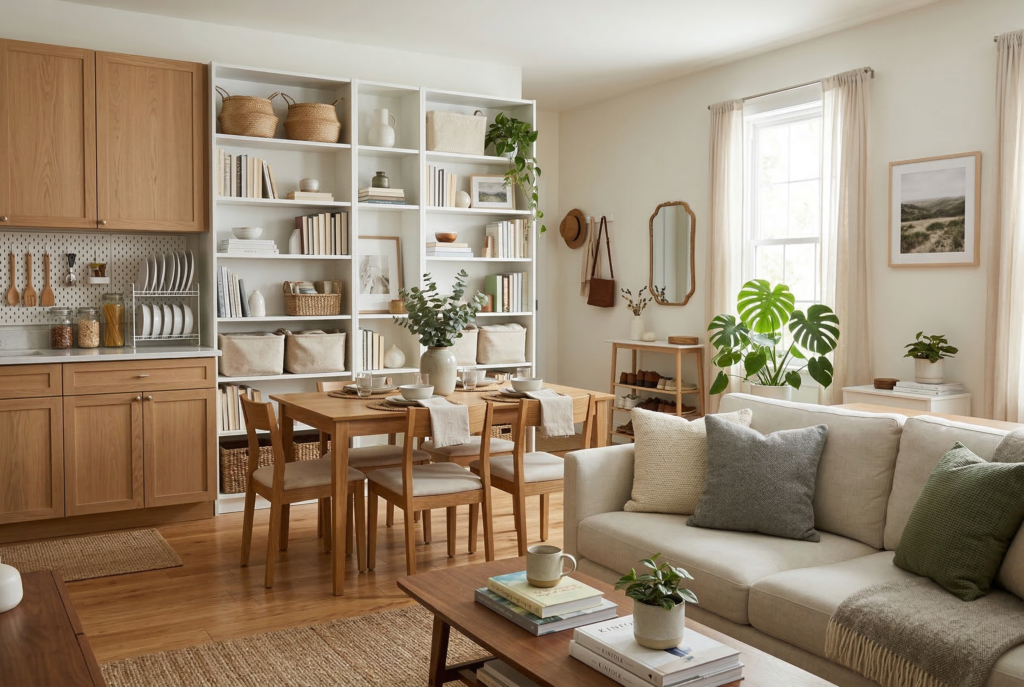
A well-organized home works better when storage is durable, practical, and easy to maintain. Eco-friendly storage supports that goal by focusing on materials and systems that hold up over time, create less waste, and often look better in everyday living spaces. That matters in homes across the United States, where people are increasingly trying to balance function, budget, design, and sustainability in realistic ways.
Many conventional storage products are made quickly, wear out fast, and end up replaced over and over again. That cycle creates more clutter, more waste, and more money spent on items that don’t hold up.
Eco-friendly home organization solutions tend to favor natural fibers, reusable containers, reclaimed materials, and long-lasting furniture that can adapt as your needs change. The result is a home that feels less disposable and easier to manage over time.
1. Choose Woven Baskets Made From Natural Materials
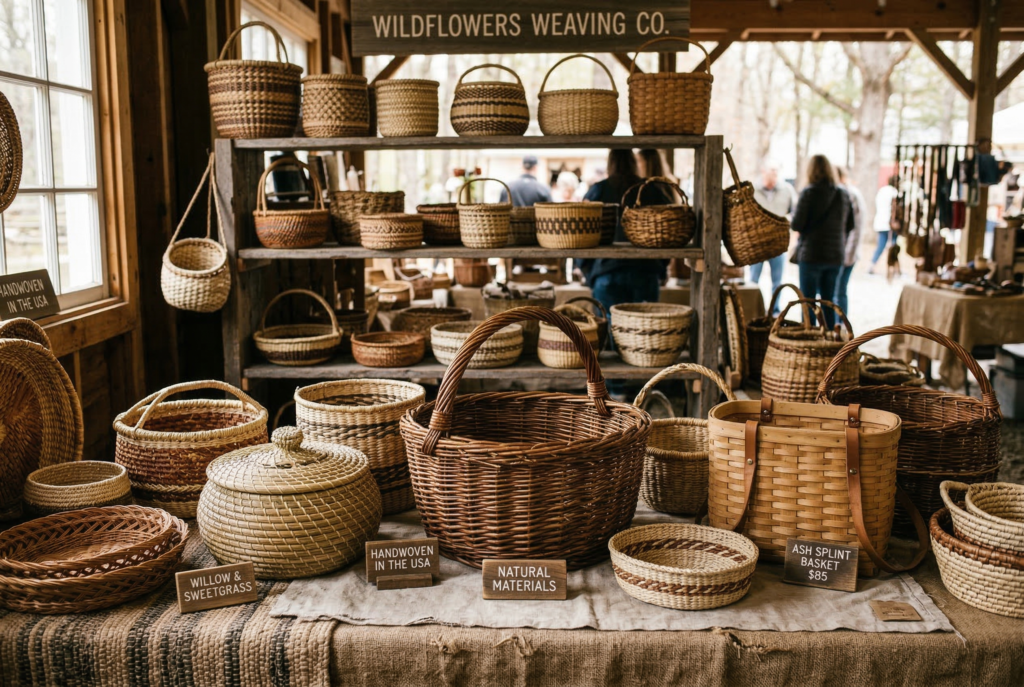
Woven baskets are one of the easiest ways to add eco-friendly storage to almost any room. Baskets made from seagrass, water hyacinth, jute, rattan, or bamboo bring texture and warmth while helping contain everyday clutter.
They work well in living rooms for blankets and magazines, in bedrooms for extra pillows, in entryways for shoes, and in bathrooms for towels or toiletries. Because they’re breathable and visually softer than plastic bins, they blend into home decor more naturally and help organized spaces feel relaxed instead of rigid.
The key is choosing sizes that match the items you actually need to store. Oversized baskets can become catchalls, while smaller defined ones help keep categories under control.
2. Repurpose Glass Jars for Small Household Storage
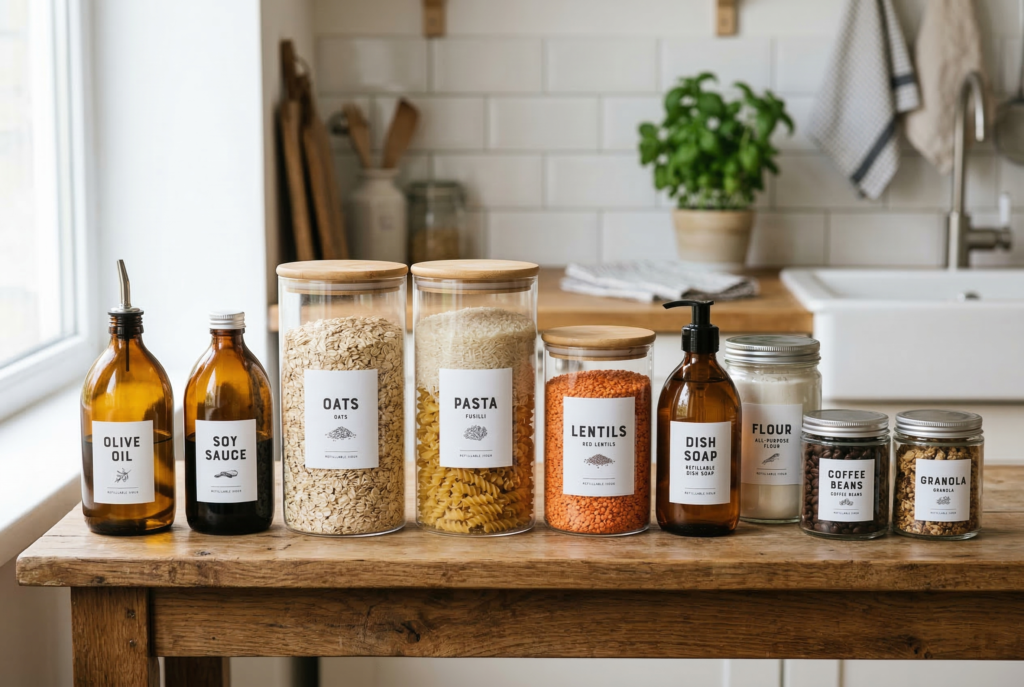
Glass jars are a simple, reusable storage option that can replace disposable containers in many parts of the home. Large and medium jars are useful in pantries for dry goods, while smaller jars can organize bathroom supplies, office items, laundry products, or hardware.
They’re especially helpful when you want visible storage that still looks clean and cohesive. In kitchens, clear jars make it easier to see staples like rice, pasta, oats, or snacks. In workspaces, they can hold pens, clips, and other small supplies without adding visual clutter.
Repurposing jars you already have is one of the most budget-friendly ways to organize sustainably. It also keeps useful materials in circulation rather than sending them to the recycling bin too quickly.
3. Use Wooden Crates for Flexible Storage With Character
Wooden crates offer a practical alternative to mass-produced storage cubes, especially if you want a home that feels more natural and lived in. They can be stacked, tucked under benches, placed on closet shelves, or used on the floor for casual open storage.
Crates work well in mudrooms, laundry rooms, home offices, and children’s spaces because they’re easy to move and adapt. Reclaimed or unfinished wood crates also bring more character than many standard storage boxes, which can help functional areas feel more thoughtfully designed.
To keep the look organized, use them intentionally. Assign each crate a category such as shoes, cleaning supplies, pantry overflow, or craft materials so the system stays easy to maintain.

4. Invest in Furniture That Doubles as Storage
One of the most effective eco-friendly storage ideas is simply buying less by choosing furniture that does more. Storage benches, coffee tables with hidden compartments, beds with drawers, and entry consoles with baskets underneath can reduce the need for extra storage products altogether.
This kind of multifunctional furniture is especially useful in smaller homes, apartments, and shared family spaces where square footage matters. It helps you store everyday items without crowding a room with additional containers or shelving units.
From a sustainability perspective, fewer separate pieces often means less consumption, less waste, and a more streamlined home. A well-made storage bench or bed frame can serve for years while solving several organization problems at once.
5. Switch to Fabric Storage Bins for Softer, Reusable Organization
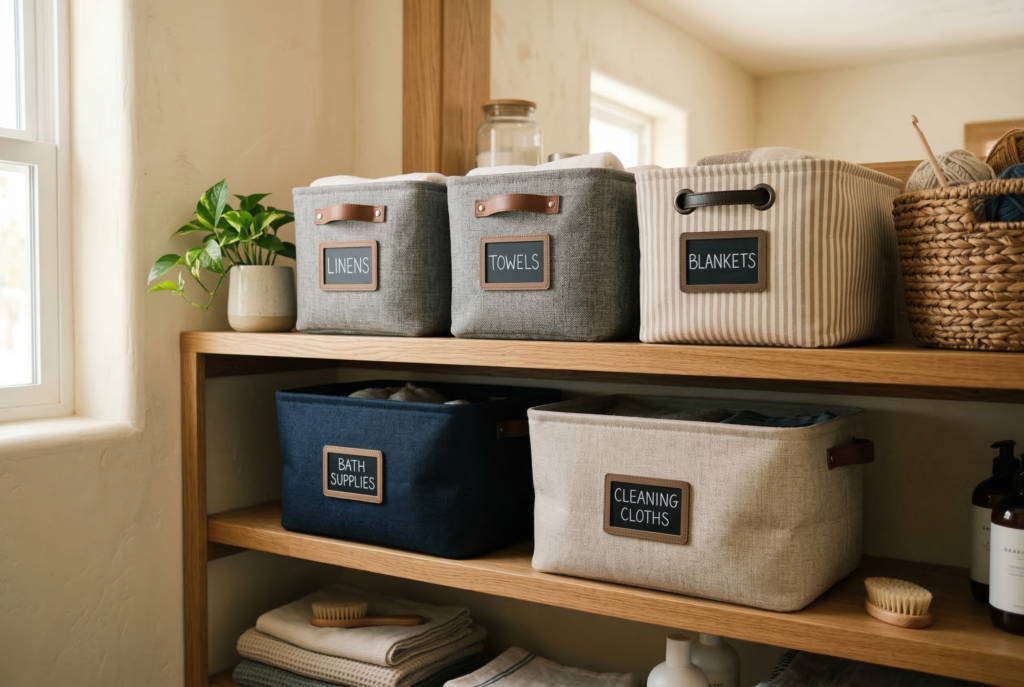
Fabric bins are a strong option for anyone who wants lightweight storage without relying on more plastic. Bins made from cotton, canvas, felt, or recycled textiles can be used on shelves, in closets, in nurseries, or inside cabinets.
They’re especially helpful for storing clothing accessories, toys, linens, or seasonal items that don’t need rigid containers. Because they fold when not in use, they’re also easier to store than bulky hard bins. Look for bins with sturdy sides and simple shapes so they still create a clean visual effect. Neutral or earthy tones often work best for a timeless look, especially in open shelving or visible storage areas.
6. Add Bamboo Organizers in Kitchens and Bathrooms
Bamboo has become a popular material in eco-friendly home products for good reason. It grows quickly, feels lighter visually than heavier wood, and works well in rooms where smaller items tend to get out of control.
Bamboo drawer dividers, shelf risers, utensil trays, and bathroom organizers can help create order without making spaces feel harsh or overdesigned. In kitchens, they’re useful for utensils, food wraps, and junk drawer cleanup. In bathrooms, they can organize makeup, grooming tools, and daily essentials. This kind of storage works best when it supports your real routine. A few well-placed organizers often do more than filling every drawer with compartments you won’t actually use.
7. Reuse Vintage or Secondhand Pieces for Unique Storage
Not every storage solution needs to come from a home store. Vintage finds and secondhand furniture can offer some of the most durable and stylish storage options in a home. Old dressers, cabinets, trunks, bookshelves, and side tables often have more character and stronger construction than many newer pieces.
This approach works especially well if you want a more collected, personal interior style. A secondhand cabinet can store board games in the living room, dishes in the dining area, or office supplies in a work-from-home space. An older trunk can hold blankets, keepsakes, or seasonal decor. Buying secondhand also reduces demand for new production and keeps usable furniture out of landfills. It’s one of the most practical ways to combine sustainability with style.
8. Organize Closets With Wooden Hangers and Simple Systems
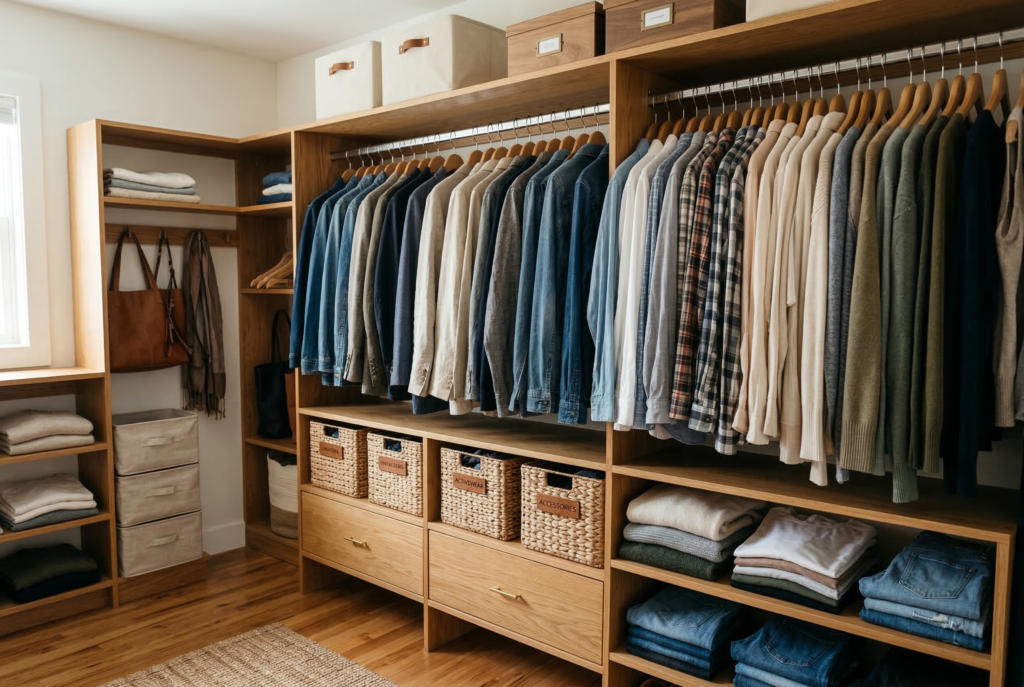
Closet organization often becomes wasteful when it depends on a mix of flimsy plastic products that crack, tangle, or get replaced every few months. A simpler and more eco-friendly approach is to use fewer, better-quality pieces.
Wooden hangers help create a more uniform closet and tend to last longer than thin plastic or wire options. Pair them with fabric bins, shelf baskets, and a small number of practical dividers to keep categories clear. The goal is to create a closet that feels easier to use, not one packed with gadgets.
This kind of streamlined setup also makes it easier to see what you own, which can reduce duplicate buying and support better long-term organization.
9. Use Refillable Containers for Utility Spaces
Laundry rooms, cleaning closets, and utility cabinets often become cluttered with disposable packaging, half-used bottles, and mismatched supplies. Refillable containers can help simplify these spaces while cutting down on waste.
Glass or metal dispensers, reusable spray bottles, and durable labeled containers can store detergents, powders, clothespins, brushes, and cleaning tools more neatly. This works particularly well for people who buy in bulk or use concentrated cleaning products at home.
Keeping utility spaces organized matters more than many people realize. When those behind-the-scenes areas function better, it becomes easier to stay on top of everyday tasks without extra friction.
10. Create Storage Zones That Prevent Overbuying
One of the most overlooked eco-friendly storage solutions is setting clear limits. When every category in your home has a defined storage zone, it becomes easier to see what you already have and harder to overbuy.
This applies to pantry staples, toiletries, linens, craft materials, kids’ supplies, and seasonal decor. If a category has one shelf, one basket, or one cabinet, that boundary encourages more intentional choices. It also keeps clutter from spreading into the rest of the home. Sustainable organization includes both thoughtful materials and habits that reduce excess and simplify daily life. Clear boundaries help support each of these.
How to Choose Eco-Friendly Storage That Actually Works
The most effective storage solutions are the ones that fit your space, your routine, and the way you naturally move through your home. That’s why it helps to start with your biggest pain points rather than shopping for storage at random. Maybe your entryway collects shoes and bags. Maybe your pantry feels crowded. Maybe bathroom drawers turn messy within days.
Once you know where clutter builds up, look for storage that solves that specific problem with durable, reusable, and low-waste materials. It’s usually better to buy a few well-made pieces than to fill your home with containers that won’t last or won’t get used properly. A stylish home also tends to stay more organized when the storage feels visually integrated. Natural materials, secondhand furniture, and simple systems often age better and adapt more easily than highly trendy storage products.
Conclusion
Eco-friendly storage solutions can help you organize your home in a way that feels practical, attractive, and easier to maintain over time. From woven baskets and glass jars to bamboo organizers and secondhand furniture, the best options reduce waste while making everyday spaces more functional. They also support a more thoughtful approach to home organization, one that values durability, flexibility, and real-life use over quick fixes.
A clutter-free space doesn’t require a perfectly curated system or a full home makeover. It starts with choosing storage that works hard, lasts well, and fits the rhythm of your life. When your organization systems are both stylish and sustainable, your home feels better to live in and easier to keep that way.