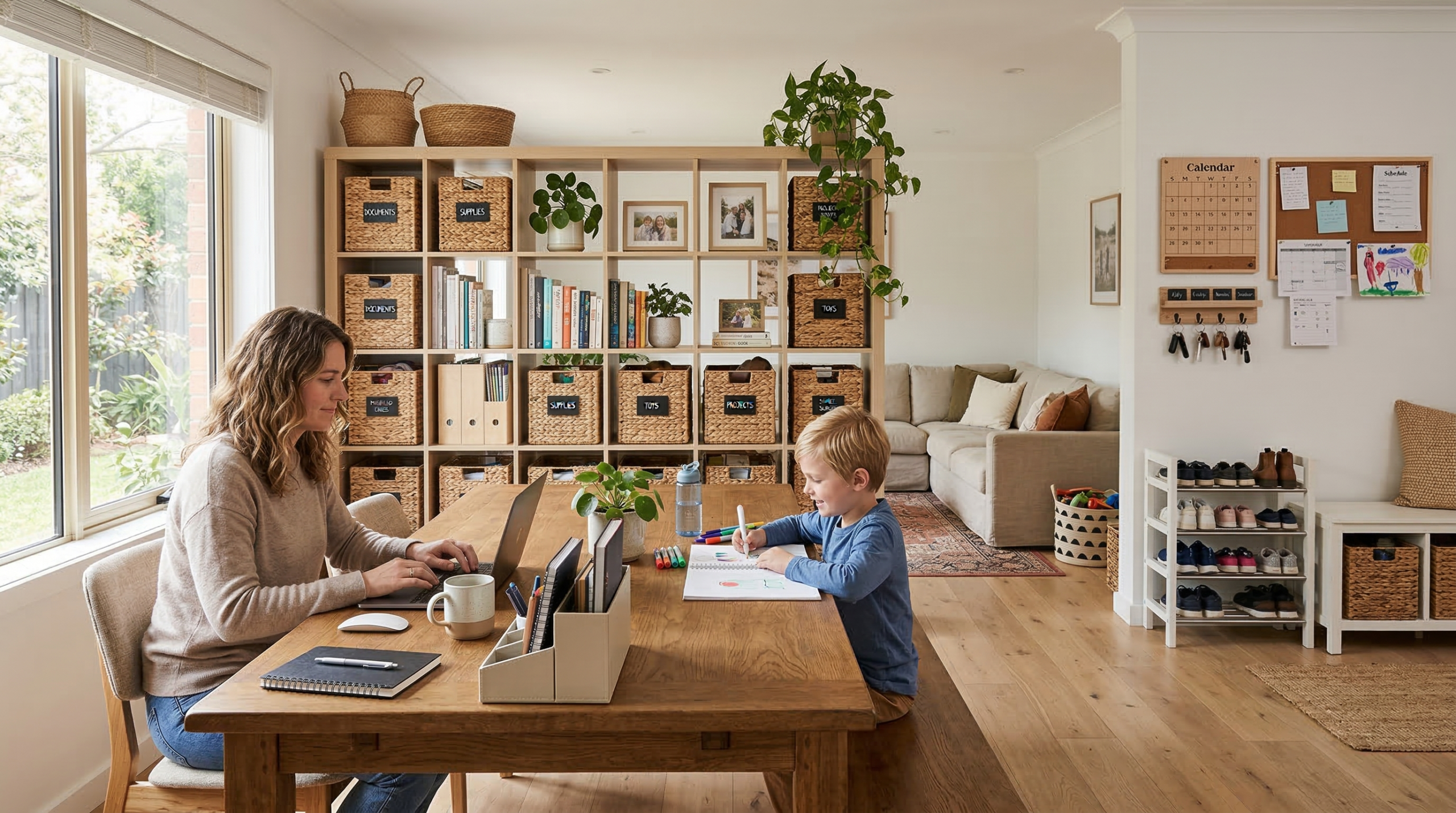
Shared spaces tend to collect clutter faster than any other part of the home. The living room becomes a drop zone for bags and chargers, the kitchen counter fills with papers and mail, and the entryway starts holding everything from shoes to sports gear.
When several people use the same areas every day, even a well-designed home can begin to feel crowded and disorganized. The good news is that shared space organization doesn’t have to be complicated. With thoughtful systems and realistic routines, you can make common areas easier to maintain and more functional for everyone who uses them.
1. Define the Purpose of Each Shared Space
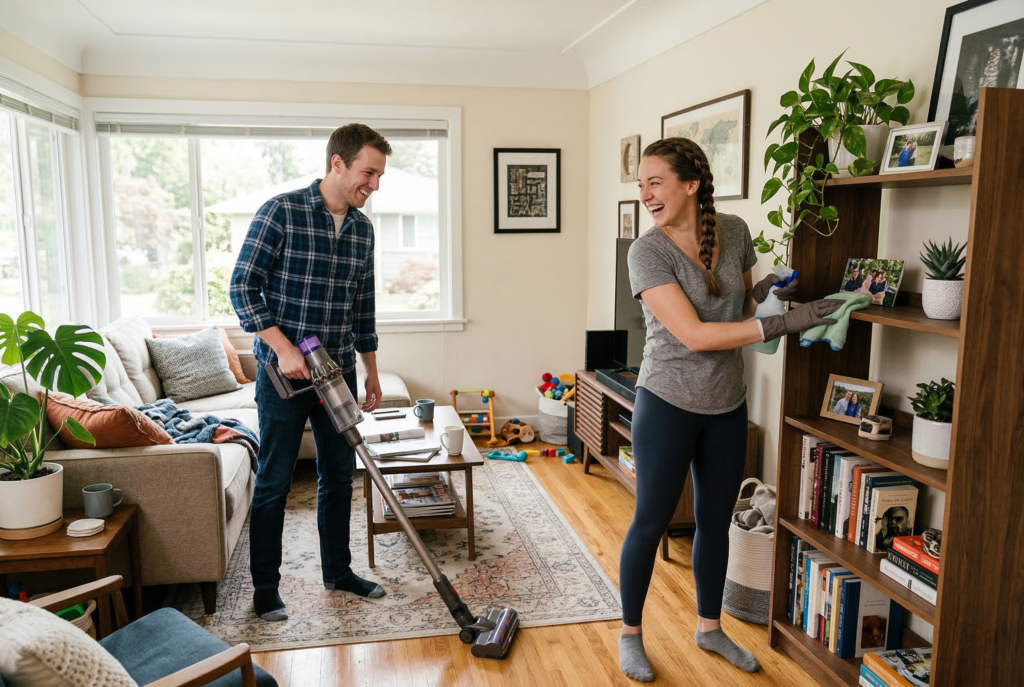
One of the most effective ways to reduce clutter is to get clear on what each shared area is supposed to do. Many common spaces become messy because they’re trying to serve too many purposes without any structure.
A living room might function as a place to relax, watch TV, do homework, and store blankets or games. A dining area may also be used for remote work, crafts, or paying bills. These overlapping roles are normal, but they need boundaries. Once you identify the main functions of a space, it becomes easier to decide what belongs there and what doesn’t.
This step helps prevent random overflow. When a room has a defined purpose, household members are more likely to return items to the right place instead of leaving everything in the nearest open spot.
2. Create Storage Zones Based on Daily Use
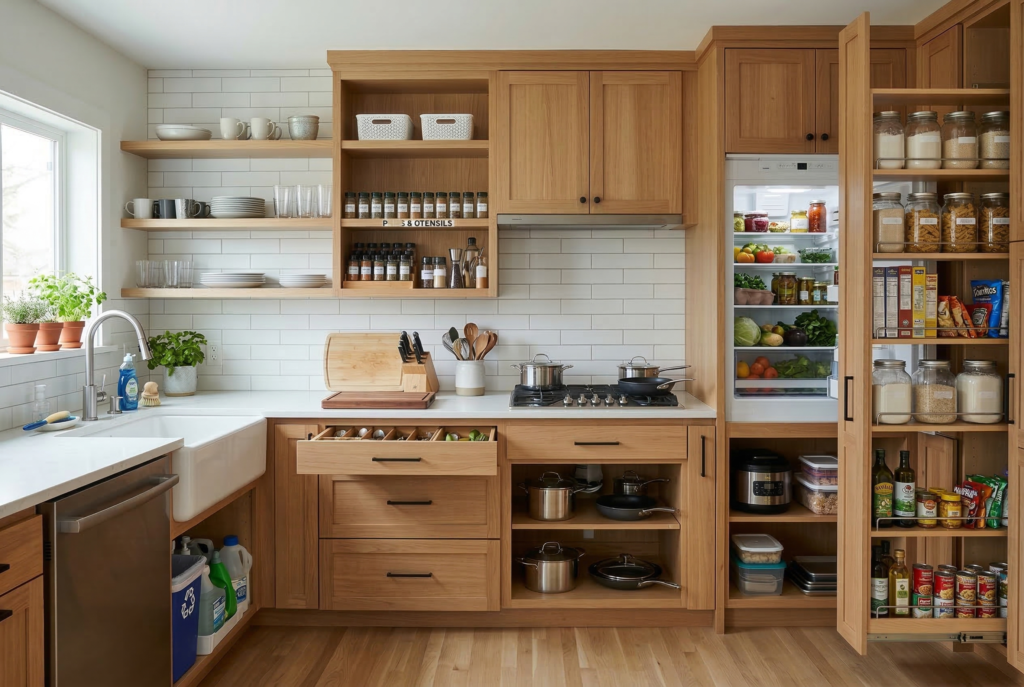
Shared spaces work better when storage is organized by category and frequency of use. Instead of placing items wherever they fit, group them by how and when the household actually uses them.
In the living room, that could mean one basket for throw blankets, one drawer for remotes and chargers, and one shelf for books or family games. In the kitchen, it may mean creating separate zones for lunch packing, coffee supplies, everyday dishes, and paperwork that needs attention. When items are grouped in a way that makes sense, people don’t have to guess where things go. That lowers the chance of clutter piling up on surfaces and makes the home easier to reset at the end of the day.
3. Keep Flat Surfaces From Becoming Catch-All Areas
Counters, coffee tables, consoles, and dining tables are some of the biggest clutter magnets in any home. Once a few things land there, more items follow quickly. Before long, the surface no longer works for its original purpose.
To keep this from happening, decide which flat surfaces should stay mostly clear and which ones can hold a limited number of essentials. A kitchen counter may need a tray for frequently used items, while a dining table may need to stay open for meals and family activities. A console table near the entry can hold a small bowl for keys, but it shouldn’t become a dumping ground for unopened mail, receipts, and random accessories. This approach works well because it gives structure without making the home feel rigid. The goal is to make surfaces usable, not empty for the sake of appearance.
4. Use Baskets and Containers to Give Loose Items a Home
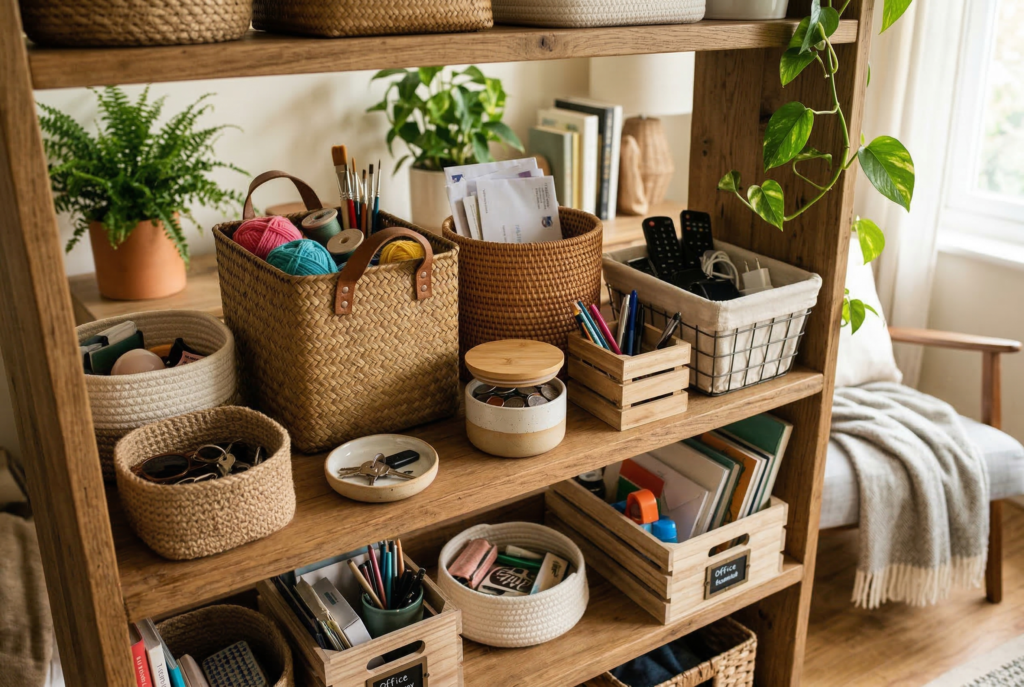
Loose items create visual clutter fast, especially in rooms shared by adults, kids, or guests. Baskets and containers can help contain these everyday items without making the space feel overly formal.
A basket near the sofa can hold blankets. A bin in the family room can collect toys or hobby supplies. A small container in the kitchen can keep charging cords, pens, or takeout menus in one place. In an entryway, baskets can help separate hats, gloves, pet leashes, or reusable shopping bags. The reason this works is simple. When small items have a clear home, cleanup becomes faster and more intuitive. It also makes shared spaces look calmer without requiring elaborate storage systems.
5. Build Organization Around Real Habits, Not Ideal Habits
Many organizing systems fail because they’re designed around how people wish they lived instead of how they actually live. A shared space has to support everyday behavior if you want it to stay functional.
If everyone drops their shoes by the door, create a shoe solution there instead of expecting them to carry shoes to a distant closet every time. If backpacks always land near the kitchen, add hooks or a bench nearby. If the family tends to open mail at the counter, keep a tray or sorter in that area rather than pretending the paperwork will magically go somewhere else.
Practical organization always starts with observation. When you build around real routines, it’s easier for everyone in the home to follow the system without constant reminders.
6. Give Each Person Some Dedicated Shared-Space Storage
Clutter often builds up in common areas because people don’t have a clear place to keep the items they use regularly. Even in shared rooms, personal storage can make a big difference.
That might mean one basket per family member in the mudroom, one shelf for each person’s everyday items, or a labeled drawer for things that tend to move through shared spaces. In households with children, this can also help contain school papers, art supplies, and activity gear before they spread across the home. Dedicated storage reduces confusion and arguments. It gives each person a manageable place for their things while still protecting the function of the larger shared area.
7. Make Entryways Work Harder
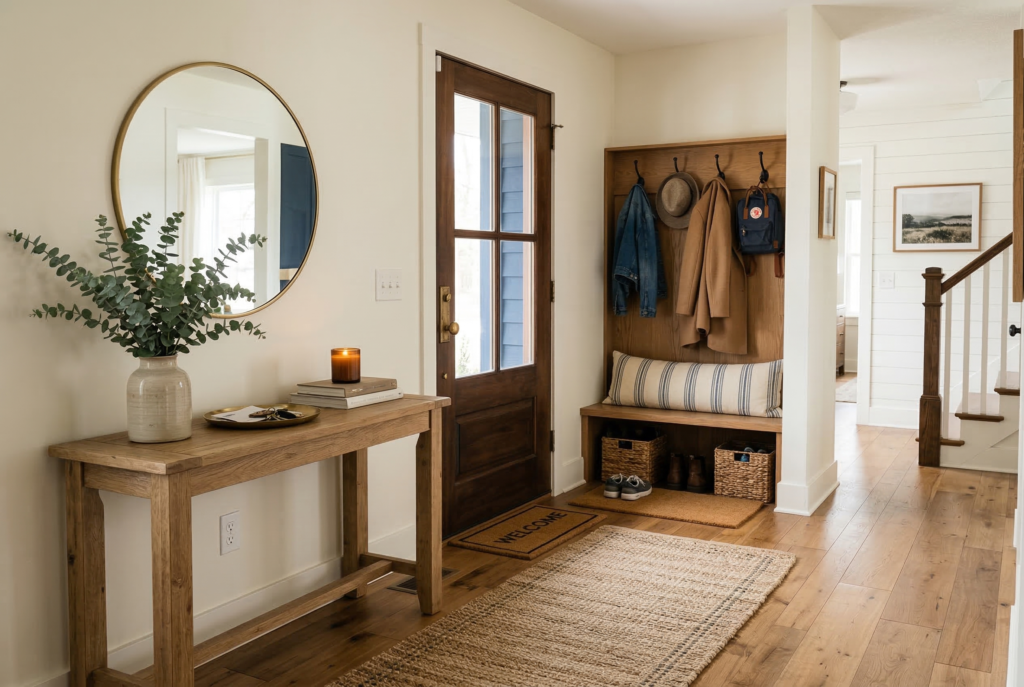
The entryway is one of the most important shared zones in the home. It’s where clutter often starts and where daily transitions happen. When this space isn’t organized, the mess usually spreads into nearby rooms.
A functional entryway should support what happens there every day. Hooks for bags and jackets, a tray for shoes, a basket for umbrellas, and a small surface for keys or mail can all help reduce clutter before it moves deeper into the house. If space allows, a bench with hidden storage can make the area even more useful.
This doesn’t require a large mudroom or custom built-ins. Even a narrow hallway or apartment entry can become more organized with a few smart solutions that fit the household’s real needs.
8. Set Limits on What Shared Spaces Can Hold
One of the best ways to keep clutter under control is to create natural limits. If a family room shelf can only hold a certain number of games, books, or decor items, that limit encourages regular editing. If the entryway basket is full, it’s time to remove what doesn’t belong there.
Without limits, shared spaces keep absorbing more and more stuff. Eventually, even good storage solutions stop working because there’s simply too much in the room. Setting capacity boundaries helps protect the function of the space and makes it easier to notice when clutter is starting to creep back in.
This is especially useful in homes with limited square footage. When space is shared, every inch matters, and keeping volume under control is just as important as having the right storage tools.
9. Create a Quick Reset Routine for Common Areas
Even the best organized shared spaces need regular maintenance. Since multiple people use these areas throughout the day, a simple reset routine helps keep clutter from building into a bigger problem.
This routine doesn’t need to take long. Five to ten minutes in the evening can be enough to put away blankets, return dishes to the kitchen, sort the mail, clear the coffee table, and gather misplaced items. In busy households, a short daily reset is often more effective than waiting for a major weekend cleanup. What matters most is consistency. A shared space stays functional when small messes are handled quickly, before they become overwhelming.
10. Review Shared Areas Regularly and Adjust as Needed
Homes change over time. Kids grow, routines shift, work schedules change, and seasons affect how different spaces are used. That means shared space organizations should stay flexible too. Take time every so often to review what’s working and what isn’t. Maybe the toy storage system no longer fits your child’s age. Maybe the kitchen paper pile has outgrown its tray. Maybe the entryway needs better storage for winter gear or sports equipment. These small adjustments help the system keep up with real life.
This kind of review is part of maintaining a functional home. It keeps shared spaces useful and prevents the slow return of clutter that often happens when systems are left unchanged for too long.
Conclusion
Organizing shared spaces well can make everyday life feel easier, calmer, and far less chaotic. When common areas are designed around real routines, clear storage zones, and simple limits, they become easier for everyone in the household to use and maintain. The result isn’t a perfect home that always looks untouched. It’s a home that functions better for the people living in it.
The most effective shared space organization ideas are usually the ones that support daily life in practical ways. Clear the surfaces that matter, contain loose items, give each person some dedicated storage, and build routines that keep clutter from spreading. With a thoughtful setup and a little consistency, shared spaces can stay organized, welcoming, and functional year-round.