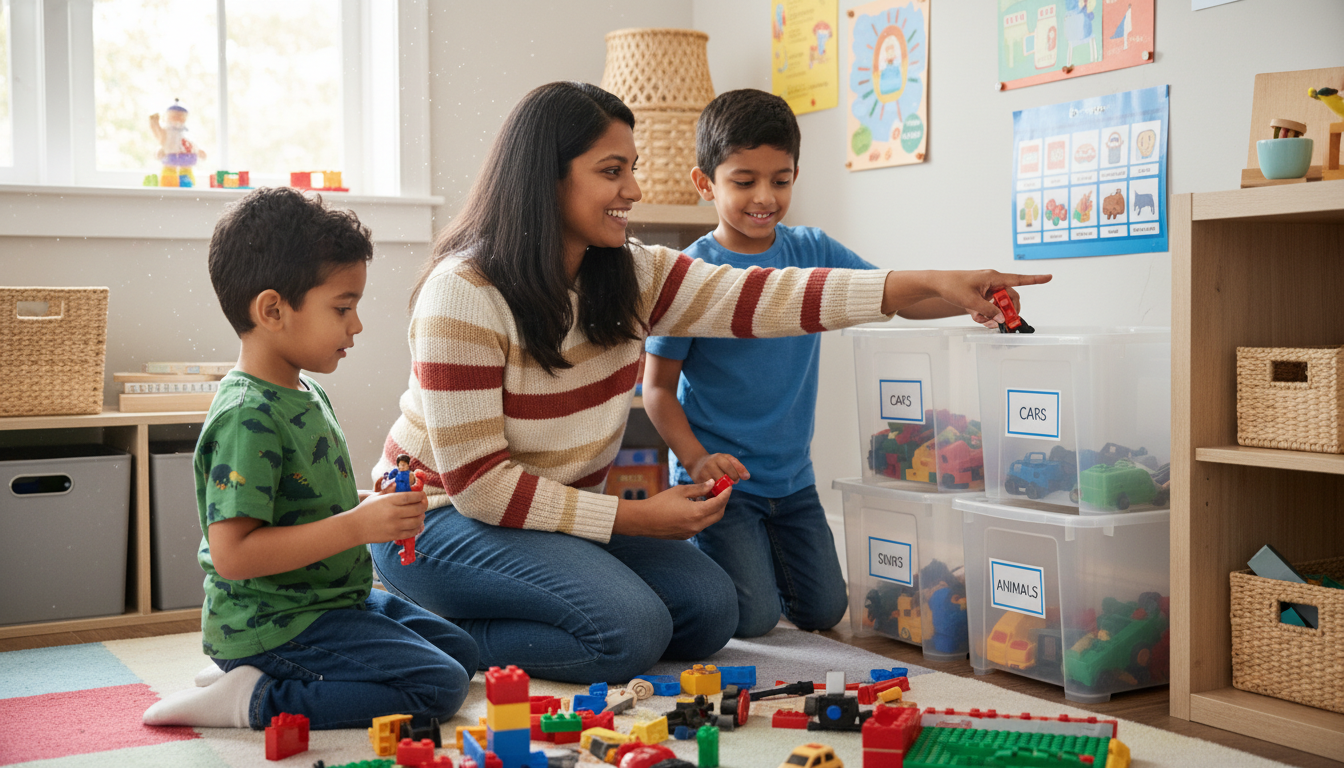
If toys seem to multiply overnight and somehow migrate from bedrooms to the living room to the kitchen floor, you aren’t failing at organization. You’re living in a real house with real kids.
Small spaces make toy clutter feel louder. There’s less room to hide it, less patience for daily cleanup. However, you don’t need a playroom or a full weekend to make toy storage work better. What you actually need are smart zones, forgiving systems, and storage that fits how kids really play.
Below are 10 smart toy storage and organization ideas for small spaces that are practical, flexible, and realistic enough to stick.
Start With This Rule (Before You Buy Anything)
If a system requires sorting by color, opening multiple lids, or adult supervision, it won’t last. The most successful toy storage systems share one thing in common: kids can put toys away on their own, without instructions or frustration. Keep that principle in mind as you read.
1. Use Open Bins for Everyday Toys
Open bins eliminate friction. No lids to wrestle with, no locks to snap shut, and no extra steps standing between a toy and its home. When kids can toss toys in quickly, cleanup actually happens, especially at the end of long days when everyone is tired. Open bins work well for blocks, action figures, small vehicles, and dress-up accessories. Just make sure the bins aren’t too deep. If kids can’t see what’s inside, they’ll dump everything out to find what they want.
2. Turn Vertical Space Into Storage Zones
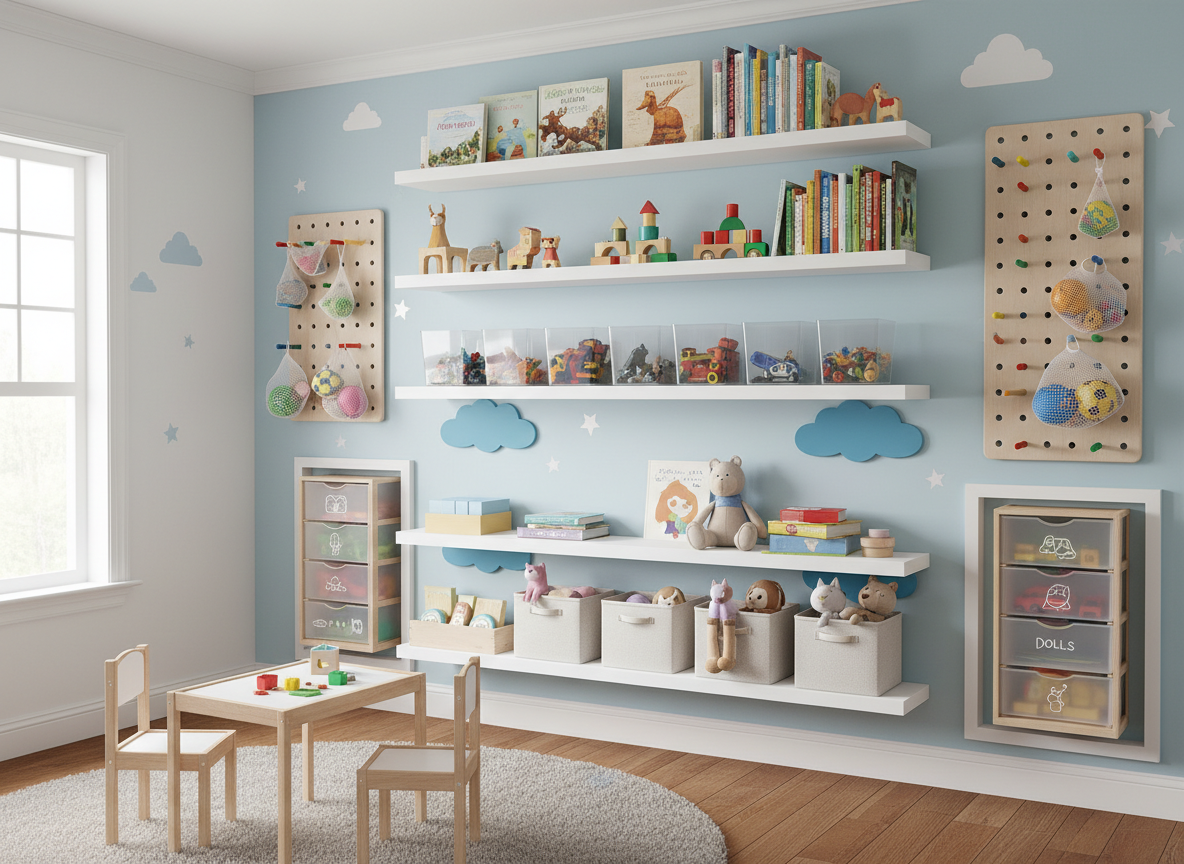
In small kids’ rooms, wall space is often overlooked. These vertical zones work beautifully for books, puzzles, small play sets, and even stuffed animals you want visible. Raising storage off the floor instantly makes a room feel bigger, even when the square footage hasn’t changed.
3. Slide-Out Storage Beats Deep Shelves
Sliding bins and pull-out drawers outperform fixed shelves in tight spaces because kids can access everything without digging or knocking things over. They also naturally limit how much can be stored, which helps prevent overflow. This kind of storage works especially well for LEGO and building toys, art supplies, and small games. If it slides easily, it’s more likely to be used and put back where it belongs.
4. Organize Toys by How They’re Played With
Instead of sorting toys by type just because it looks tidy, organize them based on how your child actually plays. Some kids dump everything out and free-build while others rotate between specific activities, so storage should reflect that behavior. One bin for all building toys often works better than separating sets. One basket for dolls and accessories is more realistic than individual containers. This approach reduces mess and decision fatigue at the same time.
5. Use Labels That Help, Not Decorate
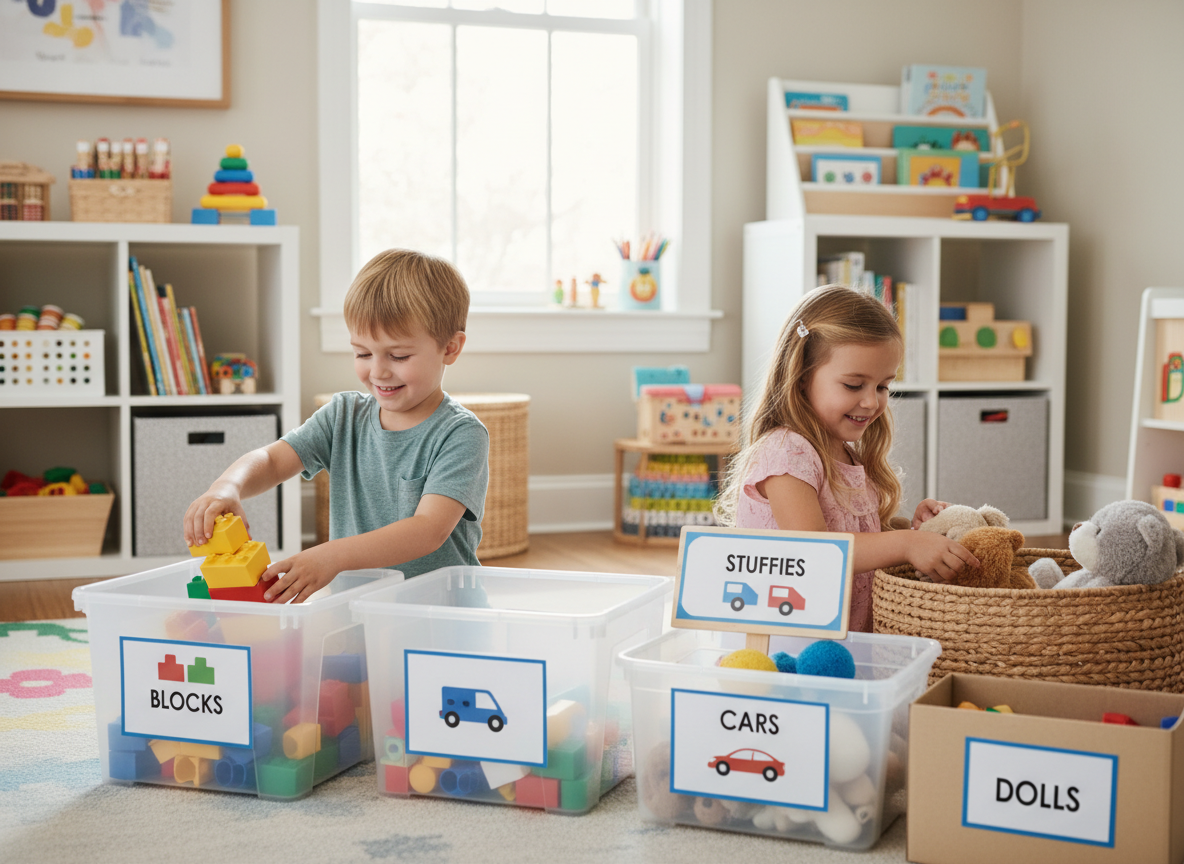
With clear and simple labels, kids are able to return toys to the right spot, make it easier for adults to reset the room quickly, and alert you when a category is starting to overflow. For younger kids, picture labels tend to work better than words. For older kids, large, easy-to-read text keeps things obvious and intuitive.
6. Store Small Pieces Inside Bigger Systems
Tiny toys create outsized messes. Rather than giving small items their own complicated systems, store them inside your main storage using smaller containers. It can be mesh zipper pouches, shallow trays, or small clear boxes that live inside bins, drawers, or cube organizers. This keeps small pieces contained, visible, and easy to grab without taking over the room.
7. Make Under-the-Bed Storage Do Real Work
Under-bed space is prime real estate in small rooms, but only if it’s easy to access. You can use low-profile bins that slide smoothly and stay organized instead of flimsy bags. They’re best for seasonal toys, large sets, and games used less often. If it takes effort to pull out, kids won’t use it, and toys won’t go back.
8. Use Doors for Hidden Storage
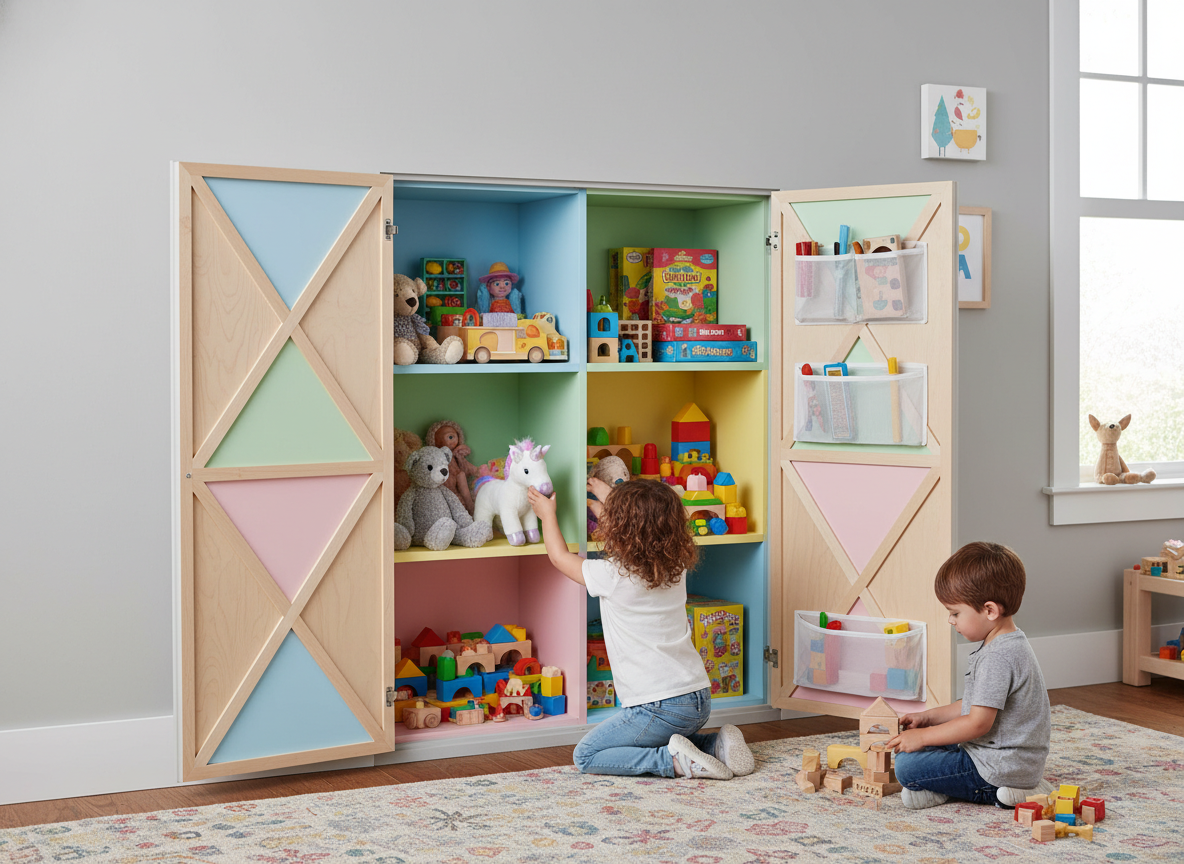
The backs of bedroom and closet doors are often wasted space. But they’re great for art supplies, dolls and accessories, small games, and dress-up items. This kind of storage keeps toys accessible without adding visual clutter to the room.
9. Designate One “Quick Clean” Basket
Every small space needs a pressure-release valve. A single catchall basket gives toys a temporary home when time or energy runs out. It’s perfect for end-of-day resets, unexpected guests, or busy school nights. Empty it properly once a week, and let it quietly save your sanity the rest of the time.
10. Build in a 5-Minute Reset Habit
The secret to staying organized is light maintenance. Once or twice a week, take a few minutes to toss broken or unusable items, return toys to their labeled storage areas, and clear clutter from the floors. Keeping up with these small tasks regularly helps maintain a tidy, organized space without feeling overwhelming.
Common Mistakes to Avoid in Small Spaces
Here are some common mistakes:
- Buying storage before decluttering
- Over-sorting toys into too many categories
- Choosing bins that are too deep or heavy
- Expecting kids to maintain adult-level systems
Final Thoughts: Small Spaces Can Still Feel Calm
You don’t need a playroom. You don’t need perfect labels. You don’t need to get rid of every toy. You need storage that respects real life. Start with one small change, maybe a bin, a shelf, or a single zone and build from there. That’s how tidy kids’ rooms actually stay tidy.