
Decluttering sounds simple in theory. You sort a few piles, donate what you don’t need, and suddenly your home feels calm again, right?
In real life, it’s rarely that smooth.
Most people don’t fail at decluttering because they’re lazy or unmotivated. They fail because they make a handful of common mistakes that quietly undo their progress. The kind that leaves you surrounded by bins, half-finished piles, and a house that somehow feels messier than before.
If you’ve ever decluttered a space only to watch it fall apart weeks later, this guide is for you. Below are the most common decluttering mistakes professional organizers see again and again and exactly how to avoid them, so your effort actually sticks.
Why Decluttering Feels Harder Than It Should
Decluttering isn’t just a physical task. It’s emotional, mental, and deeply tied to habits you’ve built over years. Most frustrations come down to starting without a clear plan, trying to do too much at once, confusing organizing with decluttering, or letting guilt, perfectionism, or “someday” thinking take over. To be honest, once you know what not to do, decluttering becomes far more manageable.
Mistake 1: Starting Without a Clear Plan
Walking into a room and “just starting” sounds productive, but it often leads to overwhelm fast. Without a plan, you end up jumping between spaces, creating piles with no finish line, and you often lose momentum halfway through.
“How can I fix it?” maybe your immediate question after reading these things above. It’s quite simple, decide one space and one goal before you begin. For example, not “the kitchen,” but “the junk drawer.” Not “the bedroom,” but “the nightstand.” Small wins build confidence and keep you going.

Mistake 2: Trying to Declutter Too Much at Once
When you begin decluttering, it’s tempting to pull everything out of multiple rooms at once. It can feel productive but if something interrupts you, you’re left with chaos. Therefore, start with tight, contained chunks such as one drawer, one shelf, or one category. That way, you can stop while you still have energy, it’s time you realize your progress and continue for the next time.
Mistake 3: Buying Organizing Products Before Decluttering
This is one of the most common and costly missteps people make. Purchasing bins and containers too early often leads to buying the wrong sizes, ending up with more storage than items, or simply organizing clutter instead of actually removing it. To fix this, always declutter first and measure your space afterward. Only buy storage solutions that truly fit your needs, and take time to check whether you already have usable containers elsewhere in your home before spending money on new ones.
Mistake 4: Organizing Before You Let Go
If you’ve ever neatly arranged items you don’t use, you’ve fallen into this trap. You need to ask yourself a few questions before organizing. Only after answering those questions, do you begin to organize. Here are several questions:
- Do I use this?
- Would I buy it again today?
- Does it deserve space in my home?
Mistake 5: Holding Onto Emotional Clutter Out of Guilt

Gifts, heirlooms, kids’ artwork, old clothes tied to memories and these are the hardest items to release. The mistake isn’t keeping meaningful things. It’s keeping everything out of guilt. To solve this problem, you should:
- Choose a few representative items
- Take photos of sentimental pieces
- Create a small memory box with limits
Your memories don’t live in objects, they live in you.
Mistake 6: Skipping the “Why” Behind the Clutter
If clutter keeps returning, it’s usually not a storage problem, it’s a habit problem. The most common causes tend to be impulse shopping, having no clear system for mail or paperwork, or holding onto items “just in case.” After you declutter a space, pause and ask yourself, “What caused this pile in the first place?” Addressing the habit behind the clutter is what actually prevents it from coming back.
Mistake 7: Shuffling Items From Room to Room
Moving clutter from one place to another can feel productive, but it only creates the illusion of progress, nothing actually improves. To avoid this trap, make sure every item ends your decluttering session in one of four places: keep, donate, trash, or recycle. If you truly can’t decide, a temporary “maybe” box is okay, but give it a clear deadline so it doesn’t become permanent clutter.
Mistake 8: Saving Things to Sell “Someday”

Selling items can be a smart way to declutter but only if it actually happens. Unscheduled “sell later” piles tend to turn into long-term clutter. If you plan to sell something, set a firm date, choose one platform, and commit to donating anything that doesn’t sell within a set timeframe.
Mistake 9: Letting Perfection Stop Progress
Waiting for the “right time,” the “right system,” or the “right energy” often means never getting started, which is why it’s better to aim for what’s functional rather than flawless. Done is always better than perfect, temporary systems are completely acceptable, and once something is in place, you can adjust and improve it over time as your needs change.
Mistake 10: Ignoring How Much Space You Actually Have
Homes have limits, and when your belongings exceed your available storage, clutter becomes unavoidable. Let your space be the boundary. If something doesn’t fit comfortably, that’s your signal that something else has to go.
Mistake 11: Decluttering Alone When You’re Stuck
Decluttering doesn’t have to be a solo effort. Maybe because of shame, you can’t ask for a favor. Honestly, learning how to ask for help and accept it can make a huge difference. It not only speeds up progress but also improves your relationship. It’s easier for you to start with a close friend, a family member, an accountability partner, or a professional organizer.
Mistake 12: Expecting Decluttering to Be a One-Time Event
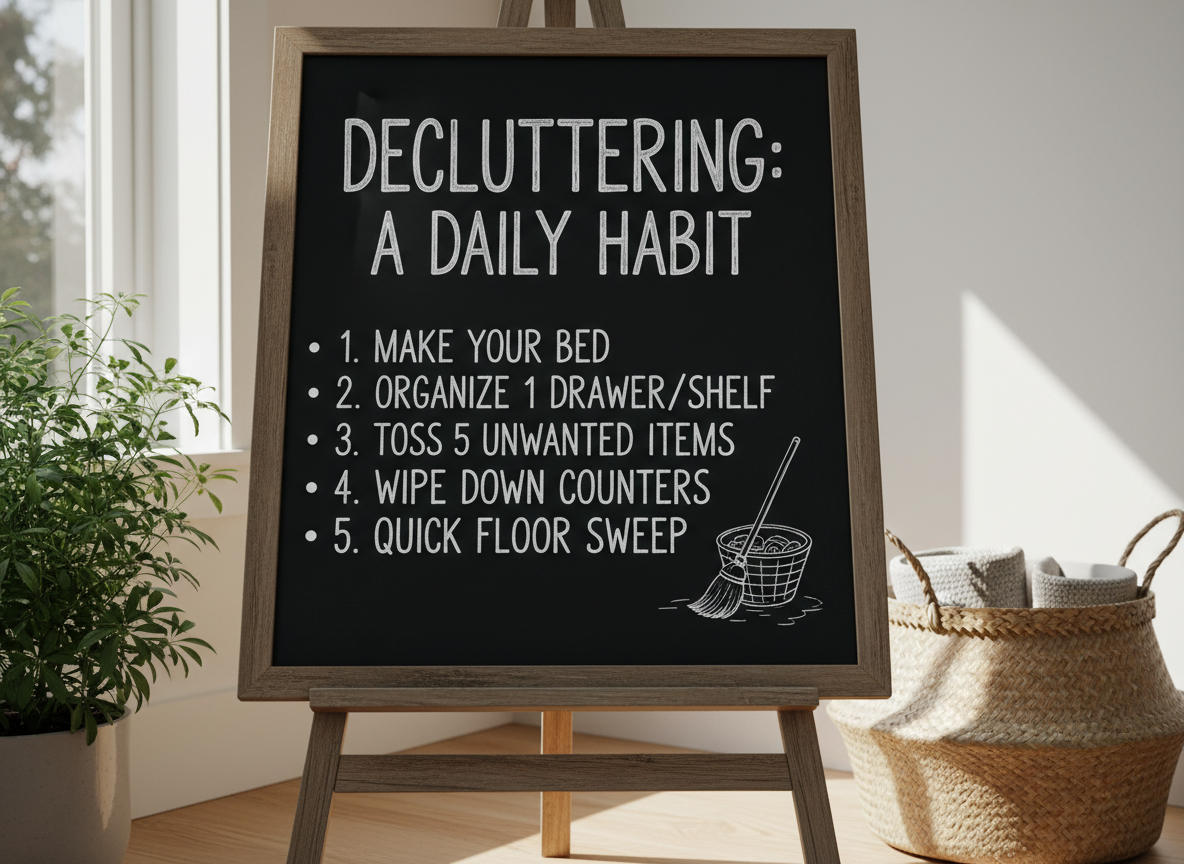
Decluttering is a maintenance skill. It’s extremely important to build a daily habit, and here are some approaches you can consider to follow:
- Monthly mini-declutters
- One-in, one-out rules
- Regular reset routines
Final Thoughts: Decluttering Is a Skill, Not a Personality Trait
If decluttering has felt frustrating, overwhelming, or short-lived in the past, it isn’t because you’re bad at it. You were likely following advice that skipped real-life challenges. When you avoid these common decluttering mistakes, something shifts. Your home becomes easier to manage. Your systems last longer. And the mental weight of “stuff” finally starts to lift.
Related Articles
- 10 Essential Benefits of an Organized Home: Why Home Organization Matters for a More Efficient, Stress-Free Lifestyle
- Practical Ways to Break the Cycle of Procrastination in Home Organization and Build Consistent Decluttering Habits
- 10 Weekend Decluttering Projects to Refresh Your Home Quickly and Easily
- How to Create a Daily Decluttering Routine for a Simpler, Clutter-Free Home