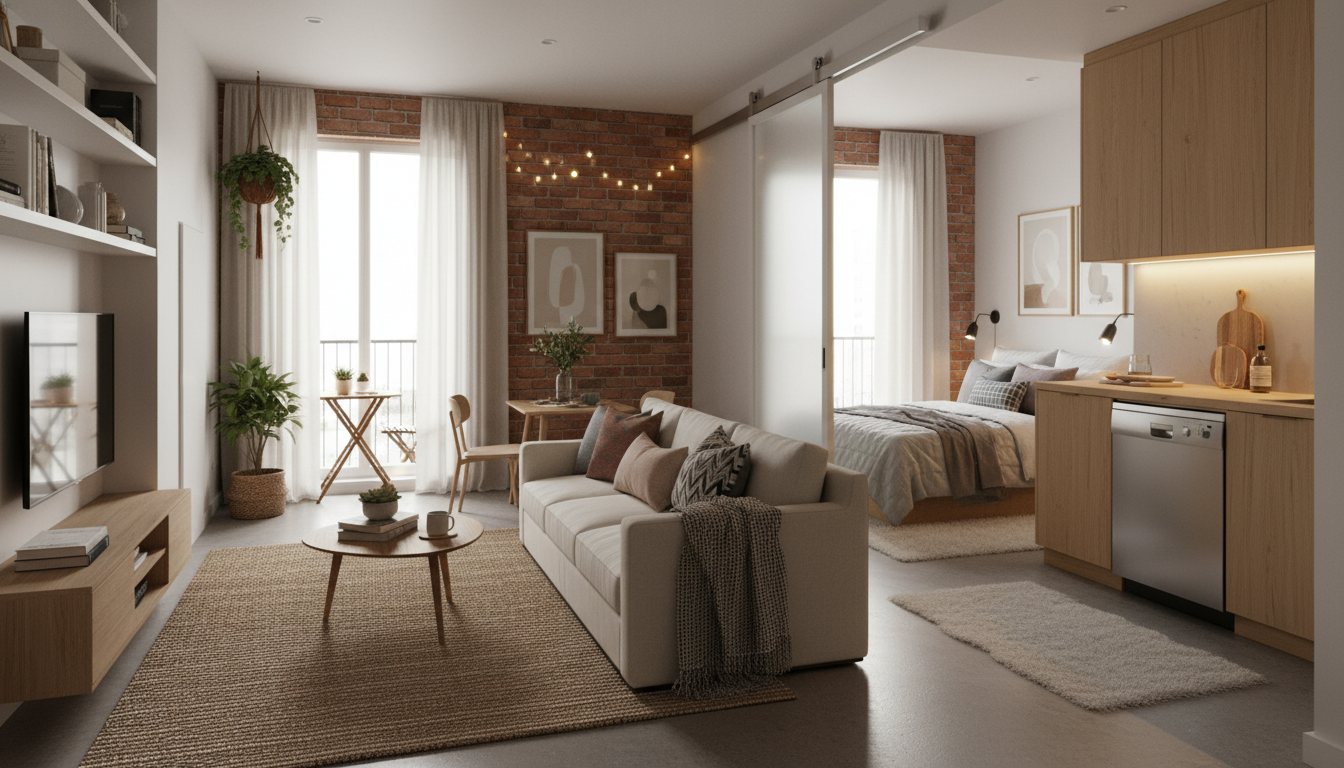
Living in a small apartment has a way of teaching you things fast: mostly that clutter shows up louder when space is tight, and “I’ll deal with it later” turns into chaos almost overnight. Whether you’re renting your first place, sharing space with a partner or kids, or simply downsizing, the challenge is the same: how do you make a compact home feel functional, calm, and livable without constant effort?
After reviewing what works (and what consistently falls short) across top-performing small-apartment organization content, one thing stands out: the best solutions aren’t about buying more bins or chasing perfect aesthetics. They’re about reducing friction, designing around real life, and making every inch earn its keep.
Below are five smart, realistic ways to organize your small apartment and maximize space efficiency. These strategies are effective on busy weekdays, messy weekends, and everything in between.
1. Design Your Apartment Around How You Actually Live
Most organization systems fall apart because they’re designed around how a space should function, not how it actually gets used. Before buying bins or rearranging furniture, it helps to pause and observe your habits. Where do bags naturally land when you walk in? Where do shoes get kicked off without thinking? Those patterns are data, giving you a blueprint for an organization system that works with your life instead of against it.
That’s why it’s more effective to create use zones rather than picture-perfect rooms. Think in terms of actions: a landing zone for keys, wallet, bag, and shoes; a morning zone for clothes, grooming, and daily essentials; an unwind zone for the couch, throws, chargers, and remotes. When each zone has just enough storage to support what actually happens there, clutter stops migrating across the home.
2. Go Vertical Strategically
“Use vertical space” is advice you hear everywhere, but it’s often applied without much strategy. When done wrong, vertical storage can make a small apartment feel crowded and visually heavy. In contrast, it quietly clears floors and surfaces while keeping your space feeling open and breathable.
Here are some high-impact vertical upgrades:
- Tall, narrow shelving instead of wide bookcases
- Wall-mounted shelves in kitchens and bathrooms for items you use daily
- Over-the-door organizers in closets, pantries, or bathrooms
- Hooks placed exactly where things naturally land, such as bags by the door, towels near the shower
Keep everyday items between waist and eye level so they’re easy to grab without effort. Save higher shelves for seasonal gear, backups, or items you don’t reach for often.
Pro tip: If you’re renting, stick with modular shelving, tension rods, freestanding ladders, and removable adhesive hooks. They give you vertical storage that’s flexible, damage-free, and easy to take with you when you move.
3. Choose Furniture That Pulls Double (or Triple) Duty
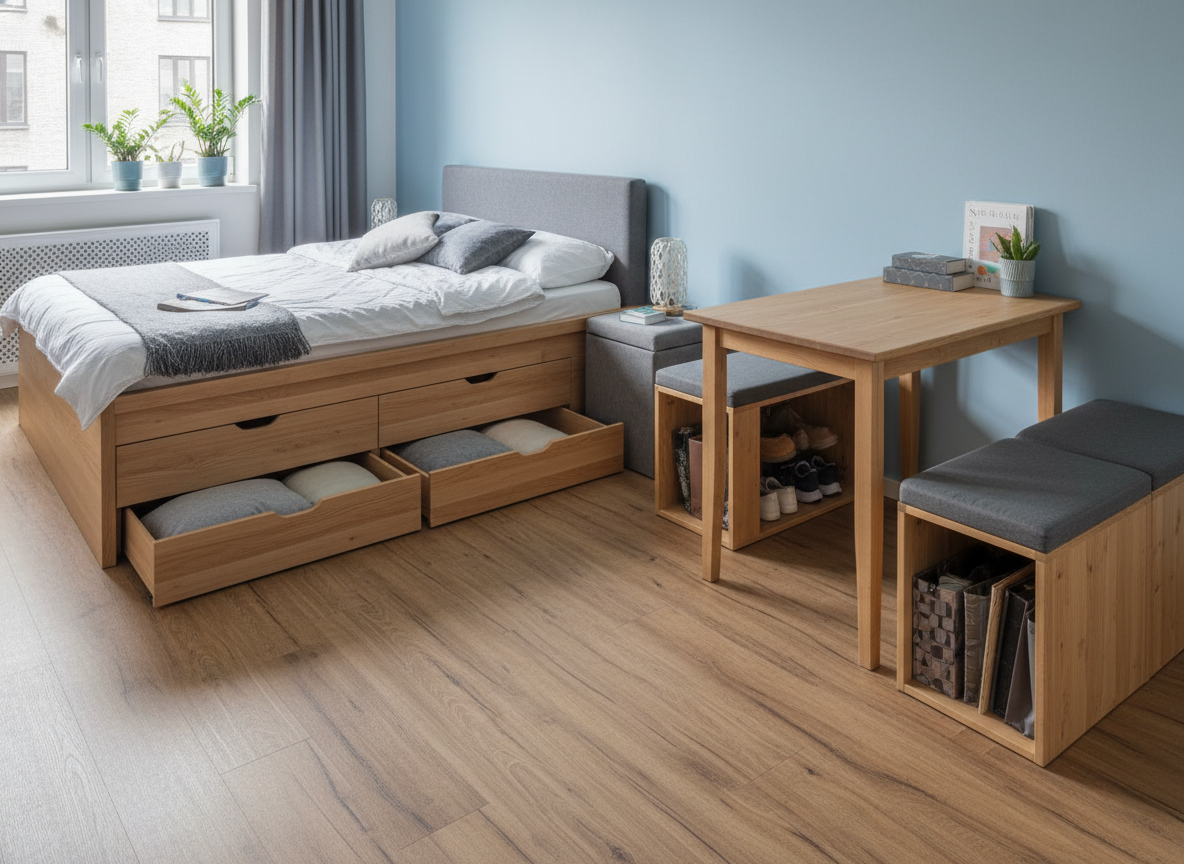
In a small apartment, furniture should never have just one job. The smartest setups use furniture to replace extra storage. When each piece earns its footprint, the entire apartment feels easier to live in For example, beds with built-in drawers or lift-up storage, storage ottomans that double as side tables, dining tables that fold, extend, or mount to the wall, and benches that offer seating with hidden storage inside. Stick to neutral colors and simple lines so these pieces blend into the room rather than visually crowd it.
4. Turn Hidden Spaces Into Your Best Storage
Small apartments often lack easily accessible storage. To solve this, you should turn places you don’t notice everyday into the most effective ones. For example:
- Under the bed: rolling bins, low-profile drawers, or vacuum-sealed bags
- Behind doors: slim racks, over-the-door hooks, or hanging organizers
- Inside cabinets: shelf risers, pull-out bins, and door-mounted storage
- Awkward corners: narrow shelving units or compact rolling carts
These spots work best for items you don’t reach for daily, like extra bedding, off-season clothing, or backup household supplies.
5. Declutter With a Maintenance Mindset (Not a One-Time Purge)
Decluttering once might give your small apartment a brief sense of calm, but it’s systems that keep it that way. Instead of chasing a big, dramatic purge every few months, it’s far more effective to build simple habits that stop clutter from creeping back in.
A few easy rules make a real difference over time. Practice a one-in, one-out approach with clothes, shoes, and kitchen tools. Do a quick five-minute reset each day to clear surfaces and return items to their zones before mess has a chance to spread. Once a month, pick one small area to declutter such as a single drawer, shelf, or category. And when you’re unsure about an item, place it in a short-term holding box. If you don’t miss or use it within 30 to 60 days, you’ll usually find it’s much easier to let it go.
A Quick-Start Plan for Real Life
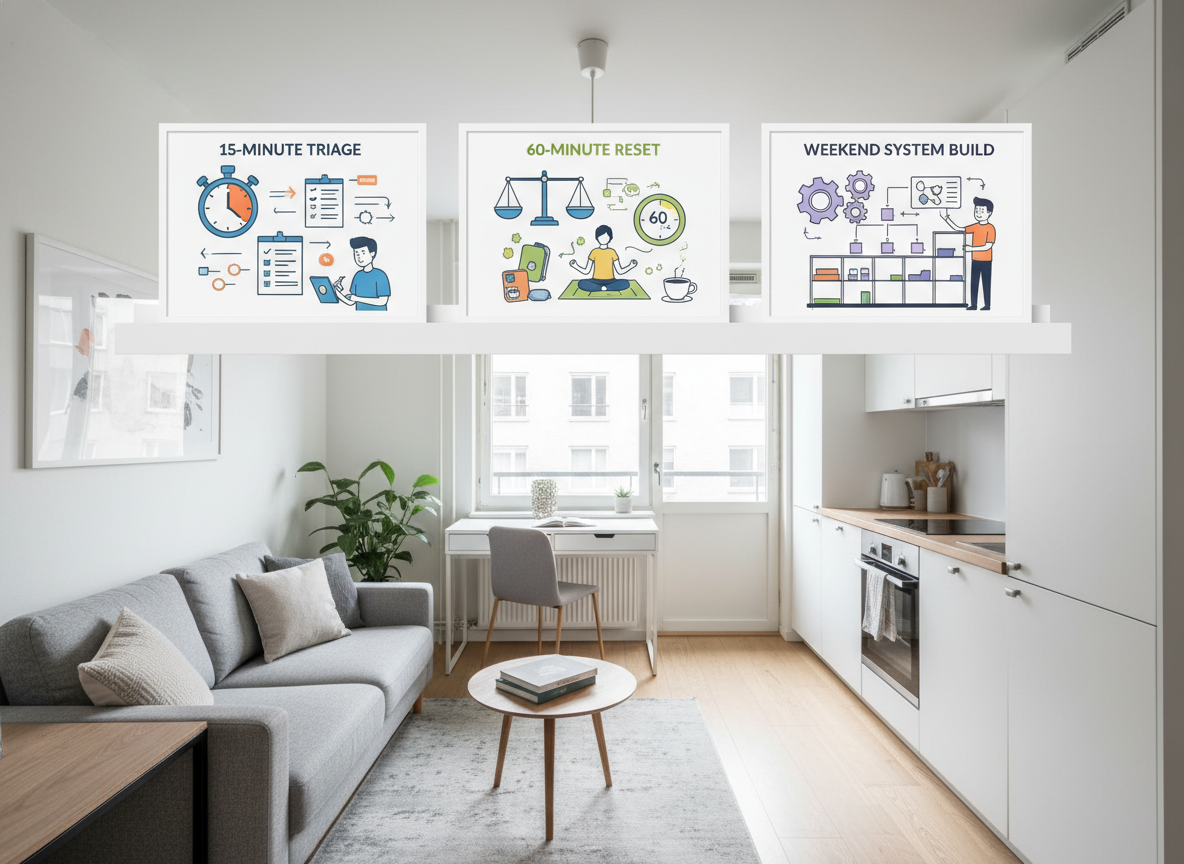
If the idea of “organizing your whole apartment” feels overwhelming, let’s start small and smart first. These three reset levels meet you where you are.
15-Minute Triage (When You’re Already Overwhelmed)
The focus is on calming the space quickly. Start by clearing just one highly visible surface, like the kitchen counter, coffee table, or entry console. Put obvious items back into their designated zones, and get rid of trash and recycling right away instead of letting it linger. And then your space feels lighter and more manageable almost instantly.
60-Minute Reset (When You Need a Noticeable Win)
Set a timer and fully commit to one trouble spot from beginning to end. Choose an area that creates daily friction and start by editing ruthlessly before you think about organizing. Once you know exactly what’s staying, you can decide how it should live there.
Weekend System Build (When You Want Long-Term Change)
This is where real change actually takes hold. Set aside one focused weekend to work with your habits instead of fighting them. Start by noticing the friction points: the spots where clutter keeps creeping back no matter how often you tidy. Then build just two or three simple, intentional systems, like a reliable drop zone by the door, a streamlined morning station, or one clearly defined storage zone for overflow. Only after those systems are clear should you add containers or organizers, and only if they serve a specific purpose.
Room-by-Room Mini Blueprints
Studio Apartment Zoning That Actually Works
Studio apartments start to feel overwhelming when every activity happens in the same visual and physical space. You can create distinct zones by using rugs to signal where sleeping ends and living begins, open shelving or bookcases as light, flexible dividers, and intentional lighting shifts. When each zone is designed to support one primary activity, the entire space feels calmer, more functional, and far less cluttered.
Tiny Kitchen Cabinet Map (Zones + Tools)
In a small kitchen, organization works best when cabinets are assigned clear roles instead of becoming catch-alls. Think in terms of zones: keep cutting boards, knives, and mixing bowls together in a prep zone; store oils, spices, and pans close to the stove in a cooking zone; and reserve a storage zone for backup items and appliances you only use weekly. Simple tools like shelf risers, pull-out bins, and Lazy Susans for deep cabinets help each zone function smoothly.
Bathroom Morning Routine Stations
Instead of organizing your bathroom by product type, organize it by sequence, which means the order you actually use things each morning. Group items into clear stations: one for daily skincare and oral care, one for hair tools and styling products, and one for the makeup you truly reach for. When everything you need for a single step lives together, you eliminate searching, cut down visual clutter, and make early mornings feel calmer and more efficient.
Renter vs. Homeowner: Storage That Fits Your Reality
Renter-Friendly Organization Options
You don’t need to drill holes or invest in built-ins to create a well-organized small apartment. The best renter-friendly systems are flexible, low-commitment, and easy to remove when it’s time to move. Smart, damage-free options to prioritize:
- No-drill wall shelving: Freestanding ladder shelves or modular wall systems that lean or brace without anchors give you vertical storage without permanent installation.
- Removable adhesive hooks and rails: Perfect for keys, bags, towels, hats, and lightweight kitchen tools.
- Tension rods in closets and kitchens: Use them to create extra hanging space, divide shelves, hang cleaning supplies, or even add a hidden under-sink curtain.
- Over-the-door organizers: Ideal for shoes, pantry items, toiletries, or cleaning supplies. They turn unused door backs into high-capacity storage zones instantly.
Homeowner Flexibility
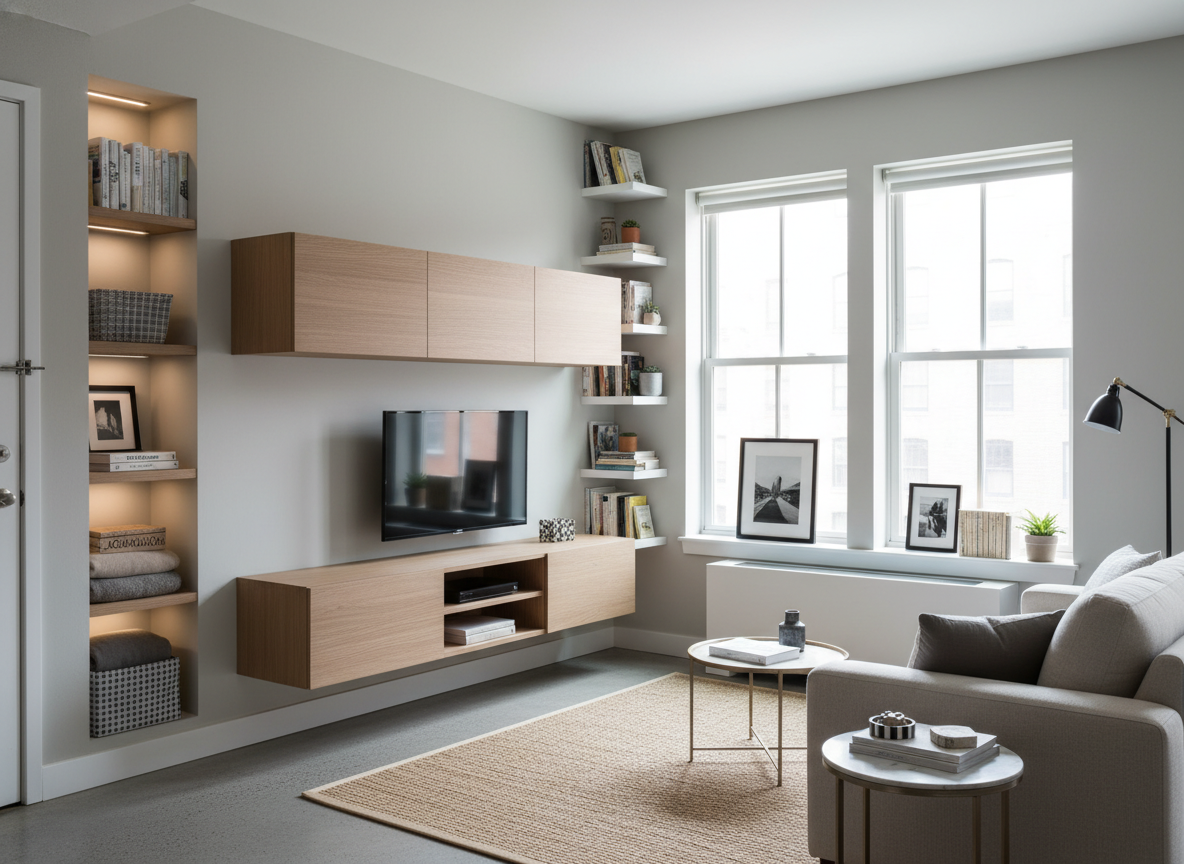
Owning your space gives you more flexibility to make lasting changes, but the goal is still simplicity, not overbuilding. The smartest upgrades improve function without adding visual weight or locking you into systems that are hard to change later. Thoughtful, restrained choices tend to age better and work harder over time.
Smart permanent upgrades worth considering include:
- Shallow built-ins in unused corners to capture storage without eating into walkways or floor space
- Wall-mounted cabinets or shelves that lift storage off the floor and keep rooms feeling open
- Closet systems designed to evolve with adjustable shelves, rods, and drawers that can change as your needs do
Freestanding Alternatives to Built-Ins
These flexible storage pieces not only work well for renters but also for homeowners, and they’re ideal if you like the freedom to rearrange as your needs change. Smart freestanding solutions to consider include narrow rolling carts that slip into tight gaps, ladder shelves that offer vertical storage without visual bulk, modular cube systems you can reconfigure over time, and slim armoires that turn awkward walls into functional storage. Together, they create order without locking you into a single layout, making your space easier to live with now and simpler to adjust later.
The Real Goal: Less Effort, Not Less Stuff
Organizing a small apartment isn’t about stripping everything down or chasing a minimalist ideal. It’s about shaping your space so it actually works with the way you live, instead of pushing back against it every day.
When storage aligns with your habits, furniture pulls double duty, and clutter has fewer places to collect, your home naturally feels more open. Start with the one area that causes the most friction, set up a simple system that solves it, and let that small win build momentum.
Related Articles
- 5 Small Space Organization Hacks: Simple Tips to Maximize Space and Tackle Clutter
- 5 Budget-Friendly Ways to Organize Small Spaces with No Storage and Maximize Your Home’s Efficiency
- 10 Essential Benefits of an Organized Home: Why Home Organization Matters for a More Efficient, Stress-Free Lifestyle
- Budget-Friendly Home Organization Ideas: Cheap Storage Hacks and Low-Cost Ways to Declutter and Maximize Space
- 10 Smart Toy Storage and Organization Ideas for Small Spaces: Clever, Space-Saving Solutions for a Tidy Kids’ Room