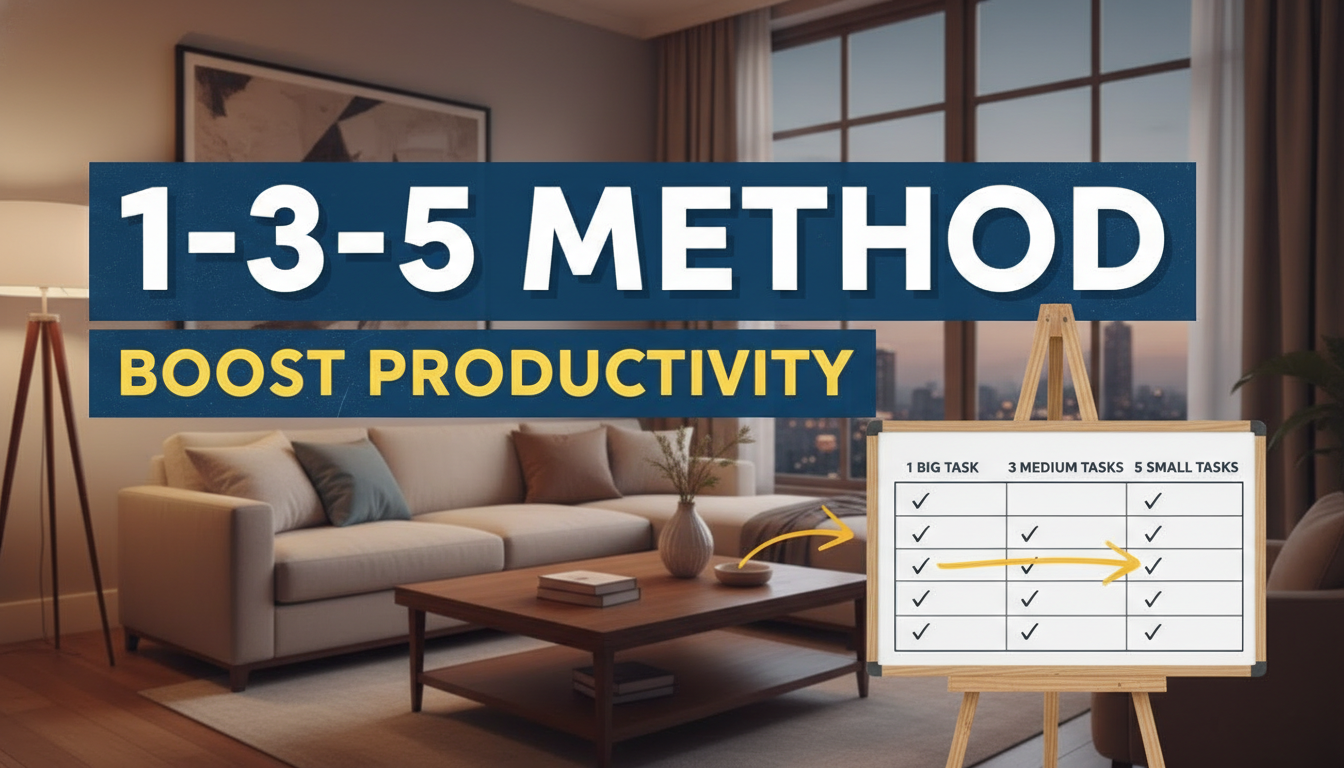
Decluttering and organizing your home can feel like a daunting task, especially when you’re staring at piles of clutter that seem to have accumulated over time.
You don’t need to take on everything at once. The 1-3-5 method offers a straightforward approach that helps you break down the overwhelming task of organizing into manageable steps. By tackling one big task, three medium ones, and five small tasks, you can declutter your home and bring order without feeling overwhelmed.
This method is not only about clearing space but also about developing habits and strategies that will help you stay organized long-term. Here’s how you can use the 1-3-5 method to declutter and organize your home effectively.
What is the 1-3-5 Method and How Does It Work?
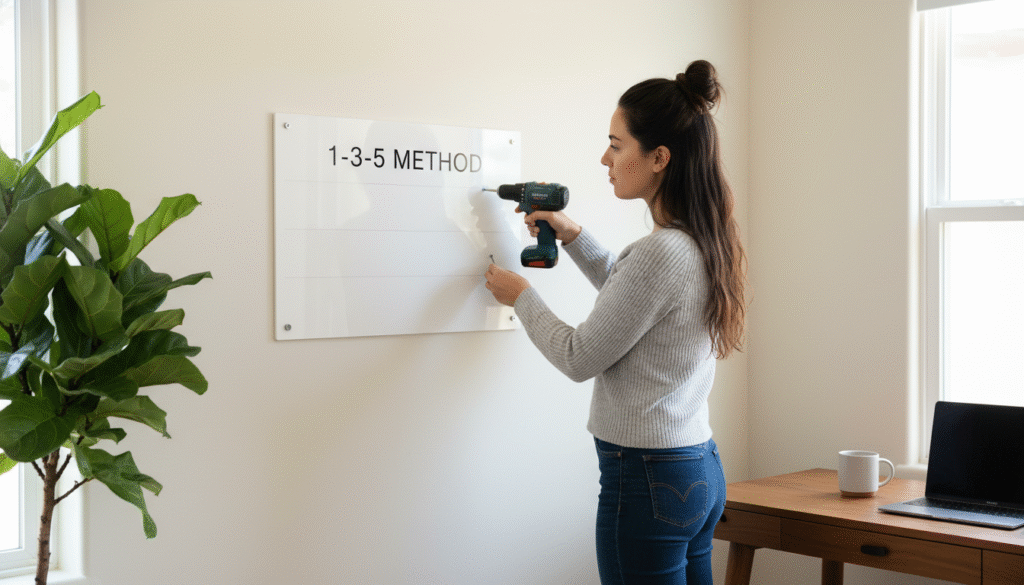
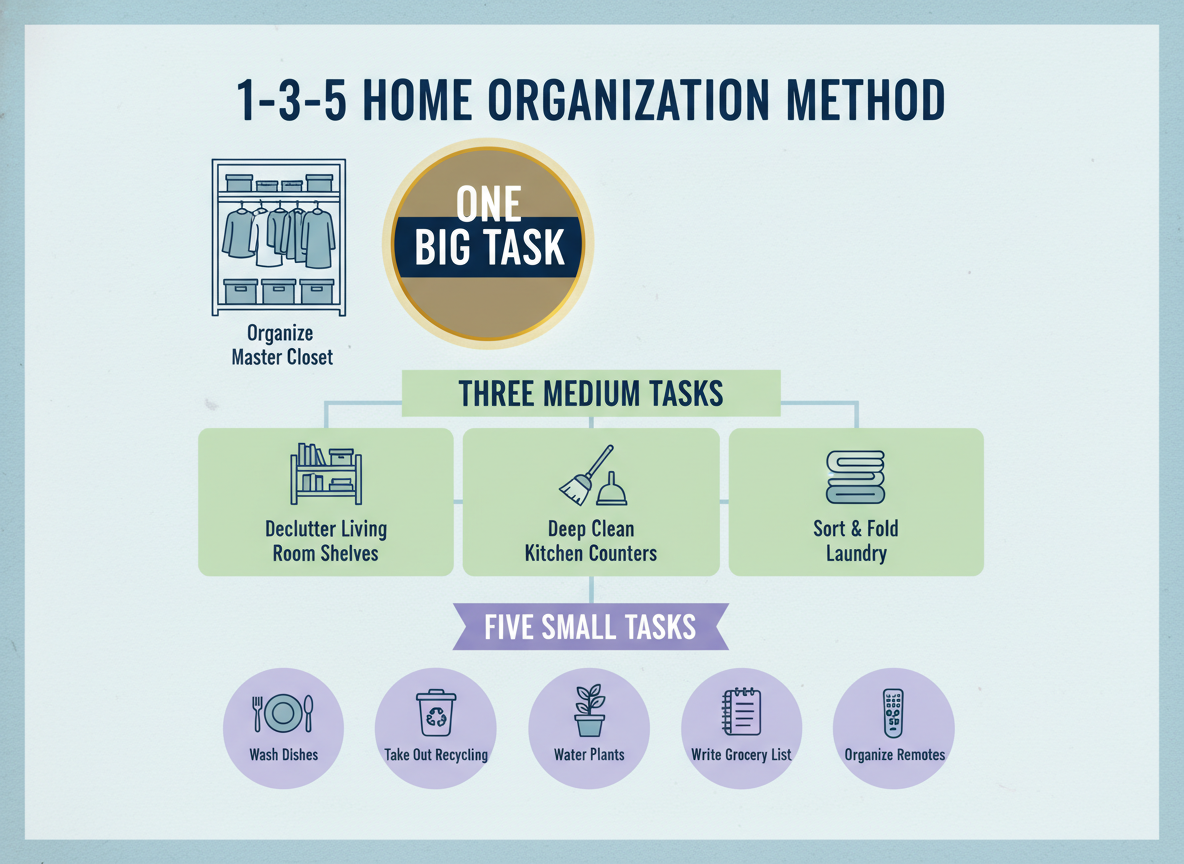
The 1-3-5 method is a simple and efficient task management technique that can be applied to various aspects of life, including home organization. This method breaks down the overwhelming process of decluttering into manageable parts, making it easy to stay on track and make progress without feeling overwhelmed. It involves categorizing your tasks into three groups:
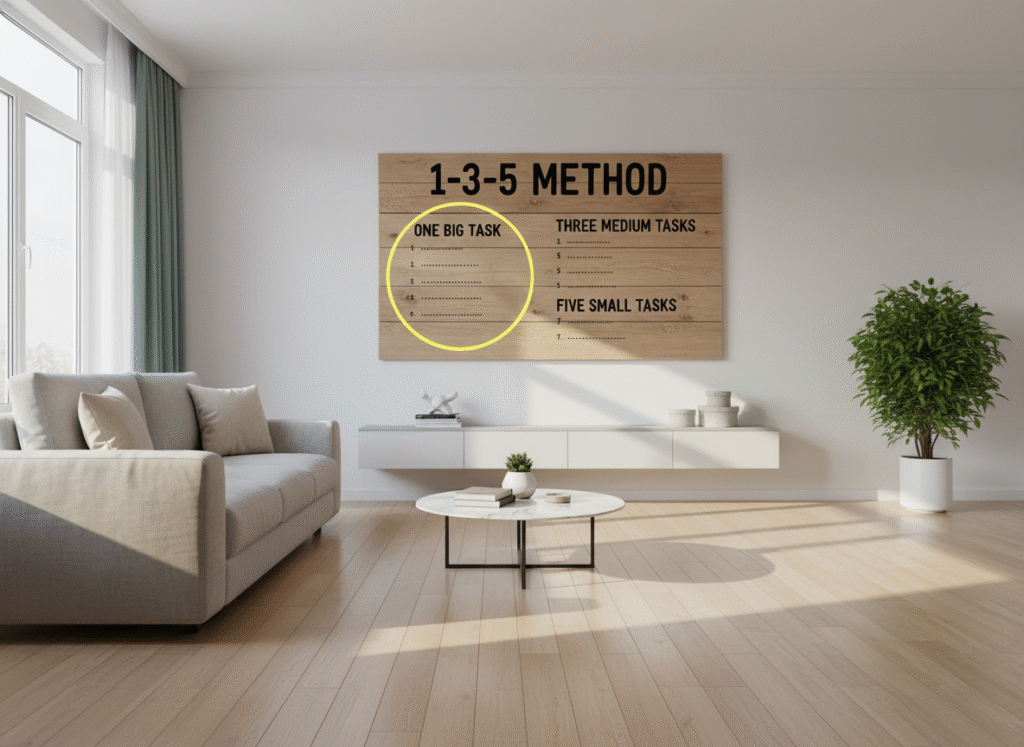
- One Big Task: This is the most important or time-consuming task of the day. It’s typically something that requires the most energy or attention, such as decluttering a large space or organizing a complicated area like your closet or attic.
- Three Medium Tasks: These tasks are still important, but they require less time or effort than the big task. They could be things like organizing a smaller area, sorting through items, or cleaning up a designated part of your home.
- Five Small Tasks: These are the quick wins: tasks that can be completed in just a few minutes. They could include putting away shoes, wiping down surfaces, or sorting through small items that tend to clutter up spaces. These small tasks help create visible progress and give you a sense of accomplishment.
The method works by breaking a large and often overwhelming task into smaller, more manageable steps. It ensures that you’re focused on the most important things first, while still taking care of the smaller details. This approach makes the overall process less stressful and allows you to see continuous improvement without feeling burdened by the size of the project.
By applying the 1-3-5 method, you can create a more structured, organized home without needing hours of free time. It’s a strategy that’s perfect for busy individuals who need to manage their time effectively while still making meaningful progress in decluttering and organizing their homes.
1. Start with One Big Task: The Focused Approach
The heart of the 1-3-5 method lies in focusing your energy on one large task that will make the biggest impact. This could be a space that causes you the most stress, perhaps your closet, the basement, or the garage. It’s tempting to start with smaller tasks, but tackling something big first sets a productive tone and gives you a sense of accomplishment.
When you begin with a large task, don’t get caught up in perfection. The goal is to make progress. For instance, if you’re organizing your closet, your big task might be going through your entire wardrobe to donate items that no longer fit or you no longer wear. This clears a significant amount of space and creates a base for all the smaller tasks that follow.
The key here is to give yourself permission to take on a big task and break it down into manageable steps. Focus on what you can accomplish in one go, knowing that the rest will follow in smaller tasks.
2. Tackle Three Medium Tasks to Keep Things Moving
After completing the big task, the next step is to handle three medium tasks. These should be things that are necessary but less time-consuming than the primary project. They complement your larger task and help you continue making progress without burning out.
For example, if your large task was decluttering your closet, your medium tasks could be organizing your shoes, sorting through accessories like belts and scarves, or going through your jewelry. These tasks don’t take as long but help you refine the overall organization of the space. Tackling them after the big task ensures that you’re still moving forward and preventing clutter from creeping back in.
Medium tasks also help you gain momentum. They’re less intimidating than large ones and are small enough to accomplish in a short amount of time. This keeps your energy high and provides visible progress, helping you stay motivated.
3. Complete Five Small Tasks to Fine-Tune Your Space
The small tasks are where you get to wrap up the process and give your space that final tidy-up. These are the easy wins that take minimal effort but go a long way in making your home feel clean and organized. They can often be completed in just a few minutes but still contribute significantly to your overall organization goals.
If you’ve been working in the kitchen, for example, small tasks could include wiping down the countertops, organizing the silverware drawer, folding dish towels, clearing the countertop of any remaining clutter, and dusting off the top shelves. While these tasks are quick, they’re the finishing touches that give your space a polished look.
By incorporating these small tasks into your 1-3-5 approach, you make sure that your home stays organized, tidy and visually appealing. Completing five small tasks also gives you a sense of closure and satisfaction, motivating you to keep your home organized on a daily basis.
4. Use the 1-3-5 Method Regularly for Ongoing Organization
Once you’ve experienced the success of the 1-3-5 method, it’s time to incorporate it into your regular cleaning and organizing routine. Instead of waiting for your space to get out of control, apply the method once or twice a week to maintain order.
For instance, you can set aside an hour every weekend to use the 1-3-5 method to declutter different areas of your home. If you want to organize your home office, your big task could be clearing your desk and sorting through old paperwork. Your medium tasks could be organizing files, wiping down surfaces, and rearranging office supplies. The small tasks could include organizing pens and pencils, cleaning your laptop, and clearing your inbox.
By using the 1-3-5 method regularly, you’re establishing a sustainable habit that keeps clutter at bay long-term. This method helps you stay on top of organization without feeling overwhelmed, making it a sustainable way to maintain a clutter-free home.
5. Adapt the 1-3-5 Method to Your Personal Needs
The beauty of the 1-3-5 method is its flexibility. Whether you’re tackling a small bedroom or a messy kitchen, you can adapt it to suit the specific challenges of your space. Not every room or project requires the same approach, so you can adjust the tasks accordingly.
For example, if you’re preparing for a family gathering and need to clean up your living room, the big task might be decluttering the main seating area. Medium tasks could involve organizing books, cushions, and the TV area. Small tasks could be vacuuming the floor, dusting the tables, and folding blankets. The method can also be adapted for larger projects, like decluttering a garage, by breaking it down into more specific sub-tasks based on your available time and energy.
This level of flexibility ensures that you can use the 1-3-5 method no matter what room you’re tackling, whether it’s a tiny closet or a sprawling kitchen. The trick is to keep your goals realistic and achievable, so you never feel like you’re biting off more than you can chew.
Challenges and Solutions: Overcoming Common Decluttering Obstacles
Decluttering can be an emotionally charged process, and many people face challenges that hinder progress. Whether it’s the difficulty of letting go of sentimental items, decision fatigue, or simply not knowing where to start, these obstacles can stall your efforts. The 1-3-5 method helps address these challenges by providing a structured approach that keeps you moving forward.
Challenge 1: Sentimental Attachment
Letting go of items with sentimental value is one of the most common hurdles in decluttering. The 1-3-5 method makes it easier to tackle these items by starting with smaller tasks that don’t feel as emotionally taxing. Focus on easier areas first, such as your kitchen drawer or bathroom counter, and leave sentimental items for later when you’re feeling more confident in your decision-making.
Challenge 2: Feeling Overwhelmed
Decluttering can be overwhelming, especially if you feel like there’s too much to do. The 1-3-5 method addresses this by focusing on one big task, three medium tasks, and five small tasks, ensuring that you’re not overwhelmed by a mountain of work. By breaking it down into these manageable steps, you’ll feel more in control and motivated to keep going.
Challenge 3: Lack of Time
Busy schedules often prevent us from dedicating long hours to decluttering. The beauty of the 1-3-5 method is that it can be adapted to fit any time constraints. Whether you have 10 minutes or an hour, you can accomplish something every day. The key is consistency, which means using the method regularly ensures you make steady progress without needing hours of free time.
Conclusion: Simplify Decluttering with the 1-3-5 Method
Decluttering doesn’t have to be an overwhelming task. The 1-3-5 method offers a simple, structured approach to organizing that helps break down your home organization into manageable steps. Whether you’re focusing on one large task, three smaller ones, or five quick wins, this method keeps you on track and motivated.
By using the 1-3-5 method regularly, you not only achieve a clutter-free home but also build healthy organizing habits that will help maintain that order over time. Whether you’re tackling a small space or a large project, this method provides an easy and effective way to transform your home, one task at a time.
So next time you’re feeling overwhelmed by clutter, remember that all it takes is one big task, three medium tasks, and five small tasks to bring order to your home. Give it a try and enjoy the calming effects of a clutter-free space.
Related Articles
10 Speed Cleaning Techniques: Quick, Time-Saving Tips for Fast, Efficient Home Cleaning on Busy Days