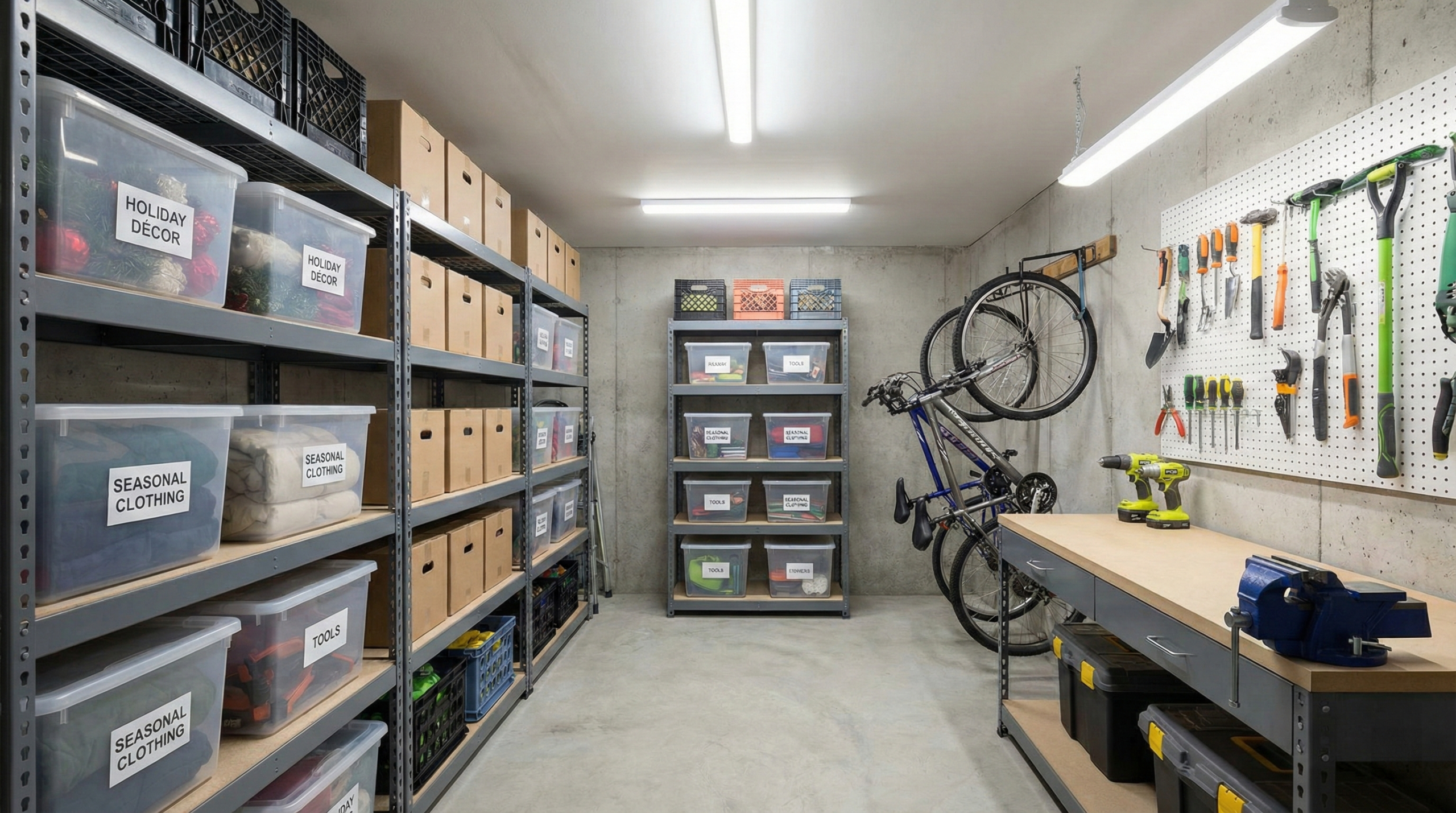
When you find yourself overwhelmed with clutter and looking for storage solutions, the basement may be the first place you think of. It’s a convenient, easily accessible space in most homes, and with the right approach, it can help you maximize your storage capacity without the extra cost of renting a storage unit.
But is using your basement for storage truly the smartest option for your home? While it may seem like a great idea, there are important pros and cons to consider before you start stacking boxes and bins in this often-overlooked area.
This guide will walk you through smart and safe ways to organize your basement and help you decide if it’s the right choice for your home. We’ll also explore key considerations, including security, moisture control, and space optimization, to help you make an informed decision.
Why Consider Basement Storage?
Before diving into the specifics, let’s explore why many people look to their basement for storage in the first place. There are obvious benefits, like the fact that the basement is usually underutilized, and it provides ample space for seasonal items, keepsakes, or rarely-used tools.
Cost-Effective Solution
The basement is essentially free storage space that you already have in your home. There’s no need to pay for off-site storage when you can make use of an entire floor of your house. For many, this is the most economical way to clear out clutter from living areas and store items like seasonal decorations, sports equipment, or old furniture.
Easy Access
One of the biggest advantages of using your basement is the easy access it offers compared to renting a storage unit. Instead of driving to a faraway facility, you can just head downstairs, grab what you need, and return it without the hassle. This makes it particularly appealing for families or homeowners with children who need constant access to seasonal items or larger household equipment.
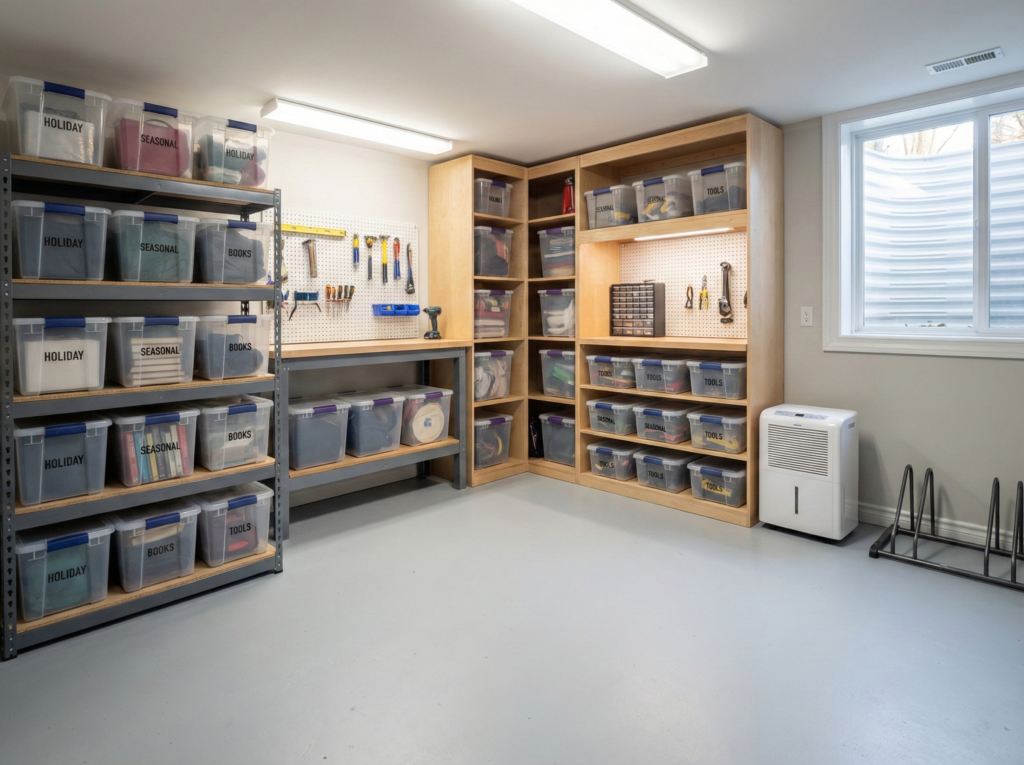
The Downsides of Basement Storage
Moisture and Humidity Concerns
Basements are often more prone to moisture and humidity than other parts of your home, and this can lead to significant issues with mold and mildew. Moisture problems are especially prevalent in older homes, where poor insulation, cracks in the foundation, or high groundwater levels can lead to water seepage.
Real-life example: Sarah, a homeowner in a humid climate, noticed that her basement walls began to grow mold after storing holiday decorations there for a few months. This not only damaged her items but also created a health risk for her family.
Even in areas with relatively dry climates, basements can become damp over time, leading to rusting tools, warped furniture, and spoiled clothing. Without proper moisture control, these issues can quickly get out of hand.
Pest Infestations
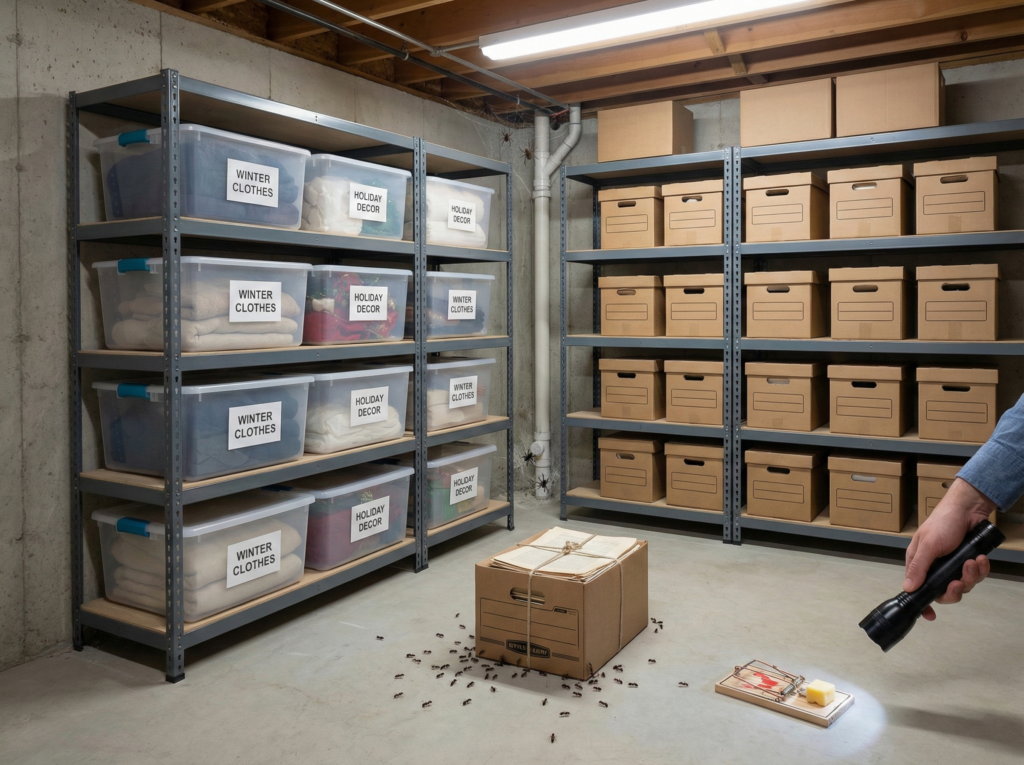
Another common downside of using the basement for storage is the potential for pest infestations. Basements are often darker, quieter, and easier for pests to access, which makes them prime targets for rodents, insects, and even termites. Storing your items in cardboard boxes or plastic bags increases the risk of damage from pests that can chew through packaging.
Solution: Use airtight plastic bins to store items. These are a far better option than cardboard boxes, which can attract pests like rats and insects. It’s also helpful to inspect the basement regularly for signs of pests, especially if you’ve had previous issues.
Smart Ways to Maximize Basement Storage Space
If you’ve weighed the pros and cons and decided to use your basement for storage, there are several smart strategies you can use to make the most of the space.
1. Organize with Shelving and Vertical Storage
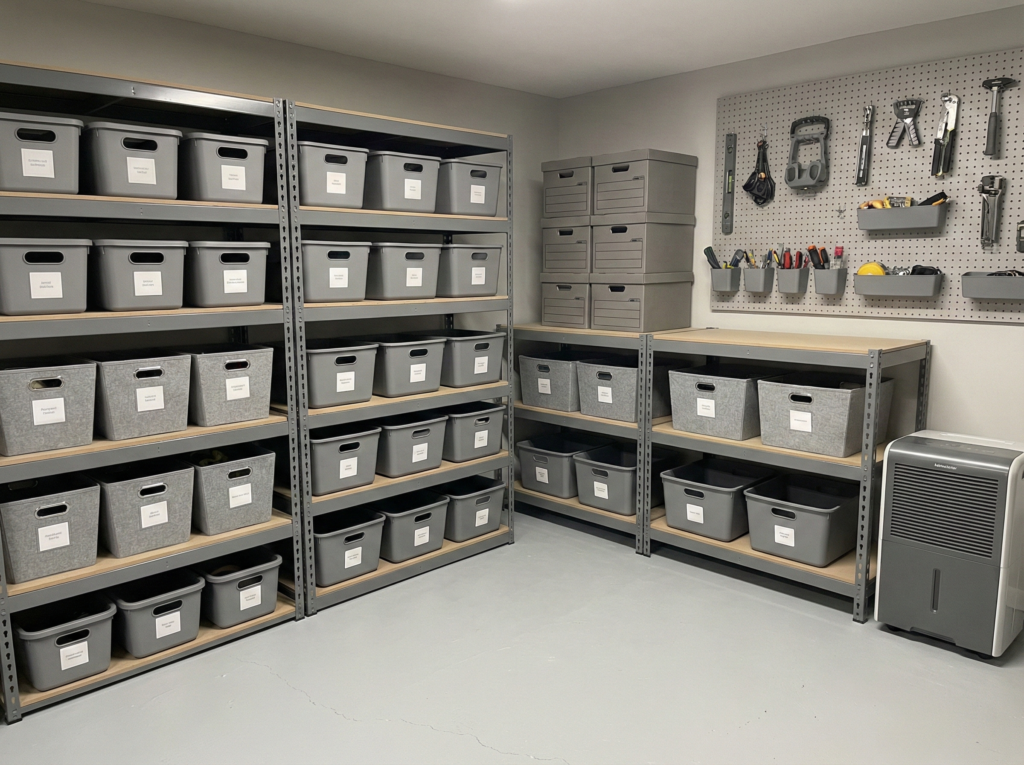
One of the easiest ways to optimize basement storage is by using shelving units and wall-mounted racks. These solutions help maximize vertical space, which is often underutilized. By stacking bins on shelves, you free up floor space for larger items like furniture or holiday decorations.
For smaller spaces, consider floating shelves to store items like tools, sports gear, or cleaning supplies. This keeps everything accessible while leaving room for other larger storage needs.
2. Invest in Airtight Storage Bins
To protect your items from moisture and pests, opt for airtight plastic bins with secure lids. This is especially important for storing clothing, seasonal decorations, and documents. Clear bins also allow you to see what’s inside, so you don’t need to dig through each one to find what you need. Label the bins clearly with the contents and date so that you can easily find and access your stored items when needed.
3. Keep the Basement Dry with a Dehumidifier
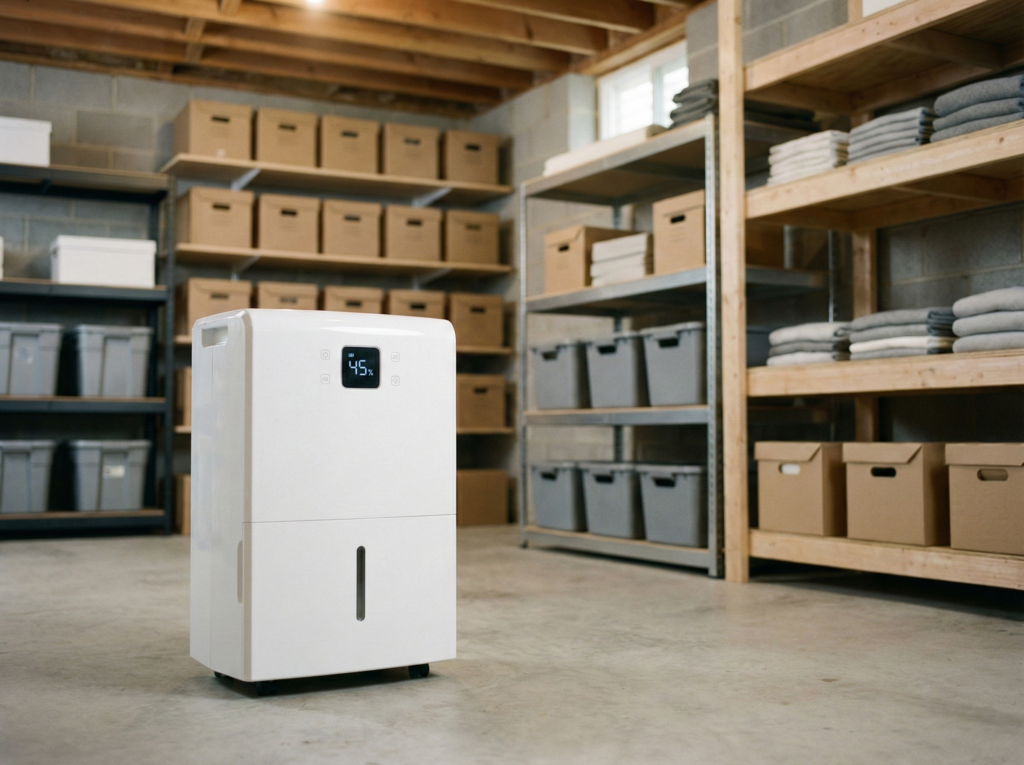
If you live in an area with high humidity, using a dehumidifier in your basement is an essential step to prevent moisture buildup. This will help to maintain the right humidity levels, protect your stored items, and prevent mold growth. Some models come with humidistats that will automatically turn the unit on or off, ensuring that your basement stays at the optimal humidity level year-round.
Pro tip: Make sure to regularly check and clean the dehumidifier’s filter to maintain its efficiency and prevent mold buildup inside the unit.
Is Basement Storage Right for You? Factors to Consider
1. Assess the Climate and Conditions of Your Basement
Consider whether your basement is well-insulated, dry, and secure enough for long-term storage. If you notice any issues like cracks, leaks, or high humidity, it might be worth investing in improvements before using the space for storage. Consider adding insulation, repairing cracks, or installing a sump pump or dehumidifier to protect your stored items.
2. Decide What You’ll Store
Certain items are better suited for basement storage than others. Seasonal items, like holiday decorations or winter clothes, are perfect candidates, but sensitive or valuable items, such as electronics, photographs, and heirlooms, might be better stored elsewhere. Storing large items, like furniture or exercise equipment, is fine, but keep in mind the risk of moisture damage over time.
Alternatives to Basement Storage
If you’re unsure about using your basement for storage, or if your basement’s condition is less than ideal, there are other options to explore:
- Self-storage units: Climate-controlled units provide extra protection for sensitive items and may be a safer option for long-term storage.
- Garage storage: If your garage is in good condition, it can serve as an alternative, especially if you add storage shelves or cabinets.
- Attic storage: If you have an accessible attic, it might offer better airflow and less moisture than the basement.
Conclusion: Making the Best Storage Choice for Your Home
Basement storage offers plenty of benefits, including cost savings and easy access, but it isn’t without its challenges. Moisture control, security concerns, and pest prevention are key to ensuring that your basement remains a safe and functional storage area. By following smart organizing tips, investing in airtight storage bins, and maintaining your basement with proper humidity control, you can make your basement an effective storage space.
However, if your basement isn’t suitable for storage, or if you’re concerned about potential issues, consider exploring other storage solutions like self-storage units or attic storage. Ultimately, choosing the best storage solution for your home depends on your needs, the condition of your basement, and how you plan to use the space.
Related Articles
Attic vs. Basement Storage: Which Is Best? Smart Tips to Maximize Space and Avoid Moisture Issues