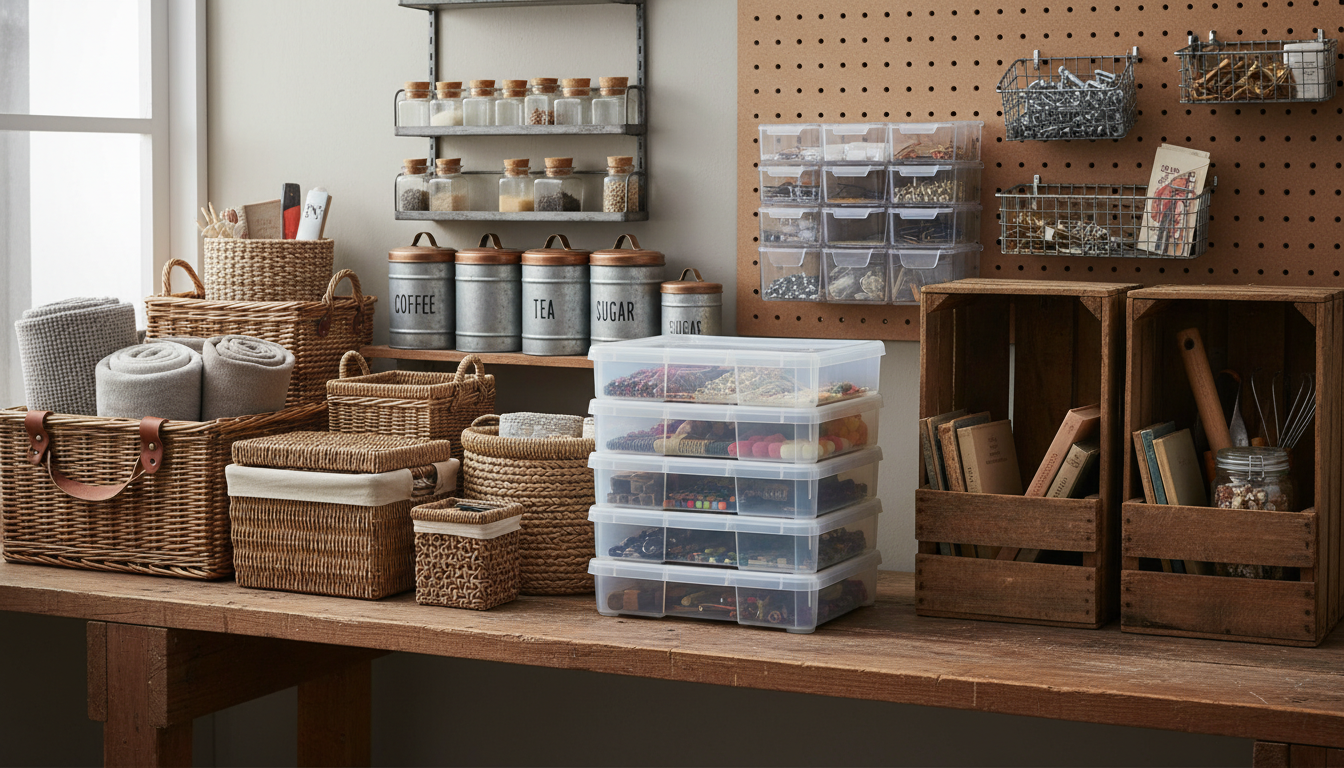
How to Choose the Right Storage Containers for Maximum Organization and Space Efficiency
If you’ve ever wandered down the storage aisle at Target or The Container Store and suddenly felt your brain short-circuit; trust me, you’re in good company. Somewhere between the rainbow of bins, the “miracle organizers,” and that one oddly convincing matching basket set, most of us hit the same wall: How on earth do I choose the right storage containers?
Here’s the thing: buying containers before you know what you’re storing (or why you’re storing it) usually ends with wasted money, systems that fall apart within weeks, and a home that still feels off.
But choosing the right storage containers doesn’t have to feel like guesswork. Once you understand a few guiding principles, everything clicks into place, such as your space, your systems, even your brain.
1. Start With the Step Most People Skip: Assess & Declutter First
I know, decluttering isn’t the exciting part. It isn’t the part with color-coordinated lids or TikTok-perfect pantry shots. But it’s the part that determines whether your organizing system will actually work.
A lot of us get swept up in “buying the pretty things,” only to realize:
- The bin doesn’t fit the shelf.
- The stuff doesn’t fit the bin.
- The setup looked great on Pinterest, but not in your house.
- The family ignores the system completely.
- The space still feels cluttered.
It happens because the containers came first and the needs came second. Before you buy anything, pause and take stock, then you can ask yourself:
- What items are you actually keeping?
- How often do you use them?
- Where does clutter pile up the fastest?
- Who needs to access these things, kids, spouses, or guests?
A good storage system always starts with clarity. Once you know the what and the why, choosing the right containers becomes surprisingly easy.
2. Understand Your Organizing Style
Here’s something I’ve learned after years of talking to organizers and living with people whose brains work completely differently than mine: organization is deeply personal. What feels “organized” to one person might feel chaotic to another.
There are countless organizing personalities, but two patterns come up again and again.
The Out-of-Sight, Out-of-Mind Thinker

If you’ve ever bought something twice because you “forgot you already had it,” you might fall into this camp. You do best with containers that make things visible such as clear bins, open-front containers, and mesh baskets. Seeing your items helps you remember what’s there and honestly, helps you put things back.
The Easily Distracted, Visual-Clutter-Sensitive Thinker
Maybe you’re the opposite, you can’t relax when you see everything at once. Visual noise feels like mental noise. In that case, you might prefer opaque or solid-colored bins, or woven baskets or containers with lids and labels, anything which is suitable for you.
These options create visual calm and consistent “lines,” which makes a space feel instantly more peaceful. Neither style is better. They’re just different. And honoring your natural patterns is the secret to building a system that actually lasts.
3. Choose the Right Type of Storage Container
Once you understand how your brain works, it’s time to match it with the right materials. And yes, the material really matters. Choose function first, aesthetics second. Here’s a breakdown based on the strengths and real-world uses of the most common container types.
A. Plastic Storage Bins
Best for: Garages, attics, basements, long-term storage, kids’ stuff, seasonal décor. If your home had a “workhorse” bin, this would be it.
People love these storage solutions because they’re built to last and designed for real-life use. They resist moisture and pests, stack neatly to save space, come in clear options for easy visibility, and are simple to wipe clean, which makes organization both practical and low-maintenance.
A couple of drawbacks:
- If tightly sealed, they can trap moisture.
- They’re more expensive than cardboard.
B. Fabric Storage Bins

They’re ideal for closets, living rooms, kids’ rooms, and display shelves. If you care about aesthetics but don’t need something heavy-duty, fabric bins are your friend.
Advantages:
- lightweight and soft
- look great in open shelving
- perfect for soft items like clothing or blankets
Disadvantages:
- not moisture-resistant
- not ideal for garages or basements
- less durable over time
C. Clear Storage Containers
These storage options make it easy to see everything at a glance, which reduces time spent searching and encourages faster, simpler cleanup. They also help everyone in the household including kids, partners, and even guests, understand where items belong. On the downside, if the containers don’t match, they can create a visually cluttered or less cohesive look.
Best for: frequently used items, pantries, ADHD-friendly organizing, family systems. Clear bins might not feel glamorous, but they’re lifesavers for anyone who needs quick visual confirmation.
D. Specialty Storage Boxes
If you want to restore fragile or valuable items, they’re a good fit. Sometimes regular bins just don’t cut it. For example: sturdy dish and glassware boxes, protective packaging for TVs and electronics, wardrobe boxes for hanging clothing, and archival-quality containers for important documents and keepsakes. For items like tools or equipment, modular storage systems designed for protection offer reinforced compartments that help prevent shifting and damage. They’re all pricier, but there’s a reason: they protect the things you can’t easily replace.
4. Select the Right Size & Shape, Measure Your Space and Your Stuff
If I had a dollar for every time someone bought a beautiful set of bins only to realize they didn’t fit the shelf. Well, let’s just say I wouldn’t be writing this from my dining room table.
Measure before you shop:
- the depth, width, and height of the space
- the height of the items you’re storing
- how much clearance you need to stack containers
Most homes have more vertical space than we realize. Stackable bins, shelf risers, and even under-bed containers can double your storage capacity. If you’re working with awkward corners or deep shelving, long low bins or modular systems make a huge difference.
5. Consider Where the Containers Will Live
Different areas of the home require different materials. Think of it like pairing fabric with weather: you wouldn’t wear suede in the rain.
For indoor areas (closets, cabinets, pantries):
- Fabric or plastic both work well
- Clear bins offer quick access
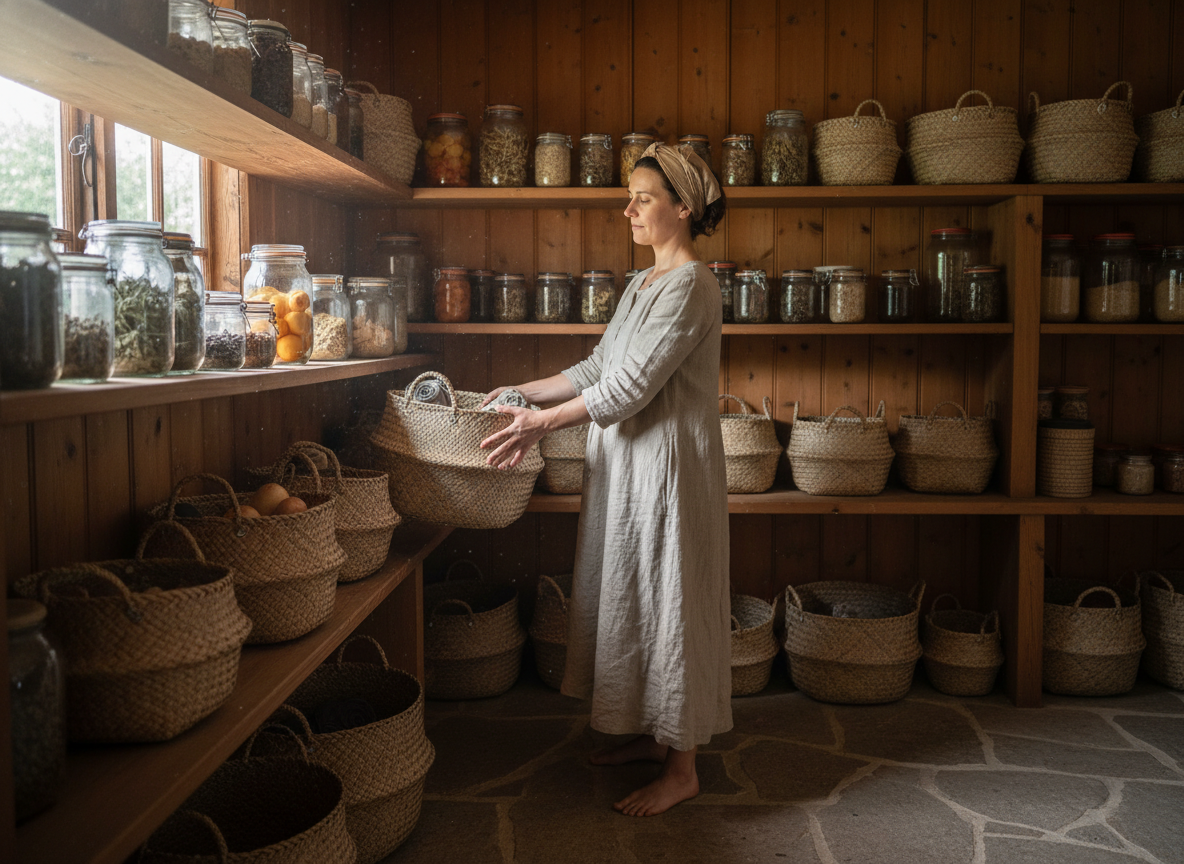
- Woven baskets add warmth and texture
For basements, garages, attics:
- Choose moisture-resistant and pest-resistant materials
- Avoid cardboard unless it’s temporary storage
For portable or off-site storage:
- Use plastic bins with tight-fitting lids
- Avoid overpacking large boxes to prevent crushing
6. Think About Accessibility & Maintenance
Before choosing containers, think about how you’ll actually use the space. Consider whether kids need to reach certain items, how often you’ll be grabbing them and whether you prefer being able to see everything clearly or rely on tidy, labeled bins. It also helps to factor in whether the space is shared with others.
If these are items you use all the time, you should manage them in open baskets, shallow bins, or clear containers that give you quick access. Things you rarely need can go in stacking bins, lidded containers, or opaque options with labels. At the end of the day, the best organizational setup is the one that still works for you even on your busiest week.
7. Label Everything
A bin without a label becomes a mystery box in about three weeks, sometimes it may be three days, depending on the household. You can use many labeling options that work well, including:
- printed or pre-made labels
- chalkboard-style labels
- adhesive label holders
- color-coding by category or room
- QR code inventory apps for digital organization
Here’s a tip: label both the front and top so you always see what’s inside, no matter how the bin is stored.
8. Use Modern Home-Organization Trends to Your Advantage
You don’t have to follow trends, but occasionally they solve problems we’ve had for years.
There are some popular trends that you can consider:
- Neutral, minimal containers: White, clear, woven, and earth tones help calm visual noise.
- Modular systems: Stackable or interlocking bins work wonders in pantries, closets, and garages.
- Digital inventory tools: For families or frequent movers, these apps save hours of time.
- Eco-friendly materials: Think recycled plastic, bamboo, seagrass, durable, and earth-conscious.
9. Practical Tips for Maximizing Space Efficiency
Sometimes it’s the little habits that make an organizing system actually stick. You might play around with mixing bin sizes on purpose, small containers for tiny things, medium ones for grouped categories, and big lightweight bins for all the bulky odds and ends. And honestly, skip the “miscellaneous” bin altogether; it almost always turns into the junk drawer’s bigger, messier sibling.
Moreover, you can try to store things vertically whenever possible, whether that means adding shelves, using risers, stacking bins, or even popping in a second row of hooks. On top of that, keeping items that naturally belong together in the same place, for example, chargers with chargers or first-aid supplies with first-aid.
Finally, you don’t cram every inch full; an overstuffed system is one that’s destined to fail. Treat your storage like something alive; it needs a little breathing room to grow and shift with you.
10. A Quick Step-by-Step Checklist for Choosing the Right Storage Containers
If you prefer a simple roadmap, here you go:
- Declutter first: get rid of what you don’t need.
- Identify your organizing style: clear or opaque? Visible or hidden?
- Measure your space: write down the dimensions before shopping.
- Measure your items: especially those awkwardly shaped ones.
- Choose the right material: plastic, fabric, woven, or specialty boxes.
- Pick sizes that coordinate: modular systems stack and fit better.
- Label everything: whatever style feels natural to you.
- Adjust as life changes: your system should evolve with you.
Final Thoughts
Choosing the right storage containers is about creating a home that feels lighter, calmer, and easier to live in. When your storage matches your habits, your routines, and the way your brain naturally works, your home finally supports you instead of the other way around.