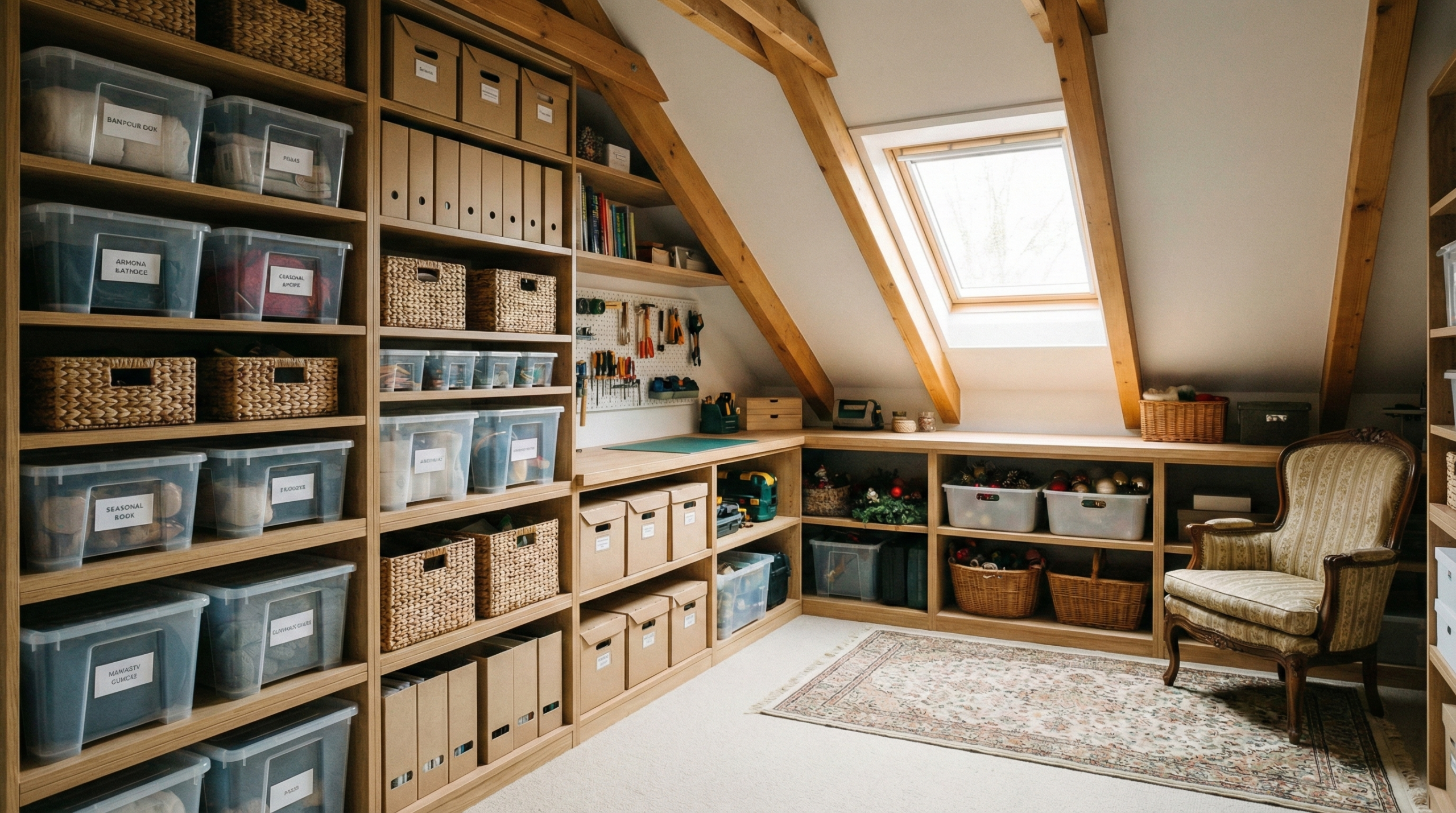
Attic storage offers a convenient way to make use of otherwise underutilized space in your home. However, before you decide to store your belongings in the attic, it’s important to understand both the benefits and potential drawbacks. Proper attic storage can help you declutter your living spaces, but moisture, temperature fluctuations, and inadequate organization can turn it into a source of frustration. This guide will explore smart, safe ways to organize your attic and maximize the space, helping you make an informed decision about whether attic storage is the right choice for you.
Why Consider Using Your Attic for Storage?
Attics often serve as a prime storage area for homeowners looking to maximize their living space. Storing items in the attic can free up valuable room in your living areas and provide a cost-effective solution to storage problems.
However, the attic’s convenience comes with a few considerations. While many homeowners turn to their attic for storing seasonal items, memorabilia, and other non-essential goods, it’s important to assess whether your attic is suitable for long-term storage. Improper storage can lead to clutter, pests, and moisture damage. The goal is to create an organized, clean space where your stored items remain safe.
Smart Ways to Organize Your Attic and Maximize Storage Space
1. Evaluate Your Attic’s Condition First
Before starting to store anything, it’s crucial to evaluate whether your attic is structurally sound. A sturdy floor is essential, and the space must be free from any signs of moisture damage or pest infestations.
Check for signs of sagging beams, mold, or rusting nails. If you notice any of these issues, it’s best to get a professional to inspect and possibly reinforce your attic’s floor. You may need to address ventilation or install insulation to improve the attic’s ability to manage humidity, which is crucial for preventing mold and mildew.
2. Use Proper Storage Containers
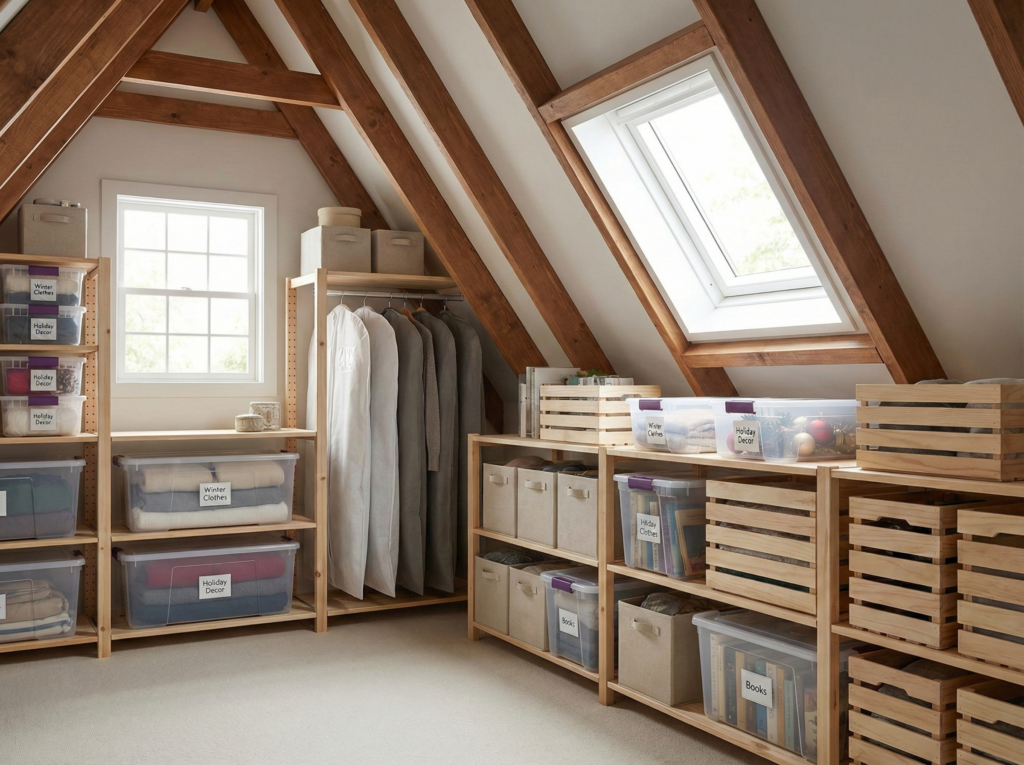
For items you intend to store in your attic, using the right containers is key to protecting your belongings from moisture, pests, and the fluctuating temperatures that often occur in attics.
How to do it: Opt for airtight plastic bins that can withstand temperature changes and prevent dust or pests from entering. If you’re storing clothes or fabric items, use vacuum-sealed bags to reduce the space they occupy and keep them free from moisture or pests.
Pro tip: Label containers clearly with the contents and date stored to make future retrieval easier and reduce the chances of misplacing items.
3. Create Separate Zones for Storage
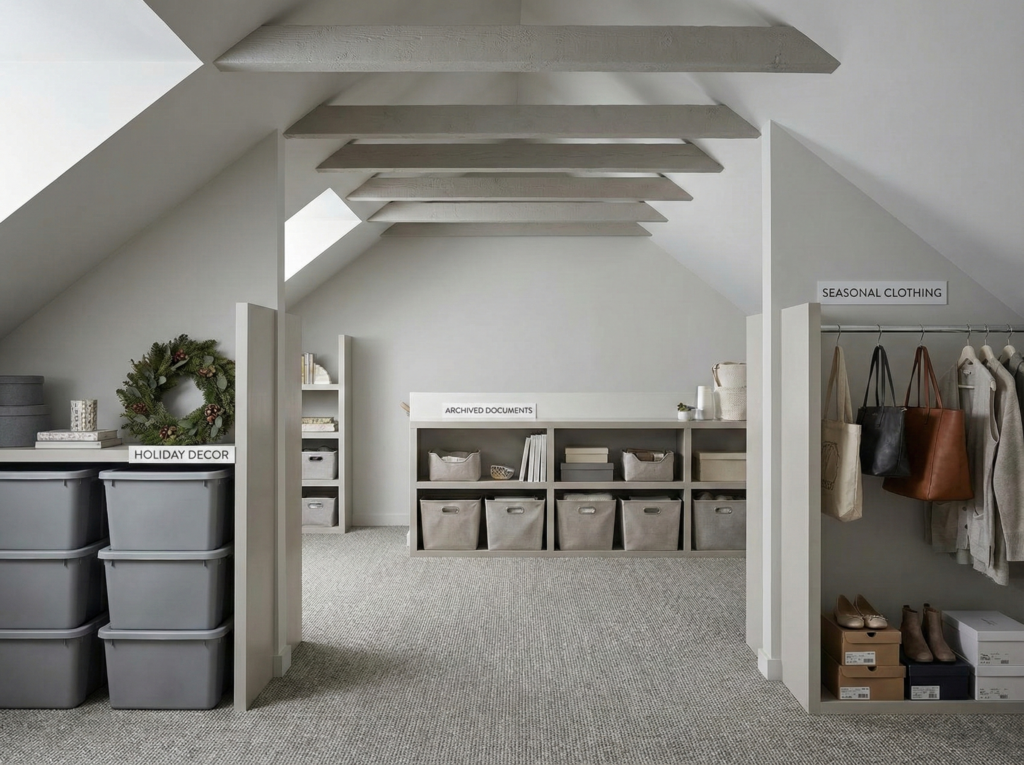
To prevent clutter, designate specific sections of your attic for different types of items. This will help keep everything organized and prevent items from piling up in an unmanageable way.
How to do it: Divide the attic into zones based on the type of items stored. For example, holiday decorations can go in one area, seasonal clothing in another, and old furniture or memorabilia in a designated section. Consider using wire shelving for heavier items to keep them off the floor and improve airflow.
4. Consider Climate Control for Sensitive Items
Temperature and humidity fluctuations can damage sensitive items, such as photographs, electronics, or important documents. While attics can be great for storage, the lack of temperature control can be a drawback for certain possessions.
If you plan to store items like electronics or important documents, consider using climate-controlled storage units or installing a small air conditioning unit in the attic. For books and photographs, use acid-free boxes and store them in cooler parts of the attic away from windows.
5. Prevent Pest Infestations
Pests, such as rodents, insects, and even mold, can wreak havoc on your stored items. Preventing pests is crucial for maintaining a clean, organized attic.
Begin by sealing any cracks, gaps, or holes in the attic walls, windows, and roof. Install pest barriers around entry points, such as the attic hatch or vent openings, to block rodents. Consider using natural repellents like mothballs or cedar to keep bugs at bay. Regularly inspect the space for signs of pests and take action immediately if you spot any.
The Pros and Cons of Attic Storage
Pros of Attic Storage
- Maximizes unused space: The attic is typically an underutilized area in the home. It offers a valuable storage option without taking up room in more frequently used spaces.
- Cost-effective: Compared to renting storage units or purchasing new furniture, attic storage is often free (aside from any upfront costs for organizing materials or insulation).
- Ideal for seasonal items: Items like holiday decorations, seasonal clothing, or luggage are perfect for attic storage as they’re only used a few times a year.
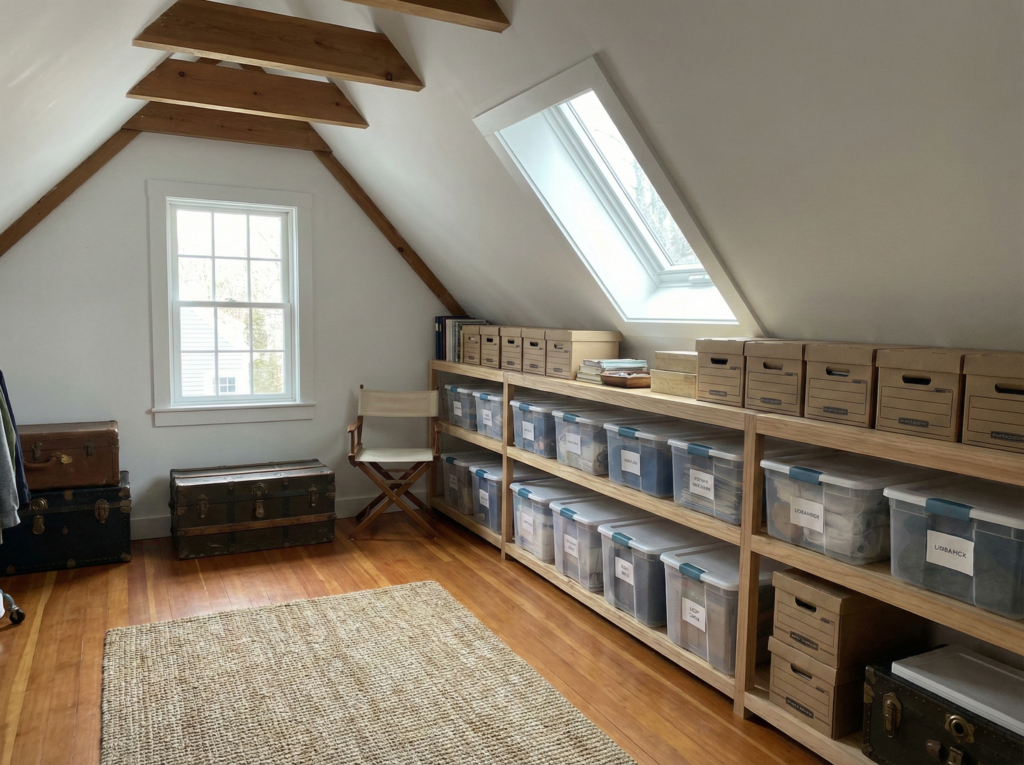
Cons of Attic Storage
- Temperature and humidity fluctuations: Attics often lack climate control, which can cause moisture buildup and mold. This can affect both the attic and the items stored inside.
- Accessibility issues: Attics are often hard to access, especially in homes without built-in stairs or ladders. This makes it inconvenient to retrieve items frequently.
- Limited space: Attics can be tricky to organize because of their sloped ceilings, ductwork, and beams. This limits the amount of usable storage space.
Is Attic Storage Right for You?
Deciding whether attic storage is the right solution for your home depends on several factors, including the condition of your attic, the types of items you plan to store, and your accessibility needs.
If you’re storing bulky, non-sensitive items like holiday decor or luggage, your attic might be an ideal space. However, for valuable items like electronics or important documents, it’s essential to consider the potential risks involved with temperature and humidity fluctuations. Additionally, be sure your attic has the proper ventilation and pest protection before beginning to store anything.
For sensitive items, or if your attic isn’t well-suited for storage, consider alternatives like basement storage, self-storage units, or garage solutions to keep things organized and safe.
Conclusion
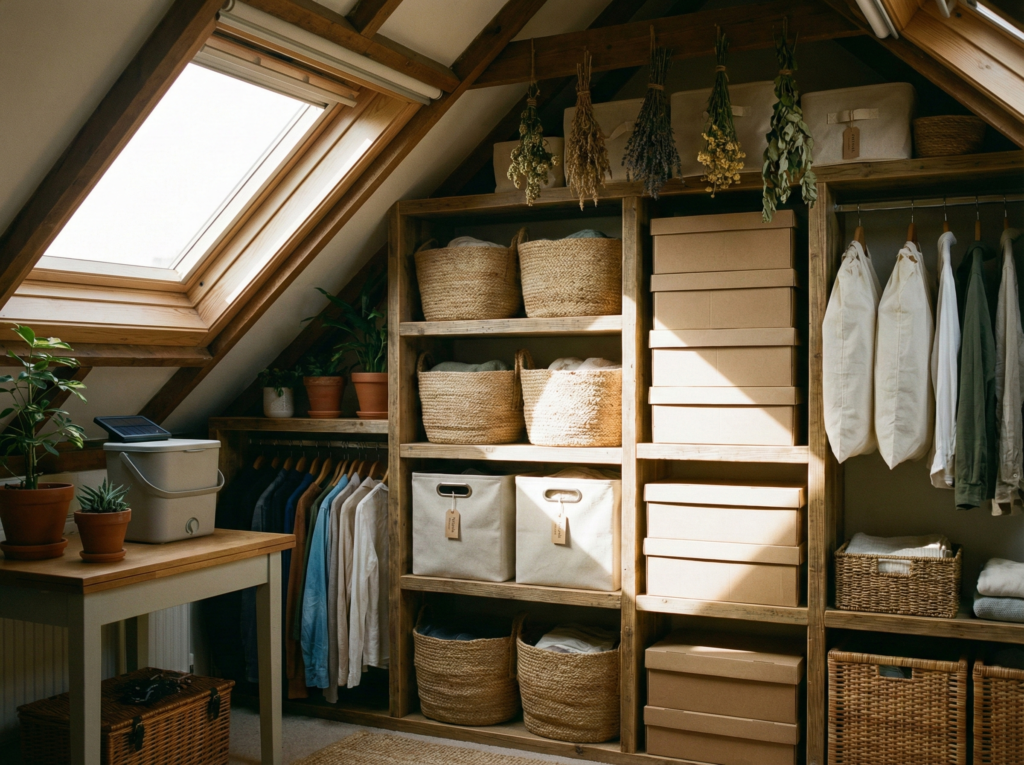
While attic storage can be a great way to declutter your home and maximize available space, it’s important to understand the potential challenges and take proper precautions to protect your items.
By organizing your attic efficiently, using appropriate storage materials, and ensuring proper ventilation and pest control, you can safely use your attic for a variety of storage needs. If you’re unsure whether attic storage is right for you, weigh the pros and cons and consider other options that may better suit your storage needs.
In the end, the best solution is the one that works for your lifestyle, whether that means making the most of your attic or exploring other ways to keep your home organized, clutter-free, and well-protected.
Related Articles
Attic vs. Basement Storage: Which Is Best? Smart Tips to Maximize Space and Avoid Moisture Issues