A well-organized kitchen cabinet can change the entire feel of your kitchen. When dishes, pantry staples, cookware, and small essentials are easier to find, cooking becomes smoother and cleanup feels less frustrating. Many kitchens don’t actually lack storage as much as they lack a clear system. With a few thoughtful cabinet organization ideas, you can make better use of the space you already have and create a kitchen that supports everyday life more efficiently.
Start by Clearing Out What No Longer Helps
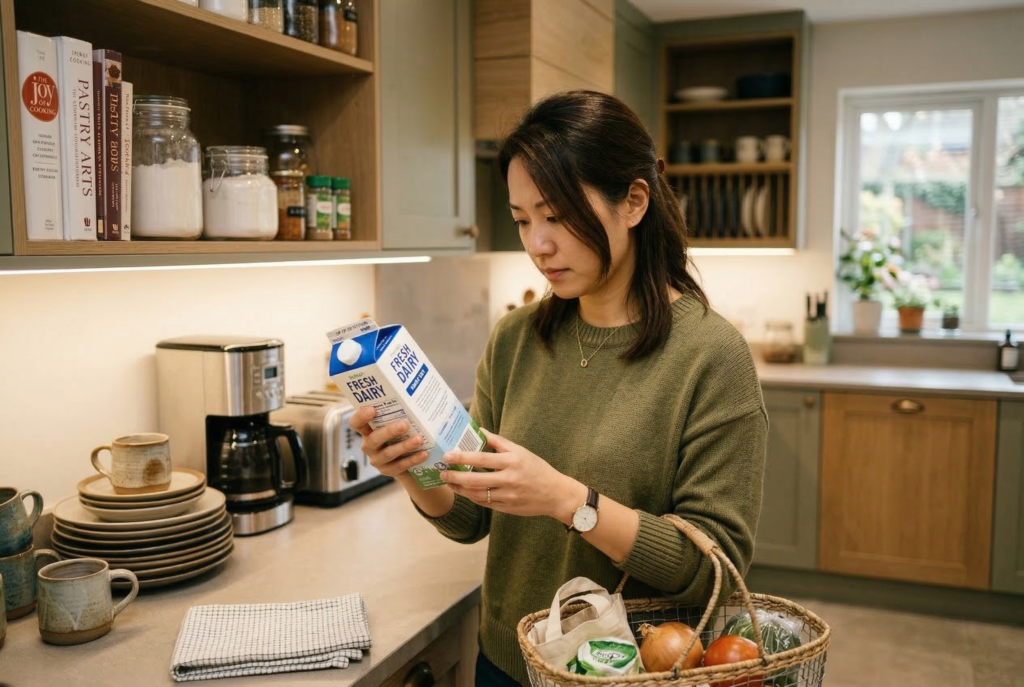
Before any kitchen cabinet organization system can work, it helps to remove what’s making the space harder to use. Cabinets often hold expired ingredients, duplicate containers, chipped mugs, unused gadgets, and serving pieces that rarely leave the shelf. That clutter takes up room you could be using for items you reach for every day.
Pull everything out one cabinet at a time and sort honestly. Check food expiration dates, get rid of damaged items, and donate kitchen tools you don’t actually use. This step matters because organizing around excess only creates a neater version of the same problem. Once you cut down what’s unnecessary, it becomes much easier to assign space with purpose.
Group Kitchen Items by How You Actually Use Them
One of the smartest kitchen cabinet storage ideas is to organize by function instead of trying to make every cabinet look identical. A kitchen works better when items are stored near where they’re used and grouped according to real cooking habits.
Keep everyday plates, bowls, and glasses close to the dishwasher or sink so unloading is quicker. Store pots, pans, and cooking utensils near the stove. Put lunch containers and water bottles in a zone that’s easy to reach during busy mornings. Baking tools should stay together, and coffee supplies should be grouped in one cabinet or section if that’s part of your daily routine. This kind of setup saves time because it reduces extra movement around the kitchen. It also makes it easier for everyone in the household to find things and put them back in the right place.
Use Vertical Space Inside Cabinets More Efficiently
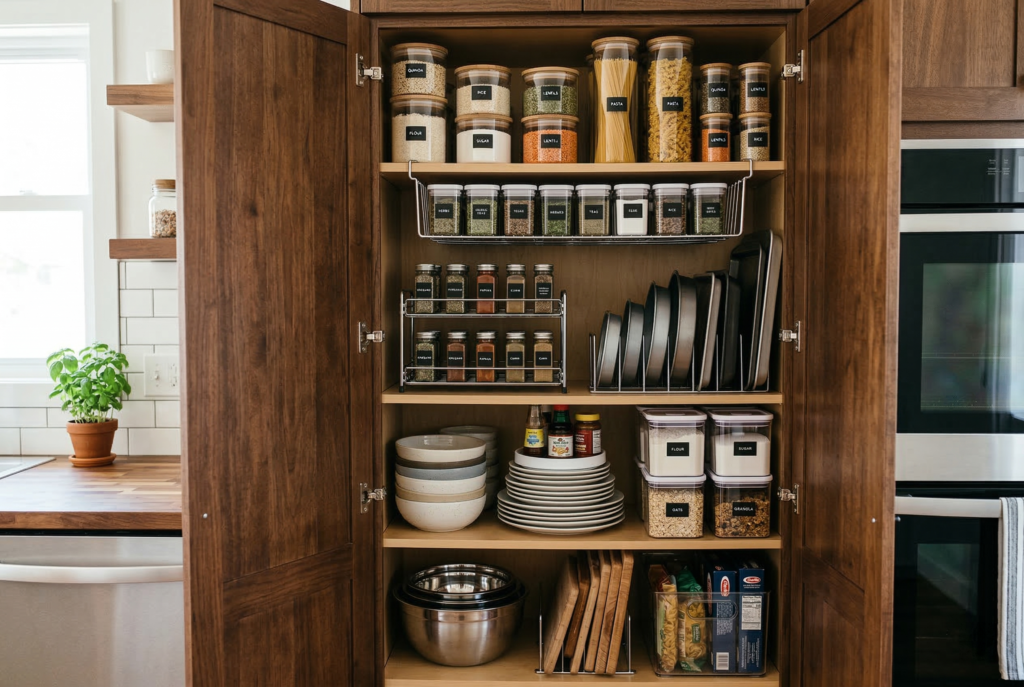
A lot of cabinet space goes unused because shelves are treated like flat surfaces instead of full vertical zones. Stacking items too high can create unstable piles, but leaving too much empty air above shorter items wastes valuable storage.
Shelf risers, stackable organizers, and under-shelf baskets can help create more usable layers inside a cabinet. These are especially helpful for mugs, canned goods, plates, and small pantry items. Even simple solutions like adding a second tier for spices or stacking cups in a more intentional way can make a noticeable difference.
Using vertical space well helps cabinets hold more without becoming harder to manage. It also improves visibility, which matters in a busy kitchen where quick access is often just as important as storage capacity.
Give Food Storage Containers a More Controlled System
Food storage containers are one of the most common sources of kitchen cabinet frustration. Lids get separated, mismatched pieces pile up, and one cabinet quickly turns into a jumble of plastic, glass, and awkward shapes.
A better system starts with editing down the collection. Keep the containers you use most often and match them with their lids before putting anything back. Once you’ve narrowed the set, store containers nested by size and keep lids together in a vertical divider, small bin, or standing file organizer.
This works because it cuts down on wasted time and visual clutter. Instead of wrestling with a cabinet full of random pieces, you create a storage setup that’s easy to maintain after meals, lunch prep, and leftovers.
Store Everyday Items at the Easiest-to-Reach Height
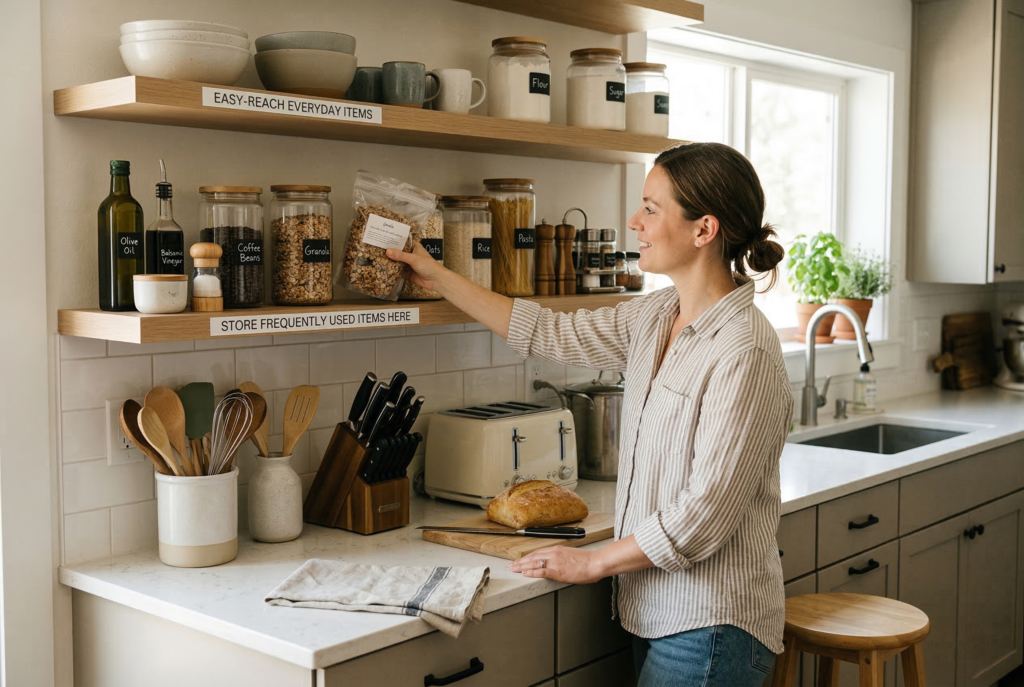
Not everything in a kitchen cabinet deserves prime placement. One of the best kitchen organization tips is to reserve your most accessible shelves for the items you use most often. That usually means everyday dishes, cooking oils, lunch supplies, favorite mugs, or commonly used dry goods.
Items used less often, like holiday platters, specialty bakeware, or extra paper goods, can go on higher shelves or in harder-to-reach cabinets. Heavy items should stay lower whenever possible for safety and convenience. This keeps the kitchen more comfortable to use and reduces the constant shuffling that happens when the wrong items are in the wrong place. A kitchen feels more functional when the layout supports your daily rhythm. Reaching less and moving things around less may sound minor, but it adds up quickly over time.
Create Cabinet Zones for Pantry Staples
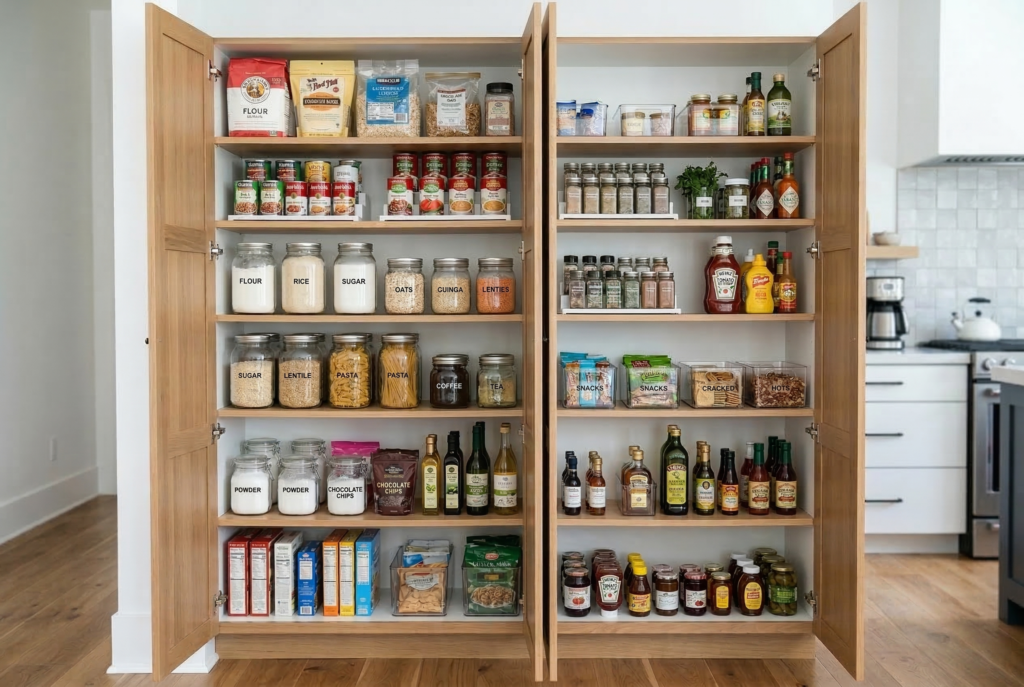
If your kitchen doesn’t have a separate pantry, your cabinets need to work harder. That makes zoning especially important. Pantry-style cabinet organization can help keep dry goods, snacks, canned food, and cooking ingredients from becoming scattered across multiple shelves.
Try creating categories such as breakfast foods, dinner staples, baking ingredients, snacks, canned items, and grains. Use clear bins or simple grouping methods to keep each category contained. You don’t need a picture-perfect pantry system for this to be effective. You just need enough structure that you can see what you have and reach it easily.
This kind of organization helps reduce food waste, overbuying, and forgotten items shoved to the back of the shelf. It also makes meal prep easier because the ingredients you use together are easier to locate.
Make Awkward Cabinets More Useful
Some kitchen cabinets are simply harder to work with than others. Deep lower cabinets, corner cabinets, and narrow vertical spaces often become catch-all storage spots where things disappear. With the right strategy, these awkward areas can still become useful.
Deep cabinets work better when items are stored in pull-out bins, baskets, or grouped categories that can be moved easily. Corner cabinets benefit from lazy Susans or turntables for oils, condiments, or small pantry goods. Narrow cabinets can be useful for cutting boards, baking sheets, trays, or cooling racks stored vertically.
The goal is to stop treating difficult cabinets as storage black holes. Once you make them easier to access, they become far more practical and far less likely to collect forgotten clutter.
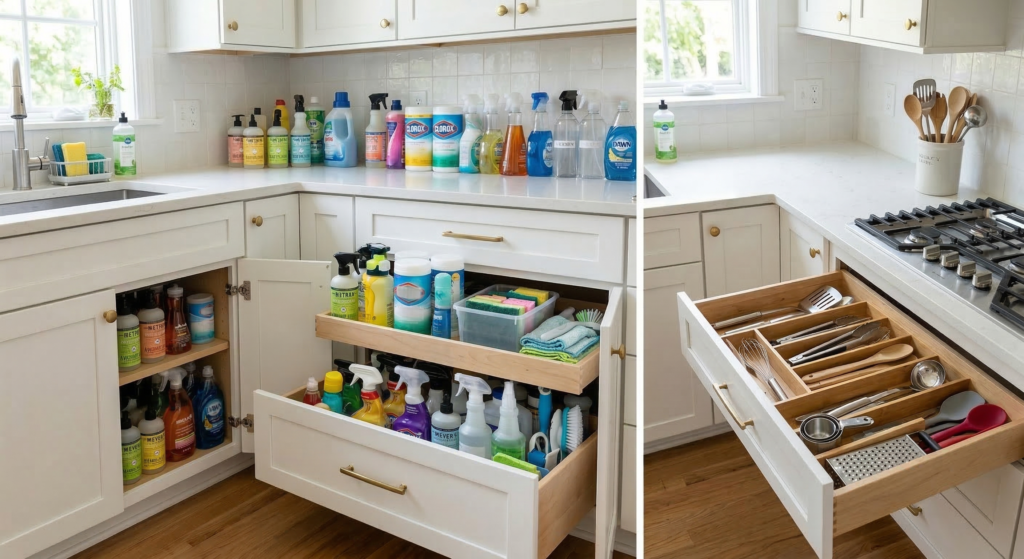
Keep Cleaning Supplies and Kitchen Tools From Mixing
Kitchen cabinets often become messy when too many unrelated categories end up in the same space. Cleaning products, dish towels, serving bowls, water bottles, and food items shouldn’t all be competing for room unless there’s truly no other option.
Where possible, separate kitchen tools by purpose. Keep dishwashing supplies under the sink or near it. Store cooking tools in the cabinet closest to your prep or cooking area. Keep entertaining items together, and avoid mixing household supplies with food unless it’s part of a clearly defined system.
This makes the kitchen easier to reset and easier to navigate. It also reduces the mental clutter that comes from opening a cabinet and seeing too many unrelated things packed into one tight area.
Use Labels Sparingly but Strategically
Labels can be helpful in kitchen cabinet organization, but they work best when used where they solve a real problem. If several people use the kitchen, labels can make it easier for everyone to maintain the system. They’re especially useful for pantry categories, snack bins, baking ingredients, and storage container sections.
That said, not every cabinet needs a label. Over-labeling can make a kitchen feel rigid and harder to adjust when your routines change. Focus on the zones that tend to get messy or confusing. A few clear labels in the right places can support consistency without turning the whole kitchen into a storage project. The real purpose of labeling is to reduce guesswork. When people know where things belong, the system stands a better chance of lasting.
Build in a Quick Cabinet Reset Routine
Even a strong kitchen cabinet organization system won’t stay functional without occasional maintenance. The good news is that once the cabinets are set up well, staying on top of them usually doesn’t take much time.
A quick weekly or biweekly reset can make a big difference. Straighten one or two problem shelves, wipe crumbs from pantry areas, return misplaced items, and check whether food storage lids or snack zones are getting out of control. Small resets help prevent the kind of buildup that leads to a full cabinet overhaul later. This routine works because it protects the system before it breaks down. Instead of waiting until the kitchen feels chaotic, you handle minor issues while they’re still easy to fix.
Conclusion
Kitchen cabinet organization can make everyday cooking easier, but it also improves how your whole kitchen functions. When cabinets are arranged around real habits, accessible storage, and practical groupings, daily tasks become smoother from breakfast prep to dinner cleanup. You don’t need a large kitchen or expensive organizers to make meaningful improvements. You need a layout that makes sense for the way you actually live.
The most effective kitchen cabinet organization ideas are often the simplest. Clear out what you don’t use, group items by function, make better use of vertical space, and keep everyday essentials within easy reach. With a little structure and regular upkeep, your kitchen cabinets can hold more, work better, and make the entire space feel more manageable.
Related Articles
10 Space-Saving Kitchen Hacks: Smart Tips to Maximize Small Kitchen Storage and Efficiency