

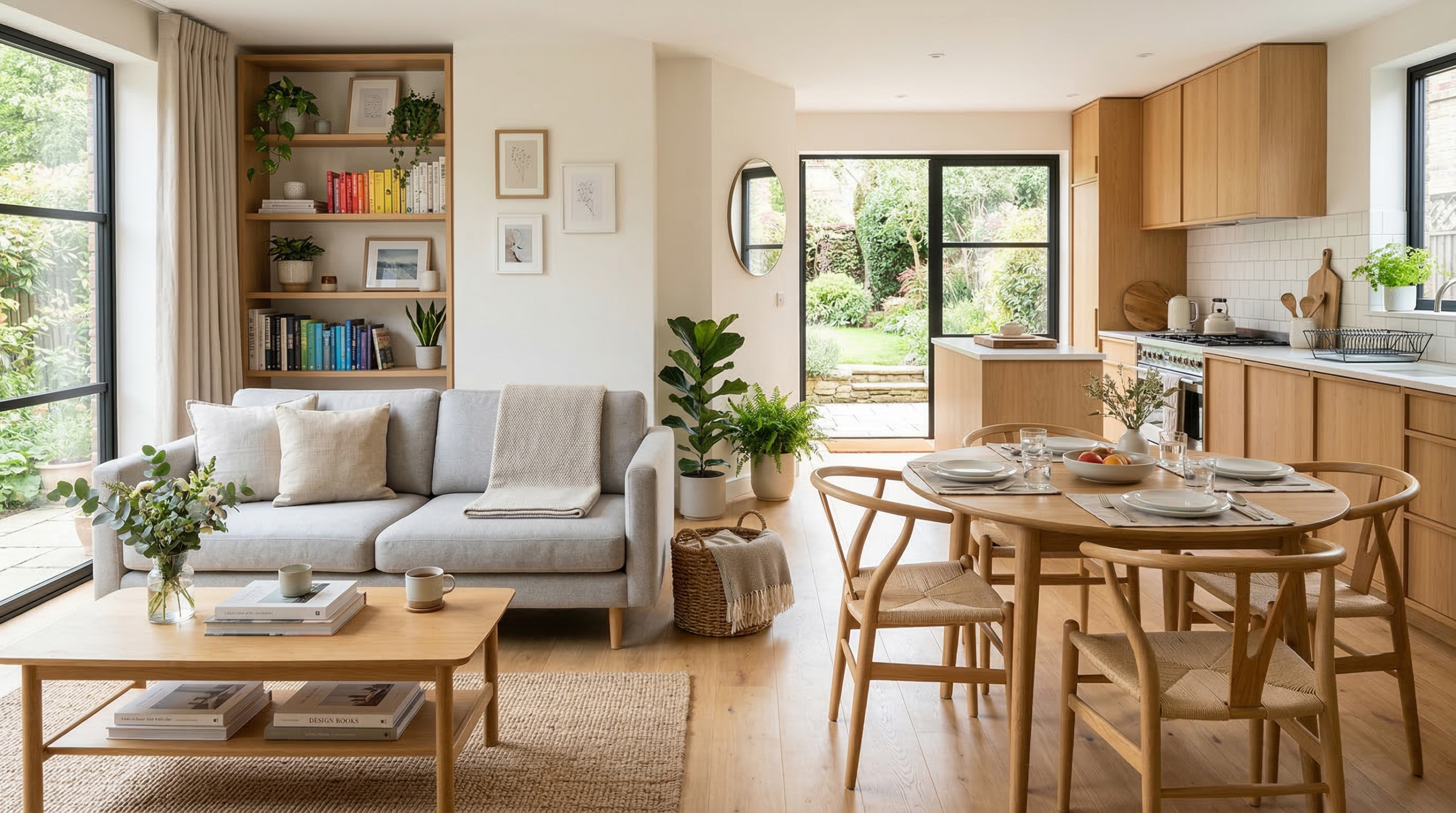
Keeping a home clean and organized with kids, full schedules, and constant daily interruptions can feel like trying to tidy up during a moving storm. Between school drop-offs, work demands, laundry, meals, sports, and the steady stream of toys, papers, and dishes, even a well-run household can start to feel behind. The good news is that a cleaner, more organized home doesn’t depend on doing everything perfectly. It usually comes from having a few realistic systems that fit the way your family actually lives.
1. Focus on Function First, Not a Picture-Perfect House
One of the most helpful mindset shifts for busy families is to stop measuring success by how polished the home looks at every moment. A family home is meant to be lived in, and when kids are part of the equation, some level of mess is simply normal.
What matters more is whether your home functions well. Can people find shoes in the morning? Is the kitchen counter usable for making dinner? Can the family sit down without clearing piles first? When you organize around daily function, it becomes easier to decide what really needs attention and what can wait.
This approach also reduces frustration. Instead of chasing unrealistic standards, you can put your energy into the areas that make family life smoother and less stressful.
2. Build Simple Systems Around the Most Repeated Messes

Most household clutter doesn’t appear randomly. It tends to come from the same routines over and over again. Shoes pile up by the door. Backpacks land in the kitchen. Lunch containers gather near the sink. Mail stacks on the counter. Toys migrate into every room.
Pay attention to those repeat patterns and create systems around them. If shoes always end up near the entry, add a shoe tray or basket there. If school papers take over the counter, create one bin or file for incoming paperwork. If sports gear gets dropped in the hallway, assign a basket or hook for each child.
The best home organization systems for families usually solve recurring problems instead of trying to control every corner of the house. When the storage solution is close to the behavior, it’s easier for everyone to use.
3. Keep Shared Spaces Light and Easy To Reset
Living rooms, kitchens, dining areas, and entryways usually carry the heaviest daily load in a busy home. These shared spaces don’t stay organized because they’re cleaned once. They stay manageable because they’re set up to recover quickly.
Try limiting how much these rooms are expected to store. If the living room holds books, toys, blankets, remotes, chargers, and paperwork all at once, it becomes harder to reset. Keep only what truly supports the room’s main use and move extra overflow somewhere else when possible.
Baskets, trays, and a few clearly defined zones can help contain clutter without making the room feel stiff or overmanaged. A shared space doesn’t need to stay spotless. It just needs to be easy enough to tidy in a few minutes.
4. Use Short Daily Resets Instead of Waiting for a Full Cleanup Day
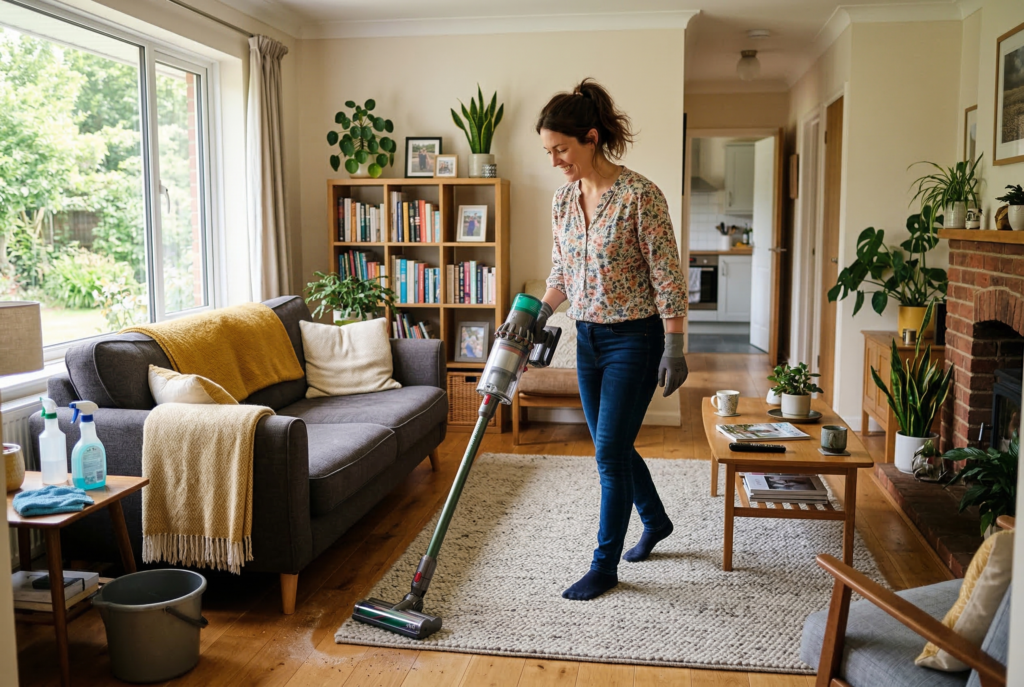
For many families, the idea of a full house cleaning day sounds good in theory but rarely works well in real life. Schedules shift, kids need things, and large messes feel overwhelming when they’ve been building all week.
Short daily resets are often more effective. Ten or fifteen minutes in the evening can go a long way when used well. Clear the kitchen counters, load or unload the dishwasher, gather stray items from the living room, and reset the entryway for the next morning. These quick routines keep clutter from turning into a much larger problem.
This kind of consistency usually matters more than intensity. A home that gets small resets throughout the week often feels calmer than one that waits for a major cleanup that keeps getting postponed.
5. Give Kids Storage They Can Actually Use
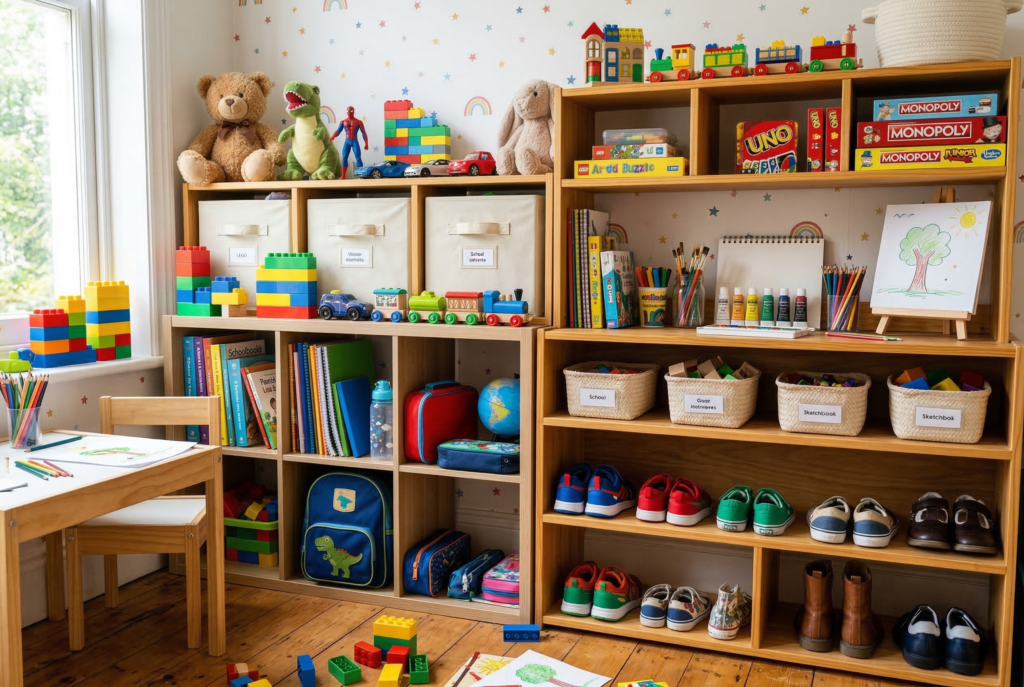
Organization systems often fail with children because the setup works for adults but not for the people expected to use it most. If bins are too high, labels are too complicated, or drawers are too full, kids usually won’t maintain the system for long.
Make storage as easy and visible as possible. Open baskets, low hooks, labeled bins with words or pictures, and simple shelving tend to work better than more complicated systems. Group similar items together so cleanup feels more intuitive. Toys, art supplies, shoes, and school items should each have a clear home that children can reach without help. When storage fits a child’s age and routine, it becomes much easier to build better habits without constant reminders or power struggles.
6. Lower the Number of Items in High-Traffic Areas
One of the fastest ways to make a home easier to clean and organize is to reduce how much lives in the most-used spaces. High-traffic areas become stressful when they’re packed with too many things, especially when several people move through them every day.
Look closely at the kitchen island, dining table, entryway bench, bathroom counters, and family room. These are often the spaces that collect the most visual clutter and the most daily interruption. Reducing what stays there permanently can make cleaning faster and help the room function better. Rather than making everything sparse, the goal is to be selective. Fewer items on busy surfaces usually means fewer things to move, sort, wipe around, and put back during the day.
7. Create a Home for Papers Before They Take Over
Paper clutter can make a home feel disorganized very quickly, especially in households with school forms, calendars, permission slips, receipts, mail, and appointment reminders arriving constantly. Without a system, these papers tend to spread across counters, tables, and desks.
A simple paper station can make a big difference. Use one tray, sorter, or folder system for incoming papers and another for items that need action. Once that’s in place, the goal is to stop paper from floating around the house. It should go straight to its spot instead of landing wherever there’s an open surface. This type of system works well because it reduces both physical clutter and mental clutter. When papers have a home, it’s easier to see what needs attention and what can be recycled right away.
8. Let Rooms Support Real Life, Even If They Serve More Than One Purpose
In many family homes, rooms need to do more than one job. The dining room may also be a homework zone. The living room may hold toys. A kitchen corner may double as a charging station or family calendar area. That kind of overlap is common, especially in smaller homes or homes with busy schedules.
Instead of fighting that reality, organize for it. If a room serves multiple functions, give each activity a defined area and keep the tools for that activity contained. A basket for homework supplies, a drawer for chargers, or a bin for toys can help prevent one use from taking over the whole room.
When rooms reflect how your family truly uses them, they become easier to keep organized. Systems built around real life hold up much better than systems built around an ideal that doesn’t match your day-to-day routine.
9. Share Responsibility in Age-Appropriate Ways
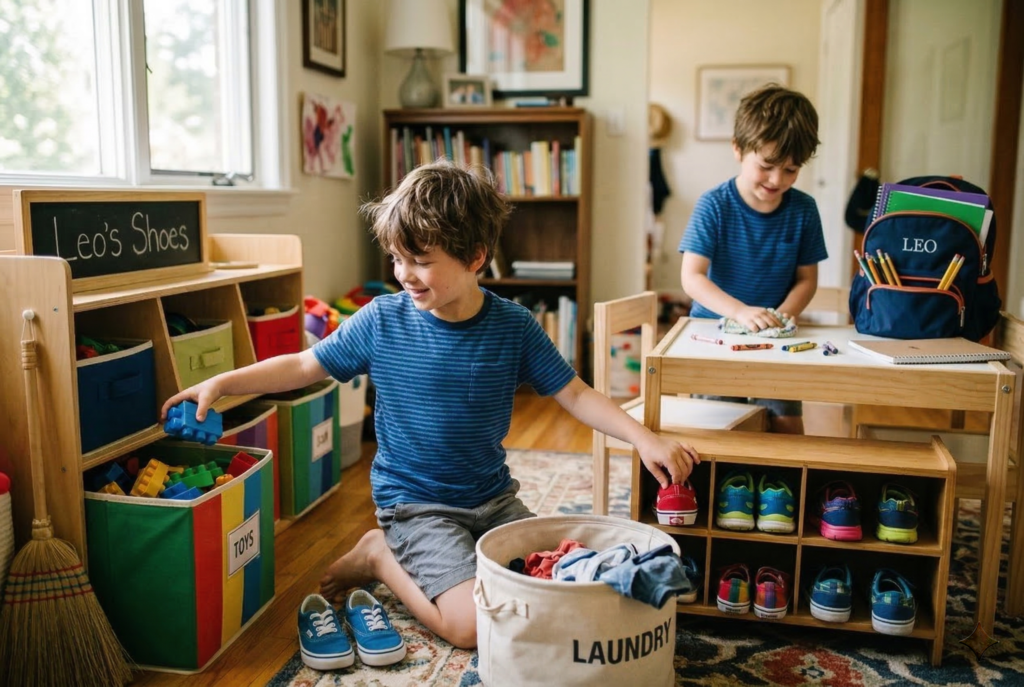
A clean and organized family home is much easier to maintain when responsibility doesn’t fall on one person alone. Even young children can help in simple ways, and older kids can take on more than many families expect when the tasks are clear and consistent.
Small responsibilities add up. Kids can put shoes in place, return toys to bins, carry laundry, wipe a table, or pack up their school supplies. Teenagers can help with dishes, vacuuming, bathroom upkeep, and managing their own rooms more independently.
Adults still carry much of the household load, but sharing age-appropriate tasks makes the home feel more cooperative and less exhausting. This also teaches useful life skills. Children learn that maintaining a home is part of everyday family life, not a job that only happens behind the scenes.
10. Make “Good Enough” the Standard You Can Sustain
One of the biggest barriers to staying organized with kids is the idea that if the whole house can’t be done, there’s no point starting. That mindset often leads to delay, discouragement, and a cycle of falling further behind.
A more sustainable standard is good enough. Good enough may mean the floor is picked up even if the shelves aren’t styled. It may mean the dishes are done and the counters are mostly clear, even if a basket of laundry still needs folding. It may mean the kids’ rooms are functional even if they don’t look perfect.
This standard makes it easier to keep going. A livable home doesn’t require constant perfection. It requires habits and systems that support your real family, your real schedule, and the pace of everyday life.
Conclusion
Keeping your home clean and organized with kids and a busy family schedule can be challenging, but it becomes much more manageable when you stop relying on big bursts of effort and start building practical routines. A home that works well for family life usually isn’t the one that looks perfect all the time. It’s the one with simple systems, realistic expectations, and spaces that are easy to reset when daily life gets messy.
The most effective tips are often the most practical. Reduce clutter in high-traffic areas, create homes for the messes that repeat, make storage easy for kids to use, and aim for steady progress instead of impossible standards. Over time, those small decisions can help your home feel calmer, cleaner, and far easier to manage, even during the busiest seasons of family life.
Related Articles
9 Simple Ways to Involve Your Family in Decluttering and Create a More Organized Home Together