

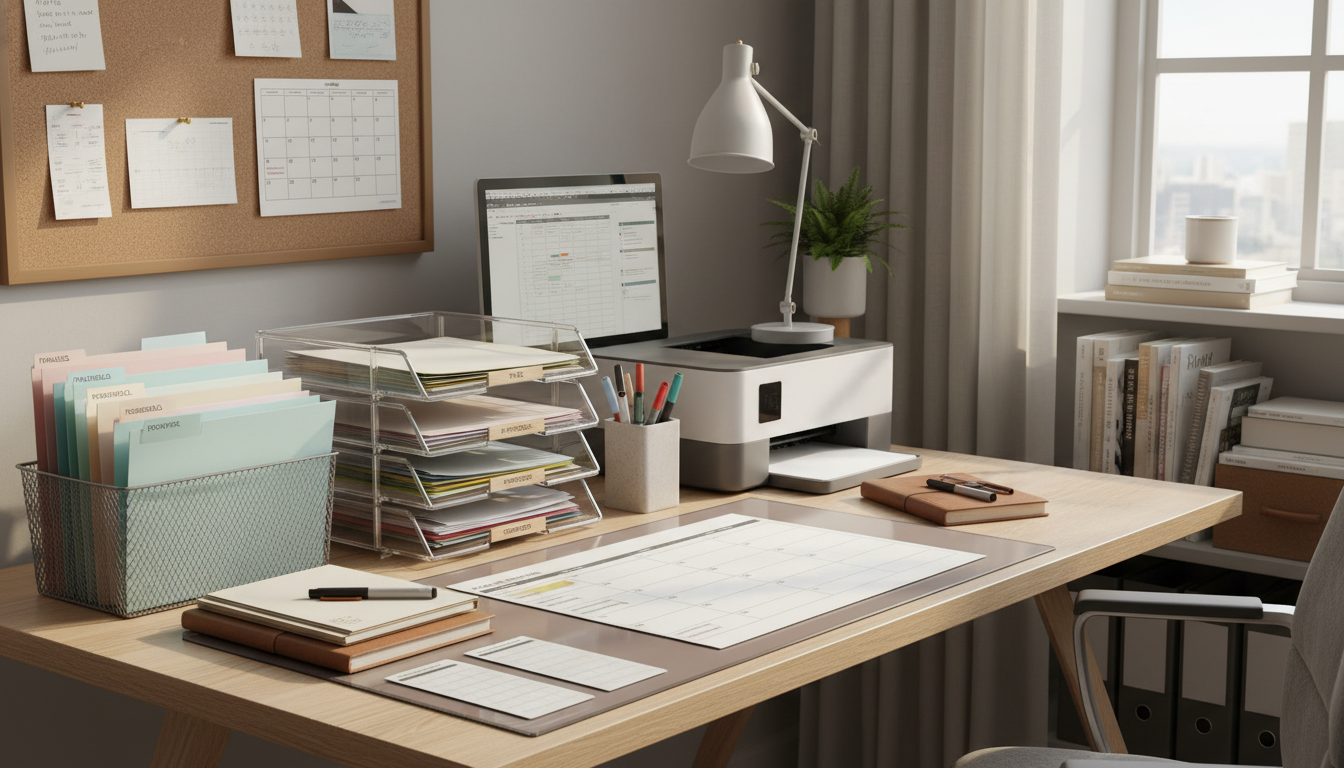
Paperwork piles up fast. Bills, receipts, tax forms, school notices, and important family records arrive every week, and without a system they end up scattered across counters, drawers, and bags.
The good news is that organizing paperwork doesn’t have to be a big project. A few habits and a simple filing setup are enough to keep the right papers, find them quickly, and get rid of the rest safely.
Below are 10 simple tips for organizing paperwork at home, starting with what to keep and for how long, then how to file, scan, store, and shred so the pile doesn’t come back.
What Paperwork to Keep and for How Long
Before you start sorting, it helps to know which papers you actually need. For tax records, the IRS bases its guidance on how long it can review a return. The other rows below are common guidelines; when in doubt, keep a document longer or ask a tax professional.
| Document | How Long to Keep |
|---|---|
| Tax returns and supporting records | At least 3 years; 6 years if you underreported income by more than 25%; 7 years if you claimed a loss from worthless securities or bad debt; indefinitely if you didn’t file or filed a fraudulent return (IRS). Many people keep copies of filed returns permanently. |
| Home purchase and improvement records | Until the tax period of limitations expires for the year you sell the home (IRS) |
| Bank and credit card statements | Until you’ve checked them against your records; longer if they support a tax deduction |
| Pay stubs | Until you’ve matched them to your year-end W-2 |
| Utility bills | Until the next bill shows your payment, unless you need them for taxes |
| Receipts for big purchases and warranties | As long as you own the item or the warranty lasts |
| Insurance policies | While the policy is active, plus records of any claims |
| Birth certificates, Social Security cards, passports, marriage and divorce papers, wills, deeds, and vehicle titles | Permanently, keep the originals |
10 Simple Tips for Organizing Paperwork at Home
1. Start by Decluttering: Purge Unnecessary Paper
The first step in organizing your paperwork is to declutter your existing documents. Many of us hold on to paper that we no longer need, such as old receipts, expired warranties, or outdated paperwork. Decluttering allows you to reduce the volume of paper you have to manage and makes the rest of the organization process easier.
Start by going through your paperwork and sorting items into categories: keep, shred, or recycle. Use the table above to decide what stays; don’t throw away tax, property, or identity documents just because you haven’t looked at them recently. Be particularly cautious with items that contain personal information: shred anything that contains sensitive data.
Once you’ve purged unnecessary paper, you’ll have a clearer view of what’s essential and what’s just taking up space.
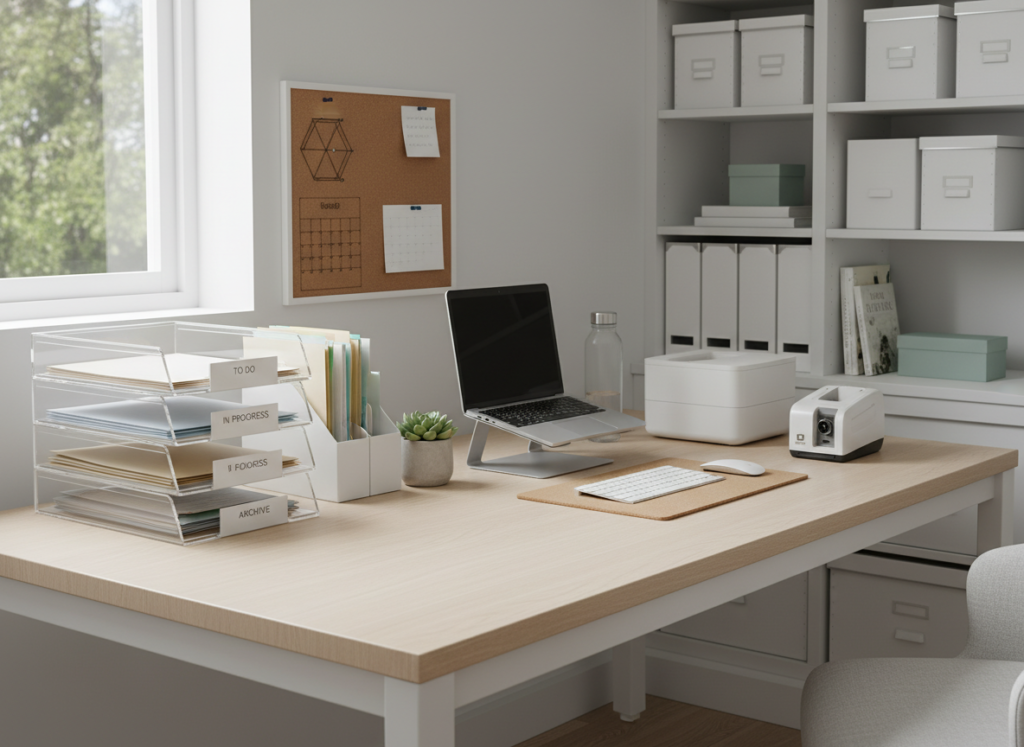
2. Create a Filing System Sorted by Category
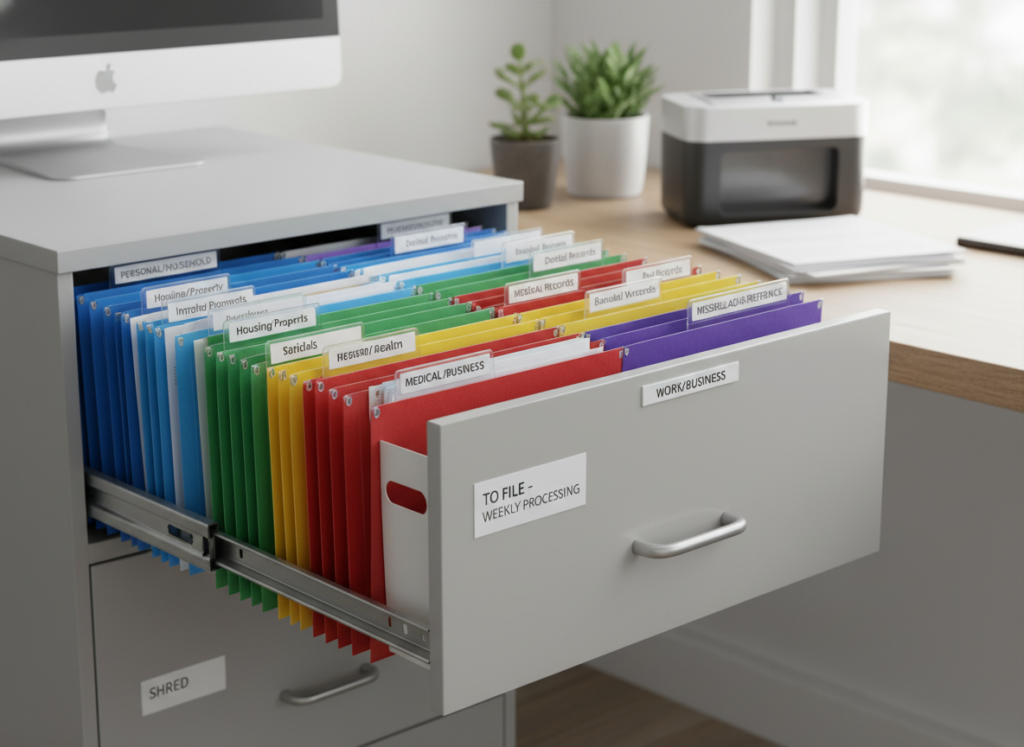
Once you’ve sorted through your documents, it’s time to create a filing system that makes it easy to access important paperwork when you need it. The key to a good filing system is consistency. Choose a system that works for you, whether that’s a filing cabinet, an accordion file, or labeled binders.
Give each category its own folder or binder, and label it clearly. You can use a color-coded system for quick identification, or simply categorize by type of document. Common categories include:
- Bills and financial documents
- Taxes
- Medical and health records
- Insurance and legal papers
- Personal documents, such as birth certificates or marriage licenses
This system helps you easily locate any important document without wasting time searching through piles of paper.
3. Set Up a “To-Do” Pile for Immediate Action
One of the best ways to stay on top of your paperwork is to have a designated area for items that require immediate action. This could be a small tray or folder that sits on your desk or filing cabinet. For example, items like bills, invoices, or documents requiring signatures can go into this pile.
The key here is to review the pile regularly (daily or weekly) and take care of items before they become overwhelming. This prevents papers from piling up, and you’ll always know what requires your attention right away.
4. Handle Mail the Day It Arrives

Most paper clutter starts at the front door. Pick one spot to open mail every day, ideally next to your recycling bin and shredder. Recycle junk mail and envelopes immediately, put anything that needs action in your to-do tray, file what you need to keep, and shred anything with personal details you don’t need. Handling each piece once keeps mail from turning into a pile.
>>> How to Clean and Descale a Coffee Maker with Vinegar
5. Digitize Documents and Go Paperless

Digitizing your paperwork is one of the best ways to reduce clutter and make your documents easier to store and access. Use a document scanner or the scanning feature built into your phone, such as the scan option in the iPhone Notes or Files app or the Google Drive app. Store the files in a secure cloud service like Google Drive or Dropbox, or on an external hard drive, and organize them into the same folders you use for paper.
To keep new paper from piling up, switch to paperless bills and statements wherever you can. Many banks, utilities, and subscription services offer electronic statements, which you can manage from your phone or computer.
Scanning doesn’t replace everything, though. Keep the original paper copies of birth certificates, Social Security cards, passports, marriage and divorce papers, wills, deeds, and vehicle titles, since a scan usually isn’t accepted in place of the original.
6. Create a System for Managing Receipts
Managing receipts can quickly become a mess if you don’t have a system in place. Receipts can pile up in your wallet, drawers, or on your desk, adding to the overall paper clutter. To make receipt organization easier, digitize them or store them in labeled folders.
For physical receipts, use a receipt organizer or binder with clear plastic sleeves. Label them by month or category, such as “Home Repairs” or “Medical.” If you’re going paperless, take a photo of the receipt or scan it and store it in your cloud storage.
Maintaining a dedicated receipt system ensures that you don’t lose important receipts for tax purposes or warranties, and it helps you stay on top of your spending.
7. Store Essential Documents in Fireproof Containers
Some documents, such as legal records, wills, or property deeds, are essential to keep safe. For these types of papers, fireproof containers or a lockbox are highly recommended. These storage solutions protect your important documents in the event of a fire or natural disaster.
Look for a safe or document box with a UL Class 350 fire rating, which means the inside stays cool enough to protect paper for the rated time, and choose a water-resistant model if flooding is a risk where you live. For documents that are hard to replace, a bank safe deposit box is another option; ask an attorney where to keep an original will, since it may need to be accessible quickly. For digital documents, make sure your cloud storage uses strong security features, such as encryption and two-factor authentication.
8. Shred Sensitive Papers Safely
Anything with your Social Security number, account numbers, signatures, or medical details can be used for identity theft if it ends up in the trash. Use a cross-cut or micro-cut shredder, which turns paper into small pieces that are much harder to reassemble than strip-cut shreds. If you have a large backlog, look for a community shred day or a local shredding service instead of feeding it through a home shredder a few sheets at a time.
9. Build an Emergency Document Kit
Keep copies of your most important documents together so you can grab them quickly in an emergency. Include copies of IDs, insurance policies, bank and account information, medical information, and key contacts, and store the kit in a waterproof, fire-resistant container or keep encrypted digital copies you can reach from anywhere. FEMA’s Emergency Financial First Aid Kit includes free checklists to help you decide what to gather.
10. Set a Weekly Routine and Maintain Your System
To keep your paper organization system working, set aside a few minutes every week to sort new papers, file them, clear your to-do tray, and shred what you no longer need. Use the same time to review your digital files and make sure they’re backed up.
Once a year, often right after you file your taxes, do a bigger cleanout: purge papers you no longer need to keep, update folder labels, and move older tax records into long-term storage. For ongoing success, create a habit of sorting and filing papers as soon as they come in. This will help you maintain an organized, clutter-free space without feeling overwhelmed.
Frequently Asked Questions
How long should you keep bank statements?
Keep them until you’ve checked them against your records. If a statement supports something on your tax return, such as a deduction, keep it as long as you keep that year’s tax records.
What documents should you keep forever?
Keep originals of birth and death certificates, Social Security cards, passports, marriage and divorce papers, adoption papers, wills, and military records permanently. Keep deeds and vehicle titles for as long as you own the property.
Is it better to scan documents or keep paper copies?
Scanning works well for most everyday papers, such as statements, receipts, and bills. Keep the original paper copies of vital and legal documents, and back up your scans in more than one place.
How often should you organize paperwork?
A quick weekly session of 10 to 15 minutes keeps new papers under control, and a yearly cleanout, often after tax season, clears out what you no longer need.
What’s the best way to organize paperwork for an elderly parent?
Create one binder or file box with clear sections for IDs, insurance, medical information, bank accounts, bills, and legal documents such as powers of attorney and health care directives. Make sure a trusted family member knows where it’s kept.
Conclusion: Create a Functional Paper Management System
These simple tips for organizing paperwork come down to a few steps: know what to keep, give every paper a home, handle new paper right away, and protect the documents that matter most.
A well-organized system helps you find important documents quickly, reduces stress, and protects you from losing records you might need later. Whether you choose a physical filing system or prefer going paperless, the key is to stay consistent and develop habits that work for your lifestyle.