

Most one-bedroom apartments fit into a 5×10 or a 10×10 storage unit, and the choice between them is the whole decision. A 5×10 holds a partial load or a downsized apartment; a 10×10 holds a full one-bedroom with room to walk in. The right answer to what size storage unit for a 1 bedroom apartment you need is an honest inventory of what you own and how you pack. This guide covers what fits each size, what it costs, and when climate control is worth it.
Unit dimensions are standard, but prices vary by facility and location, so confirm rates locally.
What Size Storage Unit for a 1 Bedroom Apartment?
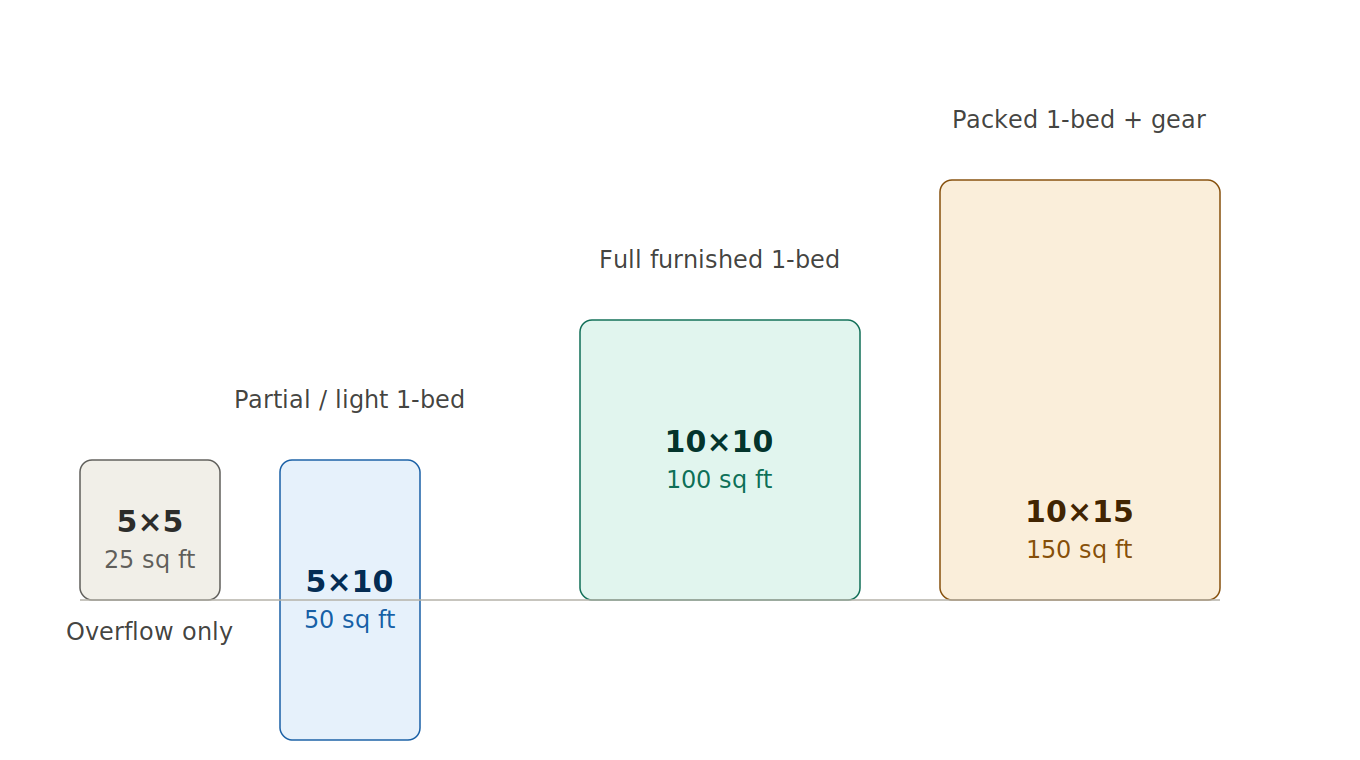
The short answer is a 5×10 or a 10×10, and the gap between them comes down to how much of the apartment you are storing. A 5×10 gives you 50 square feet, about the footprint of a walk-in closet, so it fits a partial move or a lightly furnished place. A 10×10 gives you 100 square feet, roughly half a one-car garage, and that is enough for a fully furnished one-bedroom.
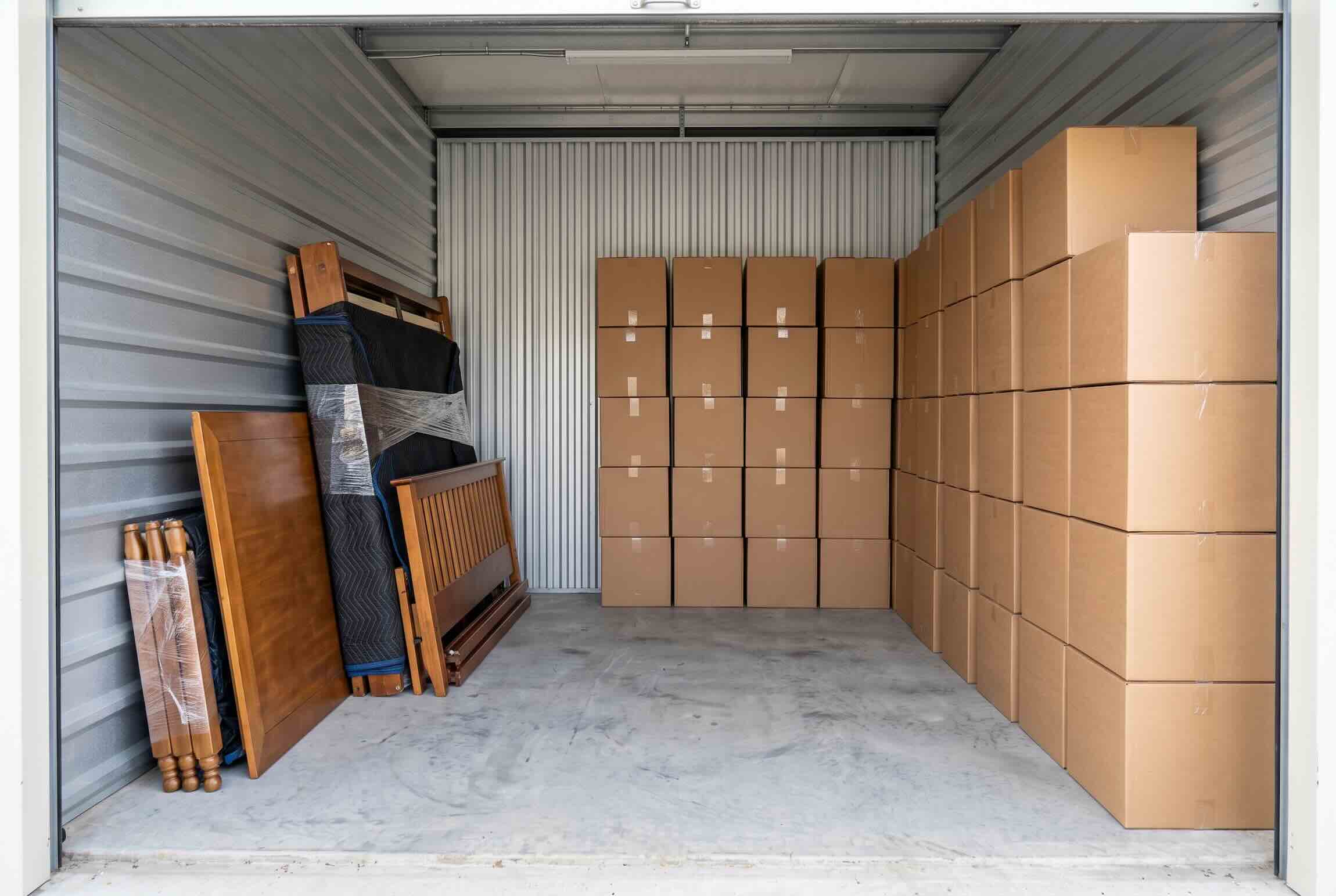
One number is easy to overlook: the ceiling height. Most units stand about 8 feet tall. So a 10×10 is not only 100 square feet of floor; stacked to the ceiling, it holds close to 800 cubic feet. That height is the reason smart packing matters. Break furniture down, stack boxes tall, and you can sometimes fit into one size smaller than you expected.
| Unit size | Floor area | Best 1-bedroom use |
| 5×5 | 25 sq ft | Overflow only, not a move |
| 5×10 | 50 sq ft | A partial or light 1-bed |
| 10×10 | 100 sq ft | A standard, furnished 1-bed |
| 10×15 | 150 sq ft | A packed 1-bed with gear |
>>> Average Gas Bill for 1 Bedroom Apartment: 2026 Costs
5×10 vs 10×10: Which Storage Unit Do You Need?
Since these two sizes cover almost every single one-bedroom, this is where you need to focus.
Pick a 5×10 for part of an apartment, not all of it. It works after a downsize, or when you have sold the bulkier pieces. Apartment-scaled furniture fits here. It also suits a short-term move, where you cycle things in and out and rarely fill the space.
Pick a 10×10 for a complete one-bedroom you are keeping long-term. Choose it when appliances are going in. Choose it too when you want to walk inside and reach the back without unstacking a wall of boxes.
If your belongings nearly fill a 5×10, it is worth considering the next size up. The monthly difference between a 5×10 and a 10×10 is usually modest. Weigh that against the cost and hassle of renting a second truck or moving to a larger unit later, and for many people the larger space pays off. Your own inventory and budget should guide the final call.
What Fits in Each Unit Size
The way to weigh these sizes is to look at what each one holds once it is packed. The figures below are working estimates. A tight, well-planned load pushes each unit further than a loose one, so treat these as a starting point rather than a fixed limit.
A 5×5 behaves like a hall closet you drive to. It takes roughly 15 to 20 medium boxes, a chair or two, a small dresser, and seasonal items. It will not hold a bed and a sofa together, so treat it as overflow rather than a home for an apartment’s contents.
A 5×10 is the workhorse for a downsized or partly furnished one-bedroom. It takes a queen bed and frame, a dresser, a nightstand, a broken-down table with a few chairs, and a wall of boxes, or a full studio’s worth of belongings. Add a full sofa plus a complete bedroom set plus a dining set, though, and it begins to spill over.
A 10×10 holds a typical one-bedroom in full, with the bed, sofa, table and chairs, dresser, and matching boxes, plus space to step inside. It fits if your furniture is standard-sized and you are not a heavy collector.
A 10×15 is for a one-bedroom that is more than one bedroom’s worth: a sectional instead of a loveseat, a home gym, bikes, or a garage’s contents folded in. It is also the choice when you want everything at floor level with a walking aisle and no stacking, which matters if you visit often.
What Affects the Storage Unit Size
Two one-bedrooms can call for different units, so the right answer to what size storage unit for a 1 bedroom apartment shifts with four factors:
- Bulky or oversized furniture. A sectional, a king bed, or a treadmill can push you up a size on its own.
- Large appliances. A fridge, washer, or dryer eats floor space fast and often decides the unit for you.
- How you pack. Disassembling furniture and stacking uniform boxes can move you from a 10×10 down to a 5×10.
- How long you store. A long-term unit you rarely open can be packed wall to wall, while a unit you visit monthly needs an aisle and a size up.
How to Size Your Own Storage Unit
To land on your own size instead of relying the facility’s optimistic estimator, run through this:
- List every large piece: bed, sofa, dresser, table, chairs, bookshelf, desk, appliances. These decide your size, not the boxes.
- Flag what disassembles, since beds, tables, and shelving that break down lie flat against a wall and free up real room.
- Estimate your boxes as one number, then picture them stacked four high along a wall rather than spread across the floor. If you are unsure, estimate how many boxes you will need for the move and use that as a working count.
- Decide how often you need access. Frequent visits need an aisle and a larger unit; deep storage can pack tight.
- When you are between sizes, take the larger one. The extra rent is modest against a wasted moving day.
How Much Does a Storage Unit for a 1 Bedroom Cost?
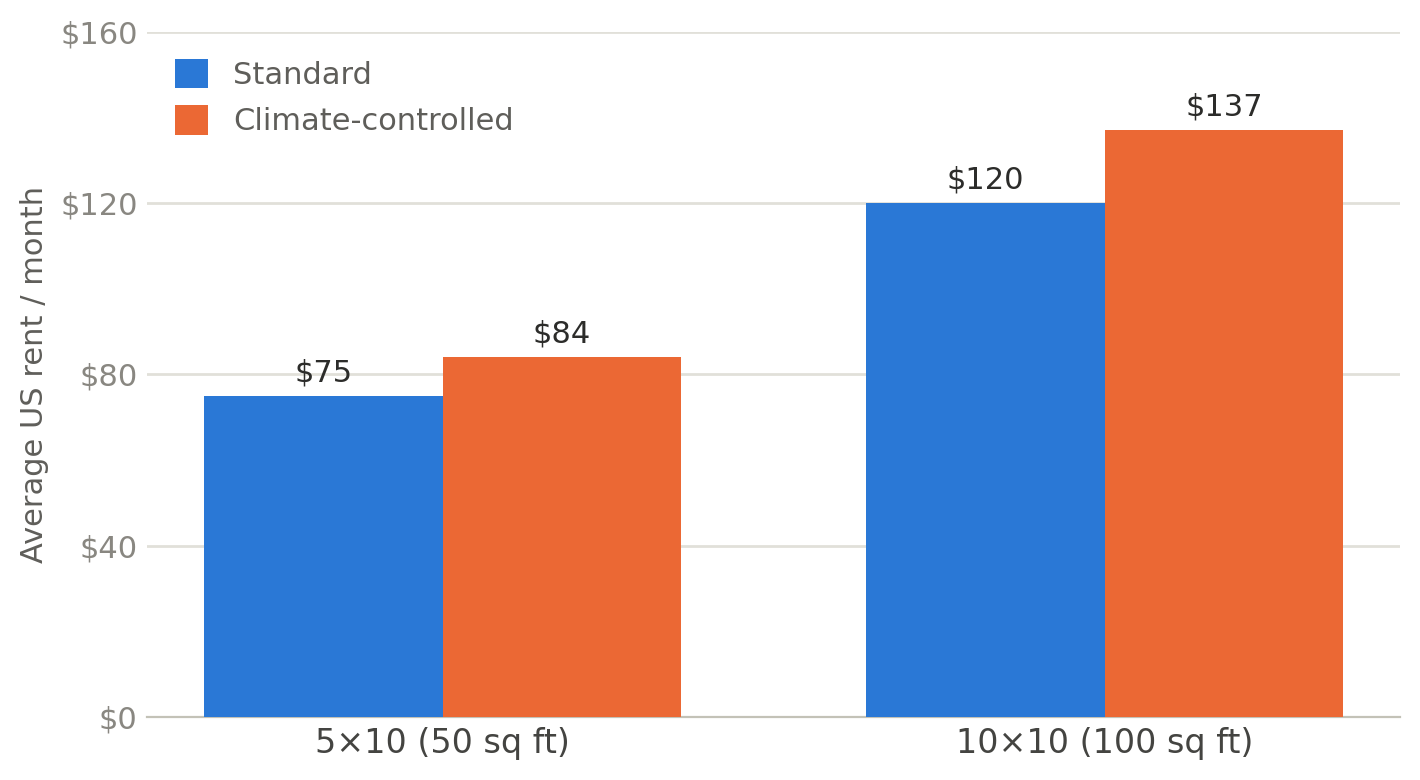
Rent tracks with size, location, and demand, and the price you see online may not be the full amount you pay. Based on 2026 industry data from storage analysts such as Neighbor and StorageCafe, national averages look like this:
| Unit size | Standard | Climate-controlled |
| 5×10 (50 sq ft) | ~$75/mo | ~$84/mo |
| 10×10 (100 sq ft) | ~$120/mo | ~$137/mo |
Location moves these figures a long way. A standard 10×10 might run about $73 a month in Oklahoma City, while the same space in a dense market like San Francisco can average over $300 a month. Treat the table as a national baseline and confirm current rates with facilities near you.
Beyond the base rent, four hidden factors change what you actually pay:
- The intro deal: Facilities routinely offer the first month for $1 or 50% off, then immediately hike it to the full rate. Always check what month two costs.
- The admin fee: Expect a mandatory, one-time setup charge of roughly $10 to $30 when you sign the lease.
- Insurance: Most facilities require coverage before handing over the keys and will happily sell you their own plan at the desk. Check your existing renters or homeowners policy first, as it often covers stored goods for less.
- Rate increases: Storage leases are almost always month-to-month, meaning your low starting price is not locked in forever. They can, and will, raise the rent after a few months.
Do You Need Climate Control for Your Stored Furniture?
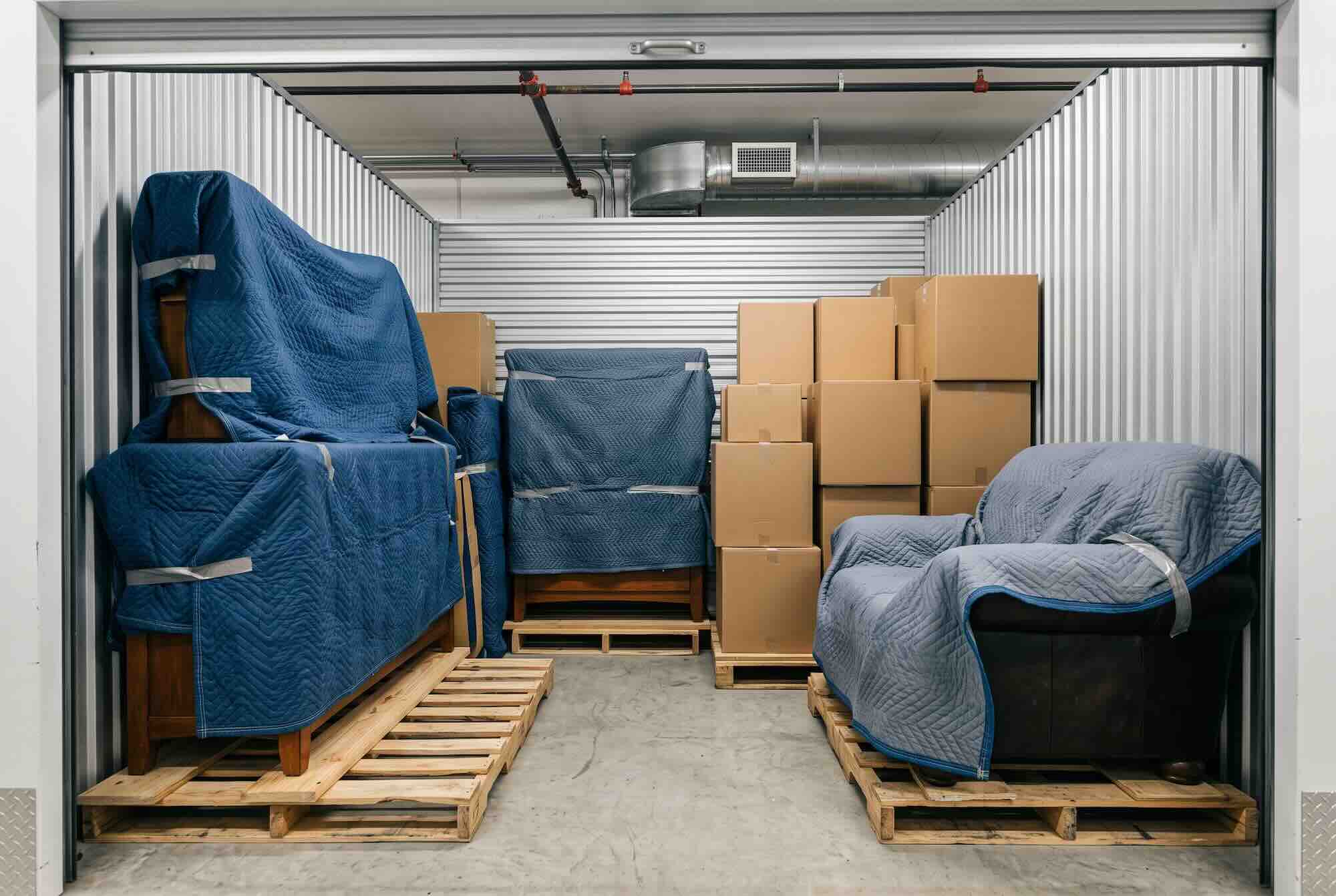
Climate control holds a unit in a steady temperature band and keeps humidity down, and whether that is worth 25% to 50% more depends on what you are storing and where. It can be useful for some belongings but unnecessary for others.
Pay for climate control when your items react to heat and humidity. Wood furniture cracks and warps as it swells and shrinks with humidity swings. Leather dries out and can grow mold. Electronics and appliances corrode when condensation forms. Instruments, artwork, photos, and documents are sensitive too.
The case gets stronger for long-term storage in a humid or extreme climate. A hot metal unit through a Gulf Coast summer can grow mold on a fabric sofa and buckle a wood dresser in a single season.
Skip it when your load is sturdy and your stay is short: metal shelving, plastic bins, dishes, tools, and outdoor gear in a mild, dry climate do fine in a standard unit.
The middle case is a mixed one-bedroom stored a few months in a moderate climate, which usually gets by without climate control if you cover the wood pieces and keep everything off the concrete floor on boards or pallets. Weigh the yearly premium against the replacement cost of your most sensitive item, and the call is usually clear.
FAQ
How long can you keep furniture in storage?
There is no fixed time limit at most facilities, so you can store furniture as long as you keep paying and the unit suits the items. For anything past a few months, climate control plus good packing, covers on wood and fabric and everything raised off the floor, is what keeps furniture from warping, molding, or drawing pests.
Do you need insurance for a storage unit?
Most facilities require some coverage and will sell a plan at move-in, but your renters or homeowners policy may already extend to stored belongings, often for less. Check that first, and match any coverage you buy to what your load is worth.
Should you get a drive-up or indoor unit for a 1 bedroom?
Drive-up units let you back a truck to the door, which makes loading a full one-bedroom faster and usually costs less, but they see more temperature swings. Indoor units mean a hallway and sometimes an elevator, slower to load but more secure and more often climate-controlled. The right pick depends on how heavy your load is and how often you plan to visit, so weigh convenience against security and cost.
How far in advance should you reserve a storage unit?
In most months a week or two of lead time is plenty, though summer moving season fills units faster and can push prices higher, so reserve sooner if you are moving then. Many facilities let you cancel a reservation at no charge, which makes booking early low-risk, and it is worth asking whether a ground-floor unit is available to make move-in day easier.
Is it cheaper to store or sell your furniture when moving?
It depends on the value and how long you will store it, which also decides what size storage unit for a 1 bedroom apartment you would pay for. Storing pays off for quality pieces or a short gap; for cheap or bulky furniture, several months of rent can cost more than simply replacing it later.
Conclusion
For a full one-bedroom, a 10×10 is the safe pick; for a partial or downsized load, a 5×10 will do, and both stretch further with disassembly and vertical stacking. What size storage unit for a 1 bedroom apartment you need comes down to an honest inventory rather than the facility’s estimator. Add climate control for wood, leather, or electronics and for humid, long-term storage, then price the base rent with the intro deal, admin fee, and insurance and confirm rates locally. Home Tips Daily keeps breaking these moving and storage decisions down so yours gets easier.