

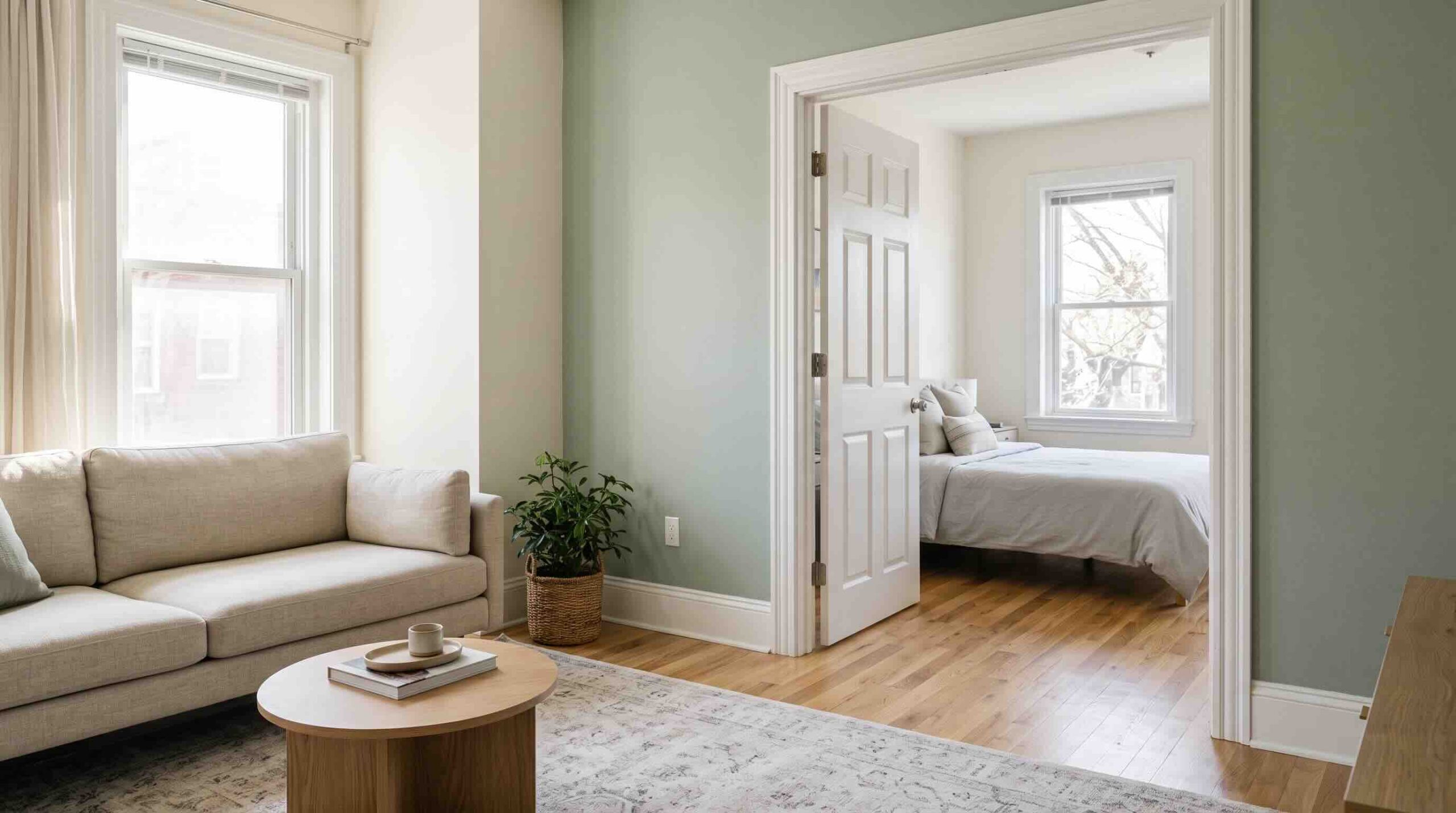
A one-bedroom apartment usually has more usable space than it feels like, and the right setup is what unlocks it. This guide to how to live in a one-bedroom apartment without feeling cramped covers the light, the furniture, the storage, and the habits that make a small floor plan feel open and calm. Most of it costs little, and none of it needs a renovation. Start with the quick visual wins, then build toward storage and zoning.
How to Make a One-Bedroom Apartment Feel Bigger
Much of how to live in a one-bedroom apartment comfortably is visual, coaxing the eye into reading the space as larger than it measures. These seven moves cost little and change how the whole place feels.
1. Light, consistent color palette. Keeping walls and furniture in a light, unified palette lets the eye travel without hard stops, which makes a room feel larger. A few related tones read as calmer than many contrasting ones, so save bold color for small accents.
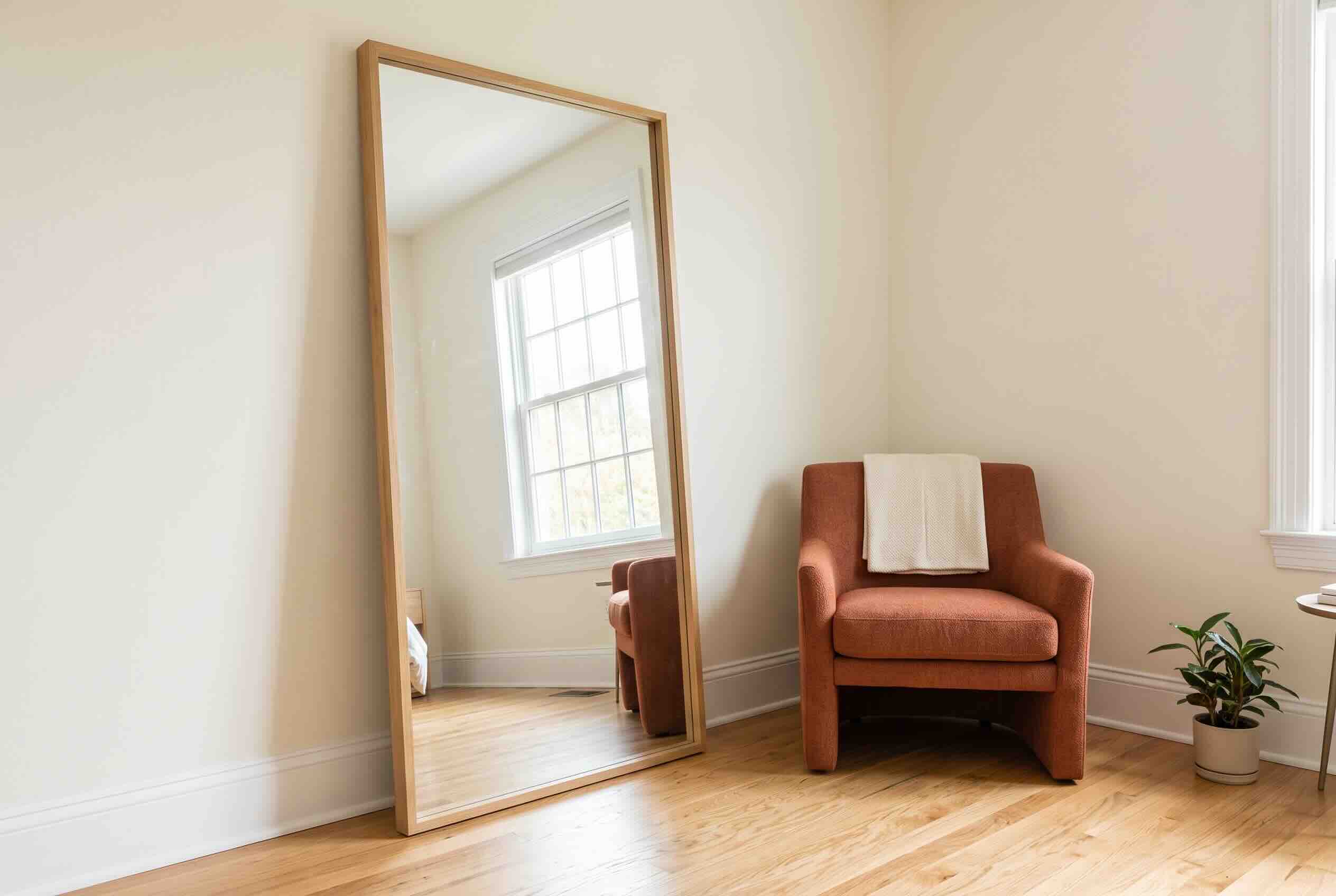
2. Mirrors to reflect light. A large mirror bounces daylight deeper into the room and doubles the sense of space. Place one across from or beside a window to catch the most light, and a leaning floor mirror or mirrored closet door needs no drilling.
3. Unobstructed windows for natural light. Natural light makes any space feel open, so keep the glass as clear as you can. Swap heavy drapes for sheers or a simple blind, and avoid stacking furniture in front of the window.
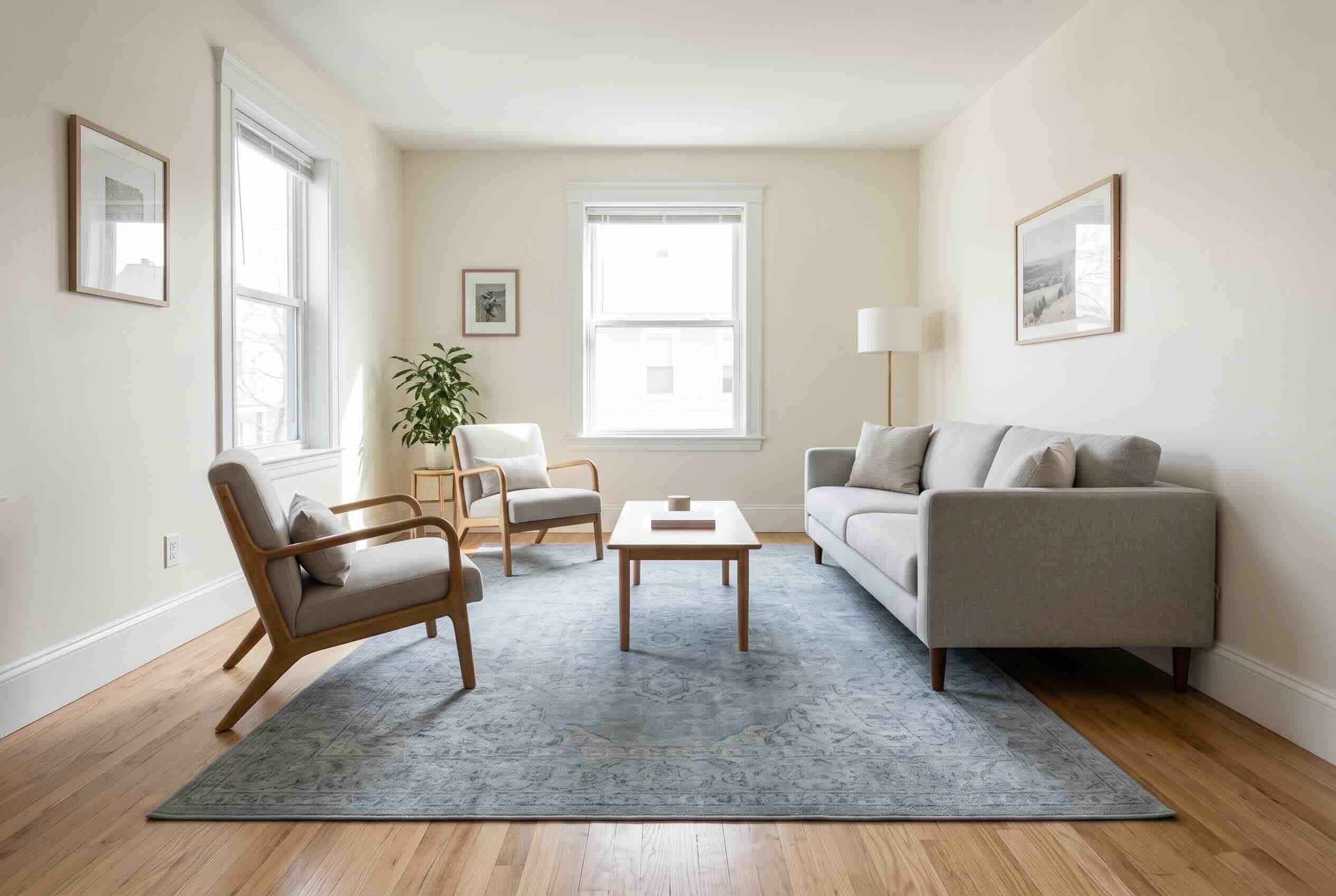
4. One large rug to ground the room. A single large rug that most of the furniture sits on reads as one intentional space, while several small rugs chop the floor into pieces. Size it so at least the front legs of the seating rest on it.
5. Multi-purpose furniture. Multi-purpose pieces are central to how to live in a one-bedroom apartment, since each item earning two jobs saves floor space: a sofa bed for guests, a storage ottoman that hides clutter and seats people, a Murphy bed that frees the floor by day. Choose fewer, harder-working pieces over many single-use ones.
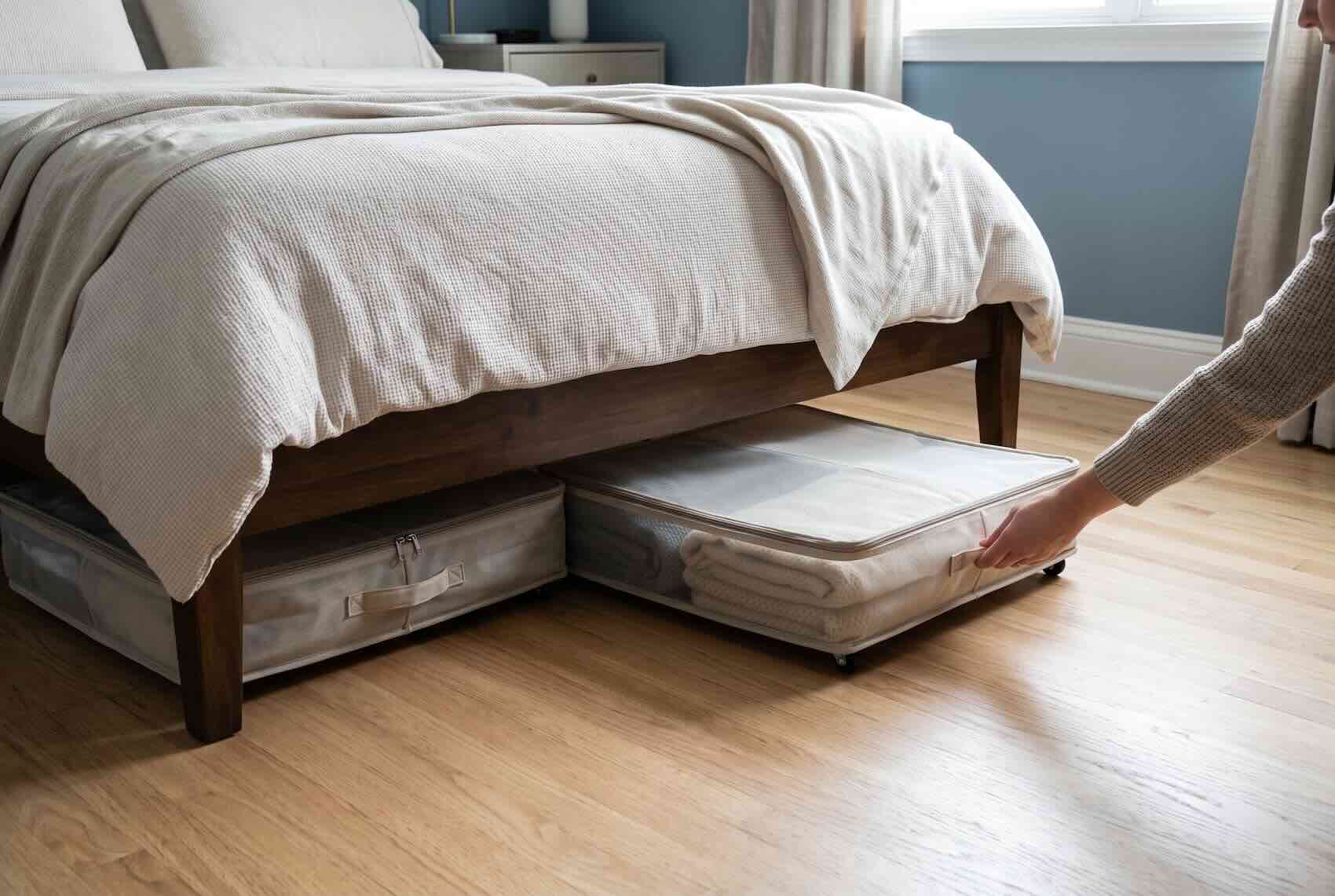
6. Under-bed and vertical storage. The space under the bed and the height of the walls are the two most wasted areas in a small apartment. Under-bed bins add hidden drawers, and tall shelving draws the eye up while storing more, which keeps the floor clear.
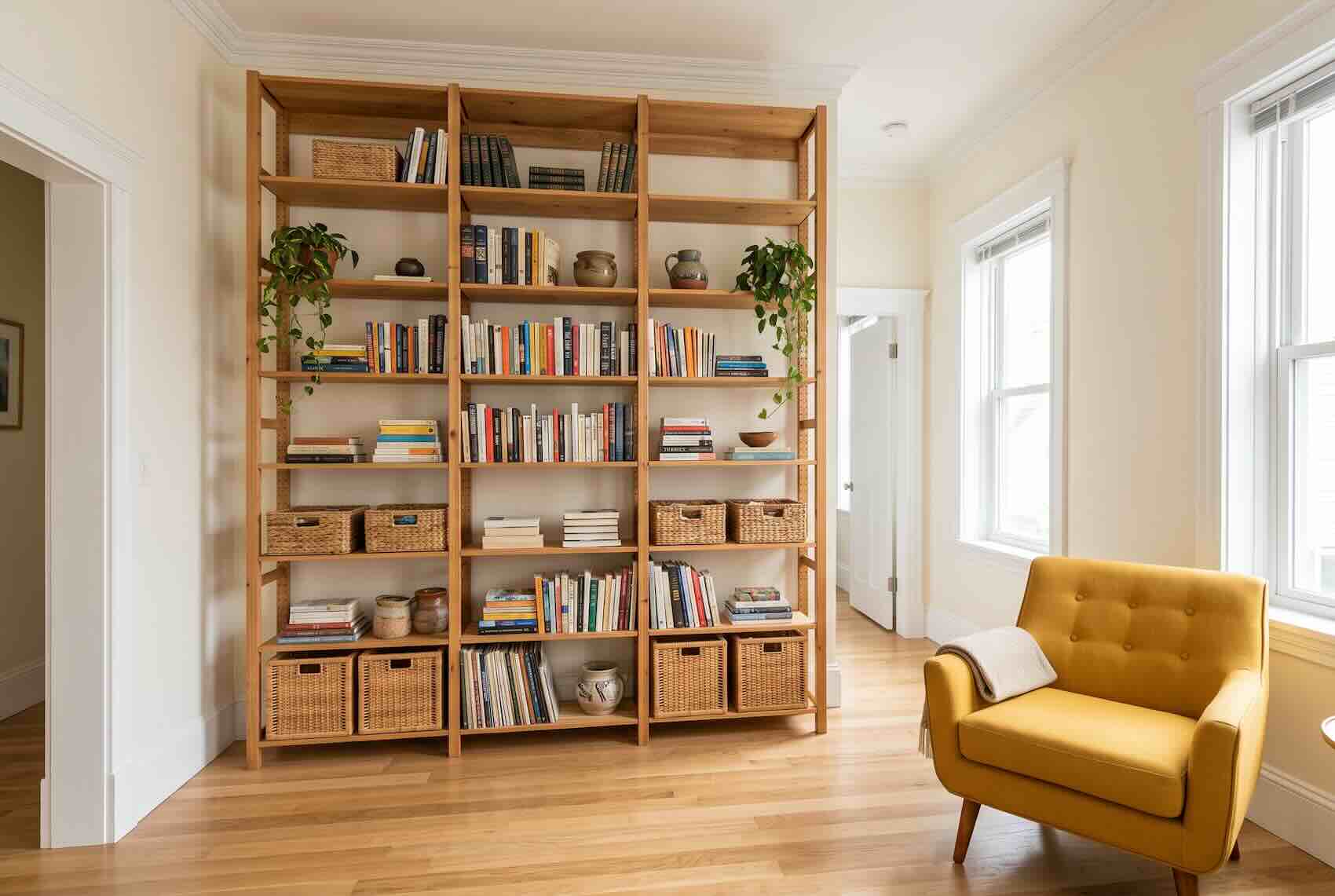
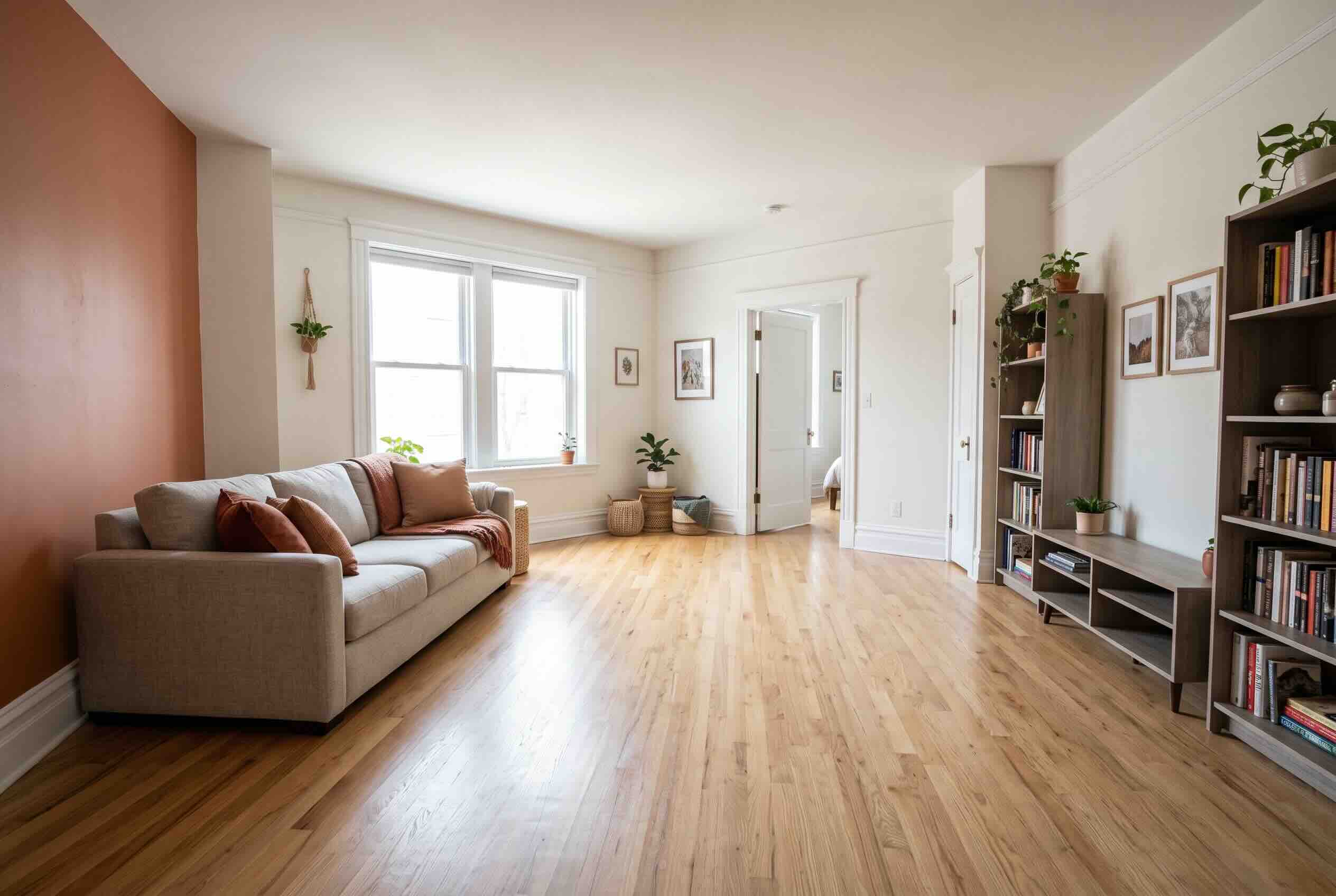
7. Furniture against the walls. Pushing larger pieces to the perimeter opens a clear path through the middle, which the eye reads as more space. Leave the center of the floor visible, and float only what needs to divide a zone.
>>> See more: 14 Genius Ways to Turn Living Room Into Bedroom Fast
Organize and Declutter to Live Clutter-Free
The fastest way to shrink a small home is to fill it, so staying ahead of clutter matters as much as any layout trick. Two habits keep a compact space from closing in.
8. Declutter on a regular schedule. A small apartment shows clutter fast, so a steady habit beats the occasional big purge. Set a regular pass, monthly or seasonal, to clear what you no longer use, because the less you own, the more room you have to live.
9. Give everything a home with smart storage. Clutter is mostly homeless stuff, so assign every item a spot and it stops piling on surfaces. Baskets, drawer dividers, and labeled bins turn a jumble into a system where tidying takes minutes.
Create Zones So One Space Does Many Jobs
A big part of maximizing a one-bedroom apartment is making one main room do several jobs without demanding a full redesign each time. Zoning brilliantly lets the exact same space lounge, dine, work, and host.
10. Zone the living room for lounging, dining, and guests. Use a rug, furniture placement, and lighting to mark out separate areas within the one room. A console behind the sofa can back a dining spot, and a pair of chairs can turn out for guests, so clear zones make one room feel like several.
11. Carve out a work-from-home nook. A dedicated work spot, even a narrow desk in a corner or a fold-down surface, keeps work from swallowing the whole apartment. Facing it away from the bed or lounge helps you switch off, and good task lighting makes a small nook usable.
12. Divide with a curtain, shelf, or divider. When you need real separation, a ceiling curtain, an open shelf, or a folding screen splits a zone with no construction. This is the same toolkit behind splitting a bedroom into two or a living room into a bedroom setup, scaled to a corner, so keep it movable as your needs change.
Live Comfortably, Not Just Efficiently
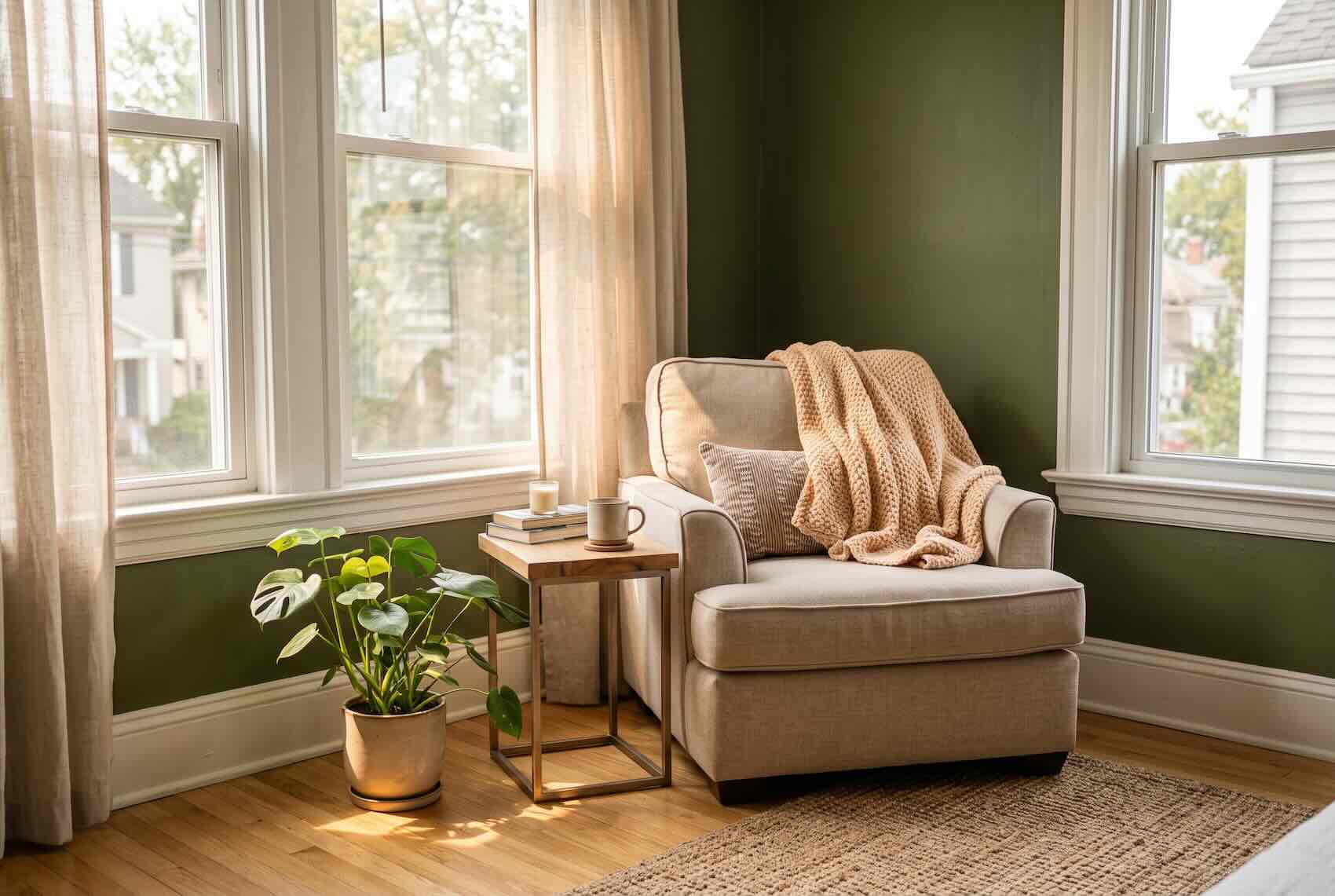
But how to live in a one-bedroom apartment is about more than fitting everything in; it is about feeling good in the space day to day.
- Separate work from rest. Even in one room, keep a line between where you work and where you unwind, so the apartment does not feel like one endless shift.
- Keep a light cleaning routine. Small does not have to mean messy, and a quick daily reset keeps a compact space from tipping into cluttered.
- Lean on building amenities. A shared gym, lounge, or rooftop means you do not have to cram every function into your unit, so treat them as extensions of your home.
- Protect a calm corner. Reserve one spot, a chair by the window or a reading nook, purely for relaxing, and keep it clear of work and clutter.
- Get outside regularly. A small home feels bigger when it is not your whole world, so let parks, cafes, and walks act as extra rooms.
How to Live in a One-Bedroom Apartment as a Couple
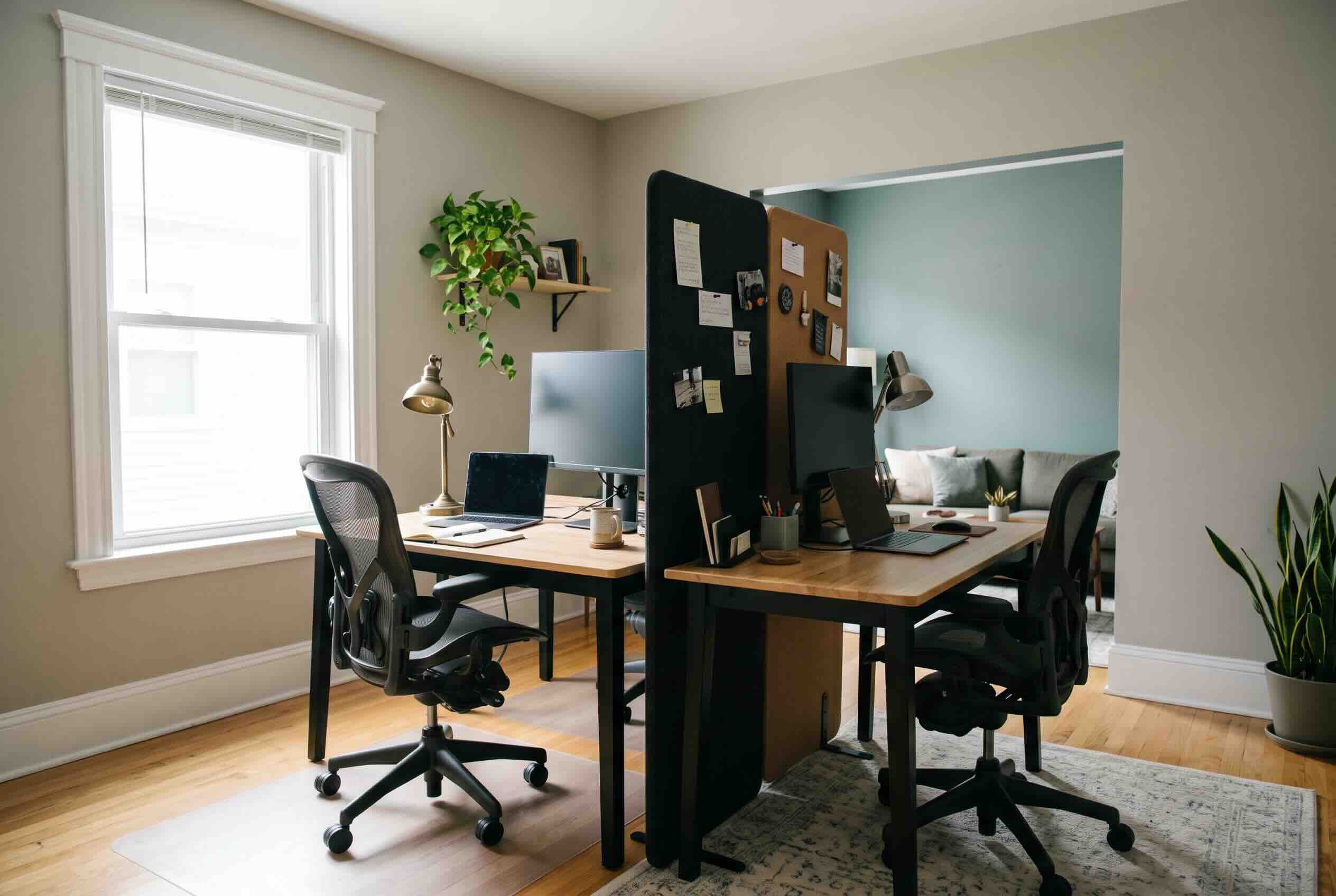
Sharing a one-bedroom takes more planning, because two people and one main room means privacy has to be designed in rather than assumed. Give each person a corner that is theirs, even just a chair and a shelf, so neither feels they have nowhere to retreat.
If you both work from home, stagger schedules or set desks facing away from each other, and lean on headphones and a divider to hold focus. Share storage by dividing it clearly instead of merging everything, which heads off the low-grade friction of losing track of your own things.
Renter Tips for a One-Bedroom Apartment
Renters have their own version of how to live in a one-bedroom apartment, since the best fixes avoid drills, holes, and anything permanent. A few no-damage habits open up most of the same options an owner has.
- Use tension rods and removable hooks to hang curtains, dividers, and storage without holes.
- Choose freestanding shelving and wardrobes over anything mounted to the wall.
- Add reversible, no-damage helpers like peel-and-stick, over-door racks, and stick-on lighting.
- Meticulously document the entire unit exactly at move-in and actively confirm exactly what specific changes your strict lease allows, actively using a move-in checklist.
FAQ
What’s the average square footage of a one-bedroom apartment?
In the U.S., a one-bedroom commonly runs around 700 square feet, though it shifts by city and building age. Older and big-city units tend to be smaller, while newer suburban ones can be larger.
Is a one-bedroom apartment worth it over a studio?
Usually, if you can afford the difference, since the separate bedroom gives you a door to close and keeps sleep apart from living and hosting. A studio saves money and suits solo minimalists, but a one-bed offers privacy a studio cannot.
Can you have guests stay over in a one-bedroom apartment?
Yes, with the right setup. A sofa bed, a daybed, or an inflatable mattress in the living room turns it into a guest space for a night, and a divider adds privacy. Plan where they sleep before they arrive.
Can a family with a baby or kid live in a one-bedroom apartment?
Many do, especially with an infant, by fitting a crib or a small bed into the bedroom or a zoned corner. It gets tighter as a child grows and needs their own space, so it tends to work best as a temporary stage.
How do you make a one-bedroom apartment feel less lonely?
A big part of how to live in a one-bedroom apartment happily is keeping it connected to the world outside it: have people over, build a cozy spot you enjoy, and get out often so home is a base rather than a bubble. Plants, warm light, and a little background sound also make a small space feel alive.
Conclusion
A one-bedroom rarely needs more space; it needs the space it has to work harder. Once the light, the furniture, and the storage are pulling double duty, the walls stop feeling close, and the apartment starts to feel like a choice rather than a constraint. The rest is habits: keep clutter down, guard a corner for resting, and let the neighborhood be your extra rooms. That is how to live in a one-bedroom apartment without counting the square feet. Home Tips Daily has more small-space strategies whenever you want them.