

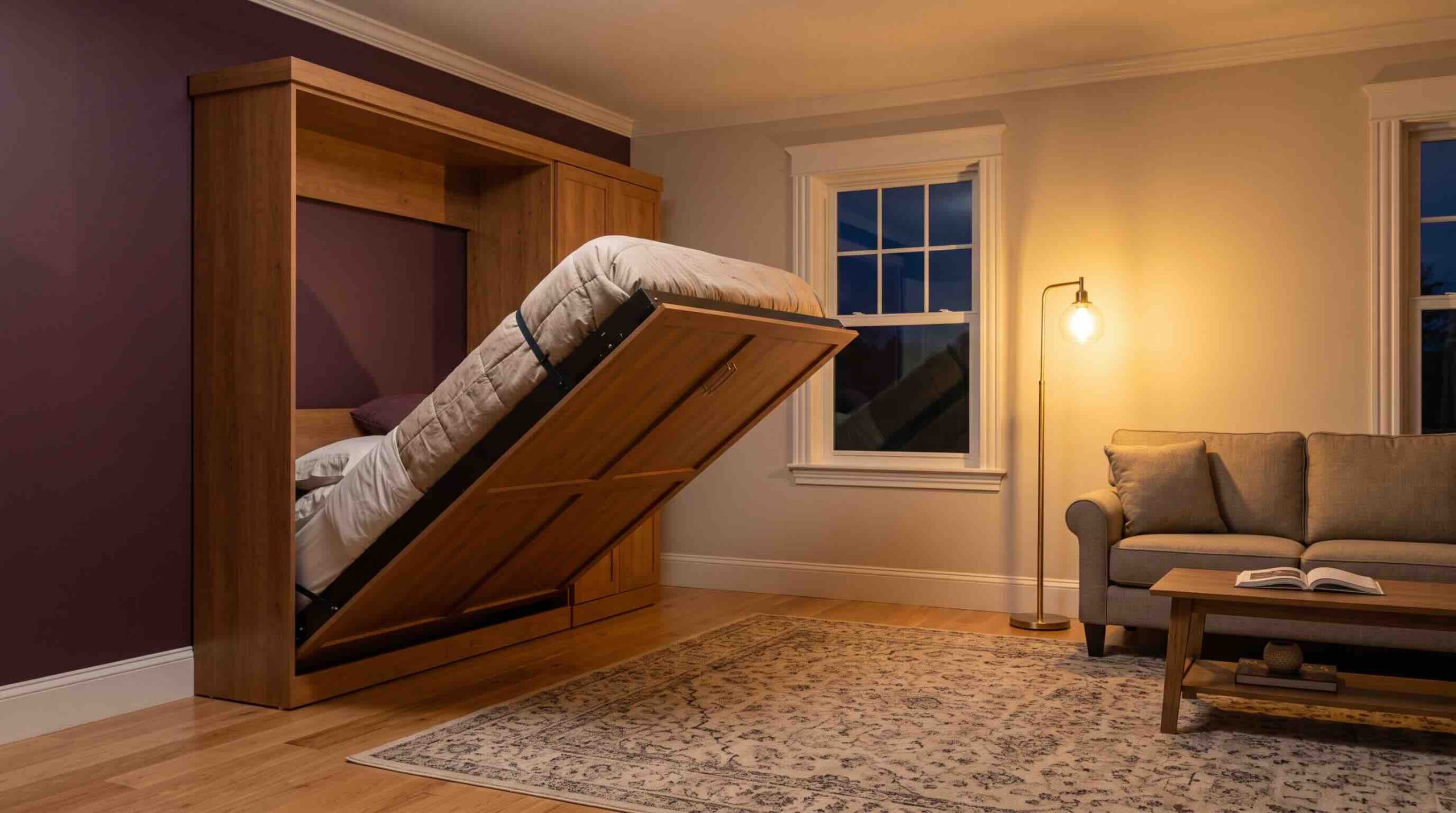
The ways to turn living room into bedroom creates two entirely different scenarios: a quick place to sleep by the weekend, or a permanent bedroom that legally counts at resale. The gap between them is large, because one requires a bed and a divider while the other demands a wall, a window, and a building permit. Whether you rent or own dictates the right approach. The 14 methods below range from completely renter-safe temporary setups to full, legal construction conversions.
Before You Turn Living Room Into Bedroom: Rent, Permits, and Egress
A few checks decide which of the methods below are even open to you.
- If you rent, keep it temporary. Anything attached to the structure needs the landlord’s permission, so favor freestanding beds and dividers, and confirm the rules first, which is one of the questions to ask before signing a lease.
- If you own and want a legal bedroom, plan for egress. A room usually cannot count as a bedroom without an egress window and code-compliant exits, and requirements vary by area, so check local codes before you build.
- Measure and sketch first. Map the room, the window, and the walkways on paper so you know what fits and where the bed can go without blocking light or the path through the space.
Beds That Turn Living Room Into Bedroom
The bed is the heart of any plan to turn living room into bedroom, and the best one disappears or does double duty when you are not sleeping. These span budget futons to invested built-ins, so match the price to how permanent the setup needs to be.
1. Sofa bed. A sofa bed is the most common way to turn living room into bedroom, working as seating by day and a bed by night with no rearranging. Modern versions have better mattresses, though a thin fold-out is still a compromise for nightly sleep.
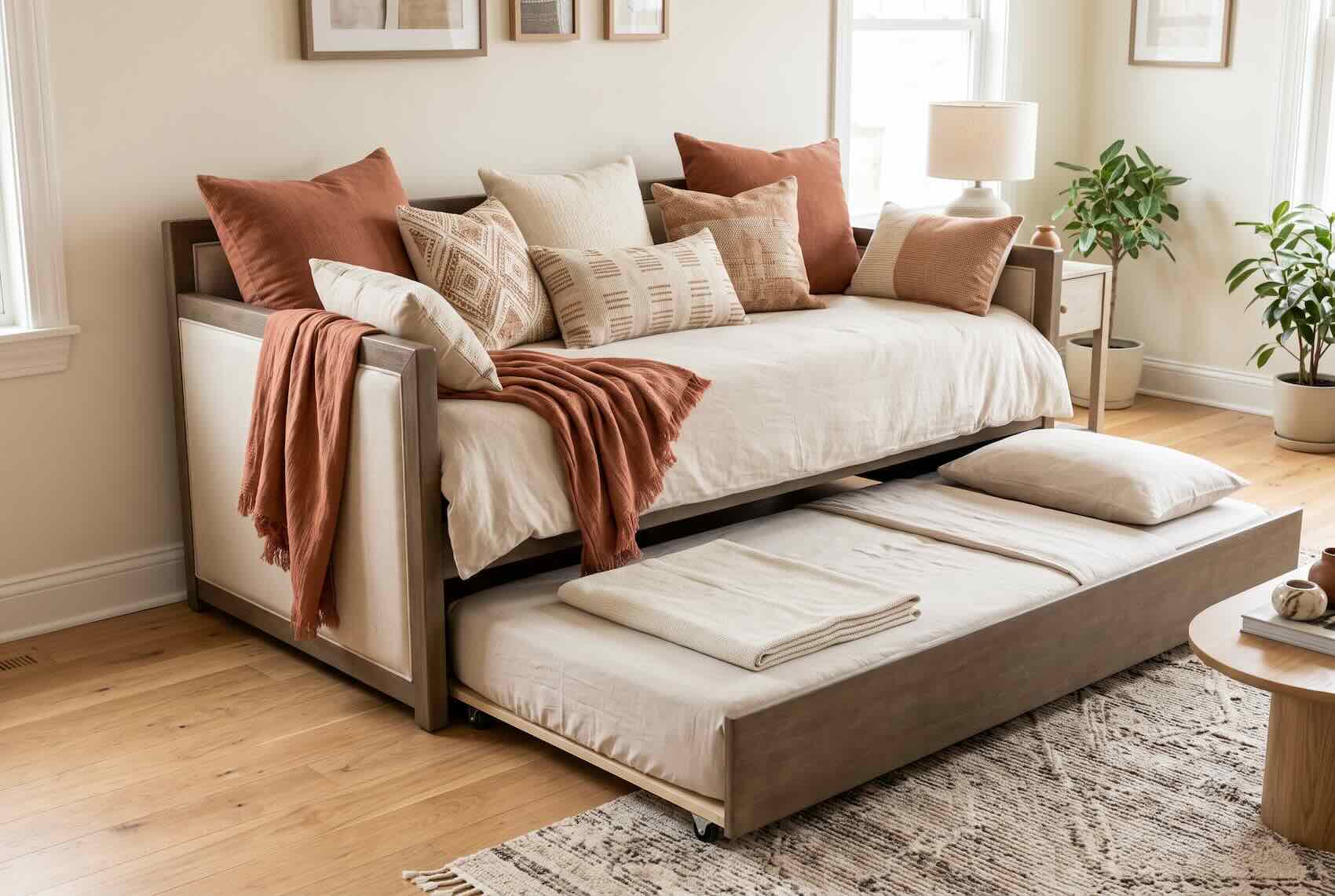
2. Daybed. A daybed reads as a sofa or bench by day and needs no unfolding, since it is already a bed. Many take a trundle underneath for a second sleeper, which makes them handy for guests.
>>> See more: 20+ Space-Saving Ideas for Splitting a Bedroom Into Two
3. Futon. A futon is the budget pick, folding flat for sleep and upright for sitting, and it is light and easy to move. The trade-off is firmness and lifespan, so treat it as a starter rather than a forever bed.
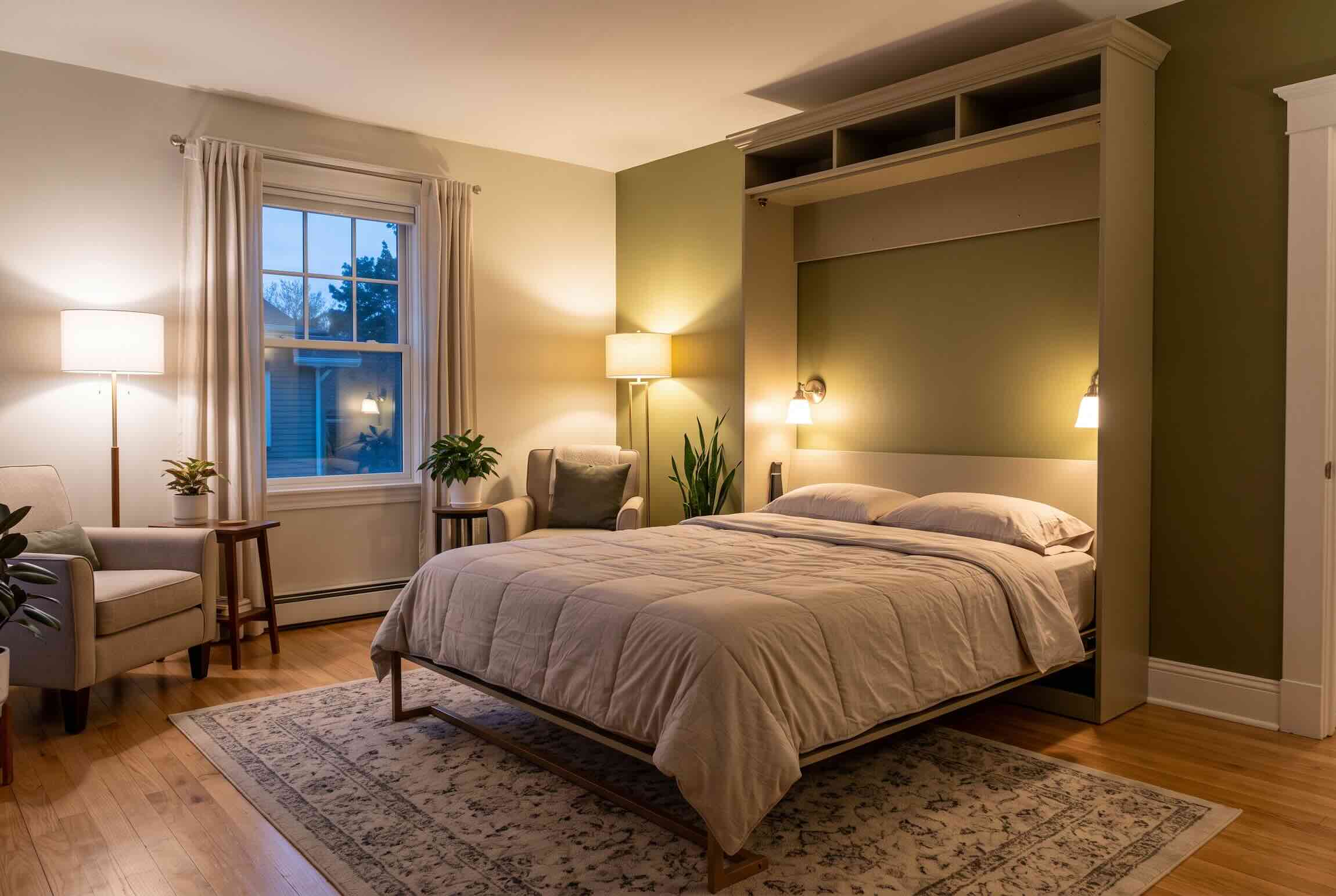
4. Murphy (wall) bed. A Murphy bed folds up into the wall or a cabinet, freeing the whole floor by day while giving you a full mattress by night. It is the best option for nightly sleep in a tight space, at a higher price and, for renters, only where mounting is allowed; freestanding cabinet versions avoid drilling.
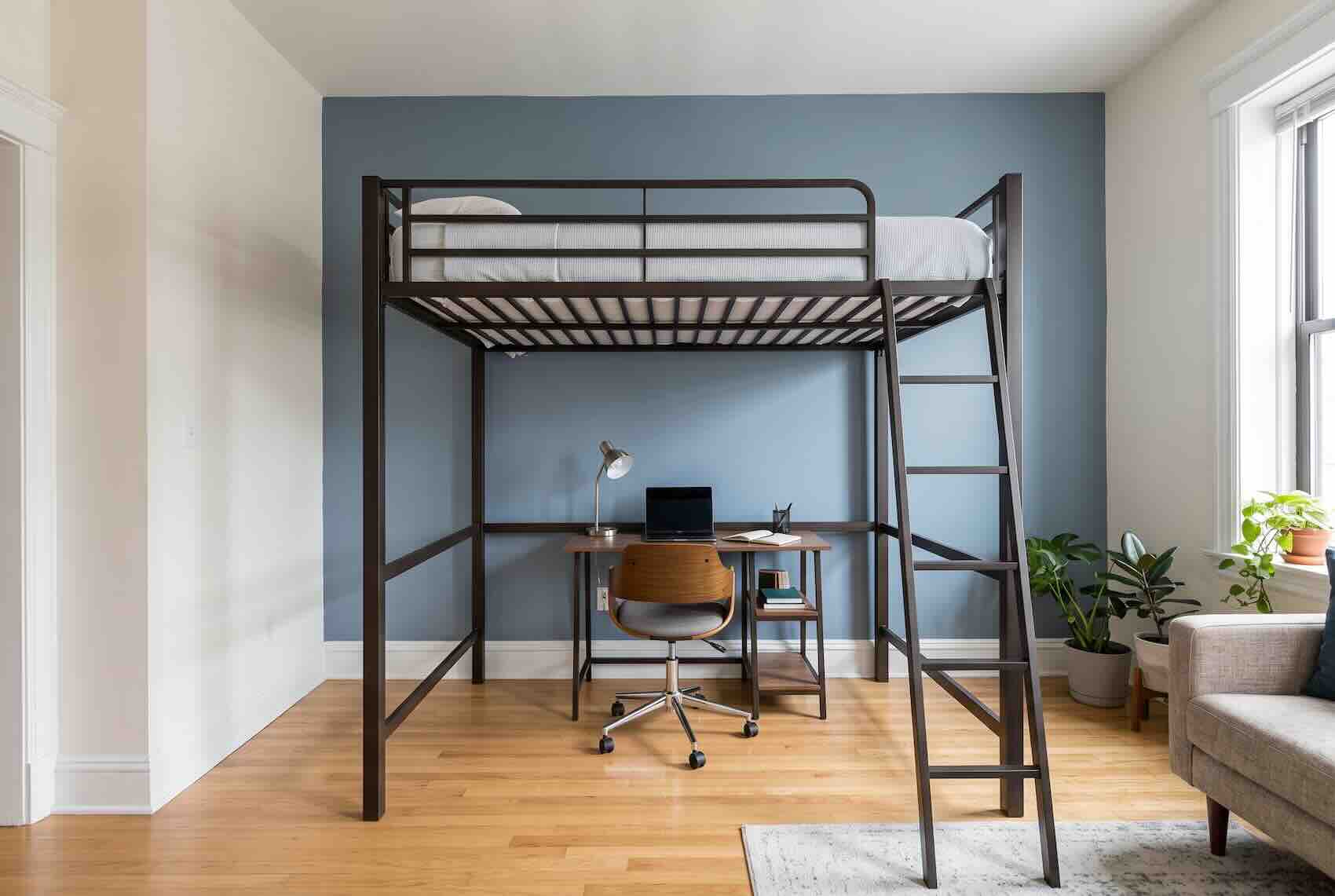
5. Loft bed. A loft bed lifts the mattress overhead and opens the space beneath for a desk, seating, or storage, reclaiming the one dimension a living room usually has to spare, which is height. Check your ceiling clearance and buy a sturdy frame.
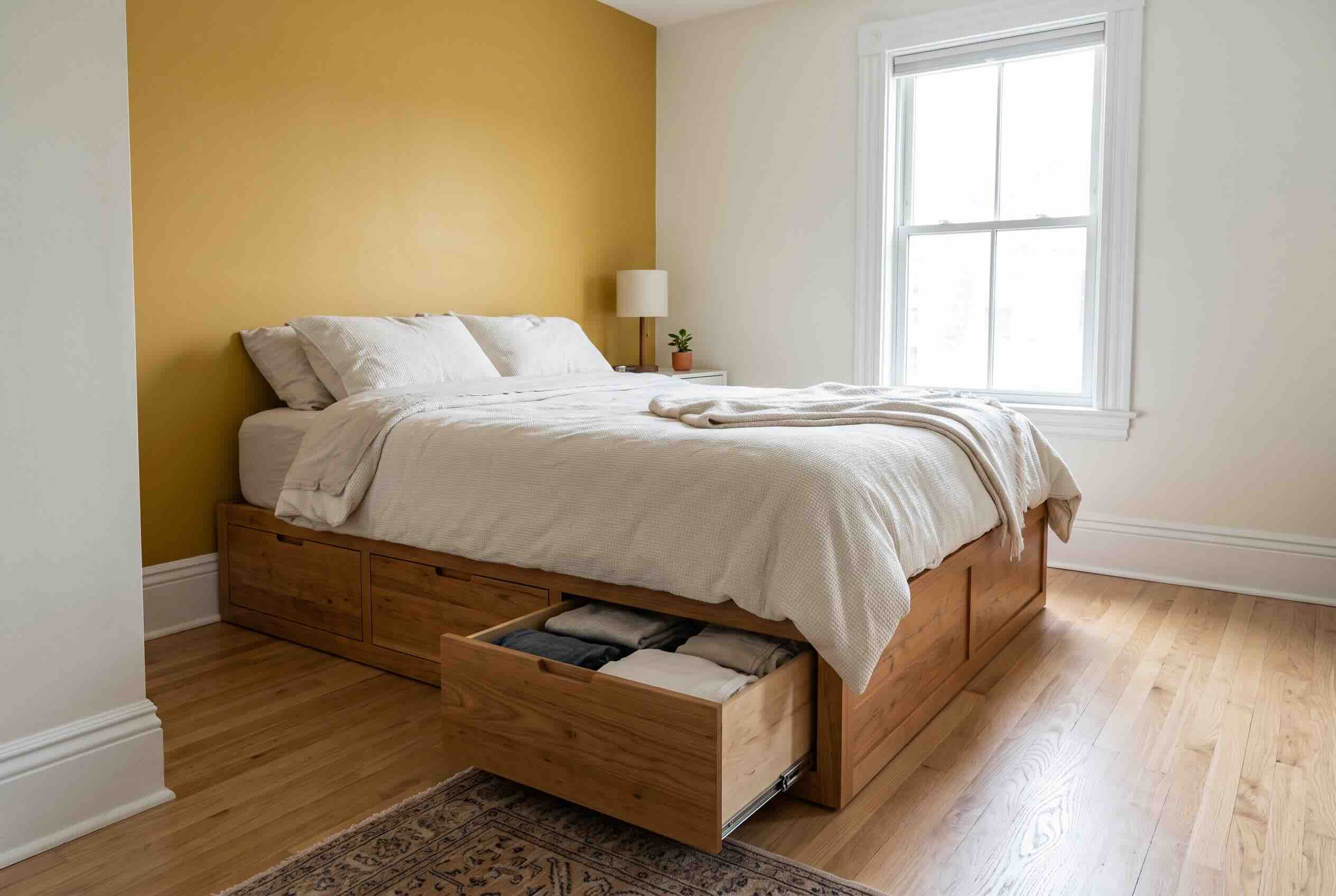
6. Captain’s bed with storage. A captain’s bed sits on a base full of drawers, adding a dresser’s worth of storage under the mattress. In a room with no closet, that built-in storage keeps clutter down and does double duty.
Divide the Room Without Building a Wall
These dividers give the sleeping area genuine privacy without any construction, deeply suiting renters and anyone who heavily wants the setup to be completely reversible.
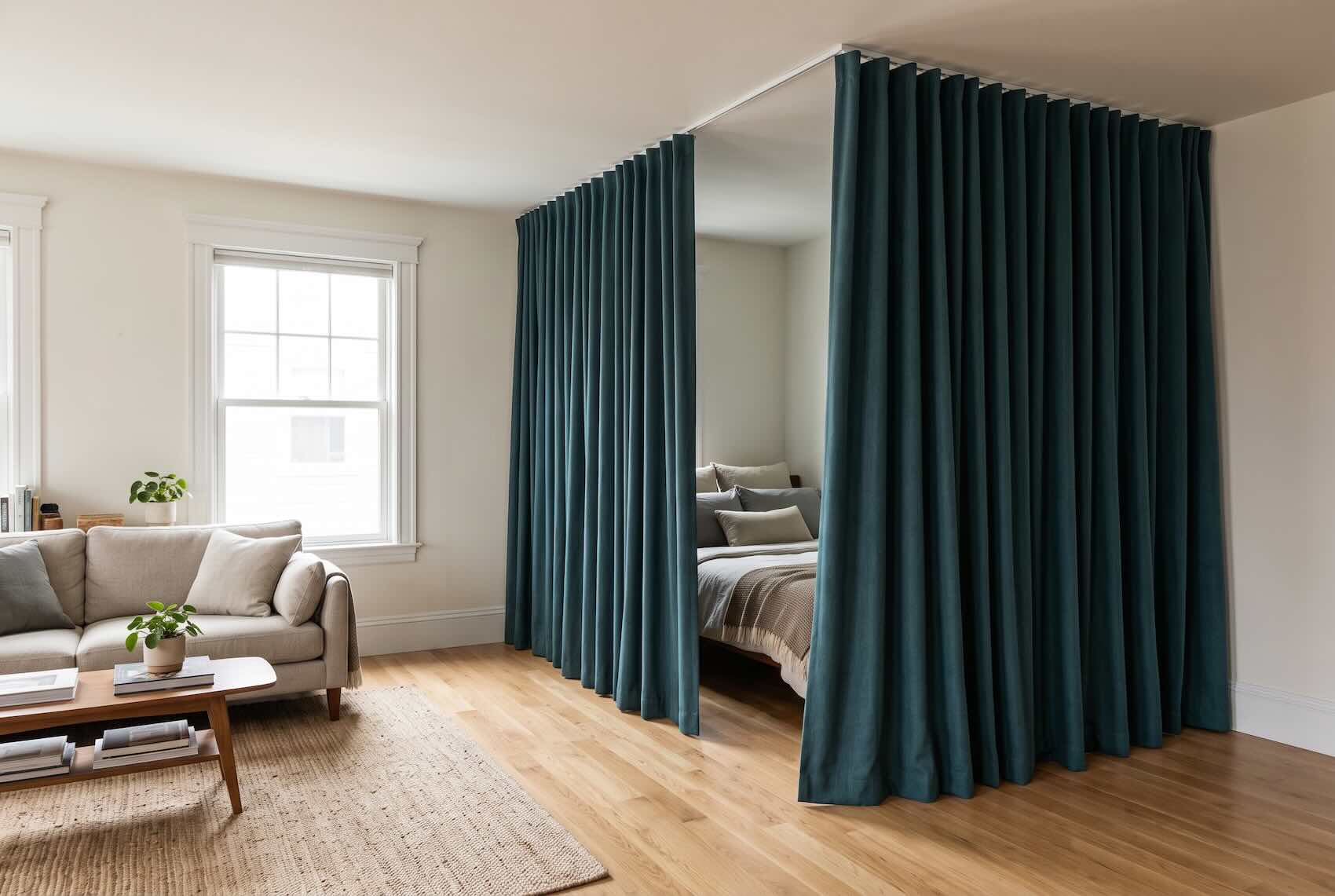
7. Curtains or drapery. A ceiling-track curtain draws across the wall off the sleeping zone, then opens to give the room back. Heavier, room-darkening fabric adds privacy and blocks light for better sleep, and it is one of the cheapest, most renter-friendly options.
8. Folding screen. A folding screen gives instant, movable separation you can angle and fold away, with nothing fixed to the wall or ceiling. Use it to shield the head of the bed from the rest of the room.
9. Bookshelf or pegboard divider. An open bookshelf splits the room while storing books and bins and letting light pass through the gaps. A pegboard panel does similar work and holds hooks and small shelves, so the divide earns its keep instead of just blocking the view.
10. Wardrobe as a divider. A tall wardrobe blocks sight and sound more fully than a screen, and it solves the closet problem a living room usually lacks. Set as a partition, it gives the bed a solid back and a place to hang clothes on the sleeping side.
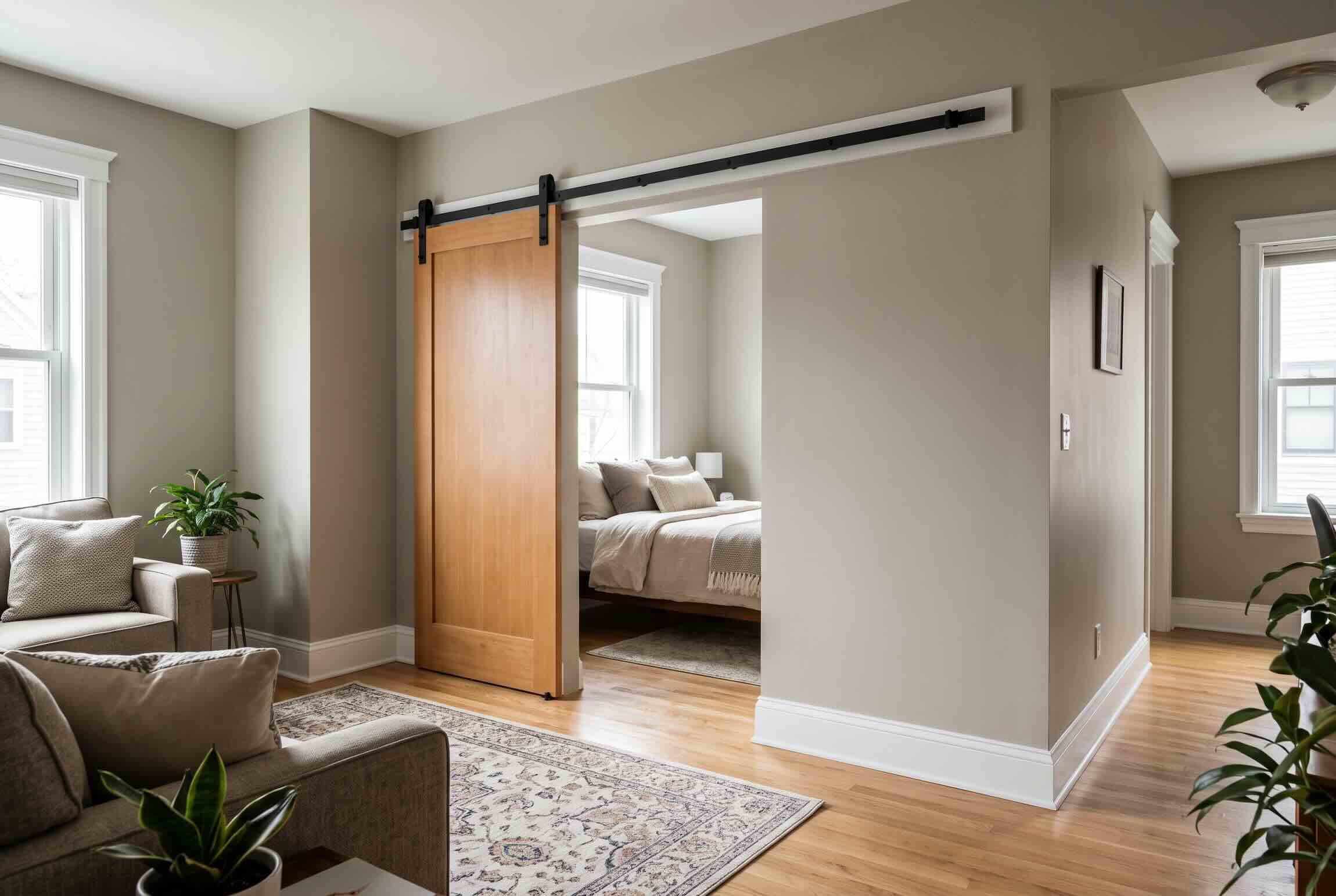
11. Sliding or barn door. A door on a track carves off the sleeping area without the swing space a hinged door needs, and it reads as a real architectural divide while staying lighter than a wall. Renters should confirm that mounting the track is allowed first.
>>> See more: Does a Studio Apartment Have a Bedroom? Here’s the Answer
14. Zone with a rug and layered lighting. Sometimes the divide is visual: a rug under the bed claims that area as its own, and separate lamps let one zone dim while the other stays bright. Layered lighting makes the sleeping corner feel like a room with no barrier at all, and it undoes in seconds.
Permanently Converting a Living Room to a Bedroom
For owners who want a highly lasting, private bedroom, the job shifts from simple styling to serious construction.
15. Build a stud wall or install French doors. A framed stud wall creates a permanent, private room, while French doors close off the space while keeping light flowing through the glass. This is owner territory and a genuine construction job, but it is what turns a zoned corner into a separate room.
16. Add an egress window to make it a legal bedroom. For the room to count as a bedroom at resale, most codes require an egress window large enough to climb out of in an emergency, plus a minimum size and sometimes a closet. Adding one is the costliest step, often cutting into an exterior wall, but it is the line between a room used as a bedroom and one that legally is a bedroom.
Does Converting a Living Room to a Bedroom Affect Home Value?
Whether the work to turn living room into bedroom affects your home’s value depends on how far you take it. A temporary setup with a sofa bed and a divider has no effect on your home’s value, because nothing about the house itself changes. A permanent, well-built conversion that adds a legitimate bedroom can raise value, though it hinges on the local market and on what you give up by losing a living room. The catch is legality: a converted room without an egress window generally cannot be counted or advertised as a bedroom when you sell, no matter how you use it day to day.
FAQ
How do you turn a living room into bedroom for guests only?
Lean on furniture that converts, like a sofa bed or a daybed with a trundle, plus a folding screen you set up when guests arrive and store the rest of the time. The goal is a comfortable night’s sleep without permanently giving up the room, so nothing needs to be built or attached.
What’s the best bed for a living room bedroom?
For nightly sleep in a shared space, a Murphy bed or a quality sofa bed wins, since both give you a real mattress and hand back the floor by day. For guests only, a daybed or futon is simpler and cheaper. Match the bed to how often someone actually sleeps on it.
Can you turn a living room into a bedroom without a closet?
Yes, and many living rooms have no closet to begin with. A wardrobe, an armoire, or a captain’s bed with drawers replaces the missing storage, and a wardrobe can double as a room divider. Note that at resale, a missing closet and egress window can keep the room from counting as a legal bedroom.
Conclusion
The final decision to turn living room into bedroom comes down to exactly how long you need the sleeping space to last. If the answer is just this weekend, a sofa bed and a simple movable divider successfully get you there with nothing to painfully undo at move-out. If it is a permanent change, the stud wall, the solid doors, and the heavily required egress window firmly earn their high cost and make the room legally count at resale.
Either way, spend your effort on the exact parts you physically feel every single night: a mattress truly worth sleeping on, a robust way to heavily block the light, and ample storage so the room does not instantly turn into a messy closet. For more space-stretching ideas, Home Tips Daily has more space-stretching ideas whenever your next room needs one.