

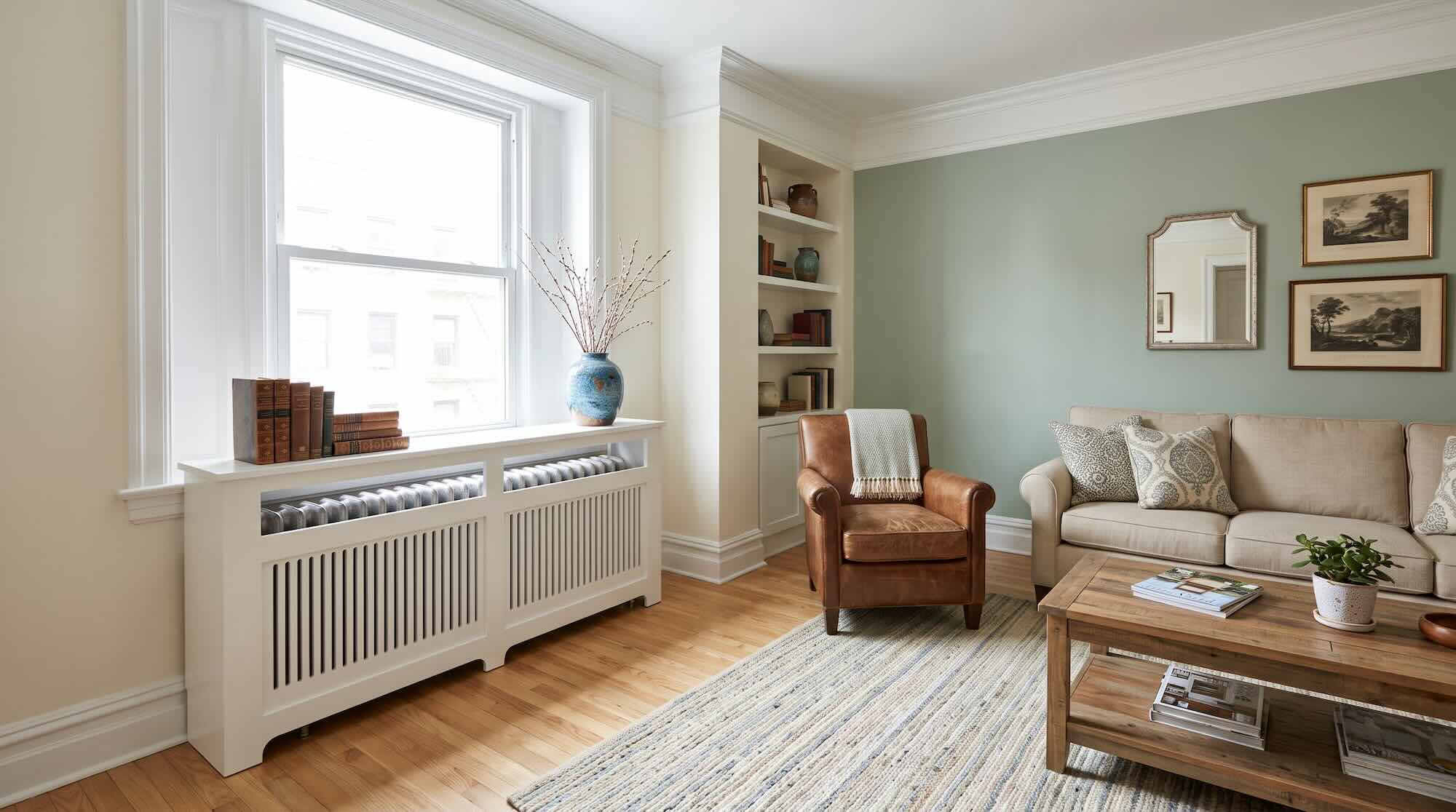
A clunky, paint-chipped radiator can pull focus in an otherwise nice room, but you do not have to stare at it. There is really only one rule to how to hide an ugly radiator, and every method worth trying obeys it: disguise the metal without trapping the heat or blocking the valves. Once you get that right, your options open up, ranging from a coat of wall-matched paint to a custom built-in bench. This guide covers eight effective methods, plus the vital safety checks that keep a cover from becoming a dangerous heat problem.
What to Check Before You Cover a Radiator Safely
Every method for how to hide an ugly radiator shares one prerequisite: the radiator still has to do its job. Run through these checks before you buy or build anything, because a cover that looks great and starves the room of heat is not a win.
- Keep the top vent clear. Hot air rises off a radiator, so leave the top open or slatted, since a solid lid traps the heat you are paying for.
- Leave room for convection. Give the front and sides a few inches of breathing space so air can circulate rather than stall against a panel.
- Use heat-tolerant materials. Whatever sits on or around the radiator, from paint to a shelf, should handle sustained warmth without warping, yellowing, or off-gassing.
- Keep the valves reachable. You still need to adjust the thermostatic valve (TRV) and reach the bleed valve, so do not seal them behind a fixed panel.
How to Hide an Ugly Radiator: 8 Ways That Work
With the safety basics covered, here are eight ways to disguise a radiator, running from the cheapest paint job to a full replacement. Most are renter-friendly, and the last couple are for owners or a planned renovation.
Paint It to Blend Into the Wall
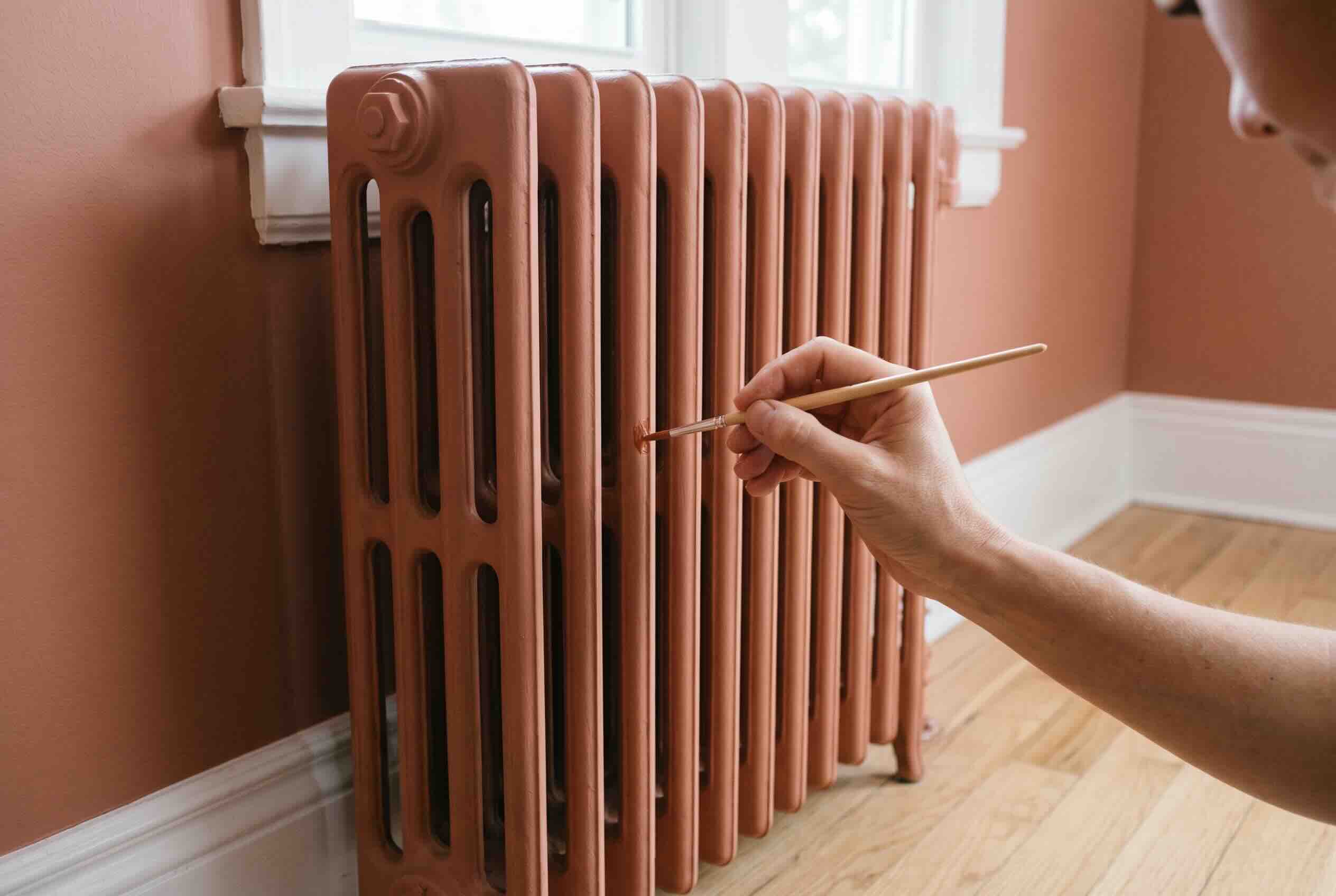
The cheapest fix is to make the radiator recede into the wall behind it, a trick decorators call color-drenching. Painting the metal the exact same color as the wall stops the eye from catching on it in the first place. Follow this specific order for a finish that lasts:
- Prep the surface. Clean off dust and grease, sand any flaking spots, and let it fully dry so the paint adheres instead of peeling.
- Prime any bare metal. A metal primer gives the color something to grip and keeps rust from bleeding through later.
- Paint with a heat-tolerant finish. Use a paint rated for radiators or metal, in an eggshell or satin sheen matched to the wall, and work while the radiator is cool and switched off.
- Let it cure before heating. Give it the full cure time on the can before turning the heat back on, so the finish hardens rather than softening.
Fit a Radiator Cover for a Built-In Look
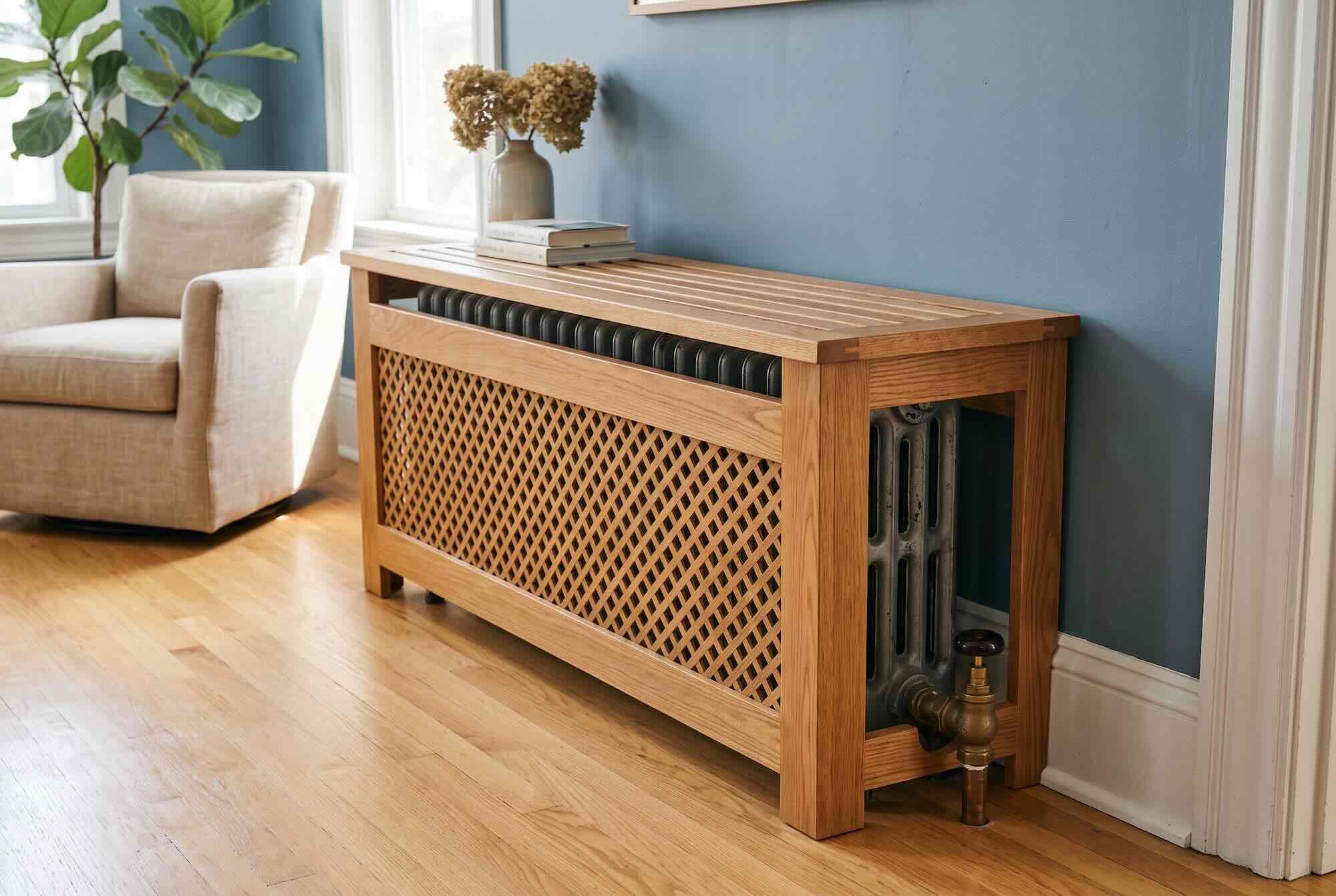
A radiator cover is the tidiest option, hiding the fins and pipes behind a panel and handing you a shelf on top. The catch is airflow, so choose one with a vented or grille front and an open or slatted top rather than a solid box. Measure carefully, including the width of the valves that stick out on the sides, plus a little clearance all around. A well-chosen cover turns an eyesore into a console, while a sealed one turns it into a heat trap.
Add a Shelf or Console Surface Above It
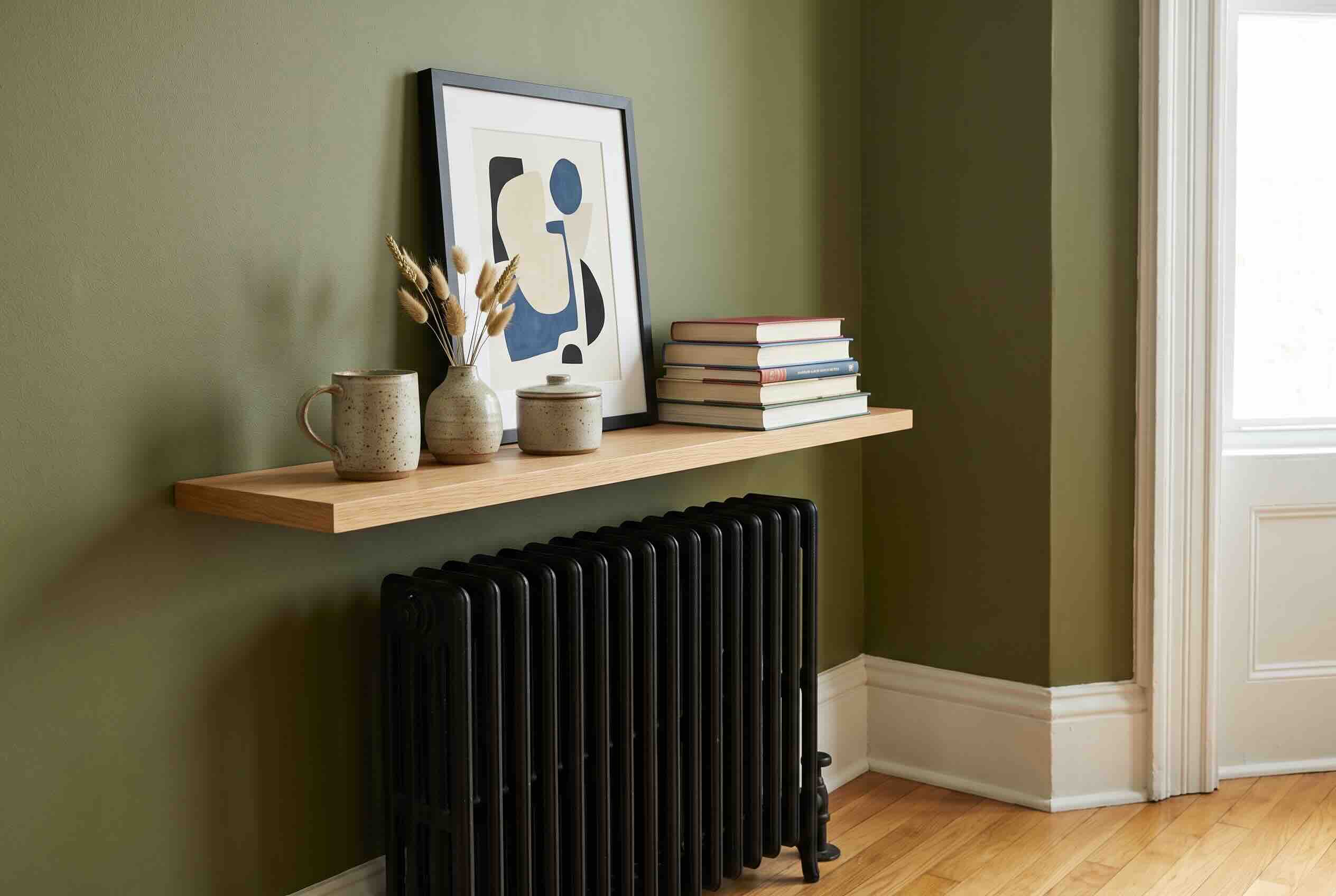
A slim shelf or a wall-mounted ledge above the radiator draws the eye up to a styled vignette instead of down to the metal. Mount it high enough to clear the rising heat, and use a heat-safe material that will not warp over a warm radiator. Style this shelf with sturdy objects like ceramics, books, or a framed print. Skip candles, electronics, and fresh flowers directly above it, since rising heat melts, overheats, or wilts them.
Build a Window Seat or Bench Over a Low Radiator
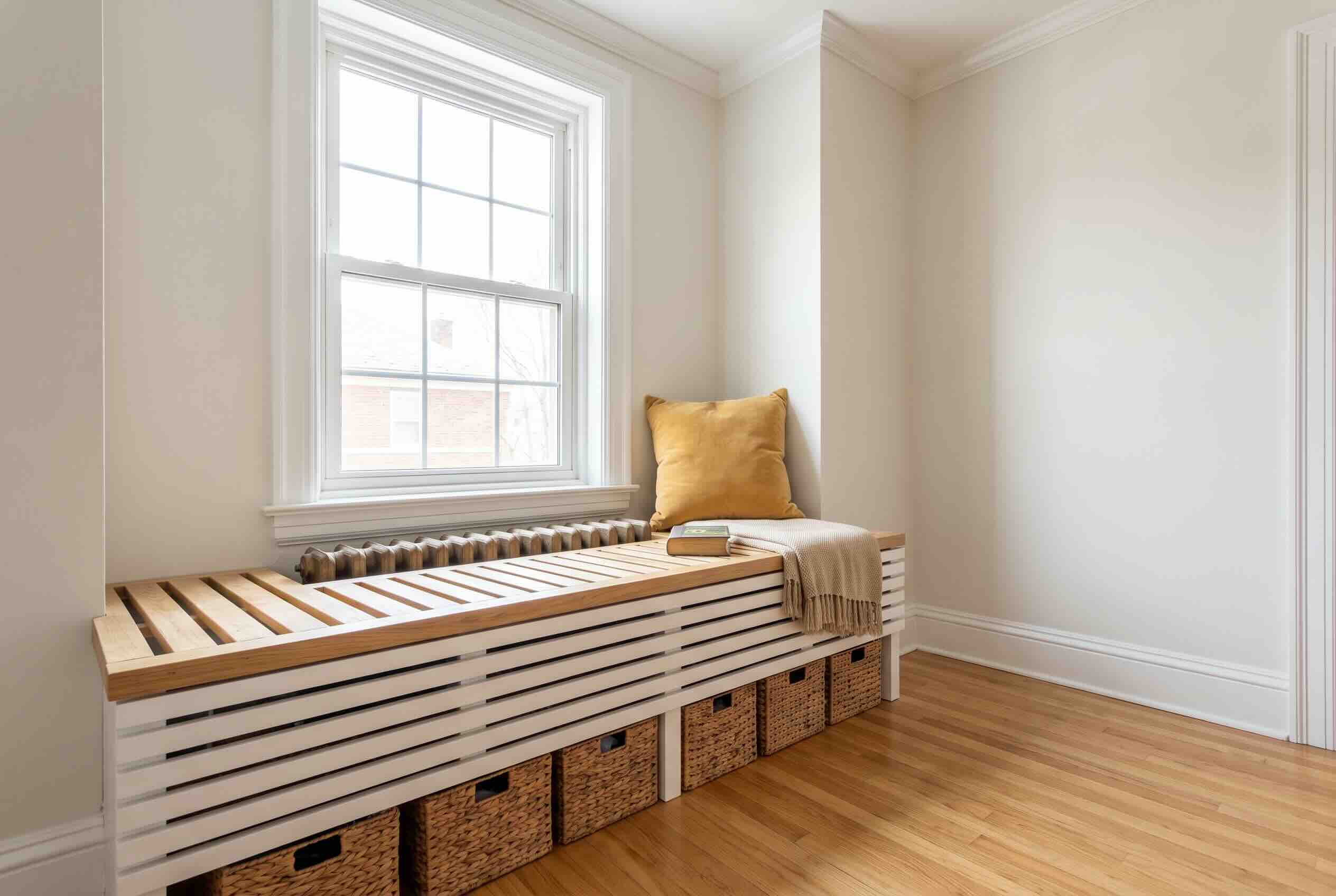
A low radiator under a window or in a bay is a candidate for a built-in bench that adds seating while hiding the unit. The rule is the same as any cover: a ventilated front panel and a slatted or open top so heat still reaches the room. A cushion on top turns it into a reading nook, and the space below stays useful for storage or baskets. This one is more of a project, but it solves the radiator and adds function in a single move.
Distract the Eye With Art, Mirrors, or Plants
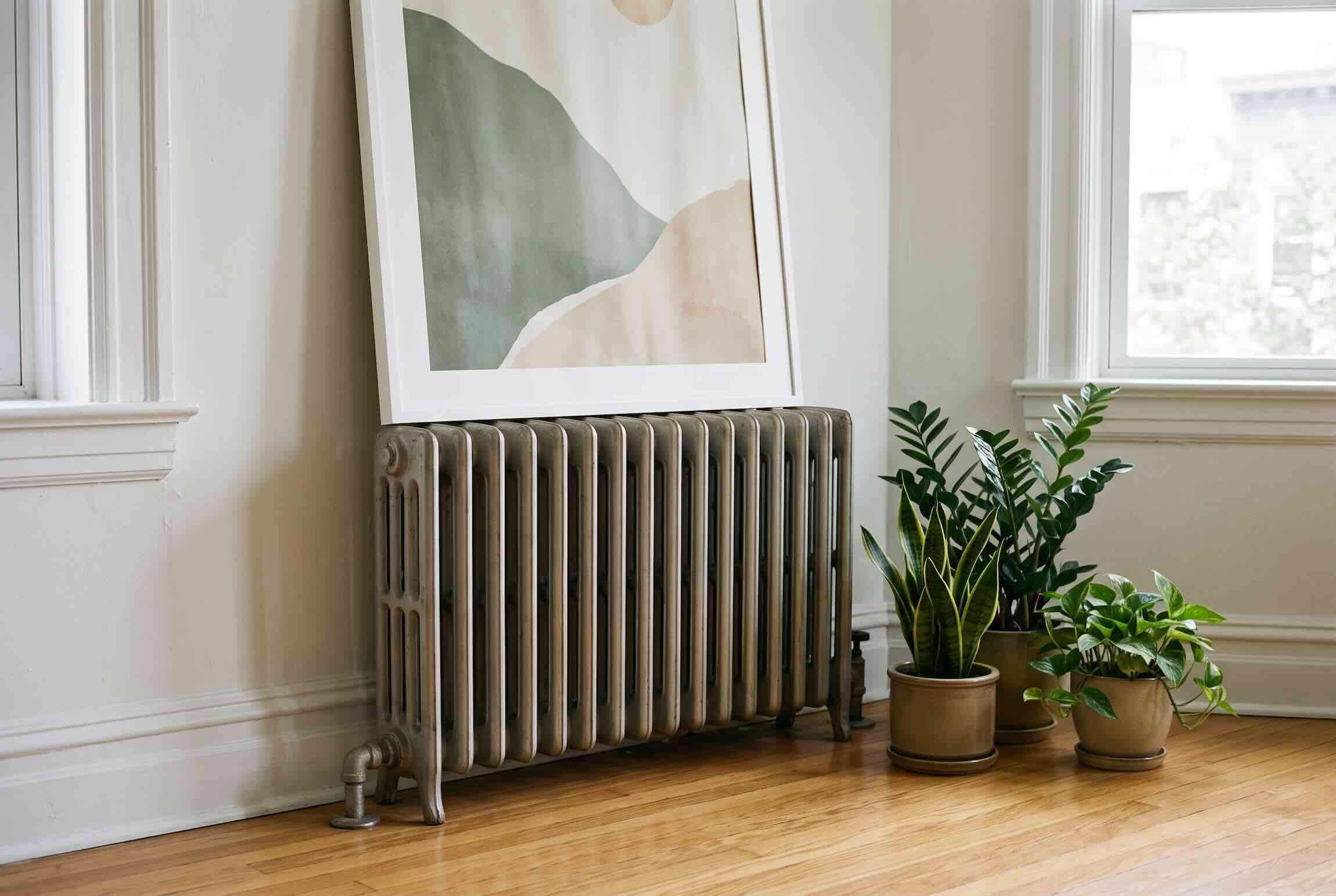
Sometimes the fix is not covering the radiator but pulling attention elsewhere. A gallery wall or a large leaning piece above it, lit by a picture light, gives the eye a better place to land. Lean art can be shifted away in the coldest months if you worry about heat, and a mirror above bounces light around the room. Cluster sturdy plants beside the radiator, rather than directly over it, to visually soften the corner without literally cooking the leaves.
Hide It With Furniture Placement
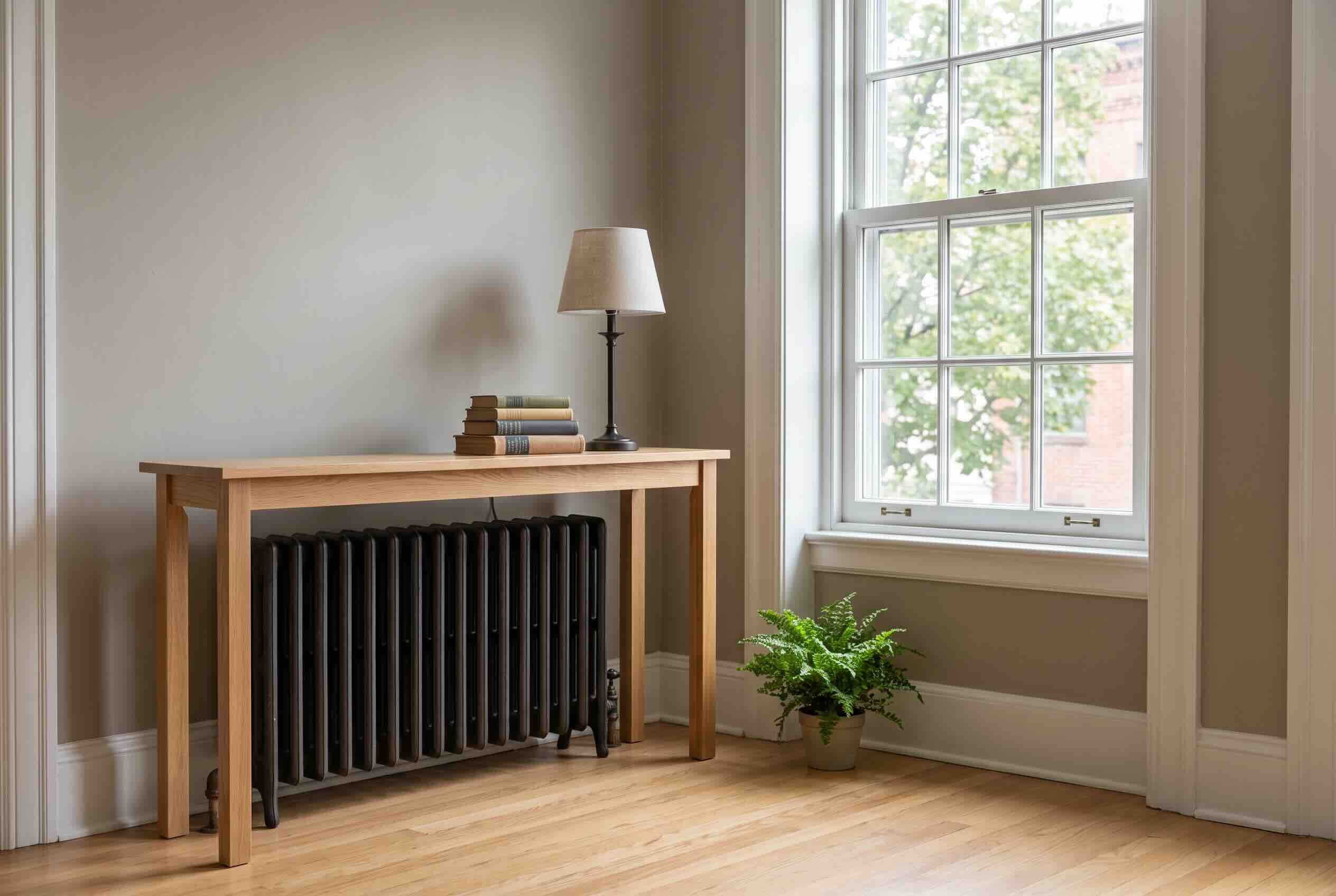
Often the simplest fix is a piece of furniture set a safe distance in front of the radiator. A console, a slim table, a sideboard, or a plant stand can break the sightline while leaving an air gap behind it for convection. Watch for the horizontal stretcher bar on some furniture, which can sit right at radiator height and block the heat. Leave several inches of breathing room so you are hiding the radiator rather than smothering it.
>>> See more: How to Reduce Electric Bill in Apartment (No Reno)
Use a Removable Magnetic Wrap (Renter-Friendly)
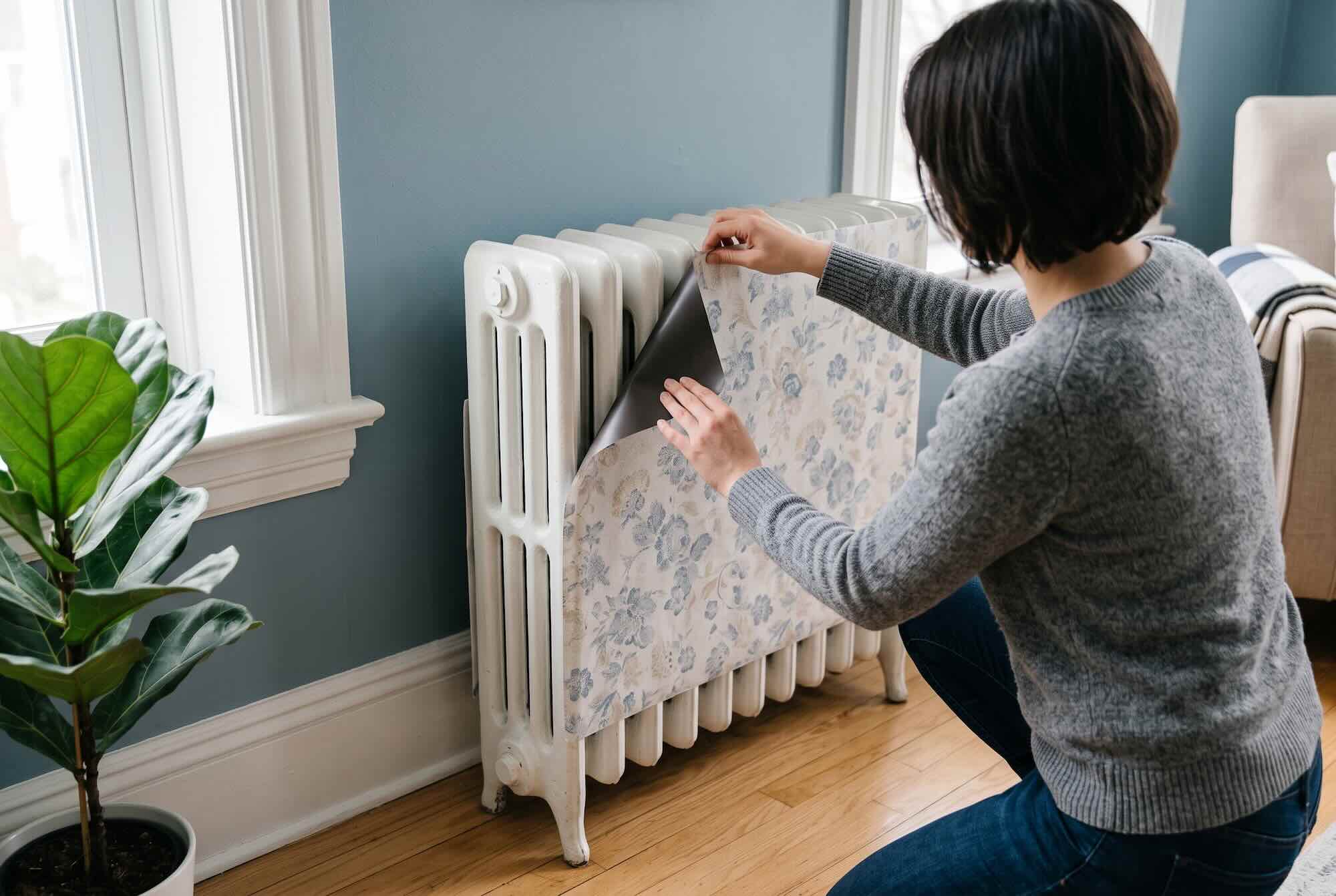
When you rent and cannot paint or build, a magnetic radiator wrap is the reversible answer, a printed magnetic sheet in a color or wallpaper pattern that clings to the metal and peels off clean. A freestanding slatted screen or a rearranged furniture layout does similar work with no attachment at all. Because leases differ on what counts as an alteration, it is worth checking first, which is one of the questions to ask before signing a lease, and noting the radiator’s original condition on your apartment move-in checklist so a reversible cover does not cost you a deposit.
Replace or Relocate It During a Renovation
If you own the place or have a renovation planned, the permanent fix is to swap the radiator for a slim, vertical, or mirror-style model, or to move it to a plainer wall. This remains the costliest route by far and strictly needs a qualified heating engineer to properly drain and safely reconnect the pressurized system, meaning it is not a casual weekend job. If you are rethinking the heating anyway, underfloor heating removes the radiator from the room and frees up the wall. Treat this as the option for a larger project rather than a quick disguise.
Compare the Ways to Hide a Radiator
If you are weighing the options, here is how the main methods stack up on the things that matter.
| Method | Cost | Effort | Blocks heat? | Renter-friendly |
| Paint | Low | Low | No, done right | Only with permission |
| Radiator cover | Medium | Medium | Slightly, if vented | Usually, if freestanding |
| Shelf above | Low | Low | No | Yes |
| Magnetic wrap | Low | Low | No | Yes |
| Furniture in front | Low | Low | No, with clearance | Yes |
| Replace or relocate | High | High | No | No |
FAQ
Do radiator covers reduce heat output?
A well-vented cover has a small effect at most, and it can even help direct warm air out into the room. A solid, boxed-in cover is the real problem, since it traps heat against the wall, so airflow is the feature to look for.
Can you put a radiator cover on a steam radiator?
With care. Steam radiators run hotter than hot-water ones, so any cover or paint needs to handle higher temperatures, and the valves must stay fully accessible. Leave extra clearance and use materials rated for the heat.
What kind of paint is safe for radiators?
Paint labeled for radiators or metal, applied over a suitable primer, holds up to repeated heating without yellowing or peeling. Apply it while the radiator is cool and off, then let it cure before the heat comes back on.
Is it safe to hide a radiator in a kids’ room?
A cover can actually add safety by putting a barrier between small hands and a hot surface, as long as it is stable and vented. Just avoid shelves with tempting, breakable objects above a radiator a child could reach.
Can I hide a radiator without drilling or damaging the wall?
Yes. A magnetic wrap, a freestanding screen, furniture placement, or a floor-standing cover all hide a radiator with no holes, which is what makes them the go-to for renters.
Conclusion
For something that spends half the year doing real work, a radiator collects a lot of resentment for how it looks. The fix, though, is rarely expensive and rarely permanent: clear a path for the heat, then let paint, a cover, or a wrap handle the disguise. What you get back is a wall you are not quietly apologizing for, without giving up the warmth that made you put up with the radiator in the first place. That is where how to hide an ugly radiator lands once you stop treating heat and looks as opponents. For the next small annoyance in your space, Home Tips Daily has plenty more fixes ready.