

If you are looking for practical ideas for splitting a bedroom, remember that the job does not have to mean swinging a hammer. The process runs along a spectrum: an afternoon of curtains and rugs that zone the space at one end, furniture that stands in for a wall in the middle, and framing a true second room at the other. Where you land depends entirely on how much privacy you need, what you can comfortably spend, and whether you rent or own. This Home Tips Daily guide walks through all three levels, offering twenty solutions you can safely match to your living situation and your lease.
Before You Split a Bedroom: Light, Layout, and Whether You Rent
Before you start splitting a bedroom into two, a few checks decide whether the result feels like two real rooms or one cramped one. Run through these first, because they rule some methods in or out:
- Measure the room and each half. Divide the floor plan on paper first, so neither side ends up too narrow to hold a bed or move around in.
- Give each half light. Plan for a window or a genuine light source in both halves, since a windowless sleeping box feels grim and may not meet code as a bedroom.
- Keep air moving to both sides. A divider can cut off a vent or block the path air takes across the room, so make sure both halves can breathe.
- Check your standing. Renters need landlord permission for anything attached to the structure, one of the questions to ask before signing a lease, while owners should weigh permits and resale before building.
No-Build Ideas for Splitting a Bedroom Into Zones
The lightest way of splitting a bedroom into two is to divide it visually, with nothing physically attached and nothing to undo later. If you are looking for renter-friendly ideas for splitting a bedroom, these no-build moves are the perfect starting point and usually take only an afternoon to set up.
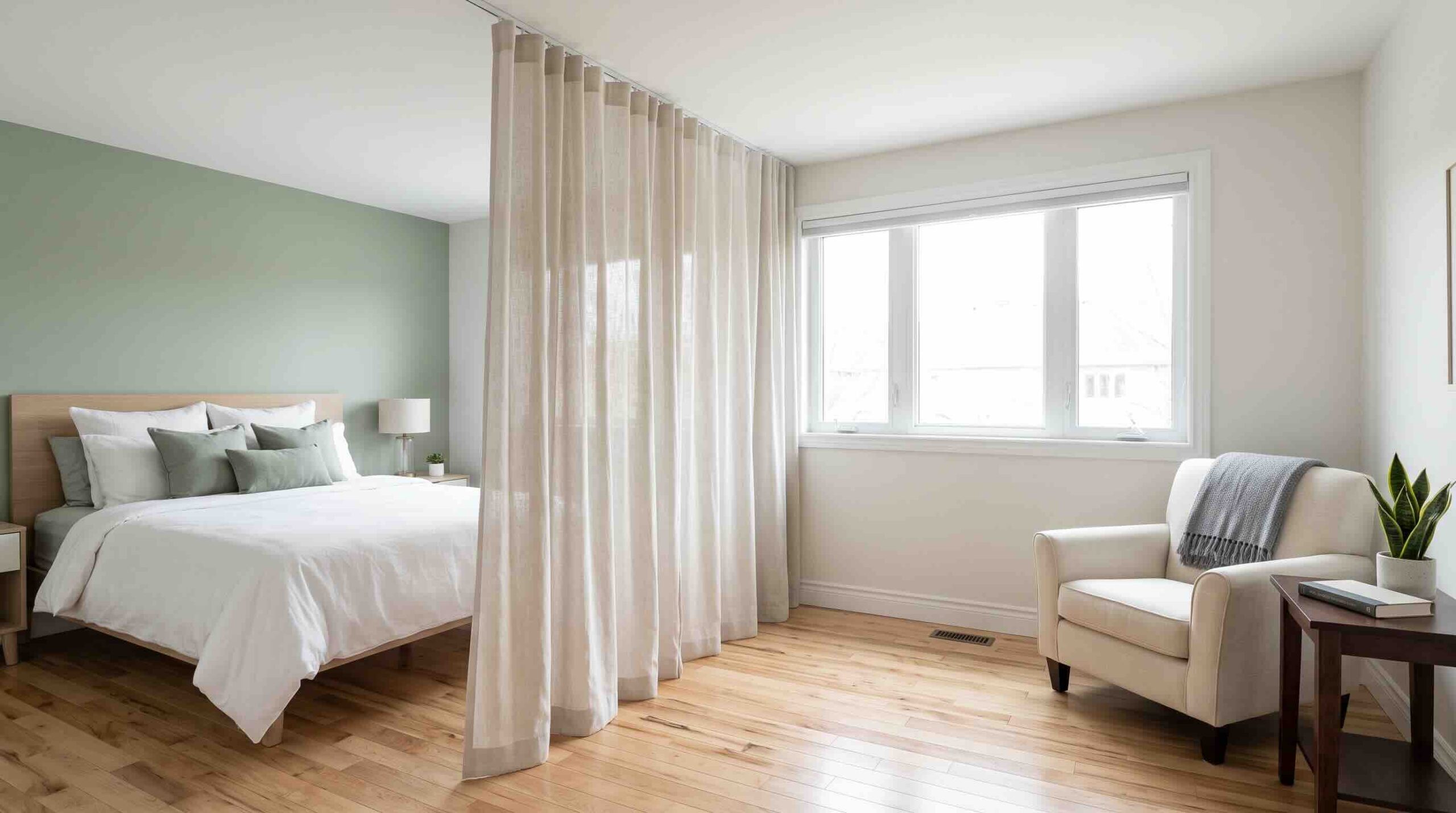
1. Hang a ceiling-track curtain. A curtain on a ceiling track pulls across to close off a sleeping nook, then slides back to give the room its space. A heavier, room-darkening fabric works best when one half is for sleep.
2. Anchor each half with its own rug. A rug under each zone claims that patch of floor as a separate area, and the eye reads two rugs as two rooms even without a wall.
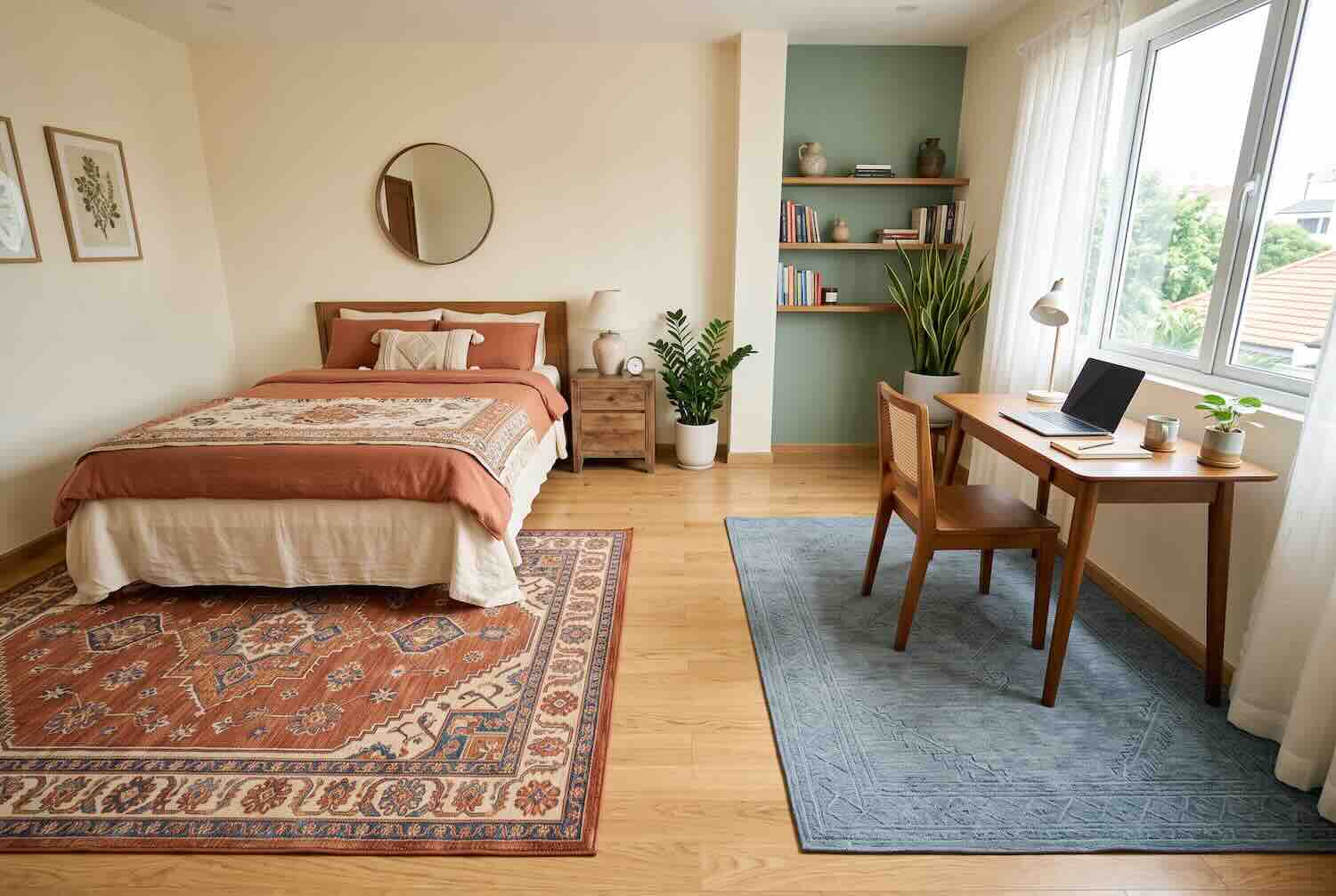
3. Change the color or flooring between zones. Painting one half a different tone, or switching the rug or flooring texture partway across, draws a line the brain follows.
4. Float the bed as a divider. Pulling the bed off the wall into the room, often with a low console behind it, turns the bed itself into the boundary between the two zones.
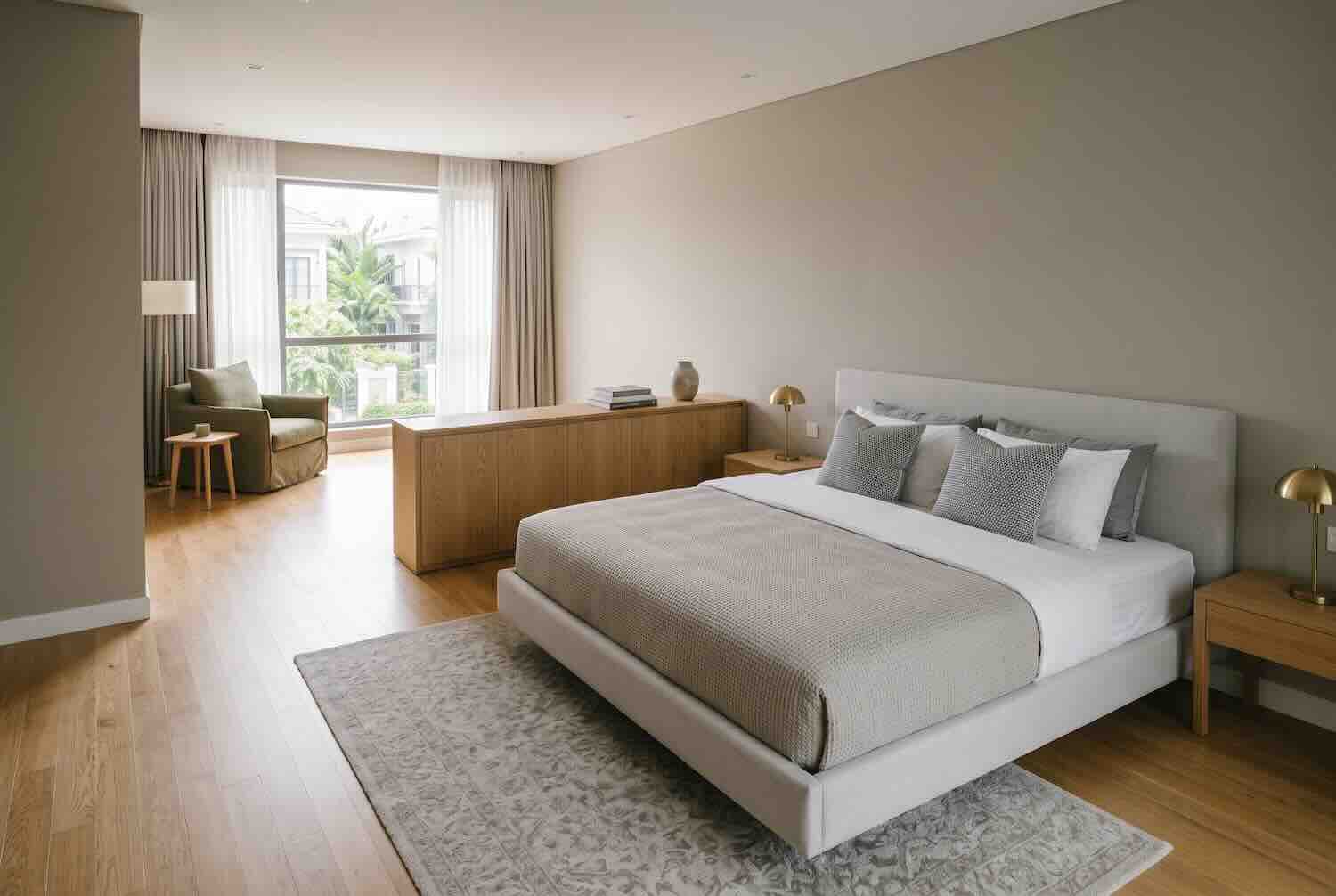
5. Use a tall or storage headboard as a partial wall. A high headboard, or a storage headboard with a shelf on the back, gives the sleeping side a sense of enclosure without a real partition.
6. Give each zone its own lighting. Separate lamps or sconces let one half stay bright while the other dims, which makes the two areas feel like independent rooms.
Furniture and Movable Dividers to Split a Room
The next ideas for splitting a bedroom step up in commitment, using furniture and freestanding dividers that build a firmer line while still coming apart when you move out.
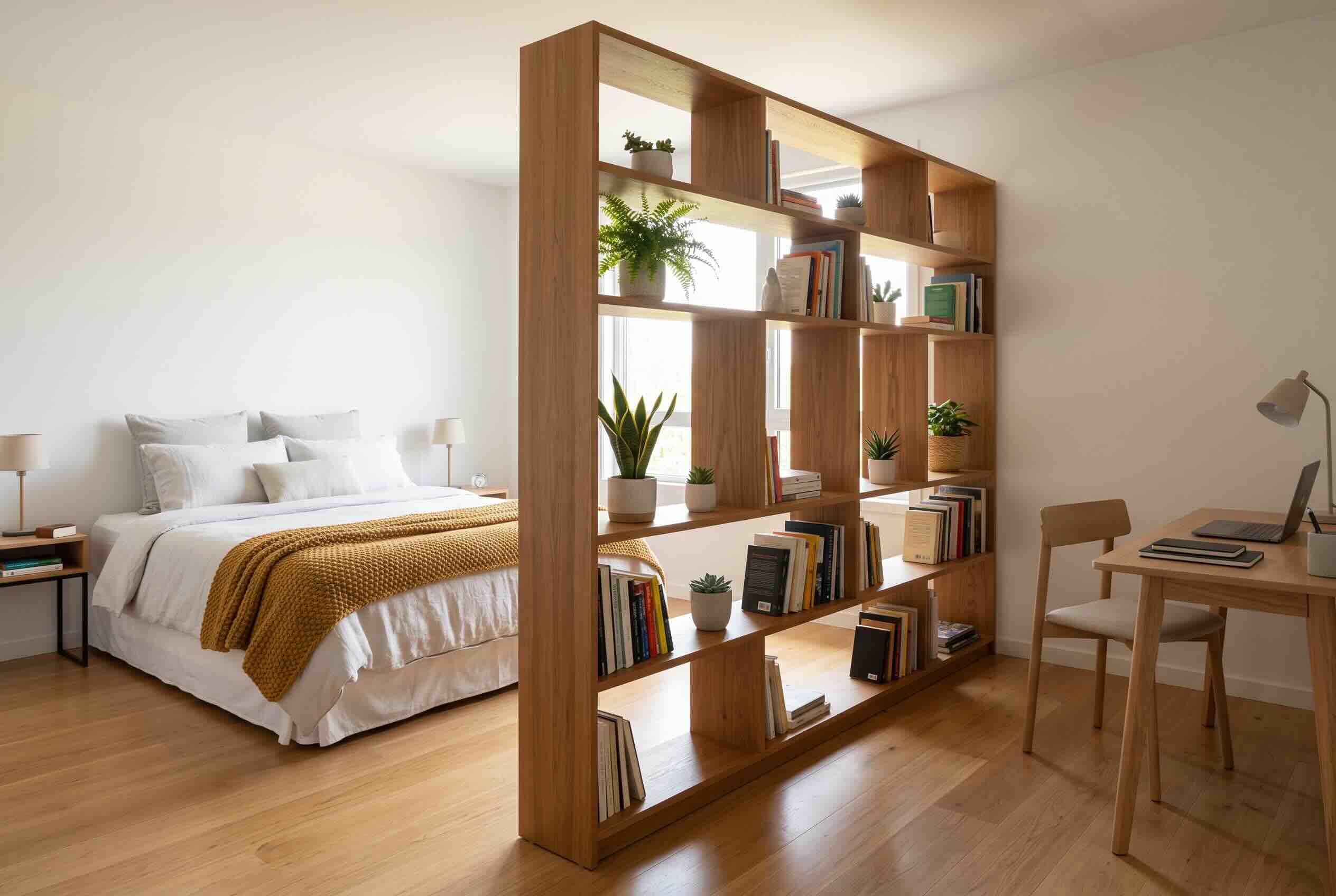
7. Turn a bookshelf into a room divider. An open-backed bookshelf splits the space and stores things on both sides, while the gaps still let light pass through.
8. Use a wardrobe or closet unit as a solid wall. A tall wardrobe blocks sight and sound more fully, which works well for kids sharing a room who each want their own side.
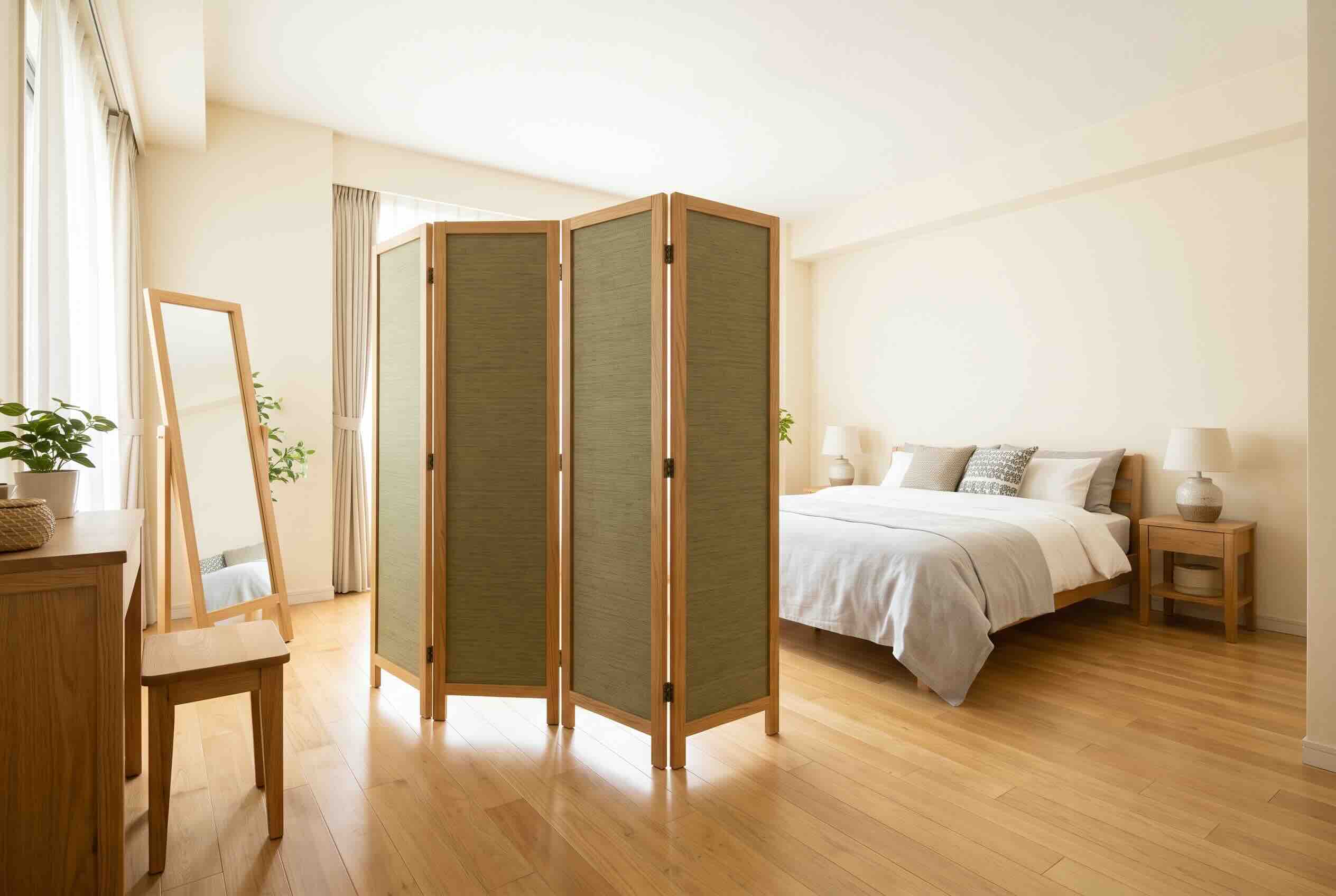
9. Set up a folding screen. A folding screen gives instant, movable separation you can angle, fold flat, and store, which makes it ideal for renters and tight budgets.
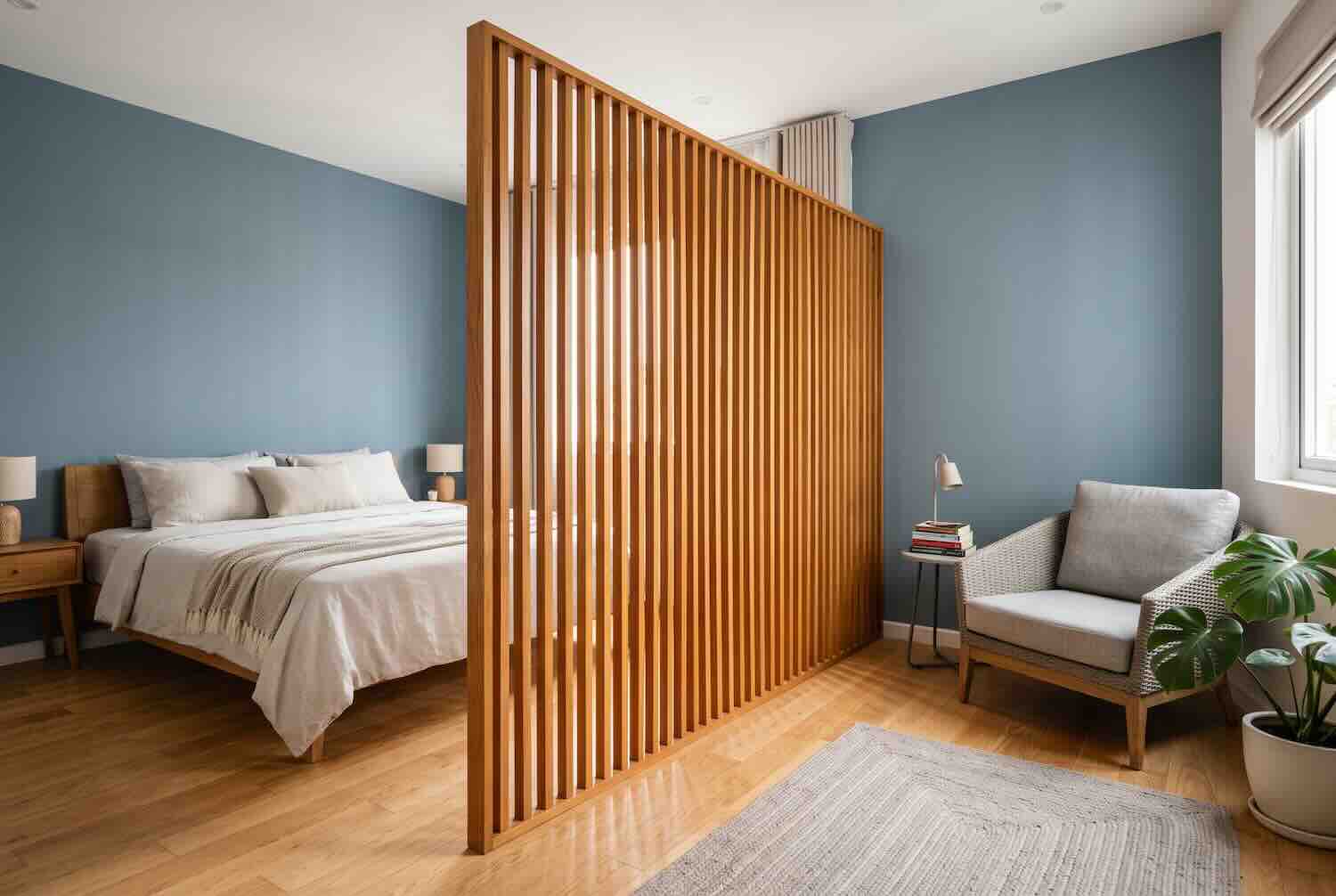
10. Add a freestanding slatted divider. A slatted or open-frame panel defines the split while letting air and light through, so neither half feels boxed in.
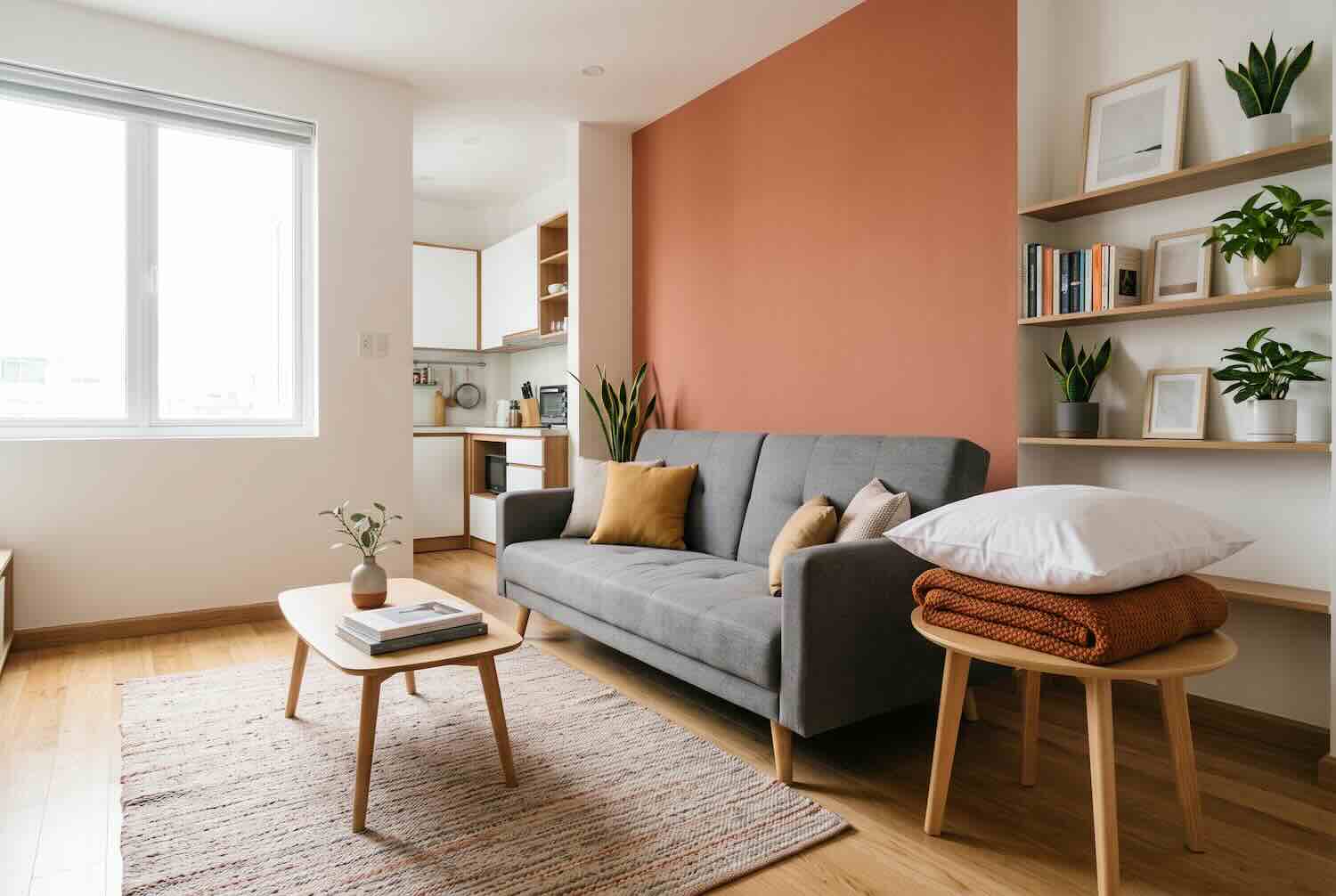
11. Zone by function with a sofa bed. A sofa bed lets one half serve as a living area by day and a sleeping area by night, splitting the room across time rather than space.
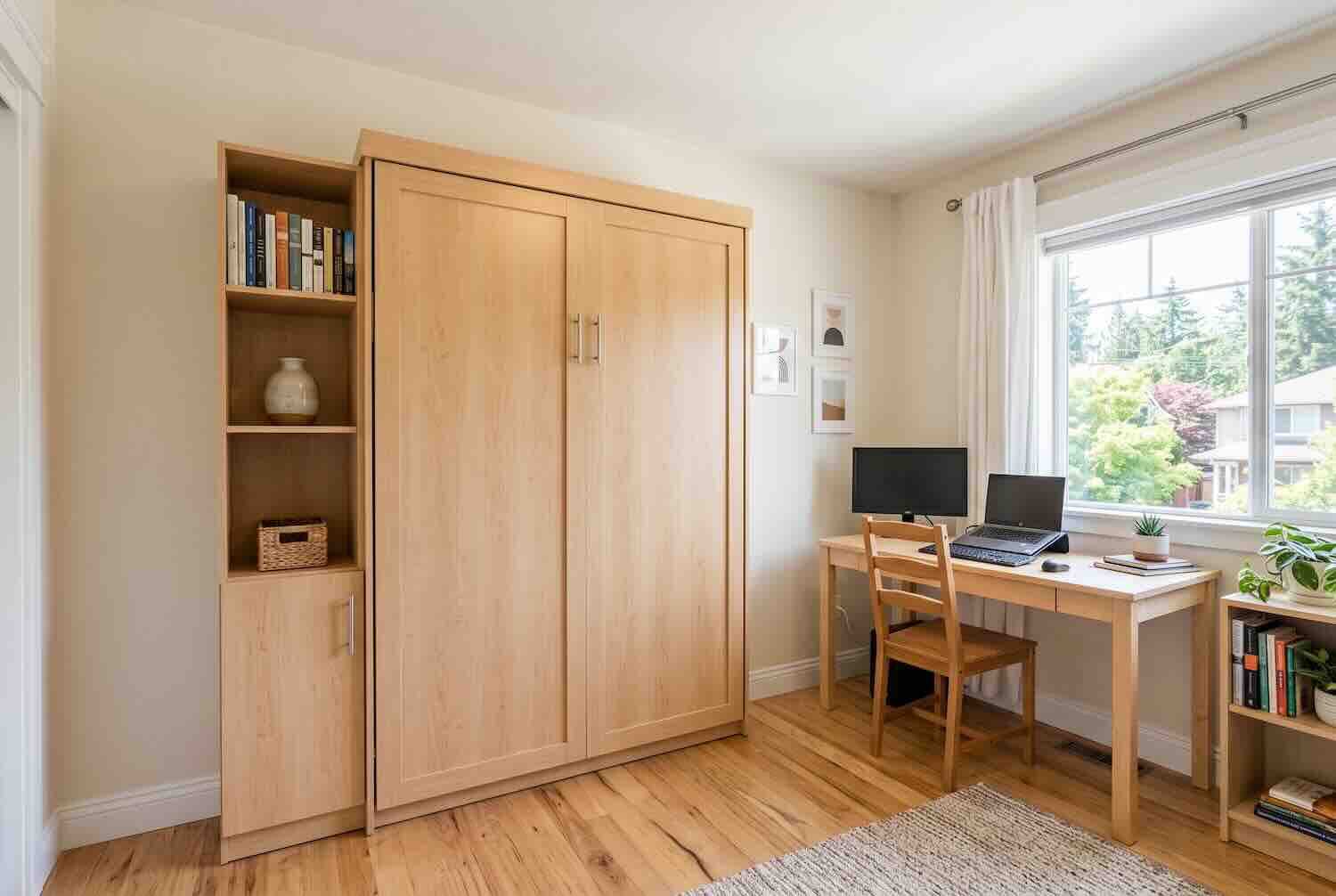
12. Fold a Murphy bed away by day. A wall-mounted Murphy bed disappears each morning, freeing that half of the room for another use altogether.
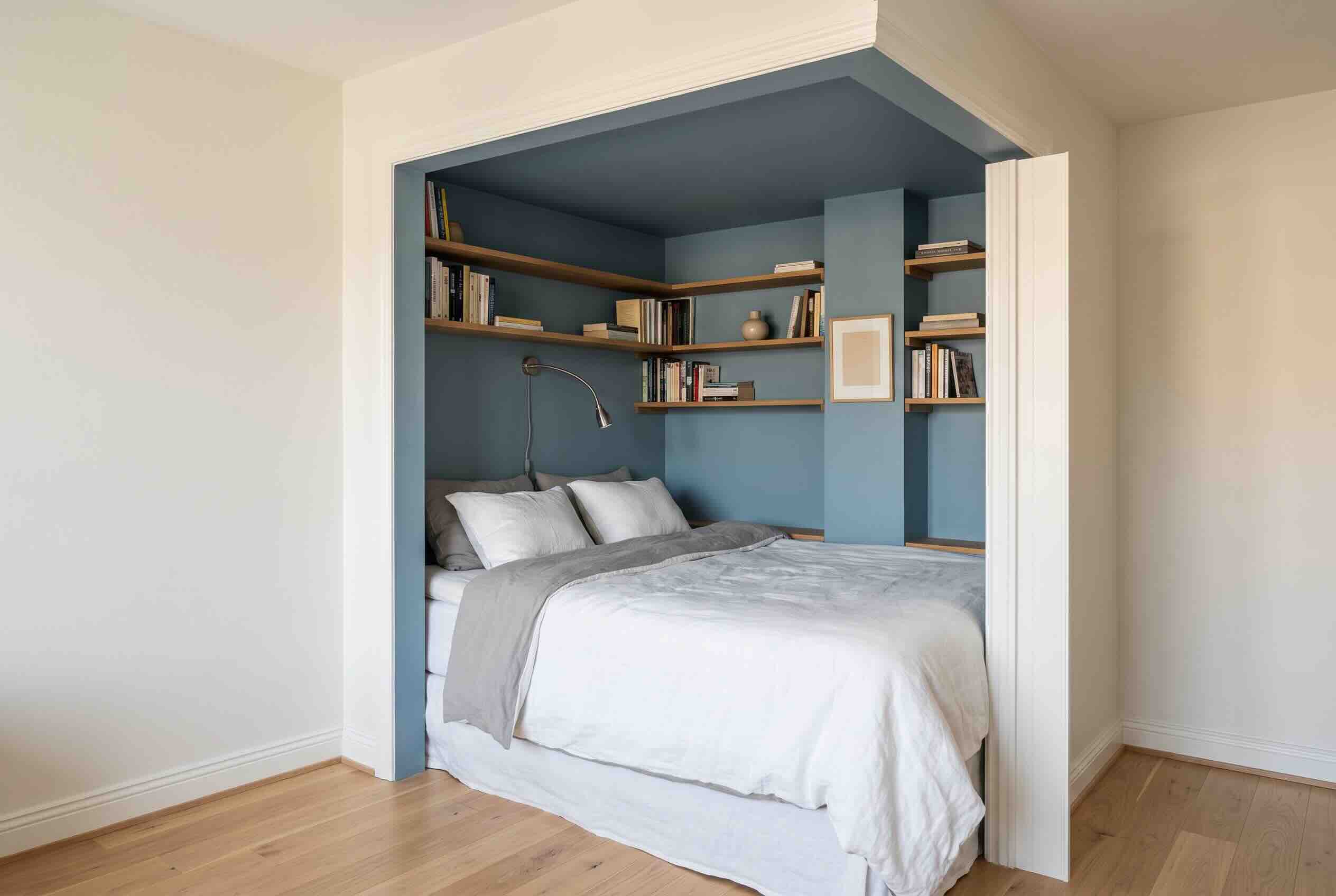
13. Build a niche or alcove bed. Tucking the bed into a framed alcove gives it a defined pocket that reads as a small room of its own.
>>> See more: Does a Studio Apartment Have a Bedroom? Here’s the Answer
Building a Wall to Turn One Bedroom Into Two
When you need true privacy and a door, a built partition turns one bedroom into two real rooms. This is strict owner territory, or requires explicit renter-with-written-permission status, and the physical framing is the easy part.
14. Frame a full stud wall. A standard stud-and-drywall wall creates a permanent, private second room, the most complete split and the most involved to build.
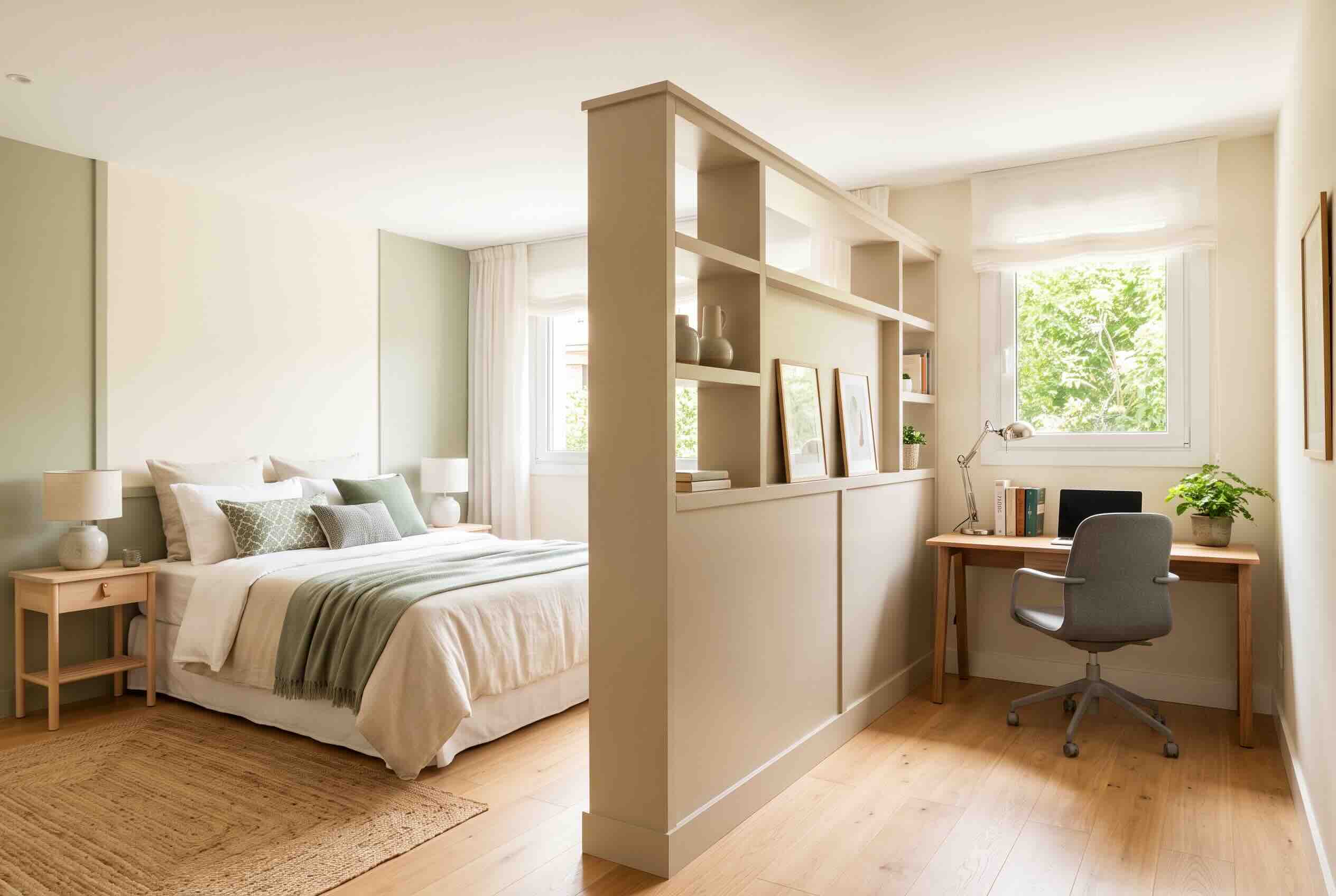
15. Build a half wall instead. A partial wall divides the space while letting light spill over the top, a middle ground between fully open and fully closed.
16. Use a glass partition. A glazed partition splits the room while sharing daylight between both halves, which keeps the inner side from going dark.
17. Fit a sliding or pocket door. A sliding or pocket door saves the floor space a hinged door needs to swing, which matters in the smaller halves a split creates.
18. Borrow light for the inner half. An interior window, a transom above the door, or a glazed panel carries daylight into the half that lost the original window.
19. Give the inner half air. Make sure the new room has ventilation, whether a transfer vent, an added register, or a clear path for air, so it does not turn stuffy.
20. Soundproof the new wall. Insulation in the cavity, a resilient layer, and a solid-core door keep the two rooms from hearing each other, which is the whole point of building the wall.
The most ambitious ideas for splitting a bedroom come with one caution: a wall can affect permits, code compliance, and resale value. Many areas require the new space to meet bedroom codes, such as a window for egress and a minimum floor size, before it can be called a bedroom at all, and unpermitted work tends to surface at sale time. Check your local rules first, and if you rent, get that written permission before anything goes up.
FAQ
Does splitting a bedroom add or lose home value?
It depends on how it is done. A permitted, well-built split that creates a legitimate extra bedroom can add value, while a cheap or unpermitted wall that produces a dark, windowless box can lose it. Quality and code compliance decide which way it goes.
Can a split room still be called a bedroom without a window?
Usually not. Most codes require a bedroom to have a window that works as an emergency exit, so a windowless half can serve as an office or nursery in practice but often cannot be marketed as a bedroom.
How small can each half be after splitting a bedroom?
Small, but codes set a floor. A legal bedroom typically needs a minimum floor area and a minimum dimension, so measure before you divide to be sure both halves stay usable and, where it matters, code-compliant.
What’s the cheapest way to split a bedroom?
Of all the ideas for splitting a bedroom, a curtain or a folding screen is the cheapest, hands down. Both cost little, need no construction, and come right back down, which makes them the go-to for renters and for anyone testing a layout before committing to more.
Conclusion
The best way to split a bedroom is the least you can get away with for the privacy you actually need. If a curtain and a rug give two people their own corners, there is no reason to build a wall and lose the light. When you do need a real room, the framing is the easy part; it is the light, the air, and the sound that make or break the result, so plan those first. However far you take it, executing these ideas for splitting a bedroom is less about the divider itself and more about giving each half what a room needs to feel like one.