

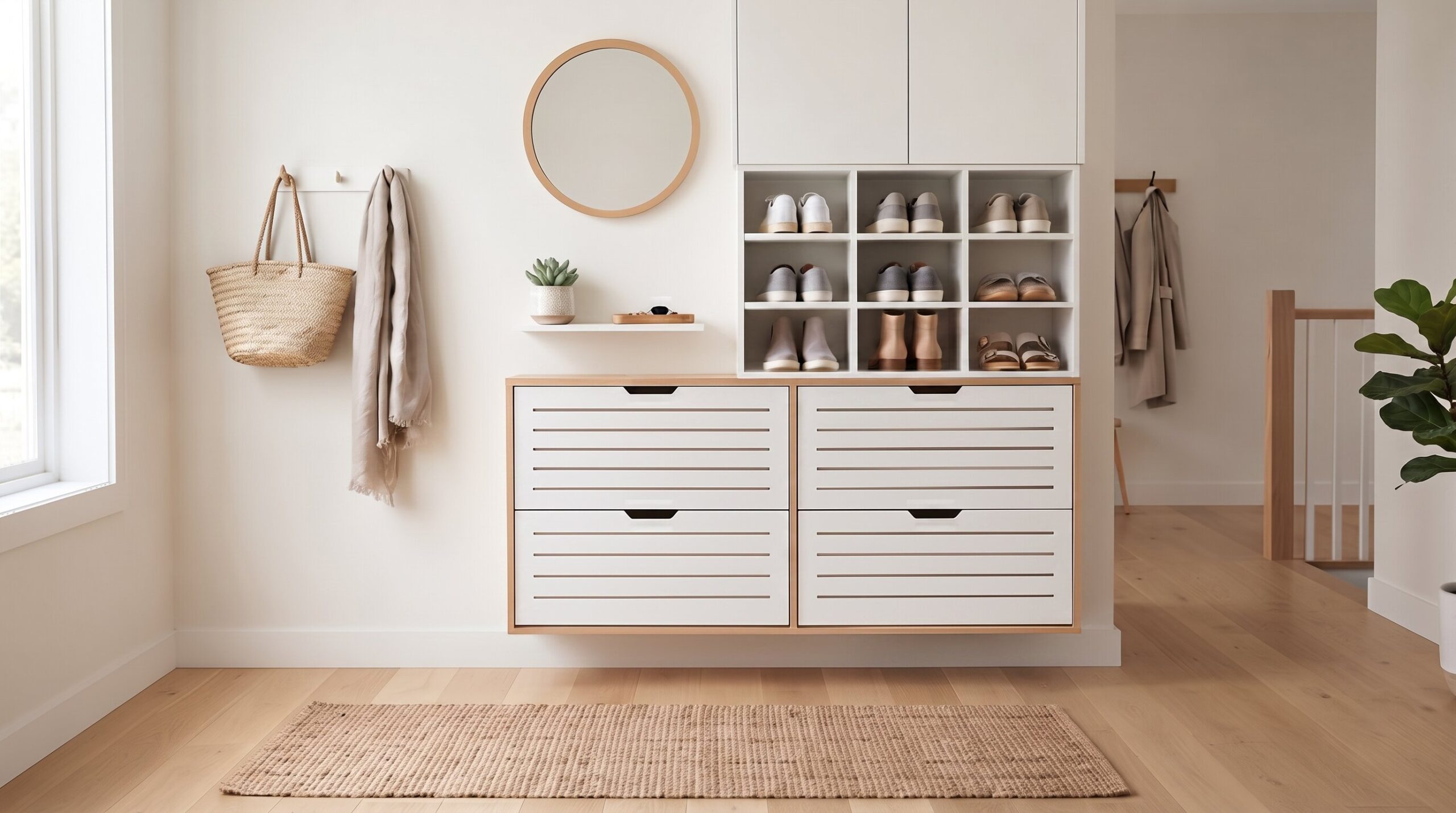
That mountain of shoes by the front door often isn’t really a clutter problem. More often, it’s a missing system problem. Most people don’t actually own too many sneakers, they just haven’t built a place to hide them yet. So before searching endlessly for entryway shoe storage, try flipping the question: what would it take to close the mess off completely instead of just rearranging it?
These 9 ideas, ranging from wall mounted cabinets to setups made for soggy winter boots, get floors clear again without a full renovation. Shoes are usually just the starting point though; for coats, keys, and everything else piling up by the door, 17 entryway storage ideas covers the full system.
Category 1: Slim Profile Hacks for Tight Hallways
Anyone dealing with a narrow entryway already knows the struggle. Every inch counts, and a bulky cabinet can make a hallway feel like a hallway ought not to feel.
1. Float a Faux Console Off the Wall
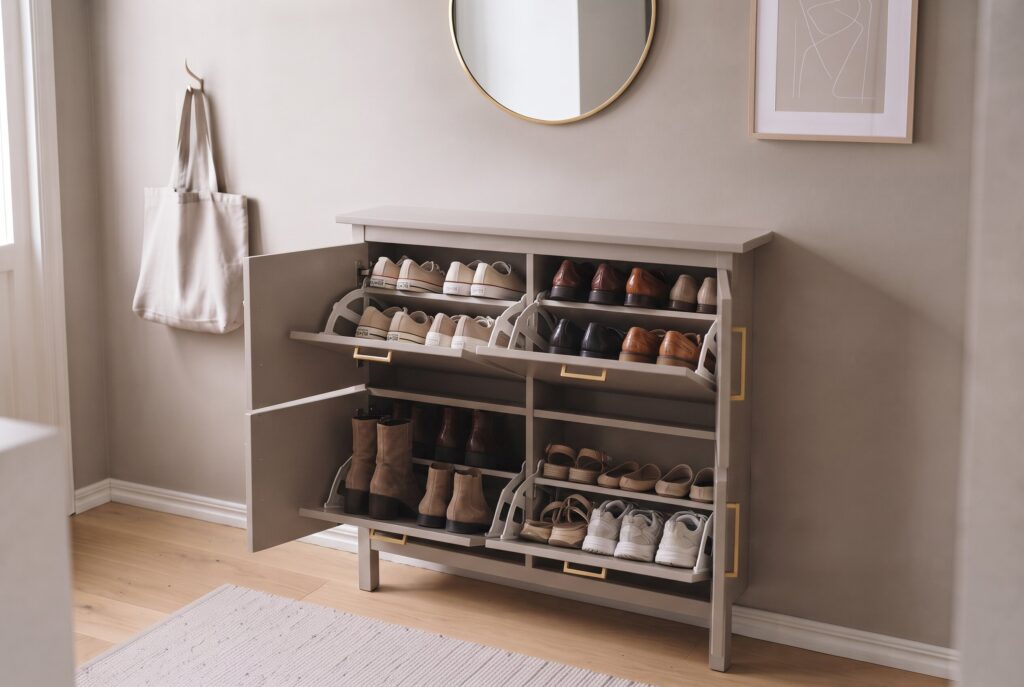
Skip setting a cabinet flush on the floor. Mount a tilt out unit about eight inches up instead, and watch how much lighter the whole hallway suddenly looks. That sliver of visible floor underneath does more for the sense of space than most people expect. Add a slab of oak on top and it doubles as an entryway table with storage, catching keys and mail while shoes stay tucked out of view.
2. Give an IKEA Hemnes a Paint Makeover
Plenty of the best entryway storage cabinet projects start with the plainest, most basic flat pack piece available. Swap the knobs for solid brass pulls, then paint the whole thing to disappear into the wall color, following that color drenching approach that keeps popping up in design feeds. The magic isn’t in adding anything fancy. It comes from removing contrast until the cabinet stops looking like furniture at all.
3. Build Drawers Into the Baseboard
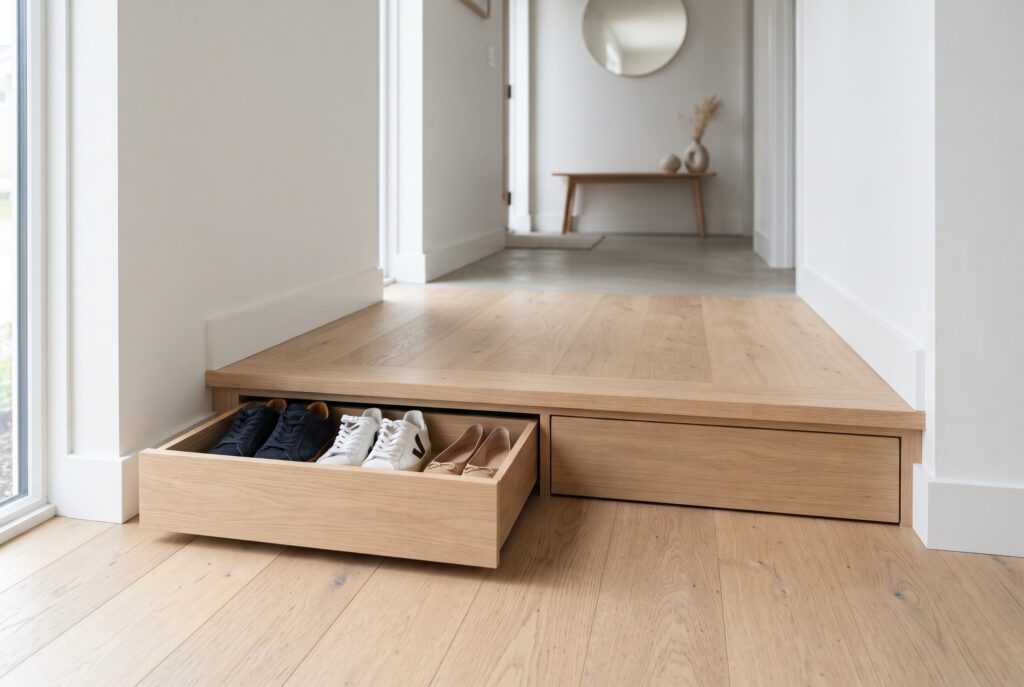
Every entryway has a patch of dead space near the floor, usually right where a raised threshold sits. Turn that gap into slim, sliding drawers hidden beneath the step, and shoe storage entryway solutions suddenly stop competing for wall space entirely. Nobody notices them until they’re pulled open, which is exactly the point.
Category 2: Setups That Handle Wet Weather
Rain and snow are where most storage ideas fall apart. This next batch is built around drainage and airflow, not just looks.
4. Line a Mudroom Bench with Copper Trays
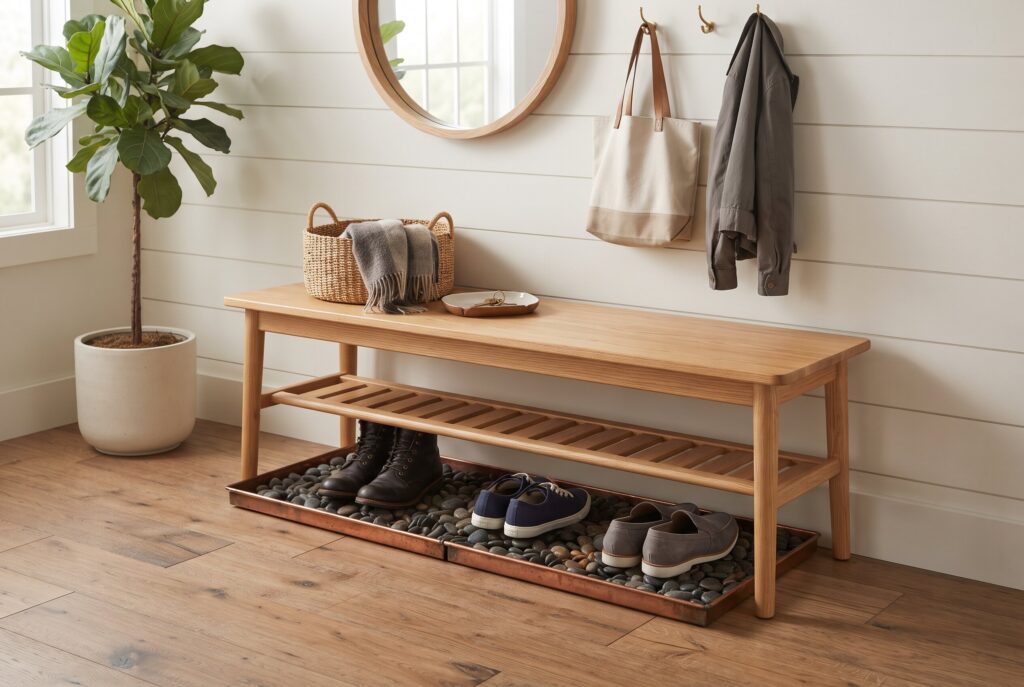
A basic entryway bench with shoe storage gets a lot more useful with a copper tray and a bed of smooth pebbles tucked underneath. Water drips straight into the tray instead of soaking into the wood grain, and copper happens to look intentional rather than accidental, which is more than most drip trays can claim.
5. Choose Tambour Doors Over Solid Ones
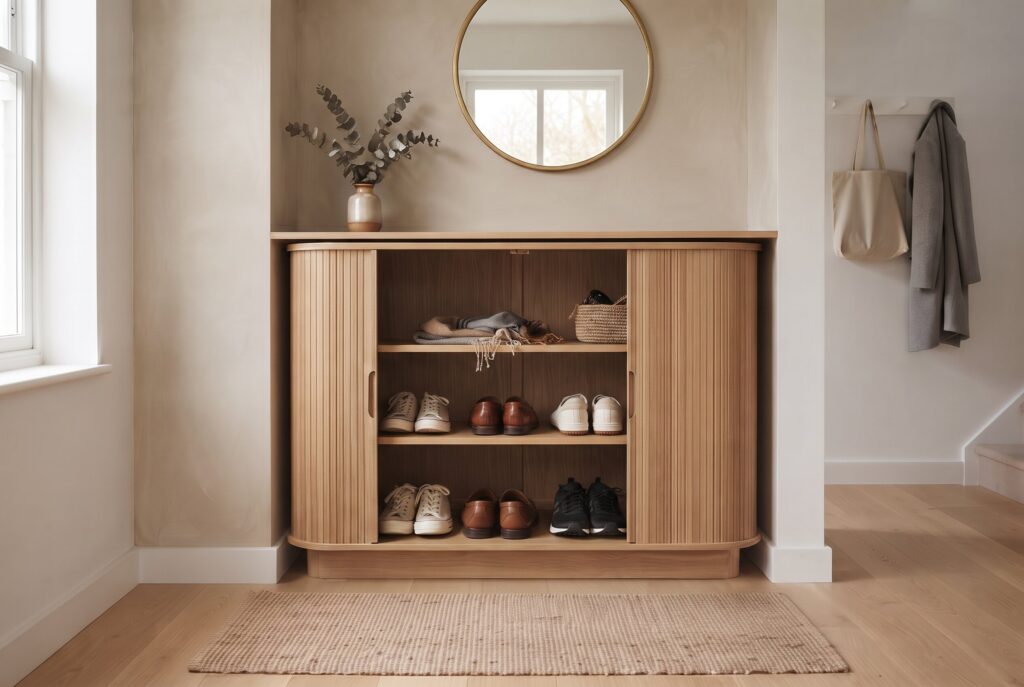
Slatted wood doors that slide open on a curved track keep everything hidden while still letting air pass through. That constant airflow is the whole reason tambour beats a sealed cabinet: nothing traps moisture, nothing starts to smell after a rainy week.
6. Roll In a Two Tier Cart for Deep Closets
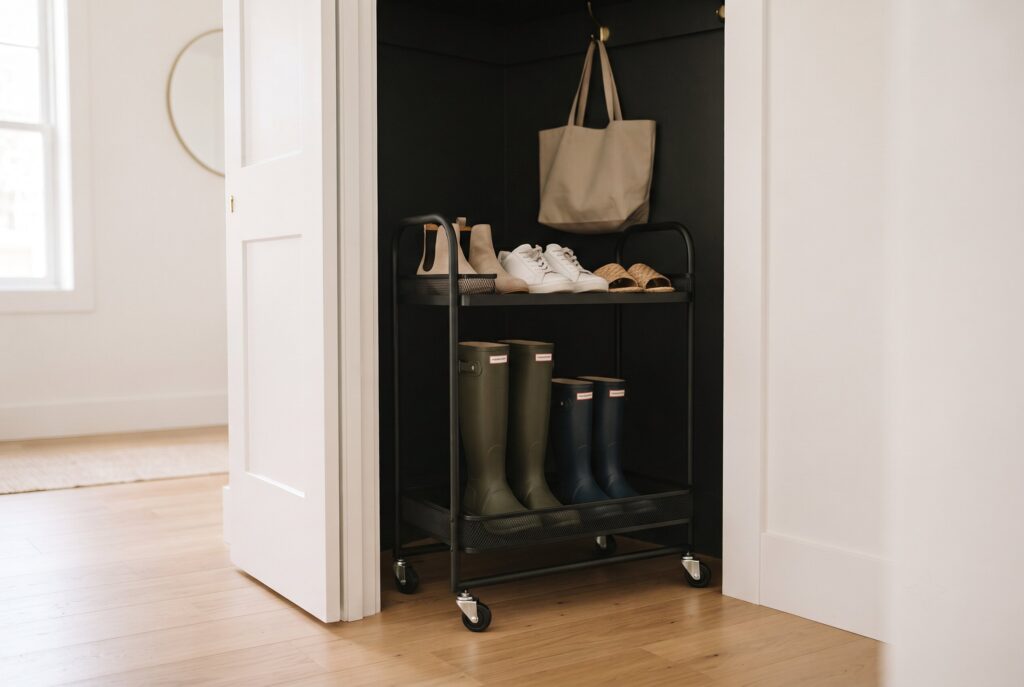
Deep, narrow closets are famous for swallowing anything pushed too far back. A two tier metal cart on casters fixes that instantly, keeping dry shoes up top and rain boots down low, and it rolls in and out with barely any effort at all.
Category 3: Seating That Hides Storage
This is the category most people search for first, since a bench that also stores things solves two problems at once.
7. Build a Deep Flip Top Bench
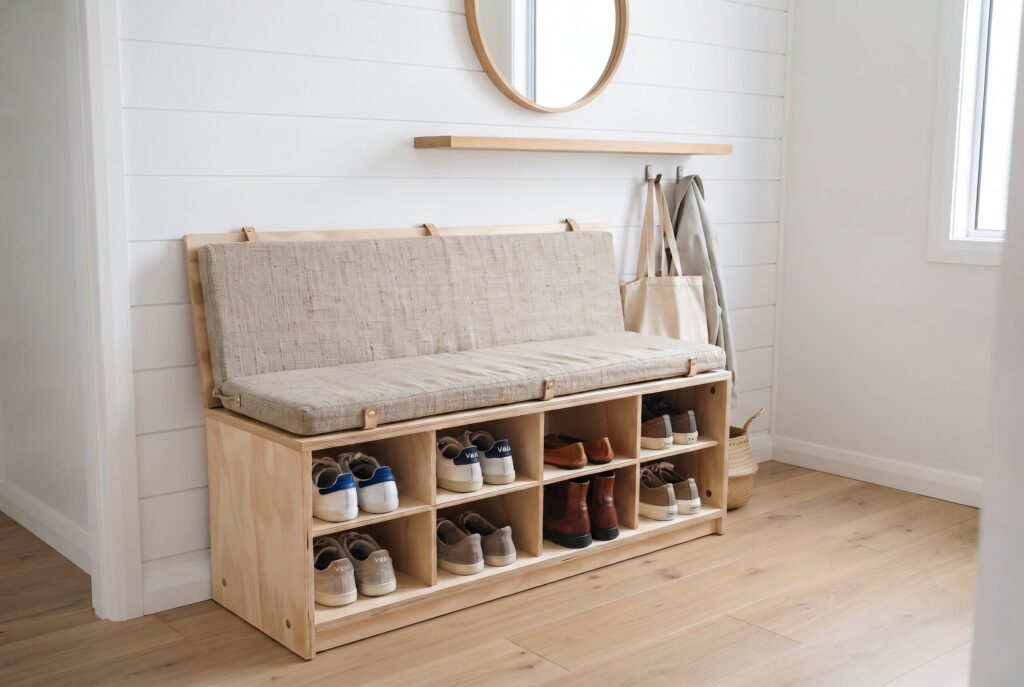
Plywood, a rough linen cushion, and a few thin dividers inside are all it takes to build an entryway bench with storage that holds more than it looks like it should. Splitting the interior into individual slots keeps shoes from getting crushed under the weight of whatever gets tossed in on top.
8. Put Storage Ottomans on Wheels
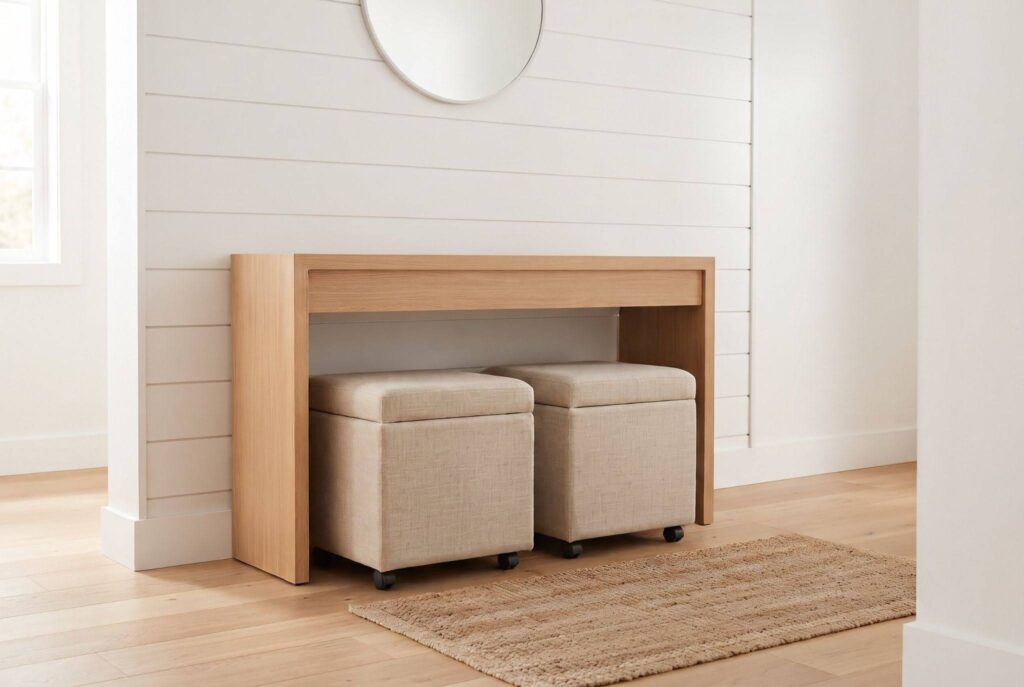
Two upholstered ottomans with lift off lids and hidden casters bring flexibility a fixed bench never could. Roll them out when guests need somewhere to sit, then push them under a console table the moment the hallway needs to breathe again.
9. Fill the Gap Under an Open Bench with Baskets
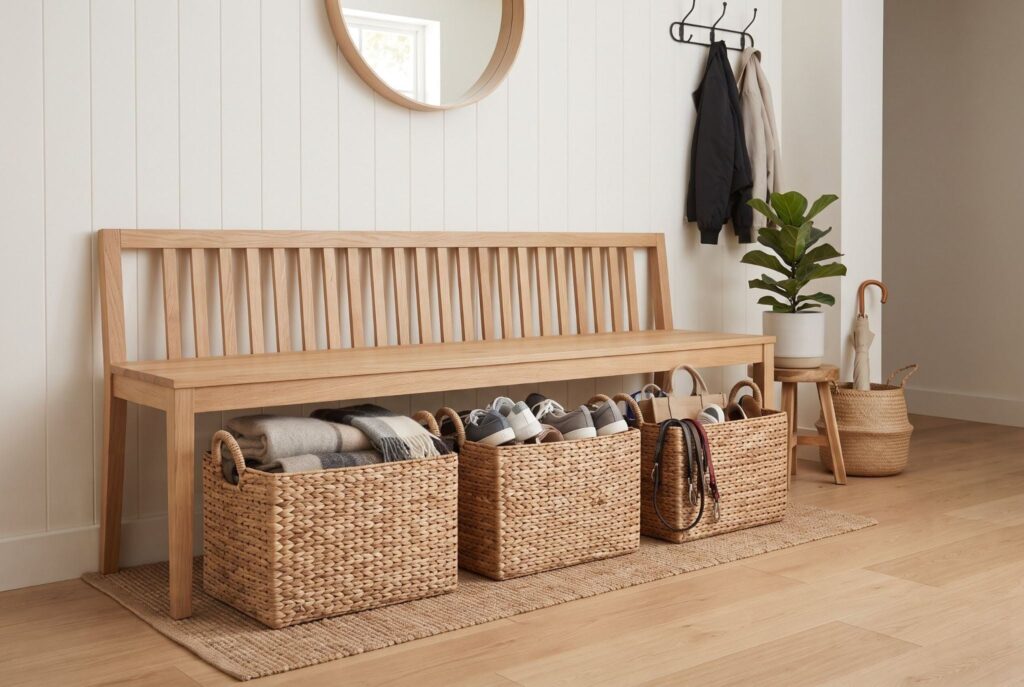
Open frame benches usually leave a stretch of empty space underneath, and that space rarely gets used well. Drop in a few oversized woven baskets and that gap becomes real entryway storage, one that kids can use without needing to line anything up neatly.
FAQ: Smart Shoe Storage Strategies
Should shoes be stored open or closed?
It really comes down to habits. Closed cabinets look cleaner and more minimal, but open shelves paired with a lined tray tend to work better for anything that needs to air dry after rain or snow.
How many pairs should an entryway actually hold?
A fair rule is two pairs per person for daily rotation. Anything beyond that belongs in a main closet, since packing too much defeats the whole purpose of building the system in the first place.
Conclusion
Even the best flip top bench or DIY cabinet only does half the work. The other half comes down to a two minute habit each evening: put away whatever doesn’t need to sit out, and shut the door on it. A clear floor at the front door does more for a calm home than any single piece of furniture ever will.