

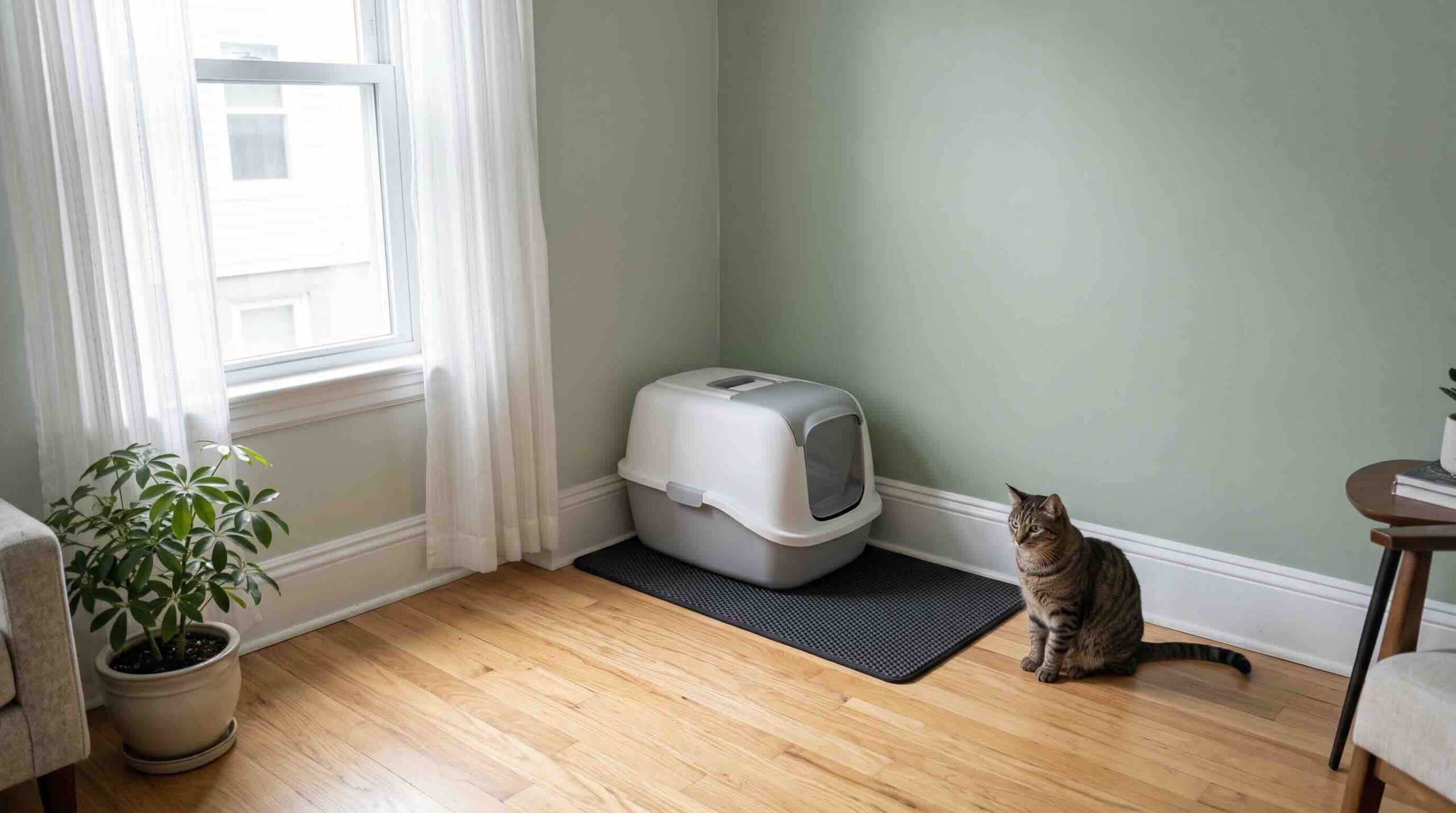
A litter box has to be private, reachable at any hour, and well ventilated, and finding where to put a litter box in a small apartment that hits all three is the real puzzle. It is easy in a house with a spare bathroom, but a few hundred square feet forces you to get creative. This Home Tips Daily guide covers 7 spots that actually work, the places to avoid, and exactly how many boxes you need. Get it right and the box blends into your space instead of taking it over.
Rules for Where to Put a Litter Box in a Small Apartment
Before picking a spot, it helps to know what a good one has to do. Every choice below is judged against the same short list, sometimes called the three C’s: comfort, cleanliness, and convenience.
- Accessible around the clock. Your cat needs to reach the box at any hour, so its spot cannot depend on a door that gets closed.
- Private and low-traffic. Cats want to go where they feel safe, which means a calm corner rather than a busy walkway.
- Well ventilated. Airflow is what keeps odor from settling, and it matters far more in a small space than any lid.
- Away from food and noise. Distance from the kitchen, water bowls, and loud appliances keeps your cat comfortable and eating normally.
The 7 Best Spots for a Litter Box in a Small Apartment
These 7 spots hit the rules above without swallowing your floor space. Each one answers where to put a litter box in a small apartment a little differently, so match them to your layout and your cat’s habits.
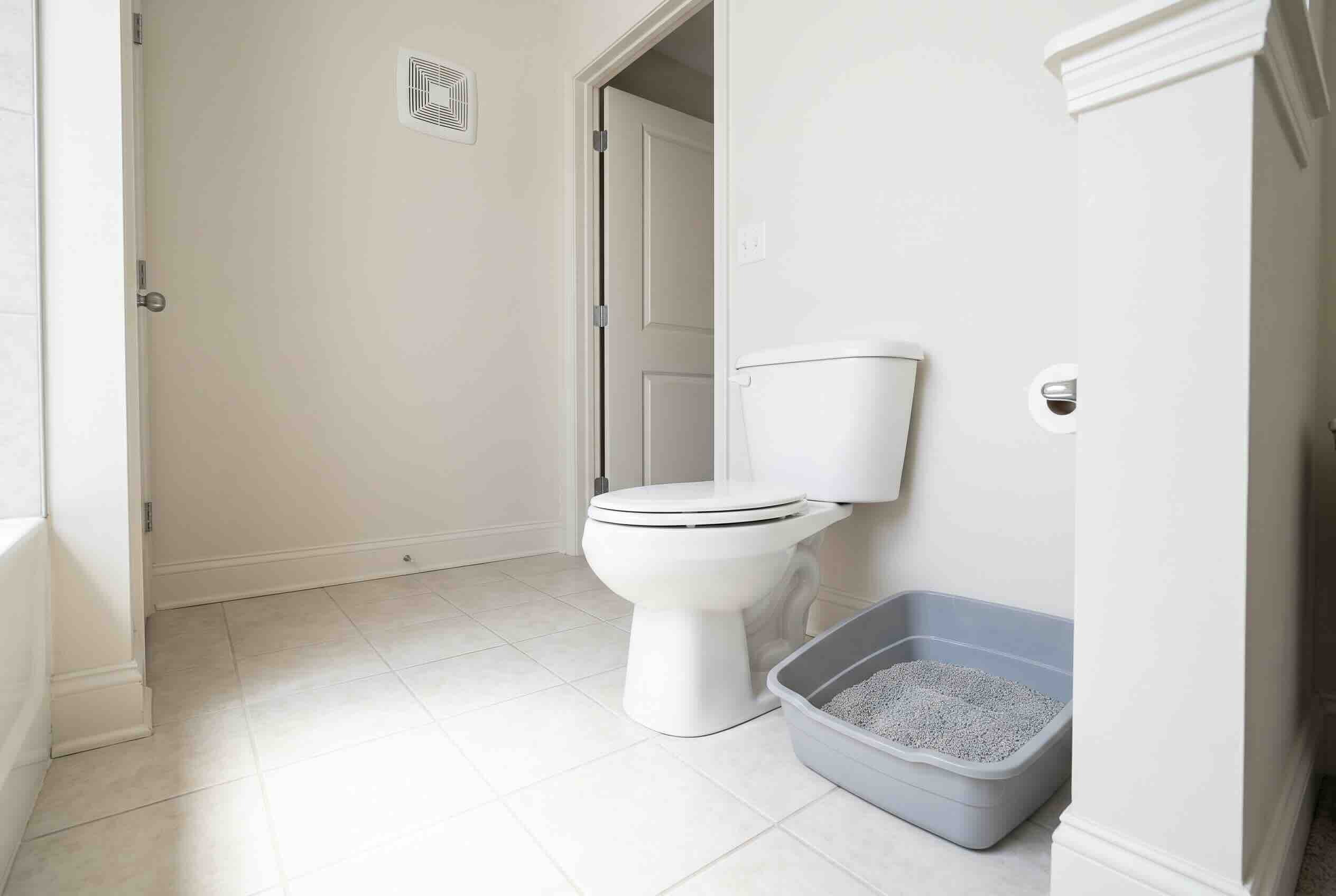
1. Next to the toilet in the bathroom. The bathroom is the default winner, since it is private, easy to clean, usually ventilated by a fan, and already the room where you deal with water and waste. Tucking the box beside or behind the toilet keeps it out of the walkway, as long as the door stays open or has a cat flap.
>>> See more: What Is a Studio Apartment vs One-Bedroom? How to Choose
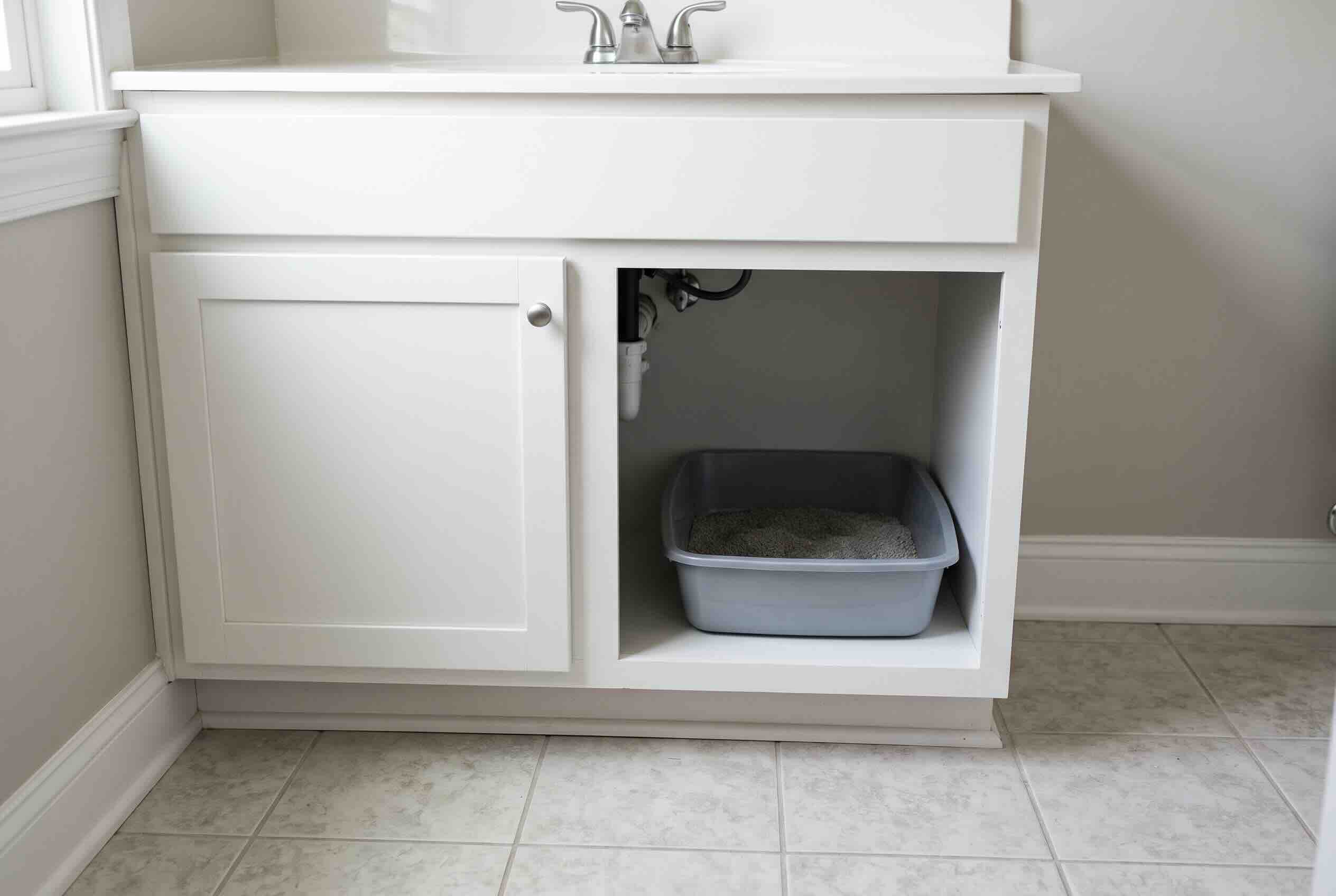
2. Inside an under-sink or bathroom cabinet. Removing a cabinet door or cutting a cat-sized entry turns dead under-sink space into a hidden litter nook, out of sight but still in the ventilated bathroom. Leave the back open or add a small vent so odor and humidity do not build up inside.
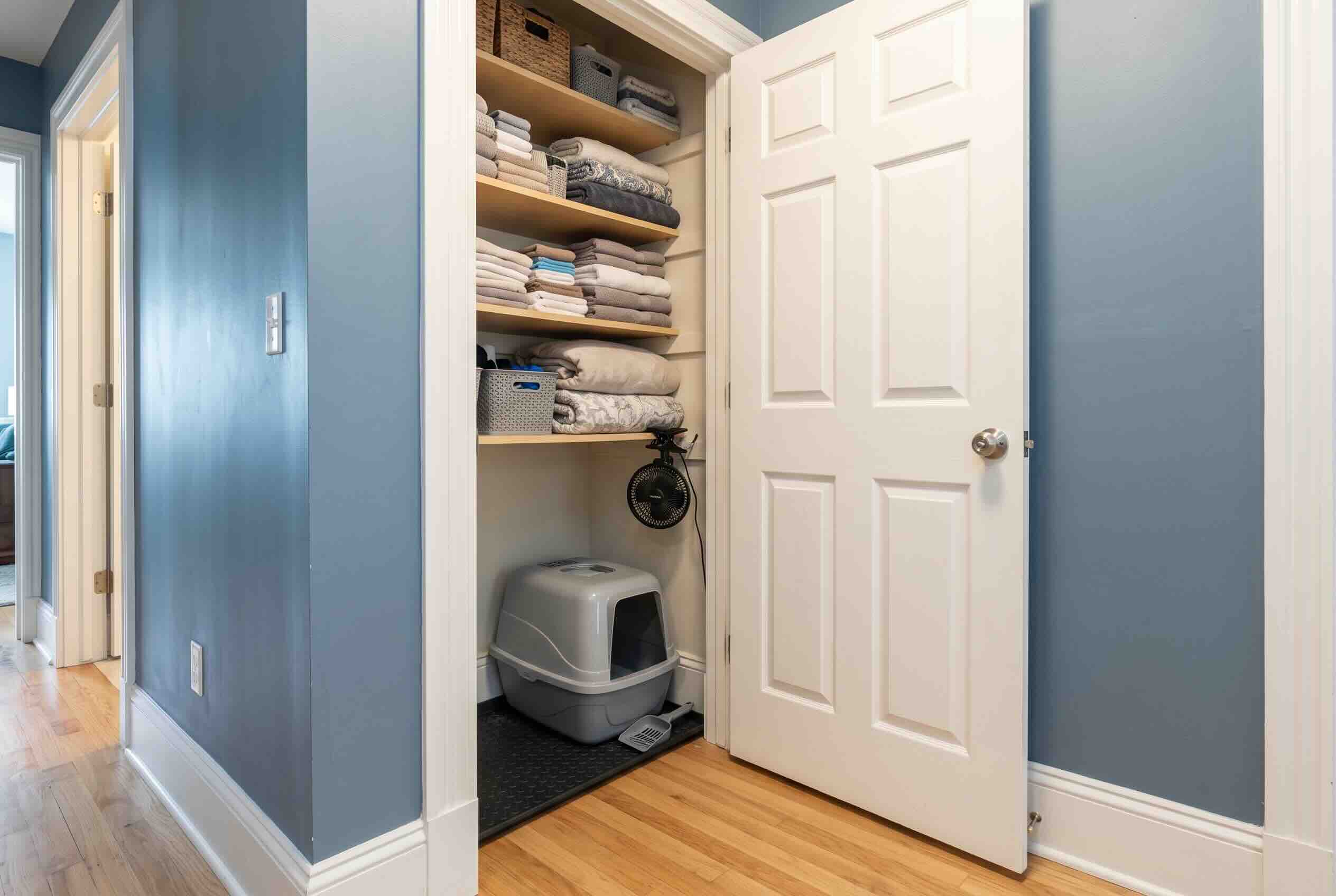
3. In a linen or hallway closet with the door propped open. A closet hides the box from guests and gives your cat privacy, provided the door stays propped or fitted with a cat door. Set a boot tray under the box to catch stray litter, and add a clip-on fan if the closet has little airflow.
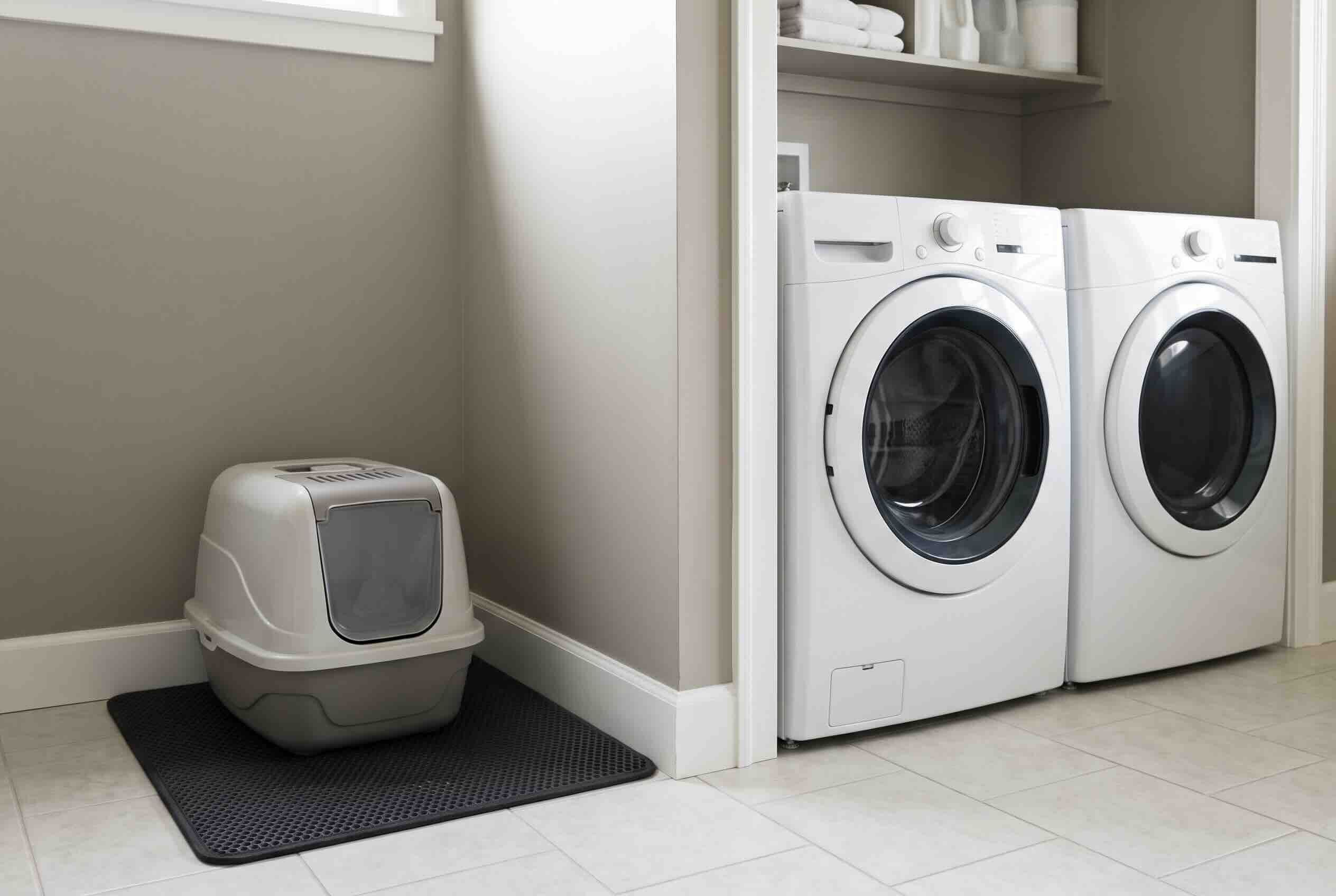
4. A quiet corner of the laundry nook. A laundry area is often tucked away and has hard, cleanable surfaces that suit a litter box. Keep the box a few feet from the washer and dryer, though, since their noise and vibration can scare a cat off using it.
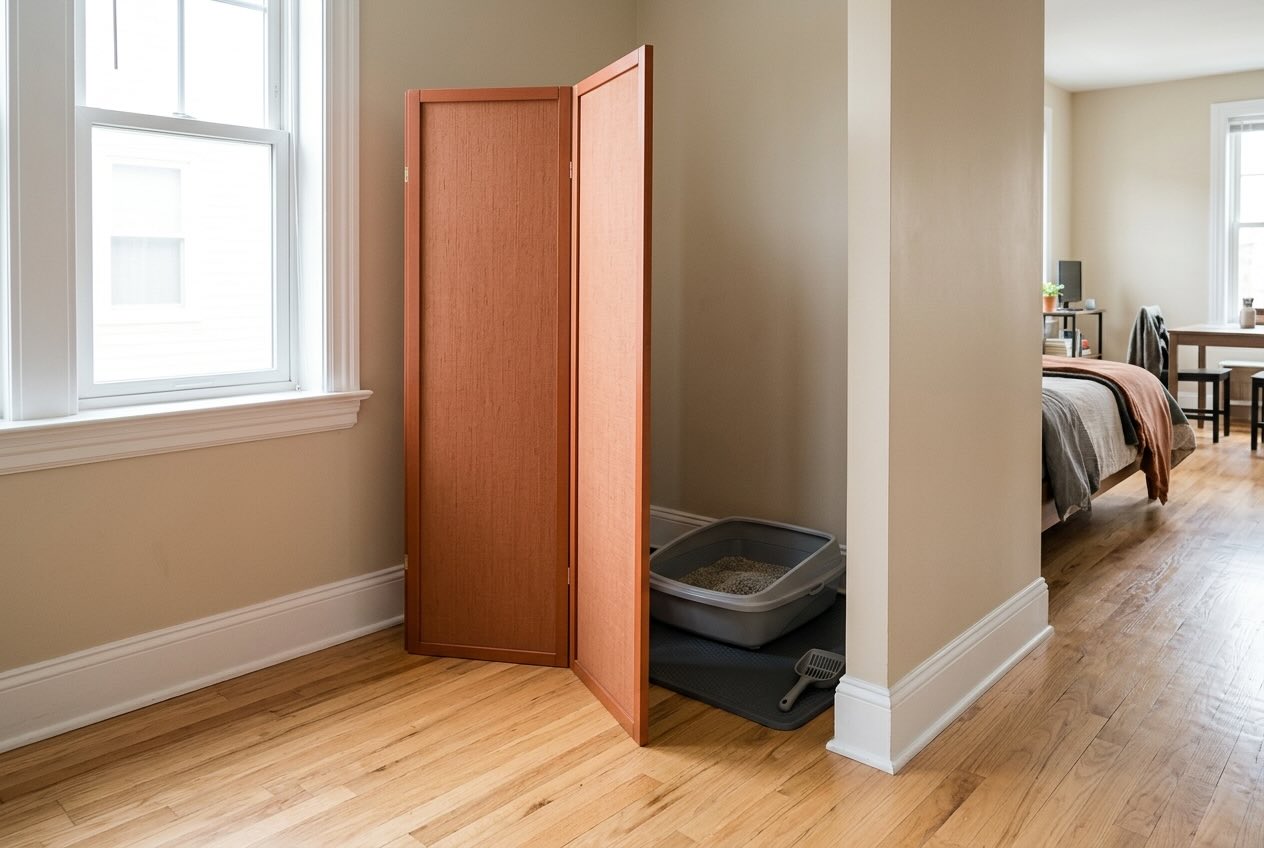
5. Behind a room divider or screen in a studio. With no separate rooms to use, a screen, a shelf, or a curtain can carve out a private litter corner in a studio. Place it in the lowest-traffic corner you have, away from the bed and the kitchen, so your cat gets the privacy the open plan lacks.
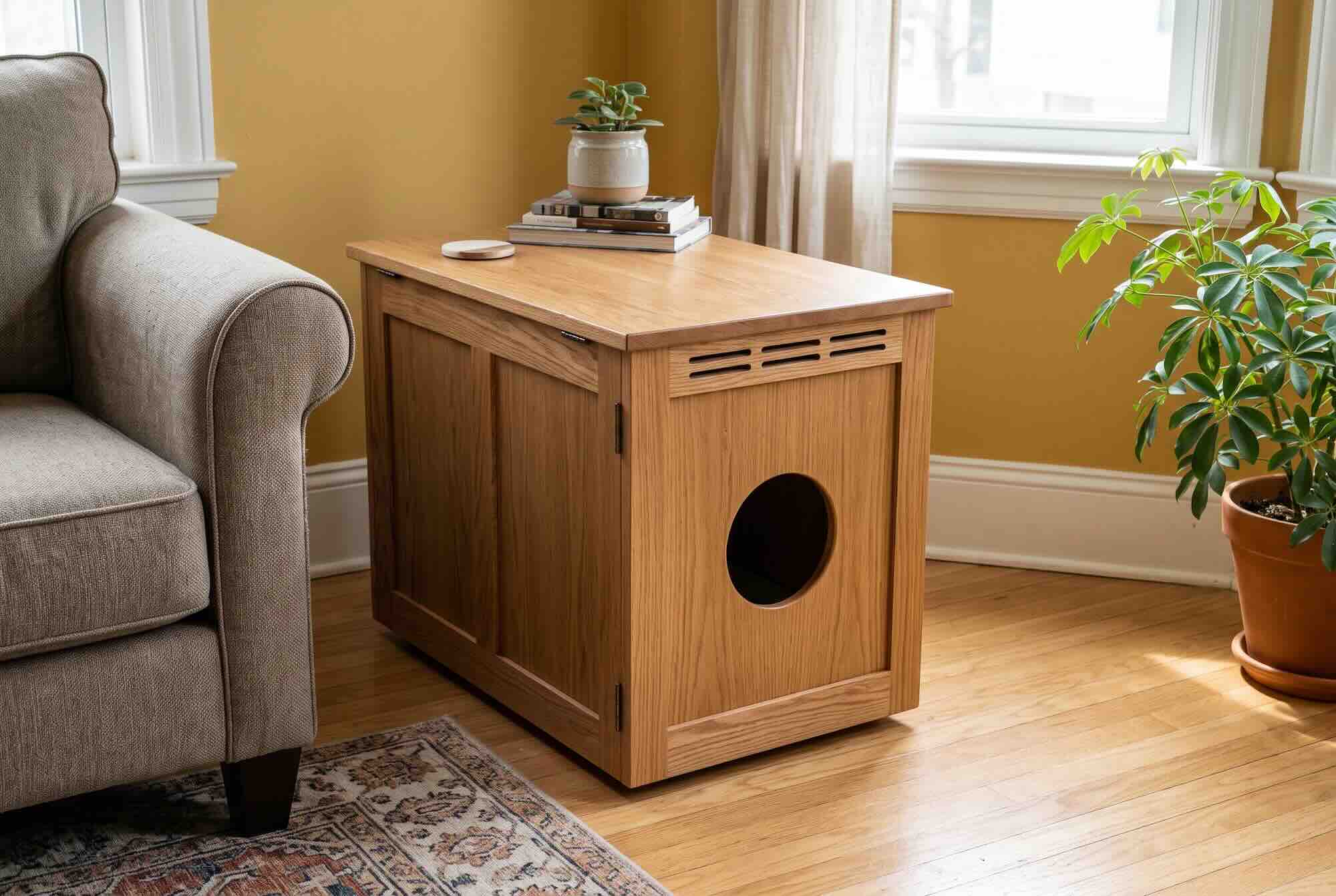
6. Concealed inside furniture like a bench, cabinet, or side table. Litter-box furniture disguises the box as a normal piece while keeping it accessible, which works well in a living area where nothing else is hidden. Choose one with airflow and an easy-open top so scooping stays simple.
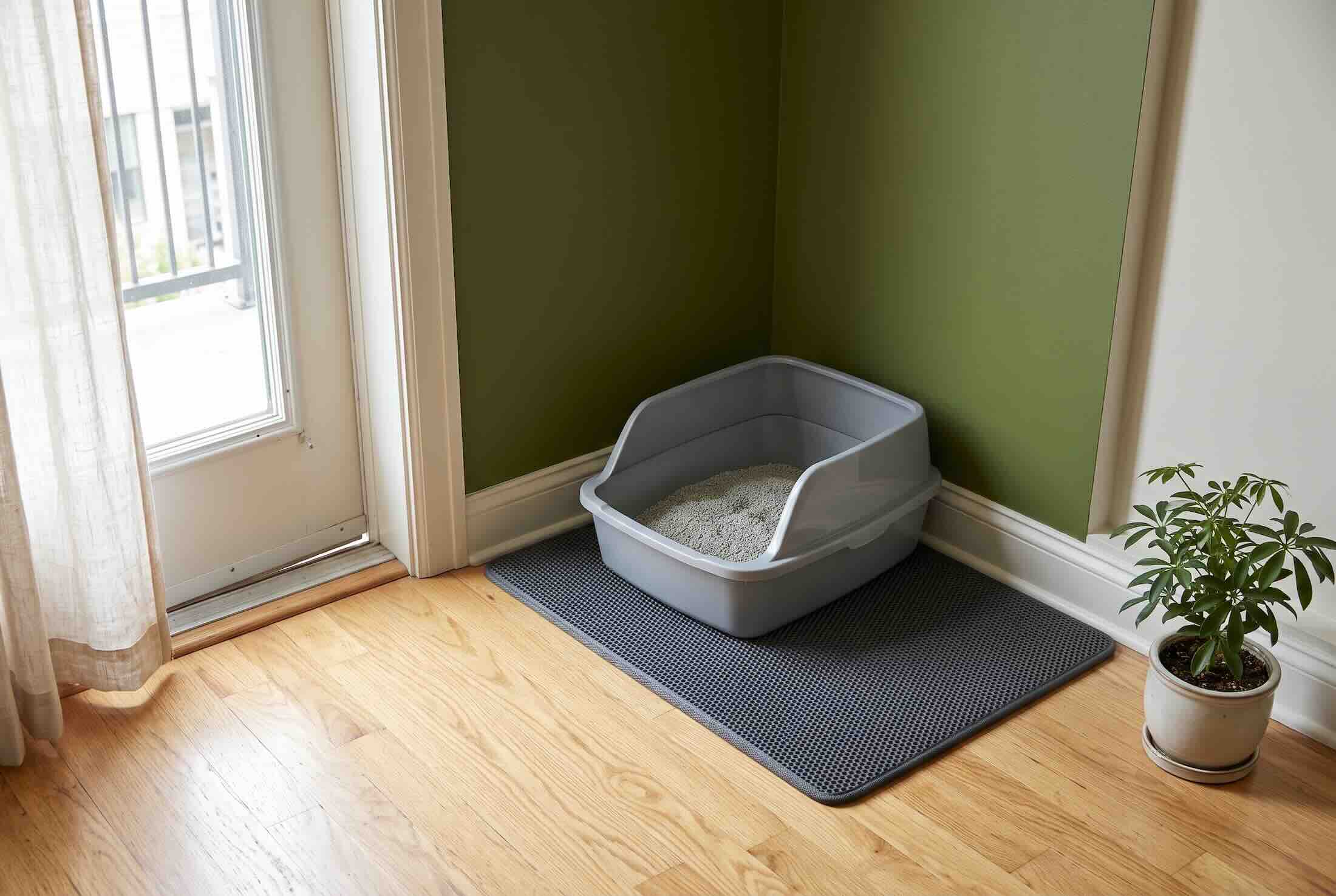
7. Near a balcony or patio door for airflow. A spot near a door or window you can crack keeps odor from settling, which matters most in a small space. Keep the box out of the direct draft and off the main path, and let the ventilation do the work a cover cannot.
Where NOT to Put a Litter Box in a Small Apartment
Where to put a litter box in a small apartment is only half the decision; the other half is where not to. A few spots reliably backfire, so steer clear of these:
- The kitchen or near food and water. Litter next to where you cook, or beside your cat’s bowls, is unhygienic and can put a cat off both eating and the box.
- Beside loud or vibrating appliances. A box next to a washer, dryer, or dishwasher gets startling noise that can scare a cat into going elsewhere.
- Dark, humid, unventilated cabinets. Sealing the box in a closed, airless cabinet traps moisture and odor and invites mold, which is a real health problem in a small home.
- High-traffic areas. A box in a busy hallway or entryway gives your cat no privacy, and many cats will hold it or find a quieter, worse spot.
- The bedroom or living room, unless the box is self-cleaning. These are where you sleep and relax, so litter dust and smell belong there only with a well-maintained or self-cleaning setup.
Mistakes to Avoid With a Litter Box in a Small Space
Picking a good spot is only half the job, and a few daily habits make or break how the box works in tight quarters.
- Not scooping daily. In a small apartment, one day of waste is enough to smell through the whole place, so daily scooping is non-negotiable.
- Moving the box suddenly. Cats dislike change, so shift the box a little at a time rather than all at once, or you may find accidents in its old spot.
- Sealing it too airtight. Hiding the box in a fully enclosed space traps odor and humidity, which makes the smell worse rather than better.
- Closing the door on the box. A shut closet or bathroom door cuts off access, so use a doorstop or a cat flap to keep the box reachable at all hours.
- Using too few boxes. The rule of thumb is one box per cat plus one spare, and skimping leads to avoidance and accidents.
FAQ
How do you stop the litter box smell in a studio apartment?
Scoop at least once a day, keep the box in a ventilated spot, and use a good clumping or odor-absorbing litter. Airflow beats covering, so a cracked window or a small fan near the box does more than a lid, which tends to trap smell inside.
How many litter boxes do you need in a small apartment?
The standard rule is one per cat plus one extra: two boxes for one cat, three for two. In a small home, where to put a litter box in a small apartment often becomes where to fit several, but skimping is the fastest route to accidents, so spread them across rooms if you have to.
Can renters put a litter box in without damaging the apartment?
Yes. Set a waterproof mat or tray under the box to protect the floor, keep it off carpet where you can, and clean spills quickly. Freestanding setups and litter-box furniture leave no marks, which keeps your deposit safe.
Can you put a litter box in the bedroom of a small apartment?
You can, but treat it as a last resort, since litter dust and odor end up where you sleep. If the bedroom is your only private option, use a low-dust litter, scoop constantly, and consider a self-cleaning box.
Can two cats share one litter box in a small apartment?
They can in a pinch, but not well long-term, since sharing leads to territory stress and avoidance. Aim for the one-per-cat-plus-one rule even in tight quarters, because a second box prevents most litter problems.
Does a covered or hidden litter box trap odor?
It can. A hood or sealed cabinet keeps smell out of sight but concentrates it inside, where it grows stronger and bothers the cat. If you do cover the box, make sure the space still has airflow.
Conclusion
The right spot usually reveals itself once it checks three boxes: private, reachable, and ventilated. That is really all where to put a litter box in a small apartment comes down to, and the bathroom, a propped-open closet, or a corner behind a divider hit all three more often than not, while the kitchen and a sealed cabinet fail at least one. Scoop daily, give each cat its own box plus a spare, and keep the air moving, and even a few hundred square feet can share space with a cat cleanly.