

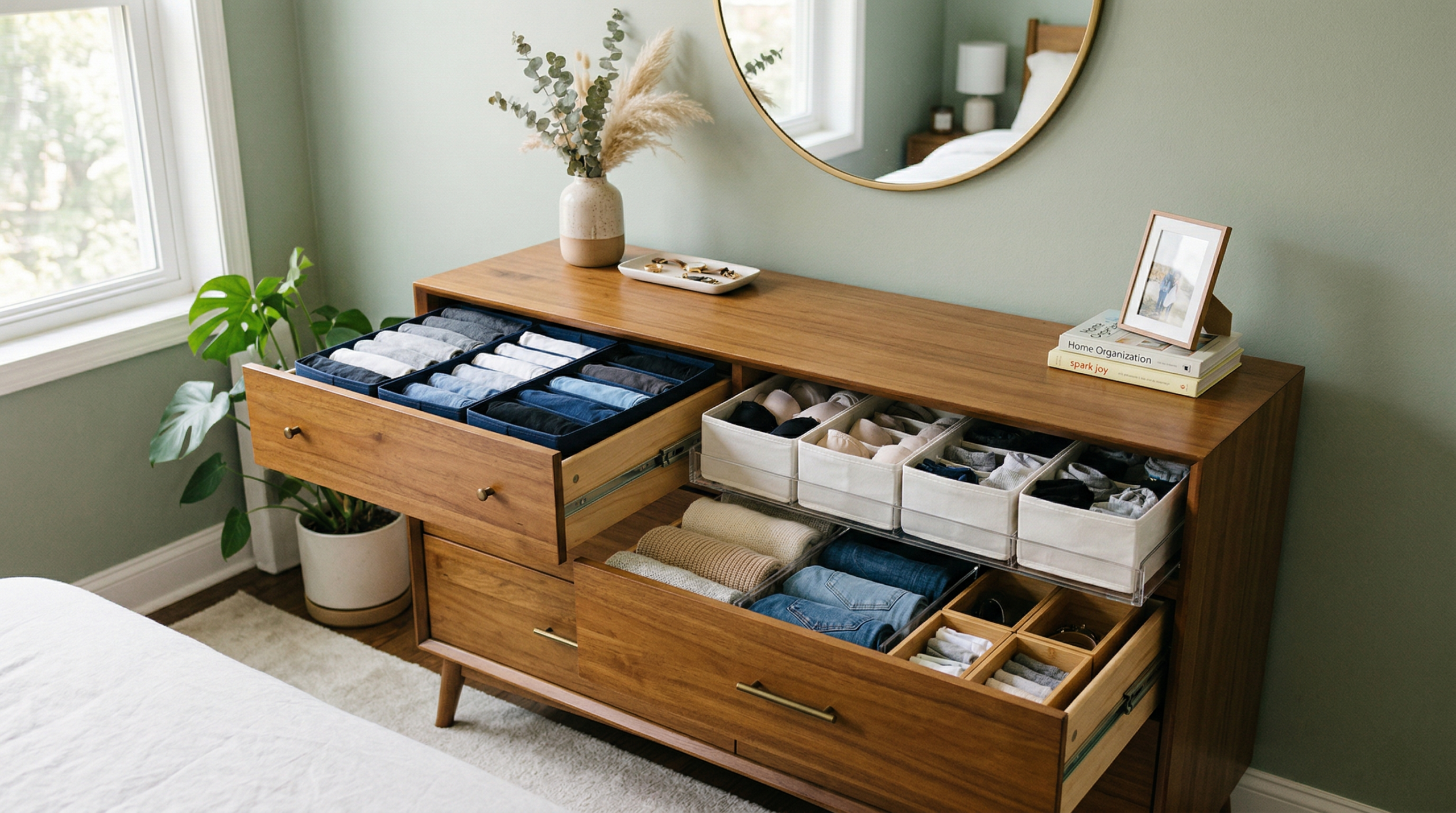
A dresser can make a bedroom feel more organized or more frustrating, depending on how it’s set up. When drawers are overstuffed, mixed together, or filled with items that don’t really belong there, even simple routines like getting dressed in the morning can feel harder than they should. The good news is that dresser organization doesn’t have to be complicated. A few practical changes can help drawers stay tidier, work better, and support everyday life with much less effort.
Why Dresser Organization Matters More Than People Think
Dressers tend to hold the clothing and personal items people use most often. That means they affect daily routines in a very direct way. If socks are hard to find, T-shirts are crammed together, or pajamas keep getting buried under random overflow, the whole bedroom can start to feel less functional.
For many households in the United States, bedrooms aren’t huge, and closet space often isn’t enough on its own. That makes dresser storage especially important. A well-organized dresser can reduce bedroom clutter, speed up morning routines, and help clothing stay in better condition. It can also make the room feel calmer because the surfaces and drawers aren’t constantly overflowing.
1. Give Each Drawer a Clear Purpose
One of the easiest ways to improve dresser organization is to stop treating every drawer like general storage. When each drawer has a specific job, it becomes much easier to put things away and find them later. Without that structure, drawers usually turn into a mix of clothing, accessories, extra toiletries, paper clutter, and items that wandered in from other rooms.
Try assigning drawers by category. One drawer might hold underwear and socks. Another might be for pajamas and loungewear. Another could be for workout clothes or folded T-shirts. The exact system depends on what you wear most, but the principle stays the same. A drawer should have a defined purpose, not a vague one.
2. Remove What Doesn’t Belong Before Reorganizing
A dresser won’t stay organized if it’s holding too much. Before buying dividers or trying new folding methods, it helps to edit what’s already inside. Remove anything you no longer wear, anything that belongs somewhere else, and anything that’s taking up space without serving a real purpose.
This step matters because no organizing method works well in an overcrowded drawer. If clothing is packed too tightly, items get wrinkled, hidden, and harder to put back neatly. Decluttering first creates breathing room, which makes every other dresser organization idea more effective. It also helps reveal how much storage you actually need.
3. Use Drawer Dividers for Small Items That Get Messy Fast
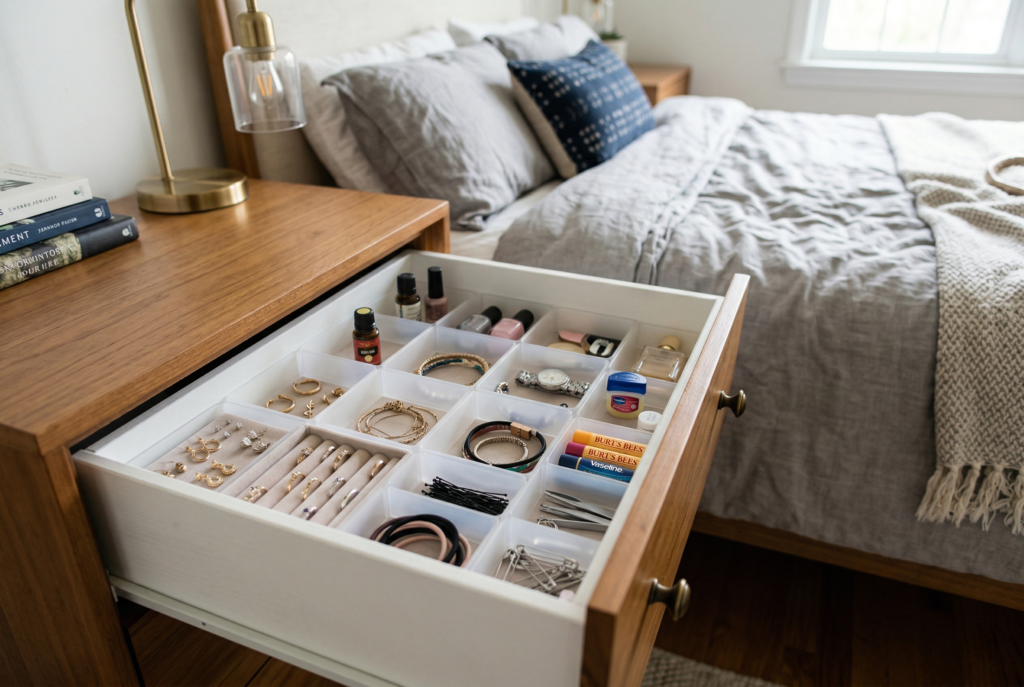
Small clothing items create some of the biggest drawer problems. Socks, underwear, bras, swimsuits, belts, and accessories can quickly become tangled or messy when they’re all tossed together. Drawer dividers help create structure so these categories stay separated and easy to see.
This is one of the most useful dresser organization tools because it prevents small items from turning into a daily frustration. Instead of digging through a jumbled pile, you can reach exactly where that category belongs. Dividers also help maintain the system over time because they create a visible boundary for how much each section should hold.
4. Fold Clothes in a Way That Makes Everything Visible
One common reason drawers get messy is that clothes are stacked in tall piles. When items are layered on top of one another, the things at the bottom disappear, and the pile usually gets disturbed every time someone searches for one shirt. A better approach is to fold clothes in a way that keeps more of each item visible.
For many categories, especially T-shirts, leggings, pajama bottoms, and baby clothes, a vertical or file-style fold works well. This lets you see more at a glance and reduces the need to dig through stacks. The goal isn’t to fold everything perfectly. It’s to create a drawer layout that makes items easier to use and easier to return neatly.
5. Store Items Based on How Often You Use Them
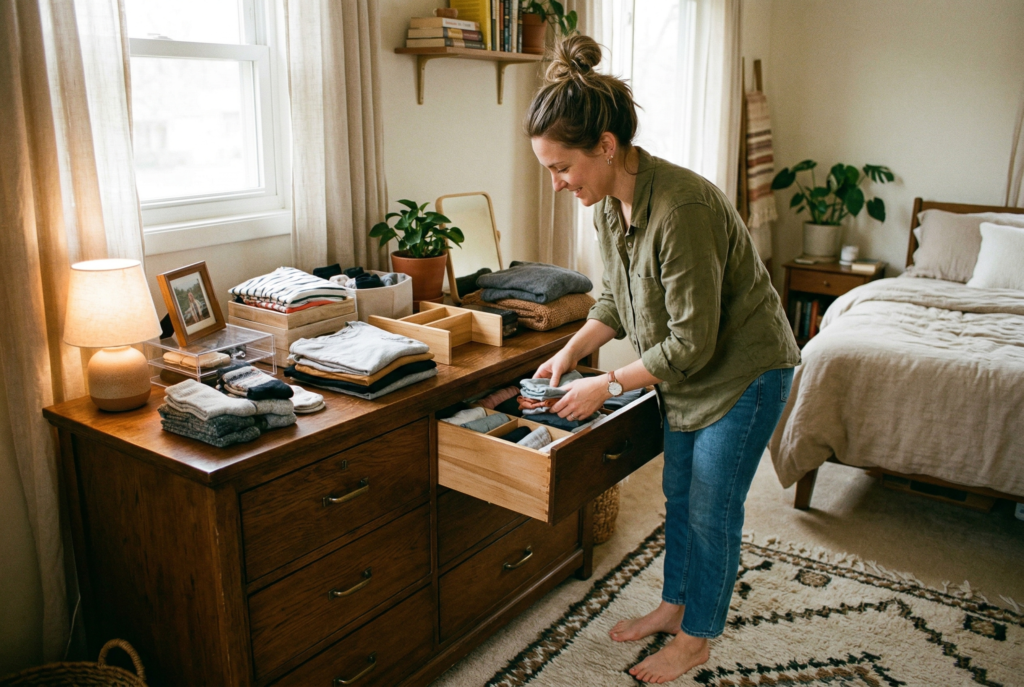
The best dresser systems reflect real habits. Frequently worn clothing should live in the easiest-to-reach drawers, while less-used items can go lower down or in less convenient spots. This small shift makes daily routines smoother because the things you need most are right where you naturally reach for them.
For example, if you wear sleepwear every night and workout clothes several times a week, those categories should probably be more accessible than special occasion items or seasonal pieces. This kind of placement helps the dresser support your routine instead of forcing you to search through drawers that don’t match how you actually live.
6. Avoid Turning the Top Drawer Into a Catch-All
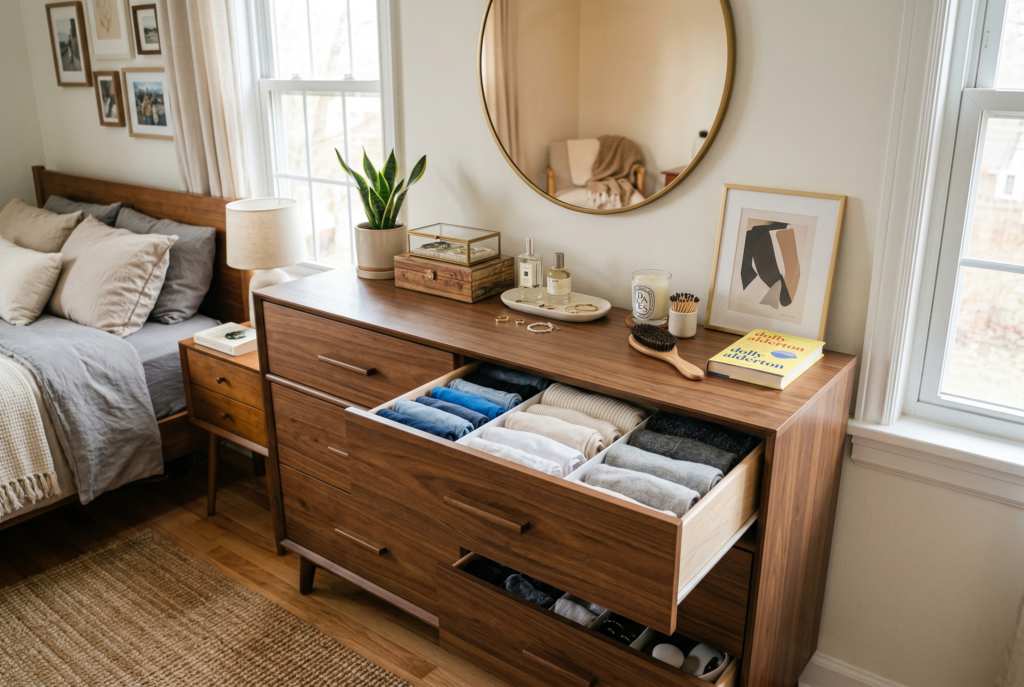
Top drawers often become clutter magnets. Because they’re easy to reach, people tend to toss in anything that seems small enough to fit. Over time, that drawer may end up holding a mix of chargers, receipts, hair ties, lip balm, random jewelry, and clothing that no longer has a clear place.
A better approach is to protect the top drawer from becoming general overflow. Keep it limited to one or two categories you use regularly, or use shallow organizers if it includes both clothing and personal items. The more focused this drawer stays, the easier it is to keep tidy. Since it’s usually opened often, its condition can shape how the whole dresser feels.
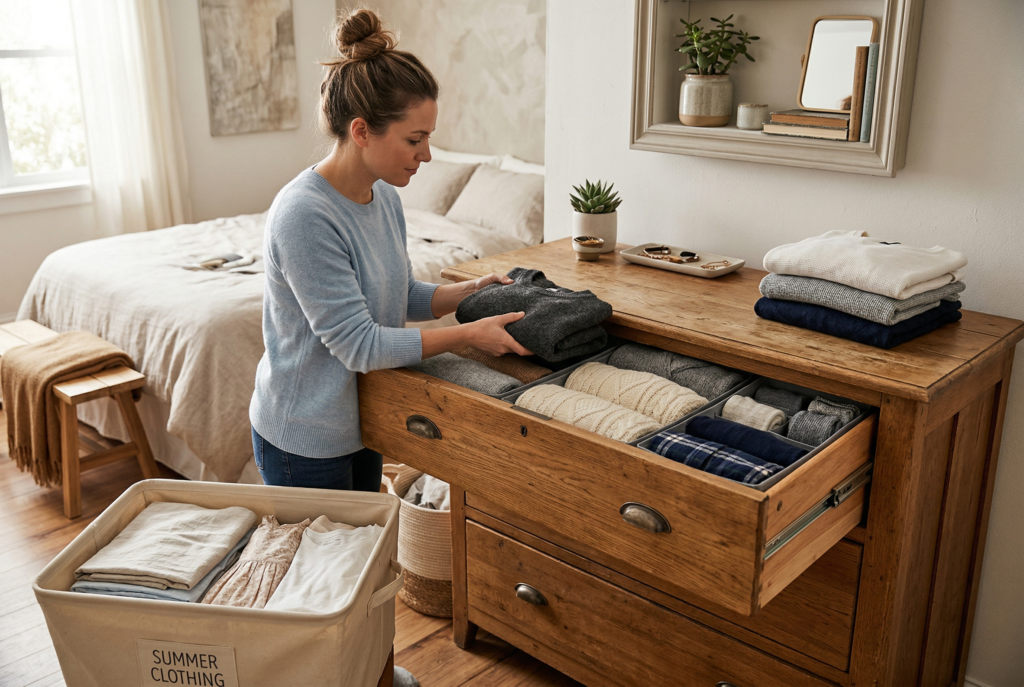
7. Rotate Seasonal Clothing Instead of Storing Everything at Once
Trying to keep every season of clothing in the dresser all year usually leads to crowded drawers and unnecessary frustration. Thick sweaters in summer, shorts in winter, and off-season sleepwear can take up space that would be better used by the items you actually need right now.
Seasonal rotation can make dresser drawers feel much more manageable. Move off-season clothing to a closet shelf, under-bed bin, or another backup storage area, and let the dresser focus on current daily use. This gives you more room to keep drawers neat and prevents the whole system from feeling too full.
8. Keep Similar Clothing Types Together
Mixing too many clothing types in one drawer often creates visual clutter and makes daily routines less efficient. If tank tops are mixed with pajamas, gym shorts, and random accessories, the drawer may technically hold everything, but it won’t feel easy to use.
Grouping similar items together creates a simpler system. T-shirts with T-shirts. Sleepwear with sleepwear. Workout gear with workout gear. Even if you need to combine categories because drawer space is limited, it helps to keep them logically paired. The clearer the grouping, the easier it becomes to maintain order and put laundry away without hesitation.
9. Leave a Little Empty Space Instead of Packing Drawers Full
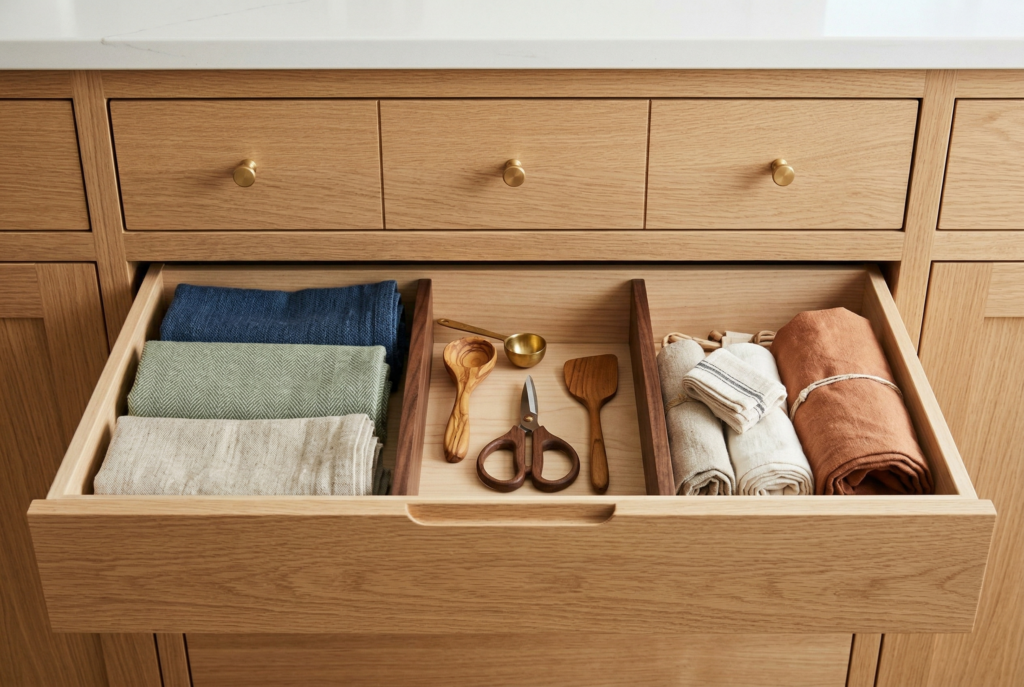
A drawer that’s packed to the brim almost never stays tidy. Even if it looks organized right after a cleanout, it usually becomes messy again because there’s no room to move things around or put items back easily. A little open space makes a big difference.
That empty space gives the drawer flexibility. It helps clothing stay folded, reduces wrinkling, and makes it easier to see what you have. More importantly, it makes the system sustainable. When drawers are slightly underfilled instead of crammed full, everyday use feels smoother and less irritating.
10. Reset Drawers Regularly in Small, Quick Sessions
Dresser organization works best when it’s maintained in small doses instead of ignored until it becomes a problem. A quick reset every so often can prevent drawers from drifting back into clutter. This doesn’t need to be a big project. It might mean refolding one section, removing a few items you no longer wear, or putting back things that ended up in the wrong drawer.
This kind of light maintenance is often what keeps a dresser clutter-free long term. Just like kitchen drawers or bathroom cabinets, dresser storage holds up better when it gets small corrections along the way. Waiting too long usually makes the mess feel bigger than it really is.
Conclusion
These dresser organization ideas can help keep drawers tidy, easy to use, and clutter-free every day by creating clearer categories, reducing overcrowding, and making clothing easier to see and access. From using dividers and visible folding methods to rotating seasonal clothes and assigning each drawer a purpose, the most effective changes are often simple and practical.
A well-organized dresser doesn’t need to look perfect. It just needs to work in a way that supports your routine. When drawers are easier to use, the whole bedroom tends to feel calmer, more functional, and much easier to keep in order over time.