

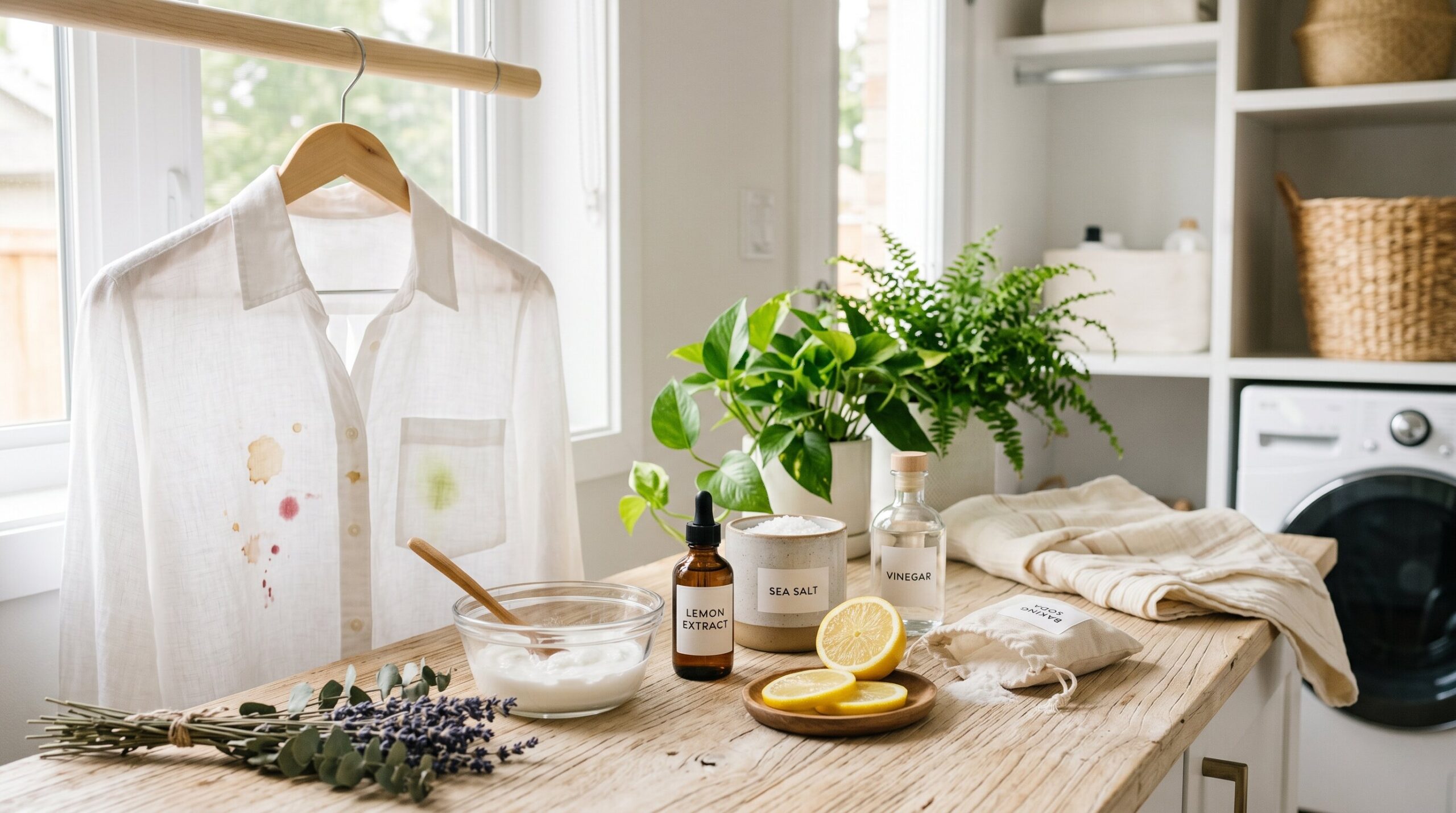
Did you just accidentally splash coffee all over your favorite white shirt right before a big meeting?. It’s a total nightmare, but you shouldn’t panic just yet. While you might immediately think you need a heavy-duty chemical stain remover, the “Green Cleaning” trends of 2026 are all about shifting toward natural, pantry-based solutions. This deep-dive guide is going to give you the best stain remover for clothes options using simple items you likely already have in your kitchen. We’ve gathered 17 incredibly effective hacks that are safe for your skin and the environment.
The Golden Rules of Natural Stain Removal
Before we get into the specific recipes, there are a few rules you’ve got to follow if you want these DIY methods to actually work. First, speed is absolutely everything, so you need to treat the spot immediately so it doesn’t have time to sink deep into the fibers.
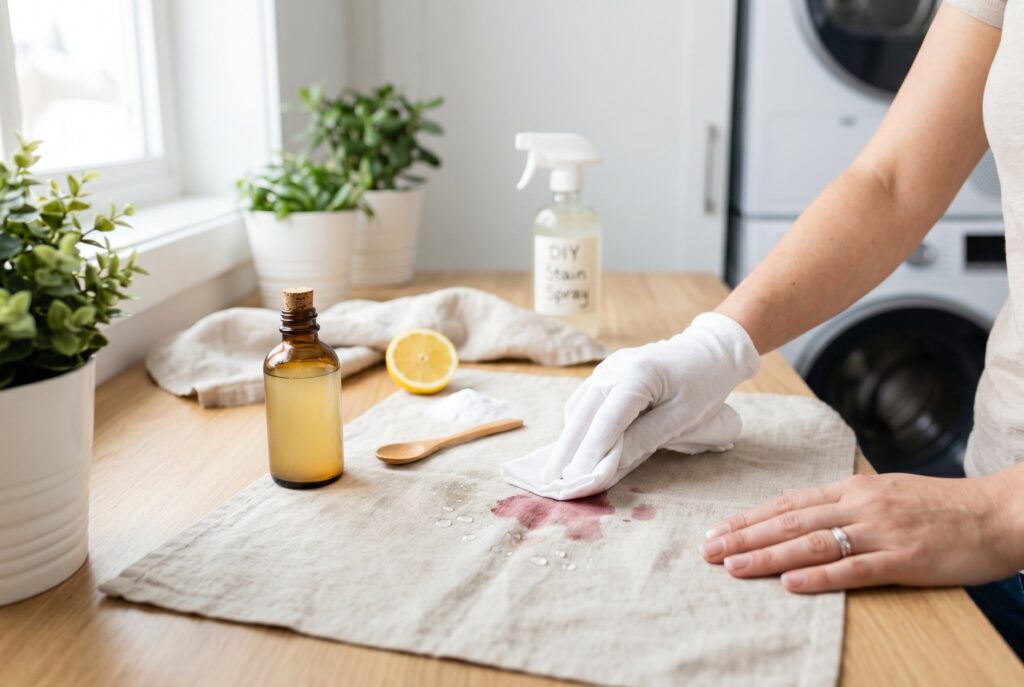
When you start cleaning, remember to blot and never rub. Rubbing just pushes the mess deeper and can ruin the fabric, so you should gently dab it instead. Finally, you should always try to work from the back of the fabric. By treating the underside of the stain, you’re essentially pushing the debris out of the fibers rather than through them.
17 Chemical-Free DIY Hacks for Every Stain Type
Every mess has its own chemical personality, so you’ve got to choose the right natural agent for the job.
Group 1: The Pantry Power Players (All-Purpose Fixes)
These are the versatile items that handle general household mishaps.
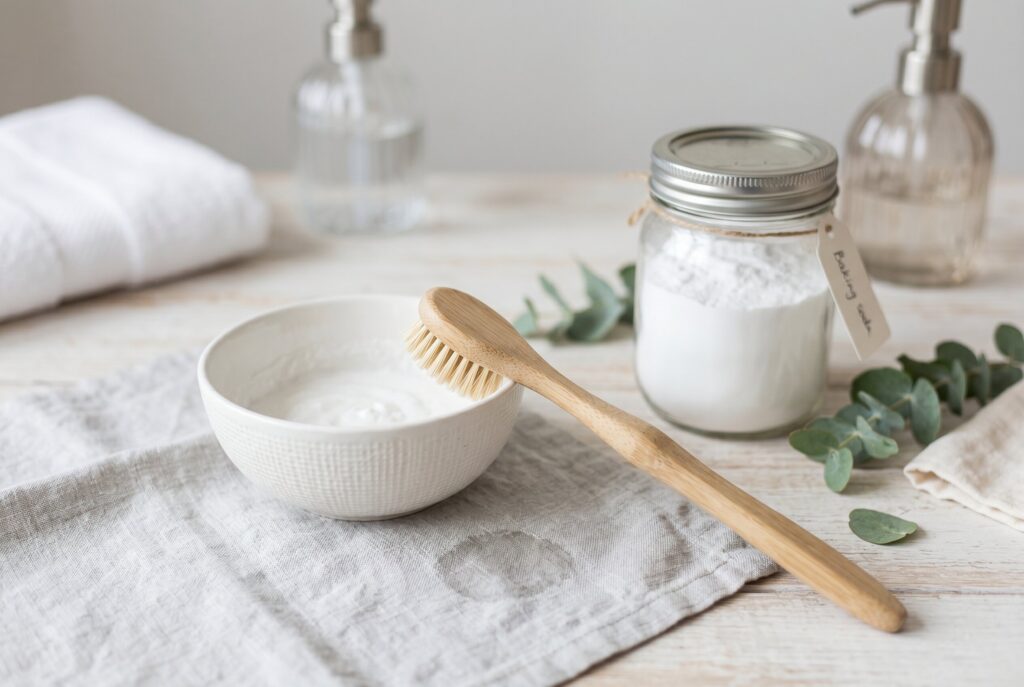
1. Baking soda paste: a legendary fix for stubborn or “mystery” spots because it works as a mild abrasive and a natural deodorizer. It’s especially useful for older spots that haven’t quite set in yet because the paste helps lift debris directly out of the weave.
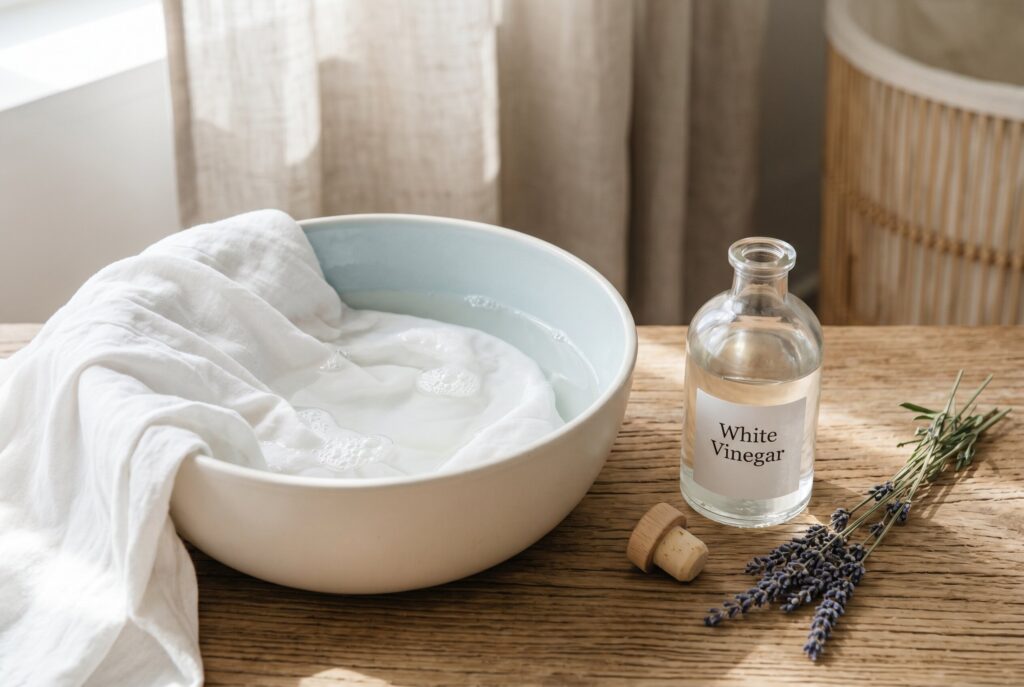
2. White vinegar soak: uses a weak acetic acid to help lift stains and soften the water. It’s a fantastic tool for general laundry, but you shouldn’t use it on delicate fabrics like silk or wool without testing a small area first.
3. Lemon juice and sunlight: acts as the original natural bleaching agent for white fabrics. The citric acid works with UV rays to brighten clothes, though it’s too strong for colored items and can cause fading.
4. Club soda: a classic emergency fix for fresh wine spills because the carbonation helps lift the liquid from the fibers before it has a chance to set. It’s a quick, fizzy reaction that prevents the deep pigments from bonding permanently.
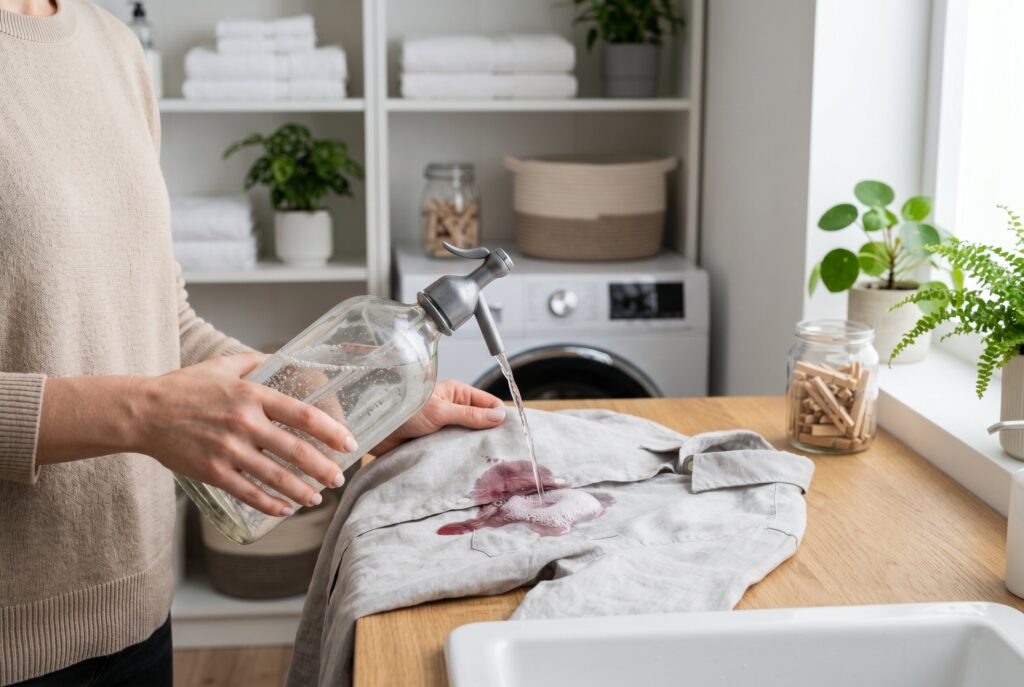
Group 2: Fighting Oils and Grease Stains
If you’re wondering how to get grease out of clothes or how to get rid of oil stains on clothes, you need absorbents that cut through the slick.
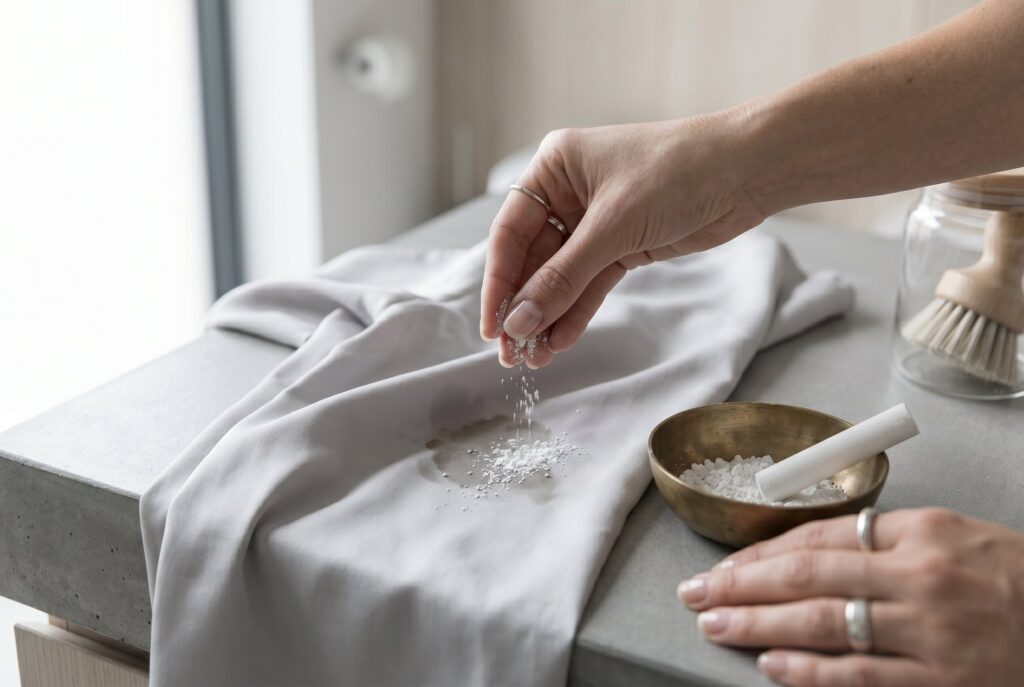
5. Cornstarch or baby powder: works wonders if you catch an oil spill early. These powders are absorbents that suck the grease right out of the fabric so you don’t ground it deeper into the fibers.
6. Liquid dish soap: specifically designed to break down grease on your dishes, so it’s a natural surfactant for your laundry. It’s one of the most effective tools for kitchen splatters because it emulsifies the oil so it can wash away.
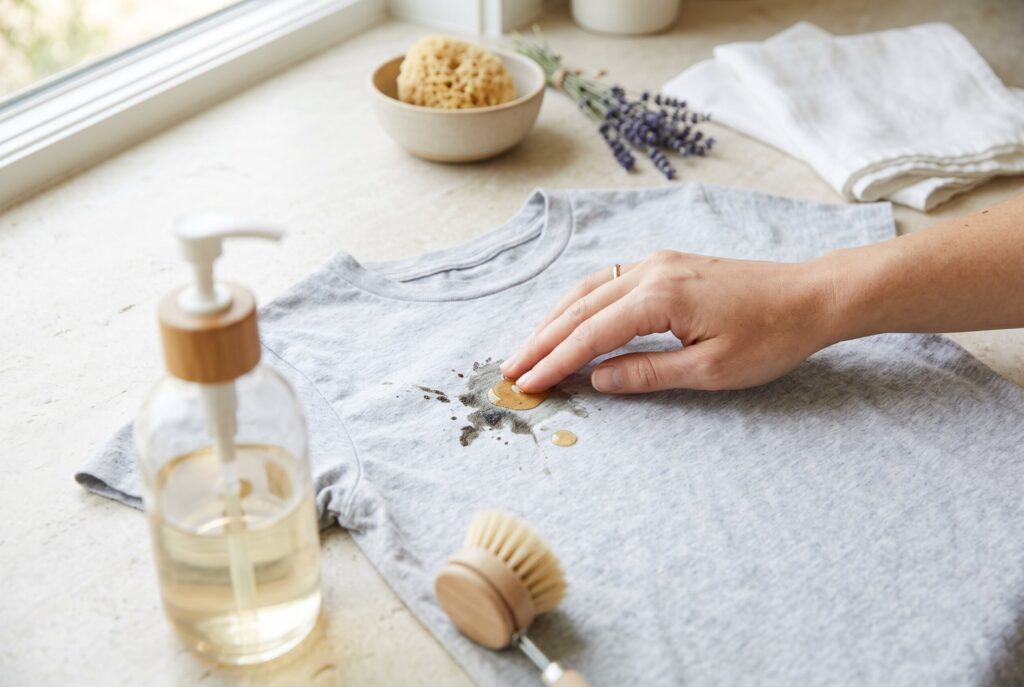
7. White chalk: a handy trick for small oil droplets on delicate fabrics like silk. You just rub a little on the spot and the fine chalk dust absorbs the grease without requiring a full soak that might damage the garment.
Group 3: Conquering Protein Stains (Blood and Sweat)
For things like blood or sweat, you’ve got to avoid hot water because heat will literally “cook” the protein into the fibers. This is key when learning how to get sweat stains out of shirts.
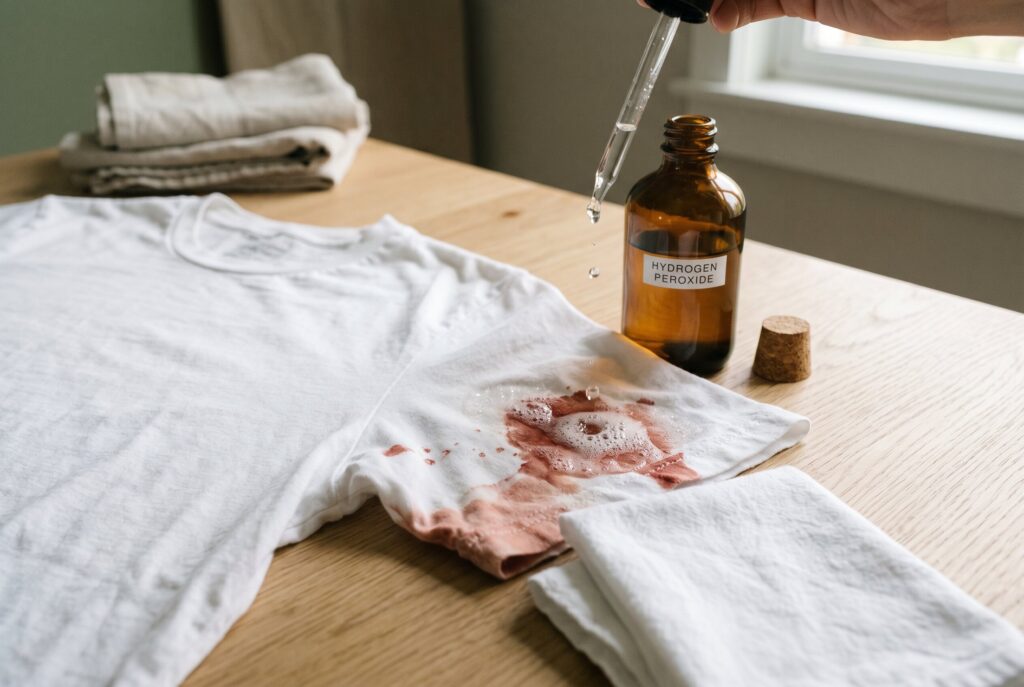
8. Hydrogen peroxide: the “saturate and see” solution for blood on white clothes. It’s an oxidizer that bubbles as it chemically breaks down the proteins, making them much easier to blot away.
9. Saltwater soak: a simple way to prevent protein stains from bonding to your clothes. You should use cold saltwater for blood or dairy spills because the salt keeps the proteins from setting into the fabric weave.
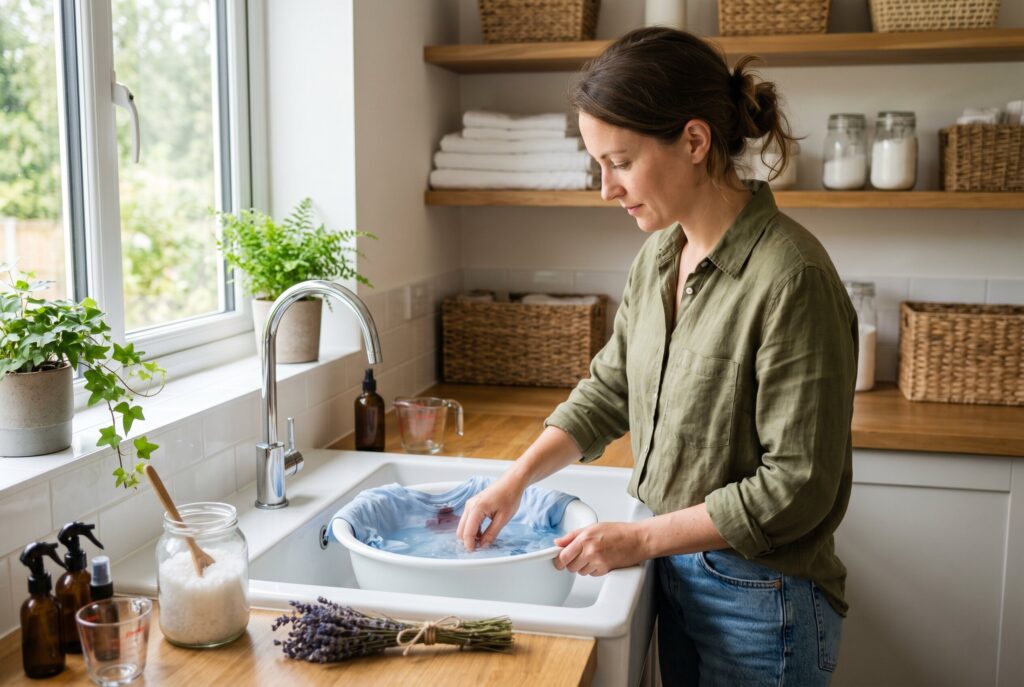
10. Aspirin paste: made from crushed tablets, it contains salicylic acid which targets those yellow underarm marks. It helps dissolve the organic build up that causes discoloration over time.
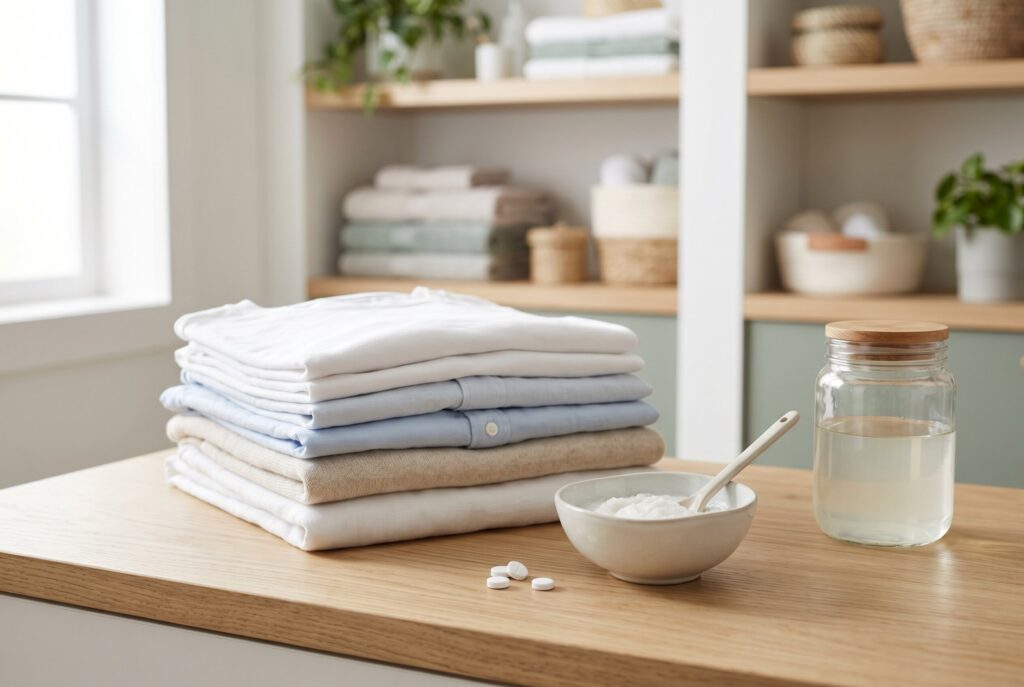
Group 4: Tannin and Pigment Hacks (Wine, Ink, and Veggies)
Pigment-heavy spills can be a disaster, especially when you’re trying to figure out how to remove vegetable stains.
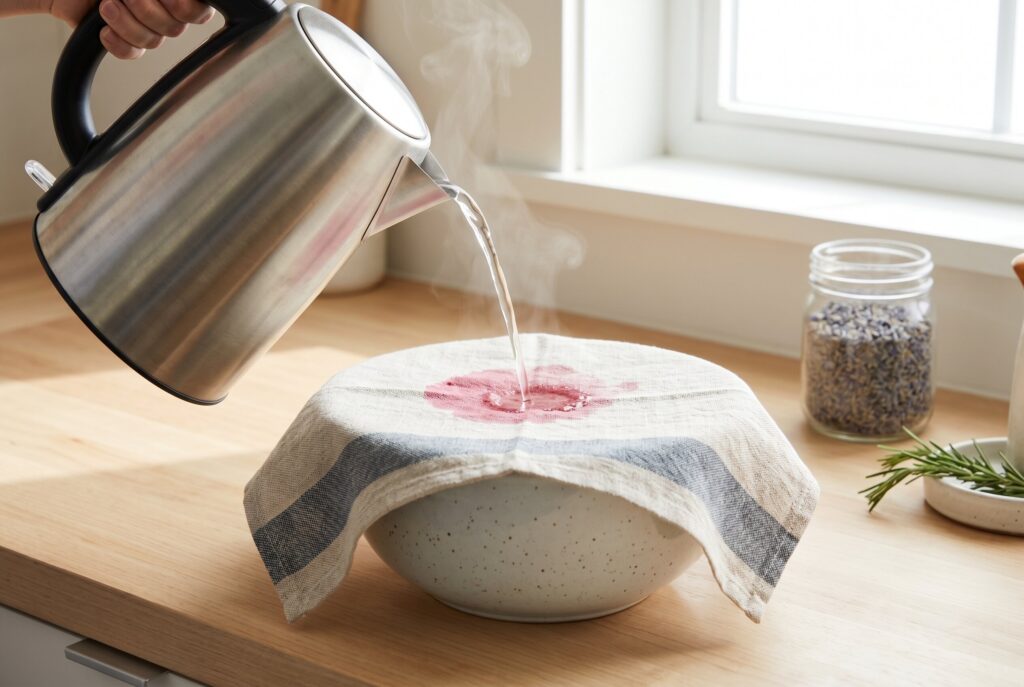
11. Boiling water “the stretch”: a classic move for berry or fruit juice stains. You stretch the fabric over a bowl and pour hot water from a height so the pressure and heat blast the pigment out of the fibers.
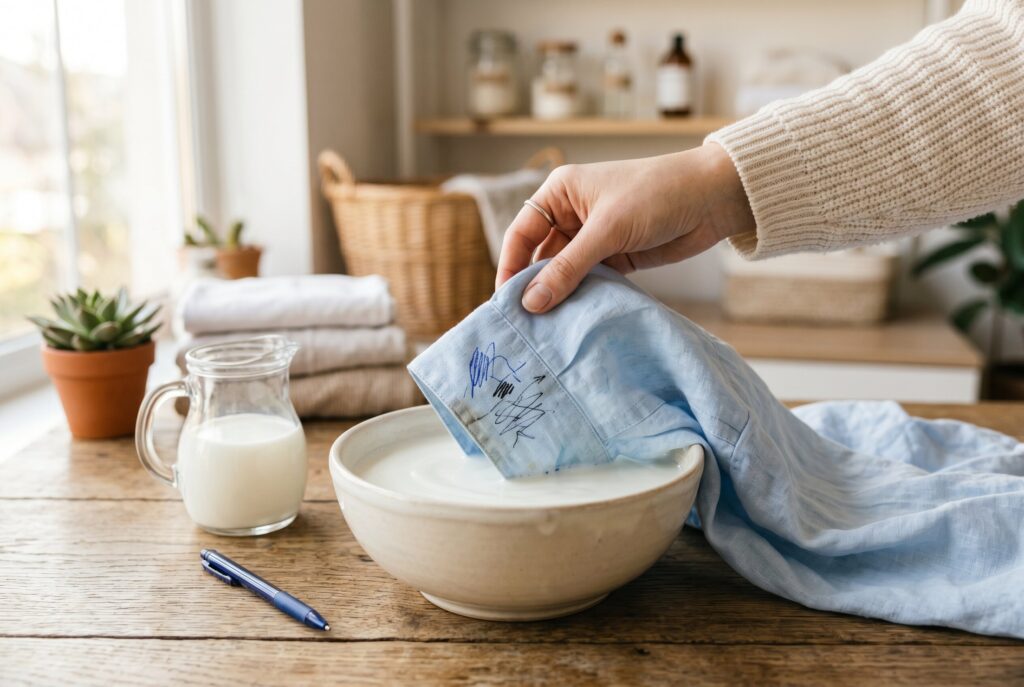
12. Milk soak: a surprisingly effective and gentle way to lift ballpoint pen ink. The proteins in the milk help draw the ink out of the clothes without damaging the fabric.
13. Rubbing alcohol: acts as a powerful solvent for grass stains or more stubborn ink marks. It breaks the chemical bonds of the pigment so you can blot it away with a clean cloth.

Group 5: The “Odd” but Effective Hacks
Sometimes the best tool is the one you’d least expect.
14. Ice cubes: essential for when you’ve got gum or candle wax stuck on your clothes. They freeze the mess so it’s brittle enough to scrape off without ruining the weave of the fabric.

15. Egg yolk: actually helps break down the oils in coffee stains. It’s a surprising emulsifier that targets the specific tannins in coffee, which sounds strange but it’s very effective.
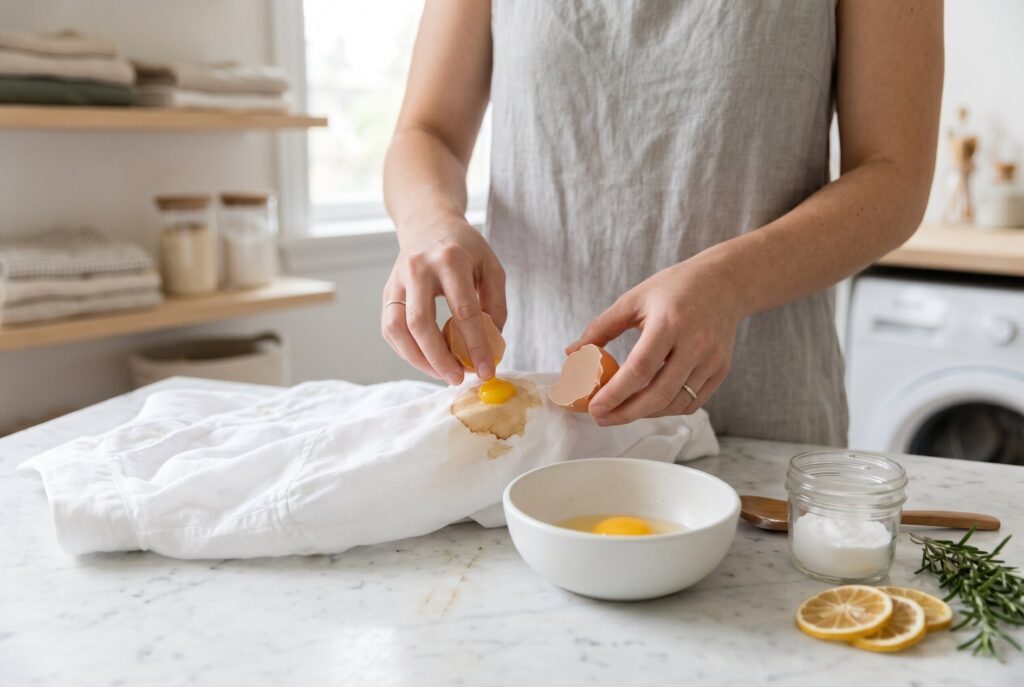
16. Bread scrub: uses the soft center of a loaf to “erase” dirt marks from suede or silk. The doughy texture grabs the surface debris without using any moisture that hasn’t been tested and might stain the fabric.

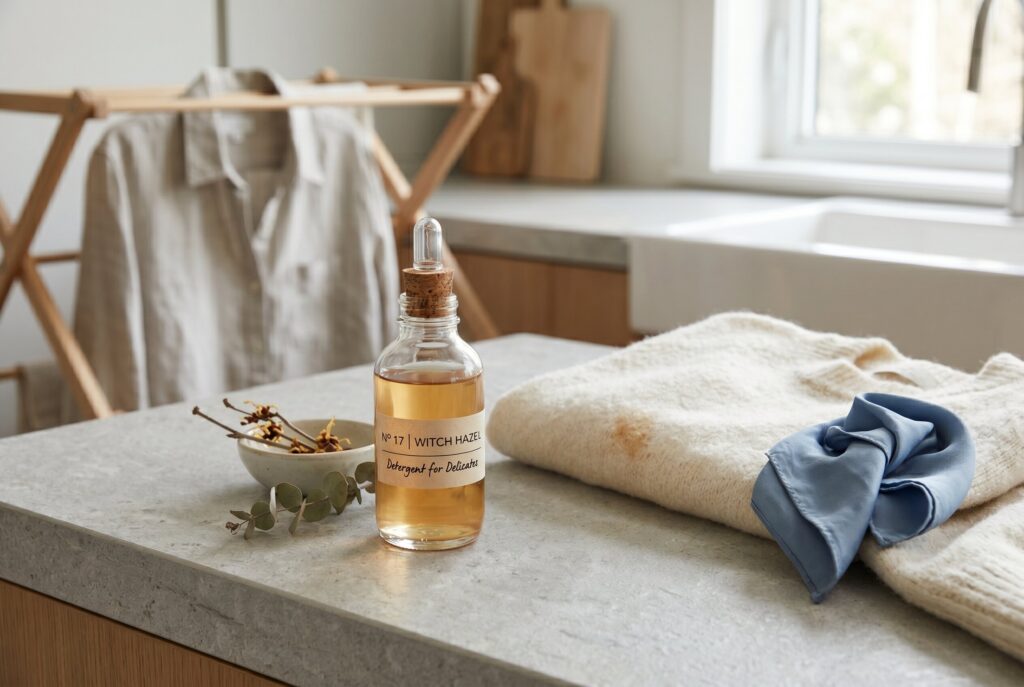
17. Witch hazel: a very gentle solvent that’s perfect for sensitive or delicate fabrics that can’t handle vinegar. It’s an excellent choice for items like wool or silk that need a lighter touch.
Salvaging Set-In Stains After the Dryer

The biggest challenge is knowing how to get stains out of white clothes once they’ve already been through the heat of the dryer. Heat usually “bakes” the stain in, making it permanent. However, you can try a natural stain remover that’s a bit more aggressive. The “Over-Night Soak” involves a mixture of two parts hydrogen peroxide and one part dish soap. You should apply this to the spot, let it sit overnight, and then wash it again.
The “Emergency” Kit: When to Pivot to Commercial Options
Sometimes a DIY fix hasn’t worked for an industrial mess, or you’re just on the go and need something fast. In those cases, having a few vetted products is a life-saver. Oxiclean is still widely considered the gold standard for large-scale oxygen bleaching. For travel, a tide pen is unbeatable for small spills.
If you need a heavy-duty spray, shout stain remover is a reliable classic. One of the biggest trends for 2026 is the miss mouth stain remover, which has gone viral on TikTok because it’s both non-toxic and incredibly effective on kids’ messes.
Fabric Compatibility and Safety Cheat Sheet
You haven’t lived until you’ve accidentally ruined a silk blouse with the wrong cleaner, so please use this table to check for safety.
| Fabric Type | Best Natural Agent | Warning |
| Cotton | Lemon, Baking Soda | Fabric can shrink if the water is too hot |
| Wool and Silk | Vinegar, Witch Hazel | Never use Hydrogen Peroxide or Lemon |
| Synthetics | Dish Soap, Alcohol | Avoid using high heat or boiling water |
A huge safety tip is that you should never mix bleach with acids like vinegar or rubbing alcohol because it can create toxic fumes. Also, the popular “baking soda and vinegar” mix is actually a bit of a myth: it’s most effective while it’s actively fizzing because the physical reaction lifts the stain, but once the fizzing stops, they just neutralize each other into salty water.
Conclusion and Next Steps
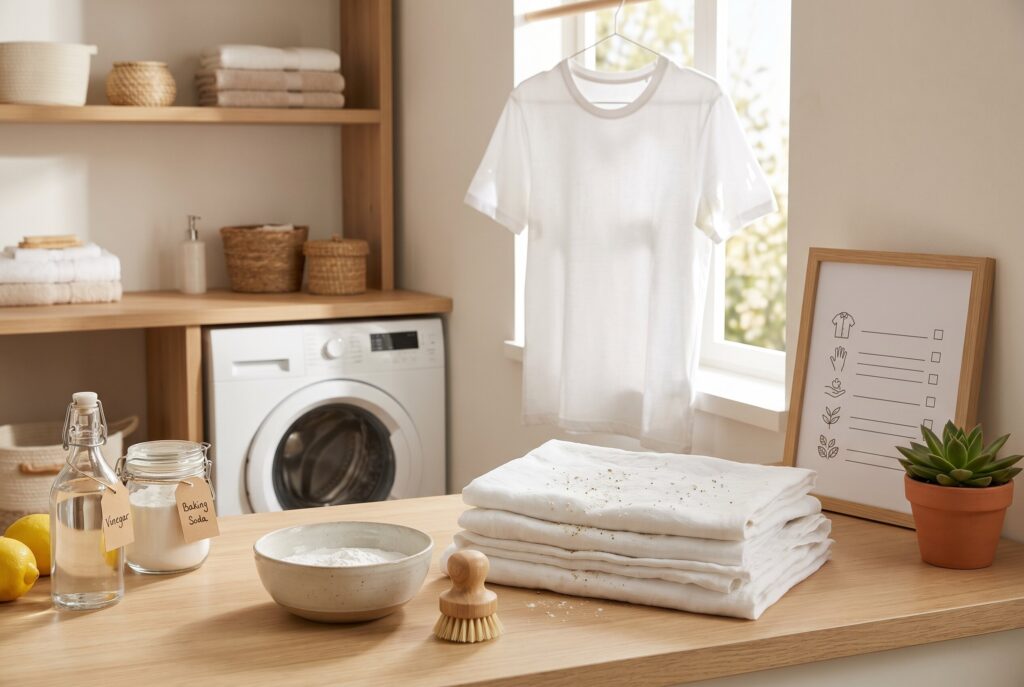
At the end of the day, cleaning your clothes doesn’t have to mean filling your home with harsh chemicals. Whether you’re dealing with a fresh splash of juice or trying to figure out how to get rid of deodorant stains, the answer is usually in your pantry. It’s all about choosing the right method for the right fabric. If you want to keep these tips handy, you should sign up for our newsletter to get a printable version of our “Stain Removal Cheat Sheet.”
Related Articles
- How to Remove Red Wine From Clothes: 11 Fast Emergency Hacks (2026)
- 12 Effective Stain Removal Methods: Easy Ways to Remove Every Type of Tough Stain at Home
- How to Remove Oil Stains from Clothes: 7 Hacks for Old Grease (2026)
- How to Get Period Blood Out of Clothes: 7 Mom-Approved Cold-Water Hacks
- How to Get Stains Out of White Clothes: 9 Hacks (Without Bleach!)
- How to Remove Vegetable Stains from Clothes: 7 Natural DIY Tricks
- How to Get Ink Out of Clothes: 7 Safe DIY Hacks (That Actually Work)