

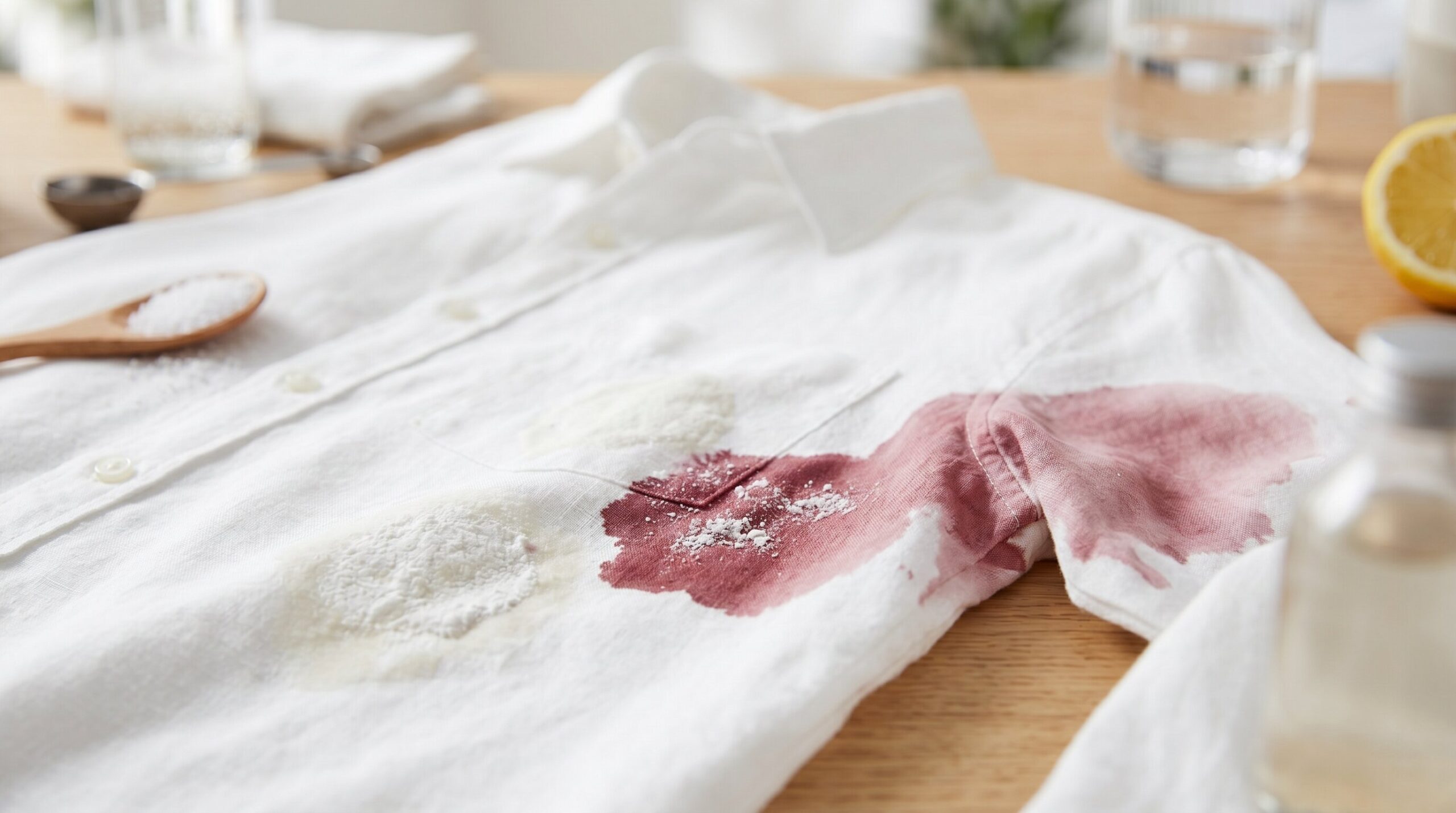
It’s a distressing moment when a glass of Cabernet tips over, but a wine spill doesn’t have to be a permanent sentence for clothing. Success in red wine stain removal depends heavily on speed, as the “golden moment” for effective treatment typically occurs within the first 15 minutes of an accident.
Understanding the chemistry behind the spill is useful because red wine contains chromogens and tannins, which are the color-carrying molecules that bond with fabric fibers. Learning how to remove red wine from clothes before these compounds permanently set into the material is the only way to ensure the item is salvaged.
The Golden Rules of Emergency Wine Stain Removal
Effective wine stain removal requires following specific rules to prevent accidental damage. One must never scrub the area, as the friction of rubbing pushes the liquid deeper into the porous fibers and can cause the stain to spread.
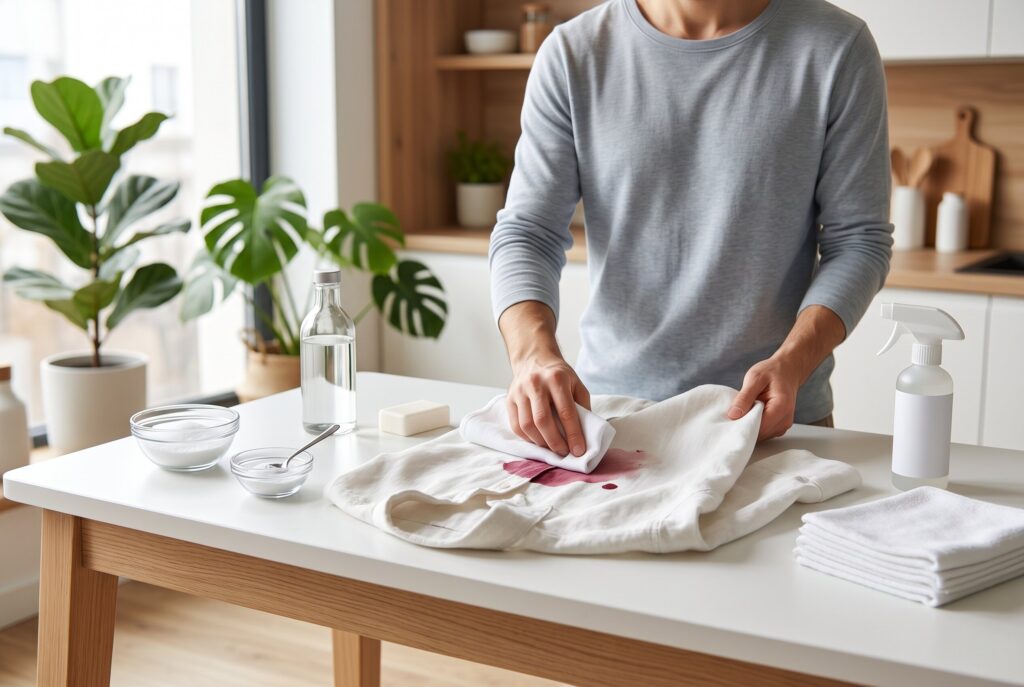
It’s also vital to avoid heat in the early stages, meaning a person shouldn’t use hot water or a dryer because high temperatures set the pigment into the fabric permanently. The most reliable technique is blotting, which involves dabbing the spill with a clean cloth or paper towel from the outside toward the center to absorb the excess liquid without expanding the mess.
11 Fast Hacks for Fresh Spills
There are several methods using household items or a dedicated stain remover that can stop a spill from becoming a permanent mark.
1. Table Salt Absorption
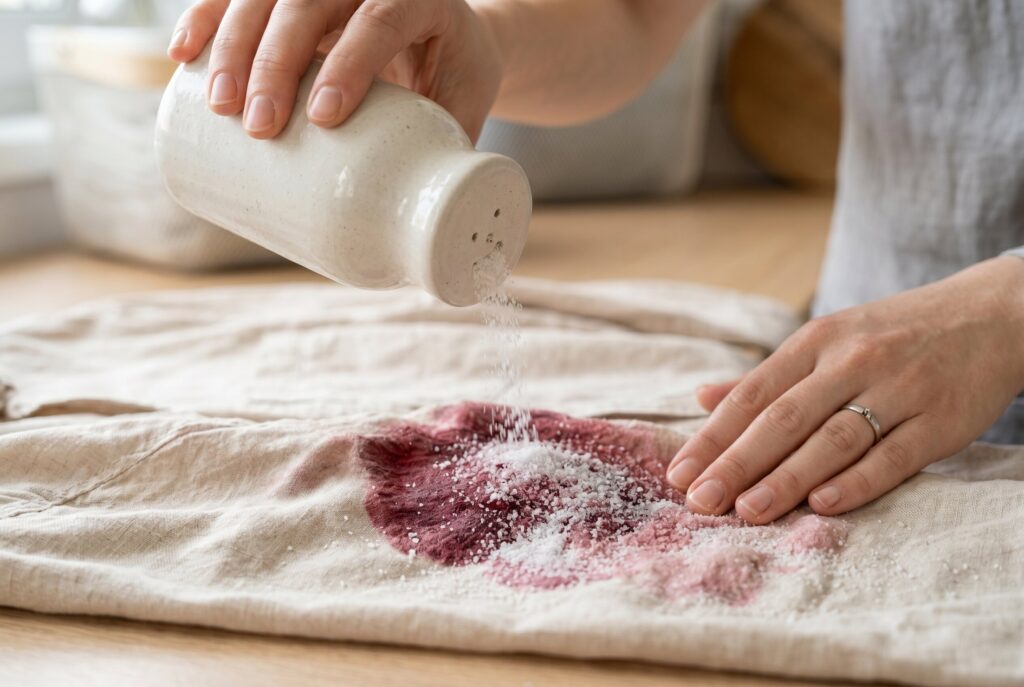
The application of salt is a high speed emergency tactic that works as a desiccant, pulling the wine pigment out of the fabric before it has time to dry. A generous layer of table salt should be spread over the wet area until the crystals are saturated with the red liquid. This method is particularly effective for heavy materials, such as when someone needs to know how to get red wine out of carpet or thick upholstery.
2. Baking Soda Paste
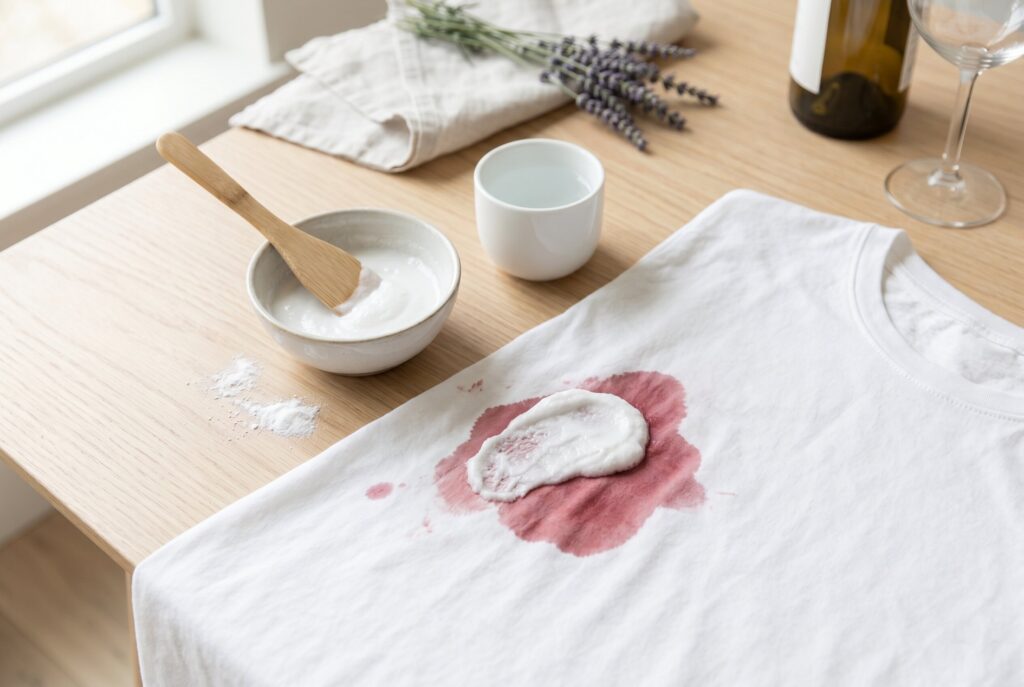
Mixing baking soda with a small amount of water creates a thick paste that excels at moisture and pigment absorption. This is a staple in non toxic cleaning routines because it doesn’t use harsh chemicals and is mild enough for most standard garments. Once the paste dries on the fabric, it can be brushed away before the item is placed in a cold wash.
3. Club Soda and Sparkling Water
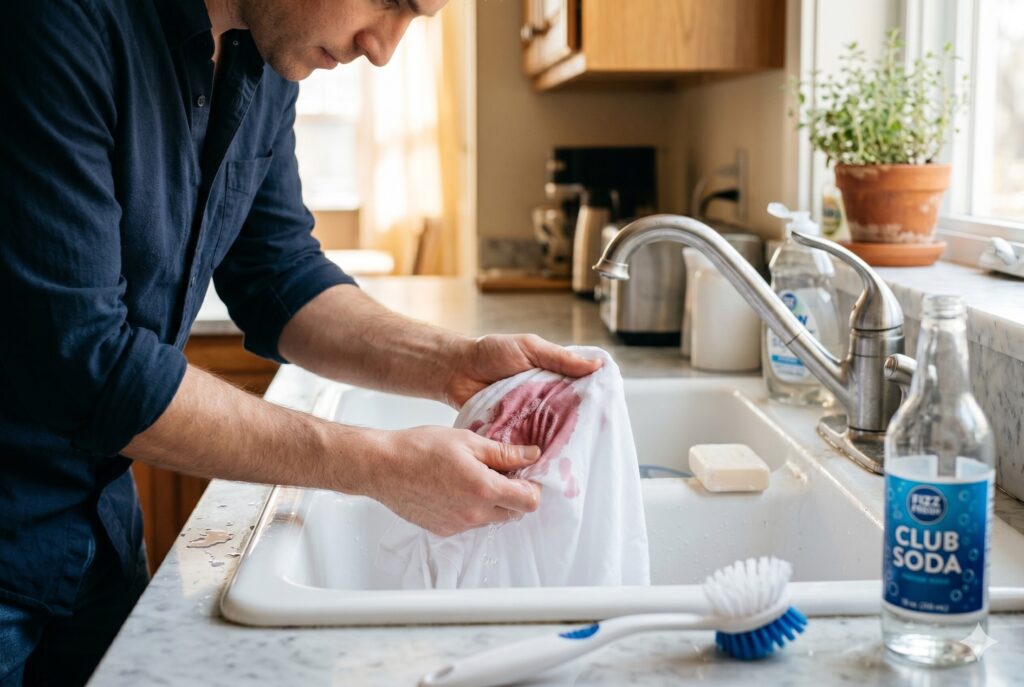
Pouring club soda or sparkling water over the affected area uses carbonation to physically lift wine particles to the surface of the fabric. It’s believed that the minerals found in many sparkling waters also assist in neutralizing the acidic structure of the wine tannins. This remains a popular emergency fix at restaurants where a full laundry room isn’t available.
4. White Vinegar Neutralizer
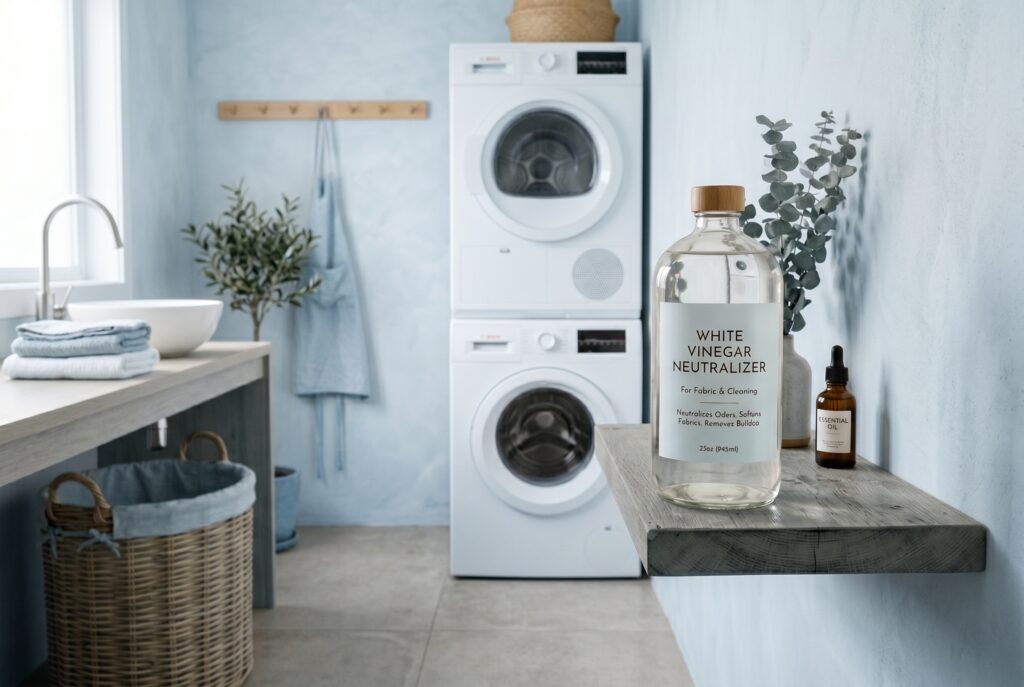
Applying white vinegar directly to the spill alters the pH level of the area, which helps prevent the red pigment from bonding with the fibers. For the best results, the vinegar should be applied immediately and then followed by a thorough blot with club soda or a laundry pre treatment.
5. Dish Detergent and Hydrogen Peroxide
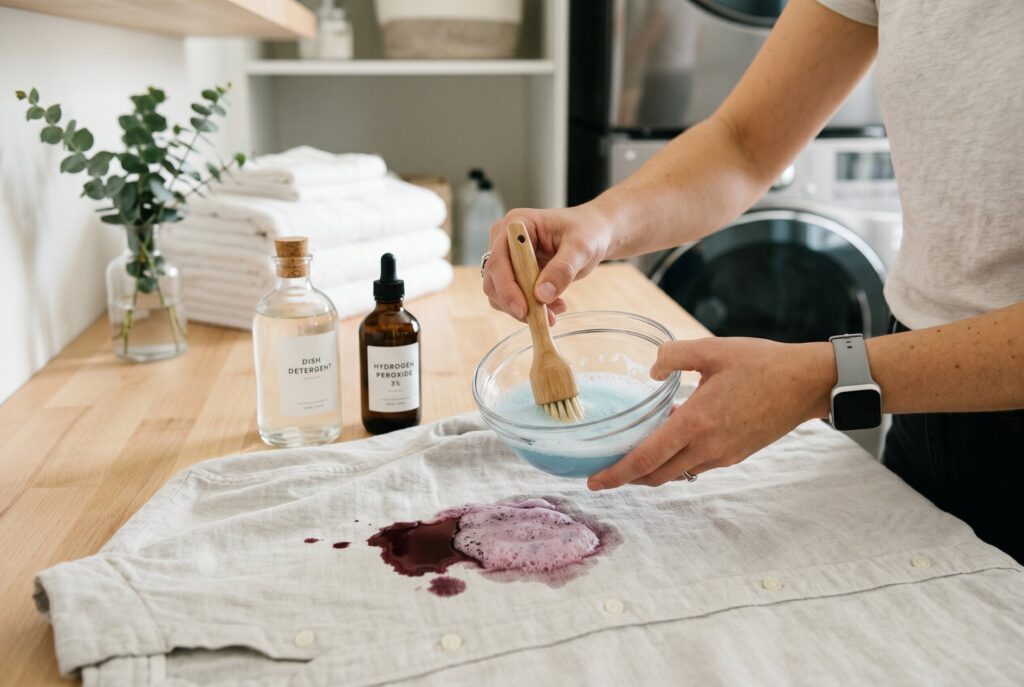
Combining equal parts liquid dish soap and a hydrogen peroxide stain remover creates a chemical reaction that breaks down the surface tension of the liquid while lifting color. This mixture is a favored internet famous solution, particularly for durable, light colored fabrics that can handle the bleaching potential of peroxide.
6. OxiClean or Oxygen Bleach
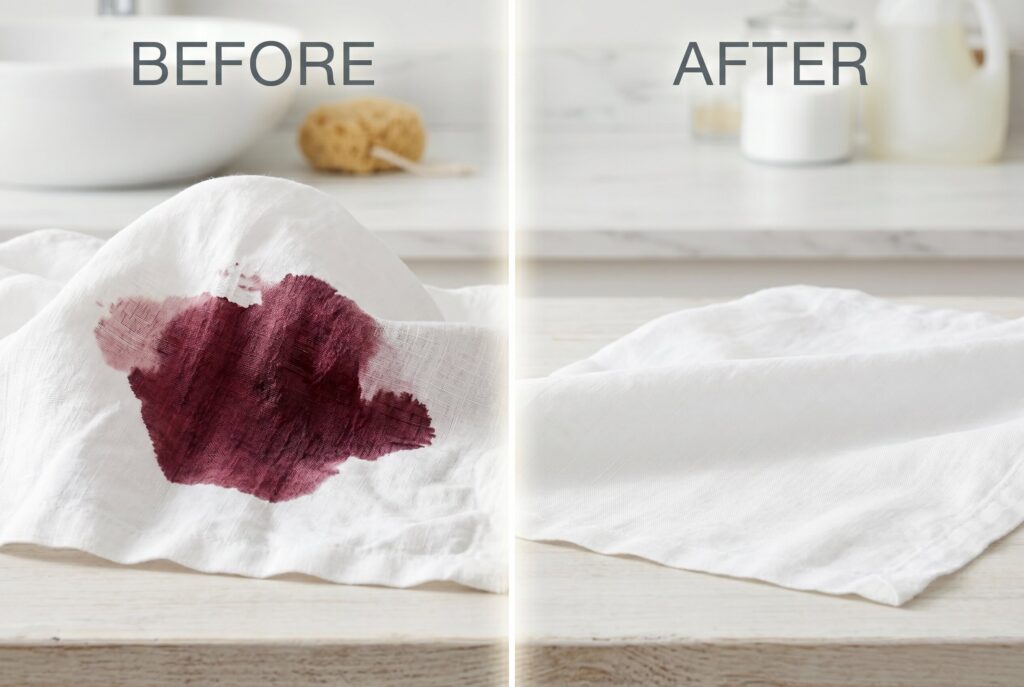
Utilizing specialized oxygen based cleaners like oxiclean targets the organic compounds in red wine through the process of oxidation. These products are designed to be safer for colored fabrics than traditional chlorine bleach while still providing a professional grade clean.
7. The Boiling Water Flush
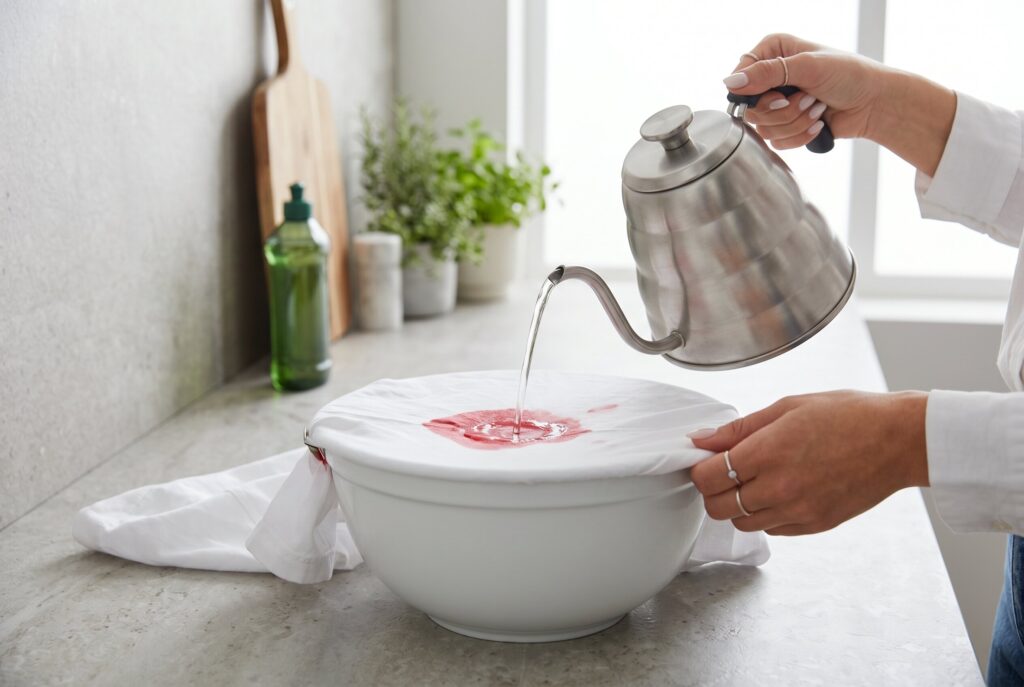
For sturdy materials like cotton or linen, stretching the fabric over a bowl and pouring boiling water from a height of about six inches can flush the wine out of the weave. The mechanical force of the falling water is highly effective at removing fresh pigments. However, this should never be used on delicate fibers like silk, wool, or suede, as the heat will ruin them.
8. Warm Milk Soak

Soaking a fresh stain in a bowl of warm milk allows the proteins in the dairy to bind with the tannins in the wine. This traditional grandma’s tip is still considered a relevant solution for tablecloths or smaller garments that can be fully submerged.
9. Sommières Earth (Natural Clay)
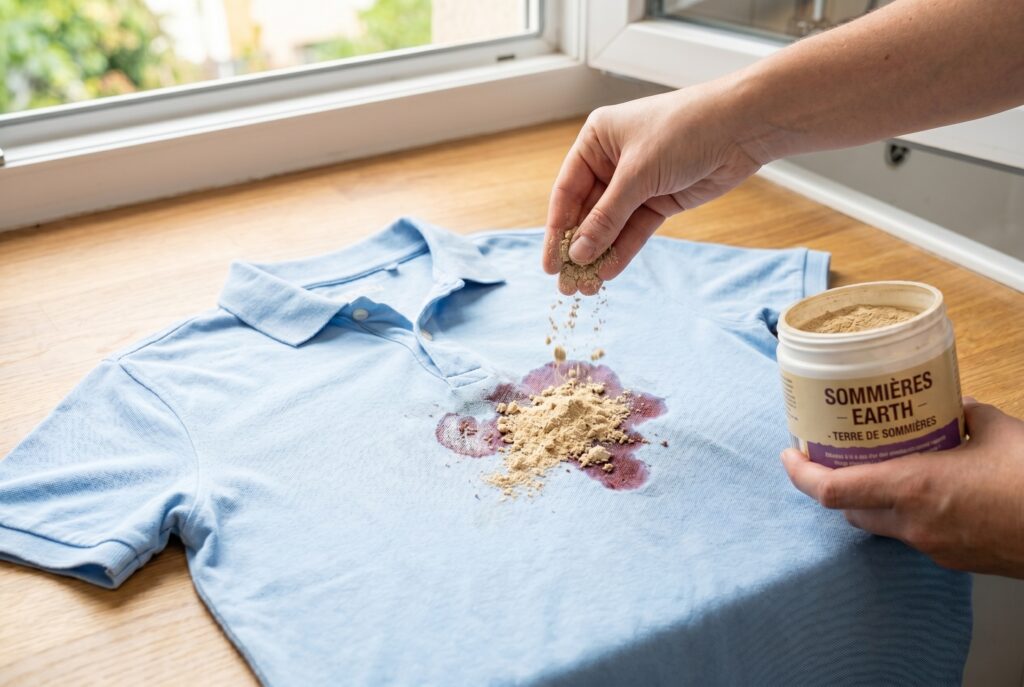
Applying Sommières earth, which is a type of natural clay powder, provides a way to absorb pigments without using liquid. This aligns with modern trends toward ancestral cleaning and is useful for delicate surfaces or items that don’t belong in a washing machine.
10. Ox Gall Soap Treatment
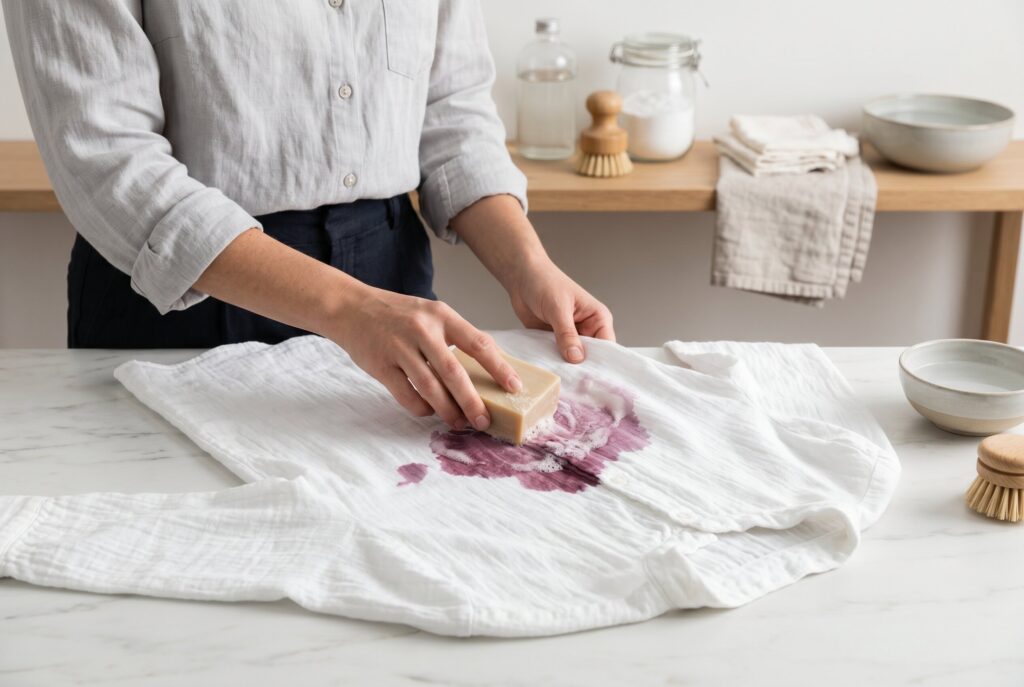
Rubbing ox gall soap into a damp stain introduces natural enzymes that are specifically designed to break down organic pigments. Many experts recommend this specialized soap for treating stubborn or slightly set in marks that other methods haven’t cleared.
11. Liquid Detergent Overnight Pre treatment

Covering a spill with high quality liquid detergent and letting it sit for several hours is an effective lazy method for late night accidents. This ensures the surfactants in the soap have maximum time to penetrate the fibers and loosen the wine before the garment is placed in a cold wash cycle the following morning.
Fabric-Specific Guidance: From Denim to Delicates
Different materials respond differently to cleaning agents, so a one-size-fits-all approach doesn’t work. Sturdy fabrics like cotton and polyester blends can handle more intensive methods. When a person needs to know how to remove red wine from clothes made of denim, it’s important to use treatments that won’t strip the blue dye from the jeans.

This process is quite similar to how to get blood out of jeans, where cold water and gentle detergents are preferred over harsh bleaches. For luxury fabrics like silk or wool, DIY hacks often pose a risk, and it’s generally safer to blot the area and seek professional help from a dry cleaner.
Solutions for Stubborn Dried Stains
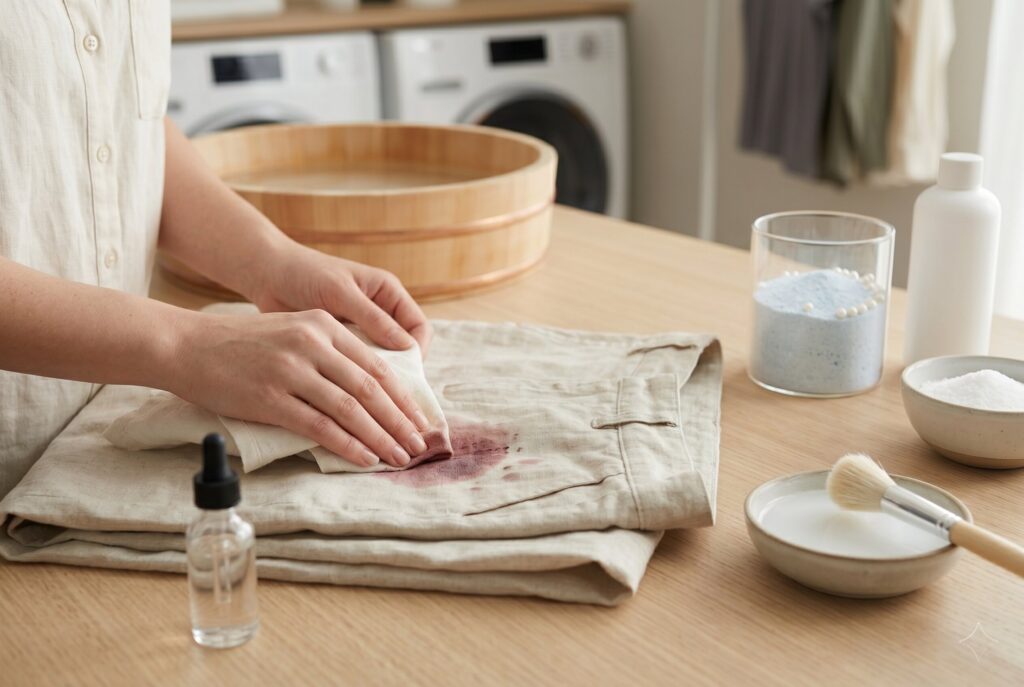
It’s a common fear that a dried wine stain is permanent, but there are ways to salvage the garment. A person can try to rehydrate the mark using glycerin or by soaking the item in cold water overnight to loosen the pigments. Using an enzyme detergent is often the most effective way to break down the structure of a stain that has already set. In some cases, a baby stain remover might provide the gentle but focused cleaning power needed for older marks on sensitive clothing.
Professional Tools: The Splurge vs. Save Framework
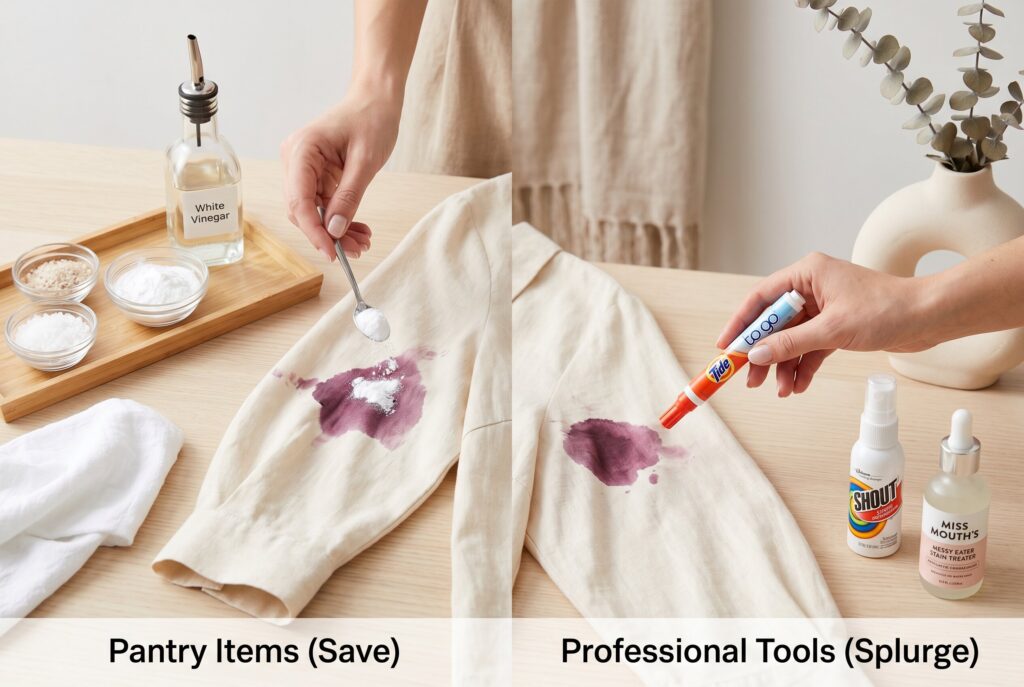
There’s a clear divide between using pantry items and investing in professional cleaning products. The save approach utilizes what’s already in the kitchen, like salt, baking soda, and white vinegar. Those looking for a splurge or a more convenient fix might reach for a tide pen, shout stain remover, or miss mouth stain remover, all of which are designed for deep cleaning and portability. Keeping a tide pen in a bag is often recommended for those who haven’t had much luck with DIY methods during social events.
Crucial Safety Warnings and Maintenance
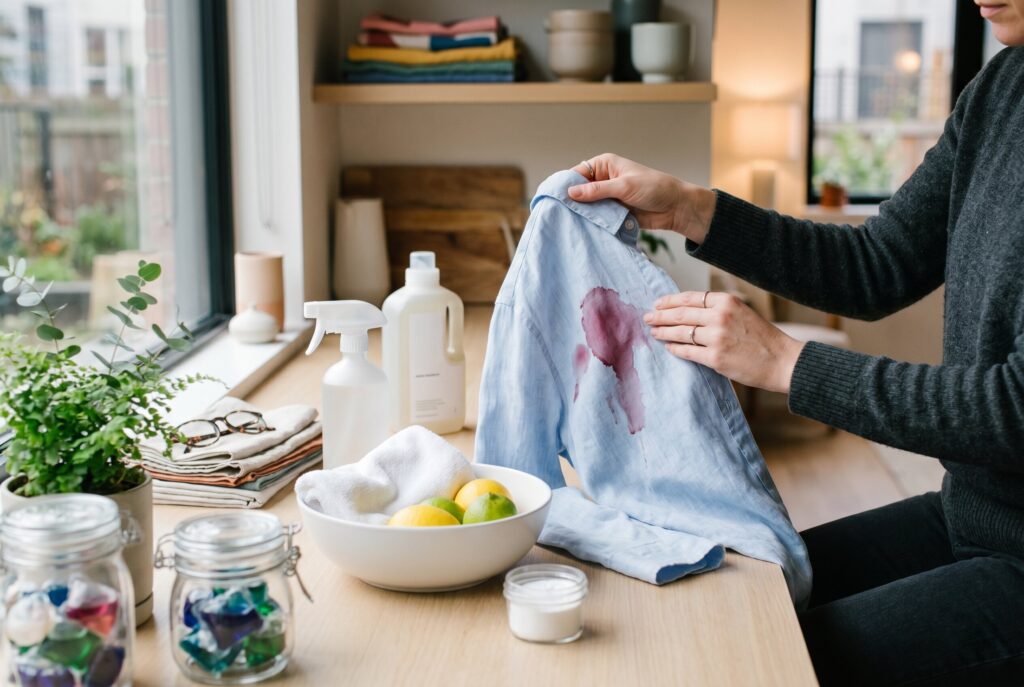
Before applying any chemical or hack, it’s essential to perform a spot test on a hidden area of the garment to ensure the treatment doesn’t cause bleaching or damage the color. Reading the garment care labels is another critical step, as the symbols provide instructions on safe water temperatures and specific chemical warnings. Following these labels ensures that a person doesn’t accidentally ruin a piece of clothing while trying to save it.
Conclusion
Spilling red wine doesn’t have to result in the loss of a favorite outfit as long as the response is quick and informed. Whether you use a professional-grade enzyme cleaner or a simple pile of salt, acting within that 15-minute window is vital. Ultimately, mastering how to remove red wine from clothes is a skill every socialite and home cook should have in their back pocket to ensure the party continues without a permanent reminder on their sleeve.
Related Articles
- How to Remove Oil Stains from Clothes: 7 Hacks for Old Grease (2026)
- 12 Effective Stain Removal Methods: Easy Ways to Remove Every Type of Tough Stain at Home
- Best Stain Remover for Clothes: 17 Chemical-Free DIY Hacks (2026)
- How to Get Period Blood Out of Clothes: 7 Mom-Approved Cold-Water Hacks
- How to Get Stains Out of White Clothes: 9 Hacks (Without Bleach!)
- How to Remove Vegetable Stains from Clothes: 7 Natural DIY Tricks
- How to Get Ink Out of Clothes: 7 Safe DIY Hacks (That Actually Work)