

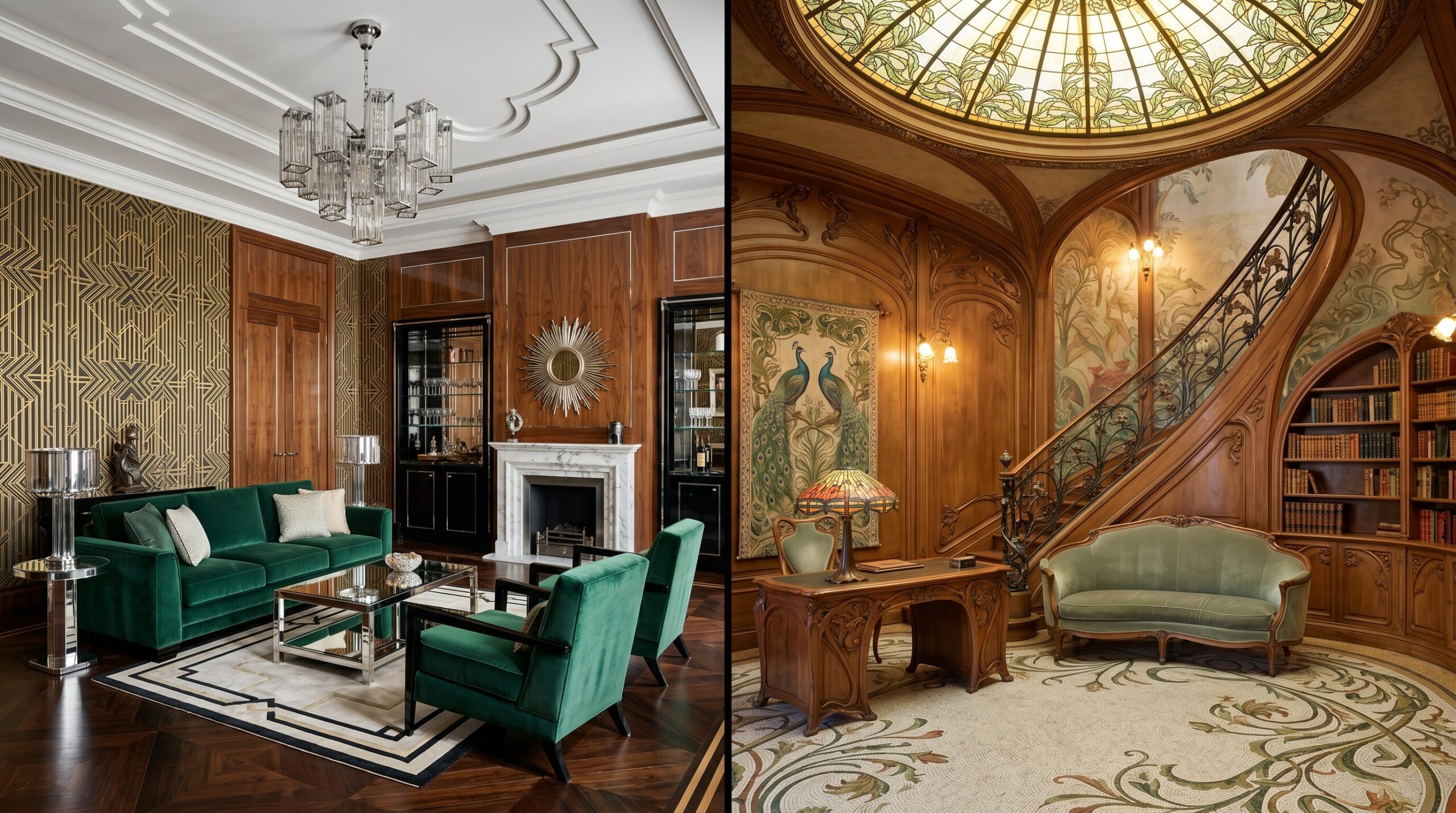
They both start with “Art,” both have French roots, and both changed the way homes, furniture, jewelry, and architecture looked. But Art Deco vs Art Nouveau isn’t a small style difference. It’s the difference between a sleek jazz club and a mystical botanical garden.
Art Nouveau feels soft, romantic, handmade, and nature inspired. Art Deco interior design feels sharp, glamorous, symmetrical, and machine age. If you mix them without understanding the rules, a room can quickly feel confused. But once you know the difference, both interior design styles become much easier to identify, shop for, and apply in a modern home.
Quick answer: The easiest way to remember Art Nouveau vs Art Deco is curves versus angles. Art Nouveau, popular around 1890 to 1910, is defined by organic asymmetrical lines and motifs like vines, flowers, dragonflies, and flowing hair. Art Deco, popular in the 1920s and 1930s, is defined by sharp geometric shapes, strict symmetry, art deco patterns, polished chrome, lacquer, mirrored glass, and bold glamour.
The 5 Key Differences in Interior Design
1. Shape and Line: Organic vs. Geometric

The clearest difference is line. Art Nouveau uses the famous whiplash curve, a flowing, bending line that looks like a vine, wave, flower stem, or strand of hair. It rarely feels rigid. Instead, the lines move across furniture, wallpaper, lamps, and ironwork as if they are growing.
Art Deco is more disciplined. It uses zigzags, chevrons, stepped forms, sharp angles, sunbursts, and symmetrical geometry. In a room, Art Nouveau softens everything. Art Deco sharpens everything. If a chair looks carved from a living tree, it leans Nouveau. If it looks like it belongs in a luxury skyscraper lobby, it leans Deco.
2. Color Palettes: Earthy vs. High Contrast
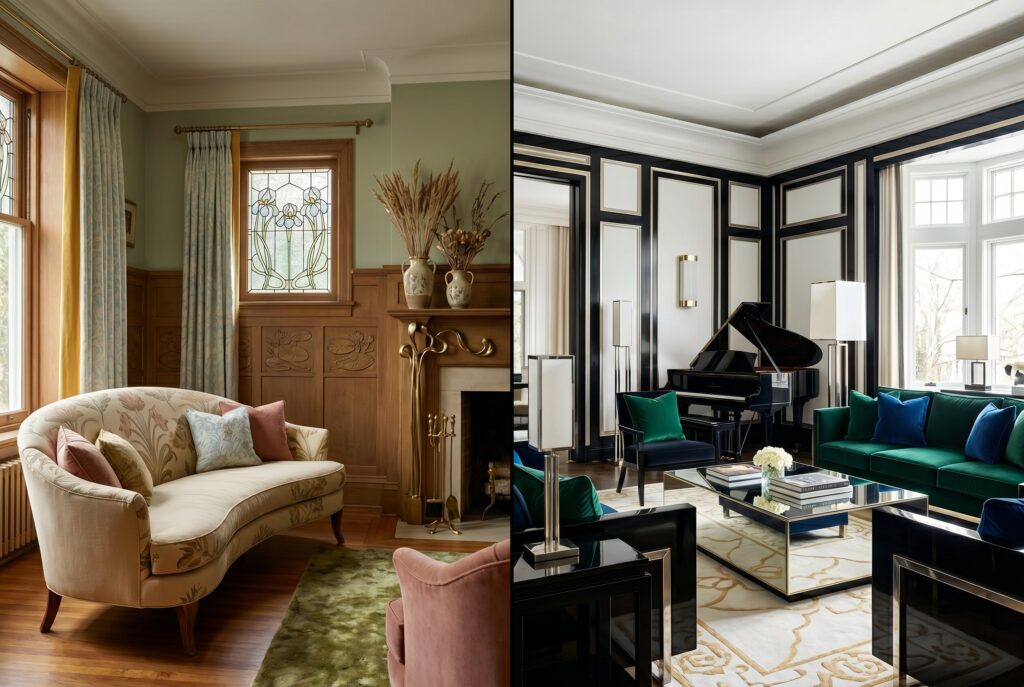
Art Nouveau usually relies on muted, romantic, natural colors. Think sage green, moss, mustard, pale blue, dusty rose, cream, and warm brown. These shades support its botanical mood and make the room feel gentle, layered, and handcrafted.
Art Deco demands more drama. It loves black and white, emerald, sapphire, ruby, amethyst, ivory, gold, silver, and deep lacquered black. This is why an Art Deco living room often feels like a luxury hotel suite. The colors are richer, bolder, and more polished. Nouveau whispers. Deco announces itself.
3. Core Materials: Handcrafted vs. Machine Age
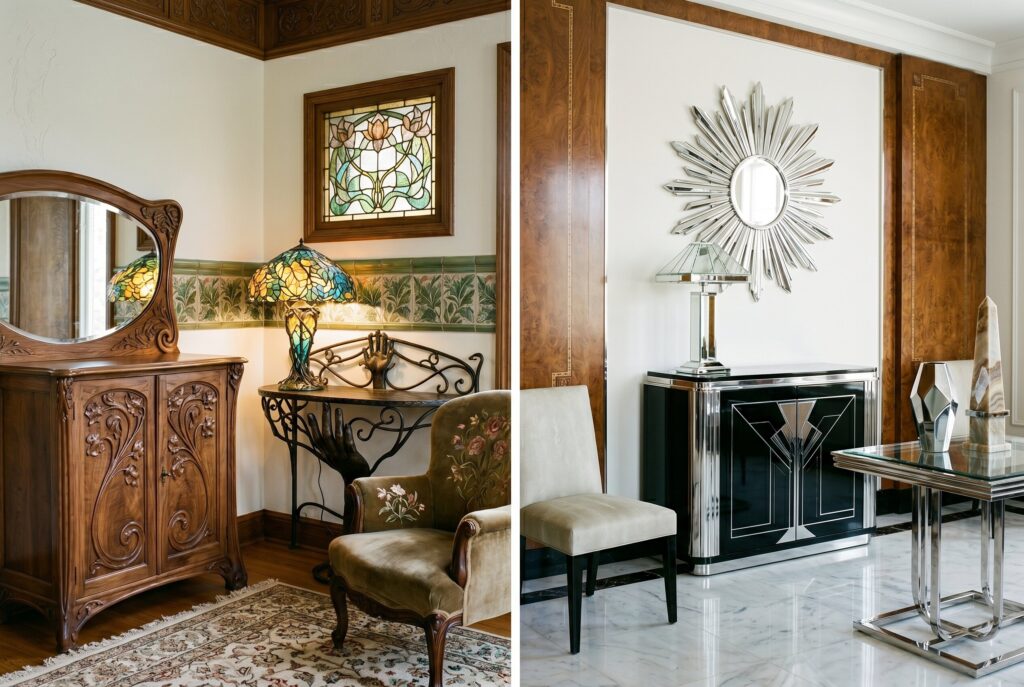
Art Nouveau celebrates craftsmanship. You will often see carved walnut, hand shaped wrought iron, ceramic tile, stained glass, and furniture that feels touched by the maker. Tiffany style lamps, vine like metalwork, and botanical wood carving all fit this world beautifully.
Art Deco celebrates the machine age. It uses high gloss lacquer, polished chrome, mirrored surfaces, glass, marble, burl wood, shagreen, and sleek veneers. Art Deco furniture feels smoother and more streamlined. The materials reflect light, create shine, and suggest speed, wealth, and modernity.
4. Iconic Motifs: Nature vs. Skyscrapers

Art Nouveau motifs come from nature. Look for dragonflies, peacock feathers, lilies, irises, vines, shells, butterflies, and female figures with flowing hair. These patterns often feel delicate and continuous. Art Deco motifs come from architecture, industry, travel, and modern life. Look for sunbursts, fountains, stepped arches, ziggurats, fan shapes, cubist figures, and interlocking trapezoids. Art Deco patterns often reference skyscrapers and speed. Nouveau blooms outward. Deco rises upward.
5. The Overall Atmosphere: Romantic vs. Glamorous
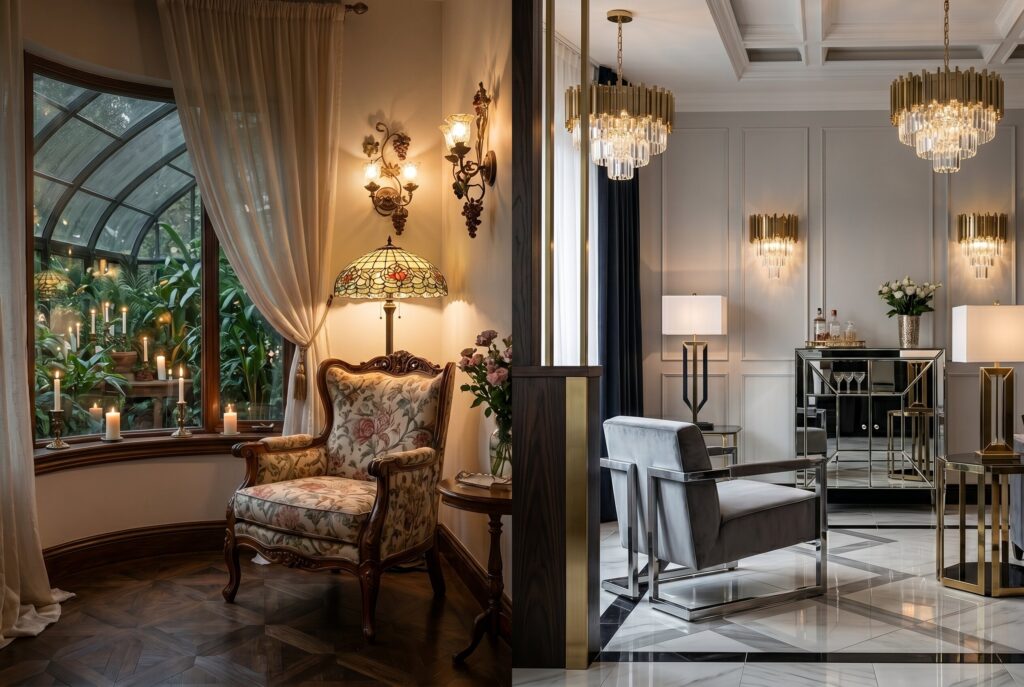
Art Nouveau feels like entering a romantic greenhouse or a fairy tale interior. It’s warm, enveloping, intricate, and emotional. It suits bedrooms, reading corners, dining rooms, and spaces where softness matters. Art Deco feels like stepping into a VIP speakeasy, grand hotel, or polished city apartment. It’s bold, structured, confident, and glamorous. It suits living rooms, entryways, bars, powder rooms, and bedrooms that need drama. Neither style is better. They simply create different emotional worlds.
Visual Cheat Sheet: Art Deco vs Art Nouveau Furniture
When shopping vintage or choosing reproduction furniture, study the silhouette first. If the chair legs twist like branches, the back curves like a flower stem, or the carving includes vines and leaves, you are probably looking at Art Nouveau. If the piece has a waterfall edge, stepped profile, chrome feet, lacquered surface, or mirrored panels, it’s likely Art Deco furniture. A Nouveau cabinet may feel handmade and botanical. A Deco cabinet may feel polished and architectural. This quick visual test helps prevent buying pieces that clash with the room’s main direction.
Room by Room: Where These Styles Work Best in 2026
When applying Art Deco and Art Nouveau in modern interior design, the biggest impact usually comes from spaces where people spend the most emotional and visual attention, especially the living room and bedroom. These two styles are highly expressive, so they work best in rooms that benefit from atmosphere, personality, and strong aesthetic identity.
Art Deco is ideal for spaces that should feel sophisticated, structured, and luxurious, while Art Nouveau shines in rooms that are meant to feel calming, artistic, and connected to nature. The key is understanding how each style affects the mood and function of a room.
Designing an Art Deco Living Room
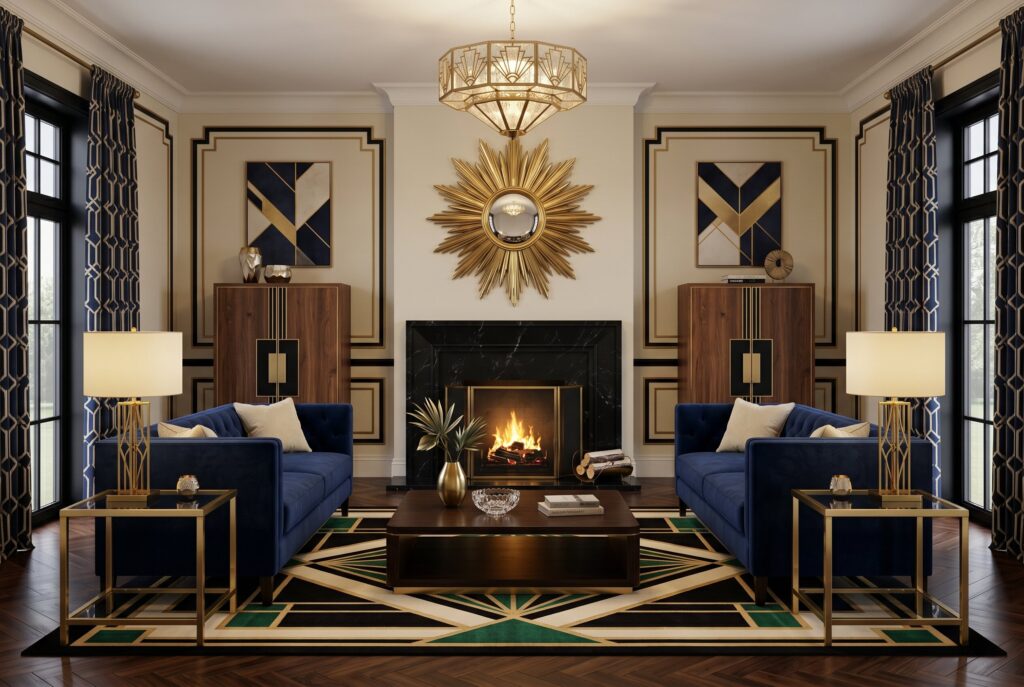
The living room is one of the best places to apply Art Deco because the style naturally creates a sense of drama and sophistication. Since this space is often used for entertaining guests or showcasing personal taste, the bold geometry and luxurious materials of Deco become highly effective here.
Start with symmetry. Place a velvet tuxedo sofa or curved sofa at the center, then balance the space with matching side tables, sculptural lamps, or geometric chairs. Add polished brass or chrome accents, glossy wood finishes, and statement lighting to reinforce the glamorous atmosphere. A sunburst mirror above the fireplace or console table instantly creates a strong Deco focal point.
Keep the palette controlled. Black, cream, emerald, navy, brass, and walnut create richness without making the room feel visually chaotic. The result is a living room that feels elegant, confident, and visually powerful while still remaining functional for everyday use.
Creating an Art Nouveau Bedroom
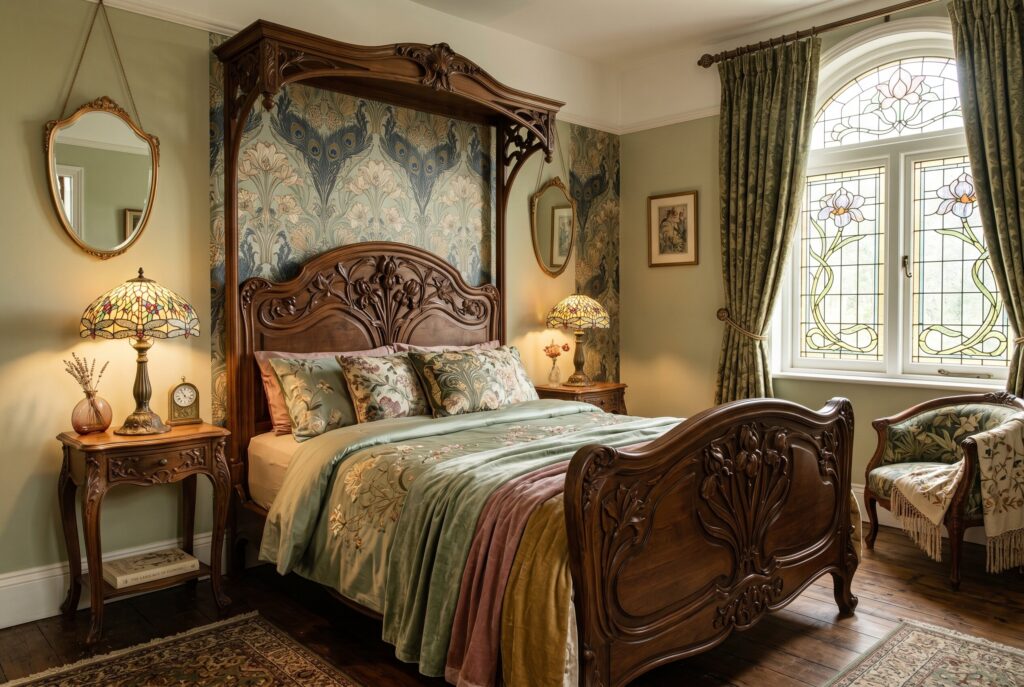
The bedroom is where Art Nouveau performs best because the style emphasizes softness, comfort, and emotional warmth. Unlike the structured glamour of Deco, Nouveau creates a more intimate atmosphere through organic forms and nature-inspired decoration.
Choose furniture with flowing curves and handcrafted details, such as a carved wooden bed frame or curved mirror. Botanical wallpaper, floral murals, stained glass bedside lamps, and muted green or earthy tones help the room feel calm and immersive. Soft textures and natural materials also enhance the relaxing mood.
This approach works especially well in bedrooms because it reduces visual harshness and creates a more peaceful environment. The room feels artistic without being overwhelming, making it easier to unwind and feel emotionally connected to the space.
The Golden Rule for Mixing Both Styles
You can mix Art Deco and Art Nouveau, but one style should lead. The safest rule is this: use Art Deco for structure and Art Nouveau for warmth. For example, build the room around symmetrical Art Deco furniture, a geometric rug, and brass lighting. Then soften it with a stained glass lamp, botanical wallpaper, or curved floral artwork. This creates contrast without confusion. Avoid giving both styles equal control. Too many vines plus too many zigzags can make the room feel messy. Let Deco organize the space, then let Nouveau bring romance.
Conclusion
The difference between Art Deco and Art Nouveau is really a difference in mood. Art Nouveau is curves, nature, romance, and craftsmanship. Art Deco is angles, symmetry, glamour, and machine age confidence. Whether you prefer the soft beauty of 1895 or the bold luxury of 1925, both styles offer more personality than generic modern decor. Choose the style that matches the feeling you want first. Then let the furniture, colors, patterns, and materials follow.
Related Articles
23 Art Deco Interior Design Ideas for Modern Opulence in 2026