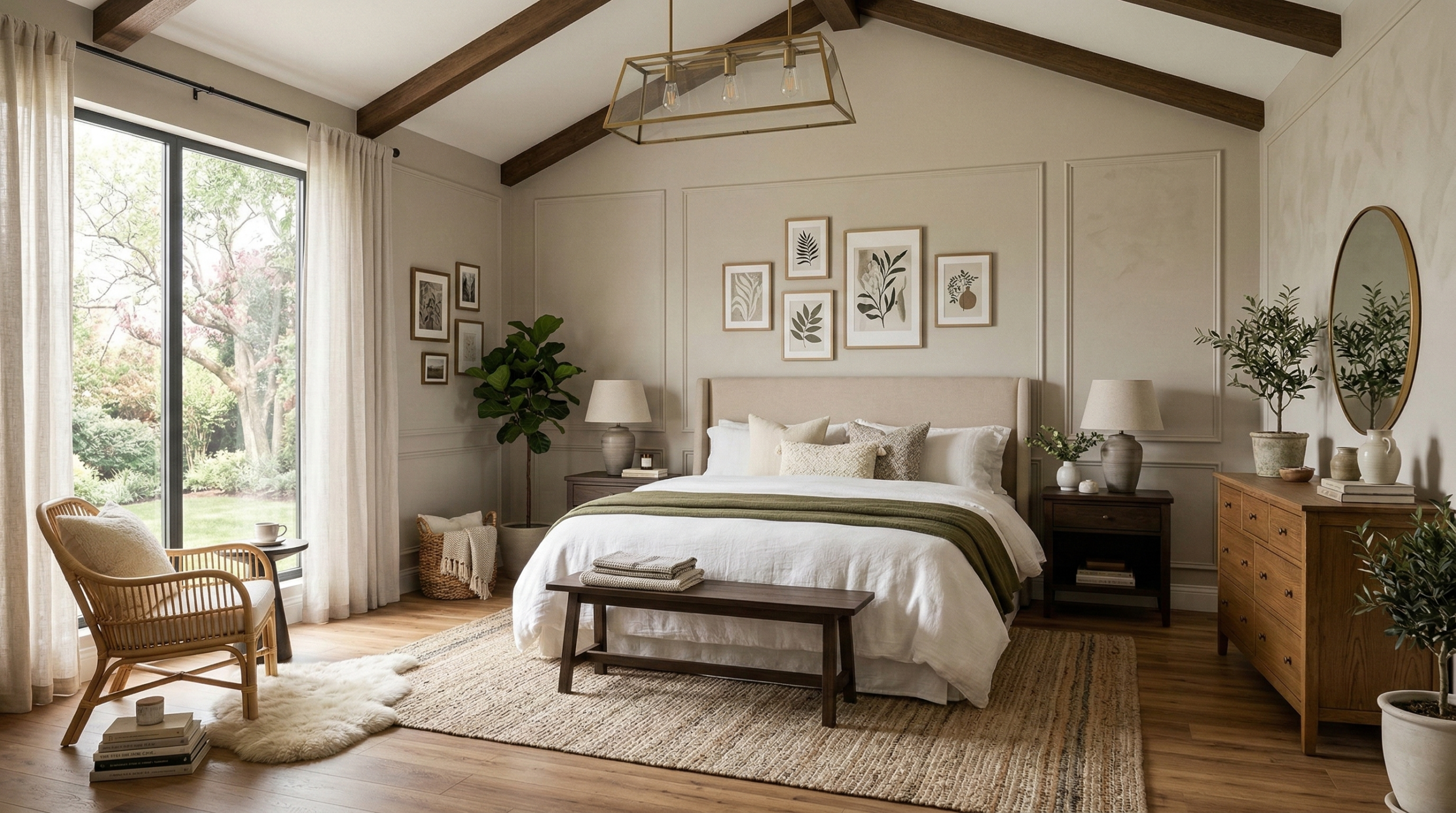
Your bedroom should do more than hold a bed and a dresser. It should support better sleep, reduce visual stress, and give you a place to reset at the end of the day. With the right design choices, even a modest bedroom can feel stylish, organized, and genuinely calming. The goal is to create a space that helps you feel more comfortable, more settled, and less surrounded by clutter.
Build the Bedroom Around Rest First
A lot of bedrooms try to do too much. They become storage overflow, part-time office, laundry drop zone, and sleep space all at once. That usually makes the room feel tense instead of restful. A smarter approach starts by deciding that sleep and comfort are the room’s main job.
Begin with the bed as the visual and functional center of the room. Place it where it feels naturally grounded, ideally with enough space on both sides to move comfortably. When the layout allows for balanced access, the room tends to feel calmer and easier to use. If your bedroom is small, even a few extra inches of walking space around the bed can make a noticeable difference in how open it feels.
Try to reduce activities that keep the room mentally busy. That doesn’t mean the bedroom has to feel empty or overly strict. Instead, each major piece of furniture should contribute to rest, organization, or comfort in some way.
Choose a Color Palette That Feels Calm but Not Flat
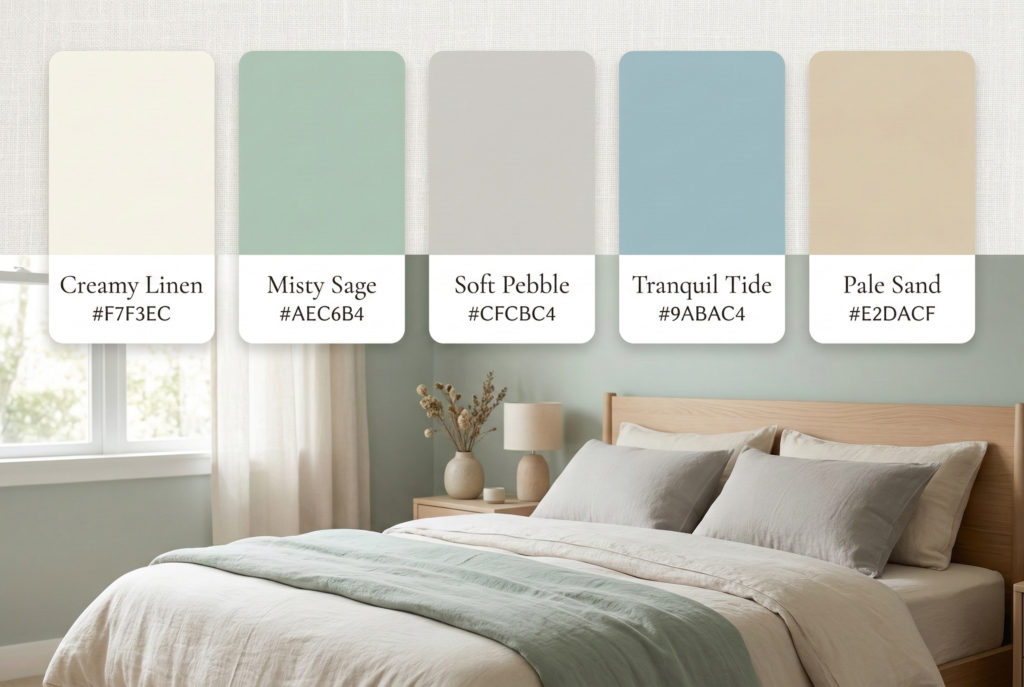
Color has a strong effect on mood, especially in a room where you start and end your day. Soft neutrals, warm whites, muted greens, dusty blues, and earthy taupes work well because they feel quiet without looking dull. These tones also make it easier to layer textures and accents without creating visual overload.
A bedroom doesn’t need to be all beige to feel relaxing. In fact, too little contrast can make the room feel unfinished. The better option is a restrained palette with some depth. You might use warm white walls, medium wood tones, soft gray bedding, and one deeper accent shade in a throw pillow, upholstered bench, or piece of art.
If you like darker colors, they can work beautifully in bedrooms when balanced well. A deep olive, charcoal, or navy accent wall can make the room feel cocooning rather than heavy, especially when paired with lighter bedding and good natural light.
Invest in Bedding That Improves Comfort Every Night
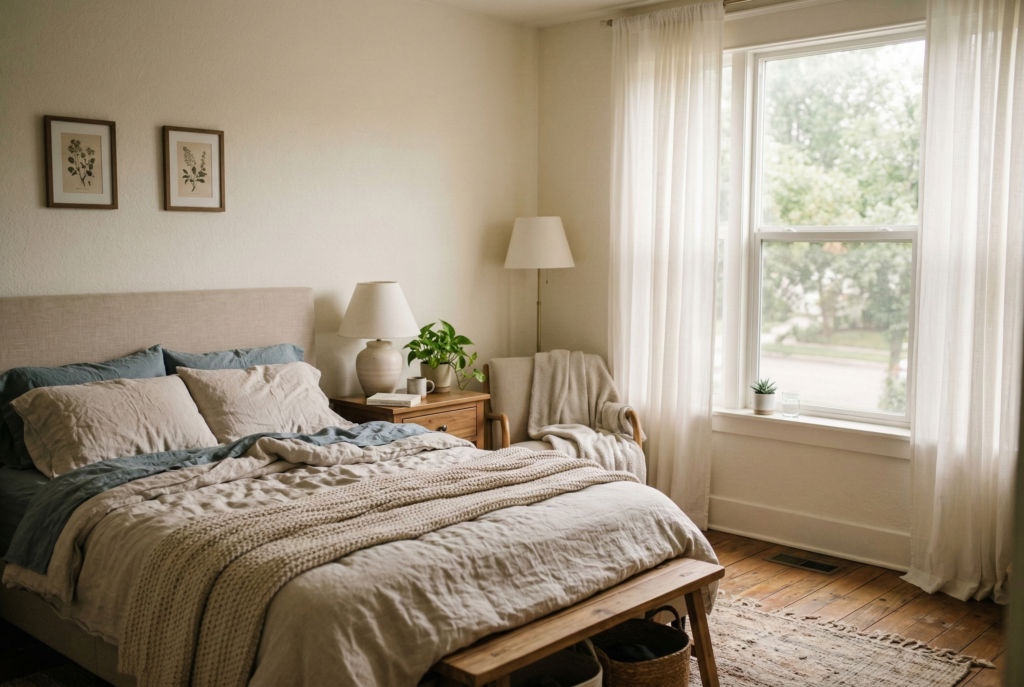
One of the smartest bedroom upgrades has nothing to do with decoration. It’s simply investing in better bedding. Since the bed takes up so much visual space, high-quality bedding improves both how the room looks and how it feels to live in.
Focus on breathable sheets, a supportive pillow setup, and layered bedding that works across seasons. Cotton, linen, and other natural-feeling fabrics tend to create a softer, more relaxed look than shiny synthetic materials. You also don’t need an overly complicated bed to make it feel styled. In most cases, a fitted sheet, duvet or quilt, two sleeping pillows, and one or two accent layers are enough.
A bed looks more inviting when it feels intentionally made but not overworked. Skip the pile of decorative pillows that end up on the floor every night. A cleaner arrangement usually looks better and makes daily upkeep easier.
Use Smart Storage to Keep Surfaces Clear
An organized bedroom feels more relaxing because your eyes have fewer things to process. The easiest way to get there is by improving storage, especially for the items that tend to collect in visible spots.
Nightstands with drawers help contain essentials like chargers, hand cream, reading glasses, and notepads. Dressers work better when the top isn’t acting as a catchall for receipts, coins, and random laundry. If closet space is limited, under-bed storage can be useful for off-season clothing, extra linens, or shoes you don’t wear often.
A few smart storage solutions can make a big difference:
- Drawer dividers for smaller clothing items
- Slim matching hangers to create more closet space
- Storage benches at the foot of the bed for blankets or extra pillows
- Lidded baskets for items you want nearby but out of sight
The goal is simple access without visible chaos. When everything has a place, the bedroom becomes easier to reset each day.
Make Lighting Softer and More Flexible
Lighting can change the entire mood of a bedroom. Harsh overhead lighting often makes the space feel less restful, especially at night when you’re trying to wind down. A better approach is layered lighting that supports different needs throughout the day.
Start with ambient lighting for overall brightness, then add bedside lamps, wall sconces, or a small reading light for more focused use. Warm bulbs usually create a softer and more inviting atmosphere than cooler white bulbs, which can feel too clinical in a bedroom.
If possible, place lighting where it supports your actual routine. Reading in bed, getting dressed early, or settling down in the evening all call for different light levels. Dimmers are especially helpful because they let the room shift with the time of day instead of feeling stuck in one setting.
Let Window Treatments Support Sleep and Style
Window treatments often get overlooked, but they affect privacy, light control, and how finished the room feels. In bedrooms, they’re especially important because they influence sleep quality and comfort.
If outside light wakes you up easily, blackout curtains or lined drapery can help. If you prefer more daytime brightness, layer them with lighter shades or sheers so you can control the room depending on the hour. Hanging curtains higher and wider than the actual window frame can also make the room feel taller and more polished.
Fabric matters too. Curtains add softness, which helps balance the harder lines of furniture. That softness can make the space feel more restful without adding clutter.
Add Texture to Make the Room Feel Warm and Lived In
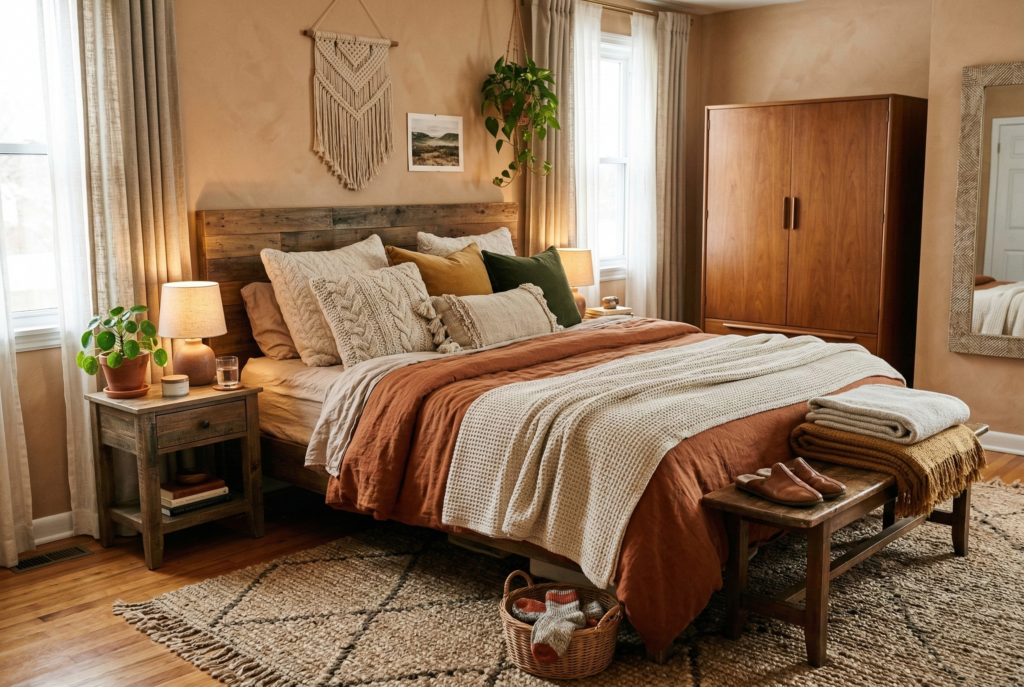
A stylish bedroom isn’t only about color. Texture does a lot of the work. When everything is smooth and flat, the room can feel cold even if the palette is beautiful. Layering texture makes the space feel more comfortable and visually balanced.
This can come from upholstered headboards, woven baskets, knit throws, linen bedding, wood furniture, or a soft area rug underfoot. Even subtle variations help. A matte ceramic lamp, a quilted blanket, or a natural wood nightstand can give the room more character without making it busier. You don’t need many textures, just the right mix. A few thoughtful layers often feel more elevated than a room filled with lots of small decorative objects.
Keep Furniture Proportional to the Room
A bedroom can feel cramped quickly when the furniture is too large for the space. Oversized beds, deep dressers, or bulky nightstands reduce walking space and make the room harder to use. Scale matters just as much as style.
When choosing furniture, prioritize the pieces you use most, then make sure there’s enough space to move naturally around them. In smaller bedrooms, narrower nightstands, wall-mounted sconces, and dressers with a taller vertical profile can help free up floor area. In larger rooms, the opposite problem sometimes happens. Furniture can feel too sparse or disconnected. In that case, a bench, small chair, or larger rug can make the room feel more grounded. The best bedroom layouts feel balanced. Nothing seems squeezed in, and nothing looks like it’s floating without purpose.
Create a Simple System for Clothing and Daily Items

Bedrooms often become messy because they lack small systems for real life. Worn-once clothes end up on a chair. Jewelry gets dropped on the dresser. Chargers sprawl across the nightstand. Instead of trying to “be tidier,” it helps to design around these habits.
A valet hook, a small tray, or a dedicated basket for evening items can prevent clutter from spreading. Laundry hampers should be placed where clothes actually come off, not where you think they should go. Jewelry organizers work better when they’re easy to reach rather than tucked away in a hard-to-use drawer. The best organization systems require very little effort and fit naturally into your daily routine, making them much easier to maintain.
Personalize the Room Without Overdecorating
A relaxing bedroom should still feel like yours. Personal touches matter, but they work best when they’re edited carefully. Too many small accessories can make the room feel visually crowded, even when everything is “pretty.”
Choose a few elements that give the space personality. That could be a favorite artwork, a framed photo, a sculptural lamp, or a beautiful quilt with color and texture. A single statement piece often has more impact than lots of scattered décor.
Plants can also work well in bedrooms if you enjoy them. They add softness and life to the room, especially when placed simply on a dresser or in a corner with good light. Just keep styling intentional. A bedroom usually feels better when it has breathing room.
Protect the Bedroom From Everyday Overflow
One of the smartest things you can do for bedroom design has nothing to do with buying more. It’s protecting the room from becoming a storage zone for everything else in the house. Papers, workout equipment, extra cleaning supplies, and half-finished projects can quickly chip away at the calm feeling you want.
Give those items a home somewhere else whenever possible. If your bedroom also has to function as an office or dressing area, use visual boundaries to keep functions separate. A small desk can work, but it should be organized and closed down at the end of the day so it doesn’t compete with the room’s restful purpose. The more consistently you guard the room’s main role, the easier it becomes to keep it feeling calm.
Conclusion
A smart bedroom design balances comfort, function, and style in a way that supports your everyday life. By focusing on restful layouts, calming colors, better bedding, practical storage, and softer lighting, you can turn your bedroom into a space that feels organized and genuinely relaxing. Add texture, keep furniture proportional, and personalize the room with restraint so it feels polished without becoming cluttered. When the bedroom is designed around real routines and real comfort, it becomes more than just a place to sleep. It becomes one of the most restorative spaces in the home.