Small spaces work better when storage can adapt as your needs change. That’s why modular storage has become such a practical solution for apartments, condos, smaller houses, and multipurpose rooms. Instead of relying on fixed furniture that only serves one purpose, modular storage gives you more flexibility to adjust, expand, stack, separate, and reorganize as life changes. When used well, it can help a home feel more open, more functional, and much easier to keep organized.
Why Modular Storage Works So Well in Small Homes
Traditional storage furniture can be limiting in a compact home because it often assumes your needs will stay the same. Real life rarely works that way. A guest room becomes a home office, a dining area starts pulling double duty as a homework zone, or a small entryway suddenly needs to hold shoes, bags, and sports gear for multiple people.
Modular storage works because it’s flexible by design. You can reconfigure it, add onto it, or break it into smaller sections depending on the space and the season of life you’re in. That makes it especially useful for renters, growing families, remote workers, and anyone trying to make a smaller home function better without constant replacement furniture. The best modular storage ideas don’t just hold more. They make the room easier to use every day.
1. Use Stackable Cube Storage for Living Rooms and Multipurpose Areas
Cube storage remains one of the most useful modular options because it adapts to so many rooms and layouts. A single unit can work as a side table, while a larger arrangement can function as a media console, room divider, or low wall of storage in a studio apartment.
What makes cube systems so effective is their versatility. Open cubes can display books, baskets, and decorative objects, while fabric or woven bins can hide clutter that doesn’t need to stay visible. In a small living room, this kind of storage helps keep daily-use items close by without making the space feel overly bulky. It also scales well. You can start with a smaller configuration and add more pieces later if the room or your storage needs change.
2. Choose Modular Closet Systems Instead of One-Size-Fits-All Solutions
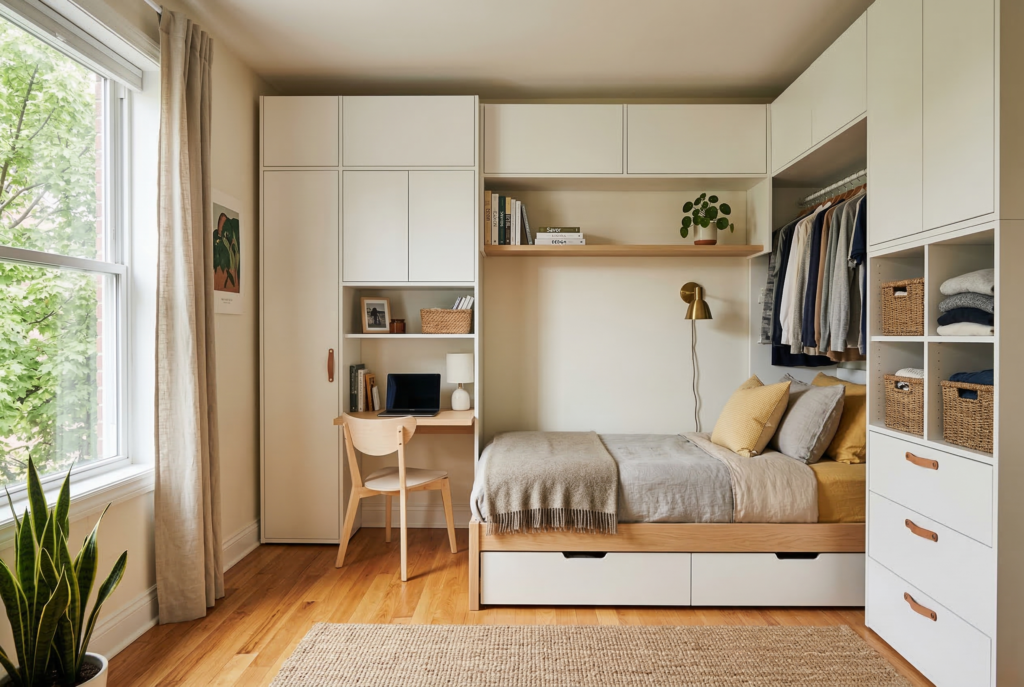
Closets often waste space because they rely on a single hanging rod and a shelf that doesn’t match what you actually store. A modular closet system can make a major difference by allowing you to combine shelves, drawers, rods, and bins in a way that reflects your real wardrobe and routine.
This is especially helpful in small bedrooms where closet space has to do a lot of work. Adjustable shelves can hold folded sweaters or shoes, while double hanging rods can instantly increase capacity for shirts, jackets, or children’s clothing. Drawer modules can also reduce the need for extra dressers in the room, which frees up valuable floor space. A closet functions much better when the storage is customized to the items inside it rather than forcing everything into a generic layout.
3. Add Modular Shelving in Home Offices and Study Corners

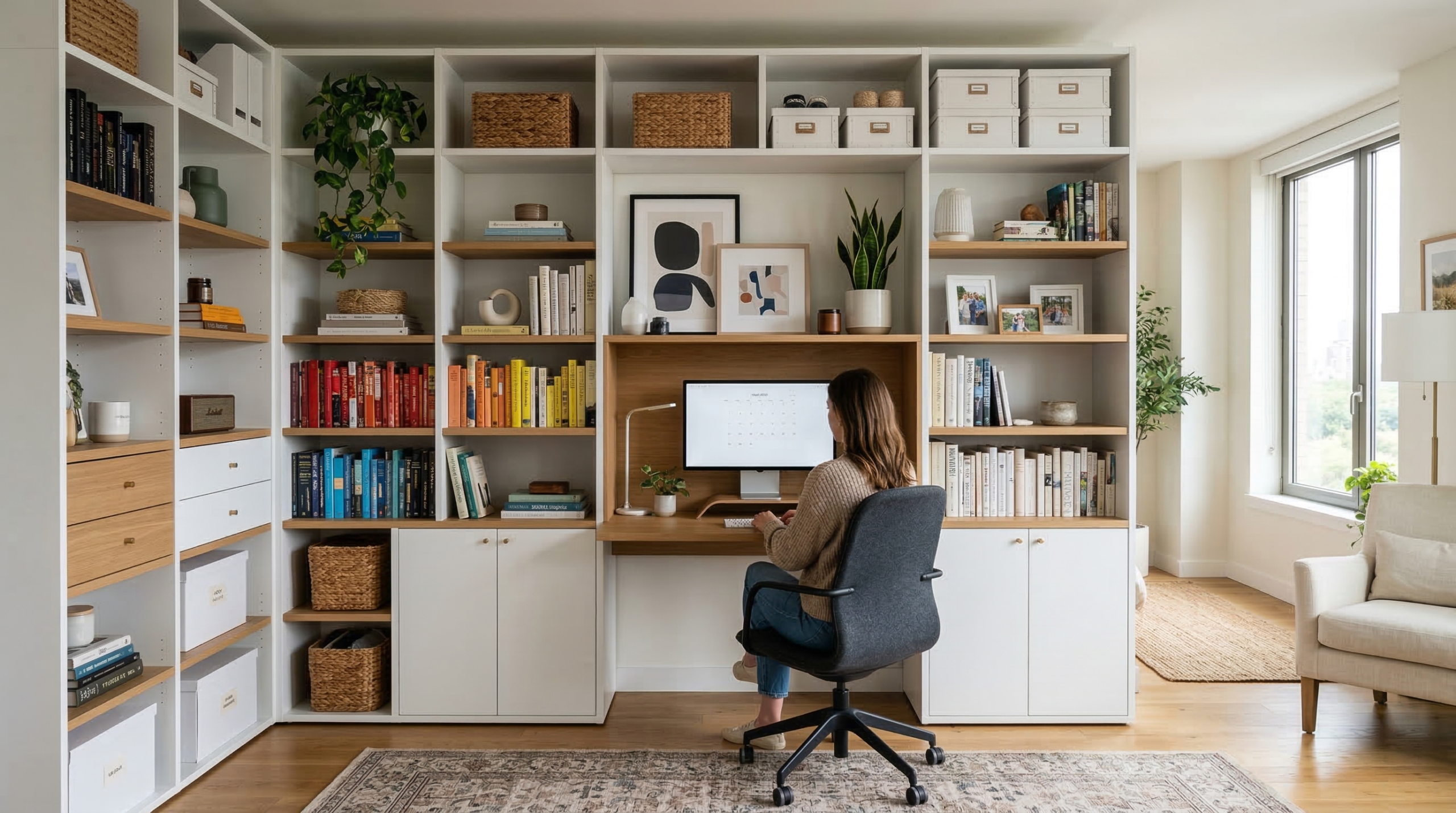
A home office in a small space has to stay organized without taking over the room. Modular shelving helps by creating vertical storage that can shift with your work habits. Instead of using one heavy bookcase that may not fit the room well, modular shelves let you build around your desk, wall space, and storage needs more precisely.
You might use lower shelves for printers or bins, middle shelves for files and work supplies, and upper shelves for books or decorative objects that make the workspace feel more finished. If the office later becomes a guest room or shared space, those same shelves can often be reconfigured for different use. This flexibility matters in homes where one room often has to serve more than one function.
4. Use Modular Entryway Storage to Handle Daily Clutter
Entryways collect clutter quickly because they’re where everyday life lands first. Shoes, bags, keys, jackets, mail, umbrellas, and pet supplies can pile up fast, especially in smaller homes where there isn’t a dedicated mudroom. Modular entry storage helps because it lets you combine the exact elements you need.
A practical setup might include a narrow bench with cubbies, a few wall hooks, and a stackable shoe unit that can expand if needed. If your household changes over time, the system can change too. More hooks can be added, bins can be reassigned, and storage can be adjusted seasonally for boots, coats, or sports gear. A well-designed entry setup reduces visual clutter throughout the rest of the home because it catches things before they spread.
5. Try Modular Drawer Units in Bathrooms and Laundry Rooms
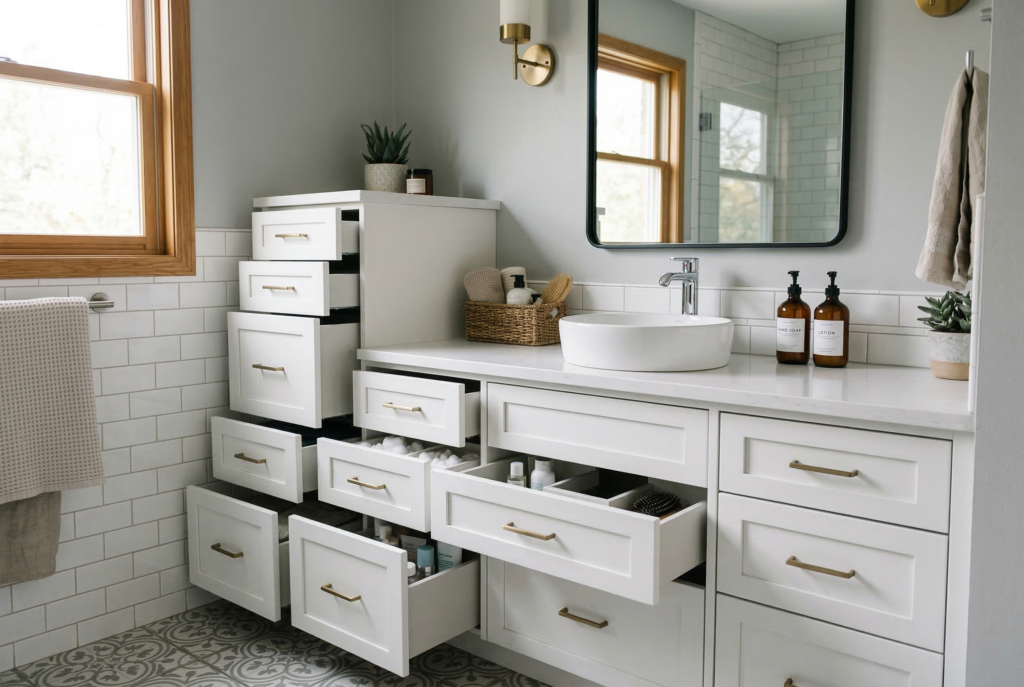
Bathrooms and laundry areas usually don’t have much extra room, which makes modular drawer units especially useful. Instead of relying on bulky storage furniture, smaller stackable drawers can fit inside cabinets, beside appliances, or under open counters where fixed storage might not fit well.
In bathrooms, they work well for toiletries, backup products, hair tools, and small linens. In laundry rooms, they can hold stain removers, dryer sheets, cloths, and miscellaneous supplies that otherwise end up scattered on shelves or appliance tops. One of the biggest benefits is visibility. Modular drawers help separate categories clearly, which makes daily routines faster and keeps these utility spaces from feeling chaotic.
6. Build Flexible Kitchen Storage With Add-On Shelf and Bin Systems
Small kitchens need storage that uses every inch wisely, especially inside cabinets and pantries. Modular kitchen organizers can make existing storage much more effective without requiring renovation. Add-on shelf risers, stackable bins, pull-out drawers, and modular pantry containers help you create layers and zones inside the space you already have.
This is especially useful for canned goods, snacks, baking supplies, food containers, and small appliances. Instead of stacking everything in one deep cabinet and forgetting what’s in the back, modular systems let you group by use and make items easier to access. The best part is that these solutions can usually be rearranged as your kitchen habits change. That makes them more practical than fixed organizers that work only one way.
7. Use Modular Storage Benches in Bedrooms and Under Windows
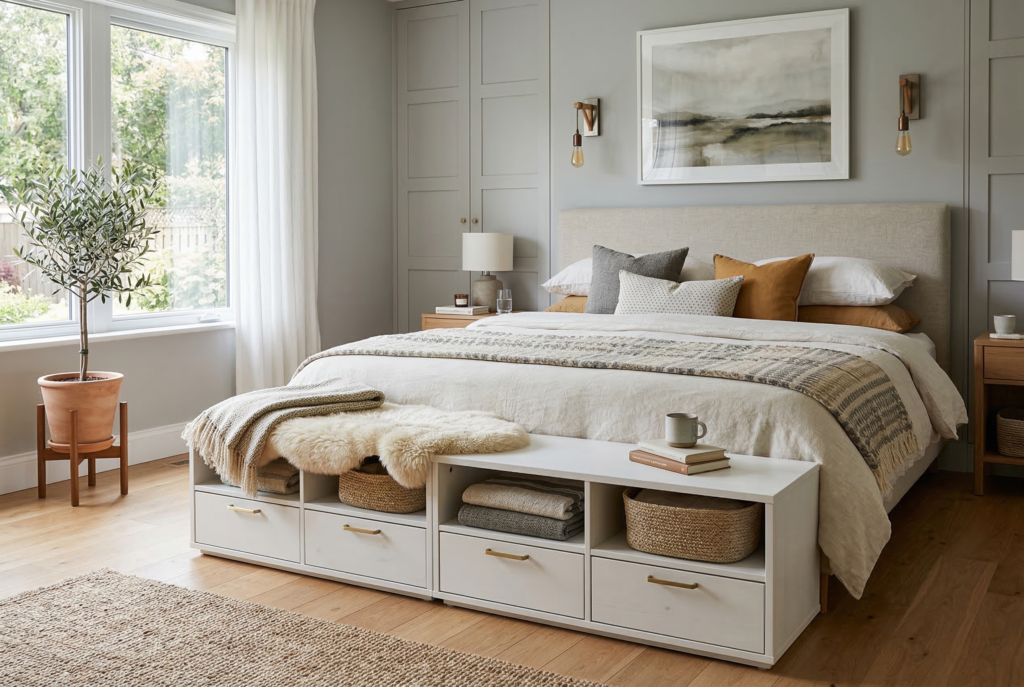
Storage benches are already useful in small homes, but modular versions can do even more because they can be separated, combined, or moved into different rooms over time. In a bedroom, they can hold extra bedding, off-season clothes, or shoes. Under a window, they can double as seating while adding hidden storage for less frequently used items.
This kind of piece is especially helpful in homes where furniture has to work hard without making the room feel crowded. A bench with modular compartments can often adapt better than a single large trunk because it offers more flexibility in how items are sorted and accessed. That combination of seating and storage is valuable in almost any compact room.
8. Create Kid-Friendly Storage With Reconfigurable Bin Systems
Children’s spaces change quickly, which is why modular storage works so well in playrooms, bedrooms, and shared family areas. Toys, books, art supplies, and school materials don’t stay the same for long, so rigid storage often stops working sooner than expected.
Modular bin systems allow you to adjust as children grow. Larger bins can hold toys in earlier years, while shelves and smaller containers can later shift toward books, craft supplies, or homework materials. The ability to relabel and reconfigure makes the storage far more sustainable over time. It also makes cleanup easier. When categories are simple and accessible, kids are more likely to participate in keeping the room organized.
9. Use Modular Room Dividers in Studios and Open Layouts
In smaller apartments and open-plan homes, storage sometimes has to create separation as well as organization. Modular room dividers are especially useful here because they can define a sleeping area, home office corner, or dining zone without requiring full walls or heavy furniture.
Open modular shelving works especially well because it provides storage while still allowing light to pass through. Baskets or bins can hide clutter on the lower levels, while upper shelves can stay lighter and more decorative. If your layout changes later, the same unit can often be repositioned or broken apart for another use. This kind of flexibility is one of the smartest ways to make a small open space feel more structured without closing it off.
10. Combine Wall-Mounted Modular Systems With Floor Storage
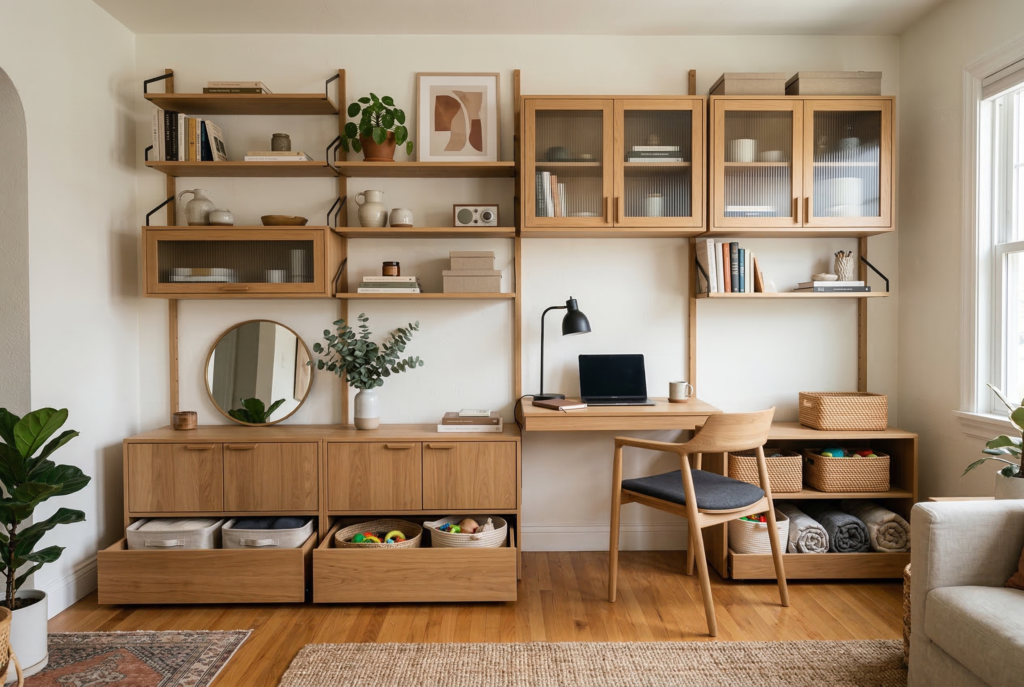
One of the best ways to maximize a small room is to stop relying only on floor-level furniture. Wall-mounted modular systems let you take advantage of vertical space while keeping the floor more open. When paired with low-profile floor storage, they create a layered storage plan that feels more balanced and less cramped.
For example, a living room might use a low modular console with wall-mounted shelves above it. A bedroom could pair a compact dresser with floating modular cubes nearby. In a small workspace, pegboards, rails, and shelves can be combined with a modular file unit below. This layered approach works well because it spreads storage visually rather than concentrating it all in one bulky area.
Conclusion
Modular storage is one of the smartest ways to maximize small spaces because it gives your home room to adapt. From cube shelves and closet systems to entryway benches, pantry organizers, and room dividers, the right modular setup can make a smaller home feel more flexible, more efficient, and much easier to keep organized. The best results come from choosing pieces that match your actual routine and can shift as your needs change. When storage is built around how you live, even a compact home can feel calm, functional, and surprisingly spacious.