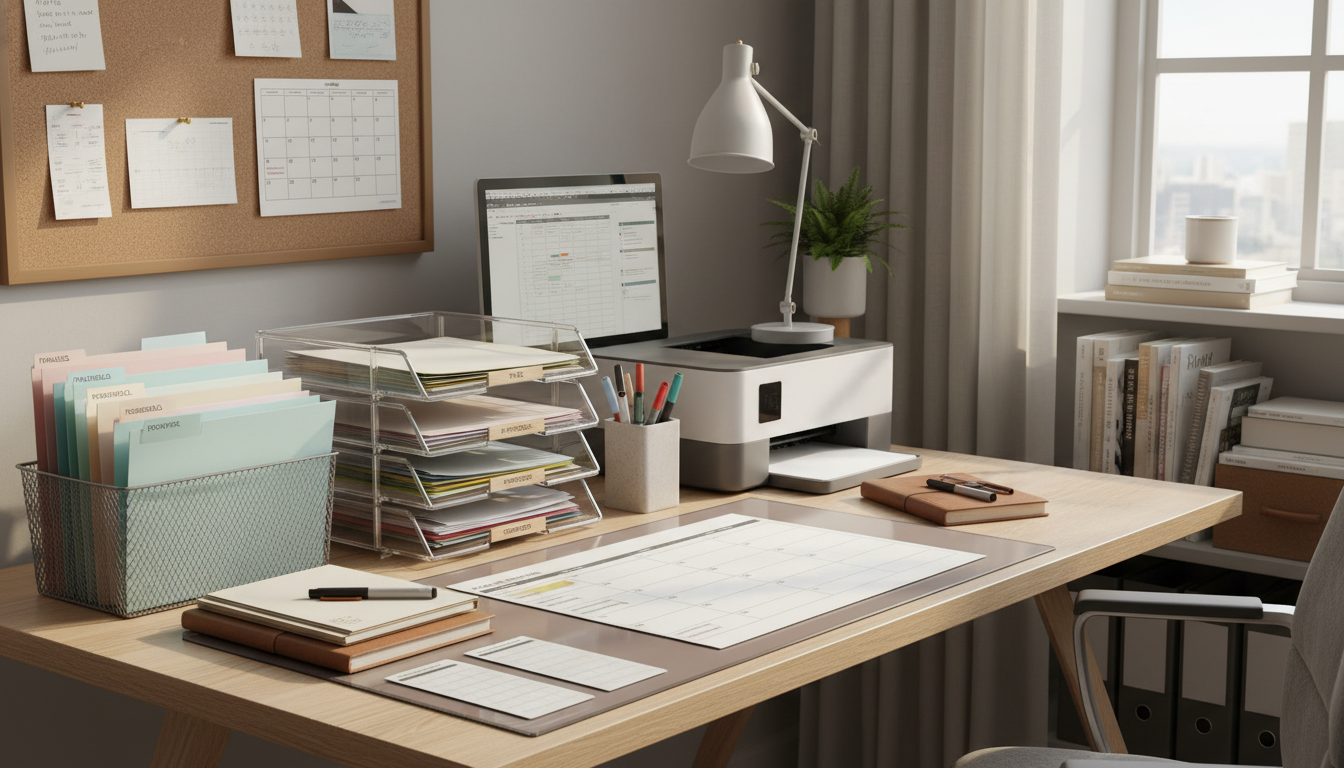
Paperwork can quickly pile up, creating clutter and stress in your home or office. Whether it’s bills, receipts, important documents, or even family records, managing paper can seem like an overwhelming task.
However, organizing paperwork doesn’t have to be a chore. With a few simple and practical strategies, you can transform your paper chaos into a well-organized, efficient system that saves you time, space, and mental energy.
In this article, we’ll explore 10 actionable tips for organizing your paperwork. These tips will help you declutter your space, boost productivity, and create a paper organization system that works for you.
1. Start by Decluttering: Purge Unnecessary Paper
The first step in organizing your paperwork is to declutter your existing documents. Many of us hold on to paper that we no longer need, such as old receipts, expired warranties, or outdated paperwork. Decluttering allows you to reduce the volume of paper you have to manage and makes the rest of the organization process easier.
Start by going through your paperwork and sorting items into categories: keep, shred, or recycle. If you haven’t used a document in over a year, it’s probably safe to toss it. Be particularly cautious with items that contain personal information: shred anything that contains sensitive data.
Once you’ve purged unnecessary paper, you’ll have a clearer view of what’s essential and what’s just taking up space.
2. Create a Filing System: Organize for Easy Access
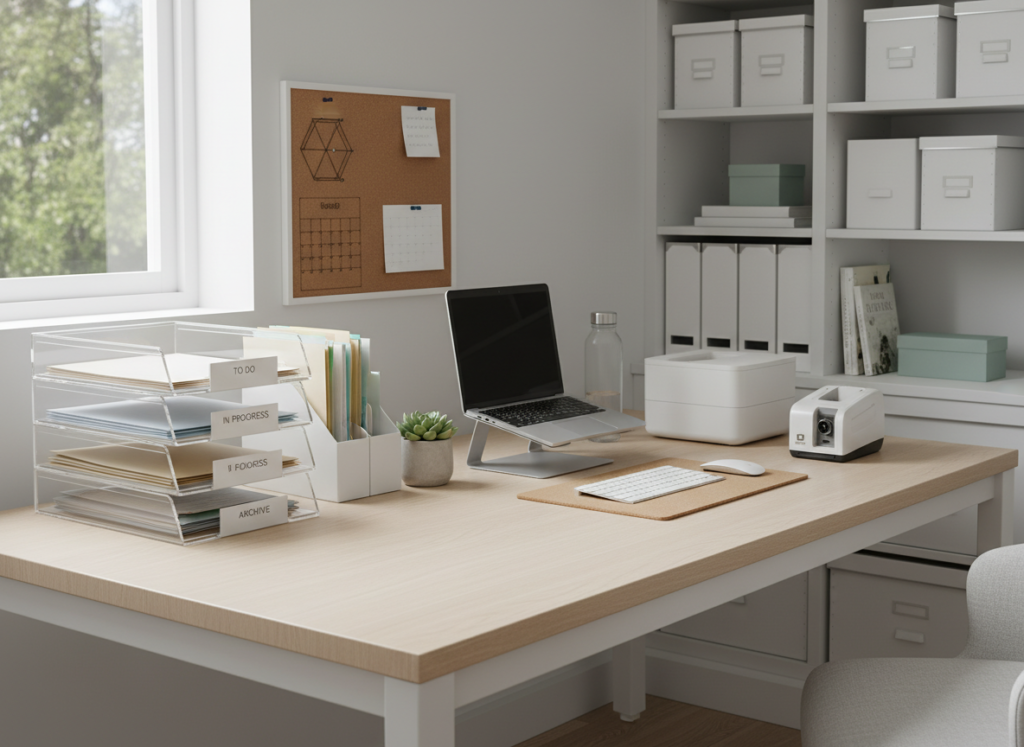
Once you’ve sorted through your documents, it’s time to create a filing system that makes it easy to access important paperwork when you need it. The key to a good filing system is consistency. Choose a system that works for you, whether that’s physical filing cabinets or digital storage solutions.
For physical documents, use labeled folders or file organizers to categorize items such as bills, medical records, tax documents, and personal paperwork. You can use a color-coded system for quick identification, or simply categorize by type of document (for example, “Insurance,” “Banking,” “Taxes”).
For digital documents, consider using cloud storage services like Google Drive, Dropbox, or Evernote to store important files electronically. This not only reduces physical clutter but also makes accessing your documents easier from anywhere.
3. Set Up a “To-Do” Pile for Immediate Action
One of the best ways to stay on top of your paperwork is to have a designated area for items that require immediate action. This could be a small tray or folder that sits on your desk or filing cabinet. For example, items like bills, invoices, or documents requiring signatures can go into this pile.
The key here is to review the pile regularly (daily or weekly) and take care of items before they become overwhelming. This prevents papers from piling up, and you’ll always know what requires your attention right away.
4. Digitize Important Documents for Long-Term Storage

Digitizing your paperwork is one of the best ways to reduce clutter and make your documents easier to store and access. Scanning important documents and saving them in a digital format not only frees up physical space but also ensures you’ll never lose track of them.
Use a document scanner or scanning apps like Evernote Scannable or CamScanner to digitize documents. Store them securely in cloud-based storage services or on an external hard drive. This way, you can access them from your phone or computer without sifting through physical files.
For financial documents, bank statements, and tax records, keeping digital copies is both environmentally friendly and efficient, offering you a backup in case the originals get damaged or lost.
5. Create a System for Managing Receipts
Managing receipts can quickly become a mess if you don’t have a system in place. Receipts can pile up in your wallet, drawers, or on your desk, adding to the overall paper clutter. To make receipt organization easier, digitize them or store them in labeled folders.
For physical receipts, use a receipt organizer or binder with clear plastic sleeves. Label them by month or category, such as “Office Expenses” or “Travel.” If you’re going paperless, take a photo of the receipt or scan it using a receipt scanning app and store it in your cloud storage.
Maintaining a dedicated receipt system ensures that you don’t lose important receipts for tax purposes or warranties, and it helps you stay on top of your spending.
6. Sort Paperwork by Categories for Easy Access
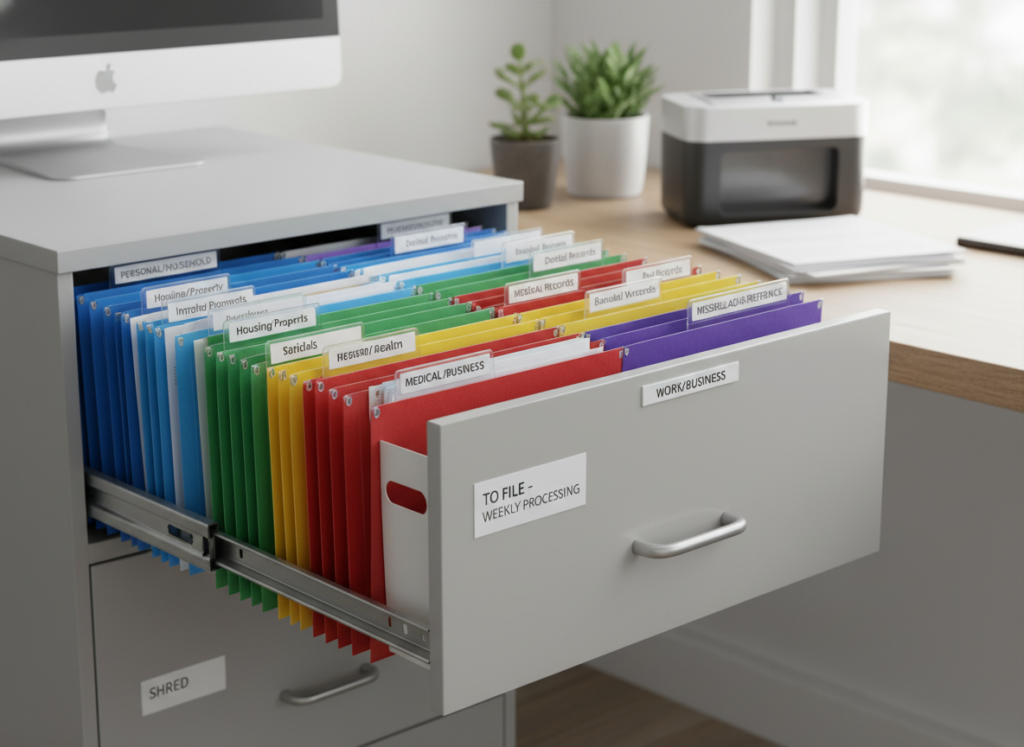
When organizing your paperwork, it’s crucial to sort it into categories. This could include bills, medical records, receipts, or personal documents. Each category should have its own folder or binder.
For example, you might categorize your paperwork into:
- Bills and financial documents
- Medical and health records
- Insurance and legal papers
- Personal documents (birth certificates or marriage licenses)
This system helps you easily locate any important document without wasting time searching through piles of paper.
7. Store Essential Documents in Fireproof Containers
Some documents, such as legal records, wills, or property deeds, are essential to keep safe. For these types of papers, fireproof containers or a lockbox are highly recommended. These storage solutions protect your important documents in the event of a fire or natural disaster.
Investing in a fireproof file cabinet or a secure document storage box ensures that your most critical paperwork remains safe and accessible. For digital documents, ensure that your cloud storage provider offers strong security features, such as encryption and two-factor authentication.
8. Set a Routine for Paper Management
To maintain your paper organization system, establish a routine for managing paperwork. Take a few minutes every week to sort through new papers, file them accordingly, and shred what you no longer need. Regularly checking your filing system prevents papers from accumulating and keeps everything in order.
Consider setting aside a specific time each week to review your digital files and back them up. This ensures that everything remains in order and that you won’t miss any important tasks.
9. Eliminate Unnecessary Paper by Going Paperless

A great way to prevent paper clutter from building up in the first place is by switching to paperless solutions. Many services, including banking, bills, and subscriptions, now offer paperless options. By opting for digital bills, statements, and receipts, you can drastically reduce the amount of paper you accumulate.
Switching to paperless systems also saves time, as you can manage everything from your phone or computer, eliminating the need to physically sort through piles of paper. It’s an eco-friendly and efficient solution for reducing clutter in your home or office.
10. Maintain Your Paper Organization System Regularly
Finally, the key to a successful paper management system is regular maintenance. After setting up your organizational system, it’s essential to keep it up to date. This means periodically reviewing your files, updating labels, and purging unnecessary items. You can set a monthly reminder to clean out files and keep your digital files backed up. For ongoing success, create a habit of sorting and filing papers as soon as they come in. This will help you maintain an organized, clutter-free space without feeling overwhelmed.
Conclusion: Create a Functional Paper Management System
By following these 10 simple tips, you can organize your paperwork in a way that reduces clutter, boosts productivity, and makes your life easier.
A well-organized paper management system helps you keep track of important documents, reduces stress, and ensures you don’t waste time searching for essential paperwork. Whether you choose a physical filing system or prefer going paperless, the key is to stay consistent and develop habits that work for your lifestyle.