Decluttering is easier to maintain when it becomes a shared household habit instead of one person’s ongoing project. In many homes, clutter builds up because everyone brings things in, uses shared spaces differently, and follows different routines. When the whole family takes part, the process feels more manageable, more fair, and far more sustainable. With a practical approach, you can reduce tension, make daily life smoother, and create a home that works better for everyone.
1. Start With a Shared Reason, Not a Lecture
Families are more likely to participate in decluttering when they understand why it matters. If the conversation begins with criticism or frustration, people usually shut down fast. A better starting point is to connect decluttering to something the household already wants.
That reason might be making mornings less stressful, clearing space for kids to play, creating a calmer kitchen, or making it easier to clean and reset the house. When people see the benefit in real daily terms, they’re more willing to help.
This also helps children understand that decluttering isn’t about getting rid of everything they like. It’s about making room for what matters most and keeping the home easier to use. For adults, it creates a sense of teamwork instead of blame. That shift alone can change the tone of the entire process.
2. Choose Small Zones the Family Can Finish Together
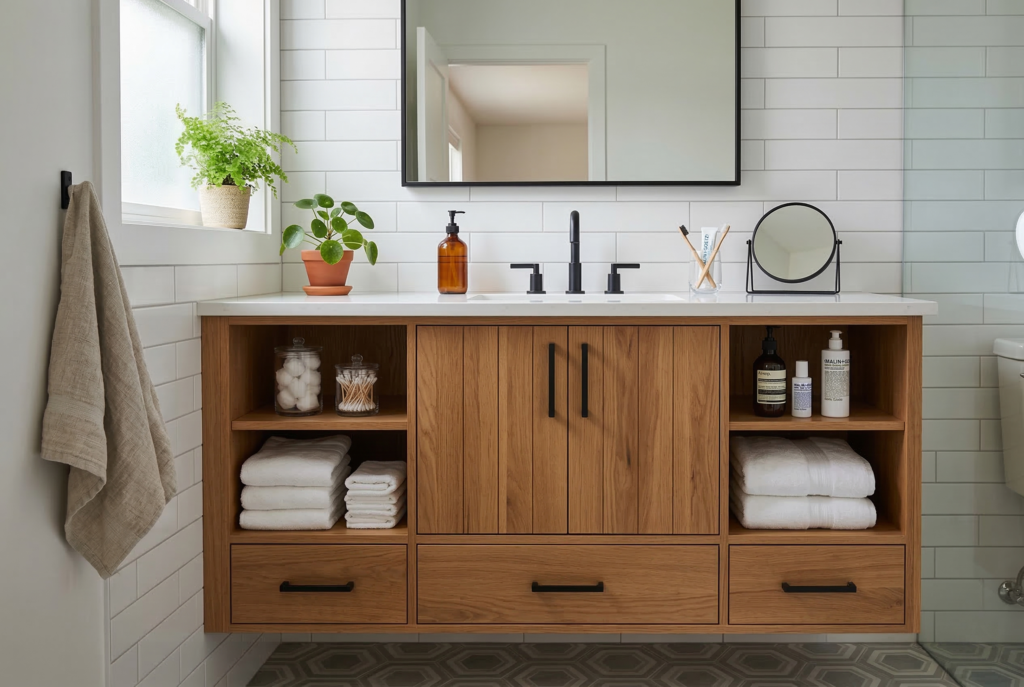
One reason family decluttering efforts fail is that the task feels too big from the start. If you announce that the whole house needs to be decluttered, most people will immediately feel overwhelmed. It’s much easier to build momentum with smaller, visible wins.
Start with one manageable area such as the entryway, a toy shelf, the junk drawer, or a bathroom cabinet. These are spaces the family uses often, so improvements are easy to notice right away. A completed small zone shows that the process can be doable and useful.
This approach also supports consistency. A family that finishes one drawer or one shelf is more likely to keep going than a family that spends hours pulling everything out of multiple rooms and never fully resets the space.
3. Give Everyone a Role That Fits Their Age and Ability
Decluttering works better when each family member has a clear role. Without that structure, one person ends up directing everything, another disappears, and someone else gets distracted halfway through.
Young children can sort toys, match shoes, or decide which books they’ve outgrown. Older kids can organize school supplies, clear out old clothes, or help label bins. Teens can take more ownership of their bedrooms, hobby items, and sports gear. Adults can handle paperwork, storage planning, donation drop-offs, and larger decision-making.
The goal is to match the task to the person, not force everyone into the same role. That makes the work feel fair and keeps people engaged. It also teaches practical household skills that are useful far beyond one decluttering session.
4. Let People Make Decisions About Their Own Stuff
One of the quickest ways to create resistance is to decide for someone else what should stay or go. Even when intentions are good, that approach often leads to defensiveness, especially with kids and spouses.
Where possible, let each person make choices about their own belongings. You can guide the process with questions instead of commands. Ask whether the item is still used, whether it fits, whether it’s broken, or whether it has a real place in the home.
These questions help people think through their choices without feeling pushed. This matters because long-term organization depends on buy-in. If family members feel respected during decluttering, they’re more likely to maintain the results. If they feel controlled, clutter tends to come back through avoidance, hidden piles, or repeated conflict.
5. Use Simple Rules to Make Decisions Faster
Families often get stuck not because they don’t want to declutter, but because every item turns into a long discussion. Clear, simple rules reduce decision fatigue and keep the process moving.
You might use guidelines like these: if it’s broken and won’t be repaired soon, let it go. If it no longer fits and won’t be handed down, donate it. If there are three versions of the same item and only one gets used, keep the best one. If something has no regular use and no designated home, it may not need to stay.
These basic rules help adults and kids alike. They remove some of the emotion from everyday decisions and make decluttering feel less personal and more practical. Over time, those rules also shape better habits around shopping, storing, and bringing new items into the home.
6. Make Decluttering Feel Like a Routine, Not a Big Event
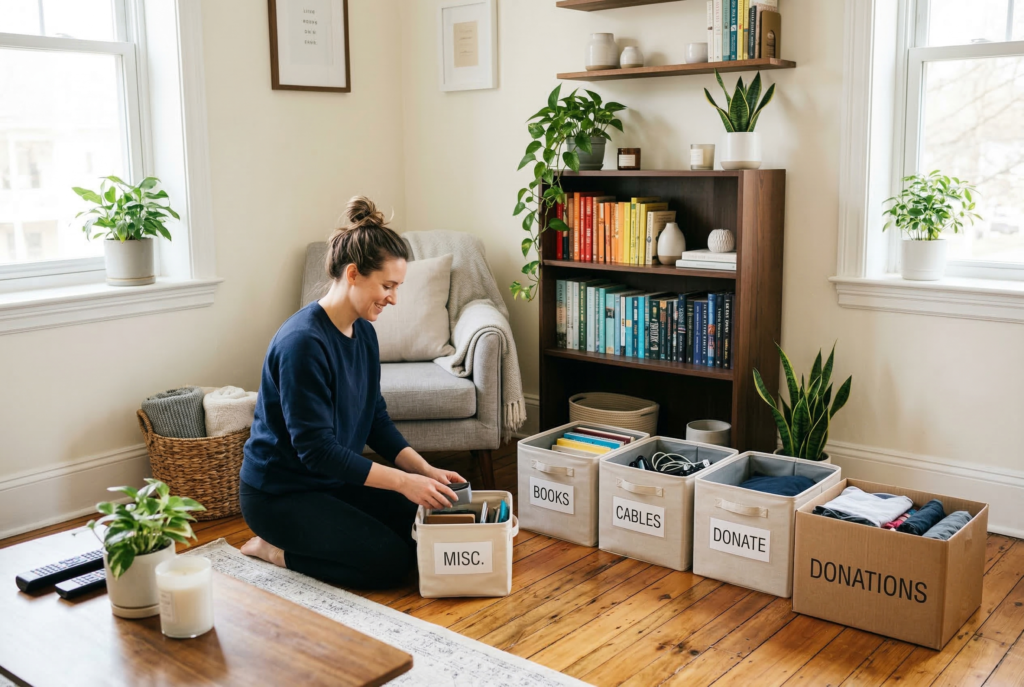
Many families wait until the mess feels unbearable before doing anything about it. By then, the process takes longer, causes more stress, and becomes harder to repeat. A more effective strategy is to make decluttering part of the regular household rhythm.
That could mean a 15-minute reset on Saturday mornings, a quick closet edit at the start of each season, or a monthly family tidy-up before donations are dropped off. Smaller sessions are easier to fit into busy schedules, and they don’t carry the same emotional weight as a full-day cleanout.
This routine-based approach works especially well for families juggling work, school, sports, and social commitments. It respects real life while still moving the home in a better direction. Consistency usually produces better results than occasional bursts of effort.
7. Focus on High-Clutter Areas That Affect Daily Life
If you want family decluttering to feel worthwhile, prioritize the spaces that cause the most friction. Some clutter is mostly visual, but some clutter actively disrupts the day. That’s where your energy should go first.
For many households, the biggest problem areas are the kitchen counter, mudroom, dining table, play area, laundry room, and shared bathroom storage. When these spaces are overloaded, routines become harder. Papers get lost, shoes pile up, backpacks land everywhere, and basic cleaning takes longer than it should.
Clearing these zones gives the whole household a stronger sense of relief because the payoff is immediate. Family members can see the difference in how the home functions, not just how it looks. That practical benefit builds trust in the process and makes future sessions easier to agree on.

8. Create Easy Systems the Whole Family Can Maintain
Decluttering is only the first step. If the organization system is too complicated, the clutter will return quickly. Family-friendly systems need to be simple enough for everyone to follow without constant reminders.
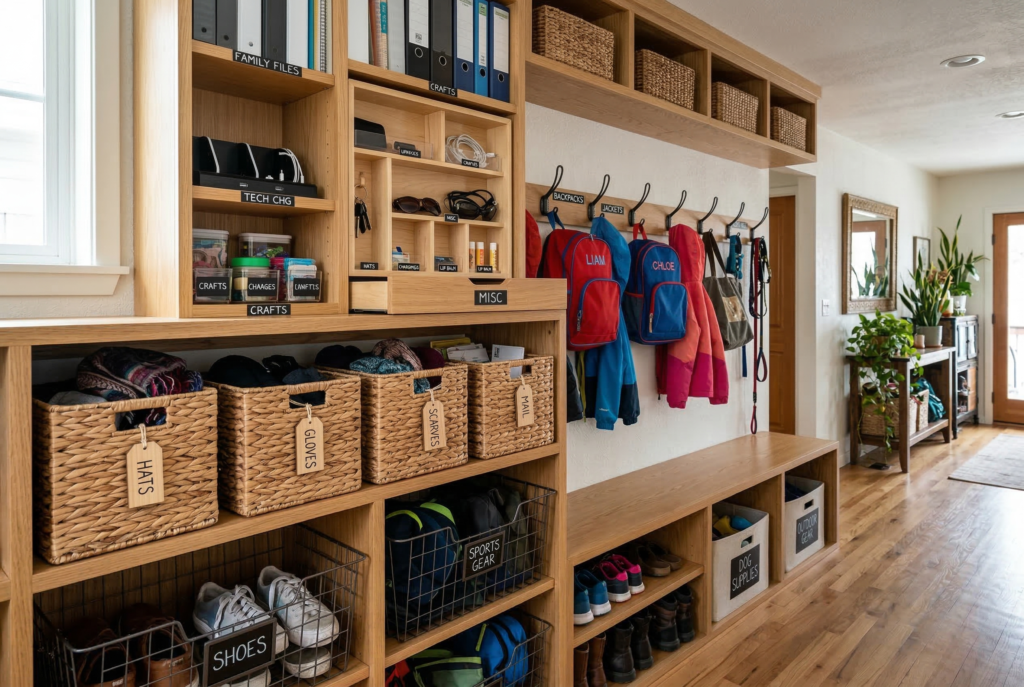
Open bins, labeled baskets, low hooks, drawer dividers, and clearly assigned shelves tend to work well because they reduce guesswork. People are much more likely to put things away when the storage solution is obvious and easy to access.
This is especially important in shared spaces. If kids can’t reach the bin, if the linen closet is packed too tightly, or if the pantry system only makes sense to one person, it won’t hold up. A well-organized home should support the household’s actual routines, not require everyone to follow a perfect system that doesn’t fit daily life.
9. Celebrate Progress So the Habit Sticks
Decluttering doesn’t have to feel like punishment. When families notice the results and feel good about the effort, they’re more likely to repeat it. That doesn’t mean every organizing session needs a reward, but it does help to acknowledge progress.
You might point out how much easier it is to leave the house on time now that the entryway is clear. You might enjoy a more relaxed evening in a tidier living room or let kids see how many toys or clothes are being donated to help others. These moments help connect effort with outcome.
Progress also matters more than perfection. A family home will still look lived in, and that’s normal. The goal is to reduce unnecessary clutter, improve function, and create spaces that feel calmer and easier to manage. When families keep that perspective, they’re more likely to stay motivated.
Conclusion
Involving your family in decluttering can make the home more organized, but it also does something deeper. It creates shared responsibility, teaches better habits, and helps everyone understand how their choices affect the spaces they live in together. Instead of one person constantly cleaning up after everyone else, the household begins to work more like a team.
The most effective family decluttering strategies are usually the simplest ones. Start with small zones, use clear rules, let people make decisions about their own belongings, and build systems that are easy to maintain. Over time, those small efforts can lead to a home that feels less stressful, more functional, and far easier for everyone to enjoy together.