A living room has a funny way of collecting everything. A throw blanket lands on the arm of the sofa. Mail gets dropped on the coffee table. Kids’ toys wander in from another room and somehow settle in for the night. Even in homes that are generally tidy, the living room can start to feel heavy fast. Nothing about the space is actually dirty. It just feels crowded and visually noisy, filled with the buildup of everyday life.
That’s why smart living room organization matters so much.The goal is simply a home that feels easier to use and easier to reset after everyday life happens, and honestly, easier to enjoy. When your living room is organized well, it can still feel warm and lived-in. It just stops feeling like it’s doing battle with you.
The good news is you don’t need a custom renovation or an expensive built-in wall unit to get there. A few thoughtful changes can make a huge difference. These living room organization ideas are designed for real homes, real schedules, and real people who want a space that looks good and works better.
Why Living Room Organization Feels So Hard in Real Life
The living room is one of the busiest spots in the house, which is part of the problem. It’s where people relax, stream shows, host friends, answer emails, fold laundry, snack, scroll, and sometimes, for reasons no one can explain, leave socks.
Unlike a pantry or linen closet, a living room isn’t a single-purpose space. It has to handle function and appearance at the same time. That tension is what makes organizing a living room trickier than it seems. You need enough storage to support daily life, but not so much visible storage that the room feels bulky or crowded.
A well-organized living room usually comes down to two things: giving common items a clear home and reducing the amount of visual clutter competing for attention. That second part matters more than people think. Even when a room is technically clean, too many objects out in the open can still make it feel stressful.
1. Start by Decluttering What Doesn’t Belong in the Living Room
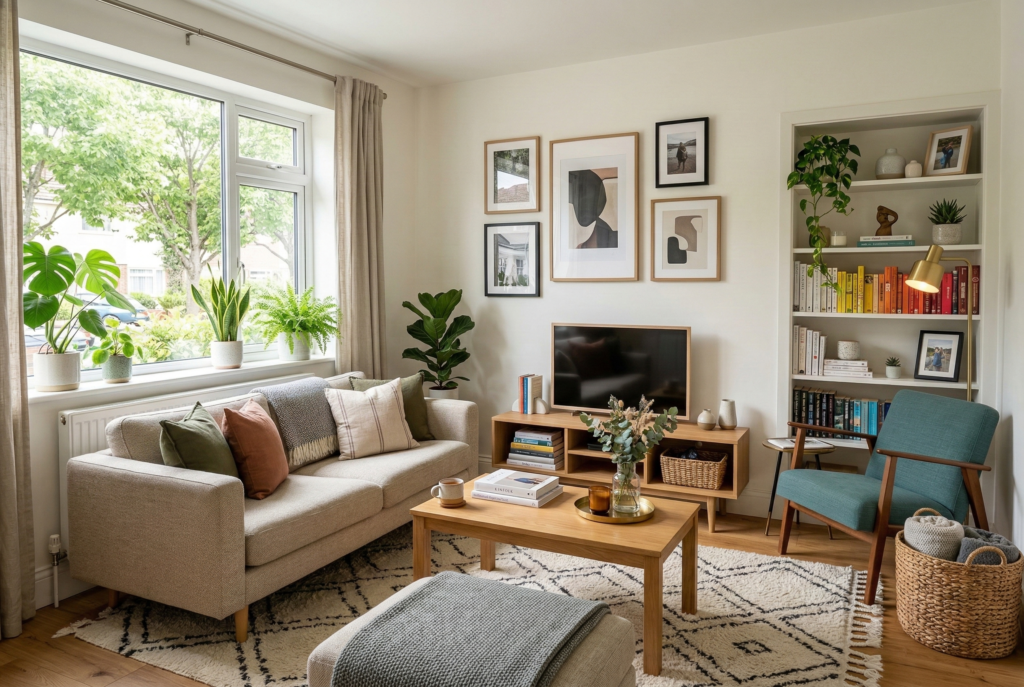
Before buying baskets or moving furniture around, take a step back and look at what’s actually causing the mess. A lot of living room clutter has nothing to do with the room itself. It’s just stuff from the rest of the house that drifted in and never left. That’s usually the best starting point.
Remove the “Temporary” Items That Became Permanent
Most living rooms slowly fill with things like return shipping boxes, school papers, random chargers, and half-read magazines from months ago, and the truth is they don’t need better storage solutions, they just need to go.
Walk through the room and ask one simple question: does this item really live here? If the answer is no, move it out before doing anything else.
Cut Down Duplicates and Dead Weight
This part is less exciting, but it works. Too many throw pillows, too many side tables, too many decor objects, too many baskets with no real purpose. They all add visual clutter. If the room feels crowded, the issue may not be a lack of storage. It may just be too much stuff.
Decluttering a living room first makes every organizing decision easier afterward. You can see the room more clearly, and you’re less likely to create systems for things you don’t actually need.
2. Use Hidden Storage Furniture That Looks Good in the Room
This is where living room storage gets smarter. If a piece can serve two purposes at once, it instantly earns its spot.
Storage ottomans, coffee tables with drawers, benches with lift-up lids, and side tables with enclosed shelves can all help hide the small everyday items that make a room feel messy. Remotes, chargers, coasters, blankets, game controllers, coloring supplies, dog toys. It adds up quickly.
Choose Storage Furniture Based on What Clutters Your Space Most
Not all hidden storage is equally useful. A beautiful storage bench won’t solve much if your biggest issue is a coffee table buried under electronics and paper clutter.
Match the furniture to the problem. If blankets and pillows pile up, a storage ottoman makes sense. If the coffee table becomes command central, choose one with drawers or a lower shelf with lidded boxes. If your entry opens straight into the living room, a slim storage bench or cabinet near the door can catch the overflow before it spreads. The best multifunctional furniture doesn’t just save space. It makes cleanup feel quicker, which means it actually happens.
3. Create Small Zones So the Room Stops Doing Everything Everywhere
One reason living rooms get messy is that the room often serves multiple purposes with no boundaries at all. A single surface becomes a snack station, work desk, toy zone, and mail drop all at once. No wonder it feels chaotic. Creating zones helps the room breathe.
Give Each Activity a Subtle Home
You don’t need to divide the room dramatically. Even small visual cues help. A tray on the coffee table can define where remotes and candles go. A basket beside the sofa can become the blanket zone. A corner chair with a lamp and side table can quietly become a reading nook instead of a catch-all.
If your household uses the living room for more than lounging, zoning becomes even more important. Maybe one side of the room supports entertainment, while another handles homework or puzzle time. What matters most is clarity, not rigid systems. Rooms feel calmer when they have a little structure.
4. Use Vertical Storage to Free Up Floor and Table Space

When a living room feels tight, adding more storage furniture at floor level can sometimes make things worse. That’s where vertical storage helps. It gives you more room to organize without eating into walking space.
Floating shelves, narrow bookcases, wall hooks, and ladder shelves can all help organize a living room while keeping the footprint lighter.
Make Vertical Storage Work Without Making the Room Feel Crowded
This is the balance people often miss. Vertical storage is useful, but only when it’s edited well. Shelves packed edge to edge with books, frames, baskets, and decor can feel just as overwhelming as cluttered tabletops.
Try using open shelves for a mix of practical and decorative items. A few books, a box for small electronics, one plant, one framed photo. Leave a little empty space too. Not every inch has to prove itself. In smaller homes or apartments, vertical storage can be especially effective because it helps you maximize the room without making it feel boxed in.
5. Corral Loose Items With Baskets, Trays, and Containers That Actually Fit Your Life
There is a reason simple containers show up in nearly every good organizing plan. They work. But the key is using them with intention, not just scattering pretty baskets around and hoping for a miracle.
A tray can instantly make a coffee table feel calmer by grouping the usual suspects. A basket can hold throw blankets near the sofa without making them look sloppy. A lidded box can hide the little things you need nearby but don’t want on display.
The Best Containers Are Specific, Not Vague
A basket labeled “miscellaneous” tends to become a black hole. A basket for board games, kids’ books, or evening throws is much more likely to stay useful.
This doesn’t mean everything needs a label maker moment. It just means each container should have a real job. When it does, tidying up becomes easier for everyone in the house, not just the person who notices the clutter first.
Here are a few of the most practical container uses in a living room:
- a tray for remotes, candles, and coasters
- a basket for blankets or pillows
- a lidded box for cords and chargers
- a bin for kids’ toys or activity supplies
Small changes like these make a room feel more intentional almost immediately.
6. Make Space for What You Love Instead of Hiding Everything
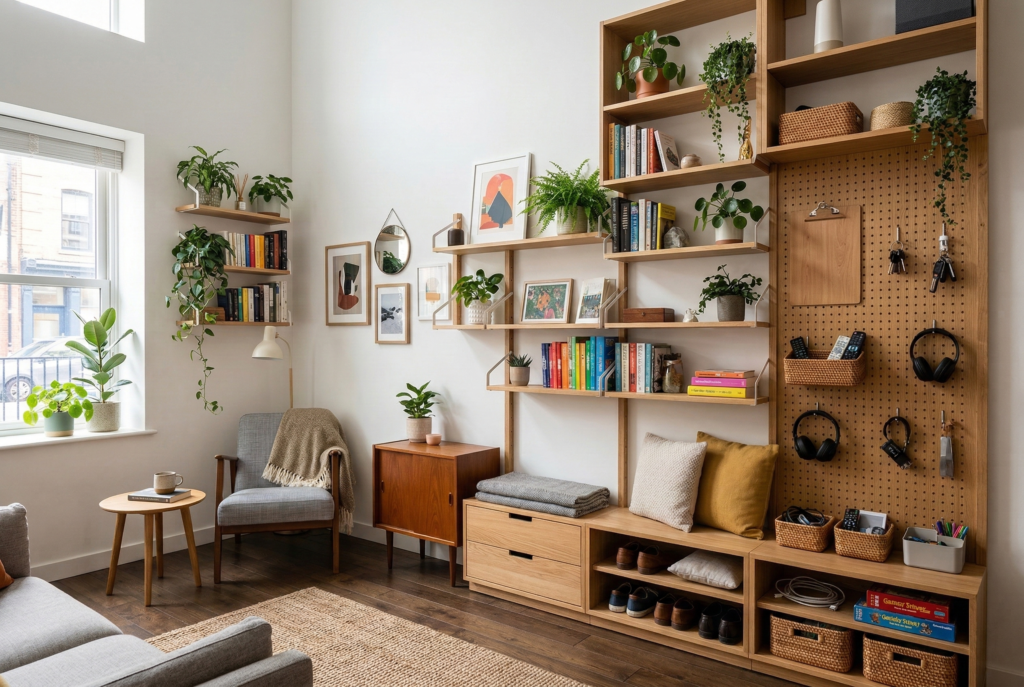
A well-organized living room should still look like your home. This matters. Some people declutter so aggressively that the room ends up technically tidy but emotionally flat. It’s clean, sure, but it doesn’t feel like anyone actually lives there. Good living room organization makes room for personality.
Display Meaningful Items With a Little Restraint
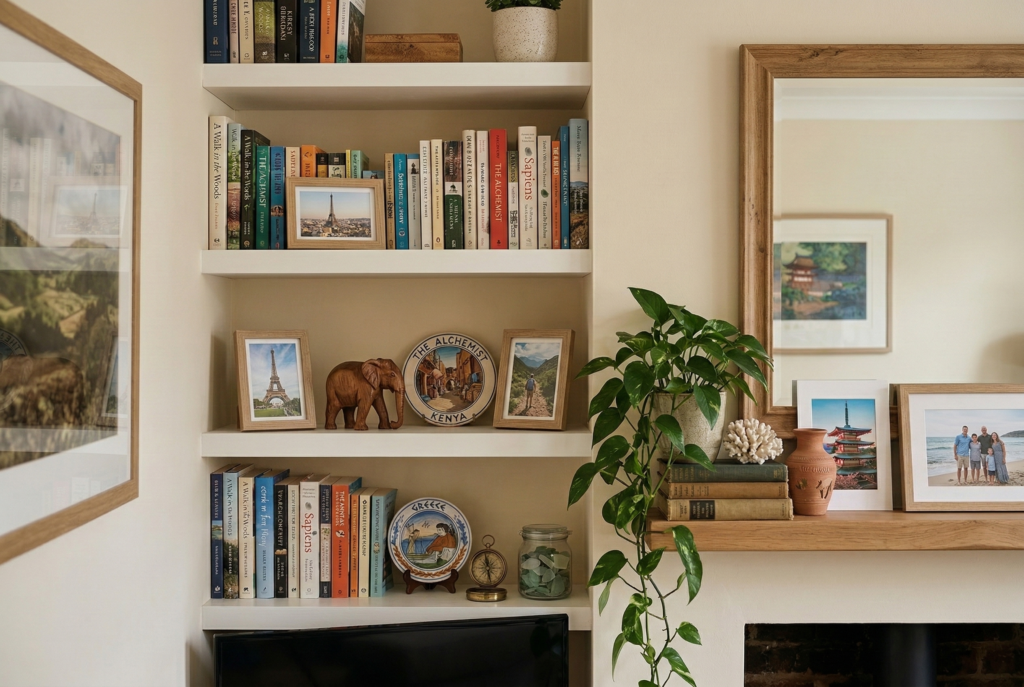
Books, framed photos, art, objects collected while traveling, a ceramic bowl from a local market, a stack of records, whatever feels like you. Those things belong in a living room. They help the space feel layered and welcoming.
The trick is curation. Not everything has to be out at once. Rotate pieces seasonally or whenever shelves start to feel crowded. Let a few meaningful items breathe instead of covering every surface with decor.
This is one of the easiest ways to create a stylish, functional home. Style doesn’t disappear when a room gets organized. It gets easier to see.
7. Turn Awkward Areas Into Useful Storage Spots
Every living room has at least one slightly annoying area. A narrow corner. An alcove that doesn’t fit standard furniture. Space under the stairs. A blank wall that feels like it should do something but hasn’t yet. These overlooked areas are often where the smartest living room storage ideas show up.
Look for Underused Space Before Buying More Furniture
A slim bookcase can turn a dead corner into useful storage. A narrow cabinet can fit beside a fireplace or media console. Under-stair space can become shelving, closed cabinets, or even a tucked-away family zone for games and overflow items.
Sometimes the most effective organizing move isn’t adding more. It’s using the room more thoughtfully. This is especially helpful for people in smaller homes who can’t afford to waste even one awkward little section of the room. If the space exists, it should probably be doing something.
8. Organize Everyday Technology Before It Takes Over the Room
Modern living rooms have a lot of invisible clutter that quickly becomes visible. Chargers, remotes, headphones, gaming gear, routers, speakers, extension cords. None of it is huge on its own, but together it creates that messy, unfinished feeling people can’t quite put their finger on. This is one of the most overlooked parts of living room organization.
Give Tech Items a Home That Doesn’t Fight Your Habits
If the family always charges devices near the sofa, create a small charging station nearby instead of pretending everyone will walk them back to a bedroom. If remotes constantly disappear, keep them in a tray or a small compartment in the coffee table. If cords collect around the media console, use cable organizers or a simple box to conceal the extras.
You don’t need a futuristic smart-home system for this. You just need a plan that fits how people actually use the room. Honestly, some of the biggest visual improvements come from organizing the least glamorous stuff.
9. Build a Simple Reset Routine So Clutter Doesn’t Creep Back In
This is the part most articles skip, but it matters as much as the storage itself. A living room can be beautifully organized on Saturday and feel unraveled again by Tuesday if there’s no easy way to maintain it. Organization needs a rhythm.
End With a Five-Minute Room Reset
A quick evening reset can make the entire room feel calmer and easier to start fresh the next day: straighten the pillows, fold the blankets, clear the coffee table, return items to their zones, toss any trash, and put away anything that wandered in from another room. It only takes a few minutes and doesn’t need to be elaborate.
A simple living room reset works because it prevents small disorders from becoming a full weekend project. It also helps everyone in the home understand what “put away” actually means, because the room has clear systems in place. A tidy room is easier to maintain when it has fewer decisions built into it.
Common Living Room Organization Mistakes to Avoid
Even well-meaning organizing efforts can backfire when they solve the wrong problem. Before you buy another basket or shelf, it helps to watch for a few patterns that tend to make things worse.
A few common mistakes stand out:
- keeping too many small decor items on every surface
- buying storage before decluttering
- choosing open storage for items that look messy
- ignoring vertical space and overloading the floor
- using “miscellaneous” bins with no real purpose
- expecting one big organizing day to fix everything forever
How to Make Your Living Room Feel Organized and Still Comfortable
There’s a sweet spot between cluttered and cold, and that’s where most people want to live. You want the room to feel calm, but not stiff. Well put together, without feeling overly delicate or untouchable. Organized enough that you can find the remote and clear enough that your shoulders drop when you walk in.
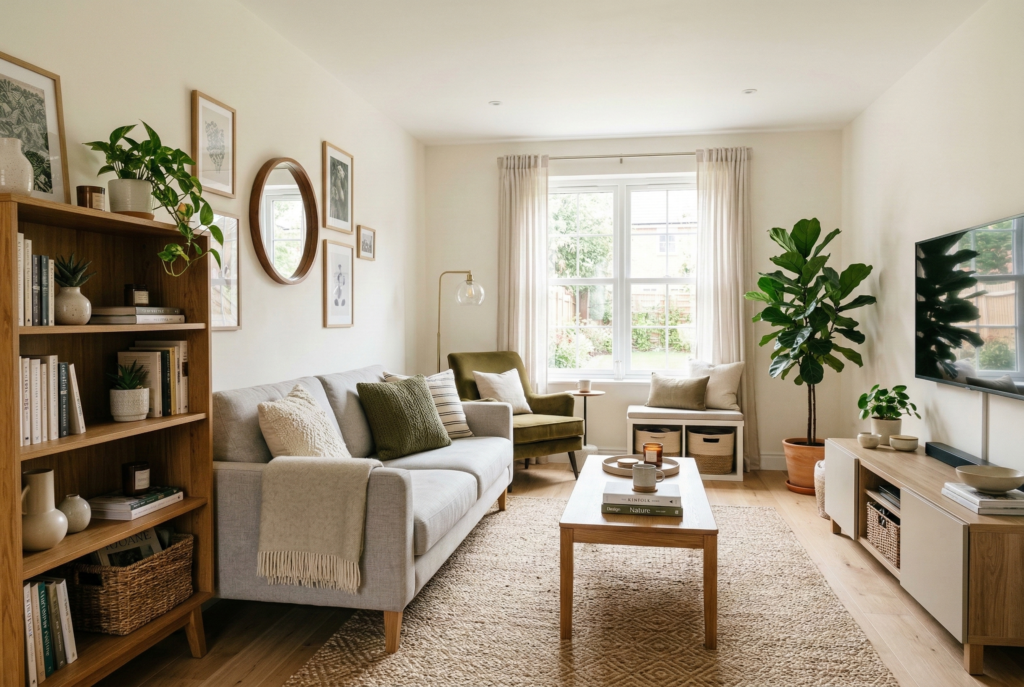
That usually means blending hidden storage with open personality. Let the practical things disappear where they can. Let a few meaningful things stay visible. Keep the layout easy to move through. Don’t ask every piece in the room to do too much visually. Sometimes the best organizing decision is simply removing one thing that has been making the room feel crowded for months.
Conclusion
A well-organized living room doesn’t have to be perfect to feel better. It just has to support the way you actually live.
That might mean a storage ottoman that hides the daily mess, a tray that keeps the coffee table under control, shelves that lift clutter off the floor, or a simple evening reset that keeps the room from slipping into chaos. These changes may seem small, but they can make a powerful difference. They make the space easier to use and more enjoyable to be in.
The best living room organization ideas are the ones that solve real frustrations, not just the ones that look nice in a photo. Start with the trouble spot that bothers you most. Fix that one thing first. Once the room begins working with you instead of against you, the rest gets a whole lot easier.
Related Articles
- 10 Small Living Room Layout Ideas to Maximize Space and Enhance Your Home’s Functionality
- 15 Best Bathroom Organization Ideas: Smart Storage Solutions for Small Spaces and Clutter-Free Living
- 15 Smart Kitchen Organization Tips to Declutter, Maximize Space, and Create a More Functional, Easy-to-Use Kitchen
- How to Organize Your Bedroom: Practical Storage Ideas to Maximize Space and Reduce Clutter
- 12 Teen Bedroom Organization Tips to Declutter, Maximize Space, and Keep Their Room Clean
- The Ultimate Guide to Garage Organization, Smart Storage Ideas, Decluttering Tips, and Deep-Cleaning Solutions